
How can leaders build workplaces where people feel truly valued?
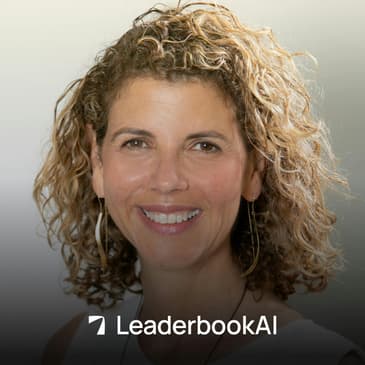
Ophira Melamed, CEO of Nitrofix, shares how transparency, trust, and purpose prevent burnout. This conversation highlights leadership behaviors, decision making, and scalable systems—reinforced by business process automation and AI automation—to sustain engagement and performance.
—
Subscribe to the LeaderbookAI Podcast (formerly CPO PLAYBOOK): https://leaderbook.ai/podcast
Want to create 10x the value of your business or investments? Let’s talk: https://leaderbook.ai/contact
Powered by the WRKdefined Podcast Network.
[00:00:00] I'm Felicia Shakiba, and this is CPO Playbook, where we solve a business challenge in every episode.
[00:00:21] Studies show that disengaged employees can drain productivity, impact morale, and hinder growth, no matter how innovative or competitive your organization is. To help us unpack this challenge, I'm honored to be joined by Ophira Melamed, CEO and co-founder at NitroFix. NitroFix has made waves as a trailblazer in the renewable energy space, providing cutting-edge solutions to decarbonize industrial operations.
[00:00:51] But behind every success story is a team. People who need to feel valued, motivated, and connected to the bigger mission. NitroFix has experienced rapid growth and Ophira has faced the real challenge of keeping employees inspired while navigating scaling pressures. shifting market dynamics and the unique demands of the renewable energy sector. Ophira, thank you so much for being here. Welcome.
[00:01:20] Thank you. Thank you for inviting me. Quite excited from this interview and post-con. Yes, I am too. We had met at TechCrunch Disrupt, and you had a fantastic pitch. And I was so impressed, and I had to have you on the show. Thank you.
[00:01:40] So to set the stage, can you share a bit about what NitroFix is, and what's the company's mission, and what are some of the greatest challenges you've faced as a leader in keeping employees engaged as you've grown? So I'm the CEO of NitroFix, and NitroFix is a startup in the deep tech field.
[00:02:00] So deep tech is not so easy because we start with a deep search or research of the solution that we are providing, which is production of green ammonia. And then we need to accelerate and scale up the solution into a final industrial product. So the team needs to grow up together with the product and with the solution that we are providing.
[00:02:24] But also there are a lot of challenges as a startup with the journey that we have to pass from a very small company into a growing company, into procedures, into working as a team together and not working as individuals. So there are a lot of challenges, and I'm so excited to have the opportunity to lead those challenges and NitroFix. What is the problem specifically that you're solving?
[00:02:53] So the current production method of ammonia is the known Haber-Bosch method. This method was invented 100 years ago by Professor Haber and Professor Bosch. Both of them got a Nobel Prize for their invention. But at that time, nobody thought about global warming. So this production method emits huge quantities of carbon emissions. It's around 2% of the global emission.
[00:03:18] And what we at NitroFix are solving is those 2% of the global emission. Our solution produces ammonia with zero carbon emission. And this is dramatic. It's dramatic for the world, and this is dramatic for the ammonia fields as well. Wow. That's impressive. You've built NitroFix during a time when employee expectations are higher than ever.
[00:03:44] So can you share a time when you noticed a drop in engagement and what you did to turn things around? So, yes. So, first of all, most of my employees are PhD doctors in chemistry or mechanical engineering. So working, and I'm a doctor in chemistry as well, but working with PhD that knows everything, that their way is the right way and it's the only way.
[00:04:12] So you need to know how to handle those figures, if I can call it like this, those people. I am these people as well because again, I'm a chemist. But you need to know how to give them or really to listen to them, but still to direct them to the right direction that the company goes. And this goes all the way from day one until where we are now.
[00:04:37] And I think, first of all, speaking with the same level of openness and listening to your employees, listening, whatever they are saying, really listening, not just hearing. And addressing what they are facing and what are the challenges and together with them solving the challenges. I think this is part, but there's a lot of things.
[00:05:02] So I can talk about it, you know, like hours about how to engage employees, how to make sure they are part of the solution and not solving a problem. So I think that's important that there would be a part of everything and not working in a company, but being part of a company or being part of the solution. I think that's part of what we are looking for with our employees.
[00:05:32] Yeah. And you said something very important, which was listening, not just hearing your employees. What does that mean to you? So it means that although I'm the CEO of the company and we have a CEO of the company and we think we know the solution, we are not always, we don't always know the solution. And we are not always right with the way that we think.
[00:06:02] So by listening to other people and carefully, although we think we know the solution, carefully listen and thinking about it before having the final decision where to go and how to go and what to do. I think that's important. And they feel it. They feel if you're really listening or just hearing what they are saying. And I'm not the smartest person in the company. I have my way. I know how to lead people.
[00:06:31] I know how to manage. I know the direction. I'm very focused. But I know that I don't know everything. And I know that it's good to listen to other people and to hear them and then to decide. But I'm part of the team as well. So I think that's part of it.
[00:06:49] It sounds like there's a lot of humility that you have as a leader and that's important, especially in an environment where you have, you know, high intelligent horsepower in your business. And I can see how there might be like a different way to engage different types of functions or levels of employees in the business. I'm wondering, like, employee engagement is really often tied to a company's culture.
[00:07:19] So how do you define the culture at Nitro Fix? And, you know, what steps do you take to keep it strong as the company grows? So first of all, we've defined within the company our values. So our values are respect. So people is one of the value which goes into respect and transparency and team working. Those are the values of the company. Also, the passion. But you believe it?
[00:07:47] That passion is part of our values. Because for me, I'm passion. I define myself as a passion person. And I want always, I want the people in the company to have passion with the goals and with the target that we aim. So first of all, this is one thing that we have the values within the company. And we've discussed this with our employees. And we've made sure, first of all, we discussed their values.
[00:08:13] And in the end, we've shared or part of the discussion was sharing the company's values. But I think more than this is being an example for the employees. My nature or my, as I said, I have passion. I have respect for others. And I'm listening to others. And I'm a team player.
[00:08:35] So I think if you are, as a leader of the company or the CEO of the company, showed as an example of those values, then it goes all the way to the employees. So I think this is, I'm very ambitious. So I have my goals and we need to reach them. So everything is okay. But it doesn't, it's not once against the other. We can get both of them, I think at the same time. So this is also important.
[00:09:04] We'll be right back. Hey, this is William Tenka, work to find. Hey, listen, I'd like to talk to you a little bit about inside the C-suite, the podcast. It's a look into the journey of how one goes from high school, college, whatever, all the way to the C-suite, all the ups and downs, failures, successes, all that stuff. Give it a listen. Subscribe wherever you get your podcasts.
[00:10:10] Back to the show. I love that you talk about values. I often talk about values as really shaping the culture. And if there's only so much you can do by putting, you know, stamping a value on the wall, but what really brings values to life are how leaders portray and show up in the business with those values. So I 100% agree with you. I don't think I could have said it better the way you said it.
[00:10:38] But I also think that there's a devil's advocate question in here, which is, you know, leaders can often easily get frustrated with employees who may not be doing their best, may not be showing up, may not be executing appropriately, maybe making big mistakes. How do you continue to show up respectfully when you are maybe overly frustrated with one or two employees on the job?
[00:11:07] Right. Because I think that a lot of leaders can fall into that hole of being disrespectful sometimes. I know that everybody's done it. I've done it. It's a human nature type of thing. But how do you do it? How do you contain and continue to be respectful when you can be highly frustrated over big mistakes? So it depends what are the big mistakes.
[00:11:30] And of course, you know, in the end, first of all, I respect that people are different than me. So I respect there are different types of people within the company. And I think diversity is important. So, again, my way of doing things is one way. And there are other ways that things can be done. And it depends on the person.
[00:11:56] And I do respect the diversity and the different types. I'm very fast and da-da-da-da-da-da. And I do have people in my team that needs to think, needs to do things slowly, need to program or do everything very, very slowly. So I could have been frustrated, but I respect it. I respect that there are other people. And maybe sometimes going this way is better, but this is their way.
[00:12:27] So I need to give them the time to do it. I want to say on the other way, on the other side, if after three months they will not deliver anything, yes. Right. Of course, we will do the discussion and we will go over and we have measurable. So if they did not perform with the things that we decided, of course, we do assessment and we share it. We don't wait till the end of the year to do assessment.
[00:12:54] So we try to do the assessment, officially assessment every quarter to make sure that we are on the same page. And if something, I don't see it good or well, and I think some things needs to improve. So we will do it this quarter, not by the end of the year. And then they have the time to improve, yes or not. Yeah.
[00:13:16] So it sounds like you leveraged your quarterly performance reviews to really be able to sit down and respectfully discuss the deliverables and the performance without, you know, waiting till the end of the year. And you see mistake, mistake, mistake after one another to blow up on someone. It's like this kind of measured time in order to have a healthy discussion.
[00:13:40] This is one thing, but on the other hand, I want to add, although I'm the CEO, I'm making sure that I go into the lab every day and discuss with people with the challenges that they are facing and the frustration that they are facing day to day. I'm not waiting. So sometimes I can support, sometimes I don't hate, but just being there, listening to them, I think this is important.
[00:14:04] So this, without the assessment, regardless to the assessment, this is a process that is important for me to have this one-on-one, like, you know, how are you? How was your day? What are the results? What do you see? Very nicely, not judged, not coming from the judgment. I forgot the English word, judgmental. Judgmental. The mental approach, but from the listening approach, from the welcoming approach. I think that's fair.
[00:14:33] I think what it sounds like you're saying is that instead of waiting for that moment of frustration, you are getting ahead of it and you're working with them. You're going into the lab every day. You're understanding what their challenges are. And so there's so much more context to share and understanding what people are going through before they get to that point of really making a big mistake. Definitely. If that's fair. Yes. Okay.
[00:15:31] Yeah. I forgot the English. I forgot the English. Like, whoever doing like a small competition. It's not really a competition, but it's the winner of the week. Like whoever got the shirt. What we understood that this approach is for the individual and we want to encourage them as a team and as a team players and working together. So there were some days that nothing worked.
[00:15:59] Everything that we did in the lab didn't work. So I came and we did like a special lunch where I ordered food on the companies and we sat together and we had a discussion, which was out of the lab, just thinking about the days and what's going on. And we had like a short brainstorming. What happened? Why something is not working? What are the challenges? The way to tackle it.
[00:16:26] But since I think it was during lunch and it was like not official, so people felt more comfortable. So it enabled them to come with new ideas and new approaches. And I think always what I'm telling to the team. Okay. Next week is a new week and we will have two results on something good. So it's nothing personal. So we as a team, we will solve the challenges. I think being a team and part of a team, so it's the challenge are together.
[00:16:56] I think that's part of the solution and encouraging them. I'm part of their team and their efforts. So I think this is one of the important points. I think what it sounds like you're doing is creating a sense of belonging, of everybody coming and having lunch together and bringing people together, I think is a really big key in how we engage. And I want to go back to kind of what you said earlier, which is engagement.
[00:17:26] It's not a one-size-fits-all solution. What strategies have worked for NitroFix to keep people motivated specifically at different levels of the organization, right? You might engage your executive team a little bit more differently than your new hires at an entry-level position. What is your experience? First of all, I want to say there are a few levels of success within the company.
[00:17:52] So there are levels of success that goes into the development process. But there are also levels of success like the TechCrunch disrupt where we won and we were selected to be part of the 20 out of 1,000. So although this success is not related directly to each one of the research within the group, I put it into the company as the company's success. It's not a private success or something.
[00:18:22] So we celebrate it as a company, although it's not something specifically that they did. Also, we've been chosen to be one of the 50 best companies to watch in Europe. So all of this, it's the company's success. I'm not surprised. Thank you. I'm not surprised. No, but what I'm saying, it's the company's success. So there are a few types of success.
[00:18:44] So although some of this is more executive level and some of this is more research level, I engage everyone with the success and with the failures. Of course, not always everyone can be part and to be in the meeting. So sometimes we need only a few people within the meeting. But I make sure that we have transparency with our success and with our failures, with all employees. And I think this is important.
[00:19:14] Of course, when we have failures, we need to balance and to put them in the right perspective. So it's not dramatically, we had failures, but we would come out a bit and we would get to a success. So also the way that you transfer this to the employees, I think it's important. Always give them the hope or the light that things can change or would be better. So this is part of the solution, I think.
[00:19:42] You talked a little bit about transparency and that's important. Why is it important? You know, I think that there's a lot of leaders that are very afraid of transparency and you're saying that you embrace it. Why and what does that look like? First of all, transparency goes both ways with my board and with my employees.
[00:20:09] For me, integrity is one of the, again, it's one of our values is integrity. So I think if you come with transparency and with the things that you believe, then it goes, how would I explain it? I think that's the best way. I don't know exactly why to explain.
[00:20:30] I think it's obvious that if you are transparent with your employees, with your challenges, then it is easier to motivate them to come to the right solution. But if they don't understand what is leading you or what are in your thoughts, what is motivating you, then it's harder for them to go to the right direction. But if you are sharing with them transparently the motivation and the reasoning for doing things, it is easier for them to be part of the solution.
[00:21:00] We'll be right back. Back to the show. I 100% agree. I think it's really difficult to try and motivate people when they don't understand the entire context of the problem. And that fear that leaders have in sharing and being transparent, and I'm not saying that everything needs to be transparent all the time,
[00:21:27] but there is a buildup of the unknown, the ambiguity is what really holds them back from moving forward and being productive in my view. So I think that's 100% on point, and I can see why you're having that experience and why transparency has been more of a competitive advantage, I think, for you in your business. When we think about one of the biggest challenges in engagement is really recognition and purpose.
[00:21:57] So how have you built a sense of purpose into your organization, and how do you recognize those employees that really deserve to be recognized? And I feel like you've talked a little bit about it already, but maybe there's something we missed, if not. So again, purpose is one of our values. So it's people, passion, and purpose. So the three Ps, if we can call it like this. So of course, everyone knows our purpose.
[00:22:24] And for us, it's a bit easier in a way, because we are going to save the world, because we are going to reduce carbon emissions. So the purpose is more than making Nitrofix a successful company, which is definitely our purpose. But we have a higher purpose. And the reasoning, by the way, for me moving from where I've been in the printing industry to the climate section,
[00:22:49] is because of this purpose that I want to do something to my soul as well, not just being a CEO of a company. For me, it's important to make sure that the things that I'm doing are doing good for the whole world and solving really challenges problems. So from this, I think the purpose for our employees is they see the big pictures.
[00:23:16] But also, of course, the success of the company is important for them. And we celebrate. I make sure that we celebrate when we had one year birthday. We did like a party where we invited the families. So not just the employees, their families, their kids, their wife, husband, their parents. And I think it was an amazing engagement, because while the families came and saw the place where we walk,
[00:23:45] and saw what the people, their kids or family members are doing, it gave us a lot of respect. And the team were very proud with what they are doing, showing it to their families. So I think this is another way of recognition. Of course, we celebrate the birthday. We celebrate success. We make sure to celebrate. When we have something good, we celebrate. And I think this is also very important.
[00:24:14] I have never heard of employee recognition being shared that way. And I would argue that that's probably one of the best ways to do it. And I am so glad that we kind of discovered this on the show. When you think about anybody, if you talk to anybody in this, you know, like HR and the industry, about recognition, it's about physical objects.
[00:24:40] Recognize someone, they get a watch, or, you know, they get a one-year trophy, or whatever. When I was like, I've always been kind of, I mean, yes, but that's nice that you recognize loyalty and all of these things. But to have their families come and show up, their families recognize their contributions. I just don't see anything bigger than that. I love that answer. I think that it's such a missed opportunity that organizations maybe don't do.
[00:25:11] What a nugget of gold. I think that that's fantastic that you do. How often do you do that? Do you do that like once a year? Once a year, once a year. Yes, it depends on the occasion. So when we celebrate one year, because it's a bigger event, so it costs more money, so we need to tailor it. So we did it when we celebrate our one-year birthday. And we won it one in a year, won two years, once in a time. That's so great. I love that.
[00:25:37] Let's talk about burnout for a second, because employee burnout is really on the rise across many industries. So what are some signs that you look for to detect burnout, and what are the practices that you've implemented to really help employees stay motivated without pushing them too hard? So I think it depends what is the project and what are the missions that they are doing.
[00:26:00] So once in a while, if you see some deterioration with the performance or with their passion of doing things, so either I think we do like a discussion. And if it's needed, sometimes we take them to a different project to give them like new spirit, doing something a bit else. So if it's possible, not always it is possible. Sometimes they take vacation to refresh. And sometimes I ask them to do additional things, which are a bit different.
[00:26:29] So they continue to do the daily work, but I give them other missions that are not part of their scope. And supporting me doing like a market search and engaging them into what we are doing, but differently when the current methodology that they are working on. So, for example, if they are doing research and most of the time they work in the lab, I ask them to do like a market research.
[00:26:55] Something totally different to open their eyes and mind thinking on other things. So it gives them a bit of refreshment and excitement. Yeah. Sometimes they're not on top of what they are doing. Sometimes not. It depends on the person and their capabilities. Giving them opportunities to get excited over doing something different. I think that's great. Let's talk about leadership development for a moment.
[00:27:22] How do you coach or train your managers to play a bigger role in motivating and engaging their teams? So this is leading leaders. Sometimes it is more challenging than leading a team. But I think, first of all, once I've been in a seminar that they explain us about levels.
[00:27:50] So each manager should know what is his level and make sure that he's not moving out of his level. Because respect the manager. This is very important. So first thing is I respect my managers and I respect what they are doing and I'm not interfering with what they are doing. But on the side, on one-on-one, not in front of people, if I see some things that need improvement, we will have discussion.
[00:28:21] And respectfully, very respectfully, I would say my way, how things should have been treated or done or done differently. And I would explain the longer vision. Not for this situation right now, but to motivate the people for a longer version. You need to give them this and this and this.
[00:28:49] So while talking with my manager, I don't want to solve immediate problem. We can do it. But it's more strategical, the way that I see my managers, the way that they should treat their employees. So this is more important for me than solving a current challenge that we have. And again, I think everything starts with respect. I respect my managers. I respect the way that they do things.
[00:29:16] Even if I think it should have been done differently, I respect that this is the way that they've chosen. But if the result is not so good, then I would advise, sometimes I would discuss with them. If I see that it's going to be really bad, I would say in advance. I don't want people to do big mistakes. But if it's a small mistake, sometimes I let it go.
[00:29:43] And I think it's okay for them to learn and to develop and to understand. People don't like to be told what to do. And they don't like that you're telling me, no, this is not the right approach. This is not the right way. So it depends. If it's not major things, I will let them do the mistake, even though I think it's a mistake. If it's a major thing, I would advise them.
[00:30:06] But always I would quietly, nicely in the room explain the strategic behind it and the way that I see it. Finally, I want to ask you one last question. What advice would you give to leaders who might be struggling with a disengaged team? Are there two or three action steps that they can take right now to really start making an impact?
[00:30:31] I think, first of all, look in the mirror and see what you reflect to your team. So if you reflect proud with your team and you reflect that you would succeed and do everything. So this is, I think, the first thing is whatever you chose, they feel it, even if you're hard-speaking. So this is the first thing.
[00:30:58] Look in the mirror, honestly, with yourself and decide what exactly do you think and what is the next way or the paths that you would like to go with the company and with the next tasks or vision or whatever. The second thing, I think, I would do a discussion with the employees to better understand why they are frustrated. What bothers them? So maybe we can solve it. Maybe it's something minor. Maybe it's their sitting.
[00:31:28] They're sitting too many people in the room. It's crowded and it's noisy and it doesn't know. The lab is too crowded. So this, I would listen to what they want to say. And I don't, I don't know what is the, so I think those are the two. Two biggest nuggets to share. Yeah.
[00:31:52] Well, Ophira, I hope you remember the little people when you are wildly successful and save the world. Please come back. We'd love to have you again on the show. It has been such a pleasure. I'm sure all of your employees are listening to this and are so proud of you as a leader. I'm sure you will have, again, just wild success. I can, I can tell you're just an awesome leader. Thank you for being here. And it's been a pleasure.
[00:32:21] Thank you. Thank you so much. I was, I was really happy and to share my thoughts and my feelings about people. And I want to say something. I love people. And this is the reasoning that I'm doing what I'm doing is because I love people and I love what I'm doing. So I think this is part of the story. If today's episode captured your interest, please consider sharing it with a friend and leaving a review.
[00:32:48] To learn more about how CPO Playbook can support you or a leader you know with executive coaching or organizational transformation, visit us at cpoplaybook.com. Your support as a subscriber means the world to us. So thank you for tuning in. I'm Felicia Shakiba. Let's connect on LinkedIn. See you next Wednesday.
Sponsors
