
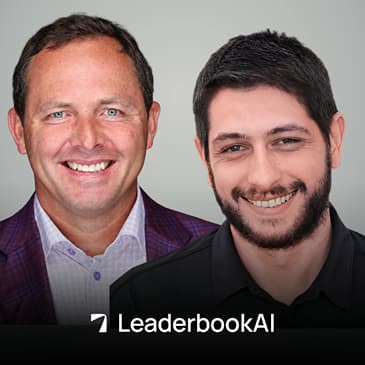
ControlUp CEO Jed Ayres and Chief Product Officer Gadi Feldman share the decision to bring 400 employees to Dubai while the company was operating through war and crisis—and what happened to morale, trust, and connection afterward.
IN THIS CONVERSATION
• How leaders make decisions during war and crisis
• Why 400 employees were brought together in Dubai
• What changed when distributed teams met in person
• How flatter organizations affect trust and accountability
• Where AI can improve employee experience and support
• How AI may reshape jobs, roles, and organizational structure
CHAPTERS
00:00 Introduction to Jed Ayres and Gadi Feldman
08:33 Leading during war and crisis
11:03 The decision to fly 400 employees to Dubai
12:57 Unifying dispersed teams across countries
15:07 Building trust through physical presence and culture
17:05 Moving from hierarchical to flat organizations
19:00 Balancing support and overstepping as a leader
20:10 Listening strategies in leadership
22:27 One-on-one leadership and employee growth
24:14 Debate and innovation in Israeli culture
25:56 The future of flat, empowered organizations
28:47 Using data to improve employee experience
33:01 AI in IT support and automation
36:10 Preparing for the future of work with AI
ABOUT THE GUESTS
Jed Ayres is CEO of ControlUp. Gadi Feldman is Chief Product Officer of ControlUp.
Explore more episodes: https://leaderbook.ai/podcast
Learn more about LeaderbookAI: https://leaderbook.ai/
Powered by the WRKdefined Podcast Network.
[00:00:00] I'm Felicia Shachiba, and this is Leaderbook AI, where we solve a business challenge in every episode. Hi Felicia. Hi, how are you? I'm great. How are you doing today? Good, good. Where are you based? I forget. I'm in San Francisco. That's right. We're neighbors. So I'm in Menlo Park. Okay, nice. I'm right down on the Embarcadero today.
[00:00:29] Oh my gosh, that's so funny. I'm sure you would recognize this view, maybe. Yes, that's awesome. Yeah, I mean, we're not too far away. We should just grab lunch or something. Yeah, it'd be great. Yeah, that would be fun. Oh my gosh. I didn't realize you guys were like all, I mean, I mean, I obviously know a little bit about the company, but you guys are everywhere, right? All spread out?
[00:00:53] Yeah, we're, I think we're in like eight different time zones and four different continents. We're all over the place. How was your Memorial weekend? Good. Good. It was nice. I always like to just actually stay home and enjoy the beautiful place that I live in and there's no one there. Yeah. It's always kind of astonishing how everybody leaves and you have the whole town to yourself. Yeah. Yeah.
[00:01:22] That's a vacation. Exactly. Yeah, I live in Marin. So this time of year is pretty good up there. Yeah, I've never been to Marin, I don't think. Well, you should come, come check it out. It's a, there's 5 million people in the Bay Area and I think Marin is about the largest county and it has 230,000. So half the county is open space. Oh, wow.
[00:01:49] It's sort of ground zero for the environmental movement in the country, if not the world. Oh my gosh. The only place in the world that has more Teslas is the Netherlands per capita. It's a, it's an interesting place. Oh my gosh. That's so funny. It's in your back door. Yeah, I know. I haven't explored enough. That's for sure. Where are you from originally? Los Angeles. Okay.
[00:02:13] Yeah. So we moved here a couple years ago, but we've, I mean like my husband's in tech and like we met here in San Francisco. So it's not like foreign to us, but it was, it just made more sense for us to be here. Yeah. Yeah. I mean, commuting from San Francisco to Silicon Valley, if that's where you know. I need to be as arduous. I did it at one point in my career. It's very draining. It is. I know we both have Teslas, so it's not too bad. The drive.
[00:02:43] Yeah. Turn on the autopilot. Yeah, we do. We do. I think we're waiting for Goddy, right? Is it Goddy or? Yeah, exactly. He texted me that he's just ended another call. So I believe he's getting. Goddy. All right. How do I pronounce his name? Goddy. Goddy. Okay. Goddy. Just wanted to make sure. Yeah. And he's, where's he based? He's in New Jersey. He moved out of Tel Aviv in November of last year.
[00:03:09] So he's adjusting with his family of three young kids to living in America.
[00:03:16] Wow. You know, it's funny. I had someone else on the show and his story was talking about like, how do you find great engineers? And he found someone in Ukraine. And then like the day before the war broke out, he was like, we think like something might be happening. You should come. You should just go somewhere else for the weekend. And then he left. And then the next day the war broke out.
[00:03:41] And then ever since then, they've just been trying to get him over to the US, but he did. And now he's here and like, he has like a wife and kids now, like since it all happened, but it was a really great story. Yeah. Well, I think, I think some of that is part of how, how Goddy ended up here is just the fatigue of living in Israel and yeah, just being in under that constant barrage and uncertainty. So yeah, his wife is actually a pediatric doctor.
[00:04:11] Oh, well, that's yeah. We have a number of people from the Ukraine. Interestingly, that's like where a lot of our near shore talent comes from. And we just bought a company that had a founder there. So yeah, it's a lot of respect for people that are in these environments. Yeah. I can't even imagine. Yeah, go for it. Have you listened to any of the episodes? It's just, you don't have to just curious.
[00:04:39] I have not. I wish I had more time. I should, I guess I could have over the three day weekend, listen to it. No, no, it's all good. But if you ever think of a topic that you want to, to know about, I mean, it's such a great, it's just a great catalog. You know, I always tell people I'm like the biggest fan of my own show because I get to front a front seat to like learning amazing things.
[00:05:04] And I probably I've saved thousands of dollars, like thousands and thousands of dollars just listening and learning from people. And I've like truly changed certain ways of working because of what someone else had did have had done. And like, it's just blown my mind. That's a special gift that you get to be in the front row. Yeah, a special gift. It is. Takes you asking the right questions to get that gold out of their mouth.
[00:05:33] Yes. Yeah. Yeah. I try, try to ask good questions. But yeah, I mean, I mean, my company, you know, we, we started out as human capital consulting and leadership development. And then, I mean, we, we still kind of are that, but, you know, as I had been talking to more and more people during the AI shift, I was like, we probably need to move in this direction if we're gonna, you know, survive.
[00:06:01] You know, it's pretty much like all we were talking about. So I was like, okay. And then I was thinking about us. And so now like Leaderbook AI is our new name and we have a new platform and we're really excited. I actually found some, I found like one of my main developers through GitHub, which was like one of the techniques that like a guest had said. He's like, yeah, I find my developers through GitHub. And I was like, I'm not a developer, so I don't really know, you know, but I ended up finding him. Hi, Gadi. How are you? Hey, what's up? Sorry.
[00:06:31] That's okay. It was very exhausting day. Oh, no. Already? Very early. Do you want to grab some water or something? No, no, I'm here. I have it. Actually, just bring something. All right. Okay. So I will go ahead and kick us off and that's, it'll just basically be my little intro and then we'll go into the questions.
[00:06:57] I'll kind of go back and forth, but however you guys want to answer is fine. And then we'll be recording for about 30 minutes. So we're at like seven or about eight minutes and 38 minutes will be the timer. Yeah. A little over is no big deal. All good. Ready? Yeah. All right. He took the job. Six weeks later, a war broke out. Then another one. Then another one.
[00:07:27] Jed Ayers runs a 450 person company where half the team works Sunday through Thursday, where kids have been home from school for months at a time and where the CEO had to convince a skeptical board to spend $2 million flying everyone to Dubai. During wartime, because he believed his people needed a break, needed to break bread together to survive the next 12 months.
[00:07:55] He just crossed a hundred million in ARR doing it. Meanwhile, the technology his team is building can tell when you are angry at your computer. It tracks 10,000 signals about you every three seconds. It knows your rage clicks. It's quietly replacing your IT help desk with a swarm of AI agents that never sleep, never escalate and never call in sick.
[00:08:21] Today, Jed Ayers and the godfather of his product, Gaudi Feldman, are here to talk about what it actually takes to lead through chaos. Ship in six hours instead of six months and build technology that watches employees without becoming the thing employees fear. Jed and Gaudi, welcome to the show. Felicia. Thank you so much, Felicia. Glad, great to be here. Jed, you took the CEO seat at ControlUp three and a half years ago.
[00:08:51] I think six weeks in, war broke out. So walk me into that moment. What was the very first leadership decision you made when the ground was shifting? And what would you do differently if it happened again tomorrow? Well, I think the first thing that goes through your mind is just empathy for the people on the ground. And I think as a leader, that's always been my principle. You can't really do great things without putting people before process or anything else. Right.
[00:09:21] So I think that was the very first thing that struck me was we actually are our office is not far from where October 7th took place. So just ensuring, you know, that our people were safe and, you know, that they had that they had what they needed. And, you know, making sure that we were checking in and utilizing, you know, some of the processes that I didn't even know existed that were already in place. Right. Relative to how we did that and check in on people.
[00:09:50] So I got to know our HR team very quickly. But I think the key is, you know, not to panic. And obviously, if there was anything I would do differently, it's really probably around communication. Right. That's one thing I've learned as a leader over the last 30 years is, you know, communication, communication, communication. And in a crisis, you know, silence kind of creates friction and people fill the void. So you can't communicate too much in those kind of periods.
[00:10:19] So that's probably what I would say I do differently. Yeah, I think a lot of leaders may underestimate the power of communication and what people are, you know, what their perspective is on in different or parts of the organization. Not everybody is going to hear everything that's happening at the same time. But I definitely feel like it's underestimated. But the fact that you have been able to recognize that, I think, is really powerful.
[00:10:47] And I know that you spent, what was it, $2 million to fly 400 people to Dubai during one of the most volatile periods that your company has really lived through. You know, boards don't usually love that line item to, you know, send everyone to Dubai. Dubai. So tell me how you actually sold it internally and what proof do you have now that it was the right choice?
[00:11:15] Well, actually, it all started with a conversation with Gotti and the partnership with Gotti. His team had earmarked, I think, $600,000 to meet up in Barcelona in September of last year. And we kind of realized, wait a second, this is probably not the best idea. Maybe we could use that money and park it in a larger event where we got the whole company together.
[00:11:38] And as we were kind of, you know, like every company out there grappling with the new AI reality and sort of shifting gears into this new dimension, we, I think, together realized, like, hey, this would be a lot better if we took that money and parsed it into a larger event. And yeah, I called our shareholders and explained to them, you know, more than half the company works remote. We're in eight different time zones.
[00:12:06] You know, I think eight different calendars and, you know, cultures and religions and so forth. Right. So it's very hard even to schedule town halls, let alone get 400 people into one location. So, you know, that was really, you know, the case that we made to the shareholders was, hey, this is a very important opportunity to unify and align the company around the sort of next stage, which is moving faster than ever.
[00:12:35] And yeah, I think in terms of the proof, we had the best first quarter that we've ever had as a company coming out of that. We had the most pipeline that we've ever developed coming out of that in a single quarter. And we're sitting on the cusp of having this second best Q2, the best Q2 that we've ever had also. So I think the results speak for themselves. We've done a number of kind of surveys with the company as well.
[00:13:00] And as you can imagine, the sort of unification and the morale of the company bounces coming out of an event like that. So it's not just financial. I think also I would add on top of it, like we actually did something like that, like five years ago, four years ago, when we bring all the company to Mexico. But back then it was very, like very Israeli based company and with like most of the people living in Israel, some of the team being in like a broadly US and Europe.
[00:13:28] But actually in the last like three, four years, we shifted a lot of like our focus of like a go-to-market to the US. So like now we sort of like create like two different companies, right? We have the developers and the engineering and we have the go-to-market organizations. And each one of them working like in different time zones, different areas, different priorities. And we never like meet together.
[00:13:52] So when we discussed it, then we saw, okay, we have this like offsite of like all the product engineering teams in Barcelona. And we're also going to have like a kickoff for like go-to-market team in Orlando, for example. It just doesn't make sense. We're still keeping with this like sort of two different companies and we need to stop it as far as we can. And then we decided that let's do it like one single event in Dubai, mainly because we all remember what we did in Mexico.
[00:14:20] Actually, what we did in Mexico kept like, it's actually like was the fuel for the company for at least a year. So we tried to actually to replicate it as well. And so you're saying like there was a split in the company and you were saying that you wanted a way to unify everyone. What was, why did you feel like that was really important? What was happening? Bring everyone together. Yeah.
[00:14:45] Again, because we still like for the last like three, four years, again, together with all like people being still in Israel, people couldn't go to Israel to meet the teams. So it's actually made it all like more complicated because like we still been operated as two different teams, two different companies. And it's like was super important to understand that.
[00:15:08] So the people from the go to market team understand the challenges of the product team or the engineering team and the engineering team will understand the complexity of the field teams. And actually, I would just add to this that, you know, you can't build trust through Zoom, right? You you build trust by breaking bread with people, learning about their families, understanding their origin stories. And you get this sort of shared physical experience that then can translate into trust.
[00:15:37] Before this call, you and I were talking about, hey, we live in the same zip code. Let's get together and have a cup of coffee. Our relationship would change after that, right? Because we would talk about our dogs and our kids and all of that. Right. And I think that's part of what happens with building a culture in an organization, right? Where we're moving through uncertain times. And, you know, most people are that work for Control Up today in the U.S. are working from a home office by themselves. Right. And so I think this is, you know, this is undeniable. Right.
[00:16:07] It's just the human condition that once you build some of that trust and connective tissue, then you get afterwards, you get this sort of speed improves, alignment improves, empathy improves, velocity improves. And you get this cross-functional trust that doesn't didn't exist before. And I think, yeah, people stop feeling alone and they feel connected to the to the mission that we're laying out.
[00:16:31] Yeah. And especially in uncertain times, culture is like a strategic asset. And I think that's one of the things that attracted me to this company is that there is like this incredible good vibes. You know, kind of teamwork, high ambition, cultural kind of underpinning. That's exciting to hear. I mean, that's that's always kind of what everybody longs for.
[00:16:55] I know that a lot of people have that feeling in organizations and then they leave and then they're constantly looking for it again. You know, they feel like they can't get back to that flow of work. So I think that's actually more important than than people might realize. And Gadi, I know that you just moved to the U.S. in November. Right. After spending your whole career in Israel. Is that right? Yeah, that's right.
[00:17:20] And then you're and Jed, you're running a leadership team where most direct reports are what, 7000 miles away in active conflict, even like what does empathy actually look like as a line item? You know, is it fresh food to people's doors, babysitting stipends or logistics? Like where is the line between supportive employer and overstepping?
[00:17:49] I mean, my my response to that starts with like being a great listener. Sorry, one second. I think there's some echoing happening. Yeah, I hear that. I was trying to figure out if it was something running on my side, but I have everything. It's my side. I don't know, Jed. Is it on my side? I see echo cancellation is on full black. I know. I see. I see. It might it might work itself out. Yeah.
[00:18:19] Like when I go put it into production. I just worry that it does that. Yeah, it's kind of annoying and hard to concentrate. I know. I wonder if we should go out and come back in. You want me to go out? OK. Yeah, maybe. I'll do that. I'm echoing too. Am I still echoing? I don't see. I don't hear any echo actually. No? No. Just your thing. Maybe it's just Jed then. I don't know. That's weird.
[00:18:50] Maybe. Let me try to mute myself. Yeah. We'll see when Jed comes back in. I don't hear any echo now. OK, Jed. Am I back? Better? Yes. It's better. OK. So I think it's my issue. But I was... I wouldn't answer it. So I'd like try to say, why? Well, guys... Do you think it was on your side or was my side? I think it's my side. But... OK. It's OK. I cannot touch the echo cancellation as well.
[00:19:19] Hey, we're on. We're good. We're all good. OK. Let's keep going. So did you want to start on what you were going to say over, Jed? Or do you mean to re-ask the question? Can you ask the question again? Yeah. Yeah. So I was saying, where is the line between supportive employer and overstepping? Yeah. So I think for us, the goal isn't to become part of people's private lives, but it's to create enough stability that people feel like, you know,
[00:19:48] their company is there for them, right? In this sort of uncertain moment. And one thing I found about the Israeli temperament is there's actually a very high degree of pride in terms of resilience and kind of, you know, building a great company and not letting, you know, some of the things that are happening around, you know, prevent that from happening. And so the level of resilience through all this has been kind of inspiring
[00:20:18] in a way, right? To think, you know, of the sort of cognitive load that people are under with everything going on around them. So yeah, this is, you know, it's hard to tune the exact empathy when you're not on the ground there also, right? But you do the most you can. And I think the most important thing is listening. How do you... It starts with that. Yeah, I couldn't agree more. How do you... And this is a question for both of you, but like, how do you listen?
[00:20:47] And I know that's like a really basic question, but at the same time, I feel like not a lot of leaders understand how to do that really well. You know, it's a lot of communication coming from leadership often, but how do you... Like, what is your strategy? Is it like physically going and talking to people? Is it focus groups? Is it certain people that you have in the business that you can grab information? Is it everything? Like, what is... So I'll tell you, I get in a lot of trouble for this.
[00:21:14] And I think it's funny that you're asking this as a professional podcaster. You're probably a better listener and questioner than most of the population. But I think for me, it's very much about building trust through one-on-one dialogue. And really, I have a bad habit potentially of building a relationship digitally with employees. So I like to give my cell phone out. I like to text people. I like to check in with them, you know, in a very personal way through...
[00:21:44] Well, in Israel, it's WhatsApp. But, you know, where you're actually, you know, you're not managing them through text, but you're checking in with them. You're getting that real-time feedback where you maybe can't schedule a call, but you're like checking in with them. Now, you can't scale to hundreds of people that way, but you can get a good sense of, you know, what the temperature is. And then not be afraid as a CEO to go right down, you know, to anybody in the organization.
[00:22:13] Gotti and I can share with you, like, we had a guy who was actually not in Israel. He was in Canada. And he was a little, you know, loose in the socket. And, you know, I had a one-on-one call with him. Gotti had a one-on-one call with him. You know, he was... He thought it was going to be his last phone call in the company. We went on to promote him, to put him in a small team, to build a new product, which we brought to market six months ago. And so what went from kind of a volatile, testy situation,
[00:22:42] because we have this open door, flat kind of ability to, you know, take calls at that level, resulted in something that probably will be one of the fastest to, you know, a million ARR products that we've ever built. Wow. What was that conversation like? I'd like to know. I mean, it was like he said that he started the conversation with, I think this will probably be the last conversation I ever have with you, but I want to, you know, share with you how I'm feeling.
[00:23:10] And I said, well, I doubt that, but let's have the conversation, right? And then he sort of felt comfortable enough, you know, over the next 30 minutes to sort of, you know, vent and had a similar call with him. And we put our head together and ultimately decided he was worth investing in. And yeah, it's been a great outcome.
[00:23:32] But I think that's the type of culture you're hoping for is one where people actually aren't afraid to go to the CEO direct where. Yeah. I think, by the way, it's not just like the mean Jett. It's like, I think that's very common in our organization. But anyone can talk with anyone. And maybe it's like, maybe some very Israeli thing. Maybe. I'm really not sure. And maybe Jett can, can like share more about like his experience with working with Israelis. But like, it's like, we always been very open to anyone.
[00:24:02] Anyone can text me or like grab me for a coffee and talk about anything. And it can be personal. It can be even like, let's talk about technology or the issue of having. So we try to be as much as open to anyone on the older organization, both for the field teams. I do think it is a special, especially present in the Israeli culture. There's this dialectic process, right?
[00:24:26] Where the youngest can, you know, kind of have a conversation and challenge the oldest, if you will. Right. Right. Freely. And, and so this sort of culture of debate and testing facts and kind of feeling like you can, you know, you can test the hierarchy, if you will. And that's actually part of the ingrained in the culture. And it is something that is special to Israel.
[00:24:55] Now, it can be taken to a level where it's, you know, almost too much, right? You're debating everything and not making enough progress. Sure. But, but I think it is a special characteristic in the Israeli culture. I feel like there's a lot of like golden nuggets that you can get from that type of culture. But I also feel like logically speaking, let's say you grow twice the size. You know, is that feasible? Like, is that culture sustainable as you grow?
[00:25:23] I think that we're actually entering an era where this is going to be the norm, right? We're moving out of this sort of like, you know, hierarchical org into ones that are way smaller, way flatter, more empowered. So I think this is actually, you know, being built for this type of kind of a flat, flattened organization is going to be how you're going to see AI in the future. Right.
[00:25:49] I saw a great video from one of the leading AI people talking about, you know, this, this hierarchical model was born out of the Roman era, right? Where you had, they, they controlled most of the globe and it was very much, you know, the bottom was feeding information to the top. And AI kind of puts that on its head, right? And you go to much flatter organizations that are smaller teams that are fully empowered. And so that's pretty exciting.
[00:26:19] And I think that this story actually has a parallel to the, you know, the team that probably would have been, you know, 30 or 40 people building a product before was done with six people. Yeah. Yeah. Gaudi, I'm so curious, like, how do you manage your team? Because I think about, I know, I think about, I mean, obviously we're based in Silicon Valley.
[00:26:43] I have a lot of connections and to understanding that the companies are built around us and the olden days, and I say olden days, maybe a couple of years ago, most managers are like, you know, average, like seven to one to one manager. Right. And just, just to put an average on it. But that doesn't seem like the case anymore. And is it important to have, you know, those one-on-ones? Like, let's say you're managing or like you're a manager of 20, 30 people nowadays.
[00:27:13] I mean, do you have, do you schedule one-on-ones with all of those people? Like, what do you have time for? Right. Like, how do you do that? I not tend to schedule one-on-one at all, by the way. Okay. I usually do a checkup twice a week with the team. So we have like, we work with like, on top level product teams. Each product team is responsible for a specific area. And the GM of this team, like responsible for the whole, every single thing that's running on the team. And is managing both product engineering, whatever.
[00:27:37] So we're doing the checkup, but, and, and, and usually I don't do like weeklys because I really want to do this, like give them that, the freedom to do whatever they, they make sense for, for their business. And I do manage them for like, sort of like, I'm looking for the KPIs. So many, mainly business KPIs, like growth, deployments and revenue, whatever. So I not, I never do weeklys. If someone wants to talk with me, usually just like give me a call or selects me or something, something like that.
[00:28:05] But I also vary in the, in details for, with, with anyone. Like I can spend a day or a few hours with developers to work on specific product and not be at the GM. So it's very, very flat. So it sounds like it was like me, mainly from the outside, it looks like a bit of chaos, but it's like, I am trying to like put my focus on, on the most important things for an organization. So for example, now I have like a project need to be my attention.
[00:28:34] I'm going to spend like the half of the day with the developers working on the specific issues. So it's not very structured. I try to do it more structured. I have like people helping me with, make it more structured with different like systems and so on. But with myself, like when I'm in talking with, working with these teams, it's very unstructured. It's very like based on the need and best on the focus. Yeah. And like giving people the autonomy to master their craft and make the decisions more decentralized.
[00:29:04] And then Gadi, I do also want to get into the technology because you track 10,000 metrics about every user, like every three seconds for every user. That's an incredible number. You can detect frustration from keyboard patterns and mouse movements. You call them rage clicks. So help me sit with the discomfort here. What's the difference between measuring digital employee experience and surveilling employees?
[00:29:33] And how do you architect for the first, how do you architect for those first few seconds? Or at least like what is the background on how you can do that? What makes sense? So first of all, let's talk about like why we're doing it. So because eventually all the market or historically, everyone been monitored a metrics of the device, CPU, the scrum network, whatever, whatever.
[00:29:59] But it's not always correlated to the actual performance of the user, right? Because like maybe the CPU is very in high load, but still I still can browse my sites or still can go to do like this Zoom call, whatever. So what we want to always try to understand, like how is correlated to the actual user experience?
[00:30:20] So whether it's like based on sentiment, based on movement, based on like how we're using these applications, based on the insights we are doing, based on like AI, different engine we're running. We always try to understand like what is the impact of the user experience of on his like performance. So it's not, I not see it as like sort of like surveillance because it's not surveillance.
[00:30:42] We mainly want to improve their experience of like working this like IT assets and then also provide this IT teams with some more insights about like where this user having some issues. Or for example, where we have more crashes, where we have like on specific maybe version, we have like more of like tickets or specific settings, maybe creating more of a support because on zone. So we mainly want to like to surface all the things that actually not very visible by the human eye.
[00:31:11] So getting all this data across the different assets of the IT, surface up to the IT teams and try to be like sort of like the co-pilot of like the pilot. I always take in this like the story of like when you have like a pilot jet, right? So fire jet, sorry. And then you have a pilot and then a co-pilot because like as a pilot, you cannot see all or everything around you. You need to like control the plane. You maybe need to fire some missile or whatever.
[00:31:41] But you have all these co-pilots that always like pay attention to different areas. So pay attention to this missile, pay attention to this fire jet, pay attention to the radio or whatever. So we try to mimic kind of the same, but also we want to take it to the next level as well. So as we always digesting all the data, we want to take it. Okay, now we have this data. Now maybe the connection instead of this pilot. So it's always the kind of like getting data across like different areas and make sense of it.
[00:32:10] So it's not surveillance, but there's any, mainly like use this data to make sense. And so like almost using the data to help you as leadership make decisions. Yeah. Yeah. Of course. It's really about trying to remove friction from the employee experience. We're not measuring productivity. That's a whole different category. We're about, you know, measuring suffering and trying to prevent it. Right.
[00:32:38] And yeah, it has very practical applications, especially in our, many of our use cases and our biggest customers are in frontline use cases where you're in healthcare or retail or trading where those friction points create, you know, real problems in terms of the actual output of, of whatever it is they're trying to do.
[00:32:59] And in many cases, they actually don't have the time to open a trouble ticket or go play ping pong with a help desk or what have you. Right. Because they're, they're trying to give care to a patient or a transaction and what have you. Right. So that, that's where I think we're, we're focused very much on kind of the operational trust.
[00:33:24] And it is important, especially nearly half of our business comes out of Europe where, as you can imagine, their standards around data protection and personal information is very high. So, yeah, I'm proud to say we have a very strong business across Europe where, you know, we adhere to all the GDPR and personal information standards. Yeah, sure. And you're, you're building an AI agent swarm, your words, that acts as a virtual IT department.
[00:33:54] Each agent owns a domain, email, storage, SQL applications. Walk me through what an actual workday looks like for an IT professional. Once the swarm is live, be specific, you know, what jobs go away, what jobs get born. So first of all, let's talk about how we create this swarm. So eventually we're like providing like this platform of like AI agents, like specialists on specific area.
[00:34:21] So we have a few things about IT, like normal corporate IT, usually they're using like 20, 30, 40, whatever number of tools currently that have been used by the IT team. Now each team, each tool usually by used by or managed by specific person or number of person or specific teams. Now what we want to try, try to understand, trying to do, sorry, is like we're going to train this AI agents on specific like tool, specific areas.
[00:34:48] So for example, it can be like troubleshoot Windows machines or troubleshoot network or troubleshoot firewalls or troubleshoot whatever world. And then whatever we're going to have like any sort of like ticket or any event related to this area, instead of like just like directing this ticket or directing this call to a human being is going to be first going through this specialized AI agent. It can be like actively by help this ticket.
[00:35:16] It can be proactively because we're looking on logs and looking on events and automatically going to like take an action. So first of all, it's going to help the IT team be very focused on the, on the, on the higher strategy level, right? Kind of like the same with what we see with developers that's like most of the code already written by AI. And then, and now they're very focused on architecture, on structure or making sense of scalability and so on.
[00:35:43] So kind of the same never arrived to, to IT yet. So what you're trying to do is that should be... Competitive kind of operational noise so that they can focus on the higher level things. And I think that's where we have a tagline that we're working on right now around, you know, humans lead agents act. Right. And I think this is, there's a big debate, as you know, Felicia, that's raging right now about how, how this is going to affect, you know, white collar jobs.
[00:36:11] And is AI going to, you know, really create a unemployment spike or what have you, right? Right. So, yeah, I mean, I think that the jobs will change, right? And I think for, for me, I've been in end user compute for almost 30 years now. And what I've seen is, you know, we've stacked more and more tools. We have more and more telemetry and troubleshooting capacity.
[00:36:34] But the number of people still doing these repetitive, you know, mundane kind of brownhog day tasks is, hasn't changed, actually. And so the cost and complexity, this is, I would say, a very exciting moment. Because in the next 12 to 24 months, the way we've been doing this for the last three decades is going to radically change. Yeah. What do you think people should expect? You know, as you say, things are going to radically change.
[00:37:02] I mean, I'm hearing that, you know, a lot of the administrative work is going to fizzle out and people may need to be more strategic, more high level thinking, more architecturally driven. You know, what do you think people should or leaders should prepare for that? I go back to what one of my great visionaries of the tech world, John Chambers, used to say years ago was that every company will become a tech company.
[00:37:32] Well, that's come into full focus. Right. And I think that IT, the people that are in IT have a very big opportunity to kind of like move up in the stack of strategy. Right. In terms of how to apply these new tools in a way that will improve revenue, improve growth, outcomes, productivity. I mean, I have a great example of where we were at IKEA. I was at IKEA a few weeks ago and, you know, they have agents now running their call center.
[00:38:01] They had 8000 people that could lay off. They retrained them all and they are now acting as sort of almost like mini interior designers. Right. That are available to help sell more stuff. Right. And all of a sudden they have a new line of business that's on fire. Right. So I think this is part of that discussion about how do you retool and reutilize human intellect in a different way.
[00:38:26] And certainly there's got to be better jobs for people than doing the same trouble ticket over and over again for their entire career. Right. Yeah. Absolutely. Jed and Gadi, thank you so much for being here. This has been a fantastic conversation and I'm very excited to see where control goes next. Thank you for having us. Thanks. Okay. Don't go anywhere.
[00:38:54] Just going to stop the recording and then visit us at leaderbook.ai. Your support as a subscriber means the world to us. So thank you for tuning in. I'm Felicia Shakiba. Let's connect on LinkedIn.
Sponsors
