
How do you scale a startup while managing distributed teams?
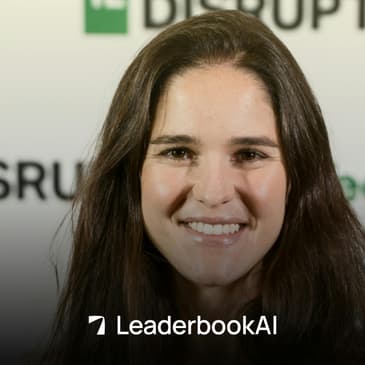
Valentina Agudelo Vargas, CEO of Salva Health and TechCrunch Disrupt winner, shares how team alignment, executive coaching, and clear communication helped her build culture and drive success across cities.
—
Subscribe to the LeaderbookAI Podcast (formerly CPO PLAYBOOK): https://leaderbook.ai/podcast
Want to create 10x the value of your business or investments? Let’s talk: https://leaderbook.ai/contact
Powered by the WRKdefined Podcast Network.
[00:00:00] I'm Felicia Shakiba, and this is CPO PLAYBOOK, where we solve a business challenge in every episode. Today we're working through a challenge that many fast-growing startups face,
[00:00:27] maintaining a cohesive culture and smooth communication as the team expands rapidly and across multiple locations. Our guest, Winner of TechCrunch Disrupts Valentina Agudelo from Salva Health, is navigating this very issue. As her team grows and begins preparing for a commercial launch, she's facing the complexities of managing two distinct teams in separate cities,
[00:00:57] each with its own developing culture and workflows. Throughout this episode, we'll work through Valentina's challenge together to uncover strategies that could help Salva Health establish stronger team alignment and sustain its unique culture even as they scale. Valentina, thank you so much for being here. We are excited to have you, and congratulations again on winning this year's TechCrunch Disrupt.
[00:01:27] Thank you very much, Felicia. I'm very happy to be here as well. Amazing. Well, Valentina, to kind of set the stage, can you tell us a bit about Salva Health's journey and how your team has expanded from its initial setup? So what challenges have emerged with this rapid growth? Of course. So just to start us off, a bit about Salva.
[00:01:52] So Salva is a company, we're based in Colombia, and we essentially develop devices for early disease detection. We developed our first device called Julieta. It is intended for early disease detection focused on breast cancer in underserved populations. And as a setup for the culture context and our team, just as a reference, in August of last year, our team was conformed of two co-founders and one full-time employee, and then we had four part-time employees.
[00:02:22] A year after that, in August of this year, we had one founder and 10 full-time employees. And as of now, in November, we have one founder and 11 full-time employees divided in two different teams. So there is one team that is led by the CEO, which would be the admin team. And then there's another one, which is with the CTO, based in another city. So we are based in Bogota. The CTO and his tech team are based in Medellin.
[00:02:51] That is basically what grows the challenges of unifying the culture. In that sense, our base in Bogota for the admin team is because the business opportunities are in Bogota. And in Medellin, the reason for that is because our research alliance is there. So it made sense for that thing to grow. And in terms of the challenges that we've been facing, of course, because there is physical presence in two different cities, and also remote work because we work hybridly,
[00:03:20] there is communication and engagements amongst teams, but not as much between both teams. There is some awareness and processes and our know-how that has been distributed again between those teams internally and not with both teams. We have been struggling to unify cultures because in each office, there is different habits and values that are being established. And in general, when we have tried to merge the teams to work on projects together,
[00:03:50] there's been challenges on project management and documentation because each team has basically identified the processes autonomously. And then when we work together, it's very hard to collaborate. Right. And that's, I think, as expected. You know, many people have your challenge at this stage. And so as you grow, it sounds like you're experiencing some divergence in culture
[00:04:17] and processes between your two offices. So could you describe how each team's subculture has developed differently? Like, how has this impacted team alignment in the business? Right. So I think that it all sums out as a strong relationship between internal teams. So the team in Bogota is very well connected and they know their patterns,
[00:04:46] the same as the one in Medellin. But the relationship between them is not as well established. In the tech team in Medellin, for example, we have a team that is very focused on results. They're extremely talented and motivated to deliver results, but they don't have any guidelines on the timeframe that the business team requires, for example. They have established their processes for task management and prioritization differently than the one that we established in Bogota because, again, we weren't aligned.
[00:05:17] And on the admin side, we have the inverse problem, which is the lack of knowledge in the tech improvements when it comes to business development. So it takes a long time for our team to be updated on what news and what relevant updates in the tech part are taking place so that we can take them into account in our business agreements and the commercial parts of our launch. And then that in turn, you know, really, I would assume,
[00:05:43] doesn't help your business development team really be able to provide clear expectations on delivery of the product. The issue there is that when we start engaging with customers, for example, we have the insights on the needs and we need a successful communication with the tech team so that we can actually implement the needs that we're finding between the clients and the users. So communication is clearly a crucial part of maintaining alignment.
[00:06:09] What types of communication or regular meetings do you currently have in place between the business and tech teams? And where do you feel are the biggest gaps? So we have, in terms of communication, we have one weekly meeting for it with all of the tech team together. And that's a meeting that I joined with our chief of staff. So it's kind of a bridge between both teams, but there is no meeting where the entire team is put together.
[00:06:36] Additionally, we have a weekly meeting as well with all the leaders of the different teams. But again, in terms of business side, there is only one leader, which would be me. And then in the tech side, we have four different leaders. So it basically has that same effect of just bridging us together, but not actually putting the teams together. We have an informal WhatsApp group of the entire team. But as the team grows, that chat becomes more impersonal. Right.
[00:07:04] Which makes it harder to become a communication channel for all of us. Yeah. And if it's one channel with everyone, you know, can probably, you know, people can maybe tune out. Right. Considering there might be a lot. Okay. And so when it comes to bridging the gap between these teams, do you think the physical separation is the primary factor?
[00:07:32] Or are there other elements like different workflows and priorities? Like what are making this alignment harder to achieve? What things? In terms of the different workflows, for example, there is some complications when we have to work together between teams. It does come on rare cases, but it is very important for them to kind of be able to establish the same protocols.
[00:07:58] Because, for example, when from the admin team, we have a requirement for the product team. We don't know how to post the requirement to them so that they can look it into the sprint that they're working it with without deprioritizing their current work. And then on the other way around, when, for example, the product team requires some inventory orders, their protocol doesn't fit our standard for creating those orders, which makes the
[00:08:27] communication between teams to have a lot of friction. You mentioned that the business and the technical teams, they have their own ways of organizing and prioritizing tasks. So do you think that there's a need to standardize some of the processes or would a more flexible approach be better given the unique needs of each team? Yeah, that's a great question. Honestly, I think I'm torn with standardizing.
[00:08:57] Given the nature of the work that the tech team does, for example, since we work in an uncertain environment, we don't really know what to expect for the next sprint of development, or we don't always know, which makes it very hard to standardize those processes. And on the other hand, our admin team is more of a manageable and predictable process, which kind of makes it easier to standardize.
[00:09:23] But if we were to combine them both, given the uncertainty levels of each, it's kind of difficult. And it's basically the same thing with the requirements between teams. It's very hard to prioritize the requirements based on our different workflows and priorities, as well as our documentation methods, which are completely different on each side. And so when we require, for example, some information on the tech team, we always have to ask them for a meeting so that they can give us content on the documentation.
[00:09:53] And then that pushes them back on their processes because they had to take time to attend to our needs. So I'm kind of torn, but it would be ideal if we could find a way to standardize, taking into account those levels of uncertainty as well. We'll be right back. Hey, it's Bob Pulver, host Q podcast. Human-centric AI, AI-driven transformation, hiring for skills and potential, dynamic workforce ecosystems, responsible innovation.
[00:10:23] These are some of the themes my expert guests and I chat about, and we certainly geek out on the details. Nothing too technical. I hope you check it out. Back to the show. Yeah, I definitely think that there's kind of an overarching standardization that you could do with some unique variables depending on the nature of the work between the teams. And, you know, I think that there's some possibility there.
[00:10:51] But let's kind of take a step back because I know that there's a few challenges that are within the greater challenge. And so let's start to kind of explore some potential solutions together. For instance, one thought is, you know, a regular all-hands meeting. So what would be your thoughts on implementing something like this that really brings everyone
[00:11:18] together virtually to create some sort of shared space for regular updates and cultural alignment? I mean, I like this approach. I think it would facilitate informal communications, which kind of makes sense for them to also bond and then have some context in what we're working on. My only worry with that is that we deprioritize these meetings as we do with our weekly leaders
[00:11:47] meeting, for example, when anything comes up. So it's a good approach, but it's very hard for us to implement it in a way that it doesn't look for it or work or that it doesn't get pushed back as well. Well, if you think about, you know, what you gain from the all-hands meetings, one thing is that people get a good sense of how their work is contributing to the greater vision and mission, right?
[00:12:14] And then how it's contributing to that today or this week or this month, right? Depending on how often you have this meeting. And I think that when people have a good sense of what that looks like and where the business is going as a whole together, they actually start spending less time on the things that are less prioritized, right?
[00:12:43] And they spend more time on thinking, oh, you know, this is the way we're going to start selling. We might need to focus on prioritizing something else, right? I mean, there's these aha moments that kind of happen during an all-hands meeting where they realize or have the idea of how they should be spending their time. Who should they be spending their time with? What the outlook is? What timelines have changed?
[00:13:13] And I can only imagine timelines change often, right? In a startup environment, any type of really fast-paced moving environment, your timelines change sometimes, you know, with a snap of a finger. And these types of meetings are really helping people align. And it doesn't have to be long, right? It could be 30 minutes, which I don't think is too long. But it could also be 45 minutes to an hour, just depending on how it's structured and how
[00:13:43] often you have that meeting. But really giving people the opportunity to kind of bucket their thinking into how to be most productive. And then shaving off the hours that may not be so productive throughout the rest of the work that they're going to do, like for the rest of the day or the week or the month, if that makes sense. Right? Yeah, definitely. It's actually funny that you mentioned that because when, for example, when I was pitching
[00:14:10] at TechCrunch, we sent the link for the video to all of our team and they watched the entire presentation. And that's when I realized that there is a huge lack of communication between teams because for the admin team, these were all questions that we discussed in the previous one. Right.
[00:14:34] So perhaps a monthly meeting where we would have to define the frequency would kind of give them context on what we're thinking and where we're going so that they can prioritize based on that. Yeah. So that might be, you know, something to think about. Another idea could be creating shared projects or across like these cross-functional teams that encourage the business and technical sides to collaborate more closely.
[00:15:01] So do you think this could help bridge some of the gaps between multiple locations? Yeah, I think the more they work together, the easier it's going to be and the better communications are going to have. We do have a challenge there, which is to standardize basically what we mentioned previously in terms of documentation and project management. We would really have to go into detail into defining a method for those project implementations. Do you have any goal setting structure right now?
[00:15:32] So it's quite informal, if I'm being honest. We have a roadmap for like the big milestones that we have. And then each team kind of breaks down what they have to do for that milestone. Yeah. I mean, I would say that that's a goal setting structure. Are you familiar with the term OKR? I am not. OK. OK. OK. OKRs are amazing.
[00:15:56] OKRs is a method of performance management that allows or actually I would not allow, I would say more so influences teams in a way to encourage their collaboration. So I'll give you an example. Very simple example. Let's say you're building a train. OK. So you have a technical team and maybe you have a design team.
[00:16:23] The team, the design team designs the train, what's going to look like, where everything goes and the paint color and so forth. And then the technical team is basically putting in the engine and how it's going to function and work and the railroad, et cetera. So if you take the goal of building a train and then you separate it, you separate into subcategories of goals and you say, OK, the technical goal is how the train is going to work.
[00:16:52] And then the design team's goal is how the train is going to get designed. That's kind of a very typical way of creating goals. What OKRs do is they say that the goal is to build a train. And so because the goal is to build a train, the design team might come up with, this is
[00:17:20] how I'm contributing to this goal of design, but it has a lot of dependencies on how the train functions and vice versa. And so nobody gets, I guess you could say, scored well unless the train is designed, right? So the technical team doesn't get, you know, kudos for making the train go.
[00:17:48] And the design team doesn't get any, you know, benefits of designing a beautiful train. They only get a benefit if the train like moves, right? It's put together if you build the train. And so it really kind of forces teams to say, oh, I probably need to talk to the other team to see what I can accomplish in the next three months.
[00:18:15] The other thing with OKRs is that they're kind of designed for fast moving businesses where they are in quarterly goals. So there's no such thing as a six month goal or a long term goal or a one year goal. There are goals every three months. You have to pick new goals every three months. And so you have to really think about what are you going to be able to accomplish within your three month time frame?
[00:18:44] And that's not too long, right? So it allows you to be very specific as well. And there is no accomplishment without collaborating with the other team. And so the goals are created together rather than by function, if that makes sense. And there's so much more to OKRs. I mean, we could really create a whole episode on it. But just to kind of give you a little bit of like insight into what that might look like.
[00:19:13] I mean, it's not like you wouldn't be really pushing anyone to collaborate. It's more of a pull, if that makes sense. Right. Yeah. I like that approach. I mean, it also allows people to get involved in the other teams processes, for example, and to be curious about it and to understand how it all comes together so that it actually works. Perhaps there's also skills on each other's teams that can help that team progress as well
[00:19:43] without knowing. Yeah. I think that could be a very nice approach. And again, it makes sense in our case because we are all building one product and that's the only product that we sell at this point. So it does kind of make sense to unify our goals. Right, right, right. And, you know, there's a lot of different ways of putting together OKRs. And that's the beauty of them is that there's no one way to do it. But I think in this case, I think it would be interesting to try it out and see what that looks like.
[00:20:12] A third solution is to have consistent department heads and have them have one-on-ones and then manager group showcases, you know, either weekly or biweekly. I know that the team is not so great to the point where there's lots of managers or lots of executives. But just to have that in the rhythm and the flow in the culture, right, and how we spend
[00:20:42] time communicating could help kind of set the foundation as you scale. What are your thoughts on that? Right. I think, I mean, I agree, of course, the team is quite small for that right now. But having meetings where there is a one-on-one communications and then a broader communication to the organization of what has been done makes sense. And it kind of goes together with the first meeting that we mentioned of the entire team hands-on.
[00:21:08] We could alternate who is presenting, for example, based on their internal communications to highlight some of the work. And it could also work as an acknowledgement process where we could, again, recognize the work of someone specifically. And then amongst managers discuss all of those accomplishments. We'll be right back. Back to the show. I think that there's a lot of different ways to structure these types of communication touch points.
[00:21:38] And I do think that they will change, you know, as you sustain and as you grow, right, all of these types of communication cadences will adapt. And so I think it's like a constant assessment of figuring that out. But having something in place already will really help get you ahead and mitigate some of the challenges that are going to come from miscommunication as you guys grow.
[00:22:08] So I think that that might be something just to kind of explore. And then since your team is expanding quickly, have you considered like a mentorship program where new hires in one location could be paired with someone from the other team? Like this might help create these bonds across locations and really foster a sense of unity and belonging. How might this fit with your current structure?
[00:22:38] To be honest, I think this is a great idea. I hadn't thought about it before and I think it makes sense. It also works as an onboarding process for all members where they're aware of the other teams and they can kind of highlight the values internally so that we make sure that they are passed across borders in a sense. Actually, just recently, one of our managers suggested creating a short video or like a set of videos describing each area's work.
[00:23:06] So we could actually use those to present to new entrants and then those could be the base of discussion for the mentorship programs. Yeah, and that's a great way. I mean, I know that doing video will often change a lot. Right? I mean, that's the balance that you have to create is that once you create content, you have to kind of find a rhythm of being able to create content often and quickly because there's always updates.
[00:23:34] I mean, perhaps a video is not the best media form, but we could have like a slide and we can update it. Yeah, I mean, either way. I mean, I think if you have a good setup, you can do video all the time. But, you know, but it's really up to you. And then I do think it's a time saver. And I do think that, you know, sometimes at least if you did a video, you would be able to teach someone once while you video, right?
[00:24:01] Like, let's say you're showing someone how to do something on a screen. That's just, you still have to put that work in. You just video, you know, do a screen recording and then you have that. The next person until the process changes again. There's no time lost. There's only time gained if you do that. So, you know, different things for different tasks, for sure.
[00:24:25] And then finally, another option is embedding the competency of collaboration in your performance evaluation criteria. And I want to kind of just talk to you about what that looks like. So, particularly the way I like to set up OKRs is that there's different sections of performance evaluation. There's a section around, you know, here are the goals, what we need to do in order to move
[00:24:55] the business forward and move the needle. And then there's a section around values, right? And then there might be a section as you grow around competencies for your level. But there's like a third, a third, a third of this type of grouping. And so if you think about, you know, if collaboration or cross-functional collaboration is a value that you
[00:25:19] think everyone should have, it makes sense because this is a competency that will make us successful as a business. It's worth baking that in. And when you think about collaboration, you know, it's not just cross-functionally. It's also, you know, do you collaborate well with a new hire? Do you collaborate well with your manager? Do you collaborate well with your peer, with another function?
[00:25:49] Do you collaborate up, sideways and down, right? Really understanding and defining what collaboration means in your context and what the behavioral results really look like. If you can think about and really structure very specifically what that is and everyone knows what collaboration, how it is and how it's defined. Like, I wonder if it's worth baking that into Foreman's criteria.
[00:26:19] Yeah, I think that's, I mean, that's an interesting approach. I hadn't thought about it either. In terms of collaboration, I mean, it does make sense if we evaluate collaboration on all fronts, not only on cross-team performance, because as you mentioned, those are quite rare that we have projects that require it. But it could be interesting to implement it in a way that we can evaluate someone's communication and collaboration and participation with their teams across the organization.
[00:26:48] I think that would be a very good value. And it does resonate with what we're trying to build at Salva, which is a team that works together, that is multidisciplinary, multifunctional, that can engage and operate together. Okay, so let's, we've thought of some amazing solutions for you that we could probably test and pilot. So if you were to pilot one of these ideas, let's say implementing a monthly all-hands meetings or, you know,
[00:27:16] setting up cross-team mentorship program, you can pick whichever one you like, but what would be your first step and how would you approach, you know, getting buy-in from both teams? I mean, I think I'd like both ideas, honestly. I think they could work together. So I would be willing to pilot one of them both. I know the team would be open to it and excited because they are feeling that lack of communication between the two cities. So I don't think that would be an issue.
[00:27:47] We could add the highlights of the mentorship programs into a monthly meeting where we are all hands-on. And it's not only about the progress, but also acknowledgements and recognitions about the program, which would for sure engage other people and make them, like, promote the program so that they can participate. Because I would assume that it's a volunteer-based mentorship program. So I think that would be a good approach as a starter point. And of course, I mean, lead by example, right?
[00:28:16] So perhaps I could be the first mentor of someone in the other team, and then I could have a CTO mentor someone on our team just to have that variation. Yeah, I mean, I think that's fantastic. Even just thinking about having, you know, different levels, right? Of course, to become mentors. And so lastly, what indicators or feedback would you look for to really measure the success of these initiatives?
[00:28:43] Like, how will you know if these strategies are making a meaningful impact on the team's alignment and culture? What are the results you want to see? Well, now that you mentioned the OKRs, for example, I'm curious to see what indicators would be provided and what performance could be measured from this culture, let's say, communication collaboration indicator.
[00:29:08] I would say that as a starter point, we could have check-ins in our weekly meetings to see how the teams are feeling about it. We could start with perhaps an initial evaluation of how things are right now and then how they evolve with time, just to see if there is a systematic change and if they're feeling that there is a benefit to that change. I think eventually, it doesn't need to be now, but, you know, engagement surveys are really important for quantitative data, right? Really understanding if you're going to move the needle or not.
[00:29:37] Sometimes in smaller organizations, it's as easy as just doing a focus group, maybe even quarterly or, you know, at least maybe a couple times a year to get the feedback, collect the themes that you're hearing, understand if those are still challenges or not, what's working, what's not working. You know, and obviously having like someone outside of the business to do something like that because a leader leading a focus group and asking about leadership and things like that is probably not the best. Right, right, not the best approach.
[00:30:07] But you get really great raw feedback in both scenarios, both the quantitative, you know, engagement survey or a qualitative, you know, focus group. I think you get some really good, thoughtful data and you're able to be nimble and really tackle challenges, you know, before they exacerbate, right, which is not what we want. But yeah, I mean, what any other questions or like and like final thoughts that you have?
[00:30:36] No, I think this definitely sets the stage for us. I'm anxious and curious about pilot running at least to the mentorship program, as we mentioned. It can be a big change and it doesn't require as much effort on our side. It's kind of a more supportive, collaborative environment, which is it's perfect for us. Yeah. Well, Valentina, thank you for walking us through this challenge.
[00:31:05] It's clear that creating a unified culture and effective communication strategy is really crucial at Salva Health and as you continue to grow. So we look forward to seeing how these solutions unfold for you. Thank you so much. Well, thank you so much, Felicia, for having us and for helping us through this. This is definitely a very big pivotal time at Salva and all the advice, all the help that we can get
[00:31:35] is very well received. So I really appreciate you walking through these issues with us and I'm excited to pilot as well. I will keep you updated. Thank you so much. I would love to hear those results. My pleasure. If today's episode captured your interest, please consider sharing it with a friend and leaving a review. To learn more about how CPO Playbook can support you or a leader you know with executive coaching
[00:32:00] or organizational transformation, visit us at cpoplaybook.com. Your support as a subscriber means the world to us. So thank you for tuning in. I'm Felicia Shakiba. Let's connect on LinkedIn. See you next Wednesday.
Sponsors
