
How can we solve the cybersecurity talent crisis in government?
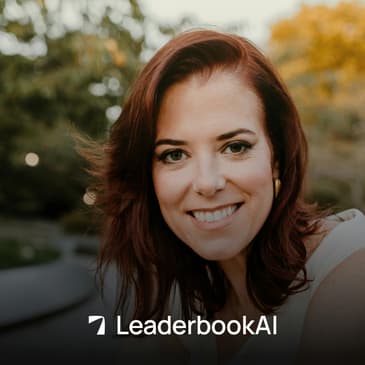
Katie Roberts, CEO of RPR Strategies, explores why tens of thousands of roles remain unfilled at the Department of Defense. This conversation connects leadership accountability, workforce decision making, and digital transformation—highlighting how AI automation and enterprise technology close critical capability gaps.
—
Subscribe to the LeaderbookAI Podcast (formerly CPO PLAYBOOK): https://leaderbook.ai/podcast
Want to create 10x the value of your business or investments? Let’s talk: https://leaderbook.ai/contact
Powered by the WRKdefined Podcast Network.
[00:00:00] I'm Felicia Shakiba, and this is CPO Playbook, where we solve a business challenge in every episode. Today we're exploring one of the most pressing issues in national security, the shortage of cybersecurity talent in government agencies.
[00:00:30] With over 30,000 positions unfilled at the Department of Defense alone and cyber threats escalating globally, the stakes are incredibly high. As private companies lure talent with competitive pay and agile hiring processes, government agencies are left struggling with outdated compensation modules and lengthy hiring timelines.
[00:00:54] To give us the full picture, Katie Roberts, founder and CEO of RPR Strategies, is here to break down the challenges and potential solutions. Katie has deep experience in both public and private sector HR, and her insights are exactly what we need to understand this complex issue. Katie, it's great to see you again. I know we've worked together in the past, and I couldn't have asked for a better guest.
[00:01:22] Katie, it's great to see you again.
[00:01:52] Let me take a step back. The reality of what we're dealing with is the world has a gap, and that means 4 million people with cybersecurity skills are needed, and we don't have them. That's huge, and that's actually from the Center of Cybersecurity with the World Economic Forum. And with that, it's really scary, but last year alone, 90% of organizations had some sort of breach.
[00:02:20] So what we're dealing with is a global challenge, right? And so what does that mean for us here in the United States? What that means is we have to come together, whether it's the private sector or the government, to understand that we are ill-equipped right now in terms of what the future workforce needs to look like.
[00:02:43] And that means that it begins with what are our kids learning at school, what are we looking at in terms of credentialing, and what is the wave of the future? I was recently actually at a conference for the Air Force, and it was specifically where industry and the government were communicating and talking together about solution.
[00:03:07] And of course, workforce came up, and a couple things I'd love to share, because I really do think that the Department of Defense and the various services are really getting after it. So a couple things. First and foremost, what we have to do is we have to start, our technology needs to be simpler, right?
[00:03:27] So for example, if we think in terms of, you know, Python and all these various different, you know, certifications and educational tools that we currently have, what we have to do is we have to make it easier. We have to make it simpler, right? The reality is today, everything is on your phone or a gadget, right? We have to make the trainings simple.
[00:03:52] We have to make sure that anybody, whether they're 16, 24, 34, 64, that they can learn and they can understand how to use technology and how to, you know, not everyone needs to be a coder, but that they can do the basics. The other thing is that what we have to understand is we really are building a community, right? And this is one of the things that I think is fantastic, because the senior leaders at this conference we're talking about,
[00:04:20] we understand the workforce has changed. Not everyone's going to spend 20, 30, 40 years working for the government or 20, 30, 40 years working for any company. But what we have to do is we have to create the mechanisms where people can be flexible, right? They can go and work in government for three to five years. They can go to the private sector. They can come back into government, right?
[00:04:47] So that flexibility to create an ecosystem of people that have, whether it be cybersecurity expertise or if they're experts in quantum physics or quantum computing, right? So we need to create that flexibility. I think it's also how the government recruits. So, for example, at this conference, a two-star Army general was brilliant in what he was talking about. He said, you know, something that really was so simple.
[00:05:14] He's like, we are fundamentally changing how we recruit. You know, he talked about, look, in the old days, right? They would just wait for people to walk through the door and come and say, hey, I want to join the United States Army. That's not what we're doing anymore.
[00:05:30] What's happening is recruiters are meeting young potential candidates and young potential professionals where they're at, whether it's on social media, whether it's in job boards, whether it's at schools, whether it's at gaming conferences, right? Whether it's you name it, where they're meeting the new potential, you know, members of the United States Army, both on the civilian side and on the military side where they're at.
[00:06:00] There's also the fact that the reality is that the federal government can provide some really interesting opportunities, especially, you know, one opportunity, for example, is when you're a young professional, right, and you come into the federal government. One of the added bonuses, right, is that you get exposure to some pretty amazing opportunities of what you're doing with your country.
[00:06:25] But the reality is you also have the opportunity to potentially get what's called a security clearance, which is a very valuable thing to have professionally. And so with that, with that security clearance, somebody maybe, you know, freshly out of college can go ahead and get that security clearance and work a couple of years with the private company. And then they just, excuse me, with the government, and then they decide a couple of years to go to a private company.
[00:06:52] That opportunity for them in terms of upward mobility is huge. And the last thing that actually, for example, is a tool that I think has been really effective, especially within the Department of Defense, is for more established federal government employees. So maybe they're 10 or 15 years into their career, and they're kind of thinking about, hmm, do I want to stay or do I want to potentially go?
[00:07:16] There are, there's this great mechanism where, for example, if there's a relocation opportunity where they can relocate to be, you know, a more senior manager or maybe even for a more senior level. So maybe they become a senior executive service level. There's an opportunity for them to get a prepaid relocation expense covered. So for four pay periods, they can get the expense of that move covered.
[00:07:45] So they can move their family. They can move for that job. So those are some of the things that I think are exciting that are happening. And I do think that one of the things that if we move forward is if we think about that number, that 4 million, it's a huge number, right? That is not anything to take lightly.
[00:08:08] I think if what we collectively, both the private sector and the government think about is if we think about how do we look at getting after that, not in terms of today, but of tomorrow and the things that we can do today to educate our children, change our institutions. I think that's an opportunity where we can create programs and we can create pathways. There's a lot that the government should be doing, could be doing the moment.
[00:08:37] And you've worked with both public and private sectors and you've seen the contrast firsthand. So how does public sector compensation compare with the private sector, particularly in the critical roles like cybersecurity? Yeah. So traditionally, what you will see is compensation. For example, there is not in the private sector, you will have base pay.
[00:09:05] You will have various different bonus structures. You'll have compensation that could deal with RSUs, right? There could be extensive benefits, whether it be things like gym memberships or other ancillary costs of living that are covered. The federal government doesn't necessarily have all those mechanisms, right? So traditionally, you will have a lower base pay.
[00:09:31] There are incentives for specific bonuses. They work a little bit different. You aren't getting RSUs and there aren't necessarily as many, shall we say, perk benefits, you know, in terms of gyms or any other ancillary discounts to, you know, refrigerators or washing machines. There's no high-end gyms in the government sector? I don't know. Maybe Elon will bring them in. You'll see. Those are performers.
[00:09:57] I will say, though, having worked in the Pentagon, the Pentagon has a great gym and a great pool. Well, there you go. Okay. We know the truth. We know the truth now. But not everybody, right? And that's not necessarily always an incentive. But I think that where the government does have an advantage is it has an advantage in terms of mission.
[00:10:21] I think sometimes we're dealing with a very, very dynamic geopolitical world, right? Whether it be in Ukraine, Israel, and just so many things. And look, each of the various different departments have a role in helping, whether they're protecting our citizens, whether they're protecting our economy, right? There's all sorts of ways.
[00:10:46] You know, personally, I had the opportunity to serve at both the Department of Defense and the Department of Veterans Affairs. And I can say those opportunities were priceless, right? Helping people that have, you know, given their lives, right, in terms of their service, right? And, you know, being a veteran is, you know, it's not easy.
[00:11:09] You know, a lot of people will spend a lot of their, excuse me, not only their life, their career away from families, right? And they, you know, when you sign up, you know, especially if you're a member of the military and even the civilian population, you're signing up to deploy and to go to very dangerous places. And, you know, I think that, you know, a lot of what I'm encouraged about is in terms of our country and our citizens is people want to contribute, right?
[00:11:38] They want to contribute to their community. They want to contribute to their country. And that's where the federal government does have an advantage because it does what calling, you know, is better than serving, you know, your country and your people. You know, that's a really unique opportunity. So, you know, and it's not for everybody.
[00:11:57] And look, I will also say I've worked for very mission-driven organizations, right, in the private sector, you know, whether it be a company like General Electric or Walmart, right? Like they're a great company is doing amazing things. But I think the federal government also, the advantage that they have in terms of mission is the enormity, right?
[00:12:22] So, for example, you know, it's not many times that you can say, wow, I'm helping, right, a workforce that's hundreds of thousands of people or that I'm making a direct impact in giving money to small businesses or etc. You name it, right? Because all of the departments, it's not just, you know, within the defense and national security departments, but all the departments are contributing in some way, shape or form, right?
[00:12:51] And so, really, it does, I will say one of the things that in conversation with young professionals is they want something that is purposeful, right? They want to, the value proposition for them has to be more than just a lot of money in terms of a base. Yeah. I mean, I work with high performers in, for example, let's call it ad tech.
[00:13:22] And, you know, there are going, engineers who are going through these social media posts. And, you know, it's like, it's social and not that it's not rewarding, but it's, there's a different level richness of mission driven affiliation than with a position like the government where you're actually having direct impact, not only on people's lives, but, you know, protecting or saving American lives.
[00:13:51] You know, I see how that can go a long way. And that kind of, I would say, you know, is the compensation that's non-monetary to really attracting top talent. You mentioned that obtaining a security clearance can add significant value to a government role.
[00:14:11] So, can you share how agencies might better use this as a recruitment tool to attract top talent, especially for those coming from the private sector? Yeah. No, it's a good question. So, I think if you think about a security clearance, right, what is that?
[00:14:32] Well, it's, it's background, it's ostensibly a background check that you as an individual have the ability to have classified, like, to have classified information in certain ways and in certain times, right, should you need it. If you translate to that to the private sector, right, so, for example, if somebody comes from the government into the private sector with a security clearance, what that means is that individual is tried and true and tested and trusted.
[00:15:02] And that is something that, especially when you look in terms of management, in terms of whether it's people or money, that's huge, right? This is somebody who, you know, there are certain things that you have to do to maintain that security clearance. So, that means that you come with a level of experience and proven capability and seniority.
[00:15:23] So, translate that to a early career individual who's making a decision, right, between a private sector company and potentially going into the government. Right. Well, potentially, they won't have that, you know, opportunity to get clearance because they wouldn't necessarily need it in the private sector. But in terms of what's the value add of going to the government, getting that clearance and then potentially spending a couple of years in the government and going to the private sector.
[00:15:51] Well, let me say that clearance is immediately going to be able to elevate you, create opportunity as a competitive candidate because not everybody can get a security clearance. Right. And that's a differentiator. And what it also does is that, look, getting a security clearance is not easy. It's an arduous process. It really, you have to go, you have to do an interview, you have to do all sorts of stuff. And that's not easy.
[00:16:15] And so, that means that there's an extra due diligence, especially, right, sometimes in interviews, especially as you're dealing, maybe you're young and in your career, but you want to go for that big job. Well, sometimes it's a challenge. People will question whether or not you have that authority, you have that capability. But a security clearance is something that's very serious. And when you have that, I'm really going to be like, OK, this kid is not joking.
[00:16:42] That's somebody who's serious, who can take responsibility, who has proven to the governments that they are capable to handle some pretty important things. So it really can be a differentiator. And I think it's also a game changer because it means that not ever anybody has a clearance. It means that they're doing work that is absolutely vital and tied to a specific mission that is helping serve their country. Huge.
[00:17:08] And that's no easy responsibility that anybody takes on. So I think that it really, it's an avenue opener. Yeah, I would agree with you. I think that recruiters are more likely to hire someone who has a security clearance or a higher security clearance that might be needed because there's a level of trust that goes into that clearance, that due diligence.
[00:17:35] Katie, President-elect Donald Trump, his inauguration is coming up next week. And with that comes Elon Musk's efficiencies of the government that he's been sharing and talking about, DOGE. Can you tell us a little bit more about what this means and maybe how it might tie to some opportunities around cybersecurity? Great question.
[00:18:02] So I think that the federal government is very large, as we all know, right? And it doesn't matter if you're the federal government, you're a privately held company, a publicly traded company, or even your household. There's always opportunity to be more efficient with your money and your people. And so I think that, you know, if you think about in terms of Elon Musk, he is a businessman. He's had to build companies. He's had to work with the federal government.
[00:18:30] He's had to be at the tip of the spear in terms of innovation. And I think that's what he'll bring to this. It doesn't matter what administration. I think that any administration has a responsibility to the American taxpayer, right, in terms of responsibility of our tax dollars and serving our country, right? And I think that what is exciting is that it doesn't matter what department you sit in or what administration.
[00:18:56] I think everyone understands how important technology and advancement has to be. If we think about some of the threats that our country is faced with, it has to deal with, if you think about China. For example, there's just, there's some basic things that if we are not ahead in terms of technology, we're not going to be, we're not, we're not going to be the country we are. And that's a real reality.
[00:19:25] And so where I think there's opportunity is to say, look, let's go ahead and see how do we put money, more money to the programs we need and to the workforce we need and be efficient. So I think that's going to be something that they're going to spend quite a bit of time on. They've talked about in some different ways. And I think that, you know, with a new administration and the president-elect, that'll be key.
[00:19:49] And the first hundred days of his administration will be about getting in certain leaders and figuring out how we can be more efficient. Yeah. And I think that with those efficiencies, you know, I wonder if this is, if there will still be 30,000 opportunities available or less, or, you know, how those, how those structures or job architecture might change, you know, within certain departments.
[00:20:18] I think it'll be interesting, which, which leads me to my next question, which is really about compensation structures, you know, around different levels, as you know, different levels. Given the urgency of recruiting and retaining cybersecurity experts, what modernized strategies could government agencies really adopt to improve retention, you know, especially in these critical areas?
[00:20:43] Yeah. So I think where I have seen progress, right, and where I think we need to lean in more is where there's actual partnerships that are public-private, meaning there's actual programs and incentives. For individuals to come in and out, to be more flexible in terms of the very specific, in some cases, to obtain a senior-level government position. It's an arduous process, right?
[00:21:13] And it's a very extensive update, very specific resume and all of these very specific things that really make it difficult. And what's happening is they're starting to peel back those, all those various specific requirements and create mechanisms to get people in faster and quicker. And also, one of the things that, again, maybe there won't necessarily be an increase in base pay.
[00:21:40] For example, there's great opportunity, you know, at least within DOD, where basically $60,000 of student loan debt can be forgiven. And that's a huge incentive in terms of, yeah, I mean, right, that's significant.
[00:21:58] Yeah. So I also think that thinking about opportunities of where there are incentives in terms of posts, right, if you think about the Department of State, right, we've got like, I think it's about 300 embassies. How amazing is that to serve your country and all sorts of wonderful places in this world, right?
[00:22:19] And so if you think about that, I think there's the more we educate our people about the opportunities in the federal government and that we talk about what the federal government does. I was recently actually at a conference in the state of Arkansas. It was really impressive. The AG there, who was hosting it with an organization called FORGE, the FORGE Institute. It was wonderful.
[00:22:44] They had the attorney general had a discussion with Janet Easterly, who is the current director of the Department of Homeland Security, CISA, and she'll be leaving. But they were talking about the difference between what are states' responsibilities and what are federal government responsibilities and what are private sector responsibilities. And one of the things that I really appreciate was the attorney general spent a lot of time talking about the need, right?
[00:23:14] He was talking specifically, again, about the state of Arkansas and the needs in Arkansas. And he talked to his folks and his citizens, right, his constituency, about the fact that he described where there would be gaps in what he needed in his state if the federal government wasn't there. And talked about how he wouldn't be positioned to be able to protect his constituents, his companies, his state, without the help of the federal government.
[00:23:43] And it was a really great dialogue that you had about who has what roles and how to leverage that. So I think that through those type of partnerships and through those type of opportunities to not only educate, but also create community, that we're going to see that gap close. And we're going to continue to see people lean in and get scrappy and figure out how do we get after this. Yeah.
[00:24:12] And it's interesting because you have such a thick background in defense contracting. You know, you have these unique insights into what's working in the private sector. What lessons could government agencies take from private companies in their approach to hiring and really maintaining and retaining top talent? Yeah. I think one of the things is that in today's world, people are incentivized differently.
[00:24:40] And yes, do you have to be paid a great base salary? Do you have to have? Yes. But there are other differentiators that I think one of the things that is most important to people, right? If we all learned anything from COVID, in terms of our day-to-day satisfaction, we now value that in a way that I think is a bit different. I think we understand how we want to work, how we want to spend our time. Fundamentally, it's changed.
[00:25:08] And I think if what we can do is we focus on that day-to-day job satisfaction and that day-to-day interaction and the value of that, that's huge. And I think that's where, for example, especially at least from the experience that we've both had in the private sector, there are a lot more levers that you can pull and you can do things. And this may seem small and this may seem petty, but the little things.
[00:25:36] For example, when, Alicia, you and I worked at WPP, we made sure during COVID people had all sorts of things, whether it was we delivered things like food or we helped organize pods for kids. And that impacted people's lives. And one of the things, you know, we sat in New York City, right, when this happened. Guess what was one of the most important things that we did?
[00:26:03] That it wasn't that expensive, but it was that valuable. It was that we gave people free city bikes. We gave them that and we gave them food discounts, right? And we created all these little mechanisms. And yes, it didn't cost the company something, but it wasn't huge. But it was that we were making a day in and day out impact. Well, the value, right, to the employees was bigger than the financial expense for the business.
[00:26:33] And so that's, I think, where you kind of look for those return on investments, you know, and how they're going to really show up. I mean, I know many companies who moved remote or to hybrid and those tweaks really changed people's lives. And if we can do that, really, and that doesn't have to necessarily look the same way to different companies, right?
[00:27:00] That looks a little bit different to different companies, depending on the culture and the leadership. I mean, I think also just access to leadership is also a big return on investment. Even just having leaders more visible or that random coffee meeting, you know, virtual meeting, right? All of those pieces.
[00:27:19] But I've seen very creative ways of enhancing the day-to-day lives of employees where the incentives are myriad and not just your base salary. And, you know, to your point, one thing that I've seen that both the government does and the private sector does, which I would encourage more to do, is where I remember when I was at General Electric, I had an opportunity to do what called the bubble assignment,
[00:27:48] where for two weeks I was based in Schenectady, New York, working in the GE Power Division. Loved my job. And I had an opportunity for two weeks to go to D.C. and work with our public affairs team and to learn, you know, what our government relations team was. And it was fabulous. It was just amazing because it helped me expand my knowledge in terms of what the company was doing.
[00:28:13] It expanded my network in terms of the company itself and learning the people in the D.C. office. And it was just a fantastic, you know, it was just a fantastic motivation tool. And it was great because my boss, you know, selected me for it. And then I worked with great people. And the government does that, too, in terms of short-term assignments, especially where potentially someone is, you know, a high flyer, regardless of age, but they're doing great work.
[00:28:41] And they have an opportunity to potentially go do a short-term assignment, right, whether it be abroad or whether it be within a different office. I know various different agencies who do that. And I think it's so important. That ability to create exposure is huge. Because that's really where especially a lot of people can figure out what they want to do when they grow up. Right. Right.
[00:29:07] Technically, you know, get in with your strengths and live that line, right? Exactly. Yeah. Well, Katie, you've highlighted so many of the hurdles within government HR. What are some immediate steps that agencies could take to make the talent acquisition process less frustrating, more efficient for both candidates and the hiring managers? Well, first of all, I want to commend them for all the work that they're doing, right?
[00:29:33] I first want to say to the talent management community, the HR community, the workforce writ large, like, bravo, because I know each and every day, you know, people are really doing tremendous work. Where I think there's opportunity, though, is I think that challenge assumptions, just because it's been done that way five years, 10 years, 20 years, or you think it, you know, it has to be done that way. I would just question that, right? I mean, sometimes, right. This is the time to do it. Yeah.
[00:30:03] When Elon is about to turn. I think there's, you know, look, I think regardless of political administration, there's always opportunity, right? I think that there's always opportunity to challenge assumptions, right? And I think that just because you've had to fill out those 10 boxes doesn't mean you have to continue to do that. And I see more and more people thinking creatively.
[00:30:28] And so I just encourage people to do that, encourage to ask the questions, challenge assumptions, you know, and work with your teams. And I think it's a mind shift, right? It's being solution oriented and focused on solving problems versus did I fill out whatever form, right? And I know that's challenging and it's a balance, right? But I do think that. Change is hard. And I really want to say, though, that I have seen a lot of change from when.
[00:30:57] I won't tell you when I started in government because that would then tell you how old I am. But you're 21 on the show. Everybody's 21 on the show. Love it. Fantastic. Yeah. So just two years ago. Right. No, but when I think that, you know, at least from when I started, even when I started in state government, it's changed. So I think that's really encouraging. And look, I think that it takes people. It takes courage, right?
[00:31:25] It takes raising your hand and saying, can we do it differently? I want to say also, I give a lot of credit to the government contracting community who has helped, you know, procurement offices and contracting offices.
[00:31:38] I want to commend the government contracting industry and the proactiveness of the contracting and programmatic offices who have really worked together to create new opportunity and who've been really pushing in terms of thinking about how to do things differently, especially with small businesses.
[00:32:04] And creating different contract vehicles and different ways to, through some of bureaucracy, focus on solving problems and getting after the mission. So I think there really is some good work. And, you know, I think that more will continue. And we just we have to it's all about partnership. Right. I believe that the private public partnership and that nexus is just pivotal.
[00:32:34] Well, Katie, thank you so much for sharing your insight on this very critical topic. It's clear that while the challenges are significant, there are strategic steps that the government can take to bridge these gaps. So bringing in the talent that's needed and ultimately protecting our nation's cybersecurity infrastructure. So thank you so much for being here. Katie, it's good to see you. Oh, thank you, Felicia. And all the best in the new year.
[00:32:59] If today's episode captured your interest, please consider sharing it with a friend and leaving a review. To learn more about how CPO Playbook can support you or a leader you know with executive coaching or organizational transformation, visit us at CPOPlaybook.com. Your support as a subscriber means the world to us. So thank you for tuning in.
[00:33:29] I'm Felicia Shakiba. Let's connect on LinkedIn. See you next Wednesday.
Sponsors
