
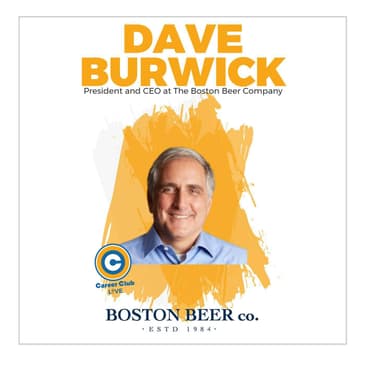
Join us in this engaging episode as Dave Burwick, CEO of The Boston Beer Company, dives deep into the role of resilience in steering a leading beverage company. With insightful commentary from Bob Goodwin, President of Career Club, this conversation explores how resilience influences business strategies and leadership.
Dave shares captivating stories from managing iconic brands such as Sam Adams and the innovative Truly line, highlighting how adaptive leadership and strategic thinking have been crucial in navigating market shifts and consumer trends. He also discusses the challenges of sustaining growth and fostering innovation within a competitive industry. Listen in for a rich discussion on the power of resilience in business and leadership, offering lessons that resonate well beyond the beverage industry.
Powered by the WRKdefined Podcast Network.
[00:00:00] I know you're gonna find it, you've got to keep on at it
[00:00:10] Hi everybody this is Bob Goodwin President of Career Club and welcome to another episode of Career Club Live
[00:00:17] Before we begin I just want to mention a couple things that we're doing at Career Club
[00:00:21] If you are in job search right now or know someone who is and who doesn't
[00:00:26] Please check out Career Club we are offering a free weekly coaching call every Thursday at 1 o'clock eastern
[00:00:34] As our way of giving back to the job seeking community we know this is an especially hard time for folks in job search
[00:00:41] And we want to do what we can to provide high quality coaching resources to people at no cost
[00:00:47] So again you can register on the website at Career Club for this free weekly coaching call every Thursday
[00:00:54] And then secondly if you are an HR professional and looking to improve the candidate experience and build your employer brand
[00:01:02] We would encourage you to check out our Journey Forward option as a way of driving candidate experience
[00:01:09] And again enhancing the employer brand you can learn all about that as well at Career Club
[00:01:14] So with that and the commercial over please let me introduce today's guest
[00:01:20] I'm really excited we're very honored and pleased to have Dave Burwick who by the time you hear this will be the very recently retired as of April 1st
[00:01:29] CEO of the Boston Beer Company which are iconic brands that you know like Sam Adams, Twisted Tea and Truly Seltzer
[00:01:38] So Dave is a visionary leader in the beverage industry as you can tell
[00:01:45] And with a story career that spans across major brands like Peats, Coffee and Tea, Executive Roles of PepsiCo
[00:01:51] I'm sure we'll talk about Mountain Dew somewhere during this
[00:01:54] Dave brings the wealth of experience in leading companies through phases of significant growth and innovation
[00:02:00] And again I'm very keen to learn about some of his leadership principles in high growth companies
[00:02:06] Under his leadership Boston beers embrace new challenges and trends
[00:02:09] Positioning itself as a leader in the craft beer and beyond sectors
[00:02:13] So again we're just joining us as Dave shares insights into his approach to leadership and how culture and innovation drive success
[00:02:21] And with that Dave Burwick welcome
[00:02:24] Thanks very much Bob I'm glad to be here
[00:02:26] No it's so nice to have you where do we find you today where are you
[00:02:29] Today I'm in my office in the seaport in Boston
[00:02:33] It's actually my last day as the President CEO of Boston Beer Company after six years in this role
[00:02:39] But actually 19 years associated with the company since I joined the board back in 2005
[00:02:44] So it's been a really wonderful long run with a great company, great people
[00:02:49] And now I get to face that fork in the road again which I'm very much looking forward to doing
[00:02:55] Well we'll unpack and explore that but before we do anything else congratulations
[00:03:00] You have had a fantastic run there and driven amazing growth
[00:03:04] And with today being your last day there
[00:03:07] There's a lot to celebrate and again really appreciate you making some time for us
[00:03:13] As is our want to do on career club live Dave we'd just like to get to know you a little bit as a human being first before we dive into all the worky stuff
[00:03:22] So where were you born and raised
[00:03:24] I was born in Worcester, Massachusetts which is about 40 miles west of Boston
[00:03:29] And when you grew up in Worcester you said you called it Wista
[00:03:32] And that's where I grew up in Wista and I was I grew up in the early in the 60s
[00:03:39] I was an only child so a little bit different from most pretty much all my friends
[00:03:43] My parents were divorced when I was very young so I was really raised by a single mom in central Massachusetts
[00:03:50] Wow well I appreciate you sharing that
[00:03:53] I just signed up then what are a couple quick lessons that you learned from your single mom
[00:03:58] Yeah I mean you learn you learn a lot and I think the first thing I'd say learned was just how to be independent
[00:04:05] First as an only child I mean yeah you have to learn how to kind of entertain yourself and to kind of seek your own path
[00:04:11] And to do you know to make a lot of decisions about what you're going to do
[00:04:14] So I think independence I would say you know with that comes some creativity because you're entertaining yourself
[00:04:22] And of course obviously you have friends you play with and stuff as a kid but the creativity piece came through I think also honestly the resilience
[00:04:29] And you know this was in a time when couples really weren't getting divorced
[00:04:36] And I had no friends whose parents were divorced who were only children
[00:04:42] And my mom was very young when she got married and she had me and so she was a 26 year old woman
[00:04:49] And they were with a son at home who wanted to start a new life
[00:04:53] So it wasn't an easy environment necessarily to grow up in
[00:04:57] I mean I was very fortunate we I'd say we were probably like middle class, upper middle class family
[00:05:02] We weren't I wasn't wanting for anything I didn't live a privileged childhood but it wasn't unprivileged either
[00:05:08] I'd say there was definitely a safety net and I was very fortunate to have that
[00:05:12] But at the same time you kind of have to you know chart your own path in that situation
[00:05:18] And when I look back it's funny it wasn't it wasn't it wasn't the best childhood but I think I learned so much from it
[00:05:25] That I think it actually made me sort of who I am today and actually went to some really wonderful things happening to me in my life
[00:05:34] Wow I appreciate you sharing that it's it's interesting
[00:05:39] Dave as you know we work with people in job search whether they just find us independently or through reductions in force
[00:05:47] And what you just shared I think is so powerful because it humanizes you right and it creates a narrative that for sure has informed your career
[00:06:00] How you think about things, your drive. I love what you talked about with independence, creativity and resilience
[00:06:06] You just told me three really important things about you that are very formative and durable about you
[00:06:13] That is ironic if I was interviewing you like I would really gravitate to those things it's not just sort of the XYZ on a resume
[00:06:22] Or where'd you go to business school kind of stuff but it's like no this is who defines him as a human being
[00:06:28] And it's going to take a lot to knock this guy over because he's already been through a lot
[00:06:34] And those are just really great qualities I appreciate you sharing that stuff I wasn't even expecting that that was awesome
[00:06:40] Yeah well I think you know those formative experiences are really important I think you only realize the benefit like in hindsight
[00:06:47] Later on in life you kind of realize when you look back and I do think it's important to be reflective and self aware and understand
[00:06:54] And obviously as you get older you start to think about these things more and more you think about things that happened
[00:06:59] And you wonder you try to find meaning in them and then it's interesting because a lot of times it all kind of comes together somehow
[00:07:05] It clicks and you realize I get it now that's why I am who I am and that's why I've been able to do these things maybe not do those things
[00:07:12] But it's been really beneficial for me and I think I'm thinking back I was just watching the Academy Awards
[00:07:20] And Robert Downey Jr. won for Best Supporting Actor at Oppenheim
[00:07:25] And the first thing he said was I want to thank my awful childhood for this
[00:07:30] And it actually obviously like the resume I don't want to make it seem that his childhood was awful in different ways
[00:07:37] But I think there's something about that that struck a chord with me because I realized that he internalized some of his experiences as a young child
[00:07:45] As growing up and it made him stronger it made him better and it made him more self aware and it allowed him to be very successful
[00:07:52] And I think for me I feel this I feel in a way very fortunate that I had some of those challenges because it made me who I am
[00:08:01] Yeah, well definitely embracing and you know a lot of people say well if you had to do it all over again what would you do?
[00:08:08] And I think the wise answer is nothing because that's made me who I am
[00:08:13] And if that had been different I would be a different person and I'd like how this is all turned out
[00:08:20] So there's a bunch of things we'll pick up on. Let's just kind of get to this little bit
[00:08:25] So where did you go to university? Where'd you go to college?
[00:08:28] Yeah, so I went to a place called Middlebury College in Vermont
[00:08:32] And which is I think where I lost my accent and I had a great experience in Middlebury
[00:08:39] I played the cross for a couple years and then I decided my junior year that I was going to like throw it all away and go over
[00:08:45] And go away for the full year and I went up going to University of Edinburgh for the year
[00:08:49] And had a tremendous time and actually I was pre-med course
[00:08:54] I was very fortunate that my mother's father was an MD and he had a great positive influence on my life
[00:09:01] In a way sort of a surrogate, definitely a surrogate father who is actually the best man in my wedding
[00:09:05] That's cool
[00:09:06] And I had always had that kind of impetus to go to be a doctor like him and a little bit of pressure
[00:09:12] And when I got to Edinburgh I realized there are other things I'm interested in
[00:09:17] I love this international component I'm interested in maybe business one day
[00:09:20] I was a history major in the end
[00:09:21] So it was the decision I made that kind of led me down a different path away from medicine more toward business
[00:09:29] And then you went to B-school as well, yes?
[00:09:32] I did so yeah, so I worked for four years after that and I went to Harvard Business School
[00:09:37] And graduated back in 89 and that kind of led me down a different path which is more toward brand management
[00:09:42] And then at Pepsi and then beyond
[00:09:45] Yeah, so let's just use that as a segue then
[00:09:48] Just like kind of give people just a little bit of a brief kind of picture of your career arc
[00:09:54] So coming out of Harvard where you went to Pepsi next?
[00:09:58] I did, I went to Pepsi I really decided I wanted to be sort of a brand manager
[00:10:03] And there were a handful of companies, obviously Proctor & Gamble and Pepsi
[00:10:07] And a few others, I guess more than a few others that really had that
[00:10:12] Presented that opportunity for training and learning how to build brands, what does that mean?
[00:10:16] And can that lead to more of a general management path
[00:10:18] And that's what I did, I was very fortunate I went, it was a great era for Pepsi
[00:10:22] I started in the summer of 89
[00:10:25] And I started as the assistant brand manager on Diap Pepsi
[00:10:29] And my career just went from there and I worked many different brands, many different types of roles
[00:10:34] Channel marketing, field marketing, I spent a couple years
[00:10:37] A year in Tampa, a year in Orlando, doing that time
[00:10:40] People from the headquarters marketing roles were pushed out into the field to learn how the business works
[00:10:45] And to do these field marketing roles and I think
[00:10:48] In the end that was actually really not a very glamorous job but very helpful to me in my career
[00:10:54] And that was a big progression of brand management roles that led to more GM type roles of Pepsi
[00:11:00] And then after Pepsi where did you go?
[00:11:03] Yes, for Pepsi I decided I needed to atone for my sins
[00:11:06] We didn't realize we were harming people by selling sugar-laced products
[00:11:11] I ended up going to Weight Watchers and I ran Weight Watchers North America
[00:11:15] So my Pepsi progression was really through the brands
[00:11:18] I was a chief marketing officer at Pepsi twice
[00:11:23] In North America, then actually I went to International, it was the CMO for International
[00:11:26] Then I came back to North America, it was the CMO again
[00:11:30] I'd run the Pepsi Quaker, Tropical and Gatorade in Canada
[00:11:34] So a lot of great experiences there
[00:11:36] But coming out of that I knew I wanted to, you know, I love brand building and marketing
[00:11:40] But I wanted to be more of a general manager
[00:11:42] And that's what Weight Watchers presented that opportunity to me
[00:11:46] We didn't have to move our family, we had four kids all growing up in Connecticut
[00:11:50] And it was a great move at the time
[00:11:52] I stayed there for about three years during the Jennifer Hudson era and George Barkley
[00:11:58] And we did some really exciting things to make that brand relevant
[00:12:01] And to grow the business group quite well during that time
[00:12:05] But then I realized Weight Watchers is a great company
[00:12:09] But it's also selling, it's really selling a learning process
[00:12:13] It's a services company
[00:12:15] And that provides a lot of value to people
[00:12:19] I really felt like for me I wanted to sell something more concrete
[00:12:22] I wanted to go back to something concrete
[00:12:24] And I ended up at Pete's Moving to California with our two youngest kids
[00:12:28] And my wife Carrie to run Pete's Coffee based in the Bay Area
[00:12:33] And I did that for one over five years
[00:12:35] And that was a company that had just been public and been bought
[00:12:39] And taken private by a private equity company called JAB, who's a terrific company
[00:12:44] I got to work with those folks and learned a lot from them
[00:12:47] And we took the business from about, when I got there maybe $350 million business
[00:12:51] It was close to 900 million, what I got five years later
[00:12:54] And that Pete's Coffee, I mean there's a lot of, you know
[00:12:58] There's coffee shops all over the West Coast
[00:13:00] There's some in Chicago and D.C. and Boston
[00:13:02] But really the big part of Pete's business was selling beans through grocery stores
[00:13:06] Through the country
[00:13:07] And through what we call direct store delivery
[00:13:10] Where we roast the coffee
[00:13:12] We put it on our own trucks and deliver it to stores
[00:13:15] So we got it to stores more quickly and it's more fresh
[00:13:18] And ultimately the taste profile is better
[00:13:21] And so that was really interesting
[00:13:24] When I worked with private equity I thought it was definitely different
[00:13:27] And I just learned a ton
[00:13:29] And you know, there's a lot of distractions that you get
[00:13:33] Working with big companies, they're public companies
[00:13:36] And have all these mechanisms in place to do certain things in certain ways
[00:13:41] When you work for a private equity company you're trying to get growth
[00:13:44] You're trying to get top line growth, bottom line growth
[00:13:46] And you don't want to, you want to reduce as much friction as you can
[00:13:49] And I think you're able to make decisions more quickly
[00:13:52] And kind of just move
[00:13:54] And then if you fail you try again and you do something else
[00:13:58] So the Pete's thing was terrific
[00:14:00] Now while I had been at Pepsi as the CMO
[00:14:05] I joined the board of Basta Beer back in 2005
[00:14:08] And at the time Basta Beer was looking out
[00:14:10] They were just, you know, Sam Adams was growing tremendously
[00:14:13] The craft beer business was really a renaissance for beer
[00:14:17] And they were looking for a marketer who could come in and help them
[00:14:20] With some of their stuff
[00:14:22] Because every day when they woke up the company was bigger than any company they'd ever run
[00:14:27] And they were doing things they'd never done before
[00:14:29] So I was very fortunate to join the board of the company then
[00:14:33] And I stayed on it probably too long
[00:14:36] And basically essentially 13 years later or so
[00:14:40] When I was running Pete's the prior CEO had retired
[00:14:44] And was moving on and they were looking for somebody
[00:14:47] And Jim Cook is the founder, he owns 20% of the company
[00:14:50] He's public, he owns 20% of the company but he's 100% of the shares
[00:14:53] Which is only kind of a deal that you would get if you were like
[00:14:56] Mark Zuckerberg or Brian Chesky right now
[00:14:58] You wouldn't get it if you had a CPG company
[00:15:00] But he did and so really it was Jim's decision on the CEO
[00:15:04] Really solely, I mean the board helps
[00:15:06] And for Jim he really trusts it's so important to him
[00:15:10] And working with people and knowing them
[00:15:12] He never really believed in the process of going outside to find a CEO
[00:15:16] Because he felt like it's a 50% chance of failure
[00:15:19] And it's a much higher chance of success
[00:15:22] If you bring it to somebody who is connected to the company
[00:15:25] And having been on the board for 13 years at that point
[00:15:27] He knew me, the board knew me
[00:15:29] I understood the culture of the company, I understood the business
[00:15:32] It turned out to be a really nice fit
[00:15:34] And actually a really good transition to go from the board
[00:15:38] To actually running the company, actually my successor here
[00:15:41] Michael Spline is going to do the same thing
[00:15:43] From he's been on the board for eight years
[00:15:45] And I think we've proven that it can really
[00:15:47] It works pretty well
[00:15:49] And it's just your chance for success are so much greater
[00:15:53] So from just being a board member
[00:15:56] I joined the company as CEO six years ago
[00:15:58] And just literally today, finishing up my run as CEO
[00:16:02] That's wild
[00:16:04] Well, there's so much to unpack and all this
[00:16:06] But super quick before we go off of this
[00:16:09] What do we find Dave Burwick doing
[00:16:12] And I guess we're going to find him doing a lot more of it
[00:16:14] Starting tomorrow
[00:16:16] What do you like to do when you're not at work?
[00:16:18] What are you interested in?
[00:16:19] Yeah, it's funny, during COVID
[00:16:22] A lot of people ended up on a Peloton
[00:16:25] And I was a runner, I've been a runner before
[00:16:27] But I was getting to the point where my knees weren't holding up
[00:16:30] As much as I wanted
[00:16:31] So I started on the Peloton and then coming out of COVID
[00:16:33] I realized, you know what?
[00:16:34] I want to get out on the street
[00:16:35] So I started to ride it
[00:16:37] So I'd say, I have a road bike
[00:16:39] I have a mountain bike so I love to ride the bikes
[00:16:42] I also rejuvenated my golf game
[00:16:46] Which I put on hold for like 25 years for four kids
[00:16:49] Because with kids, you know
[00:16:51] And I know you have four kids as well Bob
[00:16:53] You can't go give a half a day every weekend to go play
[00:16:57] Remember, I mean you can
[00:16:58] But I think it would be a very selfish thing to do
[00:17:01] And so our kids were very active
[00:17:02] And I was very happy to kind of let their lives come first
[00:17:06] And we put golf on the sideline
[00:17:08] And then part of the deal when we moved back to Boston
[00:17:11] Six years ago from Pete's in California
[00:17:13] Was to commit to like, we were empty nesters at that point
[00:17:17] Commit to playing golf
[00:17:18] And I got my wife convinced that she would do it
[00:17:21] And now she plays more golf than I do
[00:17:24] And she's become actually quite good
[00:17:26] So I think golf is something as well
[00:17:28] We like to do, we love dogs
[00:17:30] We had two Goldens as of last week
[00:17:33] Now unfortunately we only have one Golden
[00:17:35] But we love to do stuff outside with the dog
[00:17:39] So that's kind of what we like to do
[00:17:41] Not that complicated
[00:17:43] But it's something, try to stay active
[00:17:46] And I read a lot of different things
[00:17:49] And watch a little HBO, little sports
[00:17:52] Boston sports of course, what else you know
[00:17:54] Which is kind of a dark era right now
[00:17:56] For Boston sports except for the Southex
[00:17:58] But maybe the Bruins are going to be okay
[00:18:00] But not the Red Sox or the Patriots
[00:18:03] That's for sure
[00:18:04] But it's kind of fun because I've lived outside
[00:18:06] Of my native state for almost 30 years
[00:18:08] So it's interesting to be like a Red Sox fan
[00:18:11] Living in California
[00:18:13] It's just not the same as when you come back in
[00:18:16] And you just get, you have all the camaraderie
[00:18:19] Of everybody commiserating with you at the same time
[00:18:22] It's been kind of interesting and fun
[00:18:24] That's fun, good for you
[00:18:25] I suppose you'll be getting a lot more game time in
[00:18:29] And I have to ask, favorite golf course?
[00:18:33] Well, I would say, that's a good question
[00:18:37] I would say like, you know, pebbles
[00:18:39] Kind of a nice place to play
[00:18:41] So I like that one a lot
[00:18:44] And that's probably my favorite course
[00:18:46] That I've got
[00:18:47] And aspirational course?
[00:18:50] Something you haven't played but you want to play?
[00:18:52] Well, love to go, obviously like everyone
[00:18:54] Love to go to St. Andrews and, you know,
[00:18:56] Living in Scotland for a year
[00:18:57] But I was a student
[00:18:58] I wasn't running around like golf clubs
[00:19:00] So I'd love to go back and play there
[00:19:02] That's on my wish list right now
[00:19:05] That sounds pretty awesome
[00:19:06] Alright, let's get into this
[00:19:08] So I really appreciate what you were sharing
[00:19:12] About growing up
[00:19:14] And some of the things that you took away from
[00:19:17] That experience and that took away
[00:19:19] But integrated, based on that
[00:19:22] The first thing, because you've been in this
[00:19:25] General Manager role, CEO role, public company
[00:19:28] You know, what are the leadership
[00:19:32] Qualities or values that you think
[00:19:35] Best describe your leadership style?
[00:19:38] I'd say, this probably is rooted more
[00:19:41] Sort of in my childhood too
[00:19:43] I think, one, I mean, I'm curious
[00:19:46] Like I'd like to learn things
[00:19:48] And I'm very interested in constantly learning
[00:19:51] And I think that's really important
[00:19:52] Because the world, particularly when you're
[00:19:53] In the consumer world, consumers are changing all the time
[00:19:56] And the marketplace is changing
[00:19:58] You have to keep learning and adapting as you go
[00:20:00] But I just generally curious about things
[00:20:03] I'd say, aside from the desire to learn
[00:20:08] I mean, I'm pretty hardworking
[00:20:11] Because I think I had to
[00:20:13] One thing I have learned early is that
[00:20:15] You have to only rely on yourself
[00:20:17] To get to do things honestly
[00:20:19] And if people come in and help you
[00:20:20] If you have mentors, like I said
[00:20:21] That my grandfather was wonderful to me
[00:20:24] That's all the better
[00:20:27] That's gravy
[00:20:28] But I've learned to become just self-reliant
[00:20:29] And hardworking
[00:20:30] Know that if you don't do it, it doesn't get done
[00:20:32] So I think that's important
[00:20:33] I think even at this company
[00:20:35] We're a little over $2 billion company
[00:20:38] But I get involved in doing things
[00:20:42] I'm not just directing people
[00:20:43] Because sometimes there's no one else to do it
[00:20:45] You've got to do it
[00:20:46] So I think that's really important
[00:20:49] I think also it's connecting to people
[00:20:53] I mean, it's a very human thing
[00:20:55] Businesses are, right?
[00:20:56] I mean, you don't get stuff done
[00:20:57] Without working with and through people
[00:21:00] And if you have to know how to connect to people
[00:21:03] You have to understand how to be empathetic
[00:21:05] You have to be present and be willing to listen
[00:21:07] And truly listen to people
[00:21:08] And I like doing that, I do
[00:21:10] Because I think again, as a child
[00:21:13] I was looking for people to connect it
[00:21:15] Right?
[00:21:16] I needed those connections
[00:21:17] So you learn how do you
[00:21:18] How do you have a conversation?
[00:21:20] How do you ask about
[00:21:22] Learn about people's personal lives
[00:21:23] That they're willing to share
[00:21:24] That I think could be really important
[00:21:25] And understand them
[00:21:26] So I think showing the empathy
[00:21:28] And showing the willingness to connect
[00:21:30] I think is really important
[00:21:32] And I think at the end, ideally, hopefully
[00:21:34] You come out as sort of being perceived
[00:21:36] As real, authentic and humble
[00:21:40] And calling yourself humble
[00:21:42] Is probably a risk right there
[00:21:44] Because that's not...
[00:21:46] I think humility is really important
[00:21:48] Because I think if you have to take the credit
[00:21:50] If you think you have all the answers
[00:21:52] Then you're never going to get to the right place
[00:21:54] And I think IQ is important in life
[00:21:57] Yeah, it is
[00:21:58] But at some point it tops out pretty quickly
[00:22:00] And I think emotional intelligence
[00:22:03] Situational intelligence
[00:22:05] Understand how do you get stuff done
[00:22:08] With and through people
[00:22:09] And actually at the same time
[00:22:11] Make them feel excited and motivated
[00:22:13] To do it again
[00:22:14] And demonstrate to them that you're
[00:22:16] Help, that they're learning
[00:22:17] And they're growing as well
[00:22:19] That's really important
[00:22:20] So I think some of those skills
[00:22:21] I talked about are really essential
[00:22:24] To being successful in business
[00:22:28] I'll give maybe a comment and then a question
[00:22:30] So I think curiosity and humility
[00:22:32] Go together, right?
[00:22:34] Because curiosity says I don't know everything
[00:22:36] Which is a demonstration of some humility
[00:22:40] Like I don't have it all figured out
[00:22:42] And when you've got your Harvard Business School
[00:22:46] MBA, CEO, CMO
[00:22:49] Big companies that people have heard
[00:22:51] Of the brands, know the brands
[00:22:53] You can see somebody getting to a level
[00:22:56] Self-satisfaction kind of easily
[00:22:59] Has your...
[00:23:01] Have some of those values
[00:23:04] Evolved over time
[00:23:06] Like you've learned some of these things
[00:23:08] Or has more of this been innate
[00:23:10] And this has kind of been Dave all along
[00:23:13] That's a good question
[00:23:14] I think, I guess when I look back
[00:23:16] I think that I've always been that way
[00:23:18] I think, but I do believe people change
[00:23:20] I think people should always seek to change
[00:23:22] To get better
[00:23:23] But I think your fundamental core
[00:23:25] I think over time maybe I've become more comfortable
[00:23:29] Like with who I am
[00:23:31] And more knowledgeable about who I am
[00:23:34] And more confident and sort of just
[00:23:38] Acting that way and demonstrating that
[00:23:40] And kind of following my instincts
[00:23:42] And just being who I am
[00:23:44] But I'm not sure that...
[00:23:47] I mean I think you've learned a lot
[00:23:49] Over the course of time
[00:23:50] You've learned through failure
[00:23:52] You've learned through success
[00:23:54] You've learned through failure
[00:23:56] And you've learned through your experiences
[00:23:58] So you adapt and maybe you become
[00:24:00] You have better judgment
[00:24:02] You refine your instincts
[00:24:05] You kind of have pattern recognition
[00:24:07] So you've seen things happen before
[00:24:09] And you can almost predict
[00:24:11] If you're lucky sometimes you can predict
[00:24:13] What's coming up around the corner
[00:24:15] But I think who you are as a human
[00:24:17] You know, I don't know
[00:24:19] I mean I don't think I've changed much
[00:24:21] I just don't think I maybe knew
[00:24:23] What I was going to do until later in my career
[00:24:25] Yeah, and we do have to be reflective
[00:24:27] Of those things
[00:24:29] I don't...
[00:24:31] And sometimes that's with the benefit of hindsight
[00:24:33] To is like back to pattern recognition
[00:24:35] Being able to see hey I think
[00:24:37] Actually the reason I'm successful
[00:24:39] Is because of these qualities
[00:24:41] Maybe not what I thought in the moment
[00:24:43] I mentioned in the introduction
[00:24:45] You've been involved and you sort of
[00:24:47] Touched on some of these
[00:24:49] During kind of your career background
[00:24:51] You've been involved in some very high growth
[00:24:54] Businesses I think you were
[00:24:56] You know kind of launched the Mountain Dew
[00:24:58] Rocket ship and then you talked about
[00:25:00] Pete's and you talked about
[00:25:02] Weight Watchers and then obviously Sam Adams
[00:25:04] And Boston Beer have done very very well
[00:25:06] Truly just like exploded
[00:25:08] We first crossed paths
[00:25:10] When I was leading the Wall Street business
[00:25:12] At numerator and getting our data
[00:25:14] In the hands of the sell side folks
[00:25:17] And watching truly just like go
[00:25:19] Insane
[00:25:21] What's
[00:25:23] What's in your DNA
[00:25:25] That's allowed you to identify
[00:25:27] These things one and then two
[00:25:30] How you lead through rapid change
[00:25:33] In rapid growth
[00:25:36] Yeah, I would start by saying
[00:25:38] This was a quote I remember the Steve Reinem
[00:25:40] Who's the former chairman of PepsiCo
[00:25:42] Something he said one time
[00:25:45] He basically said growth is like oxygen
[00:25:47] And it is and that's
[00:25:49] It's oxygen that fuels both your personal
[00:25:51] Growth as an individual
[00:25:53] Your professional growth as a leader
[00:25:55] And so that always stuck with me
[00:25:57] There's something you know
[00:25:59] The more oxygen in the room the better
[00:26:01] And so I think and again I think growing up at Pepsi
[00:26:03] That's what it was always about
[00:26:05] It was always about growth
[00:26:07] And we're always pushing to grow more
[00:26:09] So I think that's kind of in my
[00:26:11] Over 20 years of Pepsi became part of my DNA
[00:26:14] Was this desire and this
[00:26:16] Striving for growth I think the way you get there
[00:26:18] Really is understanding
[00:26:21] The consumer it starts with the consumer
[00:26:23] So you can when you run a business
[00:26:25] You can it's much easier to cut costs
[00:26:27] You know you control that
[00:26:29] So you can you can find different ways
[00:26:32] To cut costs or reduce expenses
[00:26:34] But you cannot force a consumer
[00:26:36] In the case of obviously consumer based business
[00:26:38] To buy your product you can't do that
[00:26:40] It's much harder so I think the more
[00:26:42] You can understand the consumer
[00:26:44] What they're looking for how they relate
[00:26:46] To brands and really actually it's really about
[00:26:48] Connecting the dots how do you connect
[00:26:50] The dots between the consumer
[00:26:52] The culture that they live in
[00:26:54] And your brand and when you find a way
[00:26:56] To connect those dots like for example
[00:26:58] Mountain Dew is a good example
[00:27:00] Story because we did that with
[00:27:02] Mountain Dew at a time when
[00:27:04] Really it was a brand that was
[00:27:06] That was marketed to Gen Xers
[00:27:08] That generation has been forgotten
[00:27:10] And really around the culture
[00:27:12] Of action sports you know
[00:27:14] Base jumping street loosing snow
[00:27:16] Snowmobiling you know BMX black
[00:27:18] All that stuff was just coming to the
[00:27:20] Four through ESPN and the
[00:27:22] Started as extreme games then became the X games
[00:27:24] We were able to find a way
[00:27:26] To connect the brand which then
[00:27:28] The brand itself the product itself
[00:27:30] Mountain Dew has is low
[00:27:32] Carbonation so the least amount
[00:27:34] Of carbonation of any soft drinks
[00:27:36] You can drink it fast it's very refreshing
[00:27:38] And then we had a little more sugar
[00:27:40] A little more caffeine and we always
[00:27:42] Said that Mountain Dew for example
[00:27:44] The product was like exhilaration
[00:27:46] In a bottle right so then how do you
[00:27:48] Take that exhilaration the product
[00:27:50] Based of basis for exhilaration
[00:27:52] And demonstrate that through
[00:27:54] The emotive aspects of the brand
[00:27:56] The advertising and the brand positioning
[00:27:58] And that we used action sports
[00:28:00] Extreme sports we didn't want to call them
[00:28:02] To kind of really bring that to life
[00:28:04] And that was certainly a cultural
[00:28:06] For a whole generation so that's
[00:28:08] An example where you connected the brand
[00:28:10] The product the consumer the culture
[00:28:12] And when that all comes together
[00:28:14] Where people don't even have to think about it
[00:28:16] You know they don't see the
[00:28:18] They don't see the strings
[00:28:20] You know you're kind of
[00:28:22] You're just putting something out there
[00:28:24] That they can easily understand
[00:28:26] And gravitate toward that's when you get
[00:28:28] To hyper growth that's when you
[00:28:30] Get to create something that's when
[00:28:32] You get lightening in the bottle it's obviously
[00:28:34] When you do that it also requires
[00:28:36] You know luck and timing and other things
[00:28:38] But that's
[00:28:40] You know that's what growth is all
[00:28:42] About I think that's what I've spent
[00:28:44] My whole career trying to figure out
[00:28:46] How do you keep how do you create
[00:28:48] Lightening in a bottle how do you draw
[00:28:50] Those connections between the consumer
[00:28:52] The culture and the brand
[00:28:54] Would you consider I don't know
[00:28:56] Would you can have considered
[00:28:58] Weight Watchers Pete's Mountain Dew
[00:29:00] Any of the brands that you've been on
[00:29:02] When you got there
[00:29:06] My segment
[00:29:08] Yeah I think I think I think Dew
[00:29:10] Was not you know Dew was growing
[00:29:12] Like you know mid single digits
[00:29:14] We got into like mid teens
[00:29:16] You know up to the twenties
[00:29:18] So it was fundamentally healthy
[00:29:20] I think Weight Watchers is
[00:29:22] Very cyclical and they're
[00:29:24] Either you hit it or you don't
[00:29:26] I think with Jennifer Hudson
[00:29:28] Using her as a spokesperson
[00:29:30] And her incredible story
[00:29:32] Was
[00:29:34] And I wasn't the one that actually
[00:29:36] Chose her they chose right before I got there
[00:29:38] But I was very very involved in the actual
[00:29:40] Brand campaign the communications
[00:29:42] I think that was to sign her
[00:29:44] Was genius and I think that took
[00:29:46] That did turn that business around
[00:29:48] In a big way because
[00:29:50] She was so aspirational and so
[00:29:52] Authentic at the same time
[00:29:54] To consumers and inspirational
[00:29:56] That was a good one I think
[00:29:58] Pete's was
[00:30:00] Pete's was always doing pretty well
[00:30:02] But I think we kind of we kind of dialed it up
[00:30:04] And we at Pete's part of the strategy too
[00:30:06] There for a company was we have this
[00:30:08] Brand this is actually a boomer brand
[00:30:10] It's a tremendous coffee brand super high quality
[00:30:12] You know I think so it's still the best
[00:30:14] Coffee that's sourced and roasted by hand
[00:30:16] And this store in California
[00:30:18] Kind of kind of jewel
[00:30:20] I think we was a little bit of a sleepy
[00:30:22] Brand where the aspirations weren't that large
[00:30:24] It was like which was going to make a coffee
[00:30:26] Whatever happens happens and
[00:30:28] And I think we saw an opportunity to
[00:30:30] Drive harder and harder against that
[00:30:32] Brand but also to recognize
[00:30:34] That there are certain consumers
[00:30:36] I remember younger consumers that wanted
[00:30:38] Their own brands and so we went out
[00:30:40] We actually had an M&A strategy
[00:30:42] We bought Stumptown coffee which was based in
[00:30:44] Portland, Oregon we bought
[00:30:46] Intelligent coffee out of Chicago
[00:30:48] And they were younger like the HIPAA brands if you will
[00:30:50] So at Pete's we tried to build out a
[00:30:52] Portfolio where we could deliver coffee
[00:30:54] To different consumer segments
[00:30:56] And not try to take a brand and make it
[00:30:58] Be for everybody and so that
[00:31:00] That was the growth story of Pete's
[00:31:02] And that's how we kind of accelerated the growth
[00:31:04] There's more I guess a corporate story
[00:31:06] Of how do you build a broader portfolio of brands
[00:31:08] To take advantage of a marketplace
[00:31:10] Coffee that's just taking off and
[00:31:12] It continues to do quite well
[00:31:14] Yeah now that all makes a lot of sense
[00:31:16] And then do you find
[00:31:18] That the leadership
[00:31:20] That you needed to provide
[00:31:22] In the teams that you needed to build
[00:31:24] Looked different
[00:31:26] Behaved differently
[00:31:28] Than maybe some other teams that you had
[00:31:30] You know maybe exposure to
[00:31:32] But because you were in this hyper growth
[00:31:34] Mode several times
[00:31:36] You just needed different kinds of players
[00:31:38] Yeah well I think people have
[00:31:40] Different risk profiles for sure
[00:31:42] So I think for example
[00:31:44] Pepsi people had a very high risk profile
[00:31:46] They were taught to take risks
[00:31:48] This was Roger Rico's legacy which was
[00:31:50] And I think
[00:31:52] That's not the norm
[00:31:54] And I think part of it was
[00:31:56] People who were much more managing the downside
[00:31:58] And I think
[00:32:00] You want your CFO to manage the downside
[00:32:02] You want your head supply chain to manage the downside
[00:32:04] You don't want your head of marketing to manage the downside
[00:32:06] I'd rather have
[00:32:08] I want our CMO
[00:32:10] To scare the life out of me
[00:32:12] With his or her ideas
[00:32:14] That's the role of the CMO
[00:32:16] I think is to do that and to push the envelope
[00:32:18] And then let somebody else kind of push back
[00:32:20] And say okay maybe not all of this
[00:32:22] But yes this and this
[00:32:24] I think I never
[00:32:26] But when I moved from company to company
[00:32:28] So from Pepsi
[00:32:30] To Weight Watchers to Peach to Boston Beer
[00:32:32] There's only two people that whole time
[00:32:34] That I worked with in my past to Pepsi
[00:32:36] That I actually hired
[00:32:38] I didn't want to be that person
[00:32:40] That brings their entourage with them
[00:32:42] First of all I think it sets the wrong tone
[00:32:44] I think it can be intimidating to other people
[00:32:46] It sort of presumes that there's only one way to do things
[00:32:50] For me I really enjoy the challenge of working with a different
[00:32:52] A different leadership team
[00:32:54] With different backgrounds, different skill sets
[00:32:56] Different approaches
[00:32:58] Because I could learn from them too
[00:33:00] Selflessly I could learn from them
[00:33:02] And I also felt like it just
[00:33:04] Every business is different and needs a different outlook
[00:33:06] Now
[00:33:08] When people have the wrong fit
[00:33:10] Then you have to make changes
[00:33:12] And it's never pleasant
[00:33:14] But of course that happens over time
[00:33:16] Because if it wasn't happening
[00:33:18] Then you probably were just accepting
[00:33:20] You know a situation
[00:33:22] That you shouldn't accept
[00:33:24] So a little bit of that but I wasn't the person
[00:33:26] That came in and like shook up teams
[00:33:28] I was pretty thoughtful and considerate
[00:33:30] I wasn't the person that brought
[00:33:32] My posse with me
[00:33:34] That's not me
[00:33:36] Actually one of the two people
[00:33:38] Happened to be
[00:33:40] Became our CMO of Peach
[00:33:42] I was just worked down the street
[00:33:44] To pump organics and was looking
[00:33:46] To move on and actually came to me
[00:33:48] And he's actually a terrific, terrific retallant person
[00:33:50] He came to me, I didn't see him out
[00:33:52] So really the one person now
[00:33:54] Actually our head of corporate communications
[00:33:56] At Boston Beer got into Diego Chico
[00:33:58] I worked with a Pepsi and I actually sought him out
[00:34:00] He's the only one
[00:34:02] And I'm really glad I did
[00:34:04] He's terrific but I also feel like
[00:34:06] Respect the culture
[00:34:08] Respect the people and the leadership team
[00:34:10] And find a way to do it differently
[00:34:12] Because
[00:34:14] Usually that's going to be better
[00:34:16] Well, that kind of ties back
[00:34:18] To your learning mentality
[00:34:20] And a little bit of humility and I don't have it
[00:34:22] All figured out and maybe
[00:34:24] I can learn something from these people here
[00:34:26] As well so that's brilliant
[00:34:28] Talking
[00:34:30] About branding
[00:34:32] I love how you just sort of
[00:34:34] Painted the picture of what's the essence of the brand
[00:34:36] What's the consumer want
[00:34:38] And what's the cultural context
[00:34:40] If I follow your format there
[00:34:42] How do you see
[00:34:44] The brand as it's being
[00:34:46] Portrayed externally
[00:34:48] Also being communicated
[00:34:50] And lived out internally
[00:34:52] Yeah, I think
[00:34:54] Great brands
[00:34:56] Transmit their values to the people that work
[00:34:58] On the team and even to the
[00:35:00] Companies and I think it's helpful
[00:35:02] When people can identify with
[00:35:04] With the values
[00:35:06] It doesn't mean you have to be the consumer target
[00:35:08] Yes
[00:35:10] Because I think great marketers should be able to market to anybody
[00:35:12] Across
[00:35:14] All demographics but
[00:35:16] I think if you can, you want to be able to identify
[00:35:18] With those values. I think
[00:35:20] If you look at Boston beer, I mean
[00:35:22] Right now Boston beer are about
[00:35:24] 85% of the business of Boston
[00:35:26] Of that 2.1 billion revenue
[00:35:28] 85% of the revenue is not beer
[00:35:30] So it's Twisted Tea
[00:35:32] It's truly hard sell for a Zangry orchard cider
[00:35:34] We have dogfish head can cocktails
[00:35:36] Only 15% is beer
[00:35:38] It's either Sam Adams or
[00:35:40] Dogfish head beer
[00:35:42] But Sam Adams
[00:35:44] Still like Sam Adams Boston
[00:35:46] Lager even though it's a very small part of our
[00:35:48] Business is still
[00:35:50] Kind of represents
[00:35:52] Sort of the
[00:35:54] DNA of the company
[00:35:56] It's all about
[00:35:58] The pursuit of better beer
[00:36:00] The pursuit of excellence
[00:36:02] The pursuit of better beer
[00:36:04] It's about high quality
[00:36:06] Product that's
[00:36:08] Thoughtfully made
[00:36:10] No corners cut the
[00:36:12] Best ingredients
[00:36:14] That's really celebrated
[00:36:16] And we celebrate the triggers
[00:36:18] Of Boston Lager as well
[00:36:20] And I think that pride
[00:36:22] That goes into making Boston Lager
[00:36:24] By the way, making Lagers is the hardest
[00:36:26] Style to make
[00:36:28] You can't cover it up with a lot of hops
[00:36:30] and cover over mistakes and brewing,
[00:36:32] it stands, it comes through to the drinker.
[00:36:35] And that's sort of become sort of the North Star
[00:36:38] for the company, even though it's not really
[00:36:42] a material part of the business anymore.
[00:36:44] So I think, and people come here
[00:36:45] because they love that brand
[00:36:47] and they love the values to pursue it better
[00:36:50] is probably the simplest way to distill it
[00:36:52] that that brand represents
[00:36:53] and that's what they seek to be as well.
[00:36:56] Yeah, I think that's great.
[00:36:58] So I wanna, and I have a sense maybe where this might go,
[00:37:03] but when you, because you're not recruiting from the outside
[00:37:08] but there's turnover and you have to recruit new talent
[00:37:11] or maybe you're reconfiguring teams
[00:37:13] or something's going on.
[00:37:15] We talked about curiosity, we talked about empathy,
[00:37:19] we talked about desire to make a difference.
[00:37:23] Are those the qualities that you're interviewing for
[00:37:26] when you're assessing talent?
[00:37:30] They are, they absolutely are.
[00:37:31] And I'd say, I mean, first of all,
[00:37:34] in terms of hiring outside versus inside,
[00:37:35] we do, we have a very, what set this company apart,
[00:37:40] Boston Beer specifically over,
[00:37:41] it's actually our 40th year now was really two things.
[00:37:44] One, our brewing and R&D capability,
[00:37:46] innovation brewing, the technical,
[00:37:49] science-y part of that, the business
[00:37:51] and then the sales team.
[00:37:52] We've always invested, over vested in the sales team.
[00:37:57] I think we have the largest sales force
[00:37:58] of any brewer in America and not even accounting for size,
[00:38:01] not like on a per barrel or per case basis,
[00:38:03] but just in total raw numbers.
[00:38:06] And we have a tremendous training program
[00:38:09] and tremendous culture.
[00:38:10] So our bias is always to promote people internally,
[00:38:12] like move salespeople, certainly within sales week,
[00:38:14] almost we never go outside to hire salespeople ever, ever,
[00:38:17] except just junior level, like out of college, that's it.
[00:38:21] But then we move those people around the organization too.
[00:38:23] So our bias is to really, is to find opportunities
[00:38:27] for people inside.
[00:38:28] Having said that, the business is always changing.
[00:38:31] There are needs and capabilities that are required
[00:38:33] that you don't have internally.
[00:38:34] So you have to go outside.
[00:38:35] And I think actually bringing outside people in
[00:38:37] at the right amount, the right levels
[00:38:40] is also helps the company in total.
[00:38:42] So it's like the question is
[00:38:44] how do you get the right balance of both?
[00:38:46] Now when we do go outside,
[00:38:48] like when I think about four things
[00:38:50] when I interview people, four traits.
[00:38:54] And sort of the ones you mentioned
[00:38:55] which kind of tie to these, which are really about trust.
[00:38:59] Is this somebody that is trustworthy
[00:39:00] that I truly can trust and other people will trust
[00:39:04] and they wanna work with?
[00:39:06] Are they competent?
[00:39:08] So do they have a base level of skills
[00:39:11] and that decking row over time
[00:39:14] and we can make them better?
[00:39:16] Do they have courage?
[00:39:17] I mean, are they willing to make tough decisions?
[00:39:19] Are they willing to speak up
[00:39:22] when they see something they don't think you're right
[00:39:25] and present their point of view?
[00:39:26] Are they willing to do things
[00:39:29] that might be for the best in the best interest
[00:39:31] of the company, but maybe not
[00:39:32] in their own personal best interest?
[00:39:34] And I think courage is really important.
[00:39:36] And I think obviously the more senior you become
[00:39:40] maybe the easier it is to be courageous
[00:39:42] but I think it's an important characteristic.
[00:39:45] And at the last thing I'd say is humanity
[00:39:48] which gets to the empathy and all that.
[00:39:50] These people that really care about other humans
[00:39:52] or do they care only about themselves
[00:39:54] and their own career path?
[00:39:55] And I think so trust, competence, courage, humanity
[00:40:00] to me are four things I try to think about
[00:40:03] when I meet people.
[00:40:05] And when you shake somebody's hand
[00:40:07] basically you're, I think the actor shaking someone's hand
[00:40:09] and meeting them, you're kind of assessing quickly
[00:40:11] trust and competence right away.
[00:40:12] Like right away.
[00:40:14] And so those are kind of the foundational things
[00:40:16] but then the courage, humanity stuff
[00:40:19] those are special things that I think set us apart
[00:40:21] at the company that I look for
[00:40:26] when I meet people from the outside.
[00:40:28] I really appreciate what you're sharing Dave.
[00:40:31] When we're coaching our clients
[00:40:34] we talk about people hire people, right?
[00:40:37] The resume might get you the interview
[00:40:39] but at the end of the day people hire people
[00:40:41] and then like, okay Bob that's cute
[00:40:43] but what's the double click on that?
[00:40:45] And I think that you're making me rethink some of this a bit
[00:40:50] some of it's just terms but we talk about proficiency
[00:40:54] which is can you do the job?
[00:40:55] We talked about competency.
[00:40:58] We talk about passion.
[00:41:00] I speak in alliteration by the way
[00:41:01] so it's proficiency and then passion
[00:41:03] like do you care about what we're doing, how we do it
[00:41:07] who we do it for you talked about the pursuit of better
[00:41:09] like does this resonate with you?
[00:41:12] And then personality is just somebody I trust
[00:41:16] is just somebody that I would want to work with
[00:41:18] but this has come up twice today.
[00:41:20] I was interviewing the CMO of another large public CPG
[00:41:23] earlier today and he called it guts.
[00:41:27] You're calling it courage
[00:41:29] but it's the ability to stand up and be counted
[00:41:33] and say, hey, I don't necessarily agree
[00:41:37] with what we're doing here's why or whatever
[00:41:39] but just to have the courage to say
[00:41:42] I think we need to think about this a little bit more
[00:41:45] maybe there's a better way.
[00:41:46] I think it's also the courage also
[00:41:48] about taking accountability when things go wrong
[00:41:50] and really owning it, owning it.
[00:41:52] And I think, I mean you look in our society today
[00:41:56] across whether it be sports, business, politics,
[00:42:01] religion, whatever almost any kind of area
[00:42:03] I think there's a lack of courage
[00:42:06] and I think you gain so much more
[00:42:10] by just accepting your failings
[00:42:12] and acknowledging that
[00:42:14] and saying the things that may not be easy to say or popular
[00:42:19] because that links to me, that's about humanity.
[00:42:23] It's also about humanity.
[00:42:25] Yes, well back on the humanity piece
[00:42:28] so we've talked about humility, we've talked about empathy
[00:42:30] and I do a separate podcast with Johnny Taylor
[00:42:36] on all things kind of HR called the work wire
[00:42:40] and his organization, SHERM
[00:42:42] is actively promoting something right now around civility.
[00:42:47] And being civil, we live in a very polarized culture
[00:42:51] like I'm not gonna say anything
[00:42:52] that people don't already know on that
[00:42:54] but between politics and war and culture
[00:42:58] and just everything that's going on
[00:43:00] we've kind of devolved the humanity part of this
[00:43:05] and that's a human being
[00:43:06] and like I don't agree with you
[00:43:08] but that doesn't mean I have to be disagreeable about it.
[00:43:13] And how do you see that
[00:43:14] and just sort of this element of civility
[00:43:17] as a component of the humanity piece?
[00:43:19] Yeah, I agree Bob, I completely agree with that
[00:43:21] and I think, I mean honestly
[00:43:23] like the downside of social media
[00:43:25] is just it's all about dehumanization, right?
[00:43:27] So it's the opposite of that
[00:43:28] because you can't hate on people
[00:43:31] or throw grievances out there
[00:43:34] unless you first sort of dehumanize them
[00:43:36] and I think it's a terrible thing
[00:43:40] and I think anything to create more civil discourse
[00:43:44] and just civil behavior is great.
[00:43:46] And that's why honestly, like I've kind of personally
[00:43:48] I've sort of defaulted to a lot of sports watching
[00:43:51] because I do think that brings more people together
[00:43:54] so if I'm in a bar or restaurant or with friends
[00:43:57] or whatever, I mean sports are fun
[00:43:59] and nobody dies generally
[00:44:02] and I think to me it's a way for people to come together
[00:44:10] but yeah, it's a very tough time
[00:44:12] and it's unfortunate because I think of people
[00:44:16] if everybody demonstrated like trust competence
[00:44:18] courage humanity, I think it's easy to say
[00:44:22] but if we could do it, it'd be in a much better place.
[00:44:26] And David that's why I'm so excited
[00:44:28] to have somebody like you come in and share this
[00:44:31] because you're the CEO of a public company
[00:44:34] you have $2 billion company
[00:44:36] and so you could say anything you wanted
[00:44:42] and yet what people are hearing is,
[00:44:44] wow this guy who's climbed the corporate ladder
[00:44:46] about as high as you can go
[00:44:48] is espousing values like this.
[00:44:51] Wow, like maybe I'm not crazy
[00:44:53] maybe my intuition of like I want to be nicer
[00:44:56] is it okay, can I succeed in my career
[00:45:00] and also be a nice person?
[00:45:02] Those aren't mutually exclusive choices
[00:45:04] in fact, it's probably the preferred choice.
[00:45:07] I think so, I mean you don't have to be a sociopath
[00:45:11] to be successful in business.
[00:45:13] Although those people-
[00:45:15] That may be the headline for this episode.
[00:45:18] But those people they do exist
[00:45:19] I think you have to everybody honestly
[00:45:21] and you have to learn how to deal with people like that
[00:45:23] and I think and sometimes I think, okay
[00:45:26] I've been lucky it's worked pretty well for me
[00:45:29] but I've had moments too where I felt
[00:45:30] honestly I felt like I was maybe not appreciated
[00:45:33] or I was betrayed in some way or shape or form
[00:45:36] because I allowed myself to
[00:45:37] I put myself in that position and made myself vulnerable
[00:45:40] but I think at the end you just gotta feel good
[00:45:42] about yourself, you gotta feel go back to your spouse
[00:45:46] your partner, your family
[00:45:47] and just be able to look at them and say like I did
[00:45:50] I've kind of lived my values
[00:45:51] and with the chips fall they fall
[00:45:54] but generally I think people are good to other people
[00:45:57] and some good things should happen back to them.
[00:46:01] So you've got four kids
[00:46:02] so I can ask this question in one of two ways
[00:46:06] if you were giving advice to 25 year old Dave Burwick
[00:46:11] with the benefit of hindsight
[00:46:13] or as you talked to your kids today
[00:46:15] what's the best career advice you would give?
[00:46:19] For me it's pretty simple
[00:46:21] it's like you go like you're gonna have a long career
[00:46:25] hopefully everybody
[00:46:26] and no matter what path you take by the way
[00:46:28] you could be like I did like through brand marketing
[00:46:30] you could be an engineer, you could be a finance
[00:46:31] you could be a social worker
[00:46:33] which my wife is an MSW it doesn't matter
[00:46:36] but you can't plan it out from beginning to end
[00:46:40] it just kind of you have one experience
[00:46:42] and then you learn from that
[00:46:43] and then you kind of guide yourself to the next thing
[00:46:45] but all along the way you're kind of building
[00:46:47] a foundation of knowledge and experiences
[00:46:48] and understanding
[00:46:50] that's gonna make you stronger as you go
[00:46:52] so my advice is really learn as much as you can
[00:46:57] in every role that you have
[00:46:59] knowing that that's gonna make you better in the next role
[00:47:03] and then at some point you can't go back
[00:47:05] and redo the things that you chose not to do
[00:47:07] or you didn't maybe put yourself into fully
[00:47:10] because you've lost that opportunity
[00:47:11] now I'll give you one example for me
[00:47:13] like as I mentioned before at Pepsi
[00:47:16] I did a field marketing role
[00:47:17] so I started in headquarters
[00:47:19] I did like two years of dipepsi
[00:47:22] and some other things
[00:47:23] and then did my kind of obligatory
[00:47:25] okay you go into the field
[00:47:25] you go into Tampa
[00:47:26] and you're gonna be the field marketing person
[00:47:28] and so at this point I'm like
[00:47:31] and I'm 31 or two a couple years out of business school
[00:47:35] and one of my responsibilities was going to find
[00:47:38] the point of sale that was delivered
[00:47:40] to our big yard out there by all the trucks
[00:47:44] the route sales trucks
[00:47:45] and where the route sales guys hang out
[00:47:46] and to claim it before the rain does
[00:47:48] and make sure it gets into the route sales room
[00:47:52] and then eventually gets on the trucks
[00:47:53] so the route salesman can they have it available
[00:47:55] so when you build the display
[00:47:56] you have your Pepsi point of sale
[00:47:58] you put it up to put the price on it
[00:48:00] and you're prepared
[00:48:01] and I remember looking through the yard
[00:48:03] trying to find this like there's like a
[00:48:06] I don't know it was like a pallet of point of sale
[00:48:08] not being able to find it thinking
[00:48:09] okay all my friends in business school
[00:48:11] they're like Morgan Stanley
[00:48:12] and Kenzie and they're flying first class
[00:48:18] and they have this glamorous kind of high profile life
[00:48:21] and here I am looking for the point of sale
[00:48:23] but and it was not very a lot of fun
[00:48:26] having said that it was two years of my life
[00:48:28] even the last two years
[00:48:29] but I learned so much about how our business operated
[00:48:32] like what do like for example
[00:48:34] what when a route sales rep
[00:48:36] the guy drives a Pepsi truck
[00:48:37] who goes in and builds displays
[00:48:38] what do they need to be successful in their job
[00:48:41] how do you motivate them
[00:48:42] so when I went back up to New York
[00:48:44] back to headquarters two years later
[00:48:46] and I was running I think the time slice
[00:48:48] and mug root beer
[00:48:49] like I had a better understanding of what
[00:48:52] how to get them excited about my brands
[00:48:54] what they were looking for
[00:48:56] so it made me better
[00:48:57] it made me a better marketer
[00:48:58] and ultimately I think
[00:49:00] I don't think I would have become
[00:49:01] the chief marketing officer if I hadn't done it
[00:49:03] because part of that too was
[00:49:05] the sales organization again
[00:49:07] a Pepsi like a Boston beer very strong
[00:49:09] and very influential
[00:49:10] and I worked very closely with the sales team
[00:49:12] when I was in Florida
[00:49:14] and I built credibility
[00:49:15] and I built trust with them
[00:49:17] and so when I was looking up to get elevated
[00:49:19] and marketing as times went on
[00:49:21] I had the sales team always like
[00:49:23] yeah we like we like Dave
[00:49:25] I think that's a good move to put Dave in that role
[00:49:27] because they knew I went into the trenches with them
[00:49:30] and so I think back to the
[00:49:32] I guess the main point which is
[00:49:33] whatever you don't control
[00:49:35] and that's what your experience is going to be
[00:49:37] but whatever you do
[00:49:39] make the most of it
[00:49:40] because even at that moment
[00:49:41] if it feels kind of
[00:49:43] not essential or meaningless
[00:49:44] or not interesting or not fun
[00:49:47] you will benefit down the road
[00:49:49] and you can never recapture those moments
[00:49:51] you have that chance
[00:49:52] to get the learning
[00:49:53] and then you're going to move on
[00:49:54] and make sure you make sure
[00:49:56] you optimize that experience
[00:49:58] No, well I think that's brilliant
[00:50:00] and your one it's
[00:50:02] benefit finding which I think is actually
[00:50:04] a tremendous tool for resilience
[00:50:07] which she mentioned at the very beginning
[00:50:09] which is when we can
[00:50:11] even when I'm trying to find
[00:50:13] the point of sale stuff in a yard
[00:50:16] and it's going to rain
[00:50:17] and everything else that's getting ready to happen
[00:50:19] when we can find the good in it
[00:50:22] and like as you say kind of developing
[00:50:24] a real understanding
[00:50:26] if you're also building relationships
[00:50:27] you are building trust
[00:50:29] with people that you're going to need on another day
[00:50:31] you are building an understanding
[00:50:33] of the consumer
[00:50:34] in this case
[00:50:35] that people are actually delivering the product
[00:50:38] and the promotions at retail
[00:50:41] you're back in New York
[00:50:43] going that ain't gonna work
[00:50:44] like if you're in a planning session
[00:50:45] like I said it's not going to work
[00:50:47] you don't understand how these routes work
[00:50:49] or what the store manager's gonna let them do
[00:50:52] or whatever reality is
[00:50:55] I really appreciate what you're saying
[00:50:56] the other thing for young people
[00:50:59] is sometimes it's just a test for negatives
[00:51:02] you don't know what you don't know
[00:51:04] so go try stuff
[00:51:05] just go try stuff
[00:51:07] get some experiences under your belt
[00:51:10] because you can't map it all out
[00:51:12] and you don't know how it's all gonna play out
[00:51:15] but embracing where you are
[00:51:18] and being all there
[00:51:20] it's such great advice for people
[00:51:22] because I think sometimes folks
[00:51:24] don't understand in the moment
[00:51:26] I really am learning something
[00:51:27] this really is shaping me for the future
[00:51:31] yep, that's great
[00:51:33] brilliant
[00:51:33] well Dave this has been phenomenal
[00:51:36] thank you so much
[00:51:37] I wish you the best in whatever is next for you
[00:51:41] I hope you had the opportunity to just breathe
[00:51:45] be with your family
[00:51:45] maybe go hit a couple little white balls
[00:51:47] around Pretty Park
[00:51:49] some
[00:51:50] maybe even Scotland who knows
[00:51:52] but this has been phenomenal
[00:51:54] I appreciate what you shared
[00:51:56] and I'm taking a lot away from this conversation
[00:51:58] as I know our audience is
[00:52:00] great Bob thanks for your thoughts
[00:52:01] I really appreciate the opportunity just to talk
[00:52:03] and I think it's a nice sort of exclamation point
[00:52:06] to my last day of work here
[00:52:08] so thanks for allowing me to share some thoughts
[00:52:11] so everyone who's listening and watching
[00:52:13] thank you so much
[00:52:14] I appreciate you investing a few minutes to your time
[00:52:16] obviously you got high ROI for your time today
[00:52:19] so thank you for that
[00:52:20] and with that we wish you well
[00:52:21] and Dave thanks again
Sponsors
