
As companies navigate hybrid work models and return-to-office (RTO) strategies, HR leaders are pivotal in shaping workplace culture and ensuring a seamless transition.
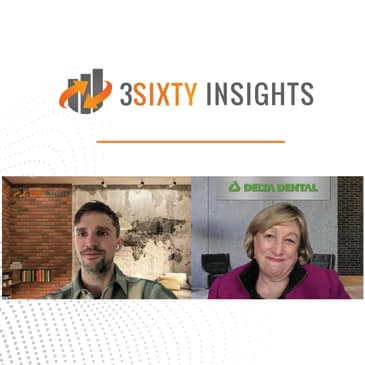
3Sixty Insight's Dylan Teggart sits down with Kathy Claytor, Chief Human Resources Officer at Delta Dental and board director at HRCI, to explore why HR should take the lead in facilities management. With over 25 years of experience in HR leadership across financial services, government, and technology, Kathy shares how workplace design, employee well-being, and strategic planning impact productivity and engagement.
She discusses Delta Dental’s approach to hybrid work, the importance of space planning, wellness initiatives, and how organizations can balance business needs with employee expectations.
Are companies rushing RTO too quickly? How can leaders create an office environment to which employees want to return?
Tune in as Kathy shares her expert insights on the future of work, hybrid work trends, and how HR can drive workplace success.
Powered by the WRKdefined Podcast Network.
[00:00:00] Hey everyone, it's Dylan Taggart here again with your most recent 360 Insights HR TechChat. Today I'm joined by Kathy Claytor. Kathy is currently the Chief Human Resources Officer at Delta Dental and is the Board Director at HRCI. So you've got over 25 years of experience leading HR organizations in financial services, government and tech, and she's got a passion for tech and tech startups. Kathy, thank you so much for joining me.
[00:00:28] Kathy Claytor, Ph.D.: Yeah. Hey Dylan, thanks for having me here. Just a little bit more to add to my background. HRCI is a real passion organization for me, Human Resource Certification Institute, which is the largest global certifying body for HR professionals as well as more broadly in the learning space. I also have a passion for tech and tech startups.
[00:00:57] Kathy Claytor, Ph.D.: I was involved in a tech startup in Chennai, India working in the HR space and I was also involved in a tech council here regionally focused, focused on tech startups and you know all of them, all of the support that goes into organizing and leading tech and tech startup organizations. So thanks for having me, Dylan.
[00:01:22] Kathy Claytor, Ph.D.: My pleasure. And with all the experience you have, I'd love to know kind of your general take on, you know, from your viewpoint, what you're seeing in the HR landscape right now and how you've been adjusting to it, how you've been reacting to it.
[00:01:37] Kathy Claytor, Ph.D.: Yeah. So I think to sum it up, I think what we've seen is lots of unknowns and unexpected things coming our way in just rapid fire, if you will.
[00:01:58] Kathy Claytor, Ph.D.: We've seen a lot of return to work and the associated kind of HR leadership necessary to quickly have folks return to the physical office space. Kathy Claytor, Ph.D.: We've seen that with Amazon recently we've seen that with federal government and I think there's you know certainly certainly more to come.
[00:02:20] Kathy Claytor, Ph.D.: I think with that the onus is you know born a lot by HR professionals to make sure that as much as possible that can be done in a kind of smooth and orderly fashion that the workplace culture is is maintained in a strong fashion. Kathy Claytor, Ph.D.: And that team members are all supported as we you know quickly in some cases make the transition back to the physical office.
[00:02:50] Kathy Claytor, Ph.D.: And with that transition back to the physical office. Kathy Claytor, Ph.D.: You know, obviously you work at one organization, but from word on the street, what is the general kind of feeling how are people receiving it are people. Kathy Claytor, Ph.D.: Is there an angst towards it are people welcoming to it are they, you know, happy to be out of their houses.
[00:03:12] Kathy Claytor, Ph.D.: And and and on to that is primarily the return to office a hybrid model always and are we seeing a higher percentage of that with businesses. Kathy Claytor, Ph.D.: Right sure thing. Kathy Claytor, Ph.D.: So I was on a call earlier today with some colleagues and some of the colleagues were based in the Washington DC area.
[00:03:32] Kathy Claytor, Ph.D.: They they reported that by 5am this morning, there was a backlog of traffic and you know, in some cases miles long looking to find parking places.
[00:03:45] Kathy Claytor, Ph.D.: I think you know this return to office, especially in DC has there hasn't been a lot of time to plan and prepare to to ensure folks have plenty of parking to ensure that there's you know plenty of physical space for them to return to.
[00:04:03] Kathy Claytor, Ph.D.: I also heard a story from another colleague who said, you know, in some cases folks who are returning to the office, in some cases just this morning, are you know, lined up around a conference room table.
[00:04:17] Kathy Claytor, Ph.D.: Head of eight laptops, you know, sort of deep summer lined up in hallway is simply because there's not enough physical space and there wasn't enough time to to to to plan to ensure that folks were set up for success when they did return.
[00:04:35] Kathy Claytor, Ph.D.: In terms of setting up people for success, it sounds like business leaders are making the decision, okay, we want to return people off this without any of the prerequisite kind of infrastructure that goes with that is it would that be correct to say I'm sure there's exceptions but are you finding it's being rushed along a little too much. Kathy Claytor, Ph.D.: Yeah, I think that's I think that's fair to say I think, you know, from a from a personal standpoint.
[00:05:02] Kathy Claytor, Ph.D.: Team members need some period of time to prepare, they need to, you know, locate childcare, they need to organize their commute. Kathy Claytor, Ph.D.: If to your point there, you know, they've been on a hybrid schedule. Kathy Claytor, Ph.D.: And if the returning full time to the office there's just a lot of prep time personally that you know that all of our team members go through to to prepare themselves.
[00:05:27] Kathy Claytor, Ph.D.: There's probably also a mental, you know, aspect to gee I have to get in my car I have to drive to the office. Kathy Claytor, Ph.D.: You know, I'm going to see my my co workers, maybe for the first time in a long time. Kathy Claytor, Ph.D.: And so all of that takes, you know, just just mentally preparing and, you know, doing a lot of. Kathy Claytor, Ph.D.: Planning, especially with kind of family units.
[00:05:49] Kathy Claytor, Ph.D.: You know, I think on the on the other side, I think that from from an HR leaders perspective, and an organizations leadership perspective. Kathy Claytor, Ph.D.: There is, you know, a certain prep and a certain timeframe to to organize and get folks back so that they're not bumping up against each other around a conference room table.
[00:06:13] Kathy Claytor, Ph.D.: To make sure that folks have, you know, plenty of space to to work and do the best job that they can possibly do for their organization. Kathy Claytor, Ph.D.: Yeah, and for the company you work for, have you returned to office or is still in a hybrid model. Kathy Claytor, Ph.D.: Right exactly. Kathy Claytor, Ph.D.: So you know we've. Kathy Claytor, Ph.D.: The method that we've used has been very, very effective.
[00:06:35] Kathy Claytor, Ph.D.: We're on a hybrid, a hybrid model, and the focus really is on a focus on our customers and providing the best support we possibly can for for our customers. Kathy Claytor, Ph.D.: And it's also on team member and team member support, too. Kathy Claytor, Ph.D.: So so we're we've been very measured and that's been very successful for us. Kathy Claytor, Ph.D.: So what have what have been some of the strategies you've done and.
[00:07:04] Kathy Claytor, Ph.D.: Why do you think that it was important that HR was in charge of that aspects of the facilities management and bringing people back to office and what what could you share for people to implement that you did that work? Kathy Claytor, Ph.D.: Yeah, exactly. Kathy Claytor, Ph.D.: So you know it's interesting because in my role, I'm responsible for HR and I'm also responsible for facilities management space, physical space planning. Kathy Claytor, Ph.D.: And and dabble a little bit in real estate even so.
[00:07:35] Kathy Claytor, Ph.D.: In in that kind of comprehensive and broad viewpoint, I've been able to you know certainly with with my executive and leadership team I've been able to to take a look at not just you know a workforce planning kind of perspective, but also kind of physical surrounding.
[00:07:55] Kathy Claytor, Ph.D.: So, for example, you know, as we worked towards getting folks, you know, back in the office, we made sure that that spaces were were comfortable. Kathy Claytor, Ph.D.: We made sure that we had, you know, a large enough kind of open space where folks could gather meet each other have a cup of coffee, you know, sit in our. Kathy Claytor, Ph.D.: Kind of cafe area.
[00:08:21] Kathy Claytor, Ph.D.: We also found that it was really important for folks to have quiet spaces, too, so you need a small pull up space to have a zoom call like what we're having here. Kathy Claytor, Ph.D.: And you know making sure that there's a good balance.
[00:08:36] Kathy Claytor, Ph.D.: From from a kind of physical space perspective, and and this is where kind of this this blend of HR leadership and facilities leadership has come into play made sure that natural sunlight was coming into the building.
[00:08:54] Kathy Claytor, Ph.D.: We have a building it's it's a beautiful building where natural sunlight reaches you know from one end of the building to the other, we have a beautiful kind of atrium and skylight natural sunlight coming in there I think there are many studies that that are out there talking about the benefits of you know having natural sunlight. Kathy Claytor, Ph.D.: We we have also a focus on health and health and wellness we have a.
[00:09:22] Kathy Claytor, Ph.D.: Employee kind of gym and and workout area. Kathy Claytor, Ph.D.: We we also have arranged our space so that we have a big center staircase where folks kind of go up and down you know multi floors. Kathy Claytor, Ph.D.: The elevator sort of tucked off to the side, you know, encouraging those who are able to take the stairs versus, you know, hop in the elevator to take them to the to the next floor so those are just a couple examples of.
[00:09:50] Kathy Claytor, Ph.D.: Just kind of a thoughtful approach to arranging physical space so that it supports the workforce culture that is really really important, especially, you know, in this period of time that we're that we're going through now. Kathy Claytor, Ph.D.: Yeah, it makes a lot of sense, because you know you're bringing people most people probably will prefer to work at home. Kathy Claytor, Ph.D.: Like, let's be honest.
[00:10:14] Kathy Claytor, Ph.D.: Obviously depends on what you do, of course, but you have to entice people back in a way you got to sell that office. Kathy Claytor, Ph.D.: And we've seen, you know, various ends of the spectrum for that, like to the is this an office or a playground to the exactly, you know, the, you know, what you envision in like a corporate. Kathy Claytor, Ph.D.: You know, gray office. Kathy Claytor, Ph.D.: Exactly. Kathy Claytor, Ph.D.: But for you as someone who is making a decision on these types of things on curating that experience.
[00:10:44] Kathy Claytor, Ph.D.: What is the kind of how do you get the buy in from leadership and what how you successfully advocate for these things? Kathy Claytor, Ph.D.: What are you kind of proposing to them in terms of is it like very scientific? Kathy Claytor, Ph.D.: Is it kind of just common sense? Kathy Claytor, Ph.D.: Right, exactly. Kathy Claytor, Ph.D.: Well, you know, I think it certainly starts from a science or a data perspective.
[00:11:03] Kathy Claytor, Ph.D.: So we're looking at kind of workforce planning, how many are expecting to come back, how many are going to be, you know, hybrid, how many will be full time back, how many will be working fully remote.
[00:11:15] Kathy Claytor, Ph.D.: And so it does start from a data perspective, it starts from a science perspective, too, in that, you know, we're looking at, you know, what are the kind of what's what's the right mix, what's the right blend to really provide a strong workplace culture where people want to come back. Kathy Claytor, Ph.D.: I think that's that's really important, I think, to your to your point, you know, there's some folks who may not want to come back and it's really, really, really important to create.
[00:11:44] Kathy Claytor, Ph.D.: A welcoming environment and inclusive environment, a place where you know they can sit down and grab a cup of coffee they can work out in the gym, we also, for example, have. Kathy Claytor, Ph.D.: Team Member garden in the back of our in the kind of the back lot of our building completely, you know kind of team members sort of run but we in the spring and summertime we offer this kind of big plot of land where folks can.
[00:12:14] Kathy Claytor, Ph.D.: You know, can you know plant fruits vegetables things like that they kind of bring it in and leave it in our kind of employee cafe where we're you know we're sharing for those who. Kathy Claytor, Ph.D.: And I want to share I know it sounds maybe a little bit. Kathy Claytor, Ph.D.: A little bit kind of back in the day but. Kathy Claytor, Ph.D.: You know it's it's really, really great our folks appreciate it and it's fun.
[00:12:44] Kathy Claytor, Ph.D.: Once again, it kind of supports this whole idea of natural sunlight health and wellness. Kathy Claytor, Ph.D.: You know, with a blend of obviously work to support our customers. Kathy Claytor, Ph.D.: To which is an important focus. Kathy Claytor, Ph.D.: You know what you should know. Kathy Claytor, Ph.D.: You should know that you should know podcast. Kathy Claytor, Ph.D.: That's what you should know. Kathy Claytor, Ph.D.: Because then you'd be in the know on all things that are timely and topical subscribe to the you should know podcast.
[00:13:13] Kathy Claytor, Ph.D.: Thanks. Kathy Claytor, Ph.D.: Yeah. Kathy Claytor, Ph.D.: And in terms of that, you know, say the sunlight thing is important, I think, just because. Kathy Claytor, Ph.D.: A lot of people envision the office in like the most negative sense a lot of the time where it's like a dark place or not getting any sunlight. Kathy Claytor, Ph.D.: But also in the United States. Kathy Claytor, Ph.D.: Works workplace spaces mainly dictated by company policy, where like if you look at somewhere.
[00:13:37] Kathy Claytor, Ph.D.: Like Germany or something, there's actual laws in place dictating how much you know what just how much space is needed, etc. Kathy Claytor, Ph.D.: And I'm not sure if that was the case also when you worked abroad, but how where is that policy originating from and how is it. Kathy Claytor, Ph.D.: Kind of being spread or carried over in the greater facilities management or office management. Kathy Claytor, Ph.D.: Right. Kathy Claytor, Ph.D.: Right. Exactly. Kathy Claytor, Ph.D.: Yeah.
[00:14:02] Kathy Claytor, Ph.D.: So, so, you know, I think it's it it really should start with kind of available space, obviously, and how you can maximize available space to kind of build and drive the drive the culture. Kathy Claytor, Ph.D.: Where does it originate. Kathy Claytor, Ph.D.: You know, it it originates, you know, with with a leadership team and a strong buy into, you know, arranging space to support the culture kind of from a practical hands on standpoint.
[00:14:30] Kathy Claytor, Ph.D.: It it lives and breathes with with my team so that we're focused on bringing the data number one bringing the science number two kind of doing an overlay in terms of what available space that we have and then how can we maximize it. Kathy Claytor, Ph.D.: So we are, you know, bringing these important elements and but we're also as practical matter, you know, arranging work pods.
[00:14:55] Kathy Claytor, Ph.D.: We're arranging, you know, quiet spaces phone booth space, if you will, for zoom calls. Kathy Claytor, Ph.D.: We're arranging conference room space and so forth. Kathy Claytor, Ph.D.: So, so, you know, so the support starts at the top, and obviously there's a you know a cost element to and then the planning, you know, to support and drive the culture kind of resides with with my team and I obviously with, you know, support from the top.
[00:15:23] Kathy Claytor, Ph.D.: And has that always been the case that it's always been with HR or has it historically been with. Kathy Claytor, Ph.D.: With different groups within the company and why should HR be the ones in charge of this. Kathy Claytor, Ph.D.: Right. Kathy Claytor, Ph.D.: If so. Kathy Claytor, Ph.D.: Great, great question. Kathy Claytor, Ph.D.: So I think probably this is, this is an anomaly. Kathy Claytor, Ph.D.: I think we've seen facilities management workforce planning, physical space planning really kind of reside in another in another area of the.
[00:15:53] Kathy Claytor, Ph.D.: Of the company facilities managers do a do a great job. Kathy Claytor, Ph.D.: They have a hard job planning planning space, but I think it wasn't until kind of reset times when there's been more of a focus on workplace culture that hey, you know, there needs to be a conversation and potentially even you know. Kathy Claytor, Ph.D.: A leadership aspect with with the HR team, you know, maybe I am an anomaly.
[00:16:20] Kathy Claytor, Ph.D.: Maybe it's an emerging trend to that if if it's not owned or led by HR that at least there's consultation with with HR a partnership with those who are managing physical space. Kathy Claytor, Ph.D.: You know, along with those who are responsible for for workplace culture and you know team member engagement to the to the degree that's that's that's feasible.
[00:16:47] Kathy Claytor, Ph.D.: So if you were to break it down for someone. Kathy Claytor, Ph.D.: You know who's about to be in the position where they need to. Kathy Claytor, Ph.D.: Be in charge of the facility being charged and kind of do what you just did. Kathy Claytor, Ph.D.: What would you say are the. Kathy Claytor, Ph.D.: Three to five main takeaways for someone like that. Kathy Claytor, Ph.D.: Wow. Kathy Claytor, Ph.D.: So.
[00:17:14] Kathy Claytor, Ph.D.: I think surround yourself with a great team, I think it, you know, it. Kathy Claytor, Ph.D.: It is maybe not in HR is kind of natural kind of body of learning.
[00:17:26] Kathy Claytor, Ph.D.: To deeply understand facilities facilities planning, I think it takes a partnership with great team members who are expert in that space, you know, sometimes you don't know what you don't know and and relying on those who are experts in the physical, you know, in this physical space and facilities management is probably, you know, could number one, you know, in terms of.
[00:17:55] Kathy Claytor, Ph.D.: In terms of importance, I think, you know, other other elements to consider in terms of importance are, you know, certainly buy in from the top. Kathy Claytor, Ph.D.: The the the the way that workplace culture can be supported with physical spaces number two just critically important and the support from the top.
[00:18:22] Kathy Claytor, Ph.D.: You know, the the buy in there. Kathy Claytor, Ph.D.: Let's see. Kathy Claytor, Ph.D.: Other items to to make sure to to keep our eye on. Kathy Claytor, Ph.D.: I think team member engagement, you know, measuring, you know, employee feedback team member feedback to the degree that you're able making sure that you're listening to folks.
[00:18:48] Kathy Claytor, Ph.D.: You know, as we talked about at the beginning of this conversation, folks are coming back and kind of a quick, a quick kind of pace. Kathy Claytor, Ph.D.: And to the degree you're able making sure that you're listening to your team members in terms of, you know, are they in a comfortable space to make sure that they're able to to be really, really successful in what they're doing.
[00:19:12] Kathy Claytor, Ph.D.: And ultimately, they're, you know, supporting customers, they're supporting, you know, folks within the governmental sector and so forth. Kathy Claytor, Ph.D.: Critically important to make sure you're listening to your team members to the degree that you're able. Kathy Claytor, Ph.D.: And if you're not able to, you know, respond immediately, at least putting that in your long range planning in terms of physical space and opportunities that you might have.
[00:19:43] Kathy Claytor, Ph.D.: Yeah. And do you think that return to the office is going to be something that comes back? Do you think we're ever going to get back to the point where we were before the pandemic? Or do you think that ship is kind of permanently sailed? Kathy Claytor, Ph.D.: Great question. You know, I think the ship has sailed. I think we're really in a different place from a workforce perspective.
[00:20:09] Kathy Claytor, Ph.D.: I think there's a different expectation of all of our team members who lived through COVID. Such a tough time, very impactful time on, you know, from a work perspective, from a family perspective.
[00:20:23] Kathy Claytor, Ph.D.: So I really think that we're in a completely different space, a little bit uncharted. I think, you know, from a talent perspective, making sure that we're getting the best and brightest work for our companies, making sure that we're able to retain that talent, you know, is really, you know, critically important for overall business success.
[00:20:50] Kathy Claytor, Ph.D.: So really, I think we need to make that pivot. And I think, you know, what's taking place currently, current events are really causing us to kind of sit up and pay attention to workplace, to talent attraction, talent retention, and business success. Kathy Claytor, Ph.D.: I feel like when you think about the trajectory we were on, you know, in 2019.
[00:21:17] Kathy Claytor, Ph.D.: It's kind of difficult to think that we ever would have been able to, you know, companies would have been able to remain competitive if they just kept relying on their local talent base right in the world we're in now. Kathy Claytor, Ph.D.: Where the world is a lot smaller. Kathy Claytor, Ph.D.: You kind of got to take who's the best at the job, whether or not they live in Wichita, Kansas, or wherever shouldn't matter. It's more, are they effective because you can't find that person anyway.
[00:21:44] Kathy Claytor, Ph.D.: Well, exactly. It's, you know, as I said, it's, it's about, you know, supporting your clients or customers. It's about business success. It's a, it's, you know, really to your point about. Kathy Claytor, Ph.D.: And brightest, wherever they live, even, you know, in some cases around the globe. It truly is, is about that.
[00:22:08] Kathy Claytor, Ph.D.: And one interesting question I have that is a little unrelated in terms of your time, you were working on the ground in India for quite a while. It sounds like. Kathy Claytor, Ph.D.: I didn't live in India, but I was, you know, a frequent flyer there, shall we just say. So I spent, I spent a lot of time in India. Yeah. Kathy Claytor, Ph.D.: And just as that world gets bigger and people work with people from, you know, Asia, South Asia more often on a regular basis.
[00:22:33] Kathy Claytor, Ph.D.: How are those two, how do you predict those two cultures are going to kind of interact? Because I think eventually we're all going to, you know, people already have tons of colleagues from all over the world, especially from Asia and South Asia. Kathy Claytor, Ph.D.: How are you envisioning a future like that where you're now managing and for someone like yourself now juggling all of these different work cultures?
[00:22:56] Kathy Claytor, Ph.D.: Right, exactly. Great, great question. You know, I think it starts with an openness and a willingness to be curious and learn, you know, about your work colleagues around the globe. Kathy Claytor, Ph.D.: You know, something as simple as, hey, tell me about your family, tell me about yourself personally.
[00:23:16] I'm getting to know someone kind of at that, at that personal level that really kind of promotes workplace and, you know, productivity success, if you will. Kathy Claytor, Ph.D.: I think it's easy to go into a relationship, you know, where you're, you know, halfway around the globe from each other, either having, you know, preconceived sort of thoughts about who you're working with.
[00:23:43] Kathy Claytor, Ph.D.: What I found is, is if you're open, if you're curious, then that opens the door to personal connection and work success. Kathy Claytor, Ph.D.: I guess finding that common ground is going to be. Kathy Claytor, Ph.D.: Exactly. Yes. Kathy Claytor, Ph.D.: The most important. Kathy Claytor, Ph.D.: Yes, exactly. Kathy Claytor, Ph.D.: Well, before we wrap up, is there anything else you'd like to add?
[00:24:06] Kathy Claytor, Ph.D.: So, you know, I think this is, this continues to be a really challenging time for folks in HR roles. Kathy Claytor, Ph.D.: Really, I think, you know, perhaps the unsung heroes and in all of this for leading through, through leading through COVID, for leading through these conversations about return to office, about physical space.
[00:24:33] Kathy Claytor, Ph.D.: And, and, you know, I think we need to, to make sure that organizationally, we're, we're lifting up those who are, you know, doing some heavy lifting themselves. Kathy Claytor, Ph.D.: So kind of taking care of each other in this HR space is really important. Dr. Ph.D.: Yeah, for sure. It's definitely an unpredictable time for the, for the profession, I would say. Kathy Claytor, Ph.D.: Absolutely.
[00:24:57] Dr. Ph.D.: And, uh, not sure it's ever going to become less predictive, you know, it's going to become any more predictable anytime soon, but hopefully. Dr. Ph.D.: Yeah, I agree. Dr. Ph.D.: All right, Kathy. Well, thank you very much. And if people want to reach out to you, if they have any questions, is there somewhere they can contact you? Dr. Ph.D.: Yeah, sure thing. Uh, they can find me on LinkedIn. Um, Katherine Claytor and, you know, I look forward to, uh, look forward to the connections.
[00:25:24] Dr. Ph.D.: Fantastic. Well, listen, everyone, thank you for checking out this podcast. Kathy, thank you again for joining me and I'll see you on the next one. Dr. Ph.D.: Great. Super. Thanks so much, Dylan.
Sponsors
