
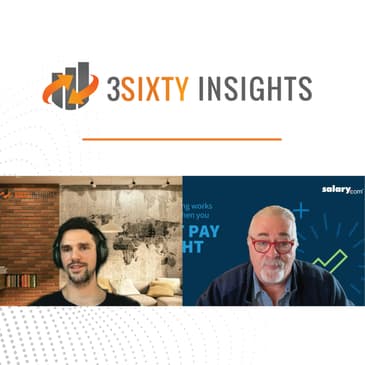
John Sumser, VP of Marketing at Salary.com and a seasoned industry analyst with over 30 years of experience, joins Dylan Teggart for this episode of #HRTechChat. Together, they explore the shifting landscape of compensation and the profound ways pay transparency and AI are shaping the future of work. From his beginnings analyzing the job board industry at the dawn of the internet, John offers a wealth of knowledge on HR technology and the critical role compensation plays in business strategy.
In this episode, John shares his unique perspective on key trends transforming the workforce, from navigating an aging labor market to the challenges of integrating vast amounts of data into actionable insights. With a thoughtful approach to ethics, technology, and innovation, John provides listeners with a deeper understanding of how organizations can adapt to thrive in an evolving workplace.
Powered by the WRKdefined Podcast Network.
[00:00:00] Hey everyone, this is Dylan Taggart reporting in from 360 Insights. I'm joined today by John Sumser. John's joining me for our latest HR TechChat. John is an industry analyst. He's got over 30 years of experience and he's currently working inside of a software company. John, thanks for joining me.
[00:00:20] John Sumser Thanks Dylan. It's nice to be here.
[00:00:23] Before we get into our conversation today, do you mind telling people a little bit about yourself and what you've been doing the last 30 years?
[00:00:28] John Sumser Sure, sure. I started as an industry analyst before I knew what an industry analyst was. In those days, 30 years ago, there were six or seven job boards and I started watching them and getting to know the players in the job board business. That was just as the web was beginning. And that evolved to become the
[00:00:58] John Sumser. And so I started to be a site called interbusinessnet.com where I wrote about digital recruiting and the job board industry every day for 15 years.
[00:01:09] John Sumser At the end of 15 years, I thought, well, maybe I've covered everything that there is to cover here. And so I broadened out and spent the next 15 looking into the broader HR universe.
[00:01:24] John Sumser And so some of the kinds of things that I did over that time is there's a shortage of good objective research about fundamental things in the business. And so I spent a couple of years building some of those.
[00:01:38] John Sumser I spent about five years helping people design ethics boards for AI governance. And that was an extraordinary dive. And these days, I like to say that I was a food critic for all those years and got a job in the kitchen. So I'm working in a software company these days.
[00:02:06] John Sumser Interesting. So what did ethics and AI governance kind of look like in the early forms? And just I know this is a little off topic, but just to someone who's there early on.
[00:02:18] John Sumser No, it's good. I've been following it for a long, long time. The stuff that is getting all of the press these days really has its roots almost 15 years ago.
[00:02:30] John Sumser And then it was called big data. And big data has evolved. The underlying things have evolved. And now you have this bubble. I think it's a bubble with large language models.
[00:02:43] John Sumser And along the way, the question became, how do you account for bias inside of large language models and other forms of AI? And that was the heart of the question that ethics boards were dealing with.
[00:03:02] John Sumser And so I designed a variety of things. Part of the problem when you build software is that nobody can afford to have all of the necessary points of view to eliminate bias from software design.
[00:03:17] John Sumser And so a function of the ethics board is to be a supplement to the design process so that you can catch bias related errors before they hit the streets.
[00:03:31] John Sumser And that looks like on one case, I built a team of 20 industry experts from all walks of life who met quarterly to guide the ethics of a company to a couple of others that were as small as me, somebody from the board, and a couple of people from inside of the company as the ethics thing.
[00:03:55] John Sumser And so we were looking, I think, for a model for ethics.
[00:04:00] John Sumser And I think that my read is that the interest in ethics, ethics is a funny thing, it doesn't pay the bills.
[00:04:10] John Sumser And so it's hard to get funding inside of organizations and the need for ethics functions in AI seems to have diminished.
[00:04:22] John Sumser It's more important than ever, but there's less emphasis on it, I think.
[00:04:27] John Sumser It's interesting that it's diminished given that wouldn't it open people up to legal liability if not handled correctly?
[00:04:35] John Sumser Because the lines are kind of blurred with law and what could be future law on AI and also where ethics tie into that.
[00:04:44] John Sumser So the thing about ethics on the one hand is that it is a compliance issue, right?
[00:04:52] John Sumser The discrimination is against the law across the board in the United States.
[00:04:57] John Sumser And so the way that you test whether or not a system is biased is you just look at its results, the outcomes, whether or not it's biased.
[00:05:06] John Sumser The point of an ethics board is to catch that stuff before it turns into a liability problem.
[00:05:12] John Sumser Now, one of the things that's interesting about liability in this stuff, if you read the contracts that most organizations sign, software providers in general distance themselves from liability and the government holds the final decision maker as responsible for the quality of decisions.
[00:05:34] John Sumser And so the liability falls squarely on the customer or the employer, depending on how you want to characterize it.
[00:05:42] John Sumser And that creates an interesting model because I don't think that most employers are in a good position to figure out what to do with that.
[00:05:58] John Sumser Interesting.
[00:05:59] John Sumser Well, it's interesting to see where it goes in the future because I think a lot of people – it's something a lot of people are worried about, I think.
[00:06:05] John Sumser It's a little bit of an unknown what will happen as these models become more and more intelligent and more and more effective.
[00:06:15] John Sumser Well, that's an interesting question.
[00:06:17] John Sumser I'm not sure that's going to happen.
[00:06:19] John Sumser I'm not sure that they're going to get more intelligent and more effective.
[00:06:23] John Sumser I think that's certainly the hype.
[00:06:28] John Sumser That's certainly the hype.
[00:06:29] John Sumser But if you watch the news over the last couple of days, all of the large language model companies are acknowledging the fact that scaling doesn't work at this point in the process.
[00:06:42] John Sumser And when scaling doesn't work, this starts to look like flying cars again or self-driving cars or something like that.
[00:06:51] John Sumser And that's happened before in the history of AI.
[00:06:55] John Sumser So I think one would be wise to be cautious about what you believe about the future of AI.
[00:07:10] John Sumser Well, that's an interesting point.
[00:07:12] I'm sure there's going to be plateaus along the way, just like with any technology.
[00:07:16] You know, we're going to have big leaps and then stuff will kind of slow down and plateau for a bit.
[00:07:20] And then maybe I can only imagine sometime in the future they're going to advance again.
[00:07:28] But how long that takes is anyone's guess, I suppose, like you said.
[00:07:32] John Sumser Yeah, yeah, yeah.
[00:07:32] John Sumser So I think we're headed in a direction, but I don't think we know whether that's five or 100 years away.
[00:07:41] John Sumser Yeah, for sure.
[00:07:43] So changing gears a little bit here and moving into paying compensation, I know that's something you look at quite a lot.
[00:07:52] And speaking of the future, I guess we could start right there.
[00:07:57] John Sumser Based, you know, given where we are right now with paying compensation, where are you seeing the trends that are happening right now kind of branching off into the future?
[00:08:08] John Sumser Well, there's an explosion of data sources for compensation information.
[00:08:14] John Sumser And there are some serious questions about how good they are.
[00:08:20] You know, anytime there's a disruption, it always starts out cheap and low quality.
[00:08:27] That's what disruption looks like anytime it happens is it's cheap and crummy.
[00:08:31] Like remember, do you remember what the first digital photos looked like?
[00:08:37] John Sumser They were heavily pixelated and nowhere near as good as you can produce with a camera.
[00:08:44] And it took a decade to get to the point where you could start to think about doing digital photography.
[00:08:52] And it took another five or six years before the transformation was complete.
[00:08:56] And that was mostly egged on by the integration of the camera into the telephone.
[00:09:02] John Sumser But it took it took a long time to go from yes, it's possible to oh, it's everywhere.
[00:09:11] Right.
[00:09:12] And so so that same kind of thing applies to what's happening with data associated with compensation.
[00:09:21] So the other thing to to to think about as as things evolve is the pay the pay transparency regulations.
[00:09:30] John Sumser Have had an enormous.
[00:09:35] Impact on the marketplace.
[00:09:38] Before 2023, there were no pay transparency regulations.
[00:09:43] Today, just before the start of 2025, 50 percent of all American workers are covered by pay transparency laws of some kind.
[00:09:53] And so what that means is that a whole lot of stuff that looks like compensation data is all over the marketplace.
[00:10:03] And and as pay transparency progresses, that data is going to get better and better and better and better.
[00:10:11] So if you want to find out.
[00:10:15] The pay for a job.
[00:10:20] That data will become prolific and there'll be some interesting questions about how you tell quality and data.
[00:10:28] Be some real interesting questions about how you tell quality and data.
[00:10:33] At the same time, having market pricing for a single job doesn't get at the heart of compensation.
[00:10:42] You know, compensation is the organization's tool for governing the single largest item on the balance sheet labor cost.
[00:10:51] And the reason that you have a compensation function is so that you can introduce predictability into labor costs because it's a really hard thing to pin down.
[00:11:01] And it tends to be where profitability of companies live or die.
[00:11:07] And so data explosion does not get your data structure.
[00:11:12] And one of the things that that I think will start to be a conversation is whether or not.
[00:11:19] Data structure is the larger part of what constitutes quality information.
[00:11:25] And so I think we'll see that shake out.
[00:11:30] Before we move on, I need to let you know about my friend Mark Pfeffer and his show People Tech.
[00:11:36] If you're looking for the latest on product development, marketing, funding, big deals happening in talent acquisition, HR, HCM, that's the show you need to listen to.
[00:11:48] Go to the Work Defined Network, search up People Tech, Mark Pfeffer.
[00:11:53] You can find him anywhere.
[00:11:57] So you're saying essentially that even though all this data is out in the market, which is a good thing, especially for, you know, transparency for workers,
[00:12:06] for businesses, if they don't necessarily know what to do with it, it's kind of just data for data's sake.
[00:12:11] Well, it's like if you had all of the books in a library in a great big pile, you can say you had a lot of books.
[00:12:22] But being able to find out what's in that pile takes some sort of disciplined structure.
[00:12:28] So you know where to put the books and you know how to think about this category versus that category.
[00:12:34] And that's not part of a single metric for what should you pay for this job or that job.
[00:12:44] So what do you see as viable solutions going forward with that in mind?
[00:12:51] Well, it's interesting because compensation professionals currently take every shred of data they can get from wherever they can get it to arrive at the conclusion that they draw about pricing for jobs.
[00:13:08] And so an explosion for data is probably heaven for compensation professionals because you get, you know, it's like your spice cabinet opens up and you get more spices to play with when you're making something.
[00:13:23] And so I imagine that the compensation function will evolve and that it might spread.
[00:13:32] Currently, compensation exists as kind of a hard silo.
[00:13:37] It's all about data and analysis unless it's involved in approving a job offer.
[00:13:46] But the rest of it is fundamentally data and analysis.
[00:13:49] And so as the data explodes, you might imagine that compensation will spread out into the rest of the organization in an interesting way.
[00:13:59] There's a case that I'm not sure how much emphasis to put on it, but there's a case to be made that everything that HR does is an expression of compensation.
[00:14:14] You know, so why do you have disciplinary conversations or performance management conversations or deliver benefits or deliver payroll or deliver variable pay or deliver training?
[00:14:26] All of those things are all about forms of compensation and reasons for paying.
[00:14:35] And so you might imagine that any of those functions can be better informed if they have a dollar figure sitting in front of them.
[00:14:47] And how in terms of how this kind of impacts employees, obviously, it gives them more or workers, I should say.
[00:14:55] It gives workers more insight into what they could be making.
[00:15:00] But do you think this will have a positive or negative effect on their wages in the long term?
[00:15:11] Well, I think there's a couple of things.
[00:15:13] The first benefit of pay transparency is that it chases favoritism out of the organization.
[00:15:21] So with pay transparency, every employee will know how they're paid and why they're paid that much.
[00:15:29] That's what the future of pay transparency looks like.
[00:15:32] So it's not a mystery any longer why you're paid what you're paid.
[00:15:38] There's some chance that that leads to a structure that has jobs and levels in it.
[00:15:49] And those levels get hard to move through.
[00:15:52] And so there's some chance that that this starts to restrict movement.
[00:15:58] But generally, that that might be seen as a good thing.
[00:16:03] It's how compensation works in Europe and it's how compensation works in the government.
[00:16:09] It's only in private industry in the United States.
[00:16:12] The compensation works differently.
[00:16:14] Exactly.
[00:16:15] So almost like pay grades in the military or pay grades in the government.
[00:16:19] Exactly.
[00:16:22] Interesting.
[00:16:22] Interesting.
[00:16:23] Um, and in terms of, I guess this ties into another question I want to ask you.
[00:16:30] is uh how skills tie into this and how job replacement replacement if any
[00:16:39] will play into this change in compensation it sounds like they could result in more rigidity
[00:16:45] but when people are now trying to compensate people for skills more it seems like that's
[00:16:50] the talk on the street how does that play into it you're then tying certain skills a certain
[00:16:56] compensation and compensation can adjust that if you have skills i guess that already happens
[00:17:01] in effect essentially but how because there needs to be this heightened transparency does
[00:17:05] that mean that you're going to have price markers for specific skills that okay your job pays 70k a
[00:17:11] year if you have you know good skills but if you have great skills if you have a master's or whatever
[00:17:19] phd that adds eight thousand dollars a year to your compensation or something like that is that is that
[00:17:25] going to be something we could see this transparency trend leading to like almost an a la carte style
[00:17:30] menu of skills tied to compensation well the interesting thing is skills don't implicitly have
[00:17:40] anything to do with what the job is so you can have a bunch of skills but if i dump you into a work
[00:17:46] environment um and your job is to produce x result finding the relationship between those two things is
[00:17:59] the thing that's slowing down hiring and managing on a skills basis right so so i'm unaware of any
[00:18:09] and my my awareness is limited but i'm unaware of any fully executed skills-based compensation program
[00:18:18] and i am at a loss for telling you how that would work i think i think it's liable to be coming
[00:18:25] and it's liable to be coming because whether or not ai is the answer there are some radical shifts going
[00:18:33] on in the way that work is structured the way that work means when what work means and the differences
[00:18:42] are some skills are decreasingly important and some skills are increasingly important and jobs change as
[00:18:53] as well as skills change inside of those jobs um what are we going to see well i have been experimenting with
[00:19:01] large language models for a couple of years now and it seems to me that some fairly rudimentary things
[00:19:11] are able to be done that that didn't used to be able to be done and so it's it's analogous to
[00:19:18] you when i came to work every every work group had a secretary and that you don't have secretaries anymore
[00:19:29] um or very very few of them um because word processing replaced them that kind of thing so what were the
[00:19:41] basic skills that word processing replaced document creation the idea that you would create your own
[00:19:47] documents was not something that nobody heard of um in 1980 but today the desktop is where all documented
[00:19:57] creation happens um the change in skills suggests that um there will be a change in the way that people
[00:20:14] think about compensation so if you've got a narrow skill that's highly valued and all of a sudden it can
[00:20:21] become automated it won't be long before you're not paid for that thing that you used to be paid for
[00:20:30] and so the question is what replaces that right and this is this is in the great unknown about the impact of
[00:20:38] technological change over the next 10 years say about how it's really going to affect
[00:20:44] white collar work and what parts of white collar work are going to get automated and what gets replaced
[00:20:52] um and that's it's been the topic of year-end hr trend forecast for about five years now
[00:21:04] it'll start to pick up momentum in the next couple of years yeah i feel like everyone's kind of at the edge
[00:21:13] of their seats wondering if they're next if they're the next secretary i guess you could say because
[00:21:19] human skills are obviously going to be something you can't necessarily replace
[00:21:23] at the moment but when it comes to other functions we don't really know what that's going to be obviously
[00:21:31] physical tasks are something you can't quite replace you know uh one-to-one all the time
[00:21:40] but for yeah white collar jobs it is a it is a bit of a wonder which leads me to one question
[00:21:49] it sounds like you know there's there's been a lot of talk about labor shortages and
[00:21:55] certain fields in certain industries i've always been a little skeptical of that just because i feel
[00:22:00] like it's largely a pay issue a lot of the time people there's a demand for certain skills but the
[00:22:07] incentive isn't necessarily there to compensate them properly so there becomes a shortage of skills
[00:22:13] but it ultimately all kind of ties back to compensation or a lack of funding for people to
[00:22:20] be educated on those skills like you would in other economies where certain things are subsidized by
[00:22:25] the government certain types of education are subsidized by the government because they need those skills
[00:22:30] how do you how do you view that in terms of the compensation function and do you think labor
[00:22:38] shortages are going to really affect things that greatly for businesses or well so so the labor
[00:22:45] shortage thing another another term for labor shortage is aging workforce right so the labor shortage is a
[00:22:53] material fact and the material fact is for 40 years family size has been shrinking and so at the startup end of the
[00:23:08] work life cycle there are fewer replacement workers simple it's simple math when when
[00:23:17] when i was born average family size was almost four kids today that's well under two kids and that means that half of the replacement workers that you would expect are not there
[00:23:34] and so what you see is people getting older in their jobs and older people hanging on to their jobs for longer and that's what the labor shortage looks like most places
[00:23:46] um that labor shortage another way of talking about your view that that um that it's really a pricing
[00:23:57] problem that you that in other words you can't get
[00:24:03] any java developers for fifty thousand dollars a year and so if you went out looking for java developers at
[00:24:10] fifty thousand dollars a year you wouldn't find any um right that's that's one way of thinking about it
[00:24:16] but the other way of thinking about it is the labor shortage creates the pressure that make wages go up
[00:24:24] and wages go up for a variety of reasons including tenure and jobs and as the workforce gets older
[00:24:33] people stay in their jobs longer um and so so you're starting to see this bubble up pressure about what people get paid
[00:24:42] that that will be the source of inflation over the next four or five years have you ever been to a
[00:24:50] webinar where the topic was great but there wasn't enough time to ask questions or have a dialogue to
[00:24:55] learn more well welcome to hr and payroll 2.0 the podcast where those post webinar questions become
[00:25:00] episodes we feature hr practitioners leaders and founders of hr payroll and workplace innovation and
[00:25:06] transformation sharing their insights and lessons learned from the trenches we dig in to share the knowledge and tips
[00:25:11] that can help modern hr and payroll leaders navigate the challenges and opportunities ahead so join us
[00:25:16] for highly authentic unscripted conversations and let's learn together and for how do you how do you
[00:25:25] predict or what is the best way for companies to handle that is that by investing further into
[00:25:35] optimizing their workforce or are you going to be seeing companies letting go of older people just
[00:25:41] because they're more expensive to keep on oh you might see some of that but it's against the law um and so
[00:25:49] um doing that results in huge settlements and so that's not likely to be a common thing um well not
[00:25:59] not explicitly but there could be ways to circumvent that like just by anecdotal means of saying that
[00:26:06] someone's not doing their job properly or there's restructuring oh you know this
[00:26:11] is another place where um what matters is not the rationale what matters is the numbers
[00:26:18] and so if you have if you've got attrition rates across the board and it and all of a sudden your
[00:26:25] attrition rate for older workers spikes up that's a foundation for a lawsuit um and the great thing
[00:26:36] is that the most important thing or terrible thing about pay transparency and contemporary
[00:26:42] data flows is that in order to figure out your internal attrition rates by demographic you have to
[00:26:52] create something that is known in in courtrooms as evidence and so there's a lot of discoverable
[00:26:59] evidence inside of companies that if there's a hint of age discrimination if there's a hint of a whole
[00:27:07] bunch of different kinds of discrimination it becomes the foundation of lawsuits so there's
[00:27:16] there's a governance mechanism in there it's imperfect but but but it kind of works kind of works
[00:27:25] interesting yeah just uh before we wrap up is there anything else you feel like people should be aware
[00:27:34] of uh there's one final point one final trend you've been noticing or one one big trend you've been
[00:27:39] noticing that we haven't touched on today well i'm going to come back to you about how do you tell
[00:27:44] if your job is likely to be automated and so while we were talking i went to chat gpt and i said
[00:27:54] uh could you monitor software companies and they're changing product lines drawing conclusions about
[00:27:59] trends on a continuous basis does that sound like your job um and it gives me 10 items about what it
[00:28:09] could do to do that job and so so if you're listening to this and you're wondering whether or not you can
[00:28:16] be replaced go ask one of the large language models it'll give you some idea of of how much time you have
[00:28:25] before you need to figure something out or how much time you have before you need to um
[00:28:31] to do that and redefine the value that you create what's what's the uh timeline i got over there um
[00:28:41] well it says it can do regular analysis of product announcements monitoring financial statements it
[00:28:47] can observe mergers acquisitions and partnerships track patent filings utilize data analytics and ai
[00:28:55] tools and engage with industry conferences and webinars so i mean this is a joke you know but but but but but
[00:29:05] but i'd look over my shoulder a little bit i'd look at my shoulder a little bit now you know the the
[00:29:11] the analyst business is all about point of view and one of the things that you can't really get in um
[00:29:20] a large language model these days is some kind of focused consistent point of view and that's really
[00:29:27] what makes one analyst firm different from another and i don't think that's probably replaceable you may
[00:29:33] find that you need fewer people to do the work it's interesting you say that because i do i think
[00:29:42] ultimately it comes back to your you being yourself as your best brand
[00:29:49] and while that's not always going to be i mean it's desirable or in demand but you as your like you
[00:30:00] said your consistent point of view is likely the best thing to make you continue to be relevant because
[00:30:07] you're bringing something that is not such a homogenized product that aligns with a lot of other people
[00:30:16] i think that's right as long as you continue to learn and work to keep your point of view fresh
[00:30:24] right um a dead point of view is not very interesting for sure absolutely
[00:30:34] well that's been a very interesting conversation john thank you so much and uh hopefully we can do it
[00:30:40] again sometime that'll be fun if people uh if you're open to people getting in touch with you what's the
[00:30:46] best place for them to reach out to you uh my email address is john.subster at salary.com
[00:30:55] great well thank you everyone for listening and john always a pleasure
[00:30:58] all right thank you very much great to do this
Sponsors
