
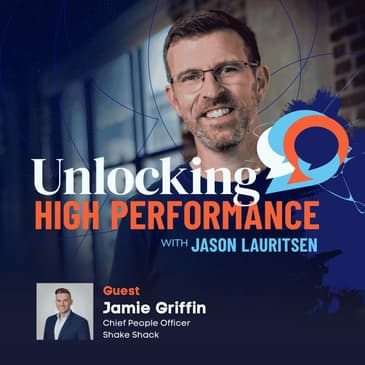
If you are trying to keep your culture consistent as you grow, this conversation shows you how one people leader is doing it across hundreds of locations and thousands of frontline workers. You will learn why clarity and alignment are two different jobs, how an origin story becomes a tool for shaping culture, how to design the employee experience so people live your values without ever being handed a document, and why the shift from being nice to being kind changes how leaders show up. It is a practical look at connecting strategy and culture so they push the organization forward together instead of pulling in different directions.
Key Takeaways
→ Clarity and alignment are not the same thing. Two people can agree on the exact same words and still picture completely different outcomes, so leaders have to slow down and make sure everyone sees the same result.
→ A company's origin story shapes how it should grow. Knowing where you came from gives you a source to design culture forward as you scale.
→ Culture lives in the minds of your team members and brand lives in the minds of your guests. You shape both by controlling the experience, not by handing people a values statement.
→ Every part of the employee journey can be designed as an episode, from the first day to orientation, so the culture comes to life without anyone being lectured about it.
→ Systems and processes are how culture scales. Design the work so it is easy to get right and hard to get wrong, then look at the design first when someone gets it wrong.
→ Feedback only matters if you close the loop. Guest and team member sentiment should feed back into training and coaching, not sit unused in a report.
→ Attendance problems are often a leadership signal, not a team member problem. When one leader has repeated issues, you need a leader intervention, not an attendance policy.
→ Leader stability drives results. People need time in one place to build connection with their team and community, so growth should not always mean moving somewhere new.
→ Nice is not the same as kind. Nice avoids discomfort, while kind embraces a little discomfort to leave someone better than you found them.
→ Caring for someone means telling them the truth. Keeping people comfortable while they are struggling is not care, and keeping someone safe is not the same as protecting them from discomfort.
Timestamps
01:07 – Why people are the solution, not the problem
04:38 – Keeping strategy and culture from pulling apart
05:44 – Why clarity has to come before alignment
08:02 – Using your origin story to define who you are
10:24 – Turning company values into a culture napkin
13:01 – Getting the message all the way to the frontline
15:15 – Designing every moment as an episode
18:46 – Building systems that close the feedback loop
22:59 – Why leader stability drives performance
25:23 – Moving from nice to kind in how you lead
Keywords
scaling company culture, aligning strategy and culture, leadership clarity and alignment, frontline employee experience, building culture across multiple locations, moving from nice to kind leadership, chief people officer insights, employee onboarding and orientation, giving honest feedback at work, retaining frontline workers
—
Connect with Jamie:
LinkedIn: https://www.linkedin.com/in/jamiejgriffin/
—
JOIN THOUSANDS OF LEADERS WHO ARE HARNESSING THE POWER OF RELATIONSHIPS AT WORK. Subscribe to our newsletter: https://tinyurl.com/59nrvxnj
—
Connect with Jason Lauritsen:
Website: https://jasonlauritsen.com/
YouTube: https://www.youtube.com/@JasonLauritsenVideo
LinkedIn: https://www.linkedin.com/in/jasonlauritsen/
Instagram: https://www.instagram.com/jasonlauritsen/
Powered by the WRKdefined Podcast Network.
[00:00:08] Welcome to Unlocking High Performance, a podcast for leaders who believe great results should never come at the expense of their people. I'm Jason Lauritsen, an advisor to CEOs and leadership teams who want to accelerate performance without burning people out. Today, I am joined by Jamie Griffin. Jamie is the Chief People Officer for Shake Shack, a multinational fast casual restaurant chain based in New York City.
[00:00:34] In his role, Jamie oversees all aspects of human resources from team member experience and talent acquisition to HRIS operations and compliance. Jamie has more than two decades of experience helping restaurants scale, evolve and build strong people-centered cultures. Jamie, my friend, it's good to see you. Thanks for joining me on the podcast. Man, Jason, it's so good to see you. Thank you for having me on the podcast.
[00:01:01] And what was in the intro? People results, great results don't come at the expense of people. Say that again? That's right. They don't have to come at the expense of their people. Oh, I love that. The way I say it is that so often people are framed up as the problem. And the reality is people are the solution. Like the only way we can do the things we want to do, especially in a restaurant business or retail business, is by making sure that we empower the people.
[00:01:30] Or the way we say it at Shake Shack is we set the table for the team so they can set the table for our guest. I think it's probably very clear to anyone listening now why you and I were fast friends when we first met. So before we get into this, in case someone lives in a part of the country where they're not regularly exposed to a Shake Shack, can you tell us a little bit about the organization, kind of how big it is, where you are?
[00:01:57] Tell us a little bit about the business just so that we can kind of have that for a context. Yeah, absolutely. Shake Shack started in New York City in Madison Square Park. It's got a great, great founding story. Something that attracted me to the brand is like, why does Shake Shack exist? And Shake Shack exists because a restaurateur with a world-class restaurant abutted to Madison Square Park was asked to put a kiosk to support an art installation in Madison Square Park.
[00:02:26] And that kiosk sold hot dogs and all of the toppings for those hot dogs were prepped in 11 Madison Park, this amazing restaurant that continues to operate in New York. For five years, Shake Shack, the seed of Shake Shack, was actually this hot dog cart in Madison Square Park. And then the park put a year-round kiosk in the park, which you can still visit today, which I'm lucky enough to live about an avenue away from.
[00:02:52] And Danny drew on a napkin all the things that he wanted this kiosk to do. He jokingly called it Custard's Last Stand because it was going to sell custard. We actually named it Shake Shack instead. And we sell premium hot dogs, hamburgers, fries, shakes. We have about 679 restaurants around the globe. 289 of those are licensed internationally and domestically.
[00:03:17] And then I'm largely responsible for the team members at the 390 Shacks and our Shack Support Centers, which are in New York, Atlanta, and Hong Kong. And we have about 14,000 team members growing rapidly. I think we opened about 40 shacks last year. We call our restaurants Shacks. I've already converted to the language. And our goal is to open 55 plus this year. So really exciting time to be here, a lot of work to do,
[00:03:42] and really a meaningful opportunity to change the way the world of work works for frontline workers, which is why I joined the company about 11 months ago. Awesome. Thank you for that. It's good to have that sort of picture of this is a large global operation. And so I think today I wanted to, as you and I were kind of thinking about what do we want to, you know, what do we want to unpack today?
[00:04:10] We were talking a little bit about, you know, some of the work that we do around how, you know, we help organizations think about performance. And we call it the connective performance system. And there's sort of a piece of this that is what we call organizational alignment, which is really the connection between strategy and culture, right? Making sure that those two things are working together to propel the organization forward
[00:04:36] and not pulling in different directions as they too often are in organizations. And it sounds like you are, you know, you sort of resonated with that because you're doing some of that work, it sounds like right now. And so we're going to dive in and pull that apart. But before we do that, you also mentioned that, you know, like when we start our work, it's often leadership clarity work, right? You have to have sort of something clear to align to, right? You have to be clear about where we're going and what the direction is and why it matters.
[00:05:05] And that sounds like that's the same place you started. So I'd love to understand, you know, especially in your first 11 months, what has that work looked like for you relative to like making sure that you're starting with, as you think about, I know we're going to talk about sort of how do we cascade this to the front lines and make sure they feel it. But what does it look like for you to make sure that you have clarity kind of from the top of the organization or that you have that to kind of carry forward?
[00:05:36] Yeah. Well, look, clarity, alignment, performance, again, reasons why we're fast friends. I'm completely aligned. You know, before I joined Shake Shack, my formative career was working for a high growth restaurant company for 14 and a half years. And then I did consulting work. And in the consulting work, it was super, it was a little bit easier to be more objective.
[00:06:01] You'd show up and you'd see people working really hard, like doing all kinds of things. And then you go, okay, well, what did you get done? And the results weren't there and they were frustrated. Or sometimes they would like get lucky, but they couldn't explain how they did it. And through some mentorship with a dear friend of mine named Kathleen Wood, she's like, look, Jamie, people need to be clear and aligned. And that's really been informative. I think this is what your research has proved out, which I'm so excited to hear more about.
[00:06:29] But she said, look, you can be clear and not aligned. And what that means is we both agree. And people think clarity is really not that complicated. And when they say like, yeah, like it's easy to get on the same page. I go, okay, well, if we had 100 people draw a blue circle, would they all do the same thing? And they're like, of course they would. And if you had 100 people draw a blue circle, some would draw a blue circle where everything was shaded in blue. And for them, that is a blue circle.
[00:06:56] And other people would take a blue marker and just draw an outline. And for them, that is a blue circle. And so I use that idea of the blue circle a lot because it's like, we can be saying exactly the same thing and still somehow be talking about two completely different things. And so you've got to invest time and clarity. And then the second part is, am I aligned? Like let's as a group, if we're going to do all of this work together, let's row together in the same direction.
[00:07:23] And the only way we can do that is if we agree that either we want the solid blue circle or the outline blue circle. And so really from day one, I came in talking about what Kathleen Wood taught me about clarity and alignment and embrace that. And I started with the clarity part. I really started by trying to get to understand who this business is. And when I think about belonging, like I just, I remember, you know, our good friend Joe saying, where are you from? And I said, Louisiana. And he's like, yeah, but you've lived in Dallas for 10 years.
[00:07:53] I'm surprised that you would say you're from Louisiana. I think our origin story says a lot about who we are and how we want to connect with the world. And I think that same thing is true for Shake Shack. And me telling the story at the top of this conversation is intentional because figuring out with clarity and alignment who Shake Shack is and is meant to be as we scale and grow starts with the origin story of where we came from. I think that's true for leaders too.
[00:08:18] Some of the best coaching I've ever received was thoughtful about what got me to where I was and all the mental models I was bringing to the picture. So the early work I did at Shake Shack was to get clear and aligned about who the business was and why it showed up the way it was. And I did that work through what I call the culture napkin. So Danny had a napkin of all the things we'd sell and the potential names and where the shack was going to be. I built a napkin that was like, what were our values? What was the purpose?
[00:08:48] What are the ways in which we operate? What are the artifacts and symbols so that me and my team could be clear and aligned on this DNA source that is the culture at Shake Shack that we want to design forward and advance. We know it's not going to be the same, but we want to advance as we scale and grow. The second thing I did was articulated a very clear vision for what the people team was meant to do. And that's to be the place everyone wants to recruit from, but no one wants to leave.
[00:09:18] Like that simple, but there's like four paragraphs below it. Look, I love the companies where people are like, oh, go get people from that company. They're awesome. And then you call on them and they're like, I'm not leaving. It's great here. And so our goal is to be that company in the restaurant business. And we've articulated it with clarity and been explicit because I think unless we write it down and spend a lot of time on it, it's hard to say we're clear and it's hard to say we're aligned.
[00:09:44] All the way to, you know, a week ago I had every member of the HR team in New York gathering and we went through that vision and we spent an hour and a half talking about like almost every word of every paragraph to make sure they understood because the multiplicity of them going out. One, I want them to resonate with it. And two, I need them to design systems and processes with that vision and that culture napkin in mind so we can do this at scale.
[00:10:11] So long answer to a short question, but that's the work I started doing and have been doing for the first 11 months here. Yeah, we have to agree on the type of blue circle that we're trying to use here. And we all have to be on board that that is the right blue circle, right? That's the work. Well, okay. So that is awesome. That culture napkin sounds like it must be a very big napkin because it sounds like there's a lot of stuff on that.
[00:10:40] It's just a large napkin with a lot of really, really good stuff. But I love that as a metaphor or an analogy, like a descriptor of like, okay, this is what needs to be. Instead of a culture deck, we're going to do a culture napkin, which makes perfect sense to me. So here's where I'm curious about what this work looks like because I think the clarity work is difficult, right? It's difficult from a standpoint of you got to slow down.
[00:11:08] You've got to really give people time to process. You've got to have those like an hour and a half meetings together, wrestling through words and talking about them and getting people aligned. Sometimes you've got to do the upstream work of even figuring out what words should be there in the first place. Like it's challenging work to do that. But even once you get that clarity created, right? We have the culture napkin now.
[00:11:34] I think that the bigger body of work is how do we make sure that all 14,000 of these folks can resonate with what's on that napkin, right? That they feel and understand the values. That they know what that origin story says about how to show up on a day-to-day basis. And so I am curious, like, can you, like, what does that look like?
[00:12:00] How do you, I guess, number one, I would say, how do you think about it from your seat as you're thinking about, like, that work, sort of making sure that you can align that clarity back to the experience people are having? And then I'm curious, the second question we'll tackle after that is, okay, what things are you doing to, you know, that works? How have you found it effective to actually make that happen? Because I think that's usually where things fall apart, right?
[00:12:29] Good intentions, but the execution of the good intentions is really difficult. I have found any ways to do at scale. Yeah. So tell me how you think about it first. How do you think about getting that message to the front line? I think it's, I think it's the most important work. I mean, you know, when we think about how we create value in a scale distributed business
[00:12:52] across multiple, not only multiple states, but multiple countries, if we want to earn trust from our guests, we have to provide them with a consistent experience. And to do so, we have to make sure that everybody, everybody in the company is clear and aligned. And there's a culture part of that. And then there's like the products we're selling and the standards, et cetera. The way I think about that is I start with the idea that I think culture lives in the minds of the team members.
[00:13:21] And I think brand lives in the minds of our guests. All that, all that to say, like, it's not a safe. It's not the culture napkin. It's not any one system or process. You know, every good definition of culture is that it's all the things. It's all the systems. It's all the decisions. It's all the artifacts. It's how clean and safe a shack is to work in, et cetera. But ultimately, I will know I will have succeeded when I ask a team member to describe what it
[00:13:49] means to work at Shake Shack and all the things off the napkin come back to me from them in a way that shows that we've executed this over time in a way that's built that image in their mind that is aligned to what my goal has been. And I'll know that that napkin's come to life when somebody tries to recruit great people from Shake Shack and they go, no, I mean, I have it too good here. This is the kind of place that takes care of you, et cetera. And I think that's really hard work.
[00:14:18] And I think it's going to take a long time. So I like to be honest about that. I think this takes constant general pressure over time. So start with the idea that it lives in the mind of the team member. And we get new team members all the time. And then realize that all we get to do is control the experience, the systems, the processes, the orientations, et cetera. And I was really, again, inspired by the founder of Shake Shack, Danny Meyer.
[00:14:45] He was describing one of his new restaurants in New York and how it was designed. And he said, like, everything's an episode. Like, I think of this as like this series of episodes you're going to experience. The restaurant in particular in New York is in Hudson Yards. It's called Shishiamo. It's this great Italian restaurant. And there's an elevator ride. And he's like, that elevator ride is an episode. And there's Chianti in the elevator. So you can pour yourself a nip of Chianti. So it's not just any elevator ride. There's like this, you're starting your experience.
[00:15:14] Then the hosting episode, et cetera. So what I'm doing with my team is I'm saying, OK, think of every moment that matters for the team member or every part of their team member journey as an episode that you're helping design and curate. How do we do that in such a way that without telling people or showing people the culture napkin or our vision, it starts coming to life and they start talking to us about the things on that napkin in a way that show that we've designed the world of work so that
[00:15:44] it's clear. Some of the like actual execution details. I mean, orientation, incredibly important for us in the work we do and making sure we're telling the founding story in orientation. So we've completely elevated the orientation experience in the field. They're seeing videos that are bringing it to life. There's a lot of emphasis on your career development. It was like the HR team talking about it. Now it's team members who've been promoted talking about it.
[00:16:11] So they're hearing the stories about what that looks like from each other. We were allowing people to start remotely at the office and now we require them to come to the office for a first day experience, which is a full day immersive experience where they're not only learning about how to get their computer up and running, but they're learning about the background of the company. And we're dropping in to check on them and showing them our hospitality so that they would describe things the way we're trying to design the episodes.
[00:16:41] And so it's just like a light thinking, like one of the smallest, my most like smallest Easter egg things that we have at Shake Shack that's tied into the culture napkin. And this happened before I arrived is our AI robot that helps recruit and set up your interview is named Madison. So Madison's taking care of you and Madison is named after Madison Square Park. And so now as we talk about orientation, we start connecting the dots that Matt, all these
[00:17:11] things are by design and by intention. Nothing's going to happen by default. We're going to give a lot of thought and consideration to every single step of the journey from beginning to end. So it sounds like what I'm hearing there is that there's a consistency and intention in the experience you're creating and what you're communicating from the very beginning and then kind of throughout their experience.
[00:17:37] And so that's, I think, incredibly powerful and is certainly a layer of it. I'm sure there's also then another layer relative to maybe systems, like how you think about, you know, the systems they interact with regularly or sort of how they experience the organization to reinforce that. What does that look like when you're trying to make sure that it's, you know, sort of
[00:18:04] reinforcing that sort of culture napkin message and experience so that then they'll create that for your guests? Yeah. I mean, systems and processes are critical to us scaling not only the brand and the product and the standards we want to keep, but the culture. And so, you know, there's the systems around onboarding, training, and development to make
[00:18:30] sure that you're being trained in such a way that resembles all the culture we're trying to bring to life. But the pride we want you to have in the product you're serving and the experience we want you to provide our guests. And so, and they're our guests, like their guests as well. And so, you know, we also have to validate that the things we've done are having the impact we want and create like these full circle loops.
[00:18:58] So, part of the systems and processes are just how are we keeping the team members and our guests at the center of everything we do? And how do we design things so it's easy to get it right and hard to get it wrong? And when they get it wrong, we need to like look at ourselves first and go, did we design that in such a way where we made it hard or we didn't make it an open book test? Because we can fix that and that impacts 14,000 to 15,000 people. Then there's the validation part. And we can get validation in multiple ways. We can get validation from guest feedback.
[00:19:28] We can get validation from engagement measurement, etc. And I think a lot of us are on the journey of gathering that feedback. We're in the same place where we certainly are gathering guest sentiments. We're certainly, you know, gathering team member sentiments. But how do we turn that into like a closed loop cycle where there is a system to take that feedback and go, hmm, okay, this indicates that one of our trainings wasn't as effective as it needed to be. So how do we fix that training for the future?
[00:19:55] And or how do we deploy retraining to the team member who might have been named in that guest sentiment? Or from a leadership perspective, it's like, oh, clearly there are sentiments about the experience somebody is having and being led in that shack. It could also be attendance is an issue in the shack. Attendance being an issue in the shack and our tracking of attendance is its own system. But I kind of read attendance as an early sign that there's a leader issue, not necessarily
[00:20:22] that it's entirely a team member issue unless it's isolated to one person. But there are a lot of times where we see like a leader has attendance issues, which means we don't need an attendance intervention. We need a leader intervention. And so lots of systems and processes. I mean, that's what brings me joy to design and develop. And we're really in the early phases of like elevating those systems. But the through line is keep the team members at the center, design them for them, not have
[00:20:49] them happen to them, and then close the loop. So as you're getting feedback, you're fixing things in real time. All right. So the last piece I want to ask you about relative to that is there's, you know, you have the clarity that drives the communication and the messaging and the design of the experience. Then you've got the systems that kind of make it scalable and you're measuring it and you
[00:21:17] are, you know, iterating and improving and that sort of thing. And then the last piece of it often is, and you and I both know that the manager leader piece of this equation is really important because they either, you know, they either bring it to life and reinforce it or they can completely cut the legs out from underneath everything you do in how they show up or how they choose to do their job.
[00:21:46] And so I'm curious from, you know, we could probably spend a whole nother hour talking about this. We don't have another hour, but what are the, let's say one or two key things that you have found are most important or most effective to ensuring that your managers and leaders can essentially, you know, play the role they need to play to reinforce all of this, to sort
[00:22:13] of support the environment that allows people to perform and serve your guests in the way that you need them to. Yeah. Look, nowhere, it's more, it's, there's nowhere it's more clear that every business is a reflection of its leader than our business. When you, we have lots of numerical results on shacks. We know the guest sentiments, we know likelihood to return, we know team member turnover, retention
[00:22:39] data, we know speed of service, like we have all this information and almost all that relate information comes back, the performance comes back to the leader and leaders of the business. And the number one thing we really are looking at and focusing on is the stability of that leader, that leaders need time in their shacks or in their restaurants to build connection to their team and to their community. And, you know, in our pace to grow, we've moved people around a bit too much, at least in our
[00:23:08] opinion, and we're trying to give them stability. So we're focused now on how long have you been stable in position in a shack? And looking at the growth that we can develop for you around growth with your connection to your team and the development of your team, growth to the community and the way you can grow your sales, and not have growth be defined as like you're moving to a new job in a new restaurant somewhere else all the time.
[00:23:33] So that's been extraordinarily important to like really focus on the stability of the leader and provide them skill development around those topics. And then the other thing, and this is a bit more about shack and maybe less common to the restaurant industry, is we have extraordinarily nice people at Shake Shack. Like people are so nice. I can uniformly say they're so nice. But niceness is like the avoidance of discomfort.
[00:24:01] And we're trying to have a transformation where we go from being nice to kind. So kind is I'm going to embrace a bit of discomfort, but I'm going to leave you better than I found you. And our niceness, we have let leaders not perform or not lead or not step our step into their position fully at the consequence of people below them. And we're really changing the paradigm on that and saying, no, no, no.
[00:24:28] We need to have honest conversations like radical candor, Kim Scott. We need to care personally. We got that in spades, but we have to challenge directly. And that means you have to be kind to that person and let them know where there's a gap and how they fill it. And if they're, you know, awareness creates choice. If they don't choose to change, then that's just new information. But we will choose to do the kind thing for every team member at Shake Shack. So those are two things we're embracing.
[00:24:55] One is that stability and connection really matters both to the team and to the community. And two is that that leaves us and leans into this need to be kind and to leave everybody better than we found them. I love that. The reframing moment there in some of the training that we do. We talk about that same thing, but around the word care. Right?
[00:25:20] Because a lot of times when we say, you know, when you talk about care, a manager hears that as like, oh, if I need to care for you, that means I need to make sure you're comfortable at all times. I don't want to do anything that makes you upset or uncomfortable. And that sounds to me like the niceness. And we're like, that's actually not caring. Right? Because when someone's struggling at work, if they're underperforming, if they're not doing their job well, like that sucks for them.
[00:25:47] And it is not kind or caring to leave them in that space. So the kind thing to do, the caring thing to do is actually give them the feedback they need so that they can be successful and they can feel great. Like it's just, it's so, it's weirdly counterintuitive for people because they're good people trying to do the right thing. And they think that caring and being nice is that, that is the right thing. And it's like, actually, it's the opposite. You're, you're reversing that.
[00:26:16] It's funny how, like, what a weird problem, right? To have to solve. It's a great problem to have to solve, but it's a, it can be challenging for people that have been in that for a long time. So I love that that's a journey that you're on. Yeah. We're saying in a couple of ways, another thing we're saying is like, hey, if somebody is under the rock, if they're stuck, do you get under the rock and just chit chat with them? Or do you get the rock off of them? Which is to say, like, look, being empathic is a beautiful thing.
[00:26:42] But if you don't help them fix the problem, then you're going to leave that restaurant and that problem is going to persist and the impact to other people is still going to be there. And so we really, we're really working hard to have those conversations because again, nicest just doesn't get people to grow. The next thing is like safety and comfort. You know, there's a lot of, a lot of discussion around like, I'm not safe to have this conversation.
[00:27:09] And we're having to really lean in and go like, okay, safe means there's danger. So please tell me what the danger is. And if the danger you're describing isn't like actual danger, but it's just, I'm uncomfortable hearing something that I'm not doing well. Then like, I can't protect you from discomfort. I can keep you safe. That is my responsibility. But you cannot, like this, this like comfort thing is hard because like growth is uncomfortable. You know, I think about going to the gym.
[00:27:39] I mean, the reason you're sore after is because lifting the weights and creating that resistance makes you stronger. So the idea that I'm going to make you stronger, but there's never going to be resistance or discomfort is not aligned as well. So we're kind of navigating all the same things. It sounds like y'all have navigated in your coaching. No, I love, I love that. That's, it's great work. I, this was a delight to hear about kind of what you're navigating.
[00:28:04] And I think it is, I know you have, I have heard you talk for years about, and it's one of the things that, one of the ways that you've always inspired me is how much you care about changing the experience for that, that sort of frontline hospitality worker at scale. And it is really inspiring that you are in that seat and that you are doing the work in the way that you are.
[00:28:32] And so kudos, keep going. Thank you for sharing your wisdom and your story. It matters. And it really matters to those 14,000 people. So thank you for the work you do. And thank you for being here. Jason, thank you for the work you're doing. Thank you for the work you're doing on clarity, on alignment, on connection and high performance. So many conversations we can continue to have. Getting results from people doesn't need to injure them. People really are the solution.
[00:29:00] And if you design the world of work thinking that their experience is the experience they're going to give you, your customers, you'll have great outcomes. And that's hard to do in the world we live in. But I'm up for the challenge and I'm grateful for the research you and your team are doing to help us do that. Awesome. Well, thank you, Jamie. And thank you for listening.
[00:29:20] I hope you can take some inspiration or some insight or some guidance from some of the wisdom Jamie shared here today and take that back into your organization to help both your people and your organization to thrive. Until next time.
Sponsors
