
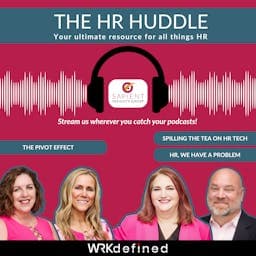
In this episode of Spilling the Tea on HR Tech, Sapient Insights Group Chief Research Officer and Managing Partner, Stacey Harris, and Sapients Insights Group Director of Research, Cliff Stevenson, discuss groundbreaking advancements from Visier, 15Five and SAP, sharing their new initiatives aimed at enhancing people analytics and performance management. They also cover important regulatory changes, key mergers and acquisitions, and feature insightful articles from industry experts.
Key points covered include:
↪️ Visier introduces "Open for Builders" and AI agents to enhance customization and decision-making in people analytics.
↪️ 15Five, with its newest innovation, focuses on business impact by providing tools for executive-level insights, linking performance metrics to business goals.
↪️ SAP's significant AI capabilities, including partnerships with Google Cloud, Meta, and NVIDIA to enhance compensation and business models.
↪️ Humanly acquires Teamable to improve the recruiting process with innovative technology.
↪️ The prevalence of "hallucinations" — incorrect information derived from AI systems — underscores the importance of understanding context and judgment.
Don’t miss this exciting thought leader conversation! Follow the hosts and companies mentioned below:
Sapient Insights Group
Download the 2023-24 HR Systems Survey White Paper
Instagram | Twitter | LinkedIn
Stacey Harris
Instagram | Twitter | LinkedIn
Cliff Stevenson
Powered by the WRKdefined Podcast Network.
[00:00:00] Welcome to the HR Huddle podcast presented by Sapient Insights Group. The ultimate resource for all things HR. It's time to get in the huddle. Welcome everyone to Spill in the T on HR Tech where we focus on the hottest HR tech news
[00:00:47] everyone needs to know to be in the know. We break down the news of the week and help you make sense of what it means for our industry and how it can help you in your organization.
[00:00:56] We are recording today on June 4th, 2024 bringing you all the news you can use this I'm your host, Stacey Harris, Chief Research Officer and Managing Partner for Sapient Insights Group. And joining me today is Cliff Stevenson, my Director of Research here at Sapient Insights Group as well.
[00:01:12] Cliff say hi to everyone. Hello everyone. I almost just waved. I've already gotten too used to being on camera. Yes. Well, it's been a busy kind of week and we're getting kind of comfortable with our video.
[00:01:24] So we're doing lighting and backgrounds and the whole bit this afternoon and audio to make sure everything was working. But we're both kind of getting ready to go off maybe for an event next week. And then I think things finally slow down with the travel.
[00:01:36] I'm getting over a really good nasty cold. I know you're getting over cold. So we've got these sort of really gravelly voices going on today. So hopefully that everyone can get through that. But boy, what a week for news.
[00:01:47] Cliff, what's all the things we're going to be talking about today? Oh, we've got a lot as you mentioned. You know, it won't be as full as it was last time when we had, you know, we were just doing the video.
[00:01:59] So we had a kind of a longer period in between, but there's still a lot of continuation what we saw in the last really few months where there's just rather than kind of this, you know, mergers and acquisition, although there
[00:02:12] will be one of those, you know, spoiler warning for later on. So stay tuned. We're seeing just really big evolutions and big developments, new products coming out refinements, some really just big technological leaps. We're going to talk about that from Vizier from 15.5 and to some extent
[00:02:33] from SAP, but as I mentioned, we've also got some acquisition news. We've got some people moves. We've got some regulatory changes that are approaching faster than we might expect, and then just some really interesting thought articles that some
[00:02:49] friends of ours, friends of the show I've written that we want to discuss and talk about and just, you know, get the discussion going. And that goes for those of you listening and watching, feel free to write in the comments, your thoughts on anything that we discussed today.
[00:03:02] We always love to see it. Yeah. It's kind of interesting. I think this time of the year, because it feels like we should be slowing down for the summer holidays. It feels like everybody's heading into family stuff. There's graduations going on.
[00:03:14] I know my feed is filled with that. There's people sort of planning for trips with seeing other family members, but the same time, a lot of organizations are trying to get things done in sort of their, their mergers, their acquisitions, their launches, their announcements
[00:03:29] before the kind of summer break. Right. And so, so it does get, tend to get a little bit busy as we get through everything, but I think one of the big things is we're wrapping up the event season. I know you just attended Vizier's Analyst Update event, right?
[00:03:43] So a little bit of update on that today, as you were talking about. And then we have a couple of other updates today. Do you want to talk a little bit, Cliff, about what you saw at the Vizier event?
[00:03:51] I know, I know I wasn't able to attend it, but you were able to join, right? That's right. And as I mentioned, you know, there's a lot of kind of just cool stuff coming out. I think, you know, I'll mention a couple of things.
[00:04:03] You know, they've got this whole initiative going open for builders. It really lets those people that are really hands on and want to really customize their people analytics, look and feel that goes beyond just sort of rearranging the dashboard, but really setting up how they are structuring
[00:04:24] their entire analytics, sort of look and feel what data is coming in, how it will be looked at, what sort of visualizations they want to have come out of that. So, you know, it really kind of does what it says on the
[00:04:36] 10 as far as being open for builders. That's a big part of it. And the other part is that they're really pushing the use of agents. And that's a term that I first started seeing, at least in the people analytics space, UKG is making a really big investment
[00:04:51] in this idea of AI agents. And, you know, just full transparency. This is a concept that although I'd seen, I sort of just, okay, there's just so much AI stuff, right? We joke about how quickly it comes up in our conversations here,
[00:05:05] but I did some research and you know what's pretty interesting? I think this is probably the best use of the term AI. When they are talking about agents, they're really talking about a sort of decision-making agent, I guess that goes beyond just an algorithm.
[00:05:21] It's not, you know, if this, then that, you know, writ large. Instead it's given a number of information and an ability to sort of make decisions set within a limit on its own. So, you know, a call center chat bot that goes beyond just, you
[00:05:38] know, if it sees these words that responds with this, but takes in information that was given to it and then makes a decision. Okay. I will get this form started. I will send this to you or that's sort of the easiest example,
[00:05:51] but you could think of other ways that could be done, especially from this year's point of view. You're going, can you build out a chart? Can you help me understand some pay changes or where we might best affect some pay discrepancies we have?
[00:06:07] And then it can say, okay, here are the, with the information I have and understanding of the situation, I will try and make some decisions and start pulling data from these areas and get what you need.
[00:06:19] So it's sort of a realization of kind of, I think what people think of when they think of AI. So it's pretty neat to see it done. And I think it makes a lot of sense for Vizier to be doing this. Right?
[00:06:31] I think these are pretty too, these aren't the only things that are announced, these are the ones I sort of, you know, picked up on as the major things. Cause I think it shows really, you know, two different paths.
[00:06:41] You know, one where you're going, look, I need some help. You know, maybe some of the small organizations, artist tech savvy say I need some help, maybe these agents can help and the other ones say, no, I really know what I'm doing.
[00:06:51] I just need better tools in order to make that happen. So really fascinating stuff. You know, Vizier usually tends to push the envelope when it comes to people analytics technology. So I was pleased to see that continue.
[00:07:05] And one last point I'll leave it with is that, you know, some of the stats that they were showing, I felt were pretty interesting because they were tamping down on, I felt like over expectations. They shared some data from BCG from the Boston consulting group,
[00:07:22] showing what their expectations of the impact of AI on HR. And at most they were saying 50%. And we're talking about that's only in certain areas in certain other aspects of AI. They're looking at maybe it's going to be no more than 10 to 15%.
[00:07:40] I'm looking at, you know, specifically things like employee relations, employee engagement, those sorts of things, you know, they're not really predicted to be that strongly affected by AI. So I thought that was pretty interesting to see, you know, sort of
[00:07:54] maybe slowing down the hype train a little bit while at the same time putting out some pretty advanced stuff. So. Yeah. And I think we talked a little bit about Vizier's sort of announcements. Last week it was right on the edge of sort of our, the end of
[00:08:05] our sort of conversation. And what I like to see about this and we're going to talk a little bit with 15.5 in the upcoming is an awareness that, you know, the biggest challenge for HR right now is getting to the information. Right?
[00:08:19] And so I think the idea that it can help me dive in and find the information, I know the questions oftentimes, I don't often know where that data sits. I know we just went through a big walkthrough of what Microsoft's doing and their new AI stuff.
[00:08:33] And I was kind of disappointed that I still can't just type in a thing and ask, you know, Excel to give me a chart in X, Y, and Z that does this. Right? So I'm excited to see some of these HR solutions get to that a little bit
[00:08:46] faster, right? Because I think that's, you know, I live in the world of charts and data and analysis, and we are starting to see some of them sort of make headway here. I mean, Cliff, you also got a chance to sit through the 15.5 announcement
[00:08:57] today, and they had a really big announcement about sort of their platform evolution, focusing on sort of an executive level conversation. What I'm hearing from both of his year conversation, the 15.5 is this conversation about getting the data and the information at a level at
[00:09:13] which we can start actually making decisions with it. Right? Like that's what I'm hearing from both of those. Right? Yeah. 15.5 honestly for the last over year, let's say a year and a half, two years, they have been pretty laser focused on this idea of impact.
[00:09:27] You know, it's one thing to sort of, you know, improve the performance management world and help these things out. But what is the actual impact? And we've been as, you know, safety needs a script.
[00:09:41] We love to see it right because that's something we talk about all the time. What are the business outcomes? What are the actual outcomes that you're impacting? What is your effect on those things? You know, when we're doing these briefings, when we talk to these
[00:09:53] companies, we're usually going, so how does this change anything? What does this do? Yeah. And they really took, I mean that to heart, you know, they, they really think about those sorts of things. And, you know, the term I think that they're using is a strategic command
[00:10:10] center, which really, I think lets you really see how well they're thinking about, you know, the big decision makers, the executives, these organizations, what is it they need to see? How do they see the things that are really driving those business
[00:10:24] outcomes and really showing that sort of information to them and helping them make best decisions around their employees performance and how to best affect that, as well as all the things sort of related to performance management, everything from, you know, productivity and
[00:10:42] pay and all those types of things. So, you know, giving that sort of leadership view rather than just solely a sort of HR view. And I just love to see that relentless pursuit of business outcomes. I mean, they're just, they're just on it, right?
[00:10:59] It's so much so we're talking about even things that are going to happen in the future. And, you know, I don't know how much we can say, but I will say they're going to continue on that path.
[00:11:08] They're going to just keep going with this idea of how do we impact a business, how do we show that impact? What are the outcomes that are related and how do you prove that out? So I was quite pleased to see just that, just that focus, you know,
[00:11:22] just that idea of let's get at the data. Let's get it the provable truth. Yeah, I was, you know, I was pleasantly surprised to see the level of filtering and the level of drilling down and we see that in a lot of platform dashboards, I think.
[00:11:35] But again, it was about sort of, they were actually looking at a couple metrics that were not just performance, but performance tied to business goals and how that connects, right? You know, those are some of the things that we're starting to see in this market. Right.
[00:11:50] And I really like the ability to be able to slice that by region, by size, by top performers, by low performers. Right? Those are kind of things that drilling down oftentimes is a very demographic conversation, but sometimes we need to categorize our
[00:12:03] demographics in different ways in our company, right? Sometimes it's performance. Sometimes it's based off of maybe people who have just come in in the last two months versus people who've come in in the last six months versus have been there for a year.
[00:12:14] Sometimes it's about, you know, maybe people who are in different clusters of training programs or different clusters of sales programs. So I really like to see the ability to categorize in the way that we think
[00:12:26] in our companies and not just in the way sort of a software generally we'll see it based off of demographics. And so those were kind of interesting things. I think the other thing that we saw in the 15.5 conversation was this announcement.
[00:12:37] We're hearing this from everyone, so we don't know that it's brand new, but just think it's worth noting. It's back to what you're talking about with Vizier's agent is the idea of their co-pilot that had now embedded artificial intelligence.
[00:12:49] Now it should be noted that they kind of went out with the co-pilot before all of the AI conversation, right? Like it was a branched co-pilot. Now it has the ability to just type in your question, right?
[00:13:00] And it was funny because when I saw what they were saying, I was like, well, well, do you have the different options someone can pick? And they were like, oh yeah, we actually started in the middle of the conversation because we rolled out those option kind of responses
[00:13:12] earlier last year. And I was like, again, I think this gets back to yes, it is great to be able to just type in, I need to find my benefits in X or what is the performance of Tom or Sue?
[00:13:23] But sometimes I need you to start that conversation for me. I just don't want people to forget that HR is still a space that requires a little bit of guidance. We just, it's not something that people work in every day.
[00:13:36] And so I hope we don't lose track of that as we're going through these conversations. So yeah, also it's interesting you mentioned the co-pilot. I'm curious to our audience. If when you hear the term co-pilot, is that something you think of purely as a Microsoft thing?
[00:13:52] Because I've noticed a lot of organizations use that. I think we started that discussion right after that, Stacey. So Vizier also uses that, but Vizier also uses chatgbt slash Microsoft's product. But I noticed it's not branded.
[00:14:05] But it's an interesting way to think about AI and these technologies, right? They're not taking over. They're just helping, right? They're co-piloting. It's literally what it says. But because Microsoft was so early with that branding for their AI, I'm
[00:14:19] curious how many people will automatically jump to that thought. So, you know, write it in the comments or, you know, send us an email with your thoughts on that, because I'd love to know what do you think of when you hear that term?
[00:14:30] Because I think it's, it was a well, Microsoft did a good job thinking of that term earlier, branding that early. So, yeah, we're going to see how many people are going to be fighting over that term, right?
[00:14:42] And then speaking of just company news, this couldn't be any hotter of tea. I mean, it's literally still brewing, right? SAP's big event, Sapphire is going on right now because of the time difference, it's happening as we're recording this.
[00:14:58] So I don't think we've ever had any newer news than this. Of course, by the time you hear this, it'll have been passed, but still pretty interesting we're seeing. I think not surprisingly. So, you know, if you want to keep the, what were we calling this?
[00:15:12] The spilling the tea drinking game or whatever the mentions of AI. That is a big, a lot of the announcements we're seeing early out of SAP, right? Some, just some big news on AI capabilities across the platforms. Yeah. I mean, I mean, Sapphire is their entire SAP environment.
[00:15:28] So it's got a lot to do with their business models, their sales environments, all of that and their finance systems, along with all their databases like SAP HANA. But there was a couple of mentions of success factors in some of the
[00:15:39] conversations one was about their AI generated reports, providing people managers with responsibly sourced insights for compensation discussions. So I know SAP has been sort of investing heavily in that compensation conversation. They've got a lot going on with a contingent sort of compensation conversation too, right?
[00:15:56] So it's interesting to see that they're sort of really focusing on reports that can help you maybe in a space that you oftentimes don't, doesn't get surfaced through the HR environment as easily. And so that was, that was interesting to see.
[00:16:09] We definitely also saw a lot of conversation here about sort of who they're partnering with SAP, right? Key partnerships were announced with Google cloud, Meta, menstrual AI and Navita. All I think again, just bringing to light that this is not, not one organization's going to own this.
[00:16:25] There's not, it's funny. I was listening to the news this morning and they were talking about chat, GPTs, open AI CEO Sam, and how many other companies he's invested in and how there might be some conflicts of interest because he's got a big investment like in Reddit. Right.
[00:16:41] And now there's this big relationship between open AI and Reddit to acquire the data that's going on in Reddit. Right. And you know, so did Sam make money off of both of those deals? Is, did they get that deal better?
[00:16:54] Like, and sort of their commentary on the board is that part of this agreement with Sam coming back to the organization, they put in place some governance around this. But you know, this world it wild, wild west isn't quite the right
[00:17:05] language, but I remember the early days of, of the internet where people were sort of like fingers in every pie, right? People were in every, every situation. It will eventually balance out. But right now there's no laws, no regulations about sort of how all this fits together.
[00:17:21] And so we are seeing that when it comes to partnerships and relationships, these organizations are having because they've got to have a little bit with everybody because you don't know where it's going to shake out. Right. And you've got to be open to the conversation.
[00:17:32] So it's, it's an interesting dialogue. I think that everybody's having one comment about the Sapphire. I do want to do a shout out to Sherianne Myers. She's a really good friend of mine who put out on LinkedIn. I thought was one of my favorite little posts.
[00:17:45] She showed the line for ASUG, which is the basically association for user group for SAP. And she was just mentioning how, no matter how many times and how many years that she's been involved with what's going on at the SAP success factors, environment, market space, right?
[00:18:00] She's done a lot of different roles in that space. She goes, ASUG is always seems to be that central connection between the customers and SAP. And so I just thought that was it. That was a cute little, cute, probably not the right word.
[00:18:11] It was an important comment to make about how valuable users groups are in this space right now and how we're starting to see the resurgence of some of them like Iroh, Manesa, Ohug. And they are a critical component of making sure that all these various
[00:18:27] vendors have higher levels of ability to listen to the customers. I know our voice, the customer research is based on that, but there's a lot of other groups that do that as well. So it was just kind of good to see her call that out. Of that.
[00:18:40] And you know, as always, you know, we always mention this, but any of the stories you mentioned or any of the people we mentioned, we always list it on our LinkedIn post that will be in a comment underneath.
[00:18:50] So if you're trying to, you know, I want to follow these people. I want to know their's. I didn't quite catch that. Don't worry. All those links are there. Don't worry. We won't let you slide by, but speaking of partnerships, but maybe
[00:19:01] even a step beyond that, we had some acquisition news, humanly acquired teamable got that news from George Leroke or Lerock George. If we got it wrong, blame me. Stacy probably got it right. But this is big in the recruiting space always near and dear to my heart.
[00:19:19] Humanly big, you know, recruiting solution acquired teamable, which is at this point, I think seven years old, they were founded in 2017. Definitely new in the recruiting space, but we're making ways basically on that sort of style and technology really trying to, and I probably
[00:19:37] this term gets overused, but disrupt that I'm using that term. That's not one they use. Because I honestly kind of get tired of that term, but you know, trying to change up how recruiting is done. Kind of taking think of slightly more, you know, informal or personable
[00:19:52] style to, you know, how those conversations go having the more natural rather than sort of the old, you know, style of recruiting, which can often just be like, Oh, I just dumped my salary and we'll just see whether
[00:20:04] I get picked or whatever, you know, but rather having that conversation. Also of note teamable was in the news because their chief inspiration officer is Alex Morgan, the old. And again, she's not hold was the previous Alex don't come after me.
[00:20:22] The previous captain of the U S women's national team. So when I saw that news, I was like, Oh wow, that's cool. So always really need to see that sort of stuff. So very cool, especially as we're getting into some big season for
[00:20:35] the women's national team for the U S shout out. So very cool. And speaking of people we had, this is one you send me Stacey. I didn't even notice this. So under my radar, Stacey overball is now the chief product officer of digital at corn fairy.
[00:20:51] So pretty neat, pretty neat news. And we've seen some movement lately, right? From people we've talked about in the last few swings tease. Yeah, we're definitely seeing a lot of people. I just got a couple of calls from people who I know are big and
[00:21:04] different part partnerships at a couple of big organizations who now are sort of out looking and heading out to some new roles. We've seen some, some pretty big movement in giving people step ups in roles and organization.
[00:21:15] So there were a couple of those announcements, man, but I thought the safer Stacey overbar one was, and I'm gonna did not say her name, right? I know I didn't. So sorry, Stacey. I have all people should be better than that, but because Stacey has
[00:21:27] been in this space for a long time, sort of behind the scenes that have this conversation with Meg Barrett, I need to get back to it because me and her really talked about putting together a list
[00:21:35] of women in the market who oftentimes, because not that men, women have signed, right? There's always people who are behind the scenes oftentimes, right? But women oftentimes tend to be, oftentimes don't make the lime light, right? When, when big announcements are being made about, you know, ownership
[00:21:51] and strategy and product leads. Right. And so whenever you can, you know, just kind of understanding the role, some of these really strong professionals have paid played in the market is critical. And so I always like to call them out when I see them, Stacey's one of them.
[00:22:05] You know, many of you might not know that Stacey was with Workday for six years almost as the senior director of people experience in product strategy. She had other roles, but in HCM products and others, but that was her kind of final role.
[00:22:16] And then she was at SAP for several years. She working as the VP of platform and experience over there. She worked at UKG for a few years as well. They are again on HCM product strategy side.
[00:22:28] So I'm excited to see her step into this corn fairy role, just because like one corn fairy is one of those organizations that is really trying hard to shift from services to a SaaS solution. We see this often. We saw Mercer go through this transition.
[00:22:45] We've seen organizations like Vizier go through this transition, although they weren't never really big services, but the topic area was more services heavy, right? We've seen some of the bigger players in the payroll space go from a services organization to a tech solution.
[00:22:59] It's a hard shift to make because one, the market looks at those two things very differently. The margins are very different on those things, but it's also a space where we know at the end of the day that I always tell people, you
[00:23:12] could do one or two big consulting groups and it's great. And it does an amazing amount of work in that first year or two, but people move, people change in the job. The system stays. And so you want to make sure that whatever you're doing in the
[00:23:25] systemic environment is being done in both places, right? Both in the systems as well as of the people change component. Right? So I really love the pairing up of a good services with a technology conversation. And so I think this is what I'm seeing from Korn Ferry.
[00:23:41] We've had a couple of conversations with people who sort of run things digitally over there at Korn Ferry. So I'm interested in seeing what Stacy does here. I am excited about this idea of systems that really support leadership and succession and talent in a way that, that oftentimes
[00:23:55] gets sort of swept under the carpet because of the succession planning conversation tends to be the last thing that we think about oftentimes from a technology perspective. Right? Yeah, absolutely. And you know, a comment you made early on when you were just talking
[00:24:10] about that is that, you know, women often sort of are overlooked, but if they are in the news, right, it's usually because they're not being paid equally or they're not being represented well enough at leadership roles, which is, you know, which is still an issue.
[00:24:27] Don't get, don't get us wrong. And because of that, you know, there are laws in place and this is a somewhat clunky transition, but it was, did make me think when you mentioned that, yeah, oftentimes when it is mentioned, it's just
[00:24:39] going, there's still not enough women in leadership roles. Absolutely true. And by the way, Saving Insights Group women founded and led, just saying so, you know, by listening to this, you're helping and viewers, but there's some EU paid transparency rules are being put into place.
[00:24:56] Now there was a great post that came out and really talking about how this is happening sooner than you might realize, because although the rules take place in 2027, they'll be looking back at 2026. Right? So you've only really got two compensation cycles to sort of
[00:25:17] get things to where they need to be. If you are in any way doing business in any of the EU countries. So it was a, it was a little eyeopening to think about that. And oftentimes when we're talking about these regulations, it is,
[00:25:32] you know, out there, but you're going to need to have that, you know, that transparency and it's for companies over 150. So it's not just massive companies. I mean, that's, you know, that's not that big of a company.
[00:25:45] So it is a great time to start thinking about it, to start really looking into this and as we become just more global with all of our companies, it's worth familiarizing yourself with it now rather than going, okay, that's three years from now.
[00:26:00] I don't even need to think about it. Yeah. And this came from my good friend Anita Lundkin who she's probably one of the strongest voices in Europe right now around what's happening with the future of work, pay transparency. She's got a book. I recommend reading it.
[00:26:14] She's got a book on, on pay transparency and payroll and global payroll. I'm just always sort of flabbergasted that, you know, how, how often organizations aren't paying attention to these things until they have to. We know from our research, we can tell you across the board,
[00:26:31] regulations make a difference. If it's regulated and reviewed, it is much more likely to be managed effectively within organizations and to be taken seriously. It's just pure simple numbers. We can tell you that, right? I know regulations are always kind of a mixed bag of conversations,
[00:26:45] particularly for SMB organizations, but they do have an impact. I think the other side of this conversation is that we do know that that caused a considerable amount of slippage in the market, especially as many caretakers took time away from the work environment to
[00:27:01] take care of family members. And so we have to be also cognizant of that and how that fits into this picture. Right? I'm not the expert on this. I just know that something that if you're working in HR technology,
[00:27:13] you cannot be ignoring this no matter where you sit in the market, but particularly if you're definitely part of the EU oversight and if you need some insight on this, my sense is a link down at the bottom of the links here too, Anita Lincoln-Lepkin's conversation about it
[00:27:27] and her book, I think will give you some good guidance. So just a, just a forewarning for anybody out there who's not paying attention to it. That's right. Cause it will seem like it's, it's far away, but if you don't
[00:27:37] start making changes now, it's going to sneak up on you and you could be. For anybody here in the United States with the ACA regulations and how they thought they were going to be able to keep up on that and the
[00:27:46] mad dash at the end of the timeframe to get those up and running, same kind of thing happening here. Right? Perfect example. Yeah. Uh, and you know, want to wrap it up with some sort of broader discussions.
[00:27:59] We like to see these sort of, you know, things that are a little more thought provoking things you may not have seen in our busy days, but are sort of, you know, not just philosophy, but just, you know, news or academic studies.
[00:28:11] The first, uh, it was one that came from Dr. Hardman, Philippa Hardman. And she's talking about some research from the university of Pennsylvania that shows just some behavioral change efforts. You know, how do people, how do you actually change behaviors?
[00:28:26] And, you know, she sort of sums it up. She literally did a TLDR on her own posts, but sort of the traditional ideas of how we think about how you change, you know, through shows, buddy, something, and then you give them quizzes or you give them
[00:28:42] lectures and you have some sort of training that they don't really seem to have that big of an effect or the effect they have is as she puts it negligible. So it's sort of an idea of maybe we need to maybe not rethink entirely,
[00:28:57] but not just suppose that the way we've been doing things for so long is truly working, you know, I think this actually ties up really nicely with what we were talking about right at the beginning of this episode.
[00:29:08] And we are looking at what are the true outcomes or the true impacts of, you know, when we're talking about performance management, because really, you know, it all goes into, you know, skills and behaviors and all these sorts of things.
[00:29:21] You know, how do we first, how do we know we're having an effect? And then how do we know that this even matters or that we're doing anything? And if we're relying on sort of outdated assumptions, cause we're not
[00:29:32] keeping up with the latest news in this area, you know, it can be detrimental down the road. So, you know, definitely special thanks to Dr. Hardman for, you know, making that post and for finding it. I mean, there's more discussion there.
[00:29:46] And then wrapping up Lexi Martin, our deaf, our good friend, they're wonderful post on LinkedIn as mentioned that we'll have that underneath, take part in that discussion. She's really talking about the prompts that are used and some real
[00:30:02] frustrations she's having with using, trying to get information, trying to sort of set up personas and interviews and get the right information and just finding a lot of hallucinations. If you recall, that's something we've talked about before on this show.
[00:30:17] The idea of a hallucination or talking about AI is just more or less information didn't seem to come from anywhere and isn't correct. I don't think Google's feelings will be heard, but sorry Google, but you've
[00:30:27] been in the news in the last couple of weeks for really nonsensical answers that the AI assistant has been giving. I think the famous one that was the least that I was seeing quite a bit
[00:30:38] was telling people to put glue on pizza and to keep their pepperoni on there, you know, hopefully nothing as drastic as that, but it reminded me a lot and you know, as I'd mentioned, you know, I, you know, recruiting is
[00:30:51] near and dear to my heart, having worked in that field for a long time. And we would have to train junior recruiters on doing Boolean searches. And I probably just gave a whole bunch of people some sort of mild PTSD
[00:31:05] for mentioning that, but you know, you'd end up with these long strings, you know, this and that, but not that, you know, where you're trying to find very specific terms. You know, like I remember we were looking for windshield developers
[00:31:17] and obviously when we're talking about windshield, we only want it related to software, not cars, unless they're doing software for cars. But you know, but so anyway, you end up having to learn how to do these prompts,
[00:31:27] how to do queries and despite all the advancements in AI and all these promises of it'll just do things for you, as you mentioned earlier, Stacey, you know that that's the ideal. We still need to know how to interact with it.
[00:31:41] Stacey often mentions, know where your data goes, know how it's stored, but also know how it's being fed back to you, you know, understand how these systems work because it is very difficult within that same post.
[00:31:53] Lexi actually links to an article kind of showing how, what prompts work best with AI and learning from that. So if you want to see some behavioral change of your own, it may be worth
[00:32:04] looking into this and how we interact with AI and what are the right words to use and how do you prompt it to, to get to these spaces? Because it's still a very young technology and it's caught a very
[00:32:15] strong media hype cycle that makes it seem like just jump in, anyone could do it. But no, it requires, it requires some learning of its own. Yeah. I think we're probably heading a little bit fat quickly into the trap of disillusionment if you follow the Gartner cycles, right?
[00:32:30] Actually both of these articles go really well together, right? I think the first article is really near and dear to my heart. Cause again, I, I come from the learning background space, right? And you know, I was formally trained on doing instructional design back in the day.
[00:32:42] And the idea of behavior-based economics and behavior-based understanding is really all about context setting and creating an environment where you're learning in that environment where you're doing the work, right? And so that's that you're doing a little bit here, a little bit there.
[00:32:58] It was, I was a little sort of surprised. I saw a, it said, you know, nudges aren't working. And so she showed out some data around that. And what she meant in that space was that nudges aren't working when
[00:33:08] you're sort of just trying to push someone to fill out a benefits form or trying to push someone to, to make a change in their approach to maybe completing, you know, a task that you want them to do.
[00:33:20] Where nudges do work is when they're in the context and in the flow of what's happening in your organization and part of a long-term development program, right? An education program that's tied together where there's a lot of context and supportive nudges that are part of the program.
[00:33:35] This is why cohort programs work so well as in training where why mentoring and one-on-one where you're following people and you get a chance to do things. And this is the same thing we just talked about in this environment
[00:33:46] that Lexi's mentioning, saying, look, I took all these interviews that I had done, which by the way, her process is great on this whole pivot conversation and she sort of tried to get the, the artificial intelligence
[00:33:58] to summarize the work that she'd been doing and it was throwing, it wasn't categorized incorrectly, which then didn't have the right context. Part of the conversation about all of these environments is, is part of what humans do so well as realize the context of information.
[00:34:14] What else is around it? Not just what it is and large language models are so much better than the previous generation is at understanding all that context. But there we got to remember that it lives in an internet and the
[00:34:29] we as human beings don't live in an internet, right? We actually live in a real world where there's other things going on that give us context. And so my comment on both of those is read those articles.
[00:34:38] They will give you a sense of how far you can stretch some of this and how you think about behavior changes because human beings are so much more sophisticated in what helps us make decisions about making change and doing things differently and behavior wise.
[00:34:55] And we can't expect that just because the system has told us that gluing pepperoni onto the pizza will keep it there or cheese on the pizza will keep it there. We hope that that will not be how we take those answers, but it keeps coming
[00:35:08] back to this idea of judgment and context. And those are the two words I want you to keep remembering as we go through this conversation. So, but if I know it's been a good conversation we've had, but you
[00:35:18] know, there's never enough time to have these conversations about sort of how you piece together this, this world that we're working in. Right? Yeah, exactly. Things are happening fast and you know, hopefully we're doing our part
[00:35:30] for you listeners and hoping at least sort of curate some of the news that we're seeing come through and start the discussion, but as Stacey mentioned, you know, we're not the experts on, on law on any of these.
[00:35:43] So if you have some comments, if you want to join in discussion, love to see you. We post this on LinkedIn, but obviously you can just reach out to us at Safe and Insights Group and directly, you know, what's probably
[00:35:57] the best email for just research at Safe and Insights Group. Research at Safe and Insights Group. Yeah. If you have comments or questions. And as we look to, to wrap up today, also just a quick reminder, the
[00:36:07] annual HR system survey, 27th annual HR system survey is now open in live. So if you're looking for where you can access it and you haven't gotten one of the million links that are out there floating around in the world,
[00:36:17] please be aware that you just go to our website and it's right on the front page, take the survey right now. It is the only way that you're going to be able to access it without having to pay for it this year. So just be aware of that.
[00:36:28] So be sure you get that in the 26th is the last date. So if you've been putting it off and thinking, you got time to wait until everything slowed down a little bit, just get your, get your data in there
[00:36:36] before the June 26th, which will be just about a week after this gets posed here. So also just a reminder that how important that research is. Last year it had over 200 HR vendors that we covered and had an input from over 5,000 HR practitioners. It was over 200 pages long.
[00:36:52] So a really, really important critical tool. If you're trying to understand the HR technology landscape, need to make any decisions about technology, or just need to understand how HR is working with it from a practices perspective.
[00:37:04] Also, if you want to get more information about what we're doing on a regular basis, go to our website and sign up for our newsletter to get ongoing updates on our research launches where we will be speaking
[00:37:13] at and when you can participate in our annual survey on an ongoing basis. As well as be sure to listen to our sister, HR huddle podcast, HR We Have A Problem, hosted by our CEO, Terry Zipper and all the HR huddle
[00:37:26] episodes, if they fire value to you, we just really ask you to support the podcast, subscribe, leave them rating. It really makes a big difference on how many algorithms it gets put into and where it gets placed in the ecosystem.
[00:37:37] To stay up to date with immediate breaking HR tech news and get all the behind the scenes content, you can follow us at Sapient Insights on LinkedIn, X and Instagram these days. I think we've got a Facebook presence too now.
[00:37:47] So Cliff, thanks again for pulling all of this stuff together. We really appreciate it. I know it's hard to sort of pull this together in last minute. Now that we're doing video, we're kind of scrambling to get it done a little bit sooner.
[00:37:57] Thanks to our production team, including Brand Method Media Group, who helps us produce the podcast run by the amazing founder, Kelly Kelly. She's been doing all the new video work for us as well and our marketing team, Lisa Renko and Summer Orlano.
[00:38:08] And thanks to our listeners and the community. We couldn't do this without you. It is absolutely helpful. And that's it for this episode of Spillin' The Tea on HR tech. We hope it's been just the brew you needed to start the engines running this week.
[00:38:21] We'll be back in two weeks with another pot of boiling hot HR tech updates and insights. And Cliff, I think we're signing off for the day. So thanks everyone. Bye everyone.
Sponsors
