
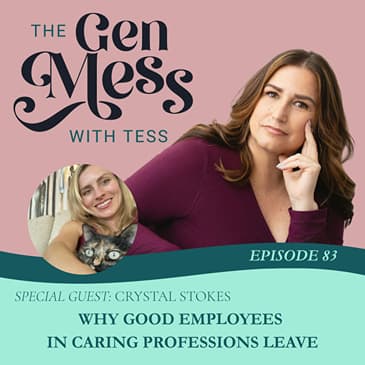
This episode examines why dedicated, compassionate professionals in veterinary medicine and other caring fields burn out and leave, and what leaders should be considering in the modern workplace.
Crystal Stokes, a licensed marriage and family therapist and doctoral candidate who founded Full Circle Lab, brings a perspective shaped by her own unexpected path.
What are the emotional and systemic forces pushing good people out of caring professions? What do generational differences actually look like inside a veterinary practice? And what specific leadership skills, onboarding systems, and feedback structures determine whether a new hire stays or leaves within the first year? Listeners will walk away with a clearer picture of why culture is a business strategy, not a soft extra, and what well-supported teams actually look like from the inside.
KEY TAKEAWAYS
- Burnout in caring professions
- The corporatization of veterinary medicine
- The generational difference in the workplace
- The Seasons of Life
- Why onboarding is not an administrative task
- Why clarity is a leadership obligation
- How employee assistance programs routinely fail caring profession workers
TIMESTAMPS
- 00:01 - Why a pre-vet student left the field and accidentally became a therapist
- 03:31 - How volunteering at a hospital led to the origin of Full Circle Lab
- 05:46 - What is actually burning out veterinary professionals
- 08:24 - When burnout escalates: suicidal ideation in veterinary medicine
- 10:13 - Why culture change stalls at the leadership level, not the team level
- 17:49 - How younger workers approach the workplace differently than older generations
- 21:39 - Where the mental health awareness pendulum may be swinging too far
- 25:36 - Why life in seasons beats work-life balance as a framework
- 30:00 - What younger workers need from leadership that they are not getting
- 33:07 - How onboarding and performance management directly drive retention
Learn more about Full Circle Lab: https://www.fullcirclelab.com/
Follow The Gen Mess with Tess for weekly insights into the modern workplace.
Join the free "Dear Gen Mess" community at tessbrigham.com/podcast
Visit tessbrigham.com to learn more.
Powered by the WRKdefined Podcast Network.
[00:00:02] Never feel like different generations just don't get each other? Certified coach, licensed therapist, and speaker, Tess Brigham, tackles the generational challenges shaping our personal and professional lives on The Gen Mess with Tess. Hello, everyone, and welcome to The Gen Mess with Tess, where we're not just fixing the mess, we're learning how to live in it. I'm your host, Tess Brigham. So let's start making sense of this mess together.
[00:00:27] So my guest today is Crystal Stokes. She is an evidence-based psychotherapist and doctoral candidate at Southern California University of Health Sciences, who founded Full Circle Lab to solve one of the veterinary industry's most urgent problems, why good people keep leaving.
[00:00:45] She works directly with veterinarian leadership to close the gap between what leaders assume their teams need and what those teams are actually experiencing, building the kind of communication and resilience that makes a practice genuinely sustainable. Thank you so much, Crystal, for coming on the show. Oh, it's so good to be here, Tess. Thanks for having me. I didn't realize how much of saying veterinary and leadership together, how difficult that is.
[00:01:11] But you have... So I would love to hear a little bit about what's the path that brought you here. I mean, how do you go from going... Because you and I hold the same license. And nobody was talking about this in grad school. No. So how do you go from, like, getting your license to maybe you thinking about having a private practice or whatever it is to doing what you're doing now? Yeah. You know, it's... Many people ask me that story because it does seem kind of strange. Yeah.
[00:01:39] And I'd say that the name of my company kind of came from my full circle experience myself. That before becoming a psychotherapist, I was actually on the school, the track of school to become a veterinarian. And so I was pre-vet, pre-med at NC State. And my whole life up before then, I planned on being a veterinarian as a little girl. I was very single track minded.
[00:02:01] And through a series of events of working in veterinary medicine as a technician, which is similar to a nurse in human medicine, I discovered that there were elements of being in veterinary medicine that I felt I didn't have what it takes to stay. Now, looking back on it, that was a limiting belief. And there are definitely strategies that could have helped me stay in veterinary medicine if I had just been taught ways of, like, managing really difficult emotions or advocating for certain things.
[00:02:30] But the thing I really struggled with as a veterinary technician was I was working night shift as an ER technician. So those are very, very tough shifts. You see a lot of trauma come in, a lot of very difficult cases. And in Raleigh, we often have pet parents who may not have the funding to pay for their dog or cat to be hospitalized if they're night or have surgery.
[00:02:52] So that resulted in a lot of what we call economic euthanasia, which is where we euthanize animals that may not be able to afford the care.
[00:03:29] Mm-hmm. It makes sense. You can understand facts and figures. And in therapy, it felt so mysterious that I just was desperate to learn the science behind the magic that I experienced in the therapeutic process. So that's what led me to become a therapist. But I would say that veterinary medicine always haunted me. It's like the thing that I would think back on. And if only if I could live a second life, you know, am I too old to go back to school to become a veterinarian and have a second career?
[00:03:59] I think these thoughts. Mm-hmm. And what brought me back to veterinary medicine was actually rather, I would say, serendipitous or accidental. I had, this was probably about 10 years ago now, I had decided that I would offer to volunteer as a technician. I was like, that's the best I can do. I have five hours a week that I could volunteer. And so I'd emailed a veterinary hospital here in my town in California, and I offered to be a volunteer tech. Mm-hmm.
[00:04:27] And the doctor emailed me back and said, why don't you come on in and I'd love to meet you? She brought me, gave me a quick tour through her hospital, and I noticed the vibe was very dark. Mm-hmm. I weren't making eye contact. It just had this like cold, the word I would have used, it felt like a morgue. Mm-hmm.
[00:05:15] Mm-hmm. I had no idea. So I'm so sorry. And now it makes sense why when I walked through their hospital, the energy was so dark. And what she said to me was that she's not looking to hire a volunteer technician, but they have been thinking for over a year of hiring a veterinary social worker, you know, specifically for things like this, to take care of their team. And she said, so I wanted to know if maybe you would like a full-time job. Wow. And my brain was exploding.
[00:05:44] Now, I did not take that job because I was not looking for a full-time position, but that was my first client. Mm-hmm. And I did work with them to explore, you know, what's happening in your clinic that may have contributed to this or not. Like, how can we protect your team from anything like this happening in the future? And that was the origin story of Full Circle Lab. Yeah. So, you know, because veterinary work, it sort of holds a unique emotional weight.
[00:06:10] So what I would love to hear, like when you get in with these teams, what's actually breaking people down? What's the crux of why there's so much burnout in this field? It's a million-dollar question. And I don't think that there is any one thing. I think similar to human medicine, when we look at, you know, physicians and nurses and all of this, anybody in a caring profession, even in psychotherapy, right? In the mental health profession, we have very high levels of burnout.
[00:06:39] We see it in dentistry. We see it in law. So I think that there's this element of people who are drawn to these kind of helping and caring professions. We often tend to be the types of people who give a lot of ourselves and may have difficulty asking for help or knowing when we're kind of getting into our red zone of creeping into burnout. We might not even necessarily notice it at first. We're used to pushing hard. Many people in veterinary medicine have some perfectionistic tendencies as well.
[00:07:08] So wanting to really do things right and maybe do it themselves and pushing themselves really hard. So I think on that side of the street, there's just an archetype of humans who just show up and work hard and give and give and give and may neglect themselves in the process. But then there are elements that are very much of the system that we're in. And I see how medicine at large has changed dramatically over the decades.
[00:07:34] We have a lot more private equity money coming in, a lot more corporatization of medicine. And that's often focused on efficiency, meaning we want to move patients, animals or humans, if you're in the human medicine system, through the system more quickly. We have a lot of patients that need to be seen. More pet parents are out there demanding, especially since COVID, to get care. So the industry is trying to meet the need and get these patients in. And we're also providing a higher level of medicine.
[00:08:02] We didn't used to do surgery and stuff. You had one town vet that did everything. And now we have specialists. We have oncologists and surgeons and radiologists. And the medicine is really advanced. So I think there's this extra pressure from the system that very much contributes to pushing people to their limits. And when you may not be good at asserting a boundary and saying this is too much, you really fall into that cycle of despair, of just feeling like you can't keep up.
[00:08:32] And it's exhausting. And then don't reach out for help. And there are many other factors, too, that I've seen contribute on an individual basis. Like when I've spoken to veterinarians who may be experiencing suicidal ideation or high levels of burnout, there are so many different factors. It can be feeling guilt that they're neglecting their family and having fights at home because they're at work too much or when they come home. They're so exhausted that they're kind of a shell of a human. So guilt about family.
[00:08:59] There can be feelings of, you know, when we get into true burnout, we start to lose our sense of enjoyment for life and meaning. So now the thing that used to give us joy, which is caring for these animals, now we feel nothing. We feel apathetic. Or we might even feel angry about it. And that's a huge loss because as a veterinary professional, you can kind of guess you're not like frost trained for much else. Like you're not just going to switch to human medicine, right? You're in vet med.
[00:09:26] So people often feel like I don't have anywhere to escape to. I'm painted into a corner. I want to pin that to say you're not. If anybody feels that way, call me because there are many, many, many things you can do. It's a huge industry that does not require you to do medicine anymore or to treat patients if you need a break from that. So people that feel trapped in that way, it's very scary. Often veterinarians have a lot of school debt.
[00:09:50] So they might feel like they're stuck in a contract that makes a lot of money that they can't get out of because there's a clawback clause of thousands of dollars. If they leave the situation, then they have this huge debt and they can't afford their mortgage. And so financial constraints come in as well. And I just think overall, when I meet with veterinary professionals, I think they're just so heart-centric, such big hearts. They feel a lot. And I think those emotions get really big and really overwhelming.
[00:10:19] And there's not a big culture of like, hey, it's okay to get help. It's okay that you need support. That's not necessarily normalized across the entire profession. So what I'm curious, so you come in and this is what you're obviously not just in one minute, but right over time. So what's the biggest resistance that you get from? Are they just like, well, I can't do, is it sort of like, no, no, no, I can't.
[00:10:46] What's the biggest piece that people just struggle to make these changes? Once I'm actually in a hospital, I don't meet a lot of resistance. I find those people are actually pretty excited to develop and learn and heal and support each other. Like there's a hunger there to be authentic, to know ourselves, to say, yeah, I want to feel better. I want to come into work and kick ass. Like most people I think are pretty excited.
[00:11:15] The biggest barrier that my company, like myself and my coaches feel, is actually I'd say with more like upper, upper level systems in leadership where they may not value this service right now. They might say, hey, we're running a really efficient, tight ship. And unless this directly contributes to our bottom line being better, we're not doing it.
[00:11:37] So that part is, it can be difficult because some of the ways that we help hospitals, it's a longer arc. It's not going to be able to improve your retention in one month. Retention, that definitely helps you make more money. If you have more team members, you can see more pets. If you have more team members that actually like working together and can be efficient, you can do even more. But that takes time to rebuild cultures and to put in really robust systems where people can thrive.
[00:12:06] So I think the upper level is where we see the most challenge and that efficiency is currently really, really valued. And sometimes it's looked at like efficiency and culture and well-being support may not go together. And I would say, actually, I think they go together perfectly, but it's just maybe not an immediate fix. Yeah. No, you're absolutely right.
[00:12:28] I think what's hard about the work that both of us do is it's hard to tell someone like, this is what you're going to get from it. This is what's going to happen. I'm like, I don't know. Something's going to happen. You know, and you're absolutely right. Like when all of this clicks together, it could be three months. It could be six. It could be a year. It could be two years. And, yeah, and things, especially when it comes to medicine, it's really become about the bottom line.
[00:12:58] This clinic near us that we were taking our dogs to, absolutely, like it became very clear. I'm like, oh, you guys got bought by someone. You got bought by a, you know, because it like things changed overnight. It went from being, and they're a corporate, they're a chain, but each chain had, you know, their unique group of people. And we would take our dogs in and they were so fair with us about everything.
[00:13:21] And then the last time we went in, it was like $1,300 for my two dogs to get like a year checkup and do all of these things. And it's crazy. Right. You know, and then they do all those tactics that really piss me off because they make you feel like you're a terrible dog or pet owner, right? If you don't do this or do this or do this or do this. Oh, yeah. I'm sorry you experienced that. And I would say I'm hoping that your experience is not the norm.
[00:13:49] I don't have the numbers right now, the stats to say like what's happening across the board. But I can definitely say that with the companies that we work with, we work with both. Most of our clients are privately owned or nonprofit, but we do have a couple of corporate-based clients too.
[00:14:06] And what I notice is that the people boots on the ground in the clinic doing the work, 98%, I'd say, are extremely focused on that pet and the pet parent. They just love them. They are there to do the best medicine possible. Their hearts are very involved. And so I think that when we're seeing some of those tactics happen or things that make us feel alienated as a client, like that felt really bad.
[00:14:34] It feels like they're just in it for the money. I feel like I just got pushed through a mill. I would say that's often from pressure from the top. Yeah. Of, you know, there can be a lot of incentives as well as kind of, I'd say, punishments if you're not meeting your numbers. And that pressure is high in some of the groups. So unfortunately, it does happen, but hopefully there are still the people out there that are fighting the good fight and finding a way to do medicine that feels good for everybody, you know? Because I think it's really possible.
[00:15:05] Yeah. And it seems like there have been some, well, the one I'm thinking of is modern animal. There's been some new things that have come out, though, and they seem to want, they have a different kind of model and they're trying to do things a bit differently. But it is, it's, again, I think that it's just like any other business, but it's very different when your business is, you know, making glasses versus healing animals, right? And that's, I think, the core of it.
[00:15:34] And it's the same thing of being a therapist. It's very different, you know, dealing with widgets or doing that versus dealing with people. Because, you know, it's draining in a different way and it's hard to pinpoint, you know? And I'm sure you've had those days too where you come home and you're exhausted and it's hard to explain to the people in your life why you're so exhausted. Like, it's the ways in which. It's so true.
[00:16:01] And I, oftentimes when I meet people and they ask what I do and I give them the little snippet, they'll say something like, well, why would veterinarians be suicidal or unhappy? Or like, that makes no sense. They're with puppies and kittens all day. Yeah. And I'd like to say, no, they are not. It's like, if you really imagine the day in life of veterinarians, so just even in a companion animal practice, like your GP, where you take your dog or cat, you know, you're either doing kind of routine work that can be kind of boring, like vaccines.
[00:16:29] And let's just do a quick wellness check and a spay and a neuter. For some people that can get very, very monotonous if you're not able to have time to like enjoy the connection with the client or the pet. Because sometimes that's where you get your fill. It's like, oh, we got to really connect and hear Miss Daisy's story. And I've seen the puppy become an adolescent, become an old dog. And I know their family and that's what fills their cup, not the medicine. Yeah.
[00:16:54] And then if you look at, you know, ER, for instance, in those locations, like it is often high volume, high pressure, intense, wild, wild work. And for them, you know, can we understand what's going on behind the scenes when we're up front yelling and screaming that we've been waiting for an hour or two hours? They are doing their very best to get people back always.
[00:17:21] You know, they're definitely not dragging their heels and making the wait time long because they want to ever. They often are not getting meals. They're often working more than 12 hours. I've seen doctors sleep in the kennels with the patient. Like, it's wild in the back when it comes to who you are. So I think if more people knew, I think we need like a series like behind the scenes in vet med. So you can really see what's happening. Mm-hmm. Yeah. Yeah. So let's talk about the generations.
[00:17:47] So you are working with, I would assume, teams that span many generations. And I'm very curious about what are you noticing with younger people? You know, how are they experiencing work differently than maybe some of the other people in your, that you're working with? I'm so curious also to hear your take on this. And that's how I'll share. And I'd love to see what your perspective is too. Okay.
[00:18:13] Because I will just preface this by saying, I am not at all an expert on generation, you know, generational phenomenon. I don't even remember like the names of the different generations and what year starts what. It does not stick in my brain. I've looked at it many times, but it does not stick. But generally speaking, I have noticed patterns over time in vet med.
[00:18:34] So I'd say with the younger generation that are currently coming in, they seem to value a sense of, you know, maybe that work-life integration more. Mm-hmm.
[00:19:16] And I'm here to get the job done. And whatever pain I have to go through to do it and however long I have to stay, it's kind of like, I'm going to go down with the ship. And there was a lot of sacrifice that happened where families might be neglected, your health might be neglected. But there was a badge of honor around it. Kind of like, hey, look at how I worked so hard. Like, I deserve a trophy. It's like, you do. Like, there was a reward back then for that kind of behavior. Yeah. And yeah, I think that somehow our system was really set up to reward that.
[00:19:45] And it was just culturally, like, thumbs up, right? Yeah. That was my generation for sure. Like, I never considered, like, if somebody said work-life balance to me, I would have rolled my eyes. Yeah, of course. I mean, who's thinking about your mental health at 20 whatever, right? Like, you're not thinking about, oh, I'm starting a new job. I need to worry about my mental health. No. It was considered, like, that'd be considered a weakness back in the day. That'd be like, there's, I remember when I used to tell the story about me first going to therapy. So I was in my 20s.
[00:20:15] It was really, it took me a long time to go. It was like my last resort because I grew up in a family that would say, therapy, that's for crazy people or weak people. And I was like, well, I'm not crazy or weak. Like, so by the time I went to therapy, I'm like, I guess I am because I couldn't figure it out anymore. Like, all my, like, hard, hard driving skills did not work. So I needed a new tool belt, right?
[00:20:41] So I think this younger generation seems to have much more awareness and understanding of the necessity of different parts. Like, yes, we need to be able to drive hard, but also we need to be able to rest and recover and have other inputs into our life. It's like my whole identity is not just work. My identity is also my family. My identity might be hobbies, you know?
[00:21:06] And I think they just seem to advocate more for having permission to have all those things in their life. So I'd say that's a big difference that I see more vocabulary around the variety, the pie chart of life. I think they articulate that better. I think each one has, like, pros and cons, right? So I'd say those are some of the pros that are easy for me to name.
[00:21:31] I'd say downsides may be, I think a lot of what we end up teaching on as coaches with the younger generation is trying to teach more grit. To say, yes, you're having a really strong emotional experience or you might feel very anxious. Lean into it. Actually, did you know sometimes if you move towards the hard thing and work through it, you come out on the other side stronger and more resilient?
[00:21:55] Like, as a therapist working with anxiety, for instance, we know that if we continuously let anxiety win and anxiety is like, you know, you really shouldn't go to that party because it might be scary because there's going to be people there you don't know. Before you know it, you won't even leave your house. Yeah. Because anxiety will talk you into it. So I think that there's that aspect of the pendulum kind of swinging where before we were way, way too hard on ourselves and pushed ourselves in ways that may have really harmed our health or harmed our family.
[00:22:24] And now the pendulum over here is swinging a little bit too far to the other side where we're not being bold or brave enough. We need to lean into the discomfort a little bit more. So I guess that's my initial surface level. No, no. Not expert opinion, which means nothing. But, you know, Tess, I'd love to hear what you've been seeing. Yeah, no, I absolutely agree with you.
[00:22:47] I think that the, I think it's a good way of saying it around grit because what I hear a lot of is just that whole thing about they're coming in and they're, you know, again, lazy. Every new generation is always called lazy. But it's talked about like they're not tough. They need to toughen up. They, you know, their parents coddled them. I mean, a lot of the same things that were said about millennials are being said about Gen Z.
[00:23:14] But I think that the overcorrection that Gen Z maybe, that I see them making is, it's almost a little bit of that, yes, you should be thinking about all those things. I agree with you. You should be thinking about your mental health. You should be thinking about work-life balance. You should be thinking about all that.
[00:23:31] But this sort of, this pendulum of, but depending on the kind of work that you want to do, depending on the kind of career you want to have, depending on the kind of life you want to live, you might not be able to do that all the time. Like, and that's, and that's the part that it's, we have a very hard time just as people in general. We don't like ambiguity. We don't like uncertainty. We don't. And so, and that's, I'm sure you get this too as a therapist. It's like people always ask, well, what's the answer to this? What's the answer to that?
[00:24:01] And I'm always like, usually it's the balance of two things. It's usually the correct way is somewhere in between all of this and you figuring out what's going to work for you and the other person and, and all of that. And that's hard for people, right? Because they want an answer. They want to know, you know, this is what it is.
[00:24:20] So that's a lot of what I see is just the, the, it's, it's, it's almost like they, they're so afraid to commit to anything for fear of quote unquote getting locked in that it's a little bit of like, no, you're not going to get locked in. Like, don't worry. You know, it's, it's going to be okay. So. I love that. I think in previous generations, right? Like the feeling was, okay, I get locked in. That's fine.
[00:24:48] And I think that, especially in this world that we live in with, you know, there's a lot more freedom. I don't know. When I first started my career, you know, back in the nineties, the, you know, I was chained to a desk. Absolutely. Like you were chained to a desk. We would, if we went to the kitchen, we would have to forward our calls to the kitchen phone so that we could pick up our calls in the kitchen. Right. Like, cause I used to work in Hollywood and that's kind of that, that world.
[00:25:16] But so that was the thing was that, and I hated it. I absolutely hated it. So I totally get why all of these young people want work, you know, want to be able to work from home. Don't want these requirements. Don't want these things. And at the same time, yeah, probably, you know, going and showing up to this job for a certain period of time every single day would help tremendously. Would, you know, help you connect some dots.
[00:25:45] So I think that's the part that's hard is like the, the, the reality of what will work is somewhere in between, but I can't get there. I mean, so much of that, I think you bring up really, really good points. And I want to highlight for those listening that thinking about life in chapters, like I think trying to have balance in every pillar of life all the time is absolutely losing recipe. It means being mediocre everywhere.
[00:26:11] And there may be periods of our life where it's, we're really focused on our career and other things take a back burner. Or when you have a young budding family, that's going to take the majority of your time and your career might, might suffer a bit or your health. And knowing that there are seasons to life and it's okay for something to be in winter and be kind of cold and, and, and not getting much attention and other things to be in summer where they're at their peak and they're full of energy. That's normal.
[00:26:37] And that life, there's no real, oftentimes I'd say there's not a right or wrong. Sometimes there, there would be, but most of the time it's not about what's the right decision. Like you said, it's about looking at just a set of trade-offs. Like I remember working with, let's say substance use disorder. Okay. Yeah. Um, I really need to stop smoking weed, but it's hard, you know? And I'm like, yeah, getting sober is hard. Guess what's also hard? Continuing to smoke weed, hide it from everybody. Yeah.
[00:27:07] Like shit every day, buying it all the time, you know, like all the mental gymnastics that goes into beating yourself up about it and hiding it from everybody. And da, da, da, da, da, da, da, da. It's also really hard. So it's, life will be hard either way. It's just which version of hard are you going to pick currently? Exactly. Or something that matters. And you also reminded me of something that I really think is so important. I think about this for myself all the time too.
[00:27:32] So much of the research out there on happiness and meaning, which is what we're all kind of seeking in life all the time, is built through being of service to others. So I think there's sometimes too much navel gazing where we are very obsessed with ourselves. What about me and how I feel and all this? Which is great to have self-awareness, but it needs to be wrapped in the bacon of taking care of and being of service to the world around us.
[00:28:00] It can be causes like environmental things. It can be taking care of the people around us. It can be gardening, you know, but getting outside of ourselves is so, so important. And I think those, you know, we're talking about veterinary medicine. They're already pretty damn good at that. They're already very much of service. But finding the harmony and the balance between tending to ourselves while also re-engaging in the world. Yeah. No, absolutely.
[00:28:24] I had so many thoughts and then they all just disappeared as, which is, again, this is showing my age because this happens to me quite a bit. But I think that's the whole thing with change, right? Which is there's lots of things that we all want to change about ourselves. And I believe that people believe that they want to change those things. But there's that other part of what you're saying, right? There's the willingness and the desire. And that's that combination of, and that's what's so hard about making any kind of change.
[00:28:52] And the changes that we're talking about, like the way we, you know, deal with work and how we see work and how we bring young people into the workforce. Like, that's a huge shift in change. And I think what's happening right now is we're right in the thick of the beginning of it. And so there's a lot, I think this is why we see so much prickliness between the generations because everyone's kind of feeling a little bit like, whoa, whoa, whoa, wait a minute. You know, these, the people that are already there, like, no, no, that's not how it works.
[00:29:21] And then we got the new people that you need desperately, you know, to run your companies. You know, they're coming in saying, no, no, no, we've never worked before, but this is how it's going to be. And so, and everyone's mad at everyone, right? Like, and the thing is, no one's right or no one's wrong. And I'm not saying, like, you've never worked before and being flippant. But what I mean is, is that it's a little bit of, yeah, you don't know all the issues. You do have a fresh perspective. Like, and you don't have the perspective of working for 30 years like other people, right?
[00:29:50] And that's the part that's hard is that people, I think, I think, you know, young people have a lot of really good intentions and ideas. But, right, like, they just, they get them, I think, you know, just takes getting them squashed a few times to feel, right? To feel like, oh, it's, you know, I'm not doing it right or they're not taking me seriously. So I'm curious.
[00:30:14] So what do you think, what do you, do you have a sense of, what do you think these younger workers, I mean, just in the veterinary world, let's say, right? What do you feel like they're needing or what do you feel like they need from leadership that leadership isn't getting? Oh, gosh, this is such a fun question because primarily at this point, what we provide at Full Circle Lab, kind of our bread and butter, is leadership development programs.
[00:30:39] Because, and this happened organically, as we kept working with hospitals and figuring out, like, how do we help create, our ultimate goal is to care for the carers, create environments where people want to be. We know the work will always be hard. That's medicine, period. But we still want you to want to be there and to leave at the end of the day being like, yeah, that mattered, you know, and I'm going to come back tomorrow.
[00:31:05] So we're, like, looking at how do we create environments like that where people can feel good about the work they did. They can feel like they're part of a team that feels like, you know, that family feel. It really comes back to leadership because leadership sets the tone for the culture of the hospital. And every hospital can have its own culture. Some are really, like, laid back and they rag on each other and it's so fun. And other ones are, like, precision and very professional. Some are more militant. All of it's great. You just have to decide.
[00:31:32] So I think that we do a whole lot of work in thinking about and researching how to help leaders learn the skill sets to create these environments, right? So in thinking about that, this kind of question is like, oh, yeah, it's such a good question. If we're going to be bringing these younger generations in because that's the lifeblood of our hospital, how do we do that?
[00:31:57] So I think a lot about, I don't know if this language sounds a little too crude, but kind of cradle to grave of a team member, meaning cradle is where you're just even recruiting them. Our recruiting process is how are we attracting people that will like our culture, our style? So first of all, it's just even knowing as a hospital, as a company, who are we? What's our identity? Are we fun and wild like Google, right? Are we more of like a military culture? And then be out about it. It's kind of like dating, right?
[00:32:25] Don't put something false out there because you're going to attract people that don't like you. So from the recruiting side, try to recruit people that you think when they read your post or your ad, they're like, that sounds like my kind of place right there. That starts you off on the right foot, okay? And then getting them in the door, having really strong interview processes, make sure you're vetting that candidate. They have, you know, skill set is not often in vet med necessarily what we're looking for because we can train people on the job. We want the right attitude.
[00:32:54] We want someone who's going to come in with a learner's mindset. It's humble enough to know they want to learn. They want to contribute. So I'd say making sure that in your interview process that you know what you're aiming for, that you have effective interview processes. Once that person's in the door, one of my favorite parts of, you know, taking care of these team members, these younger people, is having a really kick-ass onboarding, 30, 60, 90, six months, one year review process.
[00:33:23] Like, that sets the tone for the rest of their time with you. Those things that get patterned in early, if they're like, well, leadership doesn't care. They don't come through. They said they were going to do this. They didn't show up. There was no onboarding process. They just threw me in the deep end. I'm supposed to learn. And I stand back and feel anxious and afraid to jump in. And people tell me I'm dumb because I don't know anything, you know. Well, there you go. You're going to have a jaded, pain-in-the-ass team member. They're partly our fault on the leadership side that we set them up to fail. I'm constantly... Sorry. Yeah, go for it. No, no, no.
[00:33:52] I was just going to say, I'm constantly amazed. I hear this all the time where these companies are so upset. They can't retain people. They can't... And then you hear about what their onboarding process is. And I experience... I had many of these where you show up and, you know, you're like, oh, that manager that was supposed to train you, they have the flu. And it's like, they haven't thought at all about, is someone else going to show up for you? And what I love is, is like, don't we all know that, you know, first impressions? Like, and you're absolutely right.
[00:34:21] That first impressions mean a lot. And once you've made a negative impression, it takes so much to get that person back on board. You are better off focusing and really like bedazzling that person in the first couple months and really showing them that. That's what they're going to hold on to. And that's also as an employee. I say the same thing as the employee. Like you really... Like if you show up and, you know, you're someone who's getting stuff done, I mean, they...
[00:34:51] That person's really... You're going to be liked. And so you make a mistake. They don't care. You know, because you're making their life so much easier because you've... You know, you're on it and you're doing it. Yeah. It's something a two-way street. Like you're saying, both parties need to come to the table working hard at this. Like, hey, I as a company that's hired you, I'm going to do my very best to onboard you effectively, to set you up with someone who's going to teach you the skills, to check in with you every week, every two weeks, every 30, every 60, every 90, and have a real system
[00:35:20] to getting the feedback and giving the feedback. So the other thing we teach a lot in our leadership development programs is effective performance management. Are you, as a leader, setting the expectation clearly? Like a five-year-old could understand. What is expected of you in order to do your job adequately? Anything above that is gravy and we'd love that too. But this is your adequate bar. These tasks, doing it this way in this time frame means you're winning at the game.
[00:35:47] If you can't describe that and if I come to your team member and I ask them, like, what do you think are the top three most important aspects of your job to your boss? If they can't answer that, there's a failure happening. You all should be able to just name it. Like, I know exactly what I'm supposed to do. And in that review process, 30, 60, 90, whatever, they should be able to give you feedback too. You should have developed enough safety and trust with your team members that you know they
[00:36:13] can come to you and say, well, this part of the onboarding process was really clunky. This is what went really well. This is where I feel like I need more support. And to help cultivate that two-way feedback loop all the time, you know, positive, negative feedback, all of it. I think that's huge for performance management being effective. And as a leader, we have to really be paying attention. I think sometimes what is sadly the case, so many of our leaders are unsupported. They were never trained to lead. They're promoted because they were good at their jobs.
[00:36:43] They're promoted. That whole Peter principle or the level of our incompetence happens. We've all been there. They're not given training on how to effectively lead and manage people. They wear way too many hats. They're spread so thin. They don't really know who or how to delegate stuff to. So when their attention is so diffuse, how could they give attention to these new hires in a way that would actually be effective performance management? I don't have eyes on them. I didn't know that they weren't doing this correctly.
[00:37:10] So that's where it becomes really training the team. Like who is your onboarding team? Who are the people on your team that will be the mentors to these newbies that come on? How do I as a leader get the feedback if I'm the one in charge of the 30, 60, 90? Or who am I delegating that to? So something you can kind of tell in my, already I'm getting there. I love systems. I love working with practices to create who does what, put it in a chart, like understanding
[00:37:36] everybody's accountability and then upholding that system and that structure and noticing where it falls apart and fix it or make it different so that over time you're getting good results. The results should be that these people are growing and advancing and speaking up and showing up and they want to be here. So I'd say another part of retention, people have to feel like they can grow. So they feel like they're hitting a ceiling and sorry, this is the top of your, you know, you're a tech, this is as far as you're going to go. They're probably going to leave pretty soon, most people.
[00:38:06] So knowing there's always room to learn, to grow, even if it's not like a pay increase or a title change, they can still have a course or get a certificate or learn stuff within the hospital they got trained on that makes them feel like they're growing and advancing. So I think that's another really important element. Yeah, absolutely. And I also think the other, right, there's always this criticism of young people because, oh, they're leaving, they're going to go. Guess what? You know, I had a lot of jobs in my 20s. Like they're going to move around.
[00:38:35] I think that's the other part of it is that, you know, that is just being young. They're trying to figure out what's going to work for them and you have a choice. You can either be mad about it and be upset and think whatever you want or, and then that person actually will probably leave sooner than they really were. Or you can actually probably retain someone probably an extra six months to a year and they
[00:39:02] leave with warm, happy feelings about you when you come at it from this place of, yeah, this is kind of, you know, this is what we can offer you at this point. But we understand if you got to go, you got, you know what I mean? It's just, it's amazing to me that we get very stuck in these things of like, but they're going to go. And it's like, yeah, guess what? 40 year olds go and 50 year olds, you know what I mean? But yeah, most likely, yeah, because they're young. That's a good point.
[00:39:28] You know, and, and so I'm always amazed by how people who are raising these same people, they love their kids and understand their kids, but at work, they're just like, what's wrong with these kids? Yes. So what, so for full circle labs, it sounds like, do you go, you go in there and you're helping them not only with the mental health aspect of it, but you're helping them with the culture and the structure and the systems.
[00:39:58] Like we're going to come in and help you figure some things out here from, and through the lens of the, through the lens of the mental health of the employees would be my. I would say mental health may not be like our core. Okay. I think that the way we enter into hospitals is we are partnering with the leadership team. So let's say you have a leadership team and you say, Hey, this person's great at operations. This person's great with the HR aspect. This is the medical director who handles all of our medicine, but we don't have anybody
[00:40:28] that sits at the table that really understands. Yeah. It can add mental health team culture. You know, how do we help humans advance and grow and want to be here? And that's kind of the seat that we could hold at your leadership bench. And we bring a deep bench at full circle lab. We have the mental health side with licensed clinicians. We have veterinarians that are extremely experienced. We have people in leadership roles. We have the operations side.
[00:40:55] So all of that, we kind of can blend it together and then fill in the gaps where they need it. So we're extremely customized. It's kind of a criticism, like our model is not super repeatable because we really do white glove it with every single team that we work with. And then we just figure out like where can we be of service now that's going to get the most traction quickly. So some teams really just need to jump into leadership development.
[00:41:19] If we can get their leadership team unified and aligned and teach them the same skill set so they're all on the same page and they come at their team with this like unified force, boom, they got it. They can start developing their systems and getting organized. Some teams, I'd say their leadership is actually fairly aligned, but they're struggling with like, well, how though do we do like the well-being part of it? Like if that's where we're not trained. So then we can add in like well-being services. For instance, we're in the background.
[00:41:48] If a hospital ever has an incident happen that may have been extremely stressful, like a really tough euthanasia case or a death, we can come in and provide a debrief session. And that's something we don't expect their team to know how to do. They're not providers of these resources, but we can hold their team and be on call anytime somebody needs it. Or if a team member needs like a confidential session and we might help them find resources like a therapist or a crisis line.
[00:42:14] And that's something that's, I think, very valuable where many companies have like an employee assistance program where there's a phone number. And I can't tell you how many times we had people come to us, team members. They say, I called it and it sucked. I couldn't get through. The practitioner didn't show up. Or I talked to them, but they don't know shit about Vet Met. And so it wasn't helpful at all. And I just felt like it was a waste of my time. And I'm like, oh, that's not good. And the company is paying for this resource that really is not meeting their need.
[00:42:42] Whereas we as veterinary professionals are like, I feel you. I understand. Yeah. Yeah. No, that's very important too because they, you know, these employee assistance professionals that I've known many, I'm sure you have too. And a lot of them are clinicians. And it's such, I always felt like it was such a hard job in the sense of, yeah, if you don't know what the person's doing, how do you relate to it? And how do you understand it?
[00:43:08] And the way it's also set up too is it's meant to be right. Like, I don't know how much time they even have, but, you know, you present this problem. And then I'm sure the advice is always like, well, just, you know, take breaks, set boundaries, you know, do this, do that, which, and again, you can't, you just, why someone's burned out, what's happening, what's stopping them from, you know, doing the things that they need to do. Like that is such a deeper thing than six sessions. Exactly.
[00:43:37] Six half hour sessions or whatever it is. Yeah, exactly. And so what you're naming is also like that last element of what we provide is understanding the science of culture. It is not easy. Okay. And also defining the culture you want for your company. So that's where we come in with this, again, deep bench of understanding of cultural development, organizational cultures, and how to, by knowing your team, right?
[00:44:03] When people tell us all the secret stuff, we're looking for what's breaking down your culture and where's your culture strong. And then we can actually make recommendations that are absolutely tied to your unique team and what they want and need rather than some blanket cookie cutter. That's when you take like a, I'm going to do a two hour training and culture building. And why does that work? Because it's all generic advice. Yeah. That stuff probably isn't even what your team needs. We need to be targeted.
[00:44:30] Like, you know, you're not just going to take, you know, 20 Advil for, you know, an infection that would need to be treated like with a viral medication. It's like these things that we kind of just generalize and blast with like something that is so cookie cutter. And we get frustrated that it didn't work. And so I think taking the time to meet with professionals that can be targeted and focused on your unique cultural needs and then teaching you all as leaders how to do that. How you can become a culture expert too of your own hospital. And we're there to help teach that.
[00:45:00] Yeah. Yeah. This is so, I find what you do so fascinating. And I think when we first talked, I remember telling you this, one of my clients was talking about how she's a vet tech. And we were talking one day about becoming a vet and she said, I would never do it because of the cost. The amount of money it costs to become a vet, you know, it doesn't make a lot of sense for what they're earning and how stressed out it is. Right.
[00:45:28] And so, you know, that's the other part of it too, that I feel like there are some roles that are complex, difficult jobs to do that. Okay. There's something because there should be no profession where you go into, you feel like you can't pay back your student loans. Oh, I know. It's a huge problem. Even getting into vet school is so effing hard. People might spend years reapplying and reapplying and reapplying.
[00:45:58] And that's expensive right there, just like treading water. Then you come up with hundreds of thousands in debt. And it is true that veterinarians, you know, I would love to see them make more money and absolutely the whole team, the technicians, the kennel workers, the CSRs, the hospital administrators, practice managers, everybody. It's, I would say if you have a pet, go love up on your veterinary team and make sure it's not just a veterinarian. Love up on the whole team because that, it means so much.
[00:46:26] I'm in like the teams and Slack channels of different companies. When they get a love letter from a client, it can be like a positive review on like Yelp. It can be, you know, a gift basket, a card, whatever. They will post these pictures and the whole team is like loving it. Like, oh my God. Like it fills their cup. They celebrate it. Like those little things matter tremendously, not just on like holidays, but just like I had a great visit with you. Or, you know, sometimes when an animal dies, it's euthanized.
[00:46:54] And it's like, hey, like, you know, thank you for being with me through that difficult experience. Or you knew Rocky his whole life and you were part of our family and thank you. And like that, they will cry. I've seen them like crying over the letters they've gotten. And so I would just say that, that sometimes the reward comes in ways that may not be monetary. Yeah, absolutely. Well, thank you so much for coming. What, share with anybody, obviously full circle lab.
[00:47:20] Anything else you want to promote or talk about or what should we, you know, if we want to learn more about you and what you do? Absolutely. I would say just go to my website, fullcirclelab, not plural, no S dot com. That's us, easy to find. Active on LinkedIn. So if you want to chat with me there and then, you know, on our website, we're super easy to reach. You can just book an appointment. It's a free, free appointment to talk about whatever is on your mind. And we're just happy to be in touch with anybody because this is definitely our passion. And as you can tell, we can talk about it all day. Oh, yeah. That's the best way to reach out.
[00:47:50] Awesome. Thank you so much. And thank you everyone for listening to The Gen Mess with Tess. Remember, we're not just fixing the mess. We're learning how to live in it. Stay curious, be kind to yourself, and I'll see you all next time. You've been listening to The Gen Mess with Tess with your host, Tess Brigham. Make sure to subscribe wherever you get your podcasts. And make sure to follow Tess Brigham on all social channels.
[00:48:15] To learn more about Tess's books, courses, or to have Tess speak to help clean up the Gen Mess at your organization, head on over to TessBrigham.com. Thanks for listening.
Sponsors
