
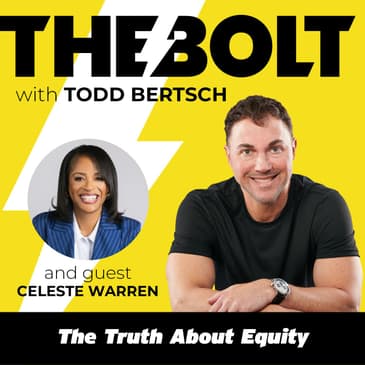
This episode explains what equity means, how it differs from equality, and why equitable leadership can help people perform at their best. Celeste Warren draws on decades of HR and diversity leadership to explain why treating everyone the same does not always create equal opportunity. The conversation explores workplace barriers, unconscious bias, hiring practices, inclusive systems, employee development, and why leaders need to understand where each person is starting from. Listeners will learn practical ways to identify barriers, ask better questions, create access to opportunity, and build workplaces where more people can contribute their full potential.
Key Takeaways
- Equity creates access to opportunity, not preferential treatment.
- Equity and equality are not the same.
- Treating everyone the same is not always fair.
- Curiosity helps leaders uncover unseen barriers.
- Equitable hiring does not mean lowering standards.
- Unconscious bias can influence people decisions.
- Better systems create more equitable workplaces.
- Great leaders meet people where they are.
- Equity can strengthen engagement, retention, and innovation.
- Equity helps unlock human potential.
https://www.toddbertsch.com/podcast/the-truth-about-equity-with-celeste-warren/
Thanks for listening or watching! We appreciate you.
Follow us at:
https://www.linkedin.com/in/toddmbertsch/ https://www.facebook.com/theboltwithtoddb https://www.instagram.com/theboltwithtoddb/ https://www.youtube.com/@theboltwithtoddb
⚡ Ready to ignite lasting transformation in your team or event? Book me for keynotes, corporate training, or Positive Intelligence® coaching at ToddBertsch.com
Powered by the WRKdefined Podcast Network.
[00:00:05] Welcome to The BOLT Podcast. I'm Todd Birch, entrepreneur, keynote speaker, and mental fitness coach. Whether you're a new listener or one of our loyal listeners, I'm glad you're here. See, I believe we're all a work in progress. No matter where you are in your journey, there's always another lesson, another challenge to overcome, and another opportunity to grow. And that's what this podcast is all about.
[00:00:31] With my guest, we'll have honest conversations about leadership and personal and professional growth. I'm excited for this next episode, so let's get to it. Welcome back to The BOLT Podcast. Today's episode is a little different. As I prepared for this conversation, I looked back at every guest who's been on The BOLT. And what I found surprised me. I believe different perspectives make us better leaders.
[00:01:00] And I've been intentional about creating a podcast that's nearly balanced between male and female guests. But as I looked deeper, I noticed something. While I've featured incredible leaders from many industries and backgrounds, I hadn't been nearly as intentional about racial diversity. In fact, today's conversation marks an important milestone for The BOLT. As Celeste Warren is the first Black woman I've had the privilege of welcoming to the show.
[00:01:29] That wasn't intentional, but it was a blind spot. And like many blind spots, I didn't see it until I stopped to look. Several years ago, I participated in a DEI racial dialogue series and had the privilege of serving on the executive committee of the Akron Urban League Board. And those experiences challenged some of my assumptions and reminded me that growth begins with listening.
[00:01:56] Like leadership itself, learning is a lifelong journey. And one of the things I teach leaders is that growth begins with curiosity. Sometimes curiosity starts by asking questions of others. And sometimes it starts by looking in the mirror. Today's conversation is a little bit of both. This episode isn't about politics or taking sides.
[00:02:19] It's about curiosity, leadership, and understanding one of the most misunderstood words in today's workplace. Equity. And we have the expert on equity joining us today, Celeste Warren. Celeste is a former vice president and chief diversity and inclusion officer for a Fortune 100 company. Founder of Celeste Warren Consulting, TEDx speaker, and author of The Truth About Equity,
[00:02:49] What It Really Is, What It Isn't, and Why Everyone Wins When We Get It Right. Celeste, welcome to the Bolt Podcast, my friend. Oh, thank you, Todd. Thank you for that wonderful introduction and heartfelt too. Appreciate it. Absolutely. You know, this is a very important topic and I'm excited to dig into it. So let's talk about the truth about equity.
[00:03:15] Now, you wrote this incredible book, The Truth About Equity. What it really is, what it isn't, and why everyone wins when we get it right. So we're going to really dive into that book today and we'll include links to the book in the show notes as well. But before we start, as I was reading the book, I noticed you started the book by taking us through your journey. And that goes back to 1987 as a young reporter.
[00:03:45] So how did those early experiences shape your leadership journey? Yeah, people laugh at that. They said, you used to be a reporter. And I said, yeah, I used to be a reporter for a quick minute. But I went through a pre, pre, pre, pre, mid-career crisis where I had tunnel vision all the way through my education, my formal education, because that's all I wanted to do.
[00:04:12] And then when I became one, if you're not in the larger markets, you don't earn a lot of money. And so they say there's an old saying that 10% of the people in that industry make 90% of the money and the other 90% make that other 10%. And that's unfortunately very true. At least it was for me back then. And I got tired of writing home to my parents, calling my parents and saying, can you help me out? I need money for rent.
[00:04:40] I mean, I didn't even have enough to cover rent on a monthly basis. And so I wasn't making enough. And so I decided to go back to school and pursue. I didn't know what. All I knew is that I needed to change careers. So I went back to school and my mother talked me into coming back close to home. I was down in Lexington, Kentucky.
[00:05:05] And so I came back close to Pittsburgh and went to Carnegie Mellon University. And because I didn't take some of the courses that were required, I was invited to a summer program.
[00:05:25] And this summer program before the courses, before the fall started, it was basically a program that back then was intended to get more students of color, more individuals of color and different genders interested in their school of urban and public affairs is what it's called. It's called the Heinz School now.
[00:05:50] And so I went through this program with about 50, 40 or 50 other people across different walks of life, different identities. And we went through this program because all of us were in the same boat. We didn't take some of the necessary micro, macro economics, statistics, things like that.
[00:06:11] And so this gave us an opportunity to take these courses over the summer so we could be on the same level playing field as our colleagues when we started classes in the fall. So we were sitting in these hot dorm rooms, no air conditioning, struggling, got tutors, helping each other through these difficult courses and ended up doing well and passing them. And so then we were ready for the fall.
[00:06:40] And so fall started. And then you can imagine the 40 of us, we developed a kinship because we've been together through the whole summer sharing similar experience. And so when fall started, we knew each other already. We were hanging out. We were eating together. You know, when we saw each other in the classrooms, we had a natural kinship.
[00:07:07] And one individual asked us, a colleague, two or three of us that were talking and said, oh, wow, you know, how do you all know each other so quickly? And we explained that we went through this program together, et cetera, et cetera. And he looked at us. Then he said, well, that's not fair. How come I didn't get to go through that program? You know, why did you all get to go through it? And I didn't.
[00:07:36] And it kind of hit me in the face to think that, wow, this guy thought that we got something or some type of preferential treatment that he wasn't made available to him. And the reason why it wasn't made available to him, the reason why he was able to enjoy his summer and go to the beach or hang out and do whatever it is that he did was because he already took those courses in his undergraduate program. So he didn't need to go through the program.
[00:08:08] And it allowed us who didn't take those courses to come into the fall semester on the same playing field. And so that's when the whole thing around equity kind of hit me like, wow, you know, it's just it's amazing. And I felt proud that I had gone to this program.
[00:08:31] I was proud that I endured the summer and took these courses and passed them and was able to join my colleagues in the fall semester at this prestigious institution and be able to to not just keep up, but but thrive. And it just it kind of it sort of almost burst my bubble when he said it. And I was really, really disappointed.
[00:08:58] And then, you know, I just kind of thought about a thought back on it at the end of the day as I was thinking about the conversation and said, you know, don't let him take your pride away. Don't let him take what you accomplish away because you didn't get something over and above what he got. You got something that you needed. So when you all came in in the fall semester, you're all on the same playing field and starting from the same gate, if you will.
[00:09:28] And and that's kind of how I kind of experienced for the first experienced it for the first time in a way that was really, really. It really made an impact on me. Yeah, that's the fence. Yes. That's the beginning of the fence analogy. Now, that's that's incredible. That's you were able to recognize that and put it aside. Right.
[00:09:54] I think oftentimes we as human beings, we get in our head. We let our inner critic control us, sabotage us. And that's what my mental fitness program is all about, is being able to identify, catch and shift that judge away so that we can be in our sage brain and celebrate our accomplishments, which we don't do nearly enough. We always focus on the negative. So I'm glad that you were able to do that.
[00:10:21] And that so that was the springboard that then led you eventually into HR, which you spent several decades and really kind of made that your home. Yeah. And I'll tell you, Todd, I didn't want to go into HR. It was funny because I didn't know anything about it. Yeah. Nobody does. Yeah. At the radio station where I worked at in that industry, you know, you didn't have a lot of HR people back then. You didn't have any.
[00:10:52] And so when I got into school, the guidance counselor there was talking to me about different careers and things. And she said, well, Celeste, what do you what do you want to do? What do you want to get out of this program? And I said, well, you know, I had a journalism and telecommunications degree. I had a minor in political science. Why don't I just go to D.C. and kind of be a campaign manager or a press secretary or something like that?
[00:11:18] And she was like, oh, no, you don't want to do that because your career would be so volatile. Have you ever thought about human resources? And I was like, human resources? No. No. My idea of it was this, you know, this kind of old lady sitting in a closet passing out applications. Right. Yeah. And she said, no, no. So she kind of introduced me to the whole world of that discipline. And she said, no, it's got a lot of different things in it.
[00:11:47] And we had to have a mandatory internship in between our first and second year of grad school. And so I interviewed with General Foods. And to this day, it is the best interview I've ever been on because I interviewed with the head of organizational development. And a gentleman who, from the moment I sat down, it was like we were just having a conversation.
[00:12:12] He was asking me about leadership and did I believe that leaders could be cultivated? Or did you have to be born with a true leader to be a leader? And just all kinds of questions like that. And next thing I know, he says, well, Celeste, it's been great talking to you. We'll be in touch. And I was like, that was an interview? Because, you know, even back then, he was like, these are the five questions that every interviewer is going to ask and all of this. And you prep for all of that.
[00:12:42] And I didn't get any of that other than, you know, he asked me a little bit about myself at the beginning. And so I ended up going interning there in White Plains, New York at the old General Foods headquarters and had a great time. I mean, just a great time learning and working with people, helping them to be a better version of themselves as an employee.
[00:13:12] And I couldn't believe it. I was like, people get paid for this? This is kind of fun, you know, as a young person. And so when I came back, they hired me. And so I started working in White Plains after I graduated and did that. Then I was transferred to Hoboken, New Jersey and did labor relations.
[00:13:37] So I was a young kid in my 20s working with labor unions. These guys were in their 50s. They were second generation Sicilian. In some cases, they was alongshoremen's. And so it was quite an environment, a learning environment. And so I just kind of was up and down the East Coast in different roles. And then Merck came calling.
[00:14:05] And after I worked probably about nine years there and Merck came calling and I didn't know anything about pharmaceuticals. And so I reached out to my sister who at the time worked for Pfizer, a competitor of Merck's. And she said, you've got to go to this interview. It's a great company. You'll really enjoy it. Go, go, go. And so I said, OK.
[00:14:30] And so I started working at Merck in different parts of the company, research, sales and marketing, supporting in human resources, supporting different parts of the organization, human resources. And then but always doing the role through a lens of inclusion, through a lens of making sure that no one is left behind.
[00:14:56] And that really served me well as I went into the role that I had before I left Merck. Yeah, that's amazing. Yeah. Yeah. Yeah.
[00:15:33] That's amazing. You. You weren't making the money as a reporter. What if you were? What if you did make the money or was maybe a few dollars more, just enough to pay rent? Maybe you wouldn't have went down this path. Right. Right. You wouldn't have this amazing, this amazing book. So but what I love most is you saw this as a gift and opportunity. Right. You didn't wallow in it. Oh, it's me.
[00:16:02] You said, OK, I'm going to I'm going to go back. Not only go back, I'm going back to a prestigious program that I would imagine is difficult to get into. And then you have this amazing experience and really opening yourself to this this land of equity and inclusion. I just think it's a great story. That's it's a great way to set us up. So we're here to talk about equity.
[00:16:32] Celeste, what is this? What is this this biggest, most misunderstood word in the workplace? Let's dig in. Let's talk about it. So what is the biggest misconception that people have about this? The biggest misconception is the one that the young man had back in 1987.
[00:16:55] That's that a group of people was getting that they're getting preferential treatment over another group. And that's not what it's about. I like to explain it. You referenced it. The Deloitte illustration cartoon. The rocks and the fences. In the first illustration, as you can see, they're all standing on one rock and they're in front of a fence.
[00:17:22] The person on the right cannot see over the fence. The person in the middle can barely see over the fence. The person on the left can clearly see over the fence. But they all have one rock. In the second illustration, the person on the right has been given two additional rocks. They can now see over the fence. The person in the middle has been given one additional rock. They can now see over the fence.
[00:17:49] And the person on the left still has the one rock because they were always able to see over the fence. Those rocks are acts of equity. It's giving them what they needed to be able to have access, to be able to see over the fence. And in my analogy, that fence represents the isms, what I call the isms, the longer term things that they didn't crop up overnight.
[00:18:16] It's going to take longer term strategies to kind of dismantle them. So the isms, racism, sexism, ableism, ageism, homophobia, all of those different things that cause challenges to different identities in society, in organizations. And so in my analogy, the challenge is those acts of equity are causing disruption.
[00:18:43] The reason why is because the individual that was standing on one rock in both those illustrations, they're looking to their right and they're saying, well, how come they have three rocks? They have two rocks and I just have one. That's not fair. That's that's you're giving them preferential treatment. And the thing that they don't understand is that there's a fence in front of them.
[00:19:05] They don't understand that the person on the right, how that fence, how those mannerisms, how it equates to them and how they experience it in the workplace. They don't understand that those isms cause challenges for their colleagues to the right. They think that their rock was taken away from them and it wasn't.
[00:19:30] And so what we have to do is we have to have a multi-pronged strategy. We have to put the acts of equity in place so everyone has access to opportunities. We have to tear down the fence because that's the longer term strategic work that needs to be done, looking at policies, infrastructure, programs, systems, etc. And then we also have to have conversations with that individual who's standing on one rock.
[00:20:00] Help them to understand how those isms manifest themselves to their colleagues to the right. Help them to understand that. And then not just make them active allies. We need them to be active from the standpoint of we need to do not to just intellectualize it, but we need you to get in the boat, grab an oar and start rowing with us. So we can get to that third illustration where the rocks are gone.
[00:20:28] We no longer need the rocks because we've torn down the fence. We've done the hard work. And everyone can see the beautiful mountains that are ahead. Yeah. Yeah, I agree. And I love the analogy, Celeste. And I think it comes back to really curiosity and being curious. Because when you're curious, you're not making assumptions.
[00:20:58] You're not judging. You're asking the second and third question. What else might be true? What might I be missing? Because a lot of people, as you mentioned, they don't know the fences there. Right. And hey, I'm a white male. I have privilege. But a lot of people, they don't know that. They just grew up that way. They really don't know that.
[00:21:25] And I'll be honest, when I went through that racial dialogue series, the DEI series, that was an awakening. And here I am. I grew up middle class, biracial neighborhood. I hung out in some of the areas and experienced some things that most people probably never experience in my life of breakdancing, which allowed me into those homes and into those communities. And I was still. So I had more awareness than most people.
[00:21:54] But as an adult, you know, sitting around my group, my table with three other black women who were around my age in our 50s. I was taken back. I was taken back by what they are still experiencing to this day. And these are really reputable women who have done some amazing things and sit in some high roles.
[00:22:21] And I'm thinking, wow, you're still experiencing this? And that was the assumption. But not in, you know, not assuming in a mean way. I just I didn't know. Right. So that's that being curious and listening and being exposed to a program like that to open your eyes, to see the fence. And then you understand more. It's like, oh, OK. I only need one rock or maybe I don't need any rocks.
[00:22:51] I can still see over the fence. That is such a great analogy. I went through a similar program with another colleague. He was a senior leader within the organization. And it was a program similar to that time.
[00:23:12] The transformation that I saw in him was in the types of conversations that we had during that program and following that program. It was it was on a different level. And I he said something to me that I thought was very, very profound. He said, Celeste, after going through this, this, this immersive experience. And that's what it was, an immersive experience.
[00:23:40] He said, I don't know how you as a black woman get out of bed every day. And come to work and do what you do, especially what you do. And we talked about it. We talked about the fence. We talked about those isms that exist.
[00:24:03] And and he said, he said, you know, he goes, I was exactly, you know, that guy who was leveraging his privilege. And I had really come up through my career by having sponsors that I didn't even know about, by having people who just like me because I went to the same school that they did. You like me because I'm from the same town.
[00:24:31] We summered in the same places. You know, all of those reasons that had nothing to do with his skills, his capabilities, his intellect, et cetera. And, you know, it was just a very profound conversation. And it took something like that, that experience for him to see and understand that the fence was there. Right. Yeah, I think I think we just need to have more conversations like that.
[00:25:00] And I love I love how you stated everybody's involved in this. Yes, everybody, everybody who's sitting on a rock. Right. Regardless of how many rocks you have, we all need to be a part of the conversation because that's where the growth happens. That's where the learning happens, where the curiosity happens. And then we can move forward. And then we don't have the experiences like you had with the guy who said, oh, Celeste, that's not fair. Right.
[00:25:30] And we're going to talk about fairness here in a little bit because that's a whole other thing. But I think this is a great segue, Celeste, into equality. Hey, it's Todd again. Look, our leaders are facing incredible challenges right now with burnout, disengagement and stress among our teams. We see the data. Gallup shows us that 80 percent of employees and managers are disengaged. Sherm reports that burnout and stress are at the top of workplace challenges.
[00:26:00] And the Global Business Index reports a 180 percent increase in business disruption. Those are real problems. And that's why mental fitness matters more than ever. Mental fitness is your ability to respond to pressure and challenges with clarity, confidence and laser focus. Instead of being derailed by negativity, self-doubt or stress.
[00:26:27] It's about building that self-command, especially when it matters most. How do I know? Because I went through a mental fitness program called Positive Intelligence during COVID. Changed my life. Changed the way that I live, lead and run my business.
[00:26:45] And through the Positive Intelligence program, I work with leaders and teams to help them reduce burnout, strengthen resilience and create a culture where people feel supported, engaged and capable of performing at their best, even under high pressure. It's a neuroscience-backed program. It's only eight weeks and it works. So if you're interested in learning more about the program, visit my website, ToddBirch.com.
[00:27:14] Let's set up a call and I'll walk you through a quick demo. Now back to the show. So you really helped us understand equity. So what is the difference between equity and equality? Because I feel like that's definitely a big part of your book. And I think it's something that people often struggle with or don't even know that they're in the same phrase because there is a distinct difference. Very much so.
[00:27:44] Equality is where we're trying to get to that third illustration where the rocks are gone, the fence is torn down. Everybody has equal access to seeing the beautiful mountains ahead. And they all can still be the people who they are, the different identities, you know, in this case, one who's vertically challenged, you know.
[00:28:09] But equality in that first illustration, they were each given one rock. They were given equal amounts. But because the fence was there, they still were not able to have access to be able to see on the other side. But they all still had the same thing. They were each given one rock. And some people think, well, that's the right thing to do. You give everybody the same thing. And it doesn't understand.
[00:28:39] It doesn't take into account that people in this illustration, different heights. And people come from different starting places. They come from different walks of life, different life experiences, different advantages, different disadvantages. And so you have to make sure that you're putting the rocks in place, the acts of equity.
[00:29:04] So while we're doing that hard work of tearing the fence down, that's not going to happen overnight. We have to do that work of creating equity so everyone can see over the fence. Everyone can have access to opportunities that may not have been available to them in that first illustration. So that's why equity is so important. Equity doesn't mean everyone gets the same thing.
[00:29:33] Equity says you get what you need to have access to the same opportunities as everyone else. Yeah. And I love in your book, you have another great analogy, the candy bar. Oh, I had forgotten about that one. Why don't you share it with me? Well, OK, I'll try. Correct me if I'm wrong, please.
[00:29:58] But talking about equity versus equality and there's three people and you need 50 cents to buy a candy bar. Right. And one person has a dime, another one a nickel and another one a quarter. Yeah. And to be equitable, we're going to give everyone the same thing. We're going to give everyone a quarter. Right. The one one guy, Johnny, has already got a quarter. He's got 50 cents. You can go get his candy bar.
[00:30:28] Awesome, Johnny. Well, Susie, she's only got a dime. So now she has 35 cents. She can't get a candy bar. And poor poor Todd over here, who's only got a nickel. He's got 30 cents. He's definitely not getting a candy bar. Yeah. So we gave everyone the same thing, but it wasn't. They couldn't have access to the candy bar.
[00:30:54] And the reason why I like that analogy is because even taking it into the sense of the person who was getting the money out, thinking they're doing a great thing. Right. Oh, these three kids are sitting outside the store. I'm going to give them each a quarter so they can go and get the candy bar without asking them, what do you have? What obstacles are getting in the way of you being able to get the candy bar?
[00:31:24] What do you need? And how can I help? Yeah. And that's the difference. The assumption was made, well, I'm going to give everybody a quarter.
[00:31:32] I'm going to give everybody a quarter.
[00:32:02] And how can I help? And those are the questions that every leader should be asking their direct report, their team members, their organization to make it a better organization, more inclusive environment. Absolutely. I'm all in on that. And I want to go back to the story real quick because I don't want to discard the person who gave the quarter because that was a great thing. Right. So, good.
[00:32:31] That's the first step. Now we need to take it a second step. And what I say is let's meet people where they are. Yes, that's exactly what I'm talking about. And this has been a through line, Celeste. And every conversation I've had for the past three months. I went to SHRM National in Orlando. We were talking about this.
[00:32:54] Every leadership conversation I've had on this show and as a guest on other shows, we keep coming back to a couple of things. Psychological safety, which I'm not going to get into because I've been beating that horse for a couple of months now. But the other one is really knowing your people, really knowing them. And when you know your people, you can meet them where they are.
[00:33:18] And you can provide that equity because you've been in the trench knowing them, getting to know them and the resources they need and what lights them up, what drains them and where they might be lacking in the resources. So they can have the rocks to see over the fence. Not easy to do. And we see a lot of leaders, especially now, because they're managing more people, right?
[00:33:48] Teams are smaller, but they're getting more people to manage. So we don't have the time necessarily or we're not making the time. But it all goes back to those one-on-ones, sticking to them, being consistent, not moving the meeting. And spending the time. And if you spend the time and you know your people, it's a win-win for everybody. And then you can provide those rocks, meeting them where they are.
[00:34:17] Very nicely said, Todd. And you're exactly right. I'd like to say that equity is simply leadership 101, management 101, business 101. Because you have to make sure that you understand what your employees need, what your customers need in order to give them what they need to be able to succeed. And that's all part of regular leadership and management, all part of the same thing.
[00:34:45] And the people that make great leaders understand that. They understand that that's what's required. I have to not just have monthly or bi-monthly staff meetings, but I need to have one-on-ones with my direct reports. I need to be able to listen empathetically.
[00:35:05] I need to be able to understand what some of their challenges are, even challenges that go beyond the workplace, that maybe there's something happening in their lives at that period in time that's causing them to take attention away. And it's causing them to be stressful because they're trying to manage both things that might be happening on the home front and their workload.
[00:35:31] So being able to understand your employees, being able to have those conversations is really, really critical. Yes, it is. Because as you said, everybody has a different journey. Everybody's got a different background and are having different experiences in their life. And obviously, different seasons in life. But it's about spending that time getting to know your people.
[00:36:00] But, you know, equity is hard. And your book talks about it. Like, why is equity so hard? It sounds and seems very simple. And as you said, when you say one-on-one, those are the prereq, right? Those are the beginning courses. The foundation, if you will. So why are we getting this wrong? Why? If it benefits everybody, why does this conversation become so polarized? What are we getting wrong, Celeste?
[00:36:30] One of the challenges is because people, they listen to the rhetoric. They listen to voices that don't really truly understand what it truly is. And so there's a lot of polarization because people think that it is one group having an unfair advantage over another.
[00:36:52] They think that, well, if I am talking about diversity and inclusion when it comes to people, what I'm really talking about is maybe lowering the standards. If it's a job situation, lowering the standards of the quality of the candidate that I need in the job.
[00:37:15] I'm doing things to try to hire someone because they're Black, because they're a woman, because they're in the LGBTQ plus community. And not because the job requires certain skills and capabilities. And that couldn't be furthest from the truth. Because. Let's say a recruiter, for example.
[00:37:40] They hear from the hiring manager and the hiring manager tells them that the candidates need certain skills, certain capabilities, certain characteristics, certain years of experience and certain education. And the recruiter says, OK, I'm going to go out and I'm going to get candidates who meet those qualifications. And I'm going to make sure you have a diverse slate of candidates as well. And when the manager hears that.
[00:38:07] All of a sudden, that myth comes up that, well, wait a minute. I'm going to make sure they're qualified. And so then, you know, we interject in the conversation of, well, what do you mean? Why did you say that? Why did you feel a need to say that and clarify that? And this is where their own biases come in, because in their head, if you say you're going to bring in diverse candidates, you're not going to. Those candidates aren't going to meet the skills and qualifications that I just talked to you about.
[00:38:36] And that's not the case, because the recruiter, number one, their job is to bring in qualified candidates based on the specifications that you outline as the hiring manager. That's their job. Their job isn't to bring you candidates that aren't qualified and don't meet the qualifications of the role.
[00:38:56] What the hiring manager needs to understand is that those qualifications, those skills, those capabilities, all of those things can be embodied in a variety of different identities.
[00:39:11] And so what that recruiter is doing is going out and sourcing from a variety of different places to be able to make sure that you have not just the skills and the capabilities that you need for the role, but they might bring in other added bonuses too. Cultural experiences, cultural experiences, life experiences that may help you connect better with the customer, for example.
[00:39:38] But things you may not have thought of, a level of innovation, a level of creativity that comes into play. So, you know, they're basically telling you that I can get those skills and capabilities and they can be embodied in a variety of different identities. And so don't worry about that. They're going to be qualified. And that's a big misconception that people have, that if you're a woman, you're inferior.
[00:40:08] You're not as smart. You don't have the skills and capabilities. And that's where equity comes in because depending on different life experiences or whatever, that person has been given things to help them become qualified for your role.
[00:40:26] Whether that be they took extra courses in school, whether that be they took extra courses in school like I did, whether they attended different developmental programs, whether they enhanced their career with sponsors and mentors to help counsel them and coach them. Whatever it is, they did things and were given opportunities to help them be qualified for the role.
[00:40:51] Obstacles and barriers were blown out of their way to help them become qualified for the role. So when the recruiters recruited, they don't have to lower the standards. They don't have to lower the bar. They're getting qualified candidates who look differently. Yeah. Yeah. I love the one example that you share in your book is the orchestra example and the blind auditions.
[00:41:18] I thought that was, that resonated with me. Do you want to share that example? It's very powerful. And it's a true story. The Philharmonic, they were having trouble because they were, they didn't have a lot of women and women were not making it onto the orchestra. And so what was recommended to them was they have blind auditions. And so they closed the curtain, couldn't see who was coming in.
[00:41:48] And they listened to the quality of the music and hired people into the orchestra because of that. And over a short period of time, over a number of years, they were able to increase the female representation on the orchestra based on not what they look like, based on the quality of their work. But when the curtains were open, who knows that certain biases may have come into play. And we all have biases.
[00:42:16] Everyone's been through unconscious bias training, I think, over the last few years. And that tells us that everybody has biases. Everyone. You're human. But when you let those biases enter into how you're making people decisions, then that becomes problematic. And so.
[00:42:42] Without even realizing it, there were certain biases that were coming into play where women were not being chosen into the orchestra. But when they close the curtains and just listen to the essence and the quality of the audition and sound, then that's when they were choosing the people who belonged in the orchestra. Yeah. And it increased, what, six times? Yes. Wonderful story.
[00:43:09] I love that story because it truly, truly does talk about how unconscious bias comes into play. Right. And I'm sure they didn't intend to. They weren't intending to the people that were selecting and choosing the musicians for the orchestra. But it came into play, unfortunately. I'm just curious, Celeste. Do you know, are they still doing the blind auditions to this day? You know what? I'm not sure. I'm not sure if they are or not.
[00:43:36] Because, you know, at some point when you get to that third illustration where the rocks are gone, the equity, because the blind auditions, those are acts of equity. Those are, that's removing barriers that might get in the way. In this case, you're trying to pull out the bias that exists in a process. Right. And that's what they did. They pulled out the bias by closing the curtains.
[00:44:03] And so what we want to get to is where people understand their biases, they're in touch with them, and they're not allowing those biases to enter into them making decisions around people's careers. Right. Yeah, and that comes in. I think that's a great lead into kind of the next topic, which is systems, systemic systems,
[00:44:29] long legacy of barriers and fences. And that's, this is great, right? We need to do this initial work, but there's a lot of hard work that needs to be had. And that's a journey that takes commitment. That's not going to happen overnight. And that's, you know, I believe why you wrote this
[00:44:51] book was to give us some, some foundation, some awareness. And hopefully if, if people read it and are genuinely curious, they will start to look into these systems. So let's talk a little bit about systems. You, you often say you, and I wholeheartedly believe this, you, you don't change people, you change the systems. And what do you, what do you mean by that?
[00:45:19] Well, the systems determined in an organization, determine who makes it through and who doesn't. So if you just change people and without changing the fundamental way, policies, practices, procedures of how people are chosen for roles in succession planning, in promotions, in hiring, in development,
[00:45:48] then you aren't really getting at the problem. It's like continuing to pour water in a bucket that has a hole in it. And so you have to look at the, the alpha to the omega of important development. If we're talking about people systems, look at the talent acquisition process.
[00:46:14] Are you, do you have a diverse sourcing strategy? Are you going and fishing from different ponds? So there is a variety of different people across different walks of life for those positions in your organization. When you look at the development strategy, who's getting the development opportunity? Who's going to the developmental programs, either internally or externally? Why is that?
[00:46:40] What happens with your selection process? Is it a manager nomination process? Are there any biases that come into the manager nominating people? Who are they nominating? Are they the people who they're close to, they have relationships to, or are they really assessing everyone to make sure that they're getting the right people who need the development through the program? So it's looking
[00:47:07] at the policies, the practices, and the procedures to say, how do we make sure that we're not leaving anyone behind? How do we make sure that it's fair and equitable practices? How do we make sure that we're getting the most out of this, this process so that it doesn't have unintended consequences of excluding people based on various different factors? You don't want that. And so you have to
[00:47:34] look at those systems because the systems, as people go through it, if the systems have bias in them, they will automatically leave people behind and people can't get through them. And I think this applies not only to Fortune 500, 100 companies, this applies to everybody. This applies to the small business owner as well.
[00:48:03] Absolutely. I am actually doing a webinar with the Small Business Expo coming up in October. And that's one of the things I talk about. How do you, you know, an organization of 15 people, 20 people, 50 people, how do you leverage inclusion to be able to make sure that your organization is successful?
[00:48:27] And with a small organization, it's even more important because you can't hide. You can't hide if you're giving preferential treatment or you have a go-to guy or gal and you're constantly talking with them, bouncing ideas off of them. In a small organization, people notice that. And they
[00:48:50] definitely notice when things are happening where you have a, things aren't transparent and they absolutely have to be transparent. Your policies, your practices, your procedures, even your mannerisms and what you do when you walk down the hall, when you come in in the morning and you say, Hey, Joe, how are you doing? Hi, Todd, how are you doing? And Cecilia and Anna don't get a hello
[00:49:18] automatically. And, you know, they start to think like, okay, well, he just talked to the guys. He didn't talk to us. He didn't say hi to us. It's little things just like that, that demonstrate that you aren't an inclusive leader and it can get, you may have just been, it may have just been harmless, but it's something that you did. So, you know, and when you're in a small organization,
[00:49:40] it's even more apparent when you aren't demonstrating inclusive leadership and have inclusive policies and practices in your organization. Yeah. Yeah, I agree. Um, you know, it was Celeste, all of my work now centers around helping,
[00:50:00] helping leaders ignite, protect, and multiply human potential. Um, can organizations fully unlock that human potential if equity isn't part of leadership? Well, the quick answer is no, you can't because everyone didn't start in the same place. Some people started, you know, if you use a, I'm a track mom, um, to use the track vernacular,
[00:50:29] everyone didn't start at the starting line. Some people, when the gun went off, they were at the starting line. Some people were at the 10 meter line. Some people were at the 20 meter line and some people weren't even out of the locker room. And so when the gun went off, people were in different places. And so, you know, you have to make sure that everyone has the same opportunity to get to the,
[00:50:53] to the finish line. Um, and they're all starting from places where you understand they're starting from different places and you're putting things in place to help them to get, to move forward. Right. And that's really, really critically important. And if you don't do that, then you're going to have people that are going to fall behind. And, and the problem with that is it creates, um,
[00:51:21] unfulfilled potential. It creates people quitting in place. It creates turnover. It creates a, well, it's lack of creativity, lack of innovation and a lack of, um, uh, extra effort, discretionary effort, which is what you want in an organization. Cause in, you know, organizations go through good times. They go through tough times and challenging times. And during those
[00:51:47] challenging times, you want leaders that when they take the hill, their team comes with them. It isn't sitting there looking at them at the bottom of the hill saying, yeah, you go on. We're all good. I'll be there in a minute. Yeah. Yeah. And, and I love that. And I think that comes back to what I talk about a lot, Celeste, which is the spark. And when you don't spend the time, when you don't know your people, when you don't meet them where they are, when you are,
[00:52:14] when you don't lead with equity, there is a chance that that spark within that person dims. And when that dims, we see the smoke signals, curiosity shuts down, ownership fades, right. And that leads us to burnout, disengagement, quiet quitting, whatever you want to call it, potentially leaving and your retention rates go down. So there, there are some huge benefits
[00:52:41] to one, this is just the right thing to do, but there are also huge benefits to many of our business goals to really leading with equity. You know, one is a higher retention rate. Another is building a stronger culture and the business results. Talk about some of, some of the results
[00:53:06] that you've seen, tangible results that you get somebody in, you know, CEO or whatever saying, okay, right. Tell me, tell me how this is going to help my company. Yeah. You know, I, I like to say besides equity being management and leadership one-on-one, it's also business one-on-one. So let's say I'm sitting in a marketing meeting and I'm looking at my
[00:53:33] marketing data and our product is not selling well with women. And we don't seem to understand that. Well, marketing one-on-one says that you do the market segmentation, you do the market research, you understand why your product or your service isn't reaching in, and this, this audience,
[00:53:57] this potential customer and understanding why. And then once you understand why you go back to the drawing board and you put strategies together so your customer can meet the needs of women as well as everyone else. And so if you don't do that, you can best believe your competitor is doing that. And that's market share, that's revenue that you are leaving on the table for your competitor to take.
[00:54:26] And that's basic, basic business understanding. You have to understand your customers and your customers are very, very diverse. And so you have to do, do this, do the research to understand, okay, what's going to get in the way of my product or my service, my product, whatever it is that I provide, what's getting in the way from certain segments of my customer base, being able to enjoy
[00:54:53] what I provide and understanding that. And you got to do that by understanding that customer. Right. Absolutely. No CEO that I know of wants to leave market share on the table. Right. No successful one. And let's put it that way. Yep. We're coming. This has been great. So last, we're, we're coming to the end of the show here,
[00:55:18] but you know, your book is gracious. Yeah. See, you know, time flies when you're having fun. Um, your book concludes with equity is how we move forward together. Now you've been doing this a long time over four decades. What gives you hope Celeste? This, this generation, new generation gives me hope. Um, number one, it's the most diverse from a,
[00:55:46] from a demographic standpoint that I've ever, that we've ever seen historically globally as well, not just in the United States. And the way that they think about things is different from previous generations. They look at things more inclusively. They look at things and ask why not? Um, they look at colleagues and try to first determine what brings them together. What are, what are some of the
[00:56:13] things they have in common as opposed to initially looking at why are they different? And I, you know, I'm not sure what the cause is. I'm sure there are a lot of theories around this generation Z and generation alpha that's coming behind them. But I think a lot of it has to do with growing up in the technology that exists where they're able to communicate with someone from another country,
[00:56:39] another part of the world, just as easily as they are to their next door neighbor or their classmate. And so the world is a little bit smaller for them than it was for us when we were growing up. And, and so I think that there's a lot of hope in what I see in talking with them. I, you know, my, my son and daughter and I have a nonprofit destination STEM, where we try to get students of color and
[00:57:04] students in need interested in STEM field. And when I engage with a lot of our scholarship recipients, that's what I see in them. I see possibilities and potential well beyond, you know, what we could ever dream of. Yeah. Yes. I, and I feel the same way. I feel like as broken as things are right now,
[00:57:26] as challenging, as uncertain, that younger generation gives me hope also. They are the most curious generation I've ever been around and they want meaning. They want meaning. And when they, when people want meaning, they want that spark to be lit and they won't have anything else.
[00:57:52] So if you don't lead with empathy, curiosity and equity, you're not gonna, you're not gonna jive with that, with that, uh, that group of people. Yes. Yeah. Celeste, if, if readers could walk away remembering just one message from your book, one message, this is probably tough, but what do you
[00:58:19] hope, what do you hope that would be? What would you leave them with? Um, I would leave them with the fact that equity is something that's needed in order for us to get to equality, true equality. And as we're on this journey, that you take the opportunity to learn, to listen empathetically,
[00:58:46] as you said, Todd, to really get to know your individual people. So you can create an environment where people feel valued, where they feel like they're being productive, where they feel like they're being seen and heard, and they're able to contribute everything that comes with them, their skills or capabilities, their, their life experiences. They're able to bring all of that
[00:59:14] into the organization and truly, truly contribute. Yeah. Well said. Celeste, thank you so much for just your willingness to have this conversation with me, spending time with me. Thank you for writing this incredible book. Highly, highly recommend it. And we'll have a link to the show notes as well.
[00:59:36] And for bringing clarity to this subject, um, that is mainly misunderstood or just avoided altogether. My hope for today is that it sparks curiosity and people are willing to ask more questions, better questions and become better leaders. That's what the show is all about. We're all on that
[01:00:00] continual journey of life and being the best person that we can possibly be. So Celeste, thank you so much. I appreciate what you're doing. Thank you for the invitation, Todd. Wow. Another great episode. Thanks for joining us on the Bolt Podcast. Look, if today's conversation sparks something for you, pass it along. Every share creates a ripple and that ripple has the power to change somebody's life.
[01:00:28] If you want more information, more conversations, show notes, resources, or free tools, check out my website, toddbirch.com. Look, leadership is pretty simple. It comes down to taking care of yourself and your people. Ignite that spark, protect that spark, and light the way for others. We'll see you next time, my friends.
Sponsors
