
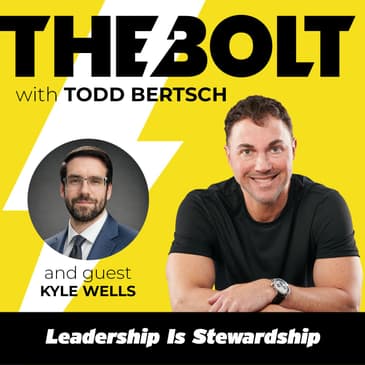
Kyle Wells, President of Champion Personnel, shares how leaders can build trust, strengthen culture, improve retention, and guide teams through uncertainty by putting people first. Drawing on his unconventional path from a temporary shop-floor worker to a company owner, Kyle explains why vulnerability, transparency, self-awareness, and investing in employees are essential leadership skills. The conversation also explores hiring challenges, employee experience, AI's impact on recruiting, mental fitness, and practical ways leaders can create workplaces where people feel valued and want to stay. Key Takeaways
- Transparency and vulnerability build trust.
- Investing in people strengthens culture and retention.
- Strong leaders put people before pride.
- Change is easier when employees feel heard.
- Great hiring starts with an honest candidate experience.
- Employer brand plays a major role in attracting talent.
- AI makes human relationships even more valuable.
- Mental fitness improves clarity under pressure.
- Self-awareness is essential for effective leadership.
- Small steps create meaningful momentum.
https://www.toddbertsch.com/podcast/leadership-is-stewardship-with-kyle-wells/
Thanks for listening or watching! We appreciate you.
Follow us at:
https://www.linkedin.com/in/toddmbertsch/
https://www.facebook.com/theboltwithtoddb
https://www.instagram.com/theboltwithtoddb/
https://www.youtube.com/@theboltwithtoddb
Ready to ignite lasting transformation in your team or event? Book me for keynotes, corporate training, or Positive Intelligence® coaching at ToddBertsch.com
Powered by the WRKdefined Podcast Network.
[00:00:05] Welcome to The BOLT Podcast. I'm Todd Birch, entrepreneur, keynote speaker, and mental fitness coach. Whether you're a new listener or one of our loyal listeners, I'm glad you're here. See, I believe we're all a work in progress. No matter where you are in your journey, there's always another lesson, another challenge to overcome, and another opportunity to grow. And that's what this podcast is all about.
[00:00:31] With my guest, we'll have honest conversations about leadership and personal and professional growth. I'm excited for this next episode, so let's get to it. Joining me on today's episode is my friend Kyle Wells, President of Champion Personnel. But Kyle's journey to becoming president was not conventional. Along the way, he faced a leadership challenge that forever shaped how he leads today.
[00:00:59] And we're going to talk about building cultures that people actually want to be a part of, why leadership is really stewardship, and what it takes to bridge the gap between the people doing the work and the people doing the hiring. Listeners, I'm excited for this episode. Kyle, welcome to The BOLT Podcast, my friend. Thank you so much for having me on, Todd. So looking forward to unpacking some of my journey and how it's inspired some servant-based leadership
[00:01:26] and different mentalities that have taken me very far a champion. So let's dive into it whenever you're right. Let's go. Well, let's start. Your journey is really remarkable. Like, I have never, honestly, I've done 66 episodes now, and I've never had a story like yours on the show. So just take our listeners through that journey from the shop floor all the way up to president. What did that look like? Well, thanks, Todd. It definitely is a unique and interesting journey.
[00:01:55] And I'm pleased to say that now that we're in the later chapters, it's a beautiful, beautiful story. So my journey with Champion was unique in that it started as a temporary associate deployed on the shop floor. At the time, before I came to Champion, I was working at Progressive, was a cocky young man, and quit without a plan. And like a lot of people without a plan, I found my way to a staffing agency, which was Champion.
[00:02:21] My friend of mine had worked there, and I took the first job I could get because I needed work and I didn't have a plan. So that turned out to be a shop floor inspector at a local rubber plant. So I found myself learning the robo business inside and out. I was fortunate enough to take a mentor and the owner of the company and started to run the business for him.
[00:02:42] So I started to learn more than just the manufacturing shop floor labor, but I started doing purchasing, procurement, quoting, sales, account management. And, you know, being a small house and I had an enthusiastic mind, I was able to get my hands on a lot. And I was coming from a progressive work in a box sort of role. Oh, yeah. And after a couple of years, Champion, you know, as a good staffing firm does go, man, this guy's got a lot of potential. He should come recruit for us.
[00:03:10] So Champion, you know, hired me from our client and I joined a team as a recruiter. And I quickly found that I was able to really relate to our candidate population and bring their stories to light when working with our clients and build what I call durable bridges between, you know, employees and companies. And so my success allowed me to take over one of our branches and really manage both sides of those relationships successfully.
[00:03:39] And it was at that time I started to realize I had something special. At that point, I had been with Champion about six years. I formed a close relationship with our owner at the time. But unfortunately, we had a terrible culture at the time. It was, you know, a very aggressive culture. It was closed minded. We had high turnover. We had poor mental health. And we also did invest in technology at the time. So when the pandemic happened, in my opinion, operations were hamstrung.
[00:04:10] There were a paper or pencil business and, you know, we were unable to really operate in that capacity in our remote work world. So I had to leave the company and went back to manufacturing. So for about 18 months, I was selling immersion heaters, DI water heaters and things like that for the semiconductor industry. It was a new change of pace.
[00:04:31] It was almost an engineering type of role where I was, you know, sizing and planning these installations for them, which was, again, great experience now with a global manufacturing company with a technical product. Unplanned one day at work and I get a phone call from the CEO, a champion and owner at the time. But unfortunately, followed on some poor health and realized that he needed a succession plan. Well, like a lot of those calls go when you start the planning at that stage, it's often too late.
[00:04:59] We were able to negotiate a deal where I was going to come back and help him revitalize operations. He agreed to effectively take a seat to a new plan and a new vision. But that vision didn't get to be executed together. I had two days with him prior to him going into hospice. He then passed away six months later.
[00:05:22] So here I was, Kyle Brohn from the shop floor temp, finding success with the company, separating from the company. And I had ideas, a plan and a vision, but no handoff. And really, to be fair, not the whole portfolio skills to do the role I accepted.
[00:05:44] But I was able to guide the company through the probate process and through a lot of vulnerability and seeking help and sharing my story. I was able to find the right people to help me build those skills, to help change the culture. And as a result, Champion's thriving and I'm pleased to share I own the company now. Wow. Kudos to you, Juan. Not a lot of people can do that. But there's a couple of key points that I want to touch on.
[00:06:14] One is the fact that you got vulnerable and you were able to seek help. Me, as a young, well, youngish man going into an ownership president role, starting my own company, I didn't know what the hell I was doing, honestly. And I was scared and fearful and felt like I needed to have all the answers. I grew up in a very blue-collar mentality. I was kind of a maverick. Like, if I can't do this on my own, then I'm not worth it.
[00:06:44] You know? Right. So I didn't. I didn't seek help. I didn't raise my hand. And I tell you what, that, looking back 17 years now, owning my business, that was probably my biggest mistake. Was not really having that self-awareness and the ability to get vulnerable and to seek help. I would have been so much further along in every aspect, in life, in leadership, in owning your business, running a business.
[00:07:10] So kudos to you for being even young to recognize that and to go out. And it's easy to do, Todd. You know, I think the reality is when you step into those shoes, it's kind of like growing up and growing from a teenager to becoming a young man. When you're faced with a situation you don't know what to do, you do what you think the person is supposed to do in that role. So here's Todd Birch, the new president. I'm going to do what I think a president should do in this.
[00:07:39] And sometimes that, in my case, that ignorance turned out great. And other times in both of our shared stories, it didn't go so well. Right. You know, like they say, some things you have to learn the hard way. And I certainly apply those examples, too. Oh, yeah. I say I got my MBA from learning. Me, too. You know, school of hard knocks and getting up and dusting yourself off and realizing that we all make mistakes. And whether we learn from them or not is a whole other story. Right.
[00:08:08] But if we want to, you know, embody the values that we envision a president should have, it's so important to pursue that continual improvement and realize it's a long skill set and it's always growing. Right. Always growing. That's the key. You know, I'm trying to think, like, how could you how could a person come into a company? One, just in that matter. Right. Like there was literally no handoff, no mentorship. Here you go.
[00:08:38] Great. You had been familiar with the company. You were on shop floor. You were a recruiter. And then, you know, in an ops kind of role. But then you have this company, not much time. All these people, very tenured company. Right. So these people have been there for a long time with the old regime. And here comes Kyle, young, new president with all these ideas. And can I say a toxic culture? Yeah.
[00:09:07] At the time it was. And, you know, we're also facing a deep fear. So I came back during the pandemic. So everyone was fearful about what work was going to look like, who was going to get laid off. Especially at a company where, wait a second, the owner is in a hospice and now deceased. I had to be very transparent. Yes. The company was going through probate and explain what that was. And quite frankly, I didn't quite even understand some of the implications that I was making upon myself.
[00:09:34] But I believed in champions so much that that confidence to dive in head first proved to be very fruitful and inspire. So I instantly changed our cop model, our communication tools and created a lot of openness. Well, again, realizing quickly, I had to be very honest and go, this is going to be a journey together.
[00:09:59] And I promise you, if you join me on this journey and you share the same vulnerability, we're going to succeed. And we're going to have something very special that we share together. And folks believed it and they felt it quickly. And some folks like Cindy Teens, who came in as our director of recruiting and some other folks that you've had an opportunity to meet through Champion, really stepped up and were willing to join in that vulnerability and fear at times.
[00:10:29] And we developed new relationships, new management styles. And the real champion that was always underneath the surface of this callous culture, it was always there. It just emerged. It was like, you know, you watered the dry dirt and allowed the seed to grow. Interesting. From the muck of our envision, this beautiful lotus, I would imagine that's a lot of change.
[00:10:57] So your team, they were experiencing every month, every quarter change, right? New policies, new procedures, new software. And people are really adverse to change. And I forgot that this was during COVID. Oh my gosh, like you did it. You had nothing in your favor. I had it. Jeez. 12-month-old son at the time. I don't like everything. You know, I didn't. And, you know, it's humorous to look back on.
[00:11:26] It's almost like, you know, a sitcom sort of situation. It's so crazy. It's like the foundation for like the different version of The Office or something like that. Mm-hmm. But it worked well. And it worked quick. Wow. That surprised me. There's got to be something in there. Why? Why did it? If you can look back now and reflect and give yourself, let's celebrate this, right? I know you're a humble man.
[00:11:57] But that's pretty remarkable to do what you did quickly with all the things that were against you, right? Your back up against the wall. How were you able to do that? I think it was by, you know, really unifying the team and, you know, investing heavily in people early, making sure their voice was heard.
[00:12:18] And also recognizing when you're coming from a broken culture, people might have some skill gaps and things like that that they're not confident to address. So, you know, identifying some of those needs, getting folks the help they need. And above all, I put the money up first. We immediately addressed the comp model, made a very aggressive industry shifting kind of, you know, change with uncapped commission.
[00:12:44] And I said from the start, anyone that wants to learn everything about this business from how we spend money, how we choose who we spend money with, why we choose the clients we do, why we don't, take a seat at the table. And if you take a seat at the table, it is going to be a fruitful seat. And if at any point you want to take that knowledge and go somewhere else, I respect it.
[00:13:07] But I think you're going to find that this is now going to be a true family-driven culture where the people at home and your life at home gets better. And a lot of the things you always thought you wanted at work, you're going to have. And you might learn that once you have that big voice and that big seat and that opportunity, there have been some folks that have taken a step back from that. And that's how we built a cohesive team where everyone knows their role. Yeah.
[00:13:36] Yeah. There's a lot there. A lot there. And I'd add also creating new positions. So taking other people's vision within the company and saying, let's create a role behind that. So, you know, someone like Amanda, our director of technology, someone like Patience, who's taken on a deeper operations role in sales administration. By creating these, it ignites individual passion. That's part. And it ignites their spark. Exactly.
[00:14:05] And it grows natural, you know, let leaders in the company and then other people see that. So when we hire and we say we promote from within, we believe in our better job, a better life philosophy. It's evident from the second someone walks in our office. And that's critical to our industry because that's not typical of the staff. Right. Right. Yeah. I see a couple of things looking from the outside. I see transparency.
[00:14:35] So you had to be transparent and open and vulnerable. I will say that I've made several mistakes over the 17 years that I've owned the business. One thing that I think I did pretty well was handle COVID. And how did I do that? I was extremely transparent and vulnerable. Right. I can't tell you how many nights, late nights in front of my laptop with 15 tabs within an Excel,
[00:15:02] all the different scenarios that could possibly happen. That's it. I mean, I had to live the worst case scenario. I had to see it. I had to see the vision of what could, which is a really dark and negative place to be in. This was before I went through positive intelligence. You know, literally in tears thinking, I don't want to lose my company. I don't want to lose these amazing people that I have.
[00:15:26] But the only way that I thought that we could work through this was just to be fully transparent. So it's every day. It was like, we're going to handle today. I don't know what the future holds. We're going to handle today. All I can do is I don't know all the answers. I don't know what's going to happen. But I'm going to be honest and open with you and clearly communicate. Every day, we had a stand up and we just talked. And that allowed me to keep all my people. We did not lose.
[00:15:56] I did not have to cut anybody. And the chair did not cut any salaries. And I will tell you this, and you've probably, you've definitely seen it. That's adversity. Adversity is one of, it is really hard and painful, but it is one of those things that if you come through it as a team, and that could be even your partner, spouse, you're going to be much stronger for it, right? You're going to find out who's really in it and who's not.
[00:16:25] And these people were all in it. We were all in it together. And so we actually thrived. Not only did we survive, we thrived. And I operationally strong, Ben. That's what the pandemic showed us. As the companies that were operationally strong did thrive. Because if you're operationally strong, you have the ability to pivot. You have the ability to innovate. You understand your customers' needs. You understand your staff's needs. So you can manage the pandemic as a variable.
[00:16:55] And that's how I look at a tough economic situation, a challenging job. These are all variables. And we can let them define us. Right. Or we can define the variables because we know the solution of the equation we want. And it really is. I love the algebra analogy there. So if we know we have X people and we have a Y product. Well, if you're going to add a Z element of the pandemic, well, we have to solve for Z instead of seeing how Z impacts the solution of the equation. Yeah.
[00:17:25] And it's always helped me look at things that way. So, you know, again, when it's the pandemic, you lose your founder and you're kind of out there on an island. Okay, let's manage all of these variables individually because I don't want them to define our failure. Right. Right. Yeah. And I think one of the key things of any successful business and certainly leadership is trust. And typically that doesn't happen overnight. That takes time. But you were able to build that trust rather quickly.
[00:17:55] And I think that goes back to just being authentic. Like this is who I am and being vulnerable. I don't have all the answers. I don't have an MBA. I haven't done this before. We, you know, dropping the eye. And I can see this in what you're saying. It's always we, we, we. Always. Not I. Kyle. We did this together. We are in this together. We are going to be champions together. And that is critically important with especially a small team.
[00:18:25] Right. Because all it takes is one bad apple and it can destroy a culture. Couldn't be more right, Tab. And it's so hard to earn that trust, to your point. It requires consistency. It requires, and especially again when you're managing variables like a pandemic or other things like that, where you can't, you know, you don't want to make promises you can't keep. Right. So you have to be very delicate in how you present these situations.
[00:18:53] And you have to understand that even though it might take addressing them 20 different times and 20 different ways to get people to fully buy in or believe them, just because they didn't buy in or believe it the first time, you can't take that personally. You can't take the shot to the ego. I know we, as leaders, we all love to have that. You know, I plan this perfect meeting after all I'm going to carry on. You know, it's a Vince Lombardi speech and everyone knows he's going to go in and get them. It doesn't happen like that. It really does. It doesn't. As much as we want it to do.
[00:19:23] And you could be the best motivational speaker. And it's just, you're in that seat. Nobody is going to love the business, care about the business as much as you do. Happily, I hear it. Right. And then they have to see it. Right. And they have to feel it. And then maybe they're going to practice it because the practice part is always going to be teeter-tottering on the what's in it for me.
[00:19:46] Do I think that benefit or solution, whether it's growth, money, whatever time, is that actually going to mature less? And I think that's the largest teeter-totter we have in employment today. And, well, companies shoot themselves afoot a lot and making promises again that they can't keep. So I think right now we're facing an employment world with a lot of distrust.
[00:20:11] Employers do not trust the candidate marketplace and the candidate marketplace do not trust the promises that are in the bullet points of that job offer. Yeah. Yeah, that brings me to a question that you kind of answered it. But, like, what do you think the future of work looks like? Do you have hope? I think we're at an inflection point here. We are. You know, we're seeing the lowest labor utilization rate of our youngest generation.
[00:20:38] We're seeing skill gaps form all sorts of places. So the ones that impact champion the most are, of course, in skilled trades. Ohio is the third largest manufacturing state in the country. And, you know, again, kids are while schools are pushing trades, not enough kids are going into trades. Not enough kids are going to work at all. And ultimately, it's a reflection on I can't I don't believe by taking this job, I'm going to be able to get to the point where I can pay off my student debt. I can buy a house.
[00:21:08] I can start a family. So the younger generation are having kids. And where I think it's going to shift is technology is going to allow the automation of a lot of processes and it's going to enhance the value of relationships more and more. And, you know, well, it's a you know, some kids aren't the best at forming relationships yet. Those are going to be the ones that thrive in the new world. And I think it's going to be a great equalizer. I truly do.
[00:21:37] You know, your companies are going to be able to generate more revenue because of the technology that they have. And if they use that revenue to develop people and create pipelines to develop people at all levels, we're going to solve these talent gaps. Now, unfortunately, there will be a lot of failure and that just like any other revolution or evolution in time throughout history. So I look at this like we're going through another version of the industrial revolution. I've heard what happened.
[00:22:05] It made light better, made light easier. And there was a lot of companies that became titans that are still titans today because of that. And that's going to be the same thing. You hear the numbers being thrown around with open AI and anthropic and these companies. Unprecedented. Unprecedented. You know, figures. We're going to see the same thing through this new evolution, just like we did with the boom of the dot-com era and other eras. But this is a big one.
[00:22:31] I think this is, you know, we'll be looked back in history the same way we did the Iron Age and the Steel Age and the Gilded Age and things like that. Yeah. Yeah, I couldn't agree more. And I'm seeing the same things and having similar conversations. I think it really all comes back to getting back to our people. People are the answer. Putting focus on the human potential. You know, AI is great. It's going to give us more time.
[00:23:01] Right. The time that we don't have right now to manage the people the way we should or want to or to upskill or to provide some learning and development to really be great managers of people so that our people are seen, heard, cared about. Then they stay. Like, you'll see your retention numbers drastically change when you take that position, that stance. It's so important. It's not easy to do? No.
[00:23:31] I don't. Nothing is. It can slow growth. It can, you know, it can, you know, put a big damper on profitability. But the long term outcome is a deeply stable organization that ultimately is poised for the next generation of these evolutions. That's what I always tell my team is hiring is going to change by the day. So whether you love it today, you hate it today, it's going to change. It's going to evolve. And that's what makes what we do so exciting is we get to stay ahead of that.
[00:24:01] And then we get to bring clarity to the both sides of this equation that are pointing to finger at each other. Right. Yeah. Well, you often mention leadership as stewardship. What do you mean by that? What does that mean to you? So leadership, by the way, is stewardship is by ensuring the wellness of others before yourself.
[00:24:24] And I think when you look at how most companies' missions are written, it puts heavy pressure on that leader to practice that first. And I think that's where a lot of disengagement, you know, we all know the Gallup polls are on with disengagement deal. 87% of people are disengaged. Well, how are you going to get someone engaged with the mission if the person who wrote it or co-wrote it doesn't practice it? Right.
[00:24:55] Yeah. Again, you know, one of the hardest things I had to learn at Champion was why aren't people not excited for this meeting? You know, we're putting out this new technology tool, this new piece. You know, hey, you know, I'm confident it's going to help them make more money. And the reality is I thought back most of my career and I go, there hasn't been too many times in my life going, Todd, I don't know about you, but I can't wait for that new meeting while we're onboarding that new tech tool on Friday. It's going to be great.
[00:25:24] I'm sure when I get out of that meeting, my inbox is going to be clear and this is going to be a clear path to the weekend. And I'm not going to be working a little late trying to get loose ends tied up. Right. And it's such a fallacy that we fall into. It is. So steward-based leadership to me is not falling victim to that, not being selfish and expecting everyone to have a standing ovation for you because you're doing your role in preparing and executing the vision. Yeah.
[00:25:52] It's interesting as I've learned a lot about the craft of speaking, you know, speaking, oftentimes most of the veteran speakers will tell you it's not about you. It's not about you. It is you. It's about the people. If you're looking to get a standing ovation or you're looking to promote your own journey, right, your own product services, like it's about them.
[00:26:21] Go to community theater if that's rest-seeking. There is a stage for that. There is. The office. There's that stage. Right. There's a place for that. So, yeah, I think that's about, again, just being authentic. It really goes – there are some simple things that it goes back to. But I keep seeing and having the same conversations about the leaders at the top not having self-awareness. Right. They don't have the self-awareness. They don't do the deep work. They don't get vulnerable.
[00:26:51] And when you're seeing that at the top, it trickles down. And when it doesn't trickle, right, you don't have that safe space. If people don't feel safe enough to take a risk to experiment for fear of judgment or being embarrassed or criticized, then they're going to shut down. They're going to get into service. Class form. Everyone finds their ally or series of allies.
[00:27:15] And when you start feeling that as a leader, you realize that there's a reason why you're not in any of those groups. And you start getting a very filtered version of the truth. Right. Yeah. But when you create the safe space, your people are more creative, more innovative, more engaged, more willing to grow. And guess what? They stay. Your retention increases. This is so very true. And it takes you starting with that humility.
[00:27:44] So each tier of management shares that humility. So there's direct pathways that, you know, anybody on our team can walk to me and say, I don't think we're doing this the right way and it's going to be heard. And it's not that they couldn't talk to their direct manager. They felt I was the right outlet for it. And vice versa. If someone feels more comfortable talking to another manager about something, that's not a negative reflection on me. That's the person that they felt could support them the best.
[00:28:11] And that's a reflection of a great culture that, unfortunately, ears often stifle because, well, you're not following the orb chart. You know, everything should go through me. Right. Yeah. Well, good. I'm glad to hear that you're hopeful because you have your ear to the ground to me recruiting on the ground floor, literally, like to have a baseline of what you think the future looks like. In part selfish, too.
[00:28:39] So staffing thrives off of imbalance, uncertainty and things like that. So, you know, I'm excited because complex problems require complex situations. And we've been a firm that over 62 years have done the due diligence, have stayed loyal to our community and our specific markets.
[00:28:56] So we can bring those insights and work together to not only integrate, you know, the technology and what we do, but to help small and to medium sized, you know, businesses protect their family legacy, just like ours.
[00:29:10] So it really ties into all of our core values, our mission about keeping Northeast Ohio beautifully unique and keeping it, you know, less homogenized by the corporate buyouts and the rollups. Right. Yeah, I know. I agree. There's a lot. There's a lot there. Hey, it's Todd again.
[00:29:34] Look, our leaders are facing incredible challenges right now with burnout, disengagement and stress among our teams. We see the data. Gallup shows us that 80% of employees and managers are disengaged. SHRM reports that burnout and stress are at the top of workplace challenges. And the Global Business Index reports a 180% increase in business disruption. Those are real problems. And that's why mental fitness matters more than ever.
[00:30:04] Mental fitness is your ability to respond to pressure and challenges with clarity, confidence and laser focus. Instead of being derailed by negativity, self-doubt or stress. It's about building that self-command, especially when it matters most. How do I know? Because I went through a mental fitness program called Positive Intelligence during COVID. Changed my life.
[00:30:34] Changed the way that I live, lead and run my business. And through the Positive Intelligence program, I work with leaders and teams to help them reduce burnout, strengthen resilience and create a culture where people feel supported, engaged and capable of performing at their best, even under high pressure. It's a neuroscience-backed program. It's only eight weeks. And it works.
[00:31:00] So if you're interested in learning more about the program, visit my website, toddbirch.com. Let's set up a call and I'll walk you through a quick demo. Now back to the show. I wanted to stay on that for a minute, Kyle, and talk about recruitment for a minute. Where do you see the biggest gap between the people on the floor, on the shop floor and the people that are actually doing that recruiting?
[00:31:28] There's a lack of sincerity in how people are, you know, first these roles are presented, how they're evaluated and how they're onboarded. I think, you know, the first 90 days and I consider the first 90 days starting including that we call it three days of, you know, hey, we're posting this job. We're interviewing you. You're going through this hiring mechanism. You know, companies often fall on the, hey, we have our process. Well, if that process is inefficient, you're starting off on a bad foot with someone.
[00:31:56] And unfortunately, you know, you don't have the luxury of the old days of saying, well, if you want to work here, you're going to jump through the hoops. That's what this is how we do things. Maybe, maybe you are and maybe you're the dream employer out there. But that reputation is going to change. So I think the biggest thing companies need to look at is how they can understand what people prioritize and what people, what frustrates people at their place of work and not make assumptions.
[00:32:23] Don't make assumptions that, you know, if you're offering a poor benefits plan and no one's taking it, but you can say you offer benefits and you think that's important. Instead, look at whatever you're paying in those administrative costs and go, can we bring in an equity plan? How do we make this money go further for our people? And really, again, take that stewardship all the way to people that aren't even working for you yet. Don't just throw out the idea that we love to promote from within.
[00:32:55] Create examples, document examples, do video interviews with employees that have lived the life and done it. Show exactly what it takes. And if you can't show what it takes, start building those paths and be honest and realize that you're selling the bill of goods. Right. And if you don't want applicants to sell you a bill of goods, a.k.a. I took your job description.
[00:33:17] I popped in the AI and said, make my resume perfect for this job, which I think every employer right now is realizing it's taking a ton of their time. And these resumes, would you read it and that, you know, what do you mean as a drive-thru attendant, you protected shareholder interests? You know, and it's like, well, that's great. That was on our job description. Now it trickled onto your resume, but it's creating this abundance of work for the employer.
[00:33:47] Well, if you're more direct in what you need, what you expect, and you recognize your position in the market, and that's largely what Champion helps our clients do. It's okay if you're paying a dollar or two under market, but your expectations should be aligned with that. And we can help you maximize the value of the hire by creating a unity between the two of you. And it's not a formal contract. People instantly go into, well, we're not going to send someone to school and make them sign an employment contract.
[00:34:17] The proof's in the pudding. Create mentorship programs, buddy systems, do employee engagement surveys. Don't be afraid to seek the unfiltered truth about who you are and how you are. Instead of going, well, only the negative people can play in a glass door. Yeah. Oh, God. Yeah. Now they merge. Yeah. Yeah. Which is true. Mostly it's negative. Oh, yeah. Oh, yeah. And, well, it's just in general. Most people are negative bias people.
[00:34:45] And we will go online to leave a negative review. But rarely will we go leave a positive review. Because it takes time and an interruption in our day. And, yeah. One piece of advice I can give to anyone that is representing a product or service and looking to hire, especially at entry to medium level jobs. Make your company's product or service and how it benefits or how it's used in the world very well known,
[00:35:15] especially if you're looking to target Gen Z and younger generations. Candidates and individuals in the workforce love to go at a family dinner and talk about that they were working on Boeing aerospace parts that are used on this plane or that this service is influencing Claude and Anthropik. And it's too often diminished in how companies present themselves. Yep.
[00:35:44] And I'm writing it down here because you keep saying this is marketing. It really is. You know, and oftentimes being a kind of a web design shop, you know, a lot of people come to us and they're really focused on the products, the services. And what we learned was that you need to really focus on like your H.O.E. brand, as I call it. Yeah. You sure have one. Right. That whole section, like that might be your most important marketing tool to your website.
[00:36:13] They're going to go there first and then your social media or vice versa. But they're doing the research to see, to try to get a feel. What is this company like? What is the culture? If community is a big core value, it's like a champion. Then you need to make that a part of that employee on grand. You need to show the pictures from all this service work you do. Otherwise, if you don't make that, you hire based on skills.
[00:36:36] And then 60 days in, you're judging someone as a culture fit because they didn't sign up for that kind of service work. That's a failure on your part as the employer. Right. And that employee brand, again, is highlight the culture. Who better to share your culture than the people? Right. And if you don't have people that are willing to talk about the culture, is there a bigger red flag? Right. It's time to work on it. Right.
[00:36:59] And that's not being afraid to do that deep work within yourself, but also the organization and get that 360 feedback. Yeah. It's never too late to change their data all around you. And I was there. I didn't want to hear it. And then I started seeing the last door reviews. Honestly, that was... You see your name on the last door review. That hit me right in the face. And I'm all about patterns. A one-off, yeah, you get somebody's upsides. You're going to get that. Well, I see a pattern. I see a couple.
[00:37:29] I'm like, okay. And then I see it in the employee surveys. I'm like, there's a problem here. That problem is pointing right at me, Rob. I need to look in the mirror and make some changes. But you have to be willing to do that. And that 360 feedback all the way down to the exit interview. Right? That's all my buddy Scott says. It's data. Data is all around us. You just have to be open enough to see it, bring it in, and reflect and make some changes.
[00:37:58] You'll be better off for it. But yeah, a lot of it is marketing. But it's... Yeah, it's interesting. I was just on a podcast as a guest a couple of days ago. It was just released called Ghosted by the Machine. Oh, I love the title. I've got to check out the episode. Yeah, I'll introduce you to Mark. Mark Lane is the host. He's part of the Work Defined HR Podcast Network. But we talked about the state of work.
[00:38:28] And he started the show because he was ghosted. And he went a year, year and a half unemployed. And what that does on your psyche and mentally. So we talked about PQ and mental fitness and how you can put some things in place to try to shift from a negative to a positive and find the gift and opportunity in that really difficult life moment. But the ghost thing is on both sides.
[00:38:57] It truly is. Right. So I don't know. With AI, how do you find the right person? I'm just curious. I'm not recruiting right now, but I can imagine it's super difficult. Well, it's interesting. And in my opinion, this is where AI is going to fail dramatically. Yeah. And that's because the ghosting occurs because the front end of the hiring process has become more transactional than ever before. As a job seeker, what do you do?
[00:39:26] You go on to one of the job boards and you link in and you literally check a box and say, apply for those 10. And, you know, what do you do when you manage it? Oh, we just lead these up constantly because we always want to see who's interested in these positions. So there is ghost positions. There is bulk applicants. There are tools out there that you can use that will actually just apply to anything within the parameters you set without you even looking at them.
[00:39:52] So once that transactional element starts, I think I can say safely that maybe not every time. Nobody's probably proud of it. We've all probably missed an oil change appointment or a restaurant reservation. I went, you know, don't give the table to someone else. It's someone's lucky day. We try to call. But if there's something that came up, we don't. And I don't know about you, but I don't feel as guilty about that as if I stiffed my dentist or someone. Right.
[00:40:21] Was waiting there and they lost that opportunity. My attorney. Right. And I think that's how the workforce rationalizes the ghosting because they've got been put in the gauntlet of, well, I've been applying. I applied a hundred jobs and heard back from five. And I think, unfortunately, the obligation falls on the company. What are you doing to quantify this as a real opportunity that's behind a real person?
[00:40:50] Why would you not want to offer some level of disposition to every advocate? Sure. Does that take time? Yes. But that's the brand. That's your reputation. And it's so important to put those practices as an exercise because, again, something tells me you have core values that that's in complete disagreement with. Right. Because you certainly wouldn't do that with purchase orders from your customer or RFQs from your customer. Go ahead.
[00:41:18] We try to get to as many of them as we can. Or this one's out of our lane. Maybe there's companies that do that. I don't. I certainly wouldn't advise that as a business practice. Yeah. I don't know. It's going to be interesting. It's going to get worse before it gets better. Yeah. We're going to see some unprecedented Supreme Court judgments. There's already one with AI, with Workday, regarding bias in these AI evaluation tools.
[00:41:47] And again, to me, when the average hire costs $5,700 in a non-managerial rule, how can you not take the time to give people good experience, the process, and make your company as attractive as possible? Because even if I got declined, I got a disposition. This wasn't another thing that was just floating out there in the ether, hoping to hear back and not understanding the mechanism. Right.
[00:42:12] And as you know, once you start with a distrust level, it's even harder to earn it back than if you started at a level of Eli Ampil. You're right. Yeah. And that's your brand. It's your brand that's out there. Everything is building that brand experience. Yeah. I mean, every bit as much as your logo, your website, and things like that, if not more. Right.
[00:42:32] You know, list of people you're going to give a Champion shirt that are going to go out and they're either going to talk about how great it is to work at Champion or less desirable comments or none at all, even worse. Yeah, absolutely. Absolutely. You know, one of the things that I really appreciate and respect about you and the way that you run the company, you said it at the get, when we started, was that investment in your people.
[00:43:01] And you reached out to me last year and we formed a partnership, bringing me in to guide you and your entire company through Positive Intelligence, a mental fitness program. Talk a little bit about, we're not trying to sell a program here. Oh, certainly. Just talk about why you did that and what that experience was like and how it changed your company.
[00:43:29] So as I mentioned, I was in and still in a very vulnerable place where I realized I did share my vision and my vision was to change the culture and to help people live our slogan, a better job, a better life internally. So they can practice it with our clients and our candidates consistently. And I realized in order to do that, we had to build a more comprehensive skill set than just business and communication skills.
[00:43:57] And one of the areas that I immediately gravitated to was how vulnerable your keynote was at the Disrupt HR conference. And I appreciated that, you know, this was a signing space program. This was someone that as soon as I was introduced to you, I immediately could relate to. You are a business leader and owner yourself. No offense to the doctors of psychology and things out there.
[00:44:24] But, you know, I have a bunch of tough nose manufacturing recruiters. Just like this, if you bring in those folks to talk to blue collar mentality folks, it doesn't resonate the same way as a really strong operations manager or manufacturing leader. Right. So those pairings instantly illuminated a path where I realized not only could this help people manage a high stress job,
[00:44:51] but we also have known each other so long and largely excused some of our negative behaviors and traits and things like that are made excuses for them, including myself. So I instantly connected the dots that if we involve the entire company and champion. And I don't know if you have this at or ball, but a champion, we have certain little phrases that are caught on that everyone knows what they mean.
[00:45:19] You know, whether it's how you talk about a certain client or a certain process, you know, a hot job or this happened. And things that don't mean anything outside of our own world, but instantly you can draw a correlation at champion. Yep. And I thought, wait a second, what if we did this with this program? What if we not only went through this and became stronger ourselves, but understood the unique strengths, challenges and whatnot that everyone faces?
[00:45:45] And then we have this emotional intelligence piece of communication. And that's why I instantly said, Todd, let's do this and let's put everyone through it. Let's not make this a hold your hand up. Right. But if everyone says they believe that this is where they want to go, hop on and we're going to we're going to add a unique skill to it. And I knew that if folks experience the benefit at home.
[00:46:15] Man, anything you do at work when it makes it better at home and it could be as simple as more money. That's the first one that everyone shrugs. But whether it's more time recognition, you know, or just a sense of security, calmness, or you establish a routine that allows you to be more present and aware at home. Now, you adapt a different loyalty to your employer, a different trust in your employer. And you're you jump ahead first to the next initiative because the last one works so well. Yeah.
[00:46:45] And that's exactly what's happened at Champion. It's been a beautiful process where we've all learned so much more about ourselves. And again, after about three weeks in the program, folks started to see and experience a difference. Mm hmm. And now we do have that central language. You know, people understand, you know, my nature and I'm able to talk about my saboteurs.
[00:47:10] And it was long with it as well as our other members were able to identify and catch our judge and do so in a non confrontational way. Okay. We've adapted the PQ reps into our morning meeting. A better way to start the day with a couple minutes of, okay, we just talked about the day's agenda. Let's take two minutes and slow things down. And I enjoy that first sip of coffee. And now let's dive into it. Wow. Mindfulness practice. Beautiful. How was that received?
[00:47:40] I'm just curious within the team. I would say it's a mixed reception. You know, I think anytime you do things like feds and I'm sure if I did a blind survey, there'd be a couple people that are like, I don't know why we do these two a couple minutes every day. But there's other people that really deeply enjoy it. It's something I'm going to do regardless. Right. And I've learned that, you know, again, in my practice of our core values, I am not going to force it just because it's something that benefits me and some of the team.
[00:48:07] And, you know, if slowly one percent, it soaks in via osmosis. Great. But I don't think it's a tall asset. Okay, go ahead and start your day and don't do the two minutes of pee-cute ups. But it's going to be there and it's going to be a constant theme. And that's because the vocabulary and the practices and the skills are critical to champion. Those are non-negotiable. How you accomplish them and exercise them. I'm flexible. Right. Yeah.
[00:48:37] Yeah. And having that shared language within your team, that's what I've seen taking my leadership team through. You know, like you say, when you're talking, you're like, oh, that's my judge. Or when you see somebody rubbing their fingers, like, oh, you just need to do some pee-pee reps. Or let's, you know, let's practice the sage perspective here. Let's find the gift and opportunity in this challenge or this situation that we're faced with. Frequently had people, you know, use that sage step. Do five minutes of pee-cute reps.
[00:49:07] Hey, we got this big order we have to fill by the end of the day. Holy smokes, we had this, you know, atom bomb of a tough situation come up. And it became like a part of the, you know, game plan. Hey, what's the first step? You know, let's charge our brains. Okay. Everyone knows what they're going to do. Go forth. Right. And the benefit of that is that clarity, that laser focus. Because you're not derailed by stress. You're not going down a rabbit hole.
[00:49:35] You're not reacting, which is what most leaders do. Right. And that's just our human nature is to react. But when you can pause and really be at peace and calm and either accept it, some things are just what they are. You can't change them. And others, you can find the gift and opportunity in it. That's convurient. And it's a beautiful way to live, to lead.
[00:49:59] And what I saw with your team, which I feel is even more important than any of this, is how they took it home and what it did with their home life. And while you, as a company champion, invest in, pay for this program, essentially it helped them be better parents, better partners, right?
[00:50:23] With their spouse, with their kids, stronger relationships, be more present, not be so stressed out when they get home. And when your home life is good, that just bleeds into work. So you've created this kind of reciprocal cycle back and forth. That was the goal. And especially because, you know, one of the stressors of the staffing industry is our recruiters and account managers are responsible for 24-7 relationships. Yeah.
[00:50:51] And that's hundreds of people you're responsible for. It's not a matter of what's going to go wrong. It's what land. Right. And we're very good at mitigating those risks. But that typically means at various points of the week, someone is getting a call during dinner. Someone is being faced with the judgment call of, do I step away from my family to take this because I know it's someone important's calling? Do I finish my dinner and then call them back?
[00:51:19] And those are really stressful decisions to make, especially when you are fully bought into this mission. And you don't want to let the team down. Right. You're a human being. Right. And I don't know about you, Todd, but my family isn't thrilled with me if I interrupt the dinner table for any reason. Right. Right. Yeah. And you started the conversation with saying this is your family. Right. Your work family.
[00:51:45] So I wanted them to have the skills to make that decision and in turn have their spouses and families see that they recognize this is something that the family has to manage together. Right. You know, no different than, you know, an on-call doctor, you know, you know, hey, honey, we're not going to dinner tonight. I've got to go do brain surgery.
[00:52:08] And, you know, you may have a super empathetic spouse, but after that happens three times, it's a one that might hurt. Right. Yeah. Yeah. It's a difficult thing, but there are many tools out there like Positive Intelligence and many other programs. I think the key here is to invest in your people. When you can, when you can. Right. And, and yeah, maybe you don't have the budget this year, but there are lots of free tools. Just giving them the time. Right.
[00:52:37] And the caring, knowing that I want to invest in you. It costs zero dollars to tell your team every day on a sunny 80 degree day like today that you expect them at some point to take a 10 to 15 minute walk, whether it's around the building, whether it's down to the end of the block or not. Even if you, if you're super motivated and you go, I can't take a break, take one phone call on your cell phone for 15 minutes, get your body in motion, feel the sun on your skin. Absolutely.
[00:53:07] It costs zero dollars to embrace that. Yeah. And whether it's someone takes it 15 minutes and sits like a cat in the sun, whether they make a phone call, whether they move their body, I promise you are going to see more productivity out of that than whatever you think you lost the productivity. Yeah. I'm all in. Easier said than done. To actually do it. I'm at fault for that. But you have to listen to your body and put some prompts. At least that's what I've found.
[00:53:35] Some interruptions in place, whether that's Outlook or an app on your phone or know your tendencies. Yeah. Or something. Just know when I need to screen break. I need to reset. And that 15 minutes, you'll gain 30, 45 minutes back in your day because you'll be more laser focused, more calm and clear. So simple things that you can do, but go a long way.
[00:53:59] One of the biggest things I learned from the program for myself was, you know, I'm a highly analytical person. So I try to solve every problem immediately. Sometimes people, someone just needs someone to talk to. And the development of those empathy skills, especially from a leadership perspective and not from a friend relationship or a spousal relationship, errant relationship. Right. It's been so influential in my professional career. Yeah. Absolutely.
[00:54:29] Good old hyper-rational. Good old hyper-rational. Kyle Sabator. This has been awesome, Kyle. We are now about to hit the lightning bolt round. Leaders built or born? Both. Both. I think there are natural attributes of leaders that individuals show at a very, very young age. And there's people that capitalize and those are people that don't capitalize on those.
[00:54:56] I don't think that anyone just comes out of the womb and they're destined to be a leader. But I just think like, just like any other role, you know, there's people that are, have a brain that is naturally better for engineering work, medical work, or certain disciplines. I think leadership skills are one of those. And they can be present with some of these other skill sets as well. Right. But it's, do you, just because you were born with, you know, an ax, did you sharpen it? Did you learn how to swing it?
[00:55:27] Bringing out Stephen Covey. That's exactly it. Yeah. I love it. I'm all about it. What's a habit that you have to do? Like not, it's a non-negotiable that helps you stay grounded. Awesome. A habit I use every day is a prioritize to-do list. Pen and paper. I write prior to my list every day. It doesn't matter if it's 10 things, 50 things, whether that, so if it's really long, I find that motivating.
[00:55:57] But whatever isn't on that list, I start, I end the day by rewriting that list and I start the day by reorganizing it from the night before. Awesome. So, you know, and I literally, I rewrite it at the end of the day and I rewrite it again in the morning. Yeah. And by rewriting it, I'm able to adjust things. I'm able to align it with my schedule and go kick. And it is before this meeting, I can squeeze this in here. Or I can also plan and say, hey, it's going to be a late one and make the right arrangements
[00:56:24] at home or decide to, you know, fire up the laptop late at night and, you know, get something done over a glass of bourbon. Yeah. I hear you. I do the same thing except I've moved to Trello, which I think I sure is. It looks great. I still have it. I still haven't explored it. I'm a slave to my notebook. Yeah. No. Hey, as long as you have something. But I love Trello. I don't get anything. I don't get any commission fees from them. But great little app.
[00:56:50] Cheap, lightweight, easy to move from cards, from different stacks and boards and keeps everything there but allows you to prioritize. Do I have any today? Things to do, other, you know, buckets. But if it's not on today, it's not getting done. Leadership. Describe leadership in one word. Abe. Thanks. Okay. I like it.
[00:57:21] All right, Kyle. If you could leave one powerful message, one thought. There's a CEO, a president, a leader out there who's struggling right now. What's one thing they can do? One small shift to get them back. I'll try that. That's funny. You say one small shift. That's exactly what I was going to say is take one small step today. Yeah. The 1% better everyday mentality.
[00:57:48] I think in today's day and age, we make problems seem so much more complex. And the reality is, is that 1% or that spark today could literally be as simple as talking to Chet GBT like it's the best friend you have in the world. And it's amazing if you just start bouncing some ideas out there, that perpetual motion will carry you so far. I think that's one of the biggest things that so many people are lacking is they're waiting
[00:58:16] for some lightning bolt of epiphany for the entire plan to come together. Take one small step and believe in the momentum of it. And again, in my opinion, that this is where technology makes that first step. It is easy as a couple sentences. Right. Yeah. I love it. No, this has been great, man. Thank you for coming back. Thanks so much, Rochelle. This is our second take, folks. Take two, really. Take two. So it's always better the second time.
[00:58:46] I screwed up the first time. Deleted the video file. And, you know, I could have got stuck in my head, Kyle. I could have been down a negative spiral. My judge was there like, damn it, Todd. Really? You did this again? And, you know, I was embarrassed. I didn't even want to tell you. And then I just said, you know what? What's the gift here? I get to spend more time with Kyle. He's willing to come back in. It's going to be a better conversation.
[00:59:13] And I also think these conversations, I could have this conversation once a week because it reminds me or also tests me. And I could think back, God, say that. Right. To, again, say just as relentlessly dedicated to that vision and drive and go. I love it, man. Thank you, brother, for helping me out. Wow. Another great episode. Thanks for joining us on the full podcast. Look, if today's conversation sparks something for you, pass it along.
[00:59:42] Every share creates a ripple. And that ripple has the power to change somebody's life. If you want more information, more conversations, show notes, resources, or free tools, check out my website, ToddBurch.com. Look, leadership is pretty simple. It comes down to taking care of yourself and your people. Ignite that spark, protect that spark, and light the way for others. We'll see you next time, my friends.
Sponsors
