
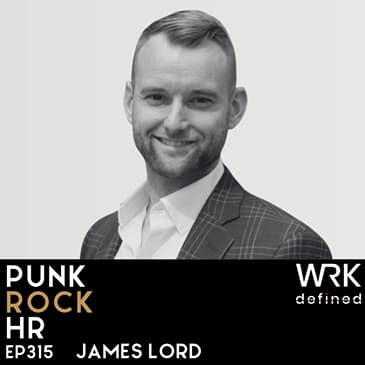
James Lord says a background check tells you whether someone has been convicted of a crime, but a reference tells you about their character. He has spent nearly 20 years in HR tech, and the last decade of it focused on references. In 2025 he joined Refapp, a Swedish platform bringing structured, evidence-based reference checks to North America.
Plenty of companies skip references or treat them like a box to tick. James says that’s a risk, especially when you’re hiring for roles that come with trust and access. With AI-polished resumes and teams that are only in the office part of the week, he argues that a real reference is how you learn how someone behaves when you aren’t watching.
If you’ve ever skipped references to close a req faster, or called a candidate’s friend and learned nothing, this conversation is for you.
In this episode, you’ll hear:
How reference checking differs from background checking, and why people mix them up
Why letting candidates pick any reference they want gets you nothing useful
The 180% ROI James calculates for structured reference checks
How to get references from people whose companies forbid giving them
Why interviews miss counterproductive work behaviors like bullying
How one reference turned into a brand-new candidate
Why James’s upcoming DisruptHR talk is called “The Reference Check Is a Lie”
Start your extended free trial of Refapp: https://www.refapp.com/hey-laurie-friend
- 00:00 - Intro
- 02:33 - References vs. background checks
- 03:53 - Taking the subjectivity out of references
- 06:38 - The ROI of checking references
- 08:40 - How Refapp works inside the ATS
- 09:54 - Who writes the reference questions
- 11:46 - Keeping reference answers confidential
- 13:09 - Getting around no-reference company policies
- 15:50 - The risks of skipping reference checks
- 19:01 - Making the need-to-have case
- 21:04 - Winning over reference check skeptics
- 22:19 - How Refapp differs from competitors
- 24:29 - Marathons and life outside work
- 26:33 - James’s upcoming DisruptHR talk
Powered by the WRKdefined Podcast Network.
[00:00:00] [SPEAKER_01] One of the things that I think about when I talk about background checks is it's very objective. It's, you know, pass, fail, true, false, yes, no, black, white. There's no grey area. Now, working in HR and talent, I've known for the longest time, it's never simple. There's always a story. That's kind of where the references piece falls in because yes, sure, they are more subjective, but if you provide
[00:00:26] [SPEAKER_01] instruction and guidance to the person who's actually providing the reference, and you've had a say in terms of who they actually are, because if the candidate is just going to go and give whoever they want as a reference, like their buddy from baseball, well then it's not worth the
[00:00:42] [SPEAKER_00] paper it's written on. Hey everybody, I'm Lori Rudiman. Welcome to Punk Rock HR. My guest this week is James Lord. He is really passionate about reference checking and he works for a company called RefApp. Now, you may wonder what's the difference between reference checking and background
[00:01:07] [SPEAKER_00] checking and which one's more important and why do I have to do this anymore? It sounds old. Well, James has got a lot of really good answers for you and surprisingly, reference checking is interesting and it is important. So if you work in human resources or talent acquisition, or you hire people in an industry where trust is really important, like sleepaway camps or hospitals or nursing homes,
[00:01:34] [SPEAKER_00] or corporate security, or just, I think it's important everywhere, sit back and enjoy this really interesting and kind of fun conversation with my good friend, James Lord. Hey James, welcome to the podcast. Thank you so much for having me. I'm so glad you're here. Listen, before we talk all things reference checking, why don't you tell everybody who you are and maybe what you're all about? Yeah,
[00:01:59] [SPEAKER_01] thank you. So obviously James Lord, to address the elephant in the room, I've obviously got an accent that follows me from just outside London. I moved to Toronto in Canada around about eight years ago, eight or nine years ago now. And I've been working in the HR technology space for pretty much my whole career. So about 19, 20 years at this point in HR tech across all different facets, but I spent a lot
[00:02:29] [SPEAKER_00] of time in the last decade in references. Let's just air the elephant in the room because I think people use reference checking and background checking interchangeably. And this is actually really important that we get this right, right up front. So can you tell me what reference checking is and how is it different than background checking? Yeah, great question. And I get this all the time.
[00:02:49] [SPEAKER_01] So I think background check will tell you whether or not a person has been convicted of a crime. It doesn't even necessarily mean to tell you that they are actually a criminal because they might not have been caught yet. But what references do is they will tell you about the person's character, observed behaviors. So if someone has been working with an individual or in the same vicinity as someone for a while, they can speak much more accurately to their character. You know, how do they actually
[00:03:17] [SPEAKER_01] show up? How do they treat other people? How do they deal with things in a workplace environment, as opposed to a tick box on, yes, James has not got a criminal record, we should hire him. Just because he hasn't got a criminal record doesn't mean he's going to be a good person and a good fit.
[00:03:34] [SPEAKER_00] So I love the distinction. It's really important. And I think background checking is kind of like a very basic thing that many organizations do. And they do it because they can go to different databases, they can go around the country and pull information. And for the most part, it's reliable and valid. Reference checking, if I may be wrong about this, but tell me maybe a little bit more subjective. So is that true? Do people find reference checking to be a little subjective?
[00:04:03] [SPEAKER_00] And how do you address whether or not people may be comfortable with that?
[00:04:08] [SPEAKER_01] Yeah, good question. I mean, one of the things that I think about when I talk about background checks is it's very objective. It's, you know, pass, fail, true, false, yes, no, black, white. There's no gray area. Now working in HR and talent, I've known for the longest time, it's never simple. There's always a story. There's always a story. And, you know, that's kind of where the references piece
[00:04:32] [SPEAKER_01] falls in because yes, sure, they are more subjective. But if you provide instruction and guidance to the person who's actually providing the reference, and you've had a say in terms of who they actually are, because if the candidate is just going to go and give whoever they want as a reference, like their buddy from baseball, well, then it's not worth the paper it's written on. So you have to kind of put the instruction to say, this is who you can have. And then tell me
[00:05:02] [SPEAKER_01] about a time when X, Y, or Z.
[00:05:05] [SPEAKER_00] So you work for a company that's really got some rigor around this. Before we get started any further, why don't you tell us about the company and what they do?
[00:05:13] [SPEAKER_01] So Refapp has been around for about a decade. We're actually a Swedish based company. So headquartered in in Gothenburg, Sweden. And we are we also have offices in Norway and in Finland, lots of business in the European market, but just by virtue of, I guess, kind of just blind luck, really, we started seeing a few customers coming to us from North America. And we signed up some
[00:05:41] [SPEAKER_01] major airports and some other huge employers and recognized that there's actually quite a large opportunity here. And the two of us, Refapp and myself as James, who I have a background in references anyway, realized that there's a really fantastic opportunity here in North America to do references better. So I joined Refapp in 2025. So I've been with them for around about a year or just over.
[00:06:11] [SPEAKER_01] But yeah, we sit in the applicant tracking system mostly. So most of our customers use us inside their existing Taleo or Workday, Dayforce, you know, Greenhouse, et cetera, set up.
[00:06:24] [SPEAKER_00] Well, it certainly makes sense that there's a process and a rigor around this. And if you can standardize it, you can actually get some really good data on whether or not references pay off. So I guess my question is so many companies skip references altogether. What's the ROI of doing it?
[00:06:42] [SPEAKER_01] The blunt number is 180% actually on ROI. If you calculate the number of the amount of time that it takes to chase down references that never asked the phone the first time or respond to the first email versus the cost of actually using an outsourced provider, like an industry standard, you would be looking at around about 180% ROI. But I think it really comes down to people's lived experience,
[00:07:10] [SPEAKER_01] right? There's a lot of misconception on the misaligned value of references, because people hark back to how they've always had their experience of taking references. And Canada, again, will take the path of least resistance. We can't blame them. You know, they're human, right? It's in human nature to take the easy path. So I will give my friends from baseball. But that's not good. So if we can put the rigor around it, and then we can ask really intelligent,
[00:07:39] [SPEAKER_01] evidence-based questions, that's when we start to get a very different result. And again, to your point, with the structure, we then get benchmarks and comparisons. So we can then start to see, okay, well, what does great look like? And what does normal look like? And you can then start to compare your candidate to previous applicants and other people in your existing talent pool. That's really
[00:08:00] [SPEAKER_00] powerful. Yeah, it's really interesting too. I mean, I like that it sits in the applicant tracking system. And I like the differentiation that what we're talking about with RefApp is a platform and not a service. Because back when I started out recruiting, it was my job to check references. That's how I kind of learned to understand recruiting and hiring. So somebody would give a friend from baseball or somebody would give, you know, an old colleague who liked them
[00:08:26] [SPEAKER_00] versus a colleague who didn't like them, right? And I would call and say, Oh, did you enjoy working with so-and-so? You know, and it was like this really dumb, rote conversation, but I earned money. And I kind of started to see this may not be worth the paper it's written on. So we talked a little bit about RefApp sitting in the applicant tracking system, but like, how does it work? What does it do?
[00:08:49] [SPEAKER_01] Yeah, good question. So I mean, for the most part, most of our customers will never really even go to refapp.com, which is our website, because they live inside their native, whether that's Greenhouse or Ashby or Leather, you know, pick your favorite ATS, we pretty much work with them all. What that effectively looks like is there's a number of different ways that they can configure it. But if it's like an automated basis, let's just say you move James, your hypothetical candidate
[00:09:15] [SPEAKER_01] into, I don't know, interview or screening or due diligence or whatever that stage is, that will just send off the request in the background. And that's as simple as it is. So it's literally drag drop from the user's perspective. From the candidate's perspective, they would then receive communication that looks like it's come from that organization. They give permission and consent, add the contact details, two, three, four references, however many you've asked the system to obtain,
[00:09:45] [SPEAKER_01] and then the references then get an invitation. And those references can say yes or no. You know, there's sometimes company policy where they're not allowed to give a reference, right?
[00:09:54] [SPEAKER_00] Yeah, absolutely. Absolutely. So are the questions that the reference givers receive selected by the organization? Or do you make recommendations on best practices for questions?
[00:10:06] [SPEAKER_01] Well, both. So we have an in-house R&D team that will constantly look at the data and are analyzing, okay, well, what are these job roles? What commonalities do these people that are really high performers with this particular job? What do they have? And let's reverse engineer that and ensure that we're asking the right questions on a reference form to understand whether the person has got these skills or not. So we give a lot of guidance. We've also got lots of templates that
[00:10:34] [SPEAKER_01] are already pre-built. But a lot of people come to us and say, hey, we've already been using these questions. We just want a more efficient way to do this. That's totally fine. You can just put your exact same systems into the platform. And of course, to use the two letters that are so commonly used right now, we do also have AI. So, you know, we can, and sorry, I know I roll for everyone.
[00:10:58] [SPEAKER_01] But what that means is we can use our data set in addition to like a job spec, for example, or the job advert, and we can then go and build questions that are most pertinent or appropriate.
[00:11:13] [SPEAKER_00] You know, I want to give every guest who doesn't mention AI $20.
[00:11:18] [SPEAKER_01] Damn. Damn.
[00:11:20] [SPEAKER_00] So you lost. You lost.
[00:11:22] [SPEAKER_01] Why did you not tell me that before?
[00:11:23] [SPEAKER_00] I know. I know. It's like a super secret thing that I've been thinking about. I'm going to start doing that. But no, I'm going to surprise it every time. I'd like though that you've been able to use technology to kind of reverse engineer, to find out what best practices are, to make sure this is evidence-based. And then, I guess, to be able to report out on trends or the types of applicants and candidates you're receiving, right? You know, a lot of people might be worried about giving information about a former colleague. How do you address anonymity in the process?
[00:11:52] [SPEAKER_01] Yeah. What we do is we reassure the person providing the reference that the information won't be seen by the candidate. It's a safe, secure, encrypted platform. And they can provide as much or as little context or additional information as they want. We encourage a lot of people to use multiple choice and or scale-based questions, as opposed to forcing people to write text. Everything can be done on a mobile phone, of course. And sometimes
[00:12:20] [SPEAKER_01] you can just like literally talk into your phone, which is cool. But we want people to be expansive in a way that will really uncover the what I think about as references, just in the general term and terminology of references, is almost like the SWOT analysis. Strengths weaknesses, opportunities, and threats of the candidate, right? That's what we're doing effectively. So how do we do that in a way that they feel comfortable providing lots of information, but that is not overbearing or is
[00:12:50] [SPEAKER_01] going to get them in trouble with their own organization? So we have some instances of people receiving reference requests and then forwarding the request to their own personal Gmail.
[00:13:00] [SPEAKER_00] So I like the idea that people can participate and give references, even if it comes to their own individual like employee email, they can go, oh, I know the company policy, but I still want to do it. I wonder, do candidates ever get dinged if people don't respond with their references? So I think about all the Fortune 100 companies that I worked for, and they were pretty explicit. You do not give a reference. And so if I send something out to my former HR directors or chief HR officers,
[00:13:27] [SPEAKER_00] I would get a zero response. So how do we address that?
[00:13:31] [SPEAKER_01] Yeah. I mean, it is company policy with a lot of organizations because there have been a few, these are few and far between, but there have been a few defamation claims. And of course, people don't want to get involved. They don't want to get involved. So it's kind of just organizations chuck it in the too hard basket and just have a hard and fast rule that says, all references must come from HR. Here's the thing. Relationships is a human, right? So if I've
[00:13:59] [SPEAKER_01] worked with you and you and I'd worked together in the same team for two or three years, five years ago, even though sure it might be company policy, you're probably willing to actually provide something for this individual because you're probably willing to help them out. So, you know, there's ways that we can show the candidate, well, look, hey, can you try and find Laurie's Gmail address? Or would you contact her through LinkedIn or something like that? As opposed to
[00:14:29] [SPEAKER_01] through the formal company structure that she's currently in. But again, at the end of the day, we just reassure people. And if they don't feel comfortable, we can just move on to the next
[00:14:39] [SPEAKER_00] person. All right, James, I'm going to put you on the spot. If we're checking your references over the past couple of years, what are some of your references going to say about you? Well, only great things, obviously. What are your strengths?
[00:14:54] [SPEAKER_01] Yeah, well, I think I'm pretty good with getting stuff done. I think we actually have this. This
[00:15:05] [SPEAKER_00] way, right? Can I say something? You sure can. Yeah, yeah, yeah.
[00:15:07] [SPEAKER_01] We have on our walls at RefApp, get shit done. You know, so that is literally something that we all embody. So I think that's probably a strength of myself.
[00:15:17] [SPEAKER_00] Good, good. What about your opportunities?
[00:15:20] [SPEAKER_01] Yeah, opportunities. I would say I could probably be a little bit better organized. Like I can fill out your form, Laurie, properly before I come on the show. So all the listeners here, Laurie sent me a form in June. It's now September and I haven't completed it. Quite bad.
[00:15:37] [SPEAKER_00] Well, it's not like I chased you down to look for it. So I'm not too worried about it. I know where to find you. And I am really grateful that you're on the show today because I think there are a lot of people who think about references and they're like, eh, all right, maybe, maybe not. And we talked about like the opportunity and the ROI, but I wonder what are the risks of not doing a reference
[00:15:57] [SPEAKER_01] check in 2026? Well, you either hire a robot or a dickhead. Let's be real, right? For sure, for sure. You know, one of the things I think about oftentimes is counterproductive work behaviors. So a candidate, if you think about me as the candidate that's coming to an organization, I'm obviously going to wave my flag and say, hey, hire me. I'm going to put the best resume that you've ever seen. I've probably used AI at this point. I'm going to put a polished version of
[00:16:27] [SPEAKER_01] myself on paper and in person. In the interview is a polished version of myself. It's not the 360 degree round view, right? Or, you know, my family are all jewelers. So I talk about like the facets of a diamond, right? The different edges of the diamond. And that's really what you're asking for when you're asking for proper thorough references. So counterproductive work behaviors, what do I mean
[00:16:50] [SPEAKER_01] by that? Well, a person could exhibit tendencies of almost like bullying, workplace bullying for example. How are you ever going to know that in an interview or on their resume? Or I mean, you might explicitly ask them, hey, have you ever had any harassment or bullying things? And they're probably going to say no. But if you ask really, you know, based on the data, the job, the type of job that they're doing, RefApp could probably give you exposure to saying, hey, you probably should ask
[00:17:20] [SPEAKER_01] this question in this particular way. And then that will uncover whether or not there is something there or there's some inappropriate behavior at the holiday party with too many glasses of wine that have been consumed or something like that. These are all important things that we need to know when we bring someone onto our team. And I think right now, obviously, we've got misrepresentation, AI, we've got a dispersed work, you know, we've still got most people are still only in the office two or
[00:17:48] [SPEAKER_01] three days a week. Yeah, yeah, we go and hire someone and they could be across country across the country. Sorry. How do we actually know what they're doing when we're not looking at them and we can't see them in the office? How do we know what their character is actually like? Are they, you know, people always do and this is an age old thing that you've heard a million times, but what do they say? People only do what is inspected, not what is expected of them.
[00:18:13] [SPEAKER_00] That is cynical. And I, I like it. I think that's true. And I want to believe that humans are a little bit better than that. But you're right. I mean, I think it's really important to make sure when you are making a hire these days, when everybody has all the certifications, and everybody's been, you know, following the rules and doing what they need to do to polish their resume, that you make an alignment with values. And one of the ways that you can check that you're
[00:18:40] [SPEAKER_00] hiring according to your values is through reference checking. And I like that Ref App offers a platform and a way to do this that's a little bit more evidence-based than little Lori Rudiman calling people up randomly on a Tuesday afternoon and asking a bunch of inconsistent questions. So I like all of that. I think there's still a big hurdle to cross in the North American market because it seems like a nice to have and not a need to have. So I just
[00:19:09] [SPEAKER_00] want to hear one more time, like, give me the need to have case for reference checking.
[00:19:15] [SPEAKER_01] If you are hiring someone in a position of trust, right? If whatever that person is, they could be that they could be someone in finance that's got direct or indirect access to, you know, personal information, financial information, you should probably do thorough references. If you're hiring someone in a position of trust who has keys to the building or who has access to the till, or they're working in a home health facility and you don't know what they're doing with that elderly person in that room when you're not there,
[00:19:45] [SPEAKER_01] how, what ways are you protecting yourself aside from like a binary check to say, yes, they didn't commit a crime last year, or that we didn't catch them doing a crime last year, committing a crime last year. So again, you want to speak to people's character. And I think that the cost of this, the cost of a service, like whether it's RefApp or another vendor is honestly so cheap in comparison to making a bad hiring decision and all the disruption that
[00:20:13] [SPEAKER_01] that costs. We all know that the bad hire costs, what, three times the salary, the replacement levels, the cause of the disruptions, the team, all that good stuff. It's so easy and quick. Like RefApp turns references around between, 89% of our references come back within 18 to 24 hours. So like if you can just press one button in your ATS and you can have peace of mind, and if nothing else, if your boss asks, because you did hire a dud, did you check their references?
[00:20:43] [SPEAKER_01] Actually, yeah, I did. And this one slipped through. Doesn't happen though. Because I mean, I've seen so many instances of job offers being rescinded, candidates being moved into different roles and departments as a result of what's come back on references. I think the risk of not doing the reference far outweighs the risk of doing them, quite honestly.
[00:21:02] [SPEAKER_00] Well, you know, you convinced me when we were at a conference in Atlanta that this was something I should pay attention to and something I should actually bring my audience to make aware of. So I'm really glad you came on the podcast today. I wonder when you're at HR tech conferences, do people, do HR practitioners, recruitment practitioners, or even other vendors want to
[00:21:24] [SPEAKER_01] talk about this? Or do you need to make the case? It's a mixed bag. I think people, if people are open minded and curious, I mean, I get such a buzz out of hearing someone that says, hey, they don't work, James, it's never going to work, please leave me alone. And then they, you know, I just had an example of a customer that I met at a conference actually here in Toronto. And he just messaged me, they were, they were super skeptical. They're like, I don't think this really works. They're like, love the process. We've already had feedback from candidates and their respective references. And actually they
[00:21:54] [SPEAKER_01] found a new candidate. They turned a ref, one of their candidates references, they turned into a future candidate because they sent the candidate the reference to a splash page, like a branded employer, employer video effectively. And that person said, actually, yeah, I'm sure I'll chuck my resume in the ring. Obviously at a more higher level than the person they've just given the reference to. But so it's a candidate generation tool as well, right? Really interesting, really
[00:22:20] [SPEAKER_00] interesting. I wonder when you're out in the marketplace and you're talking to maybe people in the TA space, they're probably not as skeptical as someone like me who was just like, what are you talking about? What's going on now? You know, when they work with other vendors, how do you hear how you're differentiated or do you see how you may be differentiated and talking to them? Like, what are your competitors look like? What's the, what's the marketplace like out there? There's not tons of
[00:22:48] [SPEAKER_01] people that just focus on solely references. Most things get bundled into the background checking world as well. And they will do that. This is a really terrible analogy, but I'm going to say it anyway. So I've used it before. Let's just, and I'm in Canada. So I'm going to preface that by saying I have a thing, summer and winter tires. So for all of your audience that live in warmer states, you don't have to change your tires every year, right? So it's kind of like when you go to that
[00:23:13] [SPEAKER_01] place to get your winter and your summer tires changed, it's almost like asking the guys there to like, Hey, can you also wash the car? Can you give it a quick valet? And they're like, well, no, really. I mean, they can, but that's again, it's a bad analogy, but it's an example that I sometimes give to explain, well, that's what really happens when you're asking a background checking company to do something outside of their core products. Our business, I always say we're
[00:23:38] [SPEAKER_01] like an inch wide, mile deep. All I do is references. I'm deep in the data. We're looking at the research all the time and we do it really well. If you go and, you know, go to a jack of all, then you're going to get kind of the mastery of none, right? So there's not tons of people that do exactly what we do. But I think one of the things that makes us stand out is our ability to connect with pretty much every applicant tracking system in HR, IS out there. And just coming from a
[00:24:06] [SPEAKER_01] place of evidence, you know, we're not just going to pedal crap, right? I mean, you can pedal crap with us if you want, but we kind of want to be disassociated for that. Use your own brand, not ours. You know, we want to have quality questions that are going to uncover things, you know, confirm what you know about the candidate, but also uncover a lot that you do not. I'm really on your side with
[00:24:30] [SPEAKER_00] this. You have convinced me. I can tell you're super buzzed and passionate about this topic. You know, one of the things that I say in all of my keynotes, and you were there at an event where I was speaking, is that if you are only one thing, if you're only work, you are weird. And James, I know you're passionate about reference checking, but you're passionate about other things. I know
[00:24:49] [SPEAKER_01] that to be true, correct? Well, I think, you know, some of my other challenges, some of my other kind of interests are, you know, around health and fitness. I am a runner, and that's something that we have obviously shared conversations about in the past. And I'm very proud to say that I'm a world marathon majors finisher. So I've done all of the big majors, major marathons of the world, and I'm currently on my second lap, which is kind of cool. So I'm doing them again. I did actually, unfortunately, just get declined for the Tokyo marathon the other day.
[00:25:19] [SPEAKER_01] But so if Tokyo marathon listeners are, Tokyo marathon organizers are listeners of your podcast, maybe they could hit me up.
[00:25:28] [SPEAKER_00] Buddy, you and me both. I got rejected for that too. And I was like, oh, yeah, I would really like to train for that. I think that would be amazing. Since you've run it before,
[00:25:37] [SPEAKER_01] what's the course like? It's flat. It's pan flat. And it's like, there's, it's very,
[00:25:42] [SPEAKER_00] you know, it's, you've run New York, right? No, I have not run New York, but I've run Chicago. So
[00:25:48] [SPEAKER_01] okay. Well, I mean, you know, it's the same in Chicago. I mean, Chicago and New York are very similar. You're running up Fifth Avenue, and people are shouting Lori or Jane's like, that's pretty cool. I'm like, you closed Fifth Avenue for me? You're cheering for me? That's kind of cool. So I think running through an Asian city, you know, specifically Tokyo is wild. It's such a crazy city. So that's fun. So yeah, yeah, I'm very much into into running health and fitness, go to the gym,
[00:26:17] [SPEAKER_01] you know, three, four times a week and traveling the world as well. Always interested travel really is the biggest education. When you start to understand people or different cultures and different ways of life, like it's, it's really enlightening, isn't it? Like it is, it is. And
[00:26:36] [SPEAKER_00] I understand that you are now sort of traveling on the Disrupt HR tour. You're both attending one and speaking one. So people in these communities can meet you and learn about Reth app. So tell me,
[00:26:49] [SPEAKER_01] how are you involved with Disrupt HR? Yeah, so I, I've been to quite a few Disrupt HRs over the last few years. I've never spoken at once. I've never done a pitch. And yet I met Jennifer, who obviously created Disrupt HR. What a wonderful thing that was that she did. And Jennifer said to me, she said, James, you need to do a talk. So I applied to five and I am speaking at one in the next few
[00:27:17] [SPEAKER_01] weeks, which I'm excited about. And the whole conversation is that it's actually titled, the reference check is a lie. And why we keep ticking the box, because even though people don't believe in it, they still do it and still kind of drag their cart with square wheels rather than
[00:27:35] [SPEAKER_00] getting some round looks. Amazing, amazing. You're living the brand, hopefully having some fun while you're doing it, just enjoying life. You know, you've done something really nice for the community of punk rock HR listeners and viewers. So tell me a little bit about what you've done for us.
[00:27:53] [SPEAKER_01] Absolutely. So there's an exclusive offer for all, uh, all listeners is that you can go and have an extended free trial of RefApp. No credit card needed, no obligation to continue. Just try it, use it, love it, and then tell everyone, or if you don't love it, please tell me and I'll make it better. Um, but yeah, so you can go and use RefApp right now and I, I will eat my hat if it is not
[00:28:19] [SPEAKER_01] significantly better than what you're already doing. Well, I love it. We're going to include
[00:28:24] [SPEAKER_00] a link to that free trial for RefApp in the show notes, along with your personal LinkedIn profile, so they can give you some direct feedback on their experience, but I'm sure they'll have a wonderful experience. And, you know, I just really appreciate you, uh, tackling such a really specific pain point for so many HR departments. You must, and your team at RefApp must have talked to a lot of hiring experts to really understand what they're going through in order to develop this platform.
[00:28:53] [SPEAKER_01] Yeah, we have, we have. It's been, it's been a long, a long journey. And I think, uh, you know, 10 years in business, but I think it's, um, it's a really interesting space. You can get so much value. I mean, ultimately we're, we're human beings, right? Human beings today are still the people that are making hiring decisions on other human beings. And we value one another's opinion is the benefit of hindsight. You know, Oh God, dang. I wish I would have known that Laurie would
[00:29:18] [SPEAKER_01] have given me 20 bucks if I hadn't mentioned AI. If I would have done my references before and spoken to some of your other guests, I might've known that I could have been $20 up.
[00:29:29] [SPEAKER_00] Well, sucks to be you, but listen, I'll be a reference for you anytime. I promise. I appreciate that, Laurie. Yeah. Well, thanks again for being a guest on Punk Rock HR. Appreciate you. Thank you. Hey everybody. I hope you enjoyed that conversation with James Lord of RefApp. Now listen, there are three things that are on my mind after listening to this conversation with James, and I want to share them with you. First of all, I think reference checking is still worth it.
[00:29:57] [SPEAKER_00] That's number one, especially in industries where a high level of trust is really important. Number two, I was surprised to hear that there was such a significant ROI on the activity for what is essentially a really small cost. You can avoid problems, but also you can potentially generate candidates and think about your talent pipeline a little bit differently. And third, I was really
[00:30:23] [SPEAKER_00] heartened to understand that reference checking can be evidence-based and that there's a platform that uses AI, but also has a team of R&D behind it who have really thought about what reference checking means for the entire hiring process. I don't know. I thought it was kind of cool and I hope you enjoyed it. And please go into the show notes and take advantage of the free trial for RefApp. you
Sponsors
