
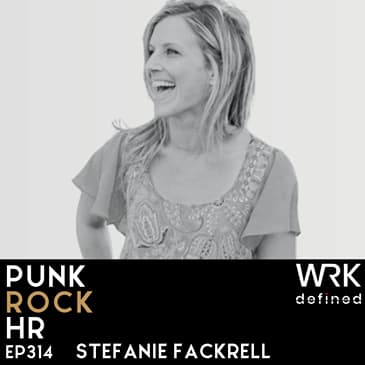
Stefanie Fackrell was laid off in 2023 and decided to bet on herself. The next two years tested that bet hard. Her brother, who was also her best friend, was killed by a drunk driver in 2024, and a year later she was diagnosed with breast cancer. She kept building her business through all of it, and she kept showing up online to help people find work.
She's now head of talent for two venture-backed startups through her firm, dysruptiveHR, and she isn't sugarcoating the market. Many white-collar tech jobs aren't coming back, and most of the job search advice flooding your feed is wrong.
If you've been laid off or think you might be next, this conversation is for you.
In this episode, you'll hear:
- Why two hours a day on job boards beats eight
- Using AI to tighten your resume, not write it
- Five solid resumes vs. a custom one for every job
- What actually gets people hired at the startups she recruits for
- The thank-you note myth
- Why your ego shouldn't keep you from a bridge job
Chapters:
- 00:00 - The jobs that aren't coming back
- 01:58 - Who Stefanie is and why she gives job search advice
- 04:32 - Grief, cancer, and posting the personal on LinkedIn
- 08:04 - The job market in 2026
- 09:36 - Why two hours on job boards is enough
- 12:22 - AI, resumes, and the customization trap
- 15:34 - What actually gets people hired
- 18:09 - Bad advice: follow-up emails and thank-you notes
- 22:05 - The case for a bridge job
- 29:36 - Laurie's three takeaways
Powered by the WRKdefined Podcast Network.
[00:00:00] [SPEAKER_00] RepCap is proud to support Punk Rock HR. We're B2B content marketing consultants that combine a journalist's curiosity with a marketer's creativity to tell clear human stories that connect. From strategy to execution, we partner with brands to turn ideas into thought leadership and get real results. Want to learn more? Head over to RepCap.com.
[00:00:23] [SPEAKER_01] It's a very challenging market for job seekers. There are plenty of jobs out there. I think a lot of these really amazing white collar jobs in tech, they're not coming back, right? And the salaries are like 20% less. You may need to pivot. Like your old life, I believe in blowing up your old life. Like you've been there, you've done that. We're not going back there.
[00:00:53] [SPEAKER_02] Hey everybody, I'm Lori Rudiman. Welcome to Punk Rock HR. My guest this week is Stefanie Fackrell. She's a talent acquisition leader, an entrepreneur and a nice wonderful human being, a good friend of mine, who's on the show today to talk about the myths and the realities of job seeking in 2026. She's here today to talk about what works, what's a stupid lie, and how you should be spending your time on the internet.
[00:01:22] [SPEAKER_02] When you're looking for work. One of the things I want you to listen for is her advice on taking a bridge job. That's something that you do when you're between jobs and how your ego can sometimes get in the way. So I'm super excited to introduce you to Stefanie. So thanks again for watching. And now sit back and enjoy this episode of Punk Rock HR.
[00:01:58] [SPEAKER_02] Hey, Stefanie. Welcome to Punk Rock HR. I'm so happy to be here. Thank you for having me. Of course. Listen, before we get started, you put out a lot of really amazing content on the internet that helps people really figure out how to get a job, how to stay employed, what's working, what isn't. And I just want to know who you are and what you do that makes you qualified to give out job seeker advice.
[00:02:26] [SPEAKER_01] So I have been in talent acquisition, HR my whole career. So over 15 years, I put out a lot of information because A, I've been a job seeker. I've been laid off. And behind the scenes, I see, I've seen thousands of resumes in my career.
[00:02:47] [SPEAKER_01] I've helped people with their resumes. I know looking for a job, especially right now in this modern AI driven world where we have tons of layoffs as well. There's a lot of bad actors that are giving a lot of bad advice. I don't, I would say that I'm qualified because I have been in this space and done recruiting.
[00:03:07] [SPEAKER_01] I've recruited thousands of people. I've looked at thousands of resumes and I just want to be able to put things out there that actually help people instead of these scammers, dim influencers that don't know what they're talking about, but claim to be experts.
[00:03:24] [SPEAKER_02] Sure. Well, I love your expertise. I believe in it. That's why you're on the podcast today. Do you want to tell everybody about like your full-time job? What do you do? Like, let's start there. Like, how do you, how do you make money?
[00:03:37] [SPEAKER_01] Yeah. So I was laid off in 2023 and I decided to take a bet on myself. So in 2023, I opened an LLC, Disruptive HR, Punk Rock HR was taken. So I couldn't take that. Wait, you can, you can have it back. Take it.
[00:03:53] [SPEAKER_01] So I took a bet on myself, you know, being an entrepreneur is not easy. So, you know, and I, there were a couple tragedies in my life. And so entrepreneurship took a backseat. And so slowly just through building relationships and networking, I have landed several small startups as clients. So I'm basically working more than a full-time job.
[00:04:23] [SPEAKER_01] So I'm helping build two series, a series A and a series B startup as their head of talent.
[00:04:30] [SPEAKER_02] I want to stop right there because you indicated that you had a couple of tragedies in your life and we don't have to talk about them if you don't want to. But one of the things you do is you post so beautifully about the personal and the professional on LinkedIn. You talk about the challenges of being an entrepreneur. You talk about what you're working on. You raise money. How do you get that balance right? And if you're comfortable telling us, what are some of the personal things that you've gone through that you've posted about on LinkedIn?
[00:04:56] [SPEAKER_01] Yeah. So in 2024, my brother, who was my best friend, was killed by a drunk driver suddenly. And so that was very hard to navigate. You know, losing a sibling was something that I, was the worst fear of my life. And you kind of lose your, a piece of yourself.
[00:05:25] [SPEAKER_01] And so I wanted to post about that because I, everybody's going to go through grief. Everybody's going to go through tragedy. And if we don't talk about it, it becomes this boogeyman where people have to navigate on their own and they shouldn't have to. And, you know, I had, I took a month off after he died. I stared at a wall. I walked in nature.
[00:05:53] [SPEAKER_01] I listened to a lot of music that we loved together growing up. And that was very healing for me. And, you know, he's everywhere all around. He's in my heart. I think of him every day. I have a little tattoo of his initials. And that allows me to think of him every day. And it allows me to speak about him when people ask what my tattoo means. Of course.
[00:06:21] [SPEAKER_01] So I wanted to put that out there. The grief aspect of life, life is messy. And, you know, we can't pretend that we're, we all live these perfect, happy lives. So that was in 2024. And then a year later, I was diagnosed with breast cancer. So I just finished my treatments in March of this year. I didn't really talk about that as I was going through that. Cause that's not really my style.
[00:06:50] [SPEAKER_01] Like I like to do the hard thing and then overcome it and show people like, Hey, you can do hard things too. And this is how I've navigated it. And if I can be a voice and a support for people, like I believe life is about supporting and loving other, love thy neighbor. And that's what I want to do.
[00:07:14] [SPEAKER_02] So I bring this up because you've had a layoff. You've lost a person whom you love deeply and have moved us all to tears in talking about him. So thank you. Thank you for doing that and been through breast cancer treatment. And yet you are running a business. You are out there building your brand, adding value to the world, doing it on your terms with your values. And Stephanie,
[00:07:42] [SPEAKER_02] you find time to post on LinkedIn to help people get back to work and you help them get back to work in real life. So I can't have more of an expert on punk rock HR. And it is such a important thing to establish right at the beginning, because you're right. There's so many, what did you call them? Dimfluencers out there giving terrible advice on the internet. So can you talk to us right now? Like what's the landscape like for someone who loses their job today,
[00:08:11] [SPEAKER_02] whether it's in tech or manufacturing or healthcare and marketing, what's it, what's it like for that person?
[00:08:17] [SPEAKER_01] It's pretty bleak. I'll be honest, you know, over these since 2023, there have been thousands of layoffs. Most of them coming from these big shiny tech companies that they have thousands of employees. So they kind of slough off a few thousand and, you know, clean up their spreadsheet and it's not a big deal. So I would say it's a very challenging market for job seekers. There are plenty of jobs out there.
[00:08:44] [SPEAKER_01] I think a lot of these really amazing white collar jobs in tech, they're not coming back. Right. And the salaries are like 20% less. So I'm always trying to advise people look at small to medium businesses, look at startups and potentially take that bridge job. You may need to pivot like your old life. I believe in blowing up your old life.
[00:09:14] [SPEAKER_01] Like you've been there, you've done that. We're not going back there. Like what is life going to be like looking forward? What are you good at? What are you passionate about? What's a gig you can do that you can make money off of until a full-time job comes back? Like you got to think outside the box and not long for the life that has been.
[00:09:37] [SPEAKER_02] I hear you. You know, so many people are laid off and they spend a lot of hours on LinkedIn and Indeed and different niche job boards. And I often talk about this as the law of diminishing returns. It's when you get People Magazine, Us Weekly and a few others. It's the same dang story about Jennifer Aniston's hair no matter what decade. So like why are you getting all those magazines? And I feel that way about job boards.
[00:10:04] [SPEAKER_02] So tell me, what do you think about how to use our time when we're on the internet and we've been laid off? Yes.
[00:10:10] [SPEAKER_01] And we've all been there. I have people that have been laid off before, right? So it's, you kind of, it's disorienting and you're trying to figure out how to fill the time that you normally would have still going to work every day. So for me, I think like you, it is spinning your wheels. It's the law of diminishing return. You're looking, if you're looking at LinkedIn for eight hours, you're going to see that same
[00:10:37] [SPEAKER_01] hundred jobs you're targeting for those eight hours. That's it. So I have written about this before. I think that you have to make a schedule for yourself, for your sanity. Build in meditating, build in exercise. And then whatever works for you, you should build in a schedule of, I am going to look
[00:11:04] [SPEAKER_01] at job boards for no more than two hours in the morning, apply to jobs that I'm qualified for, and then go about your life. Because again, you are not going to find 50 new jobs every day if you're sitting there for eight hours.
[00:11:23] [SPEAKER_02] So did I hear you right? You recommend only two hours of job searching a day. Tell me more about that. Why that number?
[00:11:32] [SPEAKER_01] I just think that's a good number. Again, I don't, it could be three if you want, but again, I think you're just going to be spinning your wheels, staring at the same jobs over and over, especially if you're going to the same job boards. I think you could, your time could be better used by networking, reach out to people, join communities.
[00:11:57] [SPEAKER_01] That's how I found a lot of my opportunities now is because I've joined these communities that are popping up and building relationships and people know who I am and they kind of, they trust me. I've built my reputation. And so I think spend a lot more time invested in building your network and building those relationships than sitting on a job board every day.
[00:12:22] [SPEAKER_02] I want to talk about a bridge job because I think that's just such an important concept and we're going to get there, but real quick, we talked about applying for jobs for two hours, three hours. The number is arbitrary unless it's scheduled, but the most important thing is applying for jobs you're qualified for. And what I see job seekers doing, I know this is something you've written about, is doing
[00:12:46] [SPEAKER_02] a customized AI heavy resume for every single job they apply for. They're in quad, they're drilling down, they're getting their resume just fine. And I just wonder, like, how are we supposed to use AI in 2026 with our resume? Like, what's the best practice?
[00:13:05] [SPEAKER_01] So I think that you should have a skeleton template, right? It doesn't matter what template. I don't care what template people use as long as what's in the resume is good quality. I think I have a free resume template on my website that anyone can have.
[00:13:28] [SPEAKER_01] But I think in terms of AI, AI should only be supplementing or wordsmithing things for you. Don't allow it to write everything for your resume because it doesn't, it's not nuanced. It doesn't know, you know, the finer intricacies and details of what you've done. So I would, if you've written out some bullet points and they seem too long and wordy, run
[00:13:56] [SPEAKER_01] it through AI to make it more clear and concise. But don't give your brain or everything over to AI because it's not going to represent you legitimately, right? It's going to write what it wants to write and it might not be exactly what you've done.
[00:14:15] [SPEAKER_02] Correct. Correct. I wonder, what do you think about the person who feels like they have to customize each and every single resume for the job? Tell me about that. Oh, please.
[00:14:24] [SPEAKER_01] This is like one of the biggest headaches that I have. And I see, you know, it's one of those things like yelling into the void because there's so many of us out there talking about, you don't have to customize your resume for every job that you apply to. That is just spinning your wheels, beating your head against the wall. Don't listen to the people that tell you that you have to do that. I think you should have five well-written resumes, right?
[00:14:53] [SPEAKER_01] That are targeted for the skills. If there's something specific in a job description from X company that doesn't necessarily align exactly with what's on your resume, maybe tailor it. But a really good recruiter is going to be able to understand verbiage and the narrative and different things from different companies and different jobs.
[00:15:20] [SPEAKER_01] But the only thing I think you should customize potentially is a cover letter. But only if that's applicable. And all you got to do there, change the name of the company. I mean, let's be real. I love that. What does it take to get a job in 2026? How do we do this right? So of the clients that I've had, I would say about 20% of the people getting hired have
[00:15:48] [SPEAKER_01] come in through a referral. Someone introduced someone from their network. And there was kind of these side conversations that ended up being a conversation and a job was, you know, they went through a formal process, but it started with the kind of these side conversations. 70% is coming from cold applications, people applying and having really solid resume bullets.
[00:16:17] [SPEAKER_01] Again, we don't care about the format as long as the content is good. I've seen some really bad resumes in my time, but I can decipher what it says, right? What is in this kind of terrible formatted resume to what we're looking for. So cold applications are still getting a lot of the hires. And then, you know, sourcing where we're going out and cold finding people that could
[00:16:43] [SPEAKER_01] already have a job, but meet what we're looking for, or looking for that open to work banner, people that are looking for work. So again, it's all, have your materials readable and ready and speak to the story so that when I see you, when Jack or Jill or Bob or Sue see your information, they understand that you're a good potential candidate for this opportunity.
[00:17:10] [SPEAKER_02] I love that you said bullet points. The Gen Xer in me was like, heck yeah, I like a good list. So am I, am I okay if I have bullet points on my resume? Oh my gosh, absolutely. Okay. I just wanted to bust that myth right there. All right. So we are applying to jobs. We see online. I mean, if 70% of people are getting hired through applying for a job online, that's still worth doing, right?
[00:17:37] [SPEAKER_02] Along with developing our network and being able to be found, we're out there. We're looking. We're going on a company's career website and we're following through and applying for a job. That's still worth doing.
[00:17:49] [SPEAKER_01] That is still worth doing. I do think the advice that I'm hearing, you know, if you find the job on LinkedIn, go to the company's website, see if the job is there and apply through the company website. That's a solid piece of advice. So yes, applying is going to get you visible and viewed and it is worth doing.
[00:18:13] [SPEAKER_02] Good to know. I wonder what other bad advice is out there and what's the good advice instead? Give me an example. Gosh, there's so much bad advice.
[00:18:22] [SPEAKER_01] I really don't like the advice of emailing the hiring manager after you've applied just because they've got work to do. They are running a team. They're running a show. They're running projects. And you're probably never going to hear from them. So I would not shoot your shot that way.
[00:18:42] [SPEAKER_02] You said don't email after you've applied. So this means I'm on a company website. I go through the ATS process or whatever system they have, right? Or I just email it to HR. And I don't find the hiring manager online and raise my hand and say, guess what? I just applied for your job.
[00:18:59] [SPEAKER_01] I think you can if the company is small enough. If you're trying to do that at Google, Apple, you're never going to get a response. You're more likely to get a response from a small company, a startup. So shoot your shot there. But if you're going to these big, shiny brands, I wouldn't try to follow up with an email to the hiring manager.
[00:19:21] [SPEAKER_02] But definitely an email after I've interviewed. We still do that. We still send thank you notes, right? I still do.
[00:19:28] [SPEAKER_01] I would say just because I believe in, you know, if I've spent time with someone like, hey, thanks for your time. That's just me. But, you know, I of the clients that I've been working with and candidates I've been working with over these last, you know, year, I'd say maybe 15% of the time I get a thank you. But it doesn't check my hide. Like, it's okay.
[00:19:56] [SPEAKER_01] Like, it's a nice gesture, but I'm not going to put someone's name to the bottom of the pile because I didn't get a thank you.
[00:20:03] [SPEAKER_02] Oh, that's really interesting because people talk about how if you don't send a thank you note after an interview, it's lights out for you. That's not true, huh? It's not true.
[00:20:13] [SPEAKER_01] And I think, I don't know if that's who has made this up, but I, you know, I think if they're, if a recruiter is saying that, are they the best recruiter?
[00:20:25] [SPEAKER_02] I love that. I love that. I mean, I think I love thanking people for their time. I think that's really important. And I also like to send mail. I don't like to send email. So I'm kind of a weirdo, right? But also I don't want to thank somebody who may not hire me down the road. And I also don't want to thank people for doing their job. It's their job to interview me, right? It's their job to talk to me. So it's like, thank you for doing your job where I'm going to work and work hard for money. Like it seems weird. So we're in 2026 right now.
[00:20:55] [SPEAKER_02] There are going to be some midterm elections here in America. Interest rates are still high. Inflation is high. Nothing is affordable, right? Is the job market going to improve anytime soon? Or should we brace for more layoffs? Where's my crystal ball?
[00:21:11] [SPEAKER_01] I know. I could foresee more layoffs. I really could foresee that over the next couple of years until things become stabilized. But again, if you're worried, well, you should always be prepared to lose your job. I'm just going to keep it real. Like people that never thought they'd be laid off from Google, that never thought they'd be laid off from Facebook, wherever, big shiny companies, they've been laid off and they've
[00:21:40] [SPEAKER_01] learned the hard way, unfortunately. So I think you just always have to be prepared. Cut down on your expenses. Have an emergency fund if you can to be prepared for that worst case scenario because jobs are taking, you know, job seekers are out there for 18 to 24 months that I've known that are looking. So just prepare yourself for the long haul. Yeah.
[00:22:07] [SPEAKER_02] Makes sense. Well, I want to end with talking about something that's really important that you mentioned earlier, and that's a bridge job. Now, I want to know your definition of this, but I think a lot of people who are unemployed think, number one, I'm not going to be unemployed as long as I will be. So they underestimate that. And then also there's something weird about our egos that won't allow us to go bag groceries
[00:22:34] [SPEAKER_02] or go work in a nonprofit or do something different, right? So tell me what a bridge job is and how might it actually be a good idea to take one?
[00:22:46] [SPEAKER_01] Yeah. I think a bridge job is anything that can help you support yourself, your family for the short term. That's, you know, working at an Amazon warehouse or working at Costco. Like if you need benefits, there's all, there's lots of reasons to get bridge jobs.
[00:23:10] [SPEAKER_01] If you're one of the people that can hold out, you're really lucky because not a lot of people can do that. Your ego is not your amigo. So I think, yeah, if you go to the gym and you love the gym and you see that they have a spa receptionist job open and you're, you love the gym and you're spending time there anyway. Why not take that spa receptionist job? Get the free membership, right?
[00:23:39] [SPEAKER_01] Cause your gym could be costing you a lot of money. Get the free membership, make, I don't know, 15, $20 an hour for now to help you keep going, to get food on the table, to keep the lights on. I think you just have to manage those trade-offs again. Don't let your ego get involved. I was just speaking to someone a couple of weeks ago, helping them with their resume.
[00:24:06] [SPEAKER_01] She had an interview the next day for a customer service job, but she did not want to take it if she was offered it because she's been there, done that. And she doesn't want to get stuck there. And I said, I think you need to shift your perspective. Like this is going to help you, you know, have your day filled.
[00:24:30] [SPEAKER_01] You're making money, you're being productive and you can continue to interview for the job that you want, that you feel that you're qualified for while also making money and being productive. Like we don't know when that job is coming. So like have a job until, have a job until that dream job comes. But again, some jobs are not coming back.
[00:24:57] [SPEAKER_01] So don't do yourself a disservice by waiting too long. Again, not everybody has the luxury of holding out. If you can, God bless you, but not everybody can.
[00:25:10] [SPEAKER_02] Yeah, that's so well said. I think two things come to mind and I'd love for your take on this. Number one, a lot of people think if I take a job, I won't have time to look for a job. And my number one job right now is to find a job. So let's address that one first. What do you think about that?
[00:25:27] [SPEAKER_01] It's with anything. What are your priorities? You can carve out time to look for a job. If that means getting an hour earlier every day to carve in that one hour where you want to look at the job board, carve in that hour. If you find a job and you need to interview, you can take your lunch hour to do those interviews. But you can make things work if you schedule them in.
[00:25:54] [SPEAKER_02] I love that. I love that. The second thing I've heard as a pushback from this very wise advice is that if my potential new employer finds out that I've been working at Bridge Job, that'll work against me. Either it'll make me more suspect, like they'll just think less of me, or it'll work against me with compensation negotiations. They'll think I'm desperate. What do you think about that?
[00:26:19] [SPEAKER_01] I don't agree with that. I think unless you've been living under a rock these last few years, you're going to know that people need to work. People need to provide for themselves. So I don't think at least for a really good employer, a good hiring manager, that is not going to work against you. So I would just keep pressing forward and hope for the best and sell yourself, sell your expertise,
[00:26:48] [SPEAKER_01] sell your knowledge. You want me here. In terms of compensation negotiations, I don't think that will come into play. I honestly don't think that will come into play.
[00:26:57] [SPEAKER_02] I think you're right. And I also think by taking that Bridge Job, it keeps your head in the work game. Even if your future employer knows this or not, you're thinking about work. You're still showing up. You're still professional. You don't kind of fall out of vogue with work lingo and all the stupid buzzwords, right? I mean, it keeps you present. And also, I think it helps professionally just with your own sense of self-esteem.
[00:27:24] [SPEAKER_02] So I love a Bridge Job for people and I recommend it. And I'm glad you do too. What do you think about all that?
[00:27:30] [SPEAKER_01] I absolutely agree with you. Do you think it is harder, you know, to be in the lingo, to keep your knowledge going, to keep your mind fresh? It's easier to do that when you're working and kind of out there seeing what's going on, reading, socializing, than it is if you are sitting on LinkedIn for eight hours a day and your brain is kind of going to mush because you're stressed out and not, you know, your
[00:27:59] [SPEAKER_01] self-esteem is taking a hit. You start to feel that you don't know what you're doing. You don't know what you're talking about. So I do think the Bridge Job, as you said, keeps you in vogue with like what's happening, what's going on.
[00:28:13] [SPEAKER_02] Yeah, I have no idea what's happening in the world of work. I don't know why anybody asks me for my advice. I got a new computer the other day. I don't have Slack on it. I'll never have Slack on it. I don't want to install Zoom. I don't want to ruin it, you know? So it's like, oh, maybe I should just go take my own Bridge Job at Costco. Stephanie, that sounds like a really good idea. Listen, you are so full of wisdom. You're so full of advice. And I just want people to find you.
[00:28:41] [SPEAKER_02] So where can they go for the free resume template for all the wise things that you share? What are your preferred platforms?
[00:28:49] [SPEAKER_01] Sure. So I am on LinkedIn. You can find me on LinkedIn. I've tried to highlight some of the things I've posted that are truly helpful for people that offer good advice. So you can find me on LinkedIn. And my website is disruptive HR.com. So D-Y-S-R-U-P-T-I-V-H-R.com. And there is a section for job seekers.
[00:29:16] [SPEAKER_01] And there is a free resume template there that I've created that anybody can download for free. And you just plug and play your own information in there.
[00:29:26] [SPEAKER_02] Super helpful. Stephanie, you're such a great human being and a great guest for us today. Thanks again for coming on Punk Rock HR. Thank you so much for having me. Hey, everybody. I hope you enjoyed that conversation with Stephanie Fackrell on this week's Punk Rock HR. I've got three things that are on my mind from this conversation, and I wanted to cover them with you.
[00:29:52] [SPEAKER_02] The first is that Stephanie is a big advocate for scheduling her time when looking for work. And I think that's really good advice for you. You don't need to spend eight hours on LinkedIn. Schedule it, get it done, and get off the internet and get into the real world and start networking. The second thing is that she doesn't think you should run each resume through ChatGPT or Claude every single time you apply for work.
[00:30:20] [SPEAKER_02] In fact, she's got a resume template on her website, and we will link to it in the show notes. And if you heard her advice, you may need to tailor it a little bit, but you don't need to start and reinvent the wheel every time you apply for work. And then the third thing is that she talks about taking a bridge job. Maybe you worked in human resources, maybe you worked in marketing, and you can't find a job, but there's a temporary opening at the gym, and you need to earn some money, and
[00:30:50] [SPEAKER_02] you're at the gym anyway. She recommends taking that job for a lot of good reasons. Including just staying in the game and having work. And she doesn't think that you're going to get in the way of your job search or interviewing if you take that bridge job. I love it. I love this whole conversation with Stephanie, and I really want to thank her for being a guest today. And if you like this and more, there's plenty of archive editions of Punk Rock HR that I think you'll find helpful.
[00:31:20] [SPEAKER_02] Punk Rock HR is produced by RepCap. They're a B2B content marketing agency who help organizations tell clear human stories that connect. Whether you need strategy, customer interviews, or full production support, RepCap turns complex ideas into compelling content that moves business forward. Learn more at RepCap.com.
[00:31:44] [SPEAKER_02] Punk Rock HR can also be found on the Work Defined podcast network, along with hundreds of other work-focused shows. To listen or learn how to advertise, head on over to WorkDefined.com. That's W-R-K-Defined.com. And finally, if you enjoyed this episode, please leave us a five-star review wherever you stream it. It really helps the show. Now that's all for today. I've got some advice for you.
[00:32:12] [SPEAKER_02] Be safe, be kind, and don't sell out.
[00:32:16] Thank you. Thank you. Thank you.
Sponsors
