
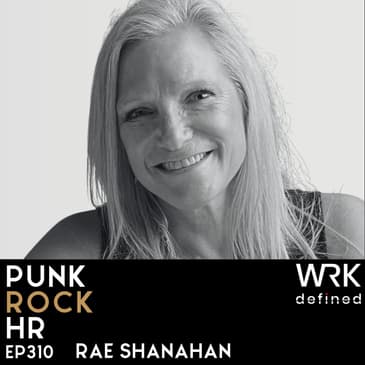
Twenty-six years in benefits gives you a particular kind of clarity. Rae Shanahan knows what the industry got right, and she's direct about what it got wrong. Now Chief Strategy Officer at Businessolver, she comes to this conversation with research and the research tells a story most HR teams aren't ready to hear.
The system was built for employees with time, financial stability, and enough clarity to search, compare, and choose. Most people don't have all three.
If you work in HR and you've ever wondered why better benefits technology hasn't fixed the problem, this conversation is for you.
In this episode, you'll hear:
-
Why personalization in benefits is reactive by design
-
What anticipatory benefits looks like in practice
-
Why financial fragility keeps showing up as an enrollment problem
-
How AI can help without replacing human judgment
-
What the benefits professional of 2035 (yes, that’s right) actually needs to know
Powered by the WRKdefined Podcast Network.
[00:00:00] RepCap is proud to support Punk Rock HR. We're B2B content marketing consultants that combine a journalist's curiosity with a marketer's creativity to tell clear human stories that connect. From strategy to execution, we partner with brands to turn ideas into thought leadership and get real results. Want to learn more? Head over to RepCap.com.
[00:00:23] Personalization has been the industry's obsession because it's measurable. You can tailor content by age, family status, past selections, but it's fundamentally reactive. So it kicks in after someone has enough clarity and calm to search, click, compare, and choose.
[00:00:43] But, you know, most consequential things with benefits aren't tidy queries. And, you know, they really show up as my kid is sick. What now? My paycheck looks wrong. My card got declined. These aren't personalization moments. They're really moments of stress. Hey everybody, I'm Lori Rudiman. Welcome to Punk Rock HR. My guest this week is Rae Shanahan. She's the Chief Strategy Officer at Business Solver.
[00:01:11] Business Solver is a provider of online benefits administration services and benefits administration outsourcing services. Now, if that seems pretty nerdy, you are in for a treat because Rae herself is a delight. She's passionate about HR. She's passionate about benefits. And she's here today to make the case that personalization, the entire thing the benefits industry has been chasing, is actually failing the employees who need help the most.
[00:01:40] And she's got new data on why the future benefits and administration is anticipation. So we're going to talk all about that today. And she's bringing findings from Business Solver's 2026 Benefits Insight Report. So for those of you who are like, hey, Punk Rock HR is light on HR. Not today, my friends. So sit back and enjoy this conversation with Rae Shanahan from Business Solver.
[00:02:15] Hey, Rae. Welcome to the podcast. Well, hello, Lori. Glad to be here. Yeah, I'm so happy to have you here. You know, before we get started talking about you, your story, Business Solver, all the good stuff. Why don't you tell us who you are and what you're all about? Sure. Hi, Rae Shanahan. I am a mom of two and also happen to be a Chief Strategy Officer at Business Solver.
[00:02:37] Just celebrated 26 years here, which is crazy. Went from 10 employees to around 3,000 and spent 10 years in HR prior to that. So you can say that, you know, HR really is my jam and excited to be here with you. Well, we're thrilled to have you here. And I just want to stop for a second. You know, you've been in HR a little bit longer than I have. I started in 1995 as an intern. Could you describe what early HR was like for you?
[00:03:03] I have a great story for you. So I started in HR in 1990. So it was my first job out of college. And at the organization I went into, I started to do college recruiting. And I came back from a recruiting trip. I think I was at the University of Florida. And I came back in a pantsuit. And my VP of HR pulled me aside and said, Now, Rae, you know our dress code for women is you wear skirts, heels and hoes.
[00:03:31] And so, you know, that's not our brand for you in a pantsuit. So that is a story about early HR. Yeah. Wow. Now tell me, how long did you keep that job for? It was going on 10 years and I left the field. It was an appliance company. And I thought, you know, I'm not sure if appliances are really going to be where I want to be. And I'm not sure if I want to be in HR forever. I love the whole foundation of HR. And it's, you know, all about the employee experience, but probably not going to be mine for long.
[00:04:00] So then I shifted and moved into sales and then got into this internet stuff. Amazing. Amazing. Well, I wonder if you can tell us what Business Solver does, what problems it tries to fix in the world, and a little bit about something called Sophia. Sophia. When John Shanahan started the company back 28 years ago, we had HR Solver, Safety Solver, Business Solver, Insurance Solver, Benefit Solver.
[00:04:25] And as a founder, you know, he was trying out different things that could work in the market and Benefit Solver is really what took off. So starting in 2002, we launched our Benefit Solver product and it's really all around, you know, simplifying the enrollment experience into benefits, getting rid of all those stacks of paper because even back then there were stacks of paper. And so we've created technology that is really meant to, you know, make it easy for employees to enroll in their benefits,
[00:04:50] give transparency to their clients into the data and understanding how the benefits programs are running for those employers. As part of a, you know, software development company at our core, you know, we embarked on this journey with machine learning and AI back in 2017 and created Sophia. Yeah. And Sophia is Greek for wisdom. And so that's how we named her. And she's really meant to be a companion because, you know, benefits isn't just an eight to five thing.
[00:05:17] It's a 24 seven. And so we wanted, we created Sophia so that she was there as a resource for employees around the clock. I think we have around 45% or 40% of our inquiries into Sophia are done after business hours. And so again, back to meeting employees where they want to be met, we need to be available 24 seven. And that's really where Sophia, we started Sophia's journey. And, you know, now she's been out there for a few years and, you know, has become wiser and wiser over the years.
[00:05:47] You know, Ray, you've got a really interesting report out there in the marketplace. And one of the insights in that report is that we're moving beyond this concept of personalization. So can you first tell us what personalization was and why it's failing the marketplace and what's next? Personalization assumes you already know what to ask. And the people who need help most often don't know what to ask.
[00:06:13] Personalization has been the industry's obsession because it's measurable. You can tailor content by age, family status, past selections, but it's fundamentally reactive. So it kicks in after someone has enough clarity and calm to search, click, compare, and choose. But, you know, most consequential things with benefits aren't tidy queries. And, you know, they really show up as my kid is sick.
[00:06:43] What now? My paycheck looks wrong. My card got declined. These aren't personalization moments. They're really moments of stress. You know, a lot of the personalization in the benefits world is really around things that have happened in the past. So if you know that if I had a claim a month ago, what people are saying is that they can use that claim to help personalize that experience. But that's in the past and that's reactive.
[00:07:07] You're talking about anticipation as really being proactive and really anticipating what your needs are rather than only focusing on the past. Well, I think about that. Well, I think about that and it's almost, forgive me. It's almost like, duh, right? Just because I broke my arm in the past doesn't mean I'll break my arm in the future. So is this the industry and the world catching up with the needs of the consumer or is this a broader trend?
[00:07:36] You know, I think of it as it really is a broader trend. With the data that we have today, with our, you know, even with some of the AI, we're able to really able to model out and really focus on what's next. And, you know, the benefits world for people is just a confusing world. And so what we're trying to do is how can we cut through the confusion and provide information, provide services, provide solutions for people when they may not even know it?
[00:08:01] Can you give me an example of what this looks like for a consumer to be living their life and not necessarily anticipating the kind of benefits needs that they'll have down the road? So let's use this example. Let's say that I'm, I'm nearing age, I don't know, 62, 63. And I am thinking about, hey, what's my life when I want to retire?
[00:08:27] And what I'm not thinking about is how am I going to pay for my COBRA health insurance? What I'm thinking about is how I'm going to spend my time. So what we're doing from an anticipation standpoint, because we know your income, we know your demographics, we know that you're getting close to that potential age. So that gives us an opportunity to anticipate and help you understand things you need to be factoring in. So, so we could contact you, we can reach out and say, hey, here's, you may be getting near retirement age.
[00:08:57] What are things, these are some things that you need to think about. And one of those is how are you going to pay for your healthcare once you're no longer employed? Because you don't, you can't have Medicare. So that's an example of really helping to anticipate what you may not even be thinking about needing down the road. Everybody, Tim Sackett, host of HR Famous, a new podcast on the Work to Find Network. No, I'm HR Famous.
[00:09:22] My wife says I'm a micro celebrity and 13 HR ladies around the world want their picture with me, which I think is funny. So, hey, what do we talk about on the pod? We talk about all the dumb stuff we do in HR in any given day, week, month, and we have fun with it and we have some great guests. Come check us out. We're not famous. We're HR Famous. Well, you know, your report is chock full of interesting statistics, which gives us an opportunity for storytelling.
[00:09:50] And your data shows that 45% of employees would panic over a $6,000 emergency bill. So I wonder why HR and employers and employees as well are still treating that as a benefits problem instead of a larger societal financial crisis. What are your thoughts on that? There's a lot of conversation around financial fragility and, you know, people, benefits is really a time where financial fragility becomes visible.
[00:10:18] But we keep managing it like it's just like paperwork. So when 45% of people say that they panic over a $6,000 ER bill, that's not benefits confusion. That's financial fragility showing up in the healthcare. And so the report really does frame it quite bluntly that only a small share of people feel fully prepared. So HR ends up in a financial crisis. You have employees that are distracted.
[00:10:45] They're not able to focus on their work because they're focused on their finances. And so let's send reminders and let's improve plan compared. That's not really what's going to help. That's too far downstream. Ray, the report is really interesting in that you found a 27-point benefits literacy gap between software workers and retail workers. Now, I have my own opinions politically on that, right? I mean, this is Punk Rock HR. I want to know what you and business solver think about this.
[00:11:12] What does that gap in literacy, like benefits literacy, really tell us about who the system was actually built for? You're centering us on back to the kind of the real world of work. And I appreciate that, Lori. When the understanding varies massively, the conclusion isn't just that people are confused. It was really built for certain workforces that have time. They have the financial capacity. And we can't treat everybody as a one-size-fits-all.
[00:11:41] And that's why this whole thought of anticipation is being able to know that. And how can I help that industry, factory industry or retail worker, be better prepared rather than treating everybody the same? And so that gap just really highlights that as an employer, I really need to be thinking about to serve my employees. I need to be very thoughtful about where they're coming from. And, you know, another piece of research that we're getting ready to release is our 11th year that we've been doing an empathy report.
[00:12:10] And, you know, that really is all about empathy, is seeing that gap and then thinking about how does that translate to me as an HR professional in how I need to recognize that I do need to support my employees differently and I can't treat them all the same. Well, I love and appreciate that you do an empathy report. I think that's really amazing. I don't know that there are easy answers here. When Business Solver is out in the marketplace, you're providing good data, you're providing good resources.
[00:12:41] What are you hearing from employers right now, whether it's around empathy or just around the financial constraints of running a business? What do they need that they're not getting right now? One of the things that as benefits professionals, think about the benefits people is always bringing problems. And so helping our HR professionals, benefit professionals have a seat at the table because what is one of the top expenses in an organization?
[00:13:08] Top four expense in almost every organization is their benefit spend. And then the second thing is what's another one of the largest, you know, money, things that employers spend money on? It's the people. And so instead of saying, oh, I can't deal with these benefits things, let's lean in. Because if we give that HR professional a seat at the table and really talking about the impact that benefits has on their employee morale and their employee productivity, it's a game changer.
[00:13:37] And so the organizations that really think about their employees as their greatest assets versus their greatest expense are really the ones that get ahead in the world. And, you know, there's numerous studies and data that point to that. Well, I appreciate that answer. And I think, you know, a lot of times in the benefits world, success is measured by what doesn't happen, right? Fewer escalations, fewer panic calls.
[00:14:03] So I wonder if there's a way that we can talk about success a little bit more openly and broadly. And also, how do you sell quiet as a KPI in an industry obsessed with activity and dashboards and incidents, right? Talk to me a little bit about that. Yeah. So I'll go back to our four benefits manager. No employee, as a general rule, an employee doesn't go to their HR benefits manager and say, Hey, I went to the ER last night and my ID card worked.
[00:14:33] They don't go and say, Oh my God, me yesterday and my deductions were correct. Right? So, you know, they end up with a lot of confirmation bias because they generally only hear from the people that are complaining. So when you ask them to tell you what does success look like, they want quiet. And so that's really where quiet as a success metric comes in is if things are quiet, then they believe that everything is hunky-dory with their employee population.
[00:15:01] And there's times when even, you know, nine people out of 10 may complain. And then they extrapolate that everything's broken and everything's not working. And then we get into a panic and suddenly, you know, there's pandemonium at the employer. Hey, this is Brent Skinner, host of Small Talk Window here at the Work Defined Podcasting Network. Have you ever wanted a short podcast to listen to during a coffee break of your work day? You've come to the right place.
[00:15:28] My guests dispense with a small talk as quickly as possible and settle into a meaningful conversation around the world of work. You know, Ray, you bring to mind the modern benefits professional. And I mean, what a job, what a career path. Like, who does this work and what are they motivated by and why do they like this job? So I'm going to go back to my, when I talked about, you know, starting my career in HR, I remember walking by the benefits ladies' desk. And that's really what they were.
[00:15:58] There were five of them and they had stacks of paper that were two feet high. And I said, oh, that benefits stuff. And we roll forward now, gosh, almost 35 years. You know, the paper's not there anymore, but there's still some of the traditional, you know, things that hang off of dealing with benefits. And oftentimes it's not a comfortable thing. And, you know, when people go to their HR teams about their benefits, it's because they're having problems.
[00:16:22] And so the modern benefits professional really has an opportunity to work to be proactive with those employees and really use data, really use technology to help get ahead of it. And also resist, you know, that whole concept of the confirmation bias that just because I hear of a couple of problems doesn't mean that there's, you know, a wholesale problem going on with that benefits world. I'll give you an example. I was in a client conversation yesterday and they have around 150,000 employees.
[00:16:51] And they had done their first, they did their first full, what we call a dependent verification audit. And the success was they didn't have very much noise and only 30 people out of 150,000 complained. And the reason why they only had 30 people complain is because they really did do some forward thinking things about the way that they communicated, they nudged, they educated, and, you know, they had very few escalations.
[00:17:16] So, you know, the modern benefits professional can really embrace the technology and use it to stay ahead of what their employees are going to be facing. Well, that is a beautiful example of what it means to go from just personalization to anticipatory. I think you're right. Back when I started in HR, there wasn't just the benefit lady. She was also the payroll lady and the leave lady, right?
[00:17:41] And if we were lucky, she personalized and she never anticipated because she was constantly playing catch up. And so I think this is really beautiful. When you think about the future of the benefits industry, is it more of that? Like what is the benefits professional in 2035 look like? Yeah, hopefully we switched from activity metrics measure workload and quiet measures outcomes.
[00:18:06] So hopefully we can start to move more toward outcome-based benefits administration in the go-forward world. You know, outcomes-based measurement is really thinking about employee satisfaction, thinking about employee engagement, thinking about employee productivity. And it's tangential, but their satisfaction with benefits and not having friction in their benefits world. Because when I need to use them, that means there's something happening in my world.
[00:18:31] And so if we can help relieve that friction, then it really does move toward a more proactive experience for those benefits professionals as well as employees. Will there be jobs for benefits professionals in the future? That's my question for every industry right now. Are these human jobs? They are human jobs. And in between on all this AI hype, you know, you hear all these layoffs, but most of those organizations are putting that money toward, you know, buying, you know, investing in data centers.
[00:19:01] And that kind of thing. And there's going to be a need for people. I don't see that changing really in the near future. And, you know, AI is logical. And human dynamics and benefits and health is not always logical. And so I see that role is going to continue to play a very important part as we go forward. Well, I just have one more question about the benefits professional of the future. Because I'm glad to hear it's human and not necessarily AI, although probably assisted by AI, one would think.
[00:19:30] When I think about all of the quote unquote benefits ladies that I've worked with, they've been good at math. They've been very organized. And not all of them, although not necessarily today, have been college educated. They kind of came up through human resources and maybe have an associate's degree, but a lot of life experience. What is the education track of a future benefits professional look like?
[00:19:57] Are they four-year educated at a college or do they have an advanced degree in people analytics? Like if you want to do this job moving forward, how do you learn it? Oh, I love that one. You know, they're really, I don't think that there is a college degree in benefits or benefits administration. And it's interesting. It's interesting when I talk to both clients as well as prospective employees. I love to hear their story about how they ended up in benefits. And most of it was accidental.
[00:20:24] I don't think many people go to college and say, I want to be a benefits administration professional. But they get into it because they care. Degree, no degree, it's the real world experience is very important. But they get into benefits because it's about the people. And the way I see the benefits professional of the future is it's going to be less about the, can I do a spreadsheet? Can I do calculations? That's where AI is going to help. Where AI isn't going to help is really that human interaction and helping people at times of need when it's more than just data.
[00:20:53] So, you know, I could see that we see more and more people that have either psych degrees or counseling and social work that really get into the human side of the human resources. And, you know, that's where I see the profession going is AI can take care of the, like I said, the data work and the analysis. But what it can't do is really help create that connection and that connection with employees. Oh, I love it. I love it.
[00:21:18] When you think about the way that clients interact with benefits and benefit brokers and programs and systems going forward, what are the expectations of the benefits industry? And where is that going like in the year 2035? My personal view is that we need to help employees be better consumers. And getting people into a high deductible health plan, getting them to understand better. Again, they're not going to, they're not going to be benefits experts, but they need to understand that this healthcare industry is not free.
[00:21:48] And how do we help employees really change where that's going? So one of the things that we have done for our employees, you know, we've got around 3,000 employees now. And we moved to something called RBP last year, reference-based pricing. And, you know, it's really a focus on, you know, organizations can't continue to have a 16%, 17%, 18% increase in their benefit spend every year. They don't get to go, you know, increase their prices that their customers pay by 16%, 17%, 18%.
[00:22:15] So this is not, it's not something that's sustainable. And there have to be new programs, new ways for employers to be able to really control these expenses. And at the same time, balance out what their employees really need. So, you know, where I see this going is we're at a time where the healthcare industry is going to have to, we're going to have to have a significant change for this to be viable on a go-forward basis.
[00:22:39] And, you know, our belief is how we can help employees be better consumers is really what we're trying to do for our clients. So, Rae, as we start to wrap up the conversation today, I want to talk a little bit about something you mentioned earlier in the conversation, Sophia. Because Sophia seems to be a great differentiator. And, you know, every HR tech company out there says that AI and machine learning will fix everything. So I wonder if you can tell us what's the difference between Sophia and the amount of data that's processed,
[00:23:09] all the interactions and the way it works with the other AI hype that's out there around everything else. It is a lot of hype. And where we're focused with AI is how can it really help improve the experience for our clients and their employees. And so where AI can help is accessing lots of information, helping provide context. And so our focus is not on AI is going to eliminate jobs. Our focus is on AI is really a helper.
[00:23:37] Helper for our employees, helper for our clients, helper for the client employees. Well, I like this approach of it being a helper and not necessarily a fixer. Because I think there's a really interesting differentiator there. I mean, it can help you get to resolution. But I think a lot of times the AI products, especially in the benefits space within broader HR tech community, are being sold as the be-all, end-all. And that's not the language that you just used. Correct. It's not going to solve everything.
[00:24:07] All we're trying to do, again, is be the helper, being there when an employee needs some support. How to sort through all of the information that is in, you think about an SPD or a benefit document that's 100 and some pages. That's what AI is really good at. That's what Sophia is good at, is really digesting that content and giving what Lori really needs, rather than making Lori hunt and peck through all those documents to get information. So I see it as a helper.
[00:24:33] I don't think it's going to necessarily transcend the benefits world and simplify everything, but really help employees anticipate what they need. Well, Ray, on Punk Rock HR, a lot of people tell me that I don't have enough HR dorks on the show. Like, they're like, where are the HR people? Where are they at? And today, I had someone who's crazy about HR and crazy about benefits. So I ticked both boxes for this episode, and I'm really pleased.
[00:24:58] If people want to learn more about the report we referenced or connect with you, where should they go? How should they find you? A couple places. Connect with Business Solver as well as me on LinkedIn. And then under our resources section on the Business Solver website, you'll have the benefits insight report, as well as the empathy report that I referred to earlier as well. Oh, amazing. Well, listen, I'll encourage everybody to go there. We'll include the URL in the show notes.
[00:25:23] And once again, I want to say thanks for being awesome and Gen X and showing up on Punk Rock HR. Yeah, I'm definitely Gen X, Lori. Thank you so much. Appreciate the time. Hey, everybody. I hope you enjoyed that conversation with Ray Shanahan. Here are three things that stuck with me from the conversation. When I began talking to Rae, I didn't really understand the difference between personalization and anticipation.
[00:25:52] But after having listened to her, I now understand that benefits needs to be less reactive and more proactive to actually understand the employee and their needs and to get involved sooner to make sure that they don't panic over something like a $6,000 ER bill. And I thought Ray made the case for that exquisitely.
[00:26:17] I also thought it was interesting how Ray pointed out that most modern benefits plans are built for a specific type of worker and they're rigid and inflexible and they're not built for all kinds of workers, including frontline workers. And so I thought that insight into the way the benefits industry operates was really interesting.
[00:26:39] And I also thought talking about the future of benefits and the type of employee who thrives in that role was kind of cool, too. And we talked about AI, of course, but we talked about having someone in that job who is empathetic and understands that people are people and that the human experience is not logical.
[00:26:59] So we have to be there for them, of course, during open enrollment, but also at other times in their not only employee experience, but life experience so that we can serve them when they need it the most. Well, that's what I heard from Rae this week. Did you hear the same or something different? Feel free to leave me a comment on LinkedIn or my website or reach out directly at hello at letsfixwork.com.
[00:27:26] Punk Rock HR is produced by Repcap. They're a B2B content marketing agency who help organizations tell clear human stories that connect. Whether you need strategy, customer interviews, or full production support, Repcap turns complex ideas into compelling content that moves business forward. Learn more at repcap.com.
[00:27:51] Punkrock HR can also be found on the Work Defined podcast network along with hundreds of other work-focused shows. To listen or learn how to advertise, head on over to workdefined.com. That's W-R-K defined.com. And finally, if you enjoyed this episode, please leave us a five-star review wherever you stream it. It really helps the show. Now that's all for today. I've got some advice for you.
[00:28:19] Be safe, be kind, and don't sell out.
Sponsors
