
Thanks to HRBench for powering this episode. To find out more about the company building the future of people intelligence, reach out to book a demo at hrbench.com/directionallycorrect!
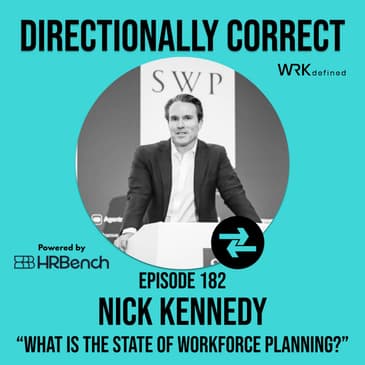
Check out this episode of the #1 people analytics podcast with special guest, Nick Kennedy, CEO of The Workforce Planning Institute!
In this timely conversation, Cole Napper and Nick dive deep into the State of Workforce Planning Profession Report, revealing key insights on growth and challenges. The report shows massive variability in team sizes with no standard model—some 10,000-employee organizations run teams of six while smaller ones have just one or two. Job ads indicate strong expansion, post-COVID recovery, and 166% growth in APAC driven by aging workforce focus, local training, and Australian pioneers like Alicia Roach and Peter House.
Nick explains why executive buy-in remains hard: SWP needs direct senior leader access, which layers dilute in massive firms. Midsize organizations around 50-100k employees often have larger median teams as they've matured the function longer, unlike giants still focused on operational planning. The episode explores centralized to federated models that build business accountability while keeping central guidance.
It celebrates SWP Conference growth in Chicago, London, and Sydney, with anchored locations driving momentum and maturing content that closes practitioner gaps. Standout sessions from Target and McDonald's plus Five Eyes military collaboration highlight global relevance. Nick expanded the portfolio with interconnected events on people analytics, AI, talent, and capability under one ticket, embracing the golden triangle converging into workforce intelligence.
Cole and Nick align on this convergence, discussing talent acquisition feeding market insights, analytics shifting to scenarios, and behavioral science for stakeholder influence. Regional differences reflect geopolitics and healthcare but common challenges like Workday foster global sharing via the Institute.
Nick shares his entrepreneurial journey founding the Institute as a global body. From practitioner consulting, a botched tender prompted a pivot to community: collaborate over compete, democratize best practices, and support professionals thrust accidentally into roles. The Institute offers training, education, lifetime memberships, and a home for the profession without prescribing one right way.
Personal touches include Nick's morning productivity, overcoming sleep paralysis by cutting alcohol, and Top Gear car passion. In Cole's Corner they discuss fears, rapid fire on careers and characters, plus BCG HR trends where SWP ranks high alongside rising talent and org design topics. AI workforce transformation gets optimistic treatment—break down roles, skill shifts, and buy/build plans. The Tampa Bay Rays Moneyball evolution sparks talk on variety, configuration, and AI-enabled experimentation for competitive chaos.
This episode delivers practical wisdom for SWP maturity, convergence, and leading uncertainty. Nick's global trends and community insights offer a clear roadmap.
If you like this episode, you’d also love exploring prior episodes—visit colenapper.com for the full archive and show links.
Powered by the WRKdefined Podcast Network.
[00:00:00] Hello friends of the podcast and welcome to Directionally Correct, A People Analytics Podcast with your host, Cole Knapper, and today's guest, Nick Kennedy, CEO of the Workforce Planning Institute. In this episode, we will cover what the State of Workforce Planning Profession Report reveals. You guys actually recently published a report called the State of Workforce Planning.
[00:00:25] Why Securing Executive Buy-In for Strategic Workforce Planning Remains Stubbornly Hard. To do SWP right, you have to be interfacing with the senior most leaders in an organization. How the Golden Triangle of People Analytics, Talent Intelligence, and Strategic Workforce Planning is Converging. I would argue that maybe you're almost the pioneer of what I've eventually called the Golden Triangle. The Entrepreneurial Story Behind Founding of a Global Professional Body from Scratch.
[00:00:54] What has that been like, just being the founder of a company and trying to create a professional body? And much more. Now let's get down to business. Hey Directionally Correct fans, this podcast is dedicated to you to help democratize people intelligence for the world of work.
[00:01:11] If you're looking to support the podcast, please make sure to listen weekly, subscribe to the Directionally Correct Substack newsletter, sign up for the Data Driven HR Academy at datadrivenhracademy.com, purchase Cole's book, People Analytics, or check out everything else at colenabber.com. Before we get into it, a quick word about HR Bench, the company powering this podcast.
[00:01:37] You know, when we all started in people analytics, we wanted to do strategic work, building predictive models, workforce planning, advising the C-suite, and most of all, quantifying the impact for the business. Instead, we spend months building dashboards and reports that should already exist. HR Bench eliminates that entire phase. Your HR is connects, your metrics calculate, your benchmarks populate. This is not novel. This is day one, not quarter two.
[00:02:06] That means skipping straight to prescriptive analysis, storytelling, and taking action for the business. Want to learn more? Book a demo at hrbench.com. Slash directionally correct. Find out more about the company powering this podcast and building the future of people intelligence. As always, all opinions are our own. And thanks for being a listener. Well, Nick, this has been a long time coming. Thanks for joining me today. I was so excited to be here.
[00:02:33] We've been talking about it for, dare I say, years. Yeah, it's been years. Yeah. So, I would finally get you on here. I appreciate you being willing. And I think it's just, I think it's the perfect time really. I feel like workforce planning is having a moment. You, you, when you kicked off the SWP conference a few weeks ago up in Chicago, you talked about like how this, this, this appears to be a moment. And you really, I see you as kind of a forerunner in this space.
[00:03:03] You guys actually recently published a report called the state of workforce planning. Can you cover maybe some of the high points of that research about like what's going on in the field right now? What, what makes it so relevant? Yeah, it's a great question. And we're really excited about that report. It was driven, Cole, by just some really fundamental kind of requests we've been getting from our members.
[00:03:28] Even some of the basic stuff, like what is a typical workforce planning team size look like? Like how many, you know, per headcounties, are there rules of thumb? And so we thought, well, let's go and ask our community and, and then bring that in as part of a broader research project. So, you know, what, what we found in that regard is that there isn't a, there isn't a consistent team size.
[00:03:57] You know, we've got, we've got a significant variability, you know, we've got instances where, you know, organizations with, with 10,000 have, you know, teams of six. And then organizations with 300 have teams of one, one and a half, right? So there's huge variability in there, but we're trying to create a visual there. We're seeing over the last five years that through job ad data that the profession is absolutely growing.
[00:04:22] We saw it spike during COVID significantly, especially in the US. And then it dropped away fairly sharply directly after, but those, those numbers have, have recovered now to pre COVID times. We've seen really significant growth in Asia pack, you know, we're at 166% of the pre COVID numbers from a job ad. Really effective.
[00:04:49] So we're seeing some really interesting and diverse regional growth. What's so different about APAC? Yeah. It's a good question. I don't, I don't know. I'm just, the only thinking is, was it, was it lagging to begin with? And is it, is it catching up, right? Have, have the advent of some more vocal voices around SWP boarded on in leaps and bounds.
[00:05:13] Um, you know, we also find, and I'm not necessarily attributing this to us, but we find it's, it's much easier to educate and train locally because, you know, there's no, there's no travel required for a face to face style. Uh, so we get a lot more training volume in this part of the world.
[00:05:32] Um, other than that, you know, I think, you know, our governments are relatively open to addressing the aging population, aging workforce conundrums. So, you know, different, different funding models available. Um, so there's a few different variables. Um, Australia's always had a, Australia in particular within APACs always had a, uh, it's been a breeding ground for, you know, SWP related talent.
[00:05:59] Um, you know, the, I give you credit for some of that at least if not at all. Well, some of it, but you know, like, uh, Alicia Roach, for example, the equate team, they've, they've been born out of, uh, well, half of those have been born out of Australia. Um, Peter Howes, you know, the, the original, um, success factors crew there, they're, they're from this part of the world. So there's been a, some, something in the water down in this part of the world. What else are we seeing in the report?
[00:06:26] Um, you know, we're seeing, um, job growth. We're seeing some really interesting, uh, and diverse models in implementation in SWP. So, you know, we're seeing, uh, uh, centralized models evolve and grow to federated models. So most organizations will start their implementation with a, with a, an SWP related hub, a center of excellence and deliver from there.
[00:06:52] But then trying to push that out and evolve responsibility and accountability to the business. Um, but still remain sort of centralized from a, from an SME and advice and support point of view. So we see very few truly decentralized models. We see, um, you know, quite a lot of federated models and still, still got some, some centralized models, uh, there. Um, nobody, nobody believes themselves from a maturity standpoint.
[00:07:21] Nobody believes themselves yet to be truly expert across all of the areas that we look at, which, you know, that's, that's not a surprise, right? Where we're, we're navigating this relatively new discipline together. So I'm kind of, I'm almost of the opinion that very few people genuinely should carry the tag of SWP expert. Um, there are some that I know around the world, absolutely.
[00:07:48] But it, it, it's one of those ones that, that we will get there together eventually. So, um, nobody, nobody rated themselves in the expert category for, for systems processes and technology, right? So no one feels like they've got the tech, um, utilization, uh, piece completely down pat.
[00:08:11] Um, and nobody feels like yet they're, they're educating themselves in the space of SWP, um, to an elite level. Um, the education models differ significantly, but we're still finding that most people call are, are learning by doing and learning on the job. Um, as opposed to implementing some sort of a formal, you know, education program, which, which we find really interesting.
[00:08:40] Um, what else can I tell you? Is there anything else that you pulled out of the report that you wanted me to, to talk more on specifically? Yeah. You, you kind of started with it and I saw this and maybe I was misinterpreting it, but it looked like the median team size for organizations that had 50 to a hundred thousand employees is actually the largest. So companies that were bigger than that had a median size that was lower.
[00:09:04] I think it was around five people if you had more than a hundred thousand employees, but I think it was a median size of eight people. If you were 50 to a hundred thousand employees and then obviously less than that with less employees. I was just curious. Why do you think there's kind of that middle ground in terms of team size? I think that those really large orgs, and I don't, I don't, I don't actually know who's in that data set right there.
[00:09:27] The, the, but we're talking about the likes of Amazon Walmart, you know, the, the really, really big companies. Yeah. I think most of them are really still caught up in operational workforce planning. Yeah. And so they're yet to re to really tackle the potentially daunting task of implementing SWP. Whereas those, those midsize organizations, it's funny, it's funny referring to a hundred thousand person business as a midsize organization. Yeah, I know.
[00:09:57] A lot of them have been doing it for years. So in, in that band, you're going to have organizations like, and I'm taking a sample based on what I know outside of the survey data, like the, the pharmaceutical companies, like the Roches, like the, the banks. So, you know, um, standard chart and that West Lloyd's, these sorts of companies that we know have been doing SWP for, for a long period of time.
[00:10:24] And they won't say they've got it all figured out, but have, have relatively mature function. So I would say that it's, it's been a, a less daunting task for some of those organizations to tackle. So they've been onto it for longer. Therefore, you know, they've, they've matured the function and recognize that perhaps they do need a few more heads in there. I have, I have a hypothesis. I'm curious if you, uh, how you react to this.
[00:10:50] I, my thought on it when looking at it was those companies I think are too big. They're too big because it's a spans and layers problem. Whereas to do SWP right, you have to be interfacing with the senior most leaders in an organization. And at large organizations, there's just too many layers between an SWP team and the senior leaders to adequately do that. And so it just kind of gets snuffed out a little bit of the business.
[00:11:18] Whereas at smaller organizations, I know we're not a 50,000 person company is not a small organization, but at small organizations, there's actually less layers. And so you can actually have that more the interface between the leaders of SWP and the executive team at that organization. Yeah. So I love the thinking and where I see that is when we're training in organizations in, in capability mapping, right? We're looking at a process to identify strategically critical capabilities.
[00:11:47] The question comes out, what's the stakeholder cohort to, to gather this information? What's the right one? It's your executive, but then we understand that the different organizations are going to have different access to that executive and, and often call that a function of size. And it sounds wrong, but it is because the larger the organization, the more spans, the more layers in there, the more difficult it is to get access to, to the very top of that, that tree.
[00:12:16] So taking that thinking, cause sometimes you see that the heart sink when, when, and if not the executive, then, you know, the next highest level. So I would agree with, with the fact that as you become larger and become more complex, that access absolutely drops away. Well, let's talk about the SWP conference. So first of all, I want to say a big thank you for, for having me attend. I was able to be there for a day. I thought it was just excellent.
[00:12:44] I hadn't been in three years since I chaired it a few years ago. So I appreciated that. And at just seeing the growth, the excitement, the relevant topics, just the stars that were there. I just want to say it was absolutely excellent. Can you talk a little bit about that evolution of that conference? And I know you've actually expanded it around the globe. So, you know, you've got the London one, you've got the Sydney one, and you're even expanding into kind of other territories as well. So talk about that journey if you don't mind. Yeah, absolutely.
[00:13:16] It's been different in different locations. So London, we have, have never really struggled to grow at London. I think because of proximity to Europe and travel and all these sorts of things throughout the last five years where travel has been a bit more difficult. London has been, been relatively easy is not the right term, but, but less arduous. So the US, as you know, we started in, in San Diego. It's a small conference, circa 100 people.
[00:13:42] It grew a little bit when we moved it to Austin and then, and then we moved it to Chicago. And I think one of the critical things there is we, we've now anchored it to Chicago, which, which we've learned over time that when you have a home, conferences tend to grow a little bit more readily. So part of it's finding the right, the right part of the US to optimize everybody's travel journeys, right? To make sure that, you know, not too many people are flying across the country and so on and so forth.
[00:14:12] So that's been a part of it. But we have seen a real maturation of the content, the sessions, the engagement over that journey as well. So we used to see far more variability in SWP capability in the US. So we used to see a cavernous gap between, you know, the elite, those that were doing it super, super well.
[00:14:38] You know, people like AJ Herman and his task based approach to SWP right, right from the early days spring to mind. Right. I remember that session popping on the, on the, on the San Diego stage versus, you know, those that were just, just starting out. I think that that gap seems to be closing a little bit just due to the sheer size of some of the organizations and, and, you know, horsepower. We still see a bit of variability.
[00:15:05] So there's a, there's a, a maturing of the profession and the aggregate capability that I'm seeing happening, which is reflecting in the sessions and, you know, the, the sort of content that we're, we're being, being shown. Also the organizations that we're getting access to.
[00:15:26] I know that we did have a pretty impressive list of brands in, in, in San Diego, but you know, you look at some of the sessions from this time around, like the, the session from, from target, the session from McDonald's, you know, they were, they were fantastic. So we're, we're seeing people are starting to recognize the event as a thing and, and therefore, you know, that's more conducive. Yeah. Okay. I'll come, I'll come and speak if it's a, if it's got some credibility behind it.
[00:15:56] So that's growing. Sydney was Australia was the same story. We moved it around for the first couple of years. We anchored it to Sydney. Lo and behold, it started to grow in London. What we've, what we've played is, is something that I no doubt you and I can talk a little bit more about is perhaps a, an acknowledgement of, of a number of very, very intimately interconnected disciplines or sub disciplines.
[00:16:23] Through the fact that, you know, the, the sort of speakers on our conference stage bear titles that are pretty diverse. Not everyone has a strategic workforce planning director VP title. Some people are from people analytics. Some people are from talent. Some people are from workforce development, workforce strategy. It's diverse. And so we thought we'd acknowledge that and we'd expand our, our conference within an existing footprint.
[00:16:51] So yeah, one day we will go into new locations. I've got no doubt about that. And new locations are asking for us to come and run conferences there. So Dubai, Germany, the subcontinent, India, you know, we are getting requests. Can you come and run here? There's risk in that for any company, right? So we just, we will grow our existing event portfolio first.
[00:17:17] So in London, we have added two new conferences and they are strictly speaking different conferences because of the fact that we don't want to dilute the sanctity of SWP, right? It's the professional body for strategic workforce planning. We don't want to, we, we, we, we, we hold that in high regard.
[00:17:38] However, we have added people analytics data and AI as a, as a separate event and we've added talent learning and capability. So yeah, we will all meet in one room for one session, right? For one, for one plenary. Then we will break out. And all of those conferences will be accessible on a single ticket and interconnected by a single exhibition, single vendor space.
[00:18:08] Yeah. Well, I mean, that's bold and I love the move. I think that's, that's excellent because I think you've been kind of coined this phrase, the golden triangle of bringing those things together. And, you know, I've been talking about how people analytics, workforce planning, talent, intelligence, and behavioral science are converging into one and what I'm calling people intelligence. Yeah. Do you kind of see those two things as fellow travelers of sorts with one another? Yeah, absolutely. I mean, to be honest, I don't see any difference.
[00:18:36] And I would argue that maybe you're, you're almost the pioneer of, of what I've eventually called the golden triangle through our previous conversations around, you know, are these really different disciplines and are these, do they really even need different tags? So sure we can give them different tags, but, but I don't think there's huge importance to anchor the sanctity of each of those as a unique discipline.
[00:19:04] I think, I think, you know, I think, you know, they are all so intimately connected and I've long been a believer that, you know, the, the natural evolution of talent acquisition should be more towards, you know, data collection and insights into SWP. If not, you know, evolving into that space, right. Right. The, the way that we access capability and fill jobs is shifting.
[00:19:29] And I'd love to see that, that job title, that job role in particular shift more towards, you know, Hey, this is what we're hearing when we're on the phone to, to can, this is our live data feed, right. From, from, from the, the one to one conversation.
[00:19:46] So I've been a huge fan of that, you know, people analytics, again, like the world is shifting from, you know, dashboards and information historically to, well, what does that mean in terms of, you know, the future and what other models can we look at to help us understand the different future scenarios and, and, you know, peer into the future, not necessarily with, with laser like accuracy, but here's what's, what could occur.
[00:20:14] So I think they're all absolutely intimately connected. Interestingly in, in the behavioral science on that, on that, that front, we are seeing more sessions around that in SWP in Sydney, we've, we've invited along actually a neuropsychologist to, to come in and talk to us around, you know, how the brain works in terms of relationship building and stakeholder influencing.
[00:20:41] And to me, that's a, that's an endorsement of, of your views that behavioral science is absolutely intimately connected to, to that triangle. So I, I don't think there actually even needs to be a triangle, but you know, we're, we're, we're pushing for it because there's still perhaps a, a, a human need to differentiate and delineate between these, these disciplines, you know. Yeah. It's a distinction without a difference sometimes.
[00:21:11] Yeah, for sure. A distinction without a difference. So I love the phrase. Yeah, absolutely. Absolutely. Yeah. Um, one of the, I mean, honestly, the, the biggest takeaway I had, uh, from the SAP conference was, uh, one of the leaders that does SWP for the New Zealand Navy. Yep. Talked about how, cause I asked the question, I was like, what's like something secret that nobody knows about here.
[00:21:33] And a few, uh, few of the presenters, uh, answer the question, but she, she, she had something that the, the five eyes countries. So New Zealand, Australia, UK, Canada, United States from a military perspective are now doing cross collaboration for workforce planning practices. Which I thought was fascinating, but it also shows the implications that this work matters on a global scale, right? That's like really important information.
[00:22:01] So the question I have for you is what are you seeing in terms of, you've got these three conferences and three different continents. What are you seeing in terms of the differences in trends in workforce planning in Australia, in the U S in Europe? Like what, what's different and what's the same? It's a good question.
[00:22:19] Um, it's funny, you know, cause, cause we, we tend to see Kevin and Sue from Deloitte stand up day, day one, session one in the U S and often that, that, that narrative is set and influence, right? So last year it was a gentic AI this year. It was kind of more the, the, the global trends, but also into the, you know, the skills, uh, jobs, tasks to outcomes kind of piece.
[00:22:46] So, um, they get the chance to set that narrative. And in many ways that the U S does, it's the first conference of the year, right? So we get the first look at, at what's happening. Um, trends wise, there are, there are absolutely some, some commonalities. So you do see, you know, um, very, very similar, um, trends emerging across those, those three events.
[00:23:14] So the good, the good news is that, you know, we are all talking about similar stuff. I think the local geopolitical landscapes and local economies do impact and influence the narrative, right? So the, the degree of uncertainty, the degree to which we're, we're needing to, to plan for contingency. I think that's really strong at the moment in, in the U S in particular. Um, it's, it's less so, uh, locally in Australia, we have a, um, probably a.
[00:23:44] A higher degree of, of certainty that governments will change. So I think, um, some of those government based organizations in Australia are, they're really thinking about, you know, a rapid shift in, in what, what we would need to plan for, um, under, under the Australian government tends to shift a lot from, from party to party. So that, that's a, that's a concern for them.
[00:24:09] Um, you know, the hospital and healthcare systems are really different in each of those three parts of the world. So in the U S we see a far more commercially astute private health, um, contribution. Whereas in, in the, the, uh, the UK and Australia, we see that, that far more publicly focused. So, you know, some of those things are, are interesting and different. Um, we also see a lot of cross cross global collaboration.
[00:24:38] So yeah, the, the New Zealand Navy, um, and the work that we've done with the Australian Navy was what led to, to them sort of talking to us about training. So they, they do chat. Um, we will, we will put people in contact with each other from different parts of the world based on, on common problems. You know, um, how do we make sense of workday adaptive is the most common one. Right.
[00:25:02] So we'll get, um, an insurance company in Australia to go and speak to a defense company in, in the U S to, to understand how they've implemented those sorts of things. So in many ways, there are some differences, but in many ways, we're also working together to, to solve common problems. Well, I think it's really great that you have positioned, you know, the workforce planning Institute to be that connective tissue. Right. And you guys have put out excellent content.
[00:25:31] Obviously you're kind of building the skills in the profession before you, before our eyes, which I think is needed, especially at a key moment like now. And you've also even got your own podcast. I got a graciously got to be a guest in there. I think a year and a half, two years ago, it was a little while ago, but, um, can you talk a little all about the workforce planning Institute and your podcast and just what you guys are doing to build skills in the arena of SWP? Yeah. Yeah. It's a, it's a, it's a great question.
[00:25:56] I guess one of the things that I'm, I'm really passionate about is, is as, as a, as a former practitioner, um, I used to love, I used to love doing what I did and helping, helping organizations with, with SWP. One of the things I found out really quickly is that there's no, there's no one right way to do this and there's lots of really good ways to do it. And many of them are, uh, suited to certain organizations and, and making things even
[00:26:25] more convoluted, um, bits and pieces of each of those methodologies are, are well suited to certain organizations. So I guess the Institute has never told anyone how to do anything at any point in time or whatever. I feel like, I feel like there are right way or there, there are many right ways, but there are wrong ways. There are definitely wrong ways. Yeah. Yeah.
[00:26:50] And, and, and no way is, is the, is the, um, the absolute and the, the, the epicenter of, of wrong ways, right? So not doing it at all, um, is certainly something that we'd, we'd advise against, but we wanted to understand what, what's done out there and then, you know, work to democratize that for, for the world. So you're taking, taking the best bits of what the experts say out there.
[00:27:17] Um, you know, how does, how does Adam Gibson do this and how does Alicia Roach do this? And, and, and, you know, um, what's Cole's views on, on, you know, the way that these disciplines indicate all those sorts of things. It's about taking that thinking from those that are proven to have done it well, pulling it together and saying, well, here's what we know. And here's how we can help, um, evolve and customize that for you over time. Right.
[00:27:45] So that your, your approach and your methodologies have got some rigor and some structure and don't have too many of those, those wrong ways creeping in, but at the same time, you know, you're able to, to be empowered to, you know, to, to do it in a way that works for you. So here's a, here's a bunch of fundamentals, take the best bits of each of those approaches and, and, and customize it.
[00:28:11] So that, that's probably one of the, the first, the first fundamentals is ask before you tell right. That, that's, that's really what I wanted to, to make sure we, um, we've got in place. And from there, I mean, it's really about, you know, giving, giving professionals acknowledgement for what they do, giving them a home base, giving them a, an event or a platform or a set of
[00:28:41] guidelines to, to anchor themselves to, um, you know, so that they can shine. Um, it's also been about providing education pathways so that professionals can have, you know, their experience or their education recognized. It really, you know, we want to make SWP a thing, Kyle, you know, it's, it's, it's, we, we've known it's a thing, but we want everyone else to look, to look at us and go, yeah, yeah, yeah, we get, yeah, you're a thing. And, and that's been a huge part of it.
[00:29:11] Um, so that, that's really what prompted, you know, it to be established is how do we, how do we recognize the, the incredible professionals in the space for what they do and, and keep them in the space for as long as we can. I think SWP has been subject to, you know, the, the voluntold strategic workforce planner, the accidental strategic workforce planner as, as, um,
[00:29:37] um, Kath Hume described, uh, I think in London last year and she did a session, she's our head of learning. She did a session on, you know, this is what happens when you thrust into it. Um, here's a, here's a, here's a, yeah. Um, so I think, you know, many of us have been there, right. And, and there's, there's been no quintessential pathway into SWP. And, and to that end, you know, we, we want to take that and, and, and make some changes
[00:30:04] to that and, and formalize it so that it is a, is a bona fide profession, if that makes sense. Absolutely. And I think you guys are putting together all the building blocks to make that possible, which I think is great. But I mean, this has been an entrepreneurial journey for you as well, because there was, you know, there was a time where this didn't exist. Right. And what, what has that been like just being the founder of a company, trying to create a professional body, you know, doing it in a global way, not just a local way.
[00:30:35] What, what has that journey been like? And what have you learned through that experience? Yeah. It's, it's, um, I think I don't get asked about, about the, the commercial side or the, or the entrepreneurial side of, of my journey. Can I actually pause you there for a second? Yeah. Cause I think it's like, no one asked about it as far as I can tell. Like no one asked me about it. No one asked a lot of the other kind of thought leaders in this space. They're really kind of sticking their necks out to do this type of thing. And I think they should. Yeah.
[00:31:02] Because this is a key pillar in the community about what makes the world go round is I always think of it like a three-legged stool. You've got your practitioners, you've got your vendors, and then you've got your educators who are building the next generation of talent as well. And all of those three need to be working in lockstep. And we act like practitioners are the only ones that matter and it's not the case. And so I, I'm really glad that you're getting an opportunity to share this. Thank you. Thank you.
[00:31:32] Super important. So I guess maybe I'll, I'll take you back to, to how it all, all started really quickly. Um, I, I was a practitioner. I had a consulting firm, uh, called deliberate edge that was strategic workforce planning advisory. It was just me plus associates. Um, we used to do projects for small to mediums, uh, delivering strategic workforce plans. And, you know, I enjoyed that.
[00:32:00] I always had a, uh, a training program sitting there that I offered as well. Um, and then COVID hit and things got tight. And I remember, you know, really looking, looking for those sort of, um, formally released, uh, requests for tender from government departments and those sorts of things. And I saw one that I thought was, was right in my hitting zone. You know, you know, it was a small job, um, was perfectly suited to, to my skills.
[00:32:27] And, and I, um, I didn't think that, you know, a lot of the top end of town would be, you know, putting their hats in the ring for that. And then, um, whoever was running the tender, um, perhaps a bit of a slip of the finger accidentally replied with a reject letter to all in a, in a CC manner, not a BCC manner.
[00:32:52] And I'm not going to name any names, but some of the companies on, on that, on that list, some of the email domains on that list were, were right at the top, top, top end of, of advisory around, um, or locally around Australia. And I thought, well, if that's the space that, that, if that's my, if that's my competition, um, yeah, I don't want to compete anymore.
[00:33:16] So in the spirit of, of Michael Porter, um, one of the forefathers of contemporary strategy, my question was, well, what business are you in? I sat there and I said, well, what business are you in? And it wasn't, it wasn't SWP advisor. It was, you know, you're, you're in the, you're in the workforce strategy, strategic workforce planning game. Okay. So how do I, how do I avoid having that, that level of, of competition?
[00:33:46] Um, and how do I stop chasing the, the bigger, you know, projects and programs? How do I, how do I create a level of, of annuity and, and, and, um, you know, certainty in a community minded manner?
[00:34:05] And that's, that's really what led to the, the birth of, of the Institute was, you know, don't, don't compete, don't, you know, collaborate, um, and turn your, turn your competitors into, into customers essentially. And that was really, that was really the thinking behind it in terms of global. It didn't make sense to start with Australia and then expand.
[00:34:32] And maybe that's, I'm pretty, um, I'm pretty outlandish and pretty bold in terms of my approach. So maybe that's my, my natural sort of blue sky thinking coming through and, and, you know, why stop there? Why stop there? Why stop there when we can, but then I thought, well, there's so much value out there. Um, there's so much to be learned and to be gained. Why don't we, you know, why don't we start with, with the, the principle of sharing things on a global scale.
[00:35:00] So we went, we went global from the outset, as opposed to trying to grow something domestically and then expand it. I also didn't think based on sort of LinkedIn searches around the number of professionals in, in certain areas back when LinkedIn showed you the number of hits that were in a, in a search response. I don't think there was enough of a market locally to sustain a whole business.
[00:35:25] So that was what was part of the thinking behind going global, but at the center of it has always been, um, you know, the, the, the values of the company, you know, and, and it's support connect, grow and enable the global SWP community. It's never been about a commercial venture. It's never been about that.
[00:35:50] And I think, you know, if, if you lead with purpose, um, and this is, you know, Simon Sinek's right when he talks about, you know, the organizations that lead with purpose. I genuinely believe that, that everything else follows. If you lead with that, um, that's been part of, of, you know, the, the emerging success of the Institute. I mean, that's great.
[00:36:15] Um, one of the things I do prepping for the podcast, I always ask people, what are some idiosyncratic or interesting things about you? And, uh, you shared some pretty wild stuff that frankly, I feel like I'd be like violating HIPAA laws, but is there anything about you? We could cut this far down if you want me to, but is there anything you wanted to share about idiosyncratic or interesting things about you? Yeah, absolutely. Absolutely. Absolutely. I'm one of those people with, um, uh, a couple of nipples.
[00:36:44] Cole, I've got a superfluo that's growing down, down below there. So there you go. There's about as close and personal as we can get. Um, yeah, I think we talked about, um, I've got an interesting condition called sleep paralysis, um, which, which I have under control now, but is, is a, a situation where you, you become conscious.
[00:37:07] So in, in the middle of your, your sleep cycle, you become conscious and aware, but you are completely unable to move. So imagine sort of essentially waking up and not being able to move a muscle in your body. Um, and it's incredibly scary, incredibly scary. And I've seen specialists all over the world for this.
[00:37:28] And one of the, one of the, um, neuroscientists I saw as part of it had a theory that, that it's potentially, um, not, not helped. Right. Or, or, or, or bought on so that the condition isn't helped, but the actual instances are bought on by even a small amount of alcohol in the evenings. So his theory was, you know, a glass of wine, for example, might be enough to blur the lines between sleep and awake.
[00:37:58] And it's interesting because I, I cut it out of my life completely. Um, which, you know, um, is something I used to enjoy a lot. Um, but I cut it out of my life and, and the condition is, is essentially completely at bay. So, um, I know that's not a purely a scientific, um, a proof of concept, but it seems to work for me. Um, it's got other unintended consequences. Like I'm a, I'm a morning person.
[00:38:28] So I wake it normally starts with a four. Um, and I will sit there and churn out a few hours of work while my brain's at its absolute sharpest before the life's life's blessings start to creep in and impact the rest of the day. So kids, um, you know, team members needing stuff, those sorts of things. So that's meant that I can do that and exploit that time when my brain works, my brain shuts down at about three o'clock.
[00:38:57] So if my team asked me something at three 30, oh, my eyes will pop out of my head. And I'll say, I'll give you a much better answer at, uh, at 7am tomorrow. So I'll think about that for you. Well, I appreciate you even doing this podcast because, you know, I'm based in the United States and I know this is Saturday morning, pretty early your time in Australia. So thank you so much. And we're catching you at your, your prime hours. Now that's okay. Like I've, I've, um, I actually went to, so I had a really weird day.
[00:39:25] So I went to bed at like quarter past seven, um, and woke up at, at four 30. So I got almost nine hours of sleep, which for me is, is rare. I, um, ashamedly. So by the way, Cole, I'm one of those people who's been a five to six hour a night kind of person for a long time. And I'm trying to change that.
[00:39:44] Um, and then certainly as, as the pressures of, of running a global business, um, are almost off my own shoulders, um, because we've been able to grow and put in place a wonderful managing director and incredible team. The sleep equation is starting to improve. Um, but yeah, I wouldn't have been otherwise sleeping. I'd be, I'd be, um, at the gym or I'd be up, um, up working, um, to try and catch the, the back end of the U S day.
[00:40:15] Absolutely. Well, uh, Nick, do you want to join me in Cole's corner? Yeah, absolutely. Let's go. Welcome to Cole's corner. All right. Let's start out with some rapid fire. Okay. If you weren't into SWP as a profession, what would you have done with your career? I would have become a, um, a host on top gear. Oh, really?
[00:40:43] I love, I love, I love cars. I love the automotive space. I would have, that's my dream job is to be, is to be there with Jeremy Clarkson, James May and, and, um, um, yeah, the, the other chaps and just, and just, uh, driving and chatting cars and having good fun. Yeah, absolutely. You're made for it. What's the place you've never been to that you most like to go and why? Oh, it will be in Italy. So I love Italy.
[00:41:11] Um, I love all things, Italian, um, you know, food, coffee, cars. Uh, I would like to go to, I've never been to, to Lake Kimo to that, to that region. Yeah. Yeah. In Italy. I'd also like to drive the, the regions between France, Italy and France. So I'd love to do that coastal go and rent a, I don't know, some sort of nice Italian, um, thing and, and, and Alfa Romeo or something and do that, do that on the road. That'd be pretty cool.
[00:41:39] Um, I had this idea the other day.
[00:42:09] 17 different countries. Oh, wow.
[00:42:39] It must have so many stamps in it. I'm looking through it. It's got none. They don't do it anymore. That's kind of weird. All right. That was not so rapid, but I got one more rapid fire for you. If you were a character in any book, TV show or movie, who would you be and why? Oh, Mr. Incredible. Okay. I like that. Why him? Um, cause I'm, I'm kind of a bigger guy. So I'd like an excuse to carry a little bit more.
[00:43:11] Um, cause he's hard to in the right place, but sometimes maybe he's not always right. That's a good answer. That's a really good answer. Hey, I've got a question for you as part of Coles Corner. Sure. What is it? What is your greatest professional fear? Hmm. And you can, you can, you can fire it back to me if you like, I'll do the same courtesy. Most people would say public speaking, but I speak publicly all the time. That's not an issue at all.
[00:43:41] Um, I'm trying to think like, what is it? Cause it's not failure. Cause I've done a lot of that too. Um, probably is going to sound kind of silly. Cause like, I don't mind people not liking me, but I really don't like it when people, I like, don't like me. Oh yeah. And so it's if like somebody I admired and respected lost, like I lost credibility in their eyes. That's my biggest fear. Probably. What would you say yours is Nick?
[00:44:08] Oh, my I've, I've taken on the onus of, um, of driving the, the SWP profession. Right. So that's a, that's a big weight. And so not, not getting there, you know, letting the global SWP profession down by not achieving what we want to achieve, you know, by the time I check out. Now I don't think that'll happen.
[00:44:35] And I absolutely think, you know, I'm the person to, to help, but at the same time, like, what if we fail? You know, what if we don't? Because organizations fail all the time. Like we're still seeing companies put all of their SWP chips in the middle. And a few years later hasn't worked for us. We're going to sheepishly collect them all back out again, you know? And so how do we stop that?
[00:45:02] How do we make sure that, you know, we help these organizations make it stick? So for me, you know, I've got a, I've got a massive, massive agenda. And, you know, that, that's what drives me is, is just do not let these amazing professionals down. Actually, actually related to the, the one big question I have for you as a part of the polls corner, which is when I talk to the people I consider to be the top people in workforce planning globally.
[00:45:29] And I always ask them like, you know, who's the top workforce planning team or who's, who's got it down pat or who's most mature? They always say no one. Yeah. Okay. No one is, no one's there. No one's at Nirvana. And if you ask that in people analytics over time, they could name names. If you asked in talent intelligence, they could name names, but workforce planning has never had this like pinnacle team or teams out there that has, have achieved the end state of being fully mature. Yeah.
[00:45:57] What do you, what do you, my question for you is, what do you think is holding the field back from getting to that level of maturity? Oh, okay. So, so great question. One is there, is there a full maturity because it's constantly evolving. So I'd, I'd challenge it by saying, you know, it's the relentless pursuit of excellence that, that, that, that I would define, you know, the best performing teams by, as opposed to the, are we there yet? Are we at the end state?
[00:46:25] And the teams that I feel. Pursue excellence in a really, really constructive way would be teams like RTX, right? Who are committed to training their own people in their own methodologies and own approaches. And as you know, we've done case studies on this. So yeah, they've always been all in, they've always been, how do we best do this? How do we best improve? You know, the, the, the Roche team led, led by Marika Chaney in, in Europe are really,
[00:46:55] really capable all in, they have their own, you know, forums and, and discussion forums and education forums, you know, they, they do things really, really well. You know, so there are organizations who, who pursue it with a rigor that I would admire and acknowledge. And for me, that's actually what matters is not, is not how do you know when you're there?
[00:47:21] It's, are we sure that we're constantly pursuing the, the end state regardless of whether we get there or not? Yeah, absolutely. Well, let's do some, what am I reading? And so I've got a, I got a few articles I sent you for, I think we're just going to do three of them today, if that's okay. Yeah, sure. So the first one I've got is called strategic, strategic workforce planning starts with HR itself by John Paul Lucason.
[00:47:48] And he goes through and he says, you can't plan the workforce if you can't model your own, which I think, and so he's talking about, you can't model HR zone capacity and its own ability to operate effectively. And so he says at first glance, cause he puts forward a formula for how to do this effectively. He said, it looks like just like another ratio, but it isn't. It forces you to articulate assumptions that are left implicit.
[00:48:12] Usually how many employees can one FTE in your business partner team realistically support? How much support does the team actually require? How much work sits close to the business versus in a centralized hub and kind of many other questions here. And so I wanted to get your thoughts on this one. And if you had any thoughts about just how doing, you know, you've heard the expression, the cobbler's children have no shoes, meaning HR doesn't even really support its own self with workforce planning.
[00:48:42] So how can it be supporting the business with workforce planning as well? Yeah. Um, so some of the most difficult, uh, stakeholders to convince that SWP is a good thing are business partners. And I see this all the time and this is not, why is that? This is not, it's not an indictment on their strategic, um, thinking capacity.
[00:49:09] It's it's, they are some of the most busy and under the pump professionals that you're ever likely to, to meet. And, and what they do for a living is they deal with other people's dirty laundry, right? They're putting out spot fires left, right, and center. So the, the very nature of, of that function is operational, you know, day to day, um, fix this problem five minutes ago.
[00:49:35] And so for us then to expect that they're going to buy into an activity that looks three years out, five years out, it's constantly moving strategic. It's, it's, it's not, they're not incentivized that way. They're not, they're not being asked to do that in, in their day to day. So we need to provide them with a vehicle to think strategically and an opportunity and the headspace to think strategically. So when you get a BP in the training room for two days where they got clear headspace,
[00:50:06] it, it, the, the shift in their thinking, the, you know, they walk out of the, the, the, the room, the virtual room or the physical room lighter and, and thankful for the ability just to, just to think that way. So I think it's, we've got to afford our HR people the opportunity to be strategic and to think strategic and to learn some of this stuff rather than just expect that they're going to do it. Absolutely.
[00:50:32] Well, actually I, I have more comments, but I'm going to actually save them until we cover the next one, because I feel like you've teed it up perfectly, which is so Boston Consulting Group published the top 15 HR topics ranked by importance. And they had done this in 2023 and they did it again in 2026 to not only show what are the top 15, but what, how has the ranking changed in the last three years? Yep. Number one is people and HR strategy.
[00:51:01] Number two on the list is strategic workforce planning. I'm going to skip down a little bit. Number eight, which has moved up seven slots as talent management and succession planning. Number 13, which has moved up five slots is org development and design. And then coming in at a cool number 15 is people analytics and reporting. Womp womp. Wish it was higher up on the list, but it's not. The reason why I mentioned those four in particular, SWP, talent management and succession planning
[00:51:29] and org design and, and people analytics, people and HR strategy, is I feel like those four things combined make up what anybody, you know how we said that there's multiple ways of doing workforce planning correctly. Yeah. Those are the four key ways of doing workforce planning correctly as far as I'm concerned. Yeah, exactly. Yeah. And, and so, and they're all increasing in importance over the last few years and number one and number two on the list.
[00:51:56] Now, isn't that such a contradiction if HR business partners are saying that we don't need to be good at workforce planning if the number one and number two things are essentially workforce planning and every one of the four things that are related to it are on the rise. Yeah. Yeah, exactly. So, so great comment. I'd ask the first two, are they different? And the fact that organizations are not different. The fact that organizations are still thinking, oh, they are, they're really unique says a lot.
[00:52:22] So one of the, one of the, the, the most common problems of a workforce planner is they'll come in and they'll, they'll be given the task of developing a strategic workforce plan. And their chief human resources officer will say, great. Here's our people strategy. Start with that as your basis. That is like trying to divide one by zero or any number by zero, right? That's going to create a, it's going to trend towards infinity. So you can't, you cannot do that. They are, they are the same thing.
[00:52:51] It's just that the people strategy more than likely has been developed without the same level of, of rigor and structure and, and strategic connection as a strategic workforce plan would be. So we need to get that out of the modern vernacular. So to the great people at BCG, let's have a think about what those categories look like to create greater delineation in the boxes that people can check.
[00:53:20] Cause I think we need to start to influence that narrative really strongly. And yeah, you're right. The other, the other, the other two plus people analytics, right? I don't know that they're that different. I think, um, all development and design, they don't necessarily belong in the same category. I think that's a curious one because all development, I would say far more. I was thinking more on the org design side as being, yeah, that's usually a part of the
[00:53:49] transformation efforts that come as a part of workforce planning. We see it as a, as a, as a really clear, uh, output lever of strategic workforce planning. So when we look at the, the, the, the sort of the 16 buckets that we, we treat as part of, you know, connecting your strategy to your workforce outputs, organ role design sit really clearly as a, as a, as a, as a succinct key consideration as part of it. Right. So I agree with you there.
[00:54:15] Um, so they are all absolutely part of that same, let's call it the, let's go back to the golden triangle or the, or the workforce intelligence piece or work intelligence piece if we want to, you know, um, be, be picky about it. Um, so, so none of those things are surprises. It's, it's pleasing to see that SWPs is up that list, but I think, you know, we need to start to, uh, we're never going to agree, right? That there'll always be a thousand different surveys that, that articulate things a thousand different ways.
[00:54:45] Um, so if you think about all of them contributing to one big, you know, popularity barometer, we're heading in the right direction. Well, I want to add one more thing here. And the, the, the topic area that it increased the most since 2023, which is number 12 on the list. It used to be number 25 is digital solutions and HR process automation. Yeah. Now I talk a lot about people intelligence and workforce planning, frankly, as a part of that,
[00:55:15] but the, the topic that comes up in literally every conversation I have nowadays in my professional life outside of the podcast is AI workforce transformation. And so I think if you lumped in all the topics that we were talking about with people analytics and strategic workforce planning and people in HR strategy, and then you started to include digital solutions, especially automation. This is where AI workforce transformation is kind of a key topic for every HR function globally right now.
[00:55:43] And I think it's kind of the topic, frankly, of 2026 and onward. What do you think about that? So I don't know, I don't know whether you saw this. I did a session in Amsterdam last year, which looked at how, how AI would impact 12 HR roles. Right. So I just took, I took 12 meat and potatoes, like HR business partner, talent acquisition specialist, people and it's a workforce planner, HR ops specialist.
[00:56:10] And I had a look at, at breaking the automation impact down between AI driven and process driven. Right. And then we just had a look at AI just to see what, what would likely happen to these roles in, in the coming sort of over the next five years, just due to AI transformation. And then, all right, if that's going to change, what are the corresponding skills and capabilities
[00:56:35] that we need to start to arm our workforce with in order to get there? So I think it's one thing to, for organizations to be concerned about AI and workforce transformation. I don't think that organizations know why they're concerned yet. And sorry, I don't mean to tar everyone with the same, but many organizations aren't yet really across why they're concerned.
[00:57:01] But I think, you know, if, if they're able to, to break that information down and really look at, all right, what is going to change? What is the work? What are the tasks and duties that are going to change and be automated? That's fine. Um, what's the corresponding skill and capability shift we need to, to support and enable over that timeframe, then that, that equation, that whole AI transformation beast that we're all
[00:57:30] really concerned about actually becomes pretty simple. You know, it's, it's not a, it's not a big thing. Um, you know, as, as I've said publicly call, I for one, welcome our new overlords. Um, I think this is an incredible opportunity for us. Um, and yeah, we need to be cautious, but optimistically cautious and or cautiously optimistic. And, and it's not something that's that complex. Just understand and examine and explore how that work will change.
[00:58:00] And there are professionals in this space that are really, really, really good at doing that. So tap into them, get the data, analyze it, and then work with your learning function to, to build out a plan that, that ensures you've got the right workforce. And of course your talent function. So here's who you're now looking for, right? Here's how we now need to recruit. This is the sort of skills and capabilities we need. Plus, so this is the buy and build, right? Um, we're going to, we're going to, we're going to build different.
[00:58:28] We're going to build differently, but we're going to buy differently as well in the future. So for me, AI workforce transformation is a fantastic thing. Fantastic buzz term, but we don't need to be scared about it. We just need to understand it, embrace it and, and, and work towards it. Be excited. Let's go. Absolutely. I have to ask you this question before I pull up the last, uh, last, what am I reading article, but are you a fan of baseball?
[00:58:56] I, so this is, so every, every time I go to the U S I try and catch a game, uh, has been unsuccessful for Chicago. I've missed the socks and the cubs by half a day each time. So, um, I will buy my children a baseball cap from the local stadium each time. So yes, I like it. Um, I'm not, I'm not across it as much as I can, but as you probably know, Cole money ball for me is the greatest workforce planning and analytics case study in existence.
[00:59:25] So I am a fan. My knowledge of it isn't, isn't as up to date as it should be, but let's give it a go. Yeah. That's perfect tee up here. I was going to apologize if you weren't familiar. This is a really unfair article, uh, to put in front of you, but two friends of the podcast, previous guests, Tyler weeks and Colby Colby Kennedy, Nesbitt wrote articles in the respective sub stacks. So Tyler's his first principles and Colby's his variance explained, and it's called the
[00:59:54] usual stuff plays how competitive variety is the key to modern talent strategy. And I would say this article is a continuation on money ball. And so what has happened recently is the Tampa Bay rays have kind of revolutionized the next instantiation of money ball where they're able to, uh, with a much lower salary, uh, than other teams able to start, you know, going really far into the playoffs, if not winning the world series.
[01:00:22] And they're able to do this because all the other teams have actually adopted the traditional money ball strategy, which I think is kind of a very kind of ironic finding. Yeah. And essentially they're still finding, uh, areas where the, there are market failings because, um, people again, are just looking for low cost players that they can, that bat above their average. And so, uh, they, they cover a few things here, uh, but they say, how did that Tampa Bay rays do it?
[01:00:51] They're hiring for, for variety. And so instead of everybody looking for who's the best batter that costs less, they're looking for multiple types of pictures and multiple types of batters and multiple types of fielders and multiple types of ways of positioning people on the field that are creating more, uh, variety, but you might even call it chaos. The second point they make is treat configuration as a verb.
[01:01:16] And so this is the, the, it's not just the players on the field, but the configuration of the players is actually an area for competitive advantage to be found. Yeah. And then the last area is select for function. So variety and configuration produce a flood of possible configurations. And the final condition is selection. The system has to keep what works and discard what does. So if you have just much more variety in players and you try much more variety and how you actually
[01:01:46] play those players in terms of the configuration of the roster and the batting order and all that kind of thing, then you can start to wean that down and show for what's most effective. And by doing this, you kind of create this chaos cycle that it makes it very difficult for other teams to replicate and understand. So before I give kind of my meta thought on this article, which I thought was excellent. What, what was your reactions to it? Nick. Moneyball only works when not everyone is doing it. Right?
[01:02:16] So if you think about again, I'm going to get back to Michael Porter. He's, he's, um, three types of, of ways to differentiate yourself and use the term differentiation there. You've got cross leadership, you've got a differentiation, and then you've got niche specialization. So Moneyball says we're going to differentiate the way that we compete to, to how everybody else does it. Now, the second that everybody else starts doing it, um, which I think didn't the Red Sox basically implement it the next year.
[01:02:42] Didn't John Henry implement it the next year and win like, you know, and then everybody else come comes along for the ride. Then of course, everyone's doing the same thing. Now that's what we've got at the moment in, in, in contemporary. Well, we were starting to get out of it, but we've had historically in contemporary talent acquisition. Everybody is looking for the same five tool candidate, right? The same five tool guy as they were in Moneyball, um, or girl as it were.
[01:03:07] And, and, um, you know, when everybody's doing it, of course you're competing for a fundamentally fixed pool of resources and you push the price up, up, up, up, up, right? So you create this false economic bubble. So I love the fact that they've looked at that and said, okay, well, what is the next evolution of doing it? I also love the fact that, you know, you mentioned keep what works and remove what doesn't right.
[01:03:32] That's a, that's an analogy for, you know, um, re forecasting scenario planning, adjusting your, your plan based on what's shifting, what's moving, what's successful, what's not successful in the market. So, um, my initial thoughts are, yeah, you gotta, you gotta keep differentiating yourself. Otherwise everyone will catch up. Yeah. So I want to make a point that the article does not make, but I think is, is a point that
[01:03:59] is going to be quite relevant in businesses over the next few years, which is this, what they did was very unconventional. It was so unconventional and so data driven that I don't think any human being on earth would configure enough variety, enough configurations and enough ways of selecting for those talent, the three pillars that they chose on their own.
[01:04:24] I think only a machine and even like AI powered machines with decision-making and kind of like stochastic models and those types of things can put into it. We create the situations that would make this possible, which means from a decision-making standpoint about the key components of baseball, they've essentially moved out of the hands of a human being and into an AI, right? Which is a key thing that organizations are talking about right now.
[01:04:50] And my thought is the same is probably true for business decision-making. And so organizations are trying more and more to adopt AI. But the one thing that I can see from that I've seen is no businesses are giving up the reins of decision-making yet to AI. They're saying we're going to make more data driven decisions. Fundamentally, it's the human in the loop that's going to finally make this decision. And the thing that I think about is what are you going to see in terms of the competitive
[01:05:19] dynamics of businesses? If any businesses actually start to go the Tampa Bay Rays route of taking a human out of the loop, truly doing experimental, crazy, wild things that in configurations that no human being could ever come to that conclusion on their own and potentially seeing some, you know, outsized returns as a consequence of that. What will happen to the competitive dynamics in business much like in baseball?
[01:05:46] I think it'll be exactly the same as money ball. So those that will do it, we'll get onto it first. And then there'll be followers, right? And then there'll be everyone's doing the, the same thing using these, a fixed pool of agents. So, you know, no one's got access. Well, not too many people have access to agents that aren't democratized. Right. And then we'll go back. We'll go full circle.
[01:06:11] So some, some, an organization will say, hang on, we've all, we've all AI the this up, the yin yang. Um, let's bring humans back into it. Let's bring emotion back into it. Let's bring feeling back into it. Let's bring culture back into it. Um, some of the things that may be a harder for, for machines to access. Uh, so to assess. So we will go all in and AI will start to make decisions for us. And we'll be okay with that because AI will get better at making decisions and then we'll go full circle. We'll come back out again.
[01:06:41] That's what I think will happen. Yeah. It'll be the hokey pokey. Nick, did you have any other questions for me? Other topics you want to bring up before we wrap up? No, I think, I think, um, this has been, this has been incredible, Colin. Look, I love, I love what you're doing with the pod. Um, and I've just been absolutely honored to, to be a guest here. Um, I'm really excited about, you know, what you and I have cooking for, for, you know, bringing
[01:07:08] your voice to, to what we're doing and really combining our superpowers. So I think, um, yeah, the future is bright for people analytics, workforce planning, talent, intelligence, uh, org organ and role design, all of those sort of interconnected disciplines. So, um, let's, um, let's, let's make beautiful music together. So to speak. Let's, let's do it, Nick. And, uh, if people want to learn more about you or your organization, where can they find out more information? Yeah, absolutely.
[01:07:36] Look, I'll connect with anyone in, in the space on, on LinkedIn. So that's, that's absolutely fine. If you want to download the report or you want to have a look at any of our training related or conference related information, it's all on the website. It's just workforce planning institute.com. Um, easy to get access to, um, we have now lifetime memberships, um, as a, as a standard. So join up and you never have to worry about it again.
[01:08:05] Um, that's, that's probably the easiest or come and come and see us at a conference and, and do the old school thing and walk up and say, hello. That nothing, nothing makes me happier than those sort of face to face discussions. I love it. Well, you've been a fantastic guest today. Uh, thanks so much for joining me, Nick. You've been listening to directionally correct a people analytics podcast with your host, Cole Knapper and today's guest, Nick Kennedy. Thanks for joining. Thanks, Cole.
Sponsors
