
Thanks to HRBench for powering this episode. To find out more about the company building the future of people intelligence, reach out to book a demo at hrbench.com/directionallycorrect !
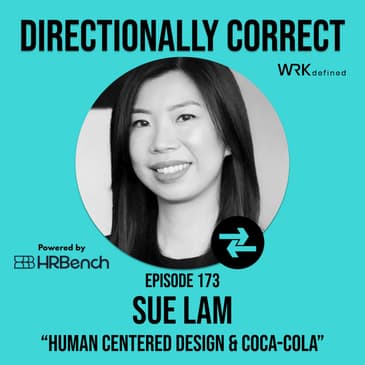
Check out this episode of the #1 people analytics podcast with special guest, Sue Lam, VP of Global People Insights, Culture, Strategy & Planning at The Coca-Cola Company!
In this wide-ranging and highly practical conversation, Cole Napper sits down with Sue Lam, VP of Global People Insights, Culture, Strategy & Planning at The Coca-Cola Company, to explore what it actually takes to turn people analytics into meaningful organizational change. Returning to the podcast after her original episode was lost during a platform migration, Sue reflects on how the field has evolved and why analytics teams must move beyond dashboards and reporting to influence real-world behavior.
Sue shares how her role at Coca-Cola blends people insights, culture, and strategy to help leaders make better decisions through data—but with an important distinction: her team focuses on behavioral change, not just surfacing insights. She walks through a compelling example of Coca-Cola’s culture transformation, where analysis revealed employees were still being rewarded for behaviors tied to an outdated operating model. Rather than stopping at the findings, her team partnered across leadership development, rewards, talent, and local culture teams to redesign manager conversations, interventions, and training to reinforce desired behaviors.
A major theme throughout the episode is human-centered design and why HR must shift from building programs to designing experiences. Instead of asking what training managers need, Sue argues organizations should ask what it feels like to become a manager, where friction exists, and what unseen pressures employees face. By focusing on the employee experience rather than the HR process, organizations can create systems that improve both performance and wellbeing.
Cole and Sue also discuss the overlap between social psychology, industrial-organizational psychology, and behavioral science, exploring why ideas from adjacent disciplines like marketing and design thinking may be essential to HR’s future. Sue reflects on her unconventional path as a social quantitative psychologist and how it unexpectedly prepared her for culture and organizational work.
The conversation expands into larger workplace debates, including whether industrial-organizational psychology is doing enough to influence real business decisions. Together, they discuss why evidence-based research often struggles to shape practice in elite organizations, where hiring decisions may rely more on credentials, networks, and backchannel references than formal science. They also explore how stronger partnerships between researchers and practitioners could accelerate more applied insights.
AI’s growing impact on hiring becomes another key focus. Cole and Sue debate whether resumes and traditional credentials are becoming less meaningful signals of competence in a world where AI can generate polished applications and work samples. While public proof of work and personal brands may surface talent, both question how organizations will distinguish genuine expertise from polished outputs and whether recruiting may ultimately shift back toward trust, relationships, and human networks.
Alongside the serious topics, the episode balances humor and storytelling as Cole and Sue unpack shows like Industry and Silicon Valley, reflecting on what they reveal about workplace incentives, analytics, and organizational behavior. The discussion also touches on workplace jargon, organizational “BS,” high performers, academic publishing, and the future of people intelligence.
Throughout the conversation, Sue brings intellectual rigor, practical wisdom, and humor, offering listeners a thoughtful look at how organizations can create better employee experiences while driving stronger business outcomes.
If you like this episode, you’d also love exploring prior episodes—visit colenapper.com for the full archive and show links.
Powered by the WRKdefined Podcast Network.
[00:00:03] I think there's so much wisdom to be taken away from that. And again, I think it just starts kind of at that almost foundational level, which is as an analytics team, you can go out and try to change things in the real world. And one of the ways that you can do that is by creating the right experiences and designing those experiences for people.
[00:00:23] Did you learn about this through your training as a social psychologist? Because for a non-IO psychologist, you do more IO psychology things than anyone I know. So what are your thoughts on that, Sue? Yes. So I call myself an IO interloper. Everyone thinks I'm an IO psychologist and then I have to say, no, I'm actually like a social quantitative psychologist. So what got you into IO anyways? I don't think I actually know.
[00:00:52] Yeah. I think I probably, we haven't talked about this in a long time, if at all. Oh yeah, I think we did. It was another one of the deleted episodes. What is something that you've learned about HR, the workplace or like how we could be doing things better based on the show Silicon Valley? Hmm. Something that is also appropriate to say on the podcast. It doesn't have to be.
[00:01:38] Welcome to Directionally Correct, a people analytics podcast with your host, Cole Knapper, and today's guest, Sue Lamb, VP of global people insights, culture, strategy, and planning at the Coca-Cola company. Hey, Directionally Correct fans. This podcast is dedicated to you to help democratize people intelligence for the world of work.
[00:01:59] If you're looking to support the podcast, please make sure to listen weekly, subscribe to the Directionally Correct Substack newsletter, sign up for the Data Driven HR Academy at datadrivenhracademy.com, purchase Cole's book, People Analytics, or check out everything else at coleknapper.com. Before we get into it, a quick word about HR Bench, the company powering this podcast.
[00:02:25] You know, when we all started in people analytics, we wanted to do strategic work, building predictive models, workforce planning, advising the C-suite, and most of all, quantifying the impact for the business. Instead, we spend months building dashboards and reports that should already exist. HR Bench eliminates that entire phase. Your HR is connects, metrics calculate, your benchmarks populate. This is not novel. This is day one, not quarter two.
[00:02:54] That means skipping straight to prescriptive analysis, storytelling, and taking action for the business. Want to learn more? Book a demo at hrbench.com slash directionally correct. Find out more about the company powering this podcast and building the future of people intelligence. As always, all opinions are our own and thanks for being a listener. I should have been on like stilts or something like that. Aren't you like six foot five or something? No, I'm like six foot two.
[00:03:24] Okay. Nah, I'm just six foot two. Yeah. I mean, six foot five is getting into like freak territory. Like you're really statistically improbable if you're like six foot five and above. Yeah, I feel like I've been to a lot of like IO conferences where there are many men who are freakishly tall, like six foot something, which like I'm not that short, but it definitely like makes me feel extremely short.
[00:03:52] Well, I collectively apologize for all of us tallies on behalf of all the tall folks. Yeah, you don't have to apologize. I'm sure being on planes, trains, cars, all that fun stuff. That's difficult. Well, I have an apology that I actually need to give you Sue. Okay, which is I'm sorry that your old episode on this podcast was deleted. I'm actually surprised that.
[00:04:22] I mean, I'm just surprised that it's been that long, like so long that it could be deleted. Like it happened so long ago. The point of thing is like, I think what you're really saying is you're surprised we lasted this long. Which is a reasonable, it's a reasonable like, well, I mean, you know. I still know you and like you as a person. So yeah, very surprising.
[00:04:46] But so what had happened and I think I think I've explained this maybe once before, but it probably for the folks out there that don't know. So I switched to podcasting providers and it only retained like a hundred or so episodes when I switched over. I didn't realize it was doing it. And so our first 50 episodes of the podcast were just deleted and they're nowhere to be found. Like there's no backup. And so Sue was one of those. And Sue, you're an amazing guest.
[00:05:13] You're one of my favorite early guests and I consider you a pretty close friend now. So I appreciate you coming back on to do it justice about all the cool things that you're doing and how brilliant I think you are. Of course. Yeah, thanks for having me. And I mean, one of the first 50 guests. I mean, now the podcast is so big. Everybody knows you and everything. It's fair. It's like going around places with you. You're a local celebrity. Everyone knows you. So it is. It's a little bit odd.
[00:05:42] And I remember, I think when you had reached out like first 50 guests, you said, hey, you know, we're still like booking people. People aren't super interested and things like that. And now I'm like your inbox is probably exploding with people wanting to be on. I mean, yeah, it's I don't know how to respond to that. It's very weird. I have enjoyed hanging out with you. We have had some weird interactions in public with with fans, which has been hilarious.
[00:06:11] But yeah, it definitely has changed. I would say like you. I mean, I want to give you some credit. You were like right on that bubble. And I think you were kind of the causes of of like like there was like a few like threshold episodes. Another one I'm thinking of with a person I invited back to one again to just to kind of pay dues there as well. But it was like it was like that episode and then your episode and then maybe like one or two others. And then it just kind of like took off from there.
[00:06:37] And so I actually think we I owe you a big debt of debt or debt of gratitude about how how well this thing is doing, because to everybody just wants to come and hear from you. I want to hear. Well, yeah, let's do it.
[00:06:54] Well, so I don't know, maybe maybe we could cover some territory briefly of just like some of the stuff that maybe we cover, because I actually talk about in my book even some of the things related to like I know a big passion area for you is culture. And some of the work that you do in that space at Coke as well. But can you talk at all about like what is what is your view on the role that culture plays right now in this moment? Yeah, yeah. Yeah.
[00:07:22] So I think for those of you who don't know me, I look after people insights, culture and strategy at Coca Cola. And so generally speaking, my job is to help HR and leaders to make better people decisions using data through a creation of strategy, data analysis, building a framework or behavioral change. And so I think the behavioral change part is something that's a bit different from my job.
[00:07:48] So in addition to like doing the science of people analytics, it's also about like the adoption of the behaviors as well. And so when my team does data analyses, I think I can share this example publicly now since it's been like five years. When I joined Coca Cola, we were going through a really big organizational culture change.
[00:08:12] We're going from being very decentralized to more centralized, having more distributed leadership. And so, of course, our executive team was asking, why is our culture not changing as quickly as we would expect it to be changing? So that's kind of a broad people analytics question, right? Like how would you actually like go about this? And so the team was really great looking at various attributes.
[00:08:38] And what we ultimately found was the biggest reason or like the top reason why we weren't seeing as quick of a culture change was we were actually like recognizing and rewarding people for behaviors that were consistent with like the old operating model versus the new one. And so we wanted to be able to identify leadership behaviors that are actually associated with that more like distributed kind of a leadership and go from there.
[00:09:07] So once we did the analysis, of course, we shared that information with people. But then we took it a step further and we partnered with the talent and the total reward COEs. So we shared it with talent. Talent went and updated all of their trainings like leadership development programs. And then on the total reward side, they actually updated like their manager conversation guides, things like that. And then also we have local culture leads that are within the business units.
[00:09:34] And so they were able to craft interventions locally to like help spread the news and have conversations that way. So I think it's a bit different from other people analytics jobs, because I think a lot of jobs, they stop at the analytics place, whereas we are trying to make sure end to end it creates behavioral change. Well, frankly, I think that's well, OK, let me be more on the nose about it.
[00:10:01] I don't think other teams should stop there. And I think that you're doing things the right way. And so that's why it's so exciting to know you and work with you. So one of the things that you introduced to me was this concept of human centered experiences and human centered design. Can you talk about what role that plays in kind of the way that you operate?
[00:10:23] Yeah, sure. So I think generally speaking, if we want to elevate human potential in organizations or just in real life, if we want to elevate human potential performance, like getting the job done, we really need to think about the whole person in an organization. And I think probably covid was the tipping point, but employee expectations are changing significantly.
[00:10:50] So what made a great employee experience 10 to 20 years ago, it may not be getting at what employees want today. And so if we want to have top performance, we need to account for the whole person. And so for those because this isn't like an I.O. concept. So for those who aren't familiar with it, human experience design or human centered design like HXD, HCD,
[00:11:14] it's a person's like collective experience with like a product, a service process or organization across like different moments that matter. And it's regardless of like their persona, whether they're a customer, a leader, patient, employee. And so HXD uses human centered design principles to create products and services to meet those types of needs. And so a lot of good can come out of that. You can address the right problem.
[00:11:41] You can test ideas like cheaply and quickly reduce support costs and then build capacity and also work for silos. And so or across silos. And so as you can see, there's just benefits to businesses as well as employees if we design in this way. So I'll give you like an example because that probably is a little bit like vague. So a simple example of us using HXD and HR.
[00:12:11] Let's take training or helping new managers. So a traditional like HR prompt for thinking about how we train new managers is like, let's just go and build a training program for those new managers. Whereas more of like an HX prompt for something like this might be how might we design the experience for people becoming managers for the first time.
[00:12:36] They're similar, but slightly different in that the latter starts with the human experience, not the HR program. So we're not asking like what training do managers need? We're asking what does it feel like to be a first time manager? What are the moments that matter for them? Like what are the highs and the lows and what are their responsibilities? But then also like what are the pressures that no one sees? So a new manager might think that they got promoted because they're good at their job.
[00:13:06] Usually you're an individual contributor, right? And you got promoted. But they might feel silly now in their new job because they don't know how to be an effective manager and they might not want to ask too many questions. So that gap in their experience is they're promoted. Then managers typically learn by trial and error and some best best practice companies. They might actually have like a new hire training in place, but support might find but might be hard to find or it might be optional.
[00:13:36] And so HX design programs help to close those experience gaps, making employees more effective, which should in turn help the business. But it's just starting from the experience perspective versus we're going to start a program now or we're going to start a process. I think there's so much wisdom to be taken away from that.
[00:13:58] And again, I think it just starts kind of at that almost foundational level, which is as an analytics team, you can go out and try to change things in the real world. And one of the ways that you can do that is by creating the right experiences and designing those experiences for people. So did you learn about this through your training as a social psychologist? Because for a non-IO psychologist, you do more I.O. psychology things than anyone I know. So what are your thoughts on that? Yes.
[00:14:27] So I call myself an I.O. interloper. Like everyone thinks I'm an I.O. psychologist. And then I have to say, no, I'm actually like a social quantitative psychologist. So I think the biggest thing is like social psychology is like disguised in the I.O. A lot of the principles just make a lot of sense. So that's always like pretty fun.
[00:14:50] And also a lot of like my dissertation work, I did work on like stress reactivity and the way we stress people out in the laboratory was actually having them go through a job interview, a mock job interview. So like maybe I was, you know, destined to go into I.O. at some point anyways. But I actually learned about this HX concept through teams at Coke. You know, I think it's a very big like marketing concept and it's slowly making its way to H.R. as well.
[00:15:19] So actually picking up these concepts from like different parts of the business and like other disciplines and applying it to I.O. So I don't know, I might I might get kicked out or something of the club, but we'll see. Well, I'll say this. One of the low key favorite things that I have in the entire universe is you take a cup, you put half like ice and water, half of it Diet Coke, and then you squeeze a lemon in there.
[00:15:48] Uh huh. And it's like the best thing on Earth. And so I just as a person who works at Coca Cola, I just want to tell you that, that I appreciate your products. And I think that they are absolutely amazing. They give me so much delight and joy. Thank you for doing what you're doing. So I'm going to have to try that. I haven't tried that that what you just mentioned. So I'm definitely going to have to try it. Well, what about isn't around?
[00:16:14] I do it all Diet Coke, but water keeps me in the good graces, you know? So you're like you're staying hydrated. Exactly. It's like it's like real things. Yeah. Anyway, but what got you into I.O. Anyways, I don't think I actually know. Yeah, I think I probably we haven't talked about this in a long time, if at all. Oh, yeah, I think we did.
[00:16:39] It was one other one of the deleted episodes that when we Scott and I had our in both of our advisor from graduate school, his name's Dr. Tillman Sheets. He was my he was actually the chair of the psychology department when I was an undergraduate. And I had planned on getting a master's in I.O. Psychology, but not a Ph.D.
[00:17:00] And so I had gotten one of these graduate assistantships and was going about a week before school started over to the psychology department to kind of like find the rules of the road for my assistantship and all this kind of stuff. Because it's sort of like a job. You're starting a new job. So you're trying to get like trained on everything. And he pulled me into his office and I was like, oh, no, I'm in trouble. I know. And he said, by the way, he disputes this.
[00:17:28] But what he said to me was he said, Cole, we'd like you to join the Ph.D. program instead of the master's program because we looked through awesome. I was like, well, that was not where my mind was at the time because I had had this plan because the master's program was a night program, whereas like the Ph.D. program was a daytime full program. And so I was going to work during the day, go to school at night and kind of not take out any student loans or anything like that. And so, yeah, it kind of, you know, had a different view on the future.
[00:17:59] But he's like, and so I told him that and he was like, like, essentially, he's like, he didn't say it in so many words. He's like, yeah, that's stupid. Don't do that. And he said, Cole, because I know you're a golfer. He said, if you get your master's degree, you're going to come out of the program. You're going to make a job. You're making this much money. You're going to be doing a bunch of grunt work. But if you get a Ph.D., you're going to graduate. You're going to come out at this level. You're going to be the master's boss and you're going to be playing a lot of golf.
[00:18:28] Hey, he's good at selling. That's pretty good. It's totally not true, by the way. But like, once I heard that, I was like, all right, I'm in. You're like a lifetime of golf, like sign me up. Yeah, exactly. And so, yeah, I'm still waiting for that lifetime of golf to show up. But yeah, it's so it's it's kind of funny how that that came to be. But yeah, I mean, I've always like I had a few undergraduate classes in Iowa, which was which is actually pretty rare for most psychology students. Yep.
[00:18:58] And and and so I just I thought it was kind of a neat area. I'd actually interned in a clinical psychology hospital. Oh, wow. OK. Because I thought originally that I wanted to go to that part of psychology. I was disabused of that notion very quickly after having actually worked in that environment. And so I was kind of looking for alternatives and I.O. seemed like a very viable alternative. OK, very cool.
[00:19:26] If you weren't doing I.O., what would you be doing? Now you're stealing my Coles Corner question. Oh, no. Sorry. You didn't get to have one when you were on the podcast. Oh, man. Because I don't think that segment like even the nerdery didn't exist back then.
[00:19:58] I don't think so. I'm creating a day driven HR Academy and working in HR binge and, you know, all the other kind of like side quests that I'm on all the time. I would probably just be doing a lot of things lately. I don't know why I've been thinking about wouldn't it be cool to be a farmer? I don't know. It's probably. I think he disabused of that idea. Well, one day and into a farm. Yeah, I don't think I would do very well. But there was a part of me that's like, oh, that'd be nice.
[00:20:28] You know, touch grass, kind of like go back to nature, live off the land sort of thing. But I lost the fat of the land. I don't know. I think it's just all the A.I. stuff has you thinking like, well, maybe as a human being we need to go back to like our hunter gatherer ways or whatever. But that would be funny. I don't know if you will. I when this is airing and such, but you mentioned HR bench. That's your new job, right? Like what are you going to be doing there?
[00:20:57] Yeah. So I'm the chief people intelligence officer for HR bench. By the time this one comes out, we've actually will have released an episode with the team at HR bench, but it hasn't come out yet. So you haven't heard it, so where we talk about that a lot. But it's a first of its kind role, which I think is pretty exciting. And really just I feel like I've been calling people intelligence like a successor ideology to people analytics.
[00:21:23] It's like the combination of the best parts of people analytics, workforce planning, talent intelligence, behavioral science, auto psychology, employee listening, all of that sort of combined into one of like creating the like what I'll call like a singular intelligence layer for HR and for the business. And I think that's really where the puck is heading. If you're skating in that direction, like there is not going to be any distinguishing factors
[00:21:50] between different kinds of intelligence that exist in HR. And I think people intelligence is that. And so I want to have skin in the game to kind of see if we can build that out ourselves. Yeah. Oh, my gosh. That sounds awesome. Are you still going to be able to like do the podcast and write your books and everything like that? Yeah. HR bench is actually kind of supporting the podcast now. So I don't have any more of these like sponsored episodes and stuff, too, which is nice. Oh, nice. Yeah. They're very supportive of it.
[00:22:19] Now I can obviously like stop it if I ever wanted to, if I ever lost that loving feeling for the podcast and everything. But it is a lot of work. I have thought about it. But I'm still getting enjoyment out of it. And one of the reasons I get enjoyment out of it is I get to talk to people like you, Sue. Like you. It's not just getting to talk to people. Like, I don't think we would have known each other. Like, I think about that sometimes. Mm hmm.
[00:22:42] Like how much of my life would just be qualitatively worse if I didn't meet cool people like you and get to call you friends? And so I don't know, like, I just think it like that's the kind of the loss aversion I have if I ever were to stop it is would I ever meet the Sue of tomorrow if I don't have it? Does that make sense? Yeah, I think that makes a lot of sense. And like having listened to your podcast, like you get to talk to so many cool people
[00:23:10] doing like really interesting work. But then not just interesting work, but their ideas are also like really interesting and thought provoking. So I totally get that. I think we would have known each other because I somehow We have a lot of the same friend group. Yeah, exactly. So I'm like, I think we would have met each other at some point, but it was cool to do it through this. Absolutely. When like the funny thing is, uh, later today it'll come out.
[00:23:38] I can't, I can't remember if it's gonna be before or after this episode, but like I'm talking to the lady at NASA, Artemis astronauts while Artemis is happening out in like the world right now. And like, to me that is like the craziest non-linear, like never would have happened type of thing. Yeah. It didn't exist. And I am just, I'm excited to talk to you. I am thrilled to talk to her. I want to talk to her.
[00:24:07] Do you need a cohost for that episode? If you want, I feel like you're kind of auditioning by asking me all these questions. So yeah, who knows? Um, I do think about having a cohost sometimes I do miss. Yeah. Um, but yeah, one of the things I appreciate about you is you actually like became a listener too. You didn't just come on and like peace out and say, I'm never talking to you again. Peace out Cub Scouts. I'm not. Give me, give me some feedback. I like, what do you, why do you listen? Like what, what, what is like, what keeps you coming back? I guess. Yeah.
[00:24:37] Um, I mean, I think in the beginning and I'll just like be super transparent about it in the beginning, I'm like, okay, what are they talking about so that, you know, I can show up while on the podcast as well. And I think in the beginning there weren't that many episodes out. So I think I listened to like all of them or something, uh, before mine. And so, um, most of it was actually just to educate myself on what was going on. But then over time, like I liked the episodes like with you and Scott, cause y'all have
[00:25:06] like a good banter, you know, you kind of like give it to each other and such. Uh, and you don't really know where the episode is going to take you, but you're talking about interesting topics. Um, you have some, uh, well, at least it's, it seems fun. It's, it's, uh, interesting. Uh, but then like over time you started getting, uh, other folks who are like industry leaders, um, authors like Alec Levinson.
[00:25:31] Um, I think I just recently listened to the episode with Neil from a sales force. Like you just have a lot of like different types of subject matter experts. So I really love, uh, seeing that. I think I really liked the episode with Chris Salling as well. Cause just so interesting to see an IO person like in the army. So just being able to learn about that topic in, it was really good everywhere. She was really good. Yes. Yeah. That was awesome.
[00:25:57] One of the things that happens from doing this is you meet people that are just phenomenal people and then the record button comes on and they turn into a zombie. And Chris was just one of these people who was just like, oh my God, it was almost like she became like more effervescent when the record button came on. And I'm like, okay, you were, you were like made to be doing this. Like this is you were, she was phenomenal. She was really good. And like the examples that she was just sharing were so interesting because they're not examples
[00:26:27] that you would normally see like in a corporate environment. And so, yeah, I just like to be able to hear from lots of different people. Um, and it also humanizes them. It's interesting when you see some IOs who are like actually funny, you know? So, um, it, it's good to see. That's, that's it. That's very kind. I don't know if it's true, but it's kind. I said, I did say some. Yeah. Um, well you've, you've had some time off recently.
[00:26:55] One of my favorite things doing, uh, guilty pleasures talking with you too, is just about what are you binge watching nowadays? Yeah. What's some of the stuff that's been on your radar recently? Yes. Um, so I actually picked up, I remember, I think I messaged you and said, Hey, I'm like doing fine after my surgery and everything, but I have a bunch of time to fill. So you said, Hey, you should watch industry because it's crazy. And I thought, okay, well how, how crazy could this be?
[00:27:24] So I, I just, I have HBO. So I decided to put it on. And I think within the first, I don't even know, like 15 minutes, I was like, what the heck is happening here? And then another 15 minutes passes. And then again, what the heck is happening here? So, um, I thought it was really interesting, but like, what drew you to that show initially? Because for me, I had it in my queue, but honestly it was just because Kit Harrington was like in the thumbnail.
[00:27:51] So like, what made you want to go watch it? When he was a late addition too, he's not even in the early season. So yeah, I don't, I mean, I don't even remember why I started watching it, but I would say like, it was like one of the most psychologically traumatic things. Like if you're a working person in corporate, the corporate world, and you look at like the underbelly of that, it's like, Oh my God, I feel the pain of it. It's stressing me out.
[00:28:19] And there was something just kind of addicting about that. I don't know. But I was just like, Oh my goodness. And the other thing that was interesting is like, I don't know anybody else that watches it. Like everybody, you know, I'm sure there's, there are people out there that listen and I'll probably hear about them after this episode comes out. But like, I would try to like talk to people about it and like, no one had either seen it or could relate. They're like, yeah, it's just all right. I'm like, it's all right. It's all right. I don't even feel all right. Yes.
[00:28:47] You get like very emotionally involved. I'm curious since I mean, we're on an IO podcast. What behaviors or behavior do you think might secretly be effective from the show? Even if it's possibly like unethical, uncomfortable, or like maybe just not advisable. Like we probably shouldn't do this in real life. Like, what do you think would actually happen in real life?
[00:29:13] I've been trying to itch on this like scab a little bit lately unsuccessfully on the podcast, which is what are things that we know are standard business practice at many firms that are like in the common sphere? Like, oh, we don't do that. Or, oh, we would, you know, or that's unethical. And and then you see that everybody in kind of elite parts of society does it constantly. Mm hmm.
[00:29:39] And so like one of the things that I've been thinking about is like the concept of like back channeling. Mm hmm. Yep. And recruiting. Some people might even say it's illegal, but in like the small world of like executive positions, like back channeling happens for every role for everything and you're thoroughly vetted. Right. And and so it's like, well, you know, these conceptually are things that must have some
[00:30:06] efficacy, but because we frown at them so much, we won't actually study them in an objective way to see whether they work. And so we can't really tell if they have efficacy because we're so morally kind of laden towards, oh, you shouldn't do that, that we can't actually know if they work because what if they do work and what if they don't work? And both of those are equally scary because we haven't scientifically studied. Yeah. Yeah. I really like that.
[00:30:36] It's I had a professor in my master's program and he studied white collar crime and he didn't really have many papers or grants and such. And somebody cheekily asked him why not? And he said the government funds the research. How many people do you think want to fund white collar crime, which I thought was like interesting, you know?
[00:30:59] So, yeah, I do think that a lot of behaviors that are not particularly positive, like they should be studied because if they are effective, why are they effective? And then also, is there a way to change that behavior so that it can actually be a positive behavior? But we won't know that until we do the work. Yeah. I think another one of these that comes up a lot, again, in like elite parts of society
[00:31:25] and is very evident in, in show like industry is kind of like the elitist hiring credentials that someone needs to have in their view on intelligence. We're out in like the common world. It's like, oh, intelligence doesn't matter. It's EQ, not IQ. And then every elite institution is like, all we care about is IQ. Mm hmm. And it's like, well, how do you square that circle of these types of things?
[00:31:51] And like, again, we've kind of beaten the dead horse on this podcast talking about like Paul Sackett said it's actually the meta analysis from shouldn't Hunter has been corrected. And, you know, it's actually conscientiousness matters more than than than, you know, intelligence and general ability and all that kind of stuff. And I'm like, well, clearly other parts of society haven't gotten the memo. And I would say they've doubled and tripled down on it. And so what does that tell us?
[00:32:19] And are we are we are we researching the things that are relevant to the most important high leverage parts of society? I was talking to a friend of mine recently that when there's an economist. So I worked at Lightcast for a while and kind of like a company founded by labor economists. And so I was like really digging in deep to what does economics say about everything? Right. And one of the people that I've been following for years now in that space is named guy named Tyler Cowan.
[00:32:48] He's a very famous economist. And he wrote this book a few years ago, which should have had the psychology community up in arms, which was called talent. And it was essentially like, how do you assess talent? But instead of our traditional ways of doing it, he was thinking about it through the lens of economics. But one of the things he did is he just went around to all like the elite parts of society, like top universities, VC firms, you know, tech companies. And they asked all these companies, like, how do you find talent? Mm hmm.
[00:33:17] Like kind of qualitatively. And he gives all of this kind of feedback about what he's found through his research and what other research out there says. And I mean, I was psychology shows up there in there a little bit, but not a lot. And I think about like, well, what are people reading in the elite parts of society? They're actually following people like Tyler Cowan and reading his book. Are they reading the Journal of Applied Psychology to learn about how to do that?
[00:33:43] And so in my mind, it should have had the IOSI community up in arms about how we should be influencing how things happen in the real world. And I promise you, every person I've ever mentioned that book to has never heard of it. Mm hmm. And to me, that is that is that is very concerning. And so I think about that in terms, again, kind of going full circle back to industry.
[00:34:04] I bet you the quote unquote characters in industry were following a lot of the dictums from that type of book and not, you know, necessarily what is in the Journal of Applied Psychology or personnel psychology or something like that. Yeah. I mean, I didn't even know when I was looking at graduate schools, like I didn't even know IO psychology existed. So I went into a social program.
[00:34:28] I think IO programs are a lot more popular in like the Midwest or like East Coast and such. Yeah. But on the West Coast, like I don't even know if there are any programs that actually study IO. They're more programs like organizational behavior that are in business schools. So that's what I was, you know, that's what I was seeing.
[00:34:48] So I think that IO could kind of come out of its bubble a bit more and like collaborate with like other types of industries or other types of academics and such, because I think that they have they have really good ideas. And I think that they could have a positive influence on this other type of work and research. But for some reason, I don't see too much of that. Why do you think that is? Well, why are they not on the West Coast?
[00:35:17] I think that's just a legacy of because you're actually identifying something that the field of biopsychology is aware of. I think there's been since you graduated, you know, a lot more proliferation out there, but it's still an underserved part of the country compared to other parts for sure. And I was aware of that. But like, why is IO not having more of an impact kind of on the broader world? I would say it's and again, people can hate me for saying this. I think it's by choice.
[00:35:44] Oh, I think they kind of choose the battles that they want to fight. And they kind of like these little kind of like get on our little high horse about selection. And we just talk about in these kind of narrow instances and say, well, selection versus like, let's say recruiting. Recruiting is a broader term than selection. We don't have a whole lot to say about recruiting and the subsets of that because the real decision makers in selection are often recruiting leaders.
[00:36:12] We don't really service recruiting so much. And so the people who are actually making the decisions on the ground about selection aren't even aware of what IO has to say about it. And so I think about that in in those terms is like we just we're not always trying to stay abreast of all the things that are happening.
[00:36:33] And then I was like and in just any scientific fields kind of credit is the publishing process takes like two years. Oh, gosh, yes. Time. There's like a new advancement. You're always two years behind scientifically. And and so business and marketing, frankly, run at much faster speeds with debatable, you know, efficacy at times.
[00:37:01] But I think that there are some systemic limitations to why, you know, fields like IO can't necessarily keep as up to date on the the most cutting edge things, because even if they start researching it today, it's not going to come out until 2028. Yeah, that makes a lot of sense.
[00:37:17] And what's interesting is that we've been talking about doing more collaborations or working with more academics, because we view academics as they have time like they have time to actually like think and noodle on different and new ideas. But maybe the publications take longer time and so like the science and information doesn't get out until later. But we have been noodling on.
[00:37:42] Can we create some types of like research collaboration so companies can actually like get that information and use it quickly and then academics can then like publish it whenever they need to publish it. So I think we've been talking a little bit more about that, like how do we infuse more innovation within our work? So, I mean, I think there's like lots of ways that IO can have an impact on organizations and businesses. Like the question, I guess, then is, do you want to do that?
[00:38:12] From my perspective, I have no idea why one would research selection and not want to impact the recruitment process. Like it just goes hand in hand in my mind. I think Charlie Munger's famous quote is, if you show me the incentives, I'll show you the outcome.
[00:38:34] And the incentives are find a niche area that is under research, published like a seminal piece of research on it, that will and then follow up on that for like 10 or 20 years. And that will not only get you a job, it'll get you tenure and it'll get you the full professorship and then the journal editor job and all of the things. And so there's not a lot of incentives to have breadth in research, but there's a lot of incentives to have depth.
[00:39:02] And when you have positions that have a lot of breadth to them, like being the head of talent acquisition, it's hard to service that from a very niche scientific standpoint. Yeah, that makes sense. What I would love to see and it'll never happen. But, you know, when folks go up for tenure, you have to show your publications and grants and service and such. I would love to see like for IOs an impact piece. Like what impact did you have?
[00:39:31] I'm going to be saying crazy stuff, Sue. I'm going to get thrown out of PSYOP. Like take away your status. Burn this heretic. There's going to be a bonfire in a few weeks for PSYOP. But I would love to see the impact piece. Like how did your work actually have an impact on organizations? Like that would be awesome to me. I know what you're saying, but they're like, yeah, see, we have our H impact index score. Right. That's not what we need.
[00:40:00] I could try maybe go back to the well again. Exactly. Well, Sue, do you want to join me in Cole's Corner? Yeah, sure. Let's do it. I have no idea what to expect unless you're going to do something similar to your other podcast. But I'm going to do something similar. OK, cool. OK, let's go. Welcome to Cole's Corner.
[00:40:25] So the first I've got some rapid fire questions for you, one of which you sort of asked me earlier, which is if you aren't doing what you're doing right now, what would you have done with your career? Oh, OK. Oh, OK. I in an ideal world where money and location and stuff wasn't an issue. Anything. OK, you could be a farmer. You know, it's allowed. Well, it is quite close.
[00:40:52] I think I would be a rescue dog ranch owner, you know, like I would want to buy a huge plot of land and all the unwanted dogs, you know, the ones with three legs or, you know, the very old dogs. And such like they have a place to go. So I would love to do that. Or I think we I mean, we've talked about binge watching content. I'm from L.A. So like movies, TV shows, music, like entertainment is like a really big part of the culture there.
[00:41:19] So I would have loved to maybe been in like TV production or movie production or something to see like the ins and outs of like how people tell their stories through art. I think that would have been really fun. The pace of change in the world of business is fast and that drives incredible complexity for the world of human resources. Welcome to the HR Data Labs Brown Bag Lunch series of conversations with experts inside and outside the world of human resources on how to innovate, measure and evolve our practices.
[00:41:49] Our goal is to help provide you with practical examples of how HR has to change and to meet in this complex business environment. Every week, we'll talk to new and different voices on all aspects of human resources. And guess what? You get to chat with us live. Live? Live. So they can answer questions or they can ask us questions. They can ask, they can answer, whatever they want. They get to talk with us live. That's awesome.
[00:42:20] Sometimes we geek out on the data and technology that underlie the processes that drive the world of HR. But the conversations are always insightful and fun. So please enjoy the HR Data Labs Brown Bag Lunch. What's the place you've never been to that you'd most like to go and why? Oh, that I've never been to. And you've actually got to travel the world with you. This is probably a harder question for you. This is hard.
[00:42:51] What comes to mind at first is Machu Picchu. I've really been wanting to go there and I'm very, very afraid that they're going to close it down for tourists. And so I've heard that. Yes. Like they're already limiting the number of people who can go and such. So that's definitely on my list. But I get altitude sickness. And so it is very high up there. So now I'm like, Yeah, yeah.
[00:43:18] I found out that I got altitude sickness while climbing Mount Fuji, which I'm like, it's like climbing Mordor. If you if anyone's ever climbed Mount Fuji, like it's the worst. And so but I was like 20, like 21, 22 at the time. So it was fine. But now in my 40s, like I'm not I'm not sure I'm going to survive that.
[00:43:41] If you were a character in any book, TV show or movie, who would you be and why? Character in TV show. Hmm. Okay, so obviously, you know me and for those who know me, I'm like 99 percentile in interpersonal sensitivity. You know, I really like people. I'm typically always nice to others. I mean, I think you've even said it to me like part of my brand is being likable.
[00:44:11] But I think that's just who I am. I think if I could be anyone, I'd want to be like someone like Gavin Belson from Silicon Valley. Like he's just unapologetically a villain. Like he's very smart, but he thinks he's doing things for like the good of the people. But they're obviously for him, you know, and I think he can also be like quite funny and ridiculous. So I would just love to be unapologetically like ridiculous in public, but I just can't.
[00:44:42] Who is going to go full heel turn, which is a wrestling term? Yes. I want to be the heel for once. Wow. Oh, my gosh. I feel like I have to dig into this. So I'm going to I'm going to use some psychoanalysis on you. So explain my thoughts. You feel free to disagree with us. Okay. Sue for the audience who doesn't know her as well as I do is the nicest person.
[00:45:08] Just she's so incredibly might even call it pathologically nice. And I think this is your way. You're like bundling it all up. I'm like, eventually, I'm going to I'm going to get these, you know, and you're going to go full Gavin Belson and you're going to be this other person. How far from the truth am I? I mean, I don't know.
[00:45:34] But but the joy of being pure villain. I love it. So, yeah, it flow through you. The dark side. It's the dark side. You know, I always say that like Star Wars, it would have never became a movie or a show or whatever franchise if all the characters just like went to therapy.
[00:45:55] So maybe it's something that I should go to therapy for and like just work out, you know, or don't, you know, or don't or don't and let it flow through me. And one day I will be the Gavin Belson of I. Oh, psychology. Well, I was going to go a different direction, but I've got one big question for you per what you were saying. So I know you recently binged watched all of Silicon Valley as well. And I wanted to ask you my big hypothetical is sort of like what you're asking me about industry.
[00:46:24] But based on that show is what is something that you've learned about HR, the workplace or like how we could be doing things better based on the show Silicon Valley. Hmm. Something that is also appropriate to say on the podcast. I think. It doesn't have to be. Yeah, that might be a career limiting move, but so I won't explain the whole thing.
[00:46:51] But there is a scene in Silicon Valley where they are talking about the development of an algorithm. Mm hmm. Let's see where you're going. OK, you know what I'm talking about. So it's a bunch of men in a room and they're talking about the development of the algorithm. And then someone comes in and says, we're going to win this even if I have to do blank. And everyone in the room.
[00:47:21] And so somebody else says, no, that's not possible. You would you know, they have a whiteboard and then they start like sketching out. You know, they were essentially like doing a math problem on the board. And so they're going and they're talking about, well, what about this situation? What about that situation? And it ends up being like an hours long conversation about an algorithm. And then the main character figures out, oh, we need to do this algorithm from middle out, like middle out compression. Right.
[00:47:47] And so I say all this because what I loved about the scene is you didn't need to know anything about math. It was humorous. And so you would remember the situation. You'd remember the story. Right. It is very memorable. And it's also, I guess, relevant, relevant to most people.
[00:48:13] And so for people in people analytics and outside of people analytics, like we're trying to get HR to adopt people analytics. And we're usually like, oh, look at this dashboard or look at all these numbers. And this is what that means. And HR is just sitting here like I have no idea what you're talking about. I think we need to use more examples like that Silicon Valley example where we're like, we're not even using math to explain something.
[00:48:40] But you could literally talk that you're like, this is how you build an algorithm. Like that's what we're actually doing with people data as well. And so what I liked about the episode is that it was like teaching people how to critically think about data. But they weren't talking about data at all. So if you haven't seen that episode, you should go and watch it. Yes. Very funny. I want to say it's like one of the season finales here, like season one or season two or something like this, because there's a big competition that they have.
[00:49:10] Yeah. They're trying to prepare for. I'll build on that, too, which you said, but I'll say in a little different words, which is. It actually teaches the layperson that you can bring an algorithm to anything. Mm hmm. Oh, yeah, I love that. That most problems are not a limitation of being able to bring data to solve them. It's a limitation of our own creativity for how we would do so. Yes.
[00:49:38] And so if you start looking at the world through the lens of like the way I would always put it when I was in people analytics functions myself, as I would say, look at all the problems that the organization is facing. Look at the slice of the pie of the problem that has to do with people, which probably is a lot. It's a lot. And then we say, OK, how much does like concepts like human variation play a role in the causes of the people parts of that problem?
[00:50:07] And how can we measure that variation? Right. I'm sorry. I'm just thinking about the example you're talking about. Variation. Variation in that. Yeah. Go go and watch it. You'll understand why she was laughing. Yes. But that variation can play a big role. Unintended. And and now I'm losing it. Yeah. But it can play a role.
[00:50:33] And if you look at people analytics through that lens, first of all, you're geared towards solving business problems, which is like the sin number one of most people in analytics is they're just fascinated by data and they just want to do something interesting and cool and they're not actually focused on the problem. So it solves that problem. But the second of all is if you can find ways of talking about it in a compelling way. Yes.
[00:50:56] It gets people to understand and why they should utilize data without having to become data scientists themselves, which is secretly all of their greatest fears. Oh, I might actually have to learn something. Oh, no. Oh, God. And it might not even be a secret fear. Like I've literally had HR business partners tell me like I'm afraid of data. I have no idea and I don't want to, you know, show up silly or something.
[00:51:21] And I think again, going back to that scene, it was like, you don't need to be you don't need to know anything about math. But what you do need to know is like, how does the business run? What are the business problems? What do you think could actually like help tackle those business problems? They don't need to be right or wrong. But like, like, let's talk this through. What's the business environment that you're operating in and HR people, they bring those ideas. And I don't think they realize like that's data and that's data that's useful for people analytics teams.
[00:51:50] And if we could just like with our powers combined, like, you know, we could actually make a really big difference in companies. I love it. So you're fantastic. I'm so glad you're here. We can all sorts of ridiculous analogies. I think they're they're they're tracking. I really appreciate it. I would love if more people would use examples like that on the podcast. So thank you for doing that.
[00:52:19] So let's do some what am I reading? Okay. The first article I have for you is by Mark Efron and the talent strategy group. He's previous guest to the podcast friend of the podcast and always is publishing some of the wildest stuff. And recently he he republished something he published in 2022, which is he says one of his favorite articles called the identical Susie's and why you should focus on your high performers.
[00:52:46] And so he puts together kind of this hypothetical experiment, which is you've got Susie number one and Susie number two. They're identical twins. They have all the same characteristics. The only difference is Susie number two works hard behaves well and is highly engaged. So they're all the same same credentials, everything. And how should organizations knowing that Susie one and Susie two on paper are identical?
[00:53:14] How should they treat Susie one and Susie two? And and he essentially is advocating for why you should treat the high performer differently than you should treat the other performer because of those differences.
[00:53:26] And so he gives some some tips and feedback about how to manage high performers, clarify true high performers using challenging goals, help managers to distinguish high performers from high potentials, audit the market to ensure extremely competitive compensation for high performers and invest in functional expertise for those performers and then clarify the prize for high performers. So like what are they actually trying to achieve? But did you get a chance to look through this one? And if so, what did you think about it?
[00:53:56] Yeah, yeah. I think I saw it when it first came out. I think it was like towards the beginning of the pandemic. And so, yeah. And but I think it's interesting that he actually republished it because I think it's still an ongoing conversation. I think what's interesting that this article was written when employees like they had the power in the marketplace, whereas now it's shifted. So organizations, I think, have more power.
[00:54:24] I think a lot of companies would include individual effort and willingness to sacrifice as part of high performance, which is interesting to me because you would think that a high performer should be able to do the same amount of work in less time. So even if they're only working their normal 40 hours, they should technically be able to get more done. I know in the article it also mentioned that organizations would prefer employees having a good work life balance.
[00:54:54] And I don't actually agree with that. I think what organizations want are effective employees. And that typically requires work life balance because you need employees who are recharged. I think the issue that I have with the article, not the issue, but like I love Mark Efron's work. But in the two Susie's problem, their output actually wasn't the same. So the one who works more has better output. And obviously, in turn, they have more opportunities and learning.
[00:55:23] So if we change that problem slightly and said their outcomes are the exact same, but one of them work more hours and one of them didn't, you would probably want to hire the Susie who worked fewer hours. Right. We assume typically that those who work more hours produce more and better work. But do we really know that's the case? Like we really should be looking more at like the performance and the goals that we've set.
[00:55:49] Like we should set high goals and see if we reach them versus measuring how many hours is somebody working on something like that. So if we change the problem slightly and said the output is the same, I think that most organizations would probably choose differently. Absolutely. Yeah. I think there's a few vantage points in which you could look at it from. You know, one is if you're Susie, if you're the organization and if you're, you know, me and you who are kind of pontificating on it.
[00:56:17] I think if you're if you're the the Susie's themselves, you know, there's kind of these competing views, which is if you have all the same, you know, characteristics about you as somebody else. Sometimes you think, well, why are they getting rewarded more than me? We're the same person. Right. Mm hmm. Yeah. But the flip side of it is if you're the other Susie, which is you're saying, well, I'm working harder. Not only am I working harder, I'm producing more output.
[00:56:47] And then the organization thinking about probably feel like more of a finance lens is they're looking about how can we pay per unit of output? So like one is giving less output. Therefore, should be getting paid, which kind of fits into my whole everyone gets paid the same theory, which we can derail away from for a second. Right. But I think it has a lot of efficacy in terms of problems like this.
[00:57:11] And then there's just like me and you, which is like as a society, sometimes we look at problems and and as we have a pendulum that swings back and forth. And sometimes we have overly focused on things like equity. And then other times we overly focus on individuals. We say only the individual matters or only the group matters or only the fairness matters and only individual inputs matter.
[00:57:36] And we kind of kind of go back and forth on the swinging of the pendulum in that space. And it seems like that, like it, like you said, since the article was written, that pendulum has swung pretty far from being very employee friendly to being very employer friendly. And how do we think about these things differently? Yeah, definitely. And I think we tend to go one way or the other, you know, centralized, decentralized, employee organization.
[00:58:03] And I think given today's business environment and the geopolitical climate, I don't think we can keep swinging back and forth like this. I think we're going to need to hold the tension between the two and figure out, like, how do we work within that? I guess it's a little bit like a dance or something. And so I don't think we're going to be able to do this heavy swinging.
[00:58:25] I think it's going to be some type of dance and trying to figure out, like, what's best for the employee as well as what's best for the organization. And human experience design is supposed to help that. So I'm plugging it there. Yes. We will move it back in. Well done. Awesome. Yeah. I mean, I think, you know, my perspective on this, like, we just need to be adults. Mm hmm. Yes.
[00:58:50] It's like we kind of treat everybody as if their children and whoever complaints the loudest kind of has the say at the time. Mm hmm. And it's like, why don't we just be adults about it? Yeah. And talk about these things. But absolutely. Well, let me go on to the next one, though. So this is from some recent research in. And so this is in psych reports. And the title of the article is this place is full of it towards an organization BS perception scale.
[00:59:19] And so cheese Cheeseman, I'm assuming that's not his real name, made a LinkedIn post about this piece of research, which I thought was just so interesting. And so he he summarizes saying that the researchers look to create a scale of how much BS exists in workplaces. And by BS, they don't just mean someone having a bad day or chatting about rubbish in the hallways. He means the people making statements with absolutely zero regard for whether they're true or not.
[00:59:48] So thinking about a manager confidently spouting off things that they clearly know nothing about or companies using meaningless jargon to sound smart or many other. We can all think of different circumstances for this. And so they put this scale into kind of three categories, the regard for the truth, the boss and how much BS language was used.
[01:00:09] And what the researchers found that while sometimes a bit of workplace banter or optimistic future talk can be harmless, excessive BS actually corrodes decision making, tanks job satisfaction and makes people distrust leadership. And so I found this one to be quite interesting. And I I save some of these like really gems that I find for people who are going to be cool with it. And I thought you'd be cool with it. So what did you think about this one?
[01:00:37] Yeah. So my knee jerk reaction was at first like this can't be real. Like coal is me. So I went and I searched for the article myself and I was like, oh, OK, no, indeed, this is a real scale. I should have just been doing this as an academic researcher. I knew someone a long time ago who used to be a part of a group of academics and they would. This is so nerdy, but it's so cute.
[01:01:03] They would bet each other whether or not they could get some ridiculous phrase into like an accepted paper, like once upon a time or something like that. So they would bet to see if they could do that. I feel like this research could have been born from a bet like that. Someone was probably betting like, hey, you wouldn't be able to work into an accepted paper. And the lead author was like, hold my beer. I'm totally going to do it.
[01:01:30] And they did and and they did and made a whole scale for it. So, I mean, I think there is some merit to the arguments that they had made. I think I think the type of industry that you're in influences whether people a lot or not. So I would say like if you're an engineering or financial services or something, I don't think you can make things up very much.
[01:01:56] I remember one time we had put in a new like employee engagement survey and we were conducting data analyses and sharing outcomes to line managers. And an engineer actually reached out to me and asked, like, how are the analyses done and why were they done that way? So I explained it to him and his response to me after that was, well, I still would have done it differently anyways. Like, I literally have a Ph.D. in this psychology and quantitative methods.
[01:02:25] And this engineer was telling me that I was wrong, which was absolutely hilarious. So I do think that this might have a different industry impact. I also I didn't really agree with the authors on some things like they use the example of like blue sky thinking or out of the box thinking. They called that language. I think a lot of people at work, they just don't have a lot of time to think about various concepts.
[01:02:52] And so phrases like this help people to have like a general understanding of what's expected when you go into a meeting like the sky's the limit for creative thinking. Yeah, it's easy to picture that. Right. It's easy to picture a box. And so back on this. Right. Yeah. Like, it's just easy for people to understand that they can have a mental image. So I think the acronyms and jargon like they're meant to convey a lot of information in a very short amount of time.
[01:03:19] Not that it doesn't have like any use. I don't know. What do you think? Well, I'm going to put on my social psychology hat here for a second and say I think that the language has the function of showing you're in the in group. Mm hmm. Yeah, for sure. Because, you know, the right kind of organization BS terms to use to talk about these particular, you know, ways of doing business instead of saying I'll follow up with you.
[01:03:49] You say I'll circle back because we all have agreed that this is like the socially acceptable thing to say in corporate roles. And, you know, it's just a way of not getting found out. So if you can master those things, you can have a long, prosperous career. And if you don't master those things, good luck. More power to you.
[01:04:08] I like that you said that because when I was moving from academia into like my first industry job, I had written up my resume and I had I had work experience and such. But I must have sent out and this was back in the day when you were sending out like paper resumes and such. I must have sent out like 200 resumes and I got nothing back. And so I had some friends who were in industry and corporate jobs read this read through my resume.
[01:04:36] And they said, you have all the experience, but you're using the wrong language to describe your experiences. You need to describe like the impact and you need to use these types of terms and things like that. So I agree that there is one is called a resume. The other one's called a CV. CV. Yes, exactly. People are like, what the heck is a CV? You know, so I do think there is a lot of BS in the workplace.
[01:05:04] But I think some of the examples that the authors use, I was like, no, there's actual use for those things. And so I do wonder if perhaps the scale should be further tested like within organizations. I think that they were doing research against like individuals and then they must have used something like M Turk or something for the other one.
[01:05:30] So I think it would be interesting to see how the scale performs within organizations. Well, and the funny thing is to the point from earlier, which is you put forward one idea and then you just milk it for the rest of your career. They have tons and tons of follow up direction that they could go with this research. Sure. It's and then now you have just said I have created a whole program of research on. Exactly. Exactly.
[01:05:58] All right. Let me let me hit you with the last one and we can wrap this thing up. Frequent person that we cite on the podcast, Dr. John Sullivan. He wrote an article called find hidden talent based on their work, just like you'd find an unknown artist.
[01:06:14] And so he goes through this process of saying, you know how it's so hard for organizations to find good people through traditional resumes right now or past job titles because of how AI generated resumes are becoming less honest indicators of a person's real capabilities. And so he says the onus is moving from organizations,
[01:06:38] Soaring through a bunch of resumes to organizations proactively reaching out to individuals based on their capabilities. And so he calls this FHTTTW, which is finding hidden talent through their work sourcing. And he's advocating that you go out and you find individuals that have published out in kind of the broader sphere that show their capabilities rather than just being listed on a resume or on their LinkedIn.
[01:07:07] And before I give my thoughts on this one, what did you think about this concept, Sue? Yeah, I mean, it makes sense. Like, duh, it's essentially a work sample. But I think also doing this can be quite time consuming for folks. It's probably easier if you ask people to bring work samples to an interview or create an assessment process where people talk through a piece of work they did or something.
[01:07:34] I guess this can help increase your pool of talent because then, like, you have a pipeline of people where you've viewed their work samples and they were obviously good enough to share online. And you're also being able to pick up passive candidates who might be more shy or more likely to stay at their current employers and such. I thought what was interesting was I read the article right before this and then they put in that ridiculous acronym.
[01:08:00] And I just thought, look, we all do this, regardless if we're academics or, you know, in the corporate world. So I found that really funny. But I did think about like there might be an issue with some of this because you're always going to put your best foot forward. Right. You're not going to put your terrible project into GitHub like you're going to put good projects there. So I think people tend to be a bit more polished when they're online or when there's like risk.
[01:08:28] And so you're there's a risk that you're looking at their best work and there could probably be some regression to the mean if you're actually like bringing people in. So like a rigorous assessment process, I think, is going to be still necessary. I also don't know who the heck has time in like talent acquisition to do this. I know it gave some examples of like how you could get it done, like through team members and such.
[01:08:52] But interesting idea. I do think if we use like LLMs to make it more efficient or something that could help. But what did you think? Yeah, I got one in the plus column and two in the minus column for this. The plus column is, hey, this should really benefit me. There you go. You have a lot of content out there. A ton of stuff out there. And so this for all the people who were out there creating content
[01:09:19] or kind of showing proof of work and proof of competence, maybe would be a better way of putting it. I think this bodes really well for those individuals. And so I think a lot of people have reached out to me in the last few years about like creating their own personal brand, so on and so forth and how to do that and if it's worth it. And if what John's saying is true, then yes, it is worth it. All right. Yeah. The two minuses is one, if somebody can use AI to polish the resume, they can also use it to create content.
[01:09:49] Yeah. Yeah, that's true. And so it's like just because they've shown their quote unquote work out in the real world doesn't mean that that work wasn't also created by AI too. Which again, I'm not actually in the camp that believes that that's such a bad thing. If you can do the work and it's with AI, is there something so wrong with that? And I know Stacia and Danny came on the podcast recently from Red Thread and they talked about this concept of the hollowed out expert,
[01:10:17] which is somebody who can actually do a task but doesn't actually know how they did the task being a concern. But if they can continue to do the task reliably, even if they have no expertise for all intents and purposes, is that the worst thing ever from a pragmatic standpoint? The other negative is, is though, do we really have to live in a world where every single person has to be like an influencer just to be able to get a job?
[01:10:42] And do you think that being able to be influential with your work out and putting it out into the ether is such a positive signal of your competence? I think that's debatable because I've seen a lot of content over the years and I think some of it is a good signal, but much of it is like, oh, no, you're, you're not proving what you think you're proving by doing this. And, and so, you know, that, I don't know, I think it cuts a few different ways. And it's just like, here's another thing. It's like the whole world isn't GitHub.
[01:11:11] And I think a lot of what people put content out there is if everyone's a software engineer. Right. And we don't just hire for software engineers, we hire for a variety of different tasks. So to be good at a department store, do you really need to have put out, you know, LLM generated proof that you are good with customers and a department store? Probably not. Let's hope not.
[01:11:34] And so I think this is kind of narrowly tailored to specifically knowledge based work, but even certain segments of knowledge work as well. Yeah, I like that point about being able to use AI to generate work samples there. I think actually it was in the same podcast where you were talking to Danny and Stacia, but I think y'all were talking about how, well, maybe actually it was something else.
[01:12:00] But in any case, if we're using AI so much to generate resumes and work products and other things like that, and people just have no idea, like, is are all these candidates? Like, is this just AI slop or is this actually something useful?
[01:12:17] I do wonder if it's going to drive like the increase in the need for networking, like face to face contact, you know, because you can't now trust anything that is like generated. You're going to need to start going back to blue books, you know, in universities to make sure people actually like know the content.
[01:12:39] So I wonder if there's going to be like some type of I don't want to call it like AI backlash, but like it could be AI backlash where now they're like, we want to go back to analog and we want to do things face to face and within groups and things like that. Yeah, we talked about that a little bit when Tyler Weeks was on the podcast earlier this year, like, he just thinks that the age of just applying to a job online is over.
[01:13:03] Before that existed, it was all about not what you know, but who you know, in your network kind of to your point, and he thinks we're kind of moving back in that direction. And I kind of struggled to find ways of disagreeing with it, frankly. Yeah, I could see that because there's just AI so good now you can generate a lot of content. And so how do you know it's that person?
[01:13:26] You know, Sue, one of the things that I always tell people, you know, they're nervous about coming on the podcast as a guest, is I'm like, it's just like a zoom call, you know, and like, I'm just imagine if somebody were recording the zoom call that we're on right now. And it would be just like that. And you're like, Oh, you're right, you know. And the funny thing is, today's podcast felt like just like our conversations. And I mean, that is the highest compliment to you.
[01:13:56] You like these are like my favorite type of episodes. It may not be that great for the like the people for the people listening. They're like, let's see Cole and Sue hang out. I don't care. Because like this is the fun stuff. This is why I keep doing the podcast, frankly, is to get to, you know, be around cool people like you. So thanks for being so amazing and being such a great guest today. If people want to reach out, where can they find you? Yes, you can find me on LinkedIn.
[01:14:21] I think if you literally just search Sue Lamb, I should be one of the first folks that pop up. So yeah, you can find me on LinkedIn. It has one of the most economy of letters names out there. It's just three and three. Three and three. You can't get much shorter. So you're really good about that. But you've been listening to directionally correct people on podcast with your host Cole Napper and today's guest Sue Lamb. Thanks for joining me, Sue. Thank you.
Sponsors
