
Thanks to HRBench for powering this episode. To find out more about the company building the future of people intelligence, reach out to book a demo at hrbench.com/directionallycorrect!
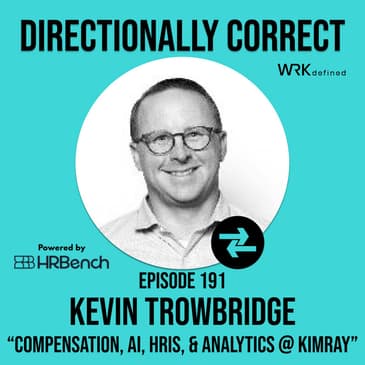
Check out this episode of the #1 people intelligence podcast with special guest, Kevin Trowbridge, Director of Compensation and HRIS at Kimray!
In this conversation Cole Napper sits down with Kevin to unpack what it means to lead compensation and HRIS as one combined function at a 78-year-old Oklahoma manufacturer that had no dedicated role for either until 2024. Kevin landed in the work almost by accident: a math degree, a banking career that burned him out, and a friend who spotted a utility job that wanted someone who could handle numbers. That first administrator seat taught the unglamorous truth. You run the reports, match the jobs, build the structures, and learn that compensation is finance with a human being on the other side of every figure. The work still looks more like an apprenticeship than something you can absorb from a book. WorldatWork’s CCP typically takes three to five years because the classroom only sticks if you are already living the messy decisions.
Comp ratios, percentiles, internal equity, and survey matching all sound like people-analytics language, so Cole asks why compensation and people analytics so rarely sit in the same room. Kevin’s answer is blunt. Pay makes people nervous. Companies that lag the market do not want that exposed. Culture can offset dollars, and at Kimray it often does. Tenure of 40-plus years is still common. Leaders teach culture to other businesses through a foundation. Frontline supervisors get executive-level leadership training. People stay because the values match, not because every offer sits at the 75th percentile.
Kimray manufactures pressure regulators, valves, sensors, and level controllers for oil and gas, made in the USA. Until May 1 of this year it was family owned. It is now an ESOP, so employees become beneficial owners through a company-funded retirement plan that sits on top of the 401(k). That ownership story collides with another unusual design choice: the CEO refuses traditional sales commissions. He does not want credit-stealing or split-store fights. Sales grew from roughly 100 million to the 230–250 million range with a company-wide EBITDA bonus instead. The team is now testing a group accelerator so everyone rows toward the same outcome.
AI is the thread that keeps Kevin up at night. Tools like Claude already save his analyst hours and even teach him Python. HRBench turned a ten-minute request for three years of departmental turnover into a clean, trusted slide. Workforce planning lets finance and leaders add, subtract, and cost positions in the same conversation. Kevin still asks the moral question: if AI swallows the entry-level report running and employee-relations grunt work, who develops the next generation of compensation and HRIS professionals? In ten years the seniors will retire unless companies keep the apprenticeship intact.
The episode also lands in a 60–65 percent blue-collar workforce. Extreme heat changes time spent at work not working. Air conditioning in a machine shop is a retention variable, not a perk. Kevin lives that contrast personally: diesel truck, red Oklahoma dirt, 11 acres, pond, chickens, a log-cabin house next to the in-laws, and a history nerd’s dream of Trowbridge, England. Rapid-fire Cole’s Corner covers banking as the road not taken, Neo from The Matrix, and a three-year forecast in which agentic tools run basic analysis in the background while compensation, analytics, and core HR finally stop living in separate Excel dumps. Attract, reward, and retain only work if the numbers, the culture, the systems, and the next generation of talent are treated as one problem. This episode is the field notes. If you like this episode, you’d also love exploring prior episodes—visit colenapper.com for the full archive and show links.
Powered by the WRKdefined Podcast Network.
Sponsors
