
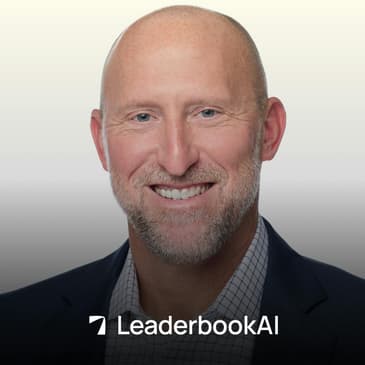
Private equity portco CEO Jeremy Jones uses cultural alignment for due diligence in private equity — not financials — as the first filter in every acquisition. The result: Frazier & Deeter has grown from 530 to 850 people in seven months through three deals, with a fourth closing next week.
Jones walks through the three-year decision process behind the firm's partnership with General Atlantic, why his CPO sat in all 25 to 30 PE meetings and called HR counterparts at existing portfolio companies, and what the first 24 hours post-acquisition actually looks like for employees who found out the night before. He also addresses the hardest question in people-first PE strategy: is culture a trade-off against financial performance, or the operating system that produces it?
For PE operating partners, portfolio company CEOs, and leaders navigating acquisition, organizational design, and AI workforce strategy.
00:00 The Journey of Due Diligence in Private Equity
09:47 Cultural Alignment in Acquisitions
16:30 Day One Post-Acquisition
23:56 Defining Success Beyond Financials
Subscribe to the LeaderbookAI Podcast for conversations with leaders shaping the future of work, leadership, and AI.
Powered by the WRKdefined Podcast Network.
[00:00:00] A lot of CEOs tell me the same thing. We're investing in AI, but the organization isn't moving any faster. That's not a tech problem. It's an organizational one. Learn what's getting in the way at Leaderbook.AI. We say no a lot to deals. Yeah. And, you know, I think there's been a couple of no's that we have said on really good firms, really good financial performing firms that would have crushed our culture.
[00:00:29] And saying no to them, even though it would have made us a lot more money, I think really helped define for me and my leadership team and our private equity investors who we wanted to be. And it wasn't just going to be about adding EBITDA and adding financial performance. It was going to be adding good people and making sure we did it the right way. I'm Felicia Shankiba, and this is Leaderbook AI, where we solve a business challenge in every episode.
[00:01:01] Jeremy Jones has grown Frazier and Dieter from 530 to 850 people since May 2025. Three acquisitions in seven months with one non-negotiable filter. Cultural alignment before financials ever enter the room.
[00:01:22] If it isn't there, he'll end a three-hour meeting in 30 minutes. Jeremy Jones is managing partner and CEO of Frazier and Dieter. Jeremy, so great to have you today. Welcome. Thanks for having me, Felicia. I'm glad to be on.
[00:01:37] So before May 2025, Frazier and Dieter was a 530-somewhat person firm with no outside capital. Can you share a little bit about that backstory to the conversation that started all of this? Yeah, this conversation actually started in 2022 for us. So our industry, the public accounting firm industry, has been disrupted by a lot of things.
[00:02:06] But private equity came into our market starting in 21. And we were hearing a lot of noise, trying to figure out what was going on. So we actually started the process in 2022 to educate ourselves about what private equity in public accounting firms meant, if we wanted to participate in it, what we needed to do as a firm to stay relevant and take care of our people and our clients well into the future.
[00:02:30] So we did start the journey in 2022 by talking to some private equity firms and some larger firms that had already taken private equity. And at the time, we decided we would stay independent and not explore it any further. That was about October of 22 that we decided that. And then about a year and a half later, the market had changed even more.
[00:02:51] In early 24, it was probably April of 24, we actually restarted the conversation internally with our board and evaluated the market, decided we were going to actually run a real process. And we hired an investment banker and they took us to market, which was fantastic. Even if we weren't going to do a deal because we had a real advisor taking us to market, we got to meet so many private equity players.
[00:03:21] And we probably had 25 to 30 phone calls with different private equity groups or face-to-face meetings. And we learned a lot. We learned the type of firms we didn't want to join forces with and we learned the type of firms we did want to join forces with. Because of where the market was and the competition in the market for talent and for clients and for the investments needed for growth and for AI, and we decided it was time to actually join a private equity firm.
[00:03:50] And we've been very happy since. So this was not a decision you had overnight. Yes. I mean, it was three years of long conversations with various groups, whether it was our partners, our employees, clients, private equity firms, obviously bigger firms, smaller firms. We talked to as many people as we could to get all the information so we made the right decision. What made you walk into a room with private equity in the first place?
[00:04:20] Yeah, I mean, it was really when we looked at the future of Fraser and Dieter and who we were going to be, we came to the realization that we needed some outside capital to help us continue to grow through acquisitions. And then with just the ever-changing landscape of AI and innovation, we knew we were going to have to invest a lot of dollars in that as well. So those were two factors. And then, you know, when we looked at the future of the firm and our people, we felt like going the route of private equity was a way to go because we did maintain a level of independence
[00:04:48] and we still could hold our culture and be who Fraser and Dieter was into the future. So that's why we decided to go to the private equity. So you told me your CPO, Chief People Officer, Sean Menard, sat in every one of those private equity meetings. What was he listening for that the financials couldn't tell him? Yeah. Well, we knew that at the end of the day, money was not the most important thing when we were making this decision.
[00:05:16] So we had laid out a rubric of the factors that were most important for us. And number one was cultural alignment. So with our private equity partner, we wanted someone that we felt was culturally aligned to a Fraser-Needer, who we were, what we believed. Most important to us were our four core values, people, entrepreneurialism, accessibility, and quality. So people at the top of it.
[00:05:39] So as we talked to firms, we wanted firms that actually wanted to invest in people, not look to cut people. And there were definitely two sides, but that's where Sean could really lean in, is he could sit there and he could listen to the words they were saying and the actions they had or reactions they had to things we said. He could really decipher which one of these private equity partners truly believed in us, believed in our people, believed in our culture and what we wanted to do.
[00:06:06] And, you know, the other side that Sean was really good at is he dug into what other portfolio companies these private equity firms had. He would have no problem placing phone calls to his equivalent at those firms and say, tell me, you know, what are you experiencing? What are your employees experiencing? So, you know, it was important to have Sean. He's an important part of the executive leadership team. But it was crucial for us to have him in those meetings to really focus on the people side of the business.
[00:06:35] So I love that he did that in order to make a great decision on the selection of private equity you wanted to sell to. I mean, I feel like that is so logical. Yet, I also feel like maybe not as many people would think to do that. I mean, I don't know. You tell me, like, is that a normal thing that happens during a sale or maybe you don't know? I mean, I think everybody approaches it different.
[00:07:01] Some people don't probably value other people's experiences as much. That was very important to us. So we wanted to understand what we were getting into before we got into it. And the best way was to really talk to other portfolio companies. And I talked to some of the CEOs. Sean talked to some of the CEOs. So, I mean, we were a marketing person, talked to some marketing people. So we really were all involved with, I hate to use the word interviewing, but really interviewing other portfolio companies to see what it was like. Yeah.
[00:07:29] So General Atlantic wasn't your only option at the table. Can you describe the moment that you knew that they were the one? What was the behavior or what were you listening for? What did they say? Was it something that they did and followed through with? What was that that made you feel like this could be the one? Yeah. There were a lot of things they did that made us want to join forces with them.
[00:07:55] Probably the biggest one we were in a meeting, there was probably 10, 12 of us in a meeting. And I would say 80% of the meeting, all they were focused on were our people. And how are we going to take care of the people on day two, right after the transaction? Were we going to make sure they were properly incented? Were we going to continue investing in their development and their learning?
[00:08:19] How are we going to make sure we retain those employees into the future and gave them the opportunity to continue to grow and to be future partners at the firm? And the fact that they weren't focused on the numbers, they weren't focused on me or the partners, they were focused on the people and keeping the people and making sure we were successful there. And that's when we were like, okay, these guys know how to participate in ownership and a people-based business. They know that they are the most important or the only asset we have. So we have to take care of them.
[00:08:48] And so that's when we knew that GA was the right partner for us. We'll be right back. Back to the show. Okay. So they talked about leadership development, talent development, retention, asking how they could support you in those pieces? Yeah. And how we could invest more in it.
[00:09:11] So, you know, for them, you know, they wanted to make sure that we knew that we had resources from them, whether it was the talent they have in-house or if it was financial resources that were needed to continue investing strongly. That's smart. It's so smart. And I feel like so many more private equity firms could learn from this episode. You know, I mean, I just feel like clearly you guys were a hot ticket.
[00:09:39] You were a high-performing portco and had options. And if private equity wants a great organization that they can truly support and grow, understanding those pieces around talent and development and retention, I think, are so key. And I mean, clearly it was what really made you and your team make that decision with them. So I think it's just something to highlight. Yeah, for sure.
[00:10:08] It's very important. So May 2nd, 2025, you signed the deal. So what did the next morning look like when you walked into that office? I mean, it was actually great because nothing changed. It was like, you know, we got to continue leading the way we'd always led. We got to continue operating the firm the way it always operated. So, you know, day one or day two was the same as it always was.
[00:10:37] But I will say it's been almost 12 months now. It'll be 12 months next week. And, you know, as our relationship has matured and developed, we have really relied on General Atlantic for a lot of thought leadership and just general help. As I go to hire an executive, General Atlantic has a fantastic executive recruiting team. So, you know, they look at it from a different lens than I do.
[00:11:04] And I have thoroughly enjoyed being able to pull those resources from General Atlantic that I need when we need them. So, you know, I would say having a partner for us like General Atlantic has really transformed our business and made us a better business, made us better business people. It has really allowed us to continue investing in our people and our clients every day. And I feel like that's what it should feel like. Right.
[00:11:27] I mean, obviously, that's not always the case, but that is the ideal case when you get bought by private equity. It's like walking into the hope and dream of being able to grow and be a better company than you were before, obviously. Like that is that's the golden ticket. Absolutely. OK, so then the first acquisition conversation starts. Walk me into that room.
[00:11:56] What's said in the first 10 minutes? Yeah, I mean, it's great. You know, when we go to any acquisition target, we always get to do them first. We don't worry about the financials. We get to know the people in the room. And usually, you know, if it's a good sign or not pretty early on based on how the conversation starts and who's in the conversation. So if we have one, only one person that's involved in the conversation, that usually indicates it might be a little bit of a domineering leadership team. And there's nobody else they can really rely on. Yeah.
[00:12:24] When we walk in that room for the first time, it's all about getting to know them. And we tell our story. We tell why we chose General Atlantic. We tell how we get wind up in the path of private equity. But really, we focus on them as much as we can and get even to know the firm we're talking to, what their core beliefs are. Do they live their core beliefs? We can always see what their core beliefs are on the website. But those don't really mean a lot to what you actually live them. But you can easily discern that through some quick conversation.
[00:12:52] Yeah, that's interesting because, you know, you're a major stakeholder. And I think what we find sometimes in private equity is that there's misalignment between the equity partners, private equity partners and the PortCo leaders.
[00:13:13] And because of that misalignment, there isn't that synergy that you kind of need in order for the PortCo leaders to truly take like the mission and vision all the way down to the individual contributor. There's a lot of maybe just, I mean, for lack of a better word, misalignment that takes place. And that's kind of what breaks a company. I think the fact that General Atlantic saw that you were a major stakeholder and brought you in.
[00:13:42] And then now, not only do you believe in them and their support and how they have treated you, you are now the spokesperson for them and bringing in more amazing targets to acquire. I mean, that's kind of the feeling I'm getting. Yeah, absolutely. That's 100%. And, you know, we stay very aligned with all of our investors. I have a every other Thursday call with them. You know, they know what's going on in the business real time.
[00:14:11] They're always available if I need them. So we stay very aligned from a communication standpoint, but also we're very aligned on where we're going and how we're going to get there. So we create a value creation plan together. We know the things that we believe will make us more successful. They also believe those same things. So it helps having a plan and everybody going in the same direction on that plan. Yeah. Same page.
[00:14:36] So you said if cultural alignment isn't there, you end the meeting in 30 minutes. What was the tell in the last one that you ended early or just one of them? Yeah. Probably the most egregious one was within five minutes of the conversation starting, the gentleman across the table we were talking to was bragging about how hard he worked his people and how many charge hours he forced them to get every year.
[00:15:05] And that's what created so much profit for him. And he was really, really proud of that. I mean, that's great. That's great if that's the way you run your business, but that's not the way we run our business. And, you know, we want to take care of our employees and everybody has to work hard. We have cycles of busy time with tax deadlines and audit deadlines. So people do work a lot of hours at certain periods of time, but we also give them a lot of vacation. We give them a lot of downtime.
[00:15:29] I never want to brag about how hard I work by people because that's not really what I'm looking to do and that's not my goal. You know, as he was having this conversation, he was really proud of the number of charge hours his people were able to produce every year. But, you know, literally within 10 minutes, we were like, you know, this is probably not the right fit for us because our culture is different. And if you and your people are used to working this many hours in a year, it's not going to translate well here.
[00:15:58] And so, you know, you just got to make those calls sometimes. But financially, it would have been a great deal for us, but culturally, it wouldn't have been. Yeah. That's really interesting. Interesting. I'm just curious, like when you ended the meeting in 30 minutes, was there like a, was that it? Like, were people surprised or, like, I'm just curious how that went. People are always surprised when you end the meeting early. Even my team gets surprised and then they, you know, do I just get up and walk?
[00:16:26] But, you know, I mean, you can end things politely and, you know, just tell them you appreciate the time and it's great to get to know them. And congratulations on your success. And it's probably not the right fit for us right now, but it's been great getting to know them. And you can end things politely. But it's sometimes, it is a shock from my own team. Yeah. It was great getting to know you. Not great. Great. Great getting to know you. Exactly. We'll be right back. Folks, we live in a crazy world.
[00:16:53] And with each new headline, it is harder and harder to find the signal through the noise and understand if that annoying wannabe keyboard warrior in your office is actually a national security expert or just blowing smoke. Do you want to know the truth? Well, come join us on the At The Water's Edge podcast, hosted by retired Green Beret turned geopolitical analyst Scott Kelly, where we explore insights beyond the headlines to take a practitioner's view on national security and geopolitics. Join us at the At The Water's Edge podcast. Back to the show. Okay.
[00:17:22] So when a deal actually closes, 100 people you've never met work for you overnight. What happens on day one for them or for you? Well, we inundate them on day one. So, I mean, we, you know, I am at their offices on day one or even day negative one, depending on how the partners want to do it. So sometimes we'll meet their whole team before closing, sometimes right after closing, but we are there immediately.
[00:17:51] And then, you know, we will, we've got a transaction closing next week. We'll have 20 people show up on next week on the day of closing. And they have about 130 people. So we'll have roughly a five to one ratio. We show up. We tell all about Frasier and Dieter. The number one question is always, how does this impact my compensation and how does it impact my benefits? That's always top of the list. So we bring our benefits people with us.
[00:18:20] Our chief people officer, Sean Menard, will be with us as well. And then we usually do, you know, they get to know us, do a dinner, happy hour, usually do office hours. And then we go into training and the training is not just technical training. It's, you know, yours who Frasier and Dieter is. Here's all the things you need to know about how we operate and who we are. But all these firms are culturally aligned. So you don't really have to teach them a lot. Maybe the words change a little bit, but they know what they're doing.
[00:18:47] Yeah, I feel like it's like a full day of onboarding and making sure that from day one, they get to know what the culture is. I mean, they should know already, but like really communicating that out and like sharing what those behaviors might look like in the business.
[00:19:05] And so I think it just sounds like from day one, there's a lot that people I think struggle with, like in the first week or two weeks, if you haven't answered those questions for them yet, you know, about pay and benefits and culture and leadership and those things.
[00:19:22] And I feel like if you get them all done as much as you can in the beginning, there's a lot less ambiguity and people feel more comfortable like being onboarded and starting this very new ambiguous future for themselves. Yeah, absolutely. And, you know, we've found that we get better every time we do an acquisition. You're never great. The first one, you get better at everyone.
[00:19:45] But we have found, you know, actually giving the employees, the new employees joining Frazier and Eater, giving them space because they find out, you know, 24 hours before we show up. And so that's a lot to process for an individual when they found out the firm they've been working for, you know, 10 years is now going to be Frazier and Eater. It's a lot to process. So we, you know, we try to be very thoughtful and give them some space and giving them a platform where they can ask anything.
[00:20:14] So we'll do things like, you know, Q&A where they can submit any question and I'll address it or one of my team members will address it. And then we have follow-ups constantly. We have engagement surveys going out every month for the first three months. And they're part of Frazier and Eater. And, you know, what are we doing well? What are we not doing well? And as you know, what we're not doing well is the most important part of that because that means we need to fix it. Fix it for this transaction. Fix it for that next one.
[00:20:40] But, yeah, giving the people space and having empathy, understanding what they're going through is a big deal. And I will say I'm very proud of my team. They've embraced that. I mean, we all went through it when we sold to General Atlantic. Our employees, you know, had to get used to thinking of us a little bit different than having 100-ish employees that have joined through acquisitions. They've gone through it. So there's a lot of empathy we can share for sure.
[00:21:05] I think that's a really important part because any acquisition is going to be us versus them, at least in the beginning. Right? These are, you know, the people who came from this company and those are the people who came from that company.
[00:21:19] And even though you're now one company, there is still, you know, ties around relationships and ties around workflow that you're used to and that people have to try and truly, you know, integrate and assimilate to one another. What has kind of come up from the leadership teams from these acquisitions? I'm just curious, like, how does the leadership team gel with the other leadership teams?
[00:21:45] Yeah, I mean, for us, that's a big advantage because we do spend a lot of time with the leadership team early on. So the transaction will close next week. But we've been spending time with them for the last five months. And it started with their executive team of five people. And then we expanded it to their full partner group. And then we've actually already spent a few days with their partner and manager group. So we've actually gone down to probably about a third of the firm we've already had interactions with.
[00:22:15] So, you know, investing in the time and investing in the relationship early is critical because those individuals are going to be our boots on the ground on day two. Right after we close, those are going to be the individuals. They're going to be able to carry the freezer leader flag and be part of that. But I'm not there. And so I need them to buy it. So far, it's been amazing. There's always, you know, there's always one or two you have to deal with.
[00:22:41] But I would say for the most part, it's been amazing working with the other leadership teams. And they've really embraced what we're doing. Yeah, that's great. I think that's super important. You said that there's always one or two pirates after an acquisition. So tell me about the hardest one you've had to move off the ship. Yeah, I mean, we had an older partner came in a transaction. And he did not want to do the transaction. All of his other partners wanted to.
[00:23:09] And so from day one, he was a problem. And nothing was going to be good enough. He was not supportive. If anything went wrong, he was firing off females. He was letting everybody in the office know how terrible this was. He just was not aligned. He was not going to get aligned. Luckily, he was older and we were able to help him reach his retirement goals very quickly. And he could move on.
[00:23:37] But I mean, you have to be conscious of that. You have to know that not everybody's going to be excited the full time they're here. My job is not to make everybody happy. My job is to take care of my people and take care of my employees or my employees of my clients. So if I could do both of those things, then sometimes the feelings get hurt from individuals. But, you know, that's just part of the job. Yeah. Yeah. And I agree. You're not going to make everyone happy.
[00:24:05] I think if any leader tried to do that, they would probably not be great at their job. And I think that just comes with being in a leadership position is just understanding that and knowing that even though there's disagreement or misalignment, you still are taking care of people. Right. So I think that you'd handle that beautifully. Seven months in, three deals, 300 new people.
[00:24:32] What's the deal you haven't done yet that will define whether any of this worked? Is there an argument to say that good people, good culture, you know, would hit that financial performance? Or do you think that it's a tradeoff? It's not a tradeoff. No, I think it might be slower than going and buying it. But if you've got good culture and good people, they're going to work hard. They're going to do what they've got to do to take care of the clients. They're going to do what they have to do to take care of each other.
[00:25:02] And because of that, we're going to have fantastic financial performance. We already do. We will continue and we'll get better every day with the right people on the team. Yeah. For any private equity managing partner listening, what advice would you give to them to help them grow their portfolio companies? And, you know, I guess get them to the point where they can resell, right? Because that's what private equity does.
[00:25:32] But, you know, for those partners who are struggling with really supporting and making their port codes more successful, what advice would you give them? Yeah. I mean, if someone is already private equity backed, it's probably too late for this piece. But I would say make sure you pick the right partner. There are a lot of fantastic private equity partners in the U.S. and in the world. So you need to bet them, which means you got to take a lot of meetings.
[00:25:59] You've got to, you know, figure out what the right fit is for you and find the right firm. That's the most important thing. And then once you found that firm, just to make sure that you are always aligned with your private equity partner and that you're sharing results and you're sharing concerns, issues, whatever it might be, so that you and the private equity partner are truly partners. And it's not viewed as them as an outside investor, but really view them as a partner. It will help take your business to next level, for sure.
[00:26:28] Any advice for the people who are maybe coming into a new environment? Like, let's say they just got purchased. They just got acquired. You know, what's your advice for people who are, like, really scared, maybe sometimes stepping into that seat? Yeah, I tell them all the time, just have an open mind. Give us, give your acquirer a chance to prove how good they really are.
[00:26:57] And don't jump to conclusions about whether they're good or not. And then ask questions. If you have concerns, if you have questions, ask them. It's not going to offend people. I get asked some crazy, awful-world questions. I get asked some hard questions. I never get upset about it because I learned something. Usually people are open to share why they're asking the question.
[00:27:19] So if people are looking or trying to fit in or trying to figure out what it's like to be owned by private equity, just give it a chance. Yeah. Anything else that you wanted to share before the end? No, this has been great. I appreciate your time today. I appreciate the fact that we share the idea that culture is very important in all that we do. Yeah, absolutely. Thanks for being here.
[00:27:48] Visit us at leaderbook.ai. Your support as a subscriber means the world to us. So thank you for tuning in. I'm Felicia Shakiba. Let's connect on LinkedIn. Thank you.
Sponsors
