
How can social selling transform your sales strategy?
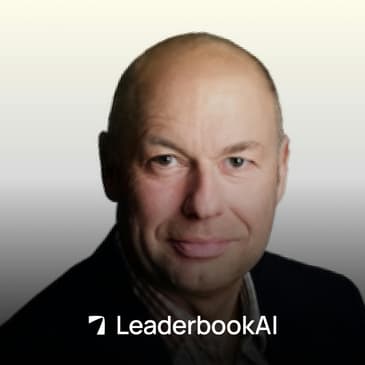
Tim Hughes, CEO of DLA Ignite, shares how a buyer-first approach on LinkedIn—powered by authentic content and meaningful engagement—can drive sales success and build a high-impact digital presence. This shift in sales leadership is a key part of digital transformation, driving value creation through smarter business process automation and leveraging the power of AI automation in customer relations.
—
Subscribe to the LeaderbookAI Podcast (formerly CPO PLAYBOOK): https://leaderbook.ai/podcast.
Want to create 10x the value of your business or investments? Let’s talk: https://leaderbook.ai/contact
Powered by the WRKdefined Podcast Network.
[00:00:00] I'm Felicia Shakiba and this is CPO PLAYBOOK, where we solve a business challenge in every episode.
[00:00:08] How to best train our sales teams to leverage social media for their advantage?
[00:00:20] Of salespeople, only 31% say they use social media content for sales enablement.
[00:00:26] Yet social media continues to be a major vehicle for finding new prospects.
[00:00:30] In fact, 54% of social browsers use social media to research products, which means social
[00:00:37] media has become an indispensable tool for businesses and ultimately sellers.
[00:00:42] It offers a unique platform for companies to engage with their target audience, build
[00:00:47] brand awareness and foster meaningful relationships with customers.
[00:00:51] With billions of users across various platforms, social media provides businesses with unparalleled
[00:00:57] reach and the ability to tailor their marketing efforts to specific demographics.
[00:01:02] Our guest today is Tim Hughes, universally recognized as the world's leading pioneer and innovator
[00:01:09] of social selling.
[00:01:11] Tim, welcome to the show.
[00:01:12] Thank you.
[00:01:13] I'm really excited to talk to you.
[00:01:15] I am so excited to chat with you and learn more.
[00:01:19] And so my first question is can you actually tell us about your background and how you
[00:01:25] transitioned from corporate sales to focusing on social selling?
[00:01:30] Yes, very quickly.
[00:01:31] I was in a corporate sales role and have been for 25 years.
[00:01:34] I'm a salesperson and I was in this corporate sales role and I was selling accounting
[00:01:39] systems and I was getting bored of it.
[00:01:42] And my manager said, and this is 15 years ago, we need to get onto social media and
[00:01:46] changing the world.
[00:01:47] And I did and I really enjoyed it.
[00:01:49] And I suddenly thought, do you know why I quite fancy spending my life on social
[00:01:53] media, helping people, transforming teams?
[00:01:57] And the company that I was working for very kindly laid me off and the person who is my
[00:02:03] business partner, Adam Gray.
[00:02:05] And in the UK being laid off is not like giving a black bag and told to go away.
[00:02:10] You're actually giving quite a lot of money, which will enable us to set up the business.
[00:02:13] All kinds of things happened.
[00:02:15] 2016, my first book came out.
[00:02:16] It was the first book on social selling.
[00:02:18] And we'll talk about how actually things I was saying to my partner actually the
[00:02:22] day so that a lot of the things have come to me rather than me having to go out and get.
[00:02:27] And I can talk about that during the discussion that we're having.
[00:02:30] I know that you mentioned the importance of building a buyer centric profile on social media.
[00:02:38] Yes.
[00:02:39] Could you elaborate on what that entails and why is it important to the sales cycle?
[00:02:45] Yes.
[00:02:45] So the mistake that we always make, whether we're salespeople or we're in human resources
[00:02:50] or whatever, we think it's about us and it's not.
[00:02:53] It's about the other person.
[00:02:54] It's about the candidate.
[00:02:56] It's about the buyer.
[00:02:58] And what we need to do if we're on social media is that we need to understand what that
[00:03:03] person is thinking and what they're looking for.
[00:03:06] And so when we put ourselves out on social media, the first thing that we need to
[00:03:10] understand is that when people are looking at our profiles, they're jumping to conclusions
[00:03:16] about what you're doing.
[00:03:17] So for example, if your LinkedIn profile is a CV, the only conclusion I can jump to is
[00:03:23] that you're looking for a job.
[00:03:24] And so what we need to do is that we need to put or create a shop window to the world.
[00:03:31] So our LinkedIn profile, there's a billion people on LinkedIn and they all
[00:03:35] walk past your LinkedIn profile every day.
[00:03:38] And what we want them to do is rather say, Kyle, that's another boring
[00:03:42] corporate profile.
[00:03:44] What we want them to do is go, that's really interesting.
[00:03:46] But you know, I think that person could help me.
[00:03:49] And we actually have clients where buyers are walking across social media and
[00:03:54] they're saying to the salesperson, senior profile, I think you can help us.
[00:03:58] Can you do that?
[00:03:59] And then that turns into a classic sales conversation.
[00:04:02] But we've got clients that are doing multi-million dollar deals purely by
[00:04:06] being on social media.
[00:04:07] Now, that's a transformation from typical salespeople.
[00:04:11] When you see a salesperson, there's a joke about salespeople.
[00:04:14] How do you tell a salesperson is lying?
[00:04:17] They're lips moving.
[00:04:18] And that's the thing about salespeople.
[00:04:20] We don't like them, we don't trust them and we know that if we talk to them,
[00:04:23] we're just going to end up as a line in the CRM system.
[00:04:26] And so what we're looking for are people that are different, that stand out.
[00:04:30] And there's a whole bunch of other things that we train and
[00:04:32] coach people in the way that search is different on social media.
[00:04:36] So how can you be found, et cetera, et cetera.
[00:04:39] But Biosentry profile is a building block of what you need to do to
[00:04:43] be good on social.
[00:04:44] And how do you approach and maintain a wide and varied
[00:04:50] network on platforms like LinkedIn?
[00:04:54] The way that the people will find you is because they will be connected to you.
[00:04:58] So if you look at sales from a classic sales perspective,
[00:05:01] there's two ways of actually getting a sale.
[00:05:03] One is through outbound, which is where I will contact you.
[00:05:08] And the classic thing that people do, everybody will have had this on LinkedIn,
[00:05:11] is that someone will have connected to you, you accept the connection across and
[00:05:14] then they send you a list of their products and services.
[00:05:17] That's spam.
[00:05:18] That's not what we would see as social selling.
[00:05:20] I'm going to answer your question but
[00:05:21] I'm actually going to define what social selling is because I think it's important
[00:05:25] that people understand that.
[00:05:26] Because quite often they think social selling is selling on social and
[00:05:29] it's not.
[00:05:30] So I'm just going to read, I have to read it off the wall because I don't
[00:05:32] know this off my heart.
[00:05:34] So social selling is using your presence and
[00:05:36] behavior on social media to build influence, make connections,
[00:05:41] grow relationships and trust which lead to conversations and
[00:05:45] commercial interaction.
[00:05:48] Now, conversations are really key because conversations create sales.
[00:05:52] So what we're trying to do is create a conversation.
[00:05:55] So go back to your question about network.
[00:05:57] Whenever we connect with somebody, what we do is we have the opportunity to
[00:06:01] have a conversation with that person because of the fact that I have a great
[00:06:05] profile.
[00:06:07] I happen to comment on one of your podcast posts.
[00:06:11] I thought that looks like an interesting podcast.
[00:06:13] I wonder if I can get on that.
[00:06:15] What I will do is I'm going to leave a comment on there, a supportive comment.
[00:06:19] You looked at that, you looked at my profile and thought Tim Hughes looks
[00:06:23] interesting.
[00:06:24] I think you then contacted me and said would you like to come on my podcast?
[00:06:28] So I'm sitting here based on the processes that we put in place and
[00:06:32] that we help and train and coach people.
[00:06:34] Only way that I would have found you is either to be connected to you and
[00:06:38] I was all to be connected to somebody that you are connected to over the LinkedIn.
[00:06:45] And if you're using other channels as well out through social media, we
[00:06:50] call this having walking digital corridors and having digital conversations.
[00:06:56] So you build a network, you see each connection is an ability to have a
[00:07:01] conversation and we train people in the way that they have those
[00:07:05] conversations.
[00:07:05] So ultimately you will be in a situation where somebody will turn around and say,
[00:07:09] what do you do?
[00:07:11] Think of it as a networking event, but online.
[00:07:13] Yes, absolutely.
[00:07:15] But people can't or sellers can't be on social media all day.
[00:07:20] Right.
[00:07:20] They have meetings.
[00:07:21] They have their meeting with other clients.
[00:07:23] They're traveling.
[00:07:24] Like what is the recommended or suggested amount of time and that
[00:07:29] people should be spending on social media to build that what you call
[00:07:35] influence?
[00:07:36] What is that day to day or week to week look like for them?
[00:07:40] So it's a very common question that we get.
[00:07:42] And my answer to that would normally be like 30 minutes or an hour.
[00:07:46] But I've been to customers where I say, so how did you say to somebody?
[00:07:50] So how did this morning go?
[00:07:51] And they say, well, wasted time.
[00:07:53] So what was that?
[00:07:54] So I was cold calling and I'd never get through to anybody and
[00:07:56] no one out returns my calls.
[00:07:58] It's like, okay, so why are you doing that?
[00:08:01] You know it doesn't work.
[00:08:02] We know social selling works.
[00:08:04] So why didn't you invest that three hours in social selling?
[00:08:07] Now I can't do that.
[00:08:08] Why not?
[00:08:09] Why would you do something that doesn't work versus something that does?
[00:08:14] Now all of our team or all of my team, all we do is social sell.
[00:08:18] We've never placed an ad.
[00:08:19] We've never made a cold call.
[00:08:20] We don't have an email list.
[00:08:22] So all we do is social self.
[00:08:24] So I spend all my time in social media.
[00:08:26] When you say 30 minutes, people say that's a long time go.
[00:08:28] Okay, yes.
[00:08:29] But so there's a guy on LinkedIn called Simon Kemp.
[00:08:32] He creates a every quarter.
[00:08:36] A it's now 500 slides of the most up to date data on what is social media?
[00:08:43] How many people are on the internet?
[00:08:45] How many people on social media?
[00:08:47] The average person.
[00:08:49] So there are something like this that five billion people on social media.
[00:08:54] 62% that's 62% of the world's population.
[00:08:58] And the average person spends two hours, 23 minutes a day on social media.
[00:09:04] That five billion people are spending two hours, 23 minutes a day.
[00:09:09] Now that's an average.
[00:09:10] So in the Philippines, they generally spend five hours a day on social media.
[00:09:15] Some people less, that gives you an average figure.
[00:09:17] As well as that, of course, some of that is posting pictures of your lunch
[00:09:21] or your fruit bowl or something like that.
[00:09:24] But also what 75% of the people are using it for brand research.
[00:09:29] Let's take the family to Iceland.
[00:09:30] That'll be really good.
[00:09:31] The first thing that you do is reach for your mobile.
[00:09:34] Right.
[00:09:34] Yeah.
[00:09:34] And you'd start searching.
[00:09:35] I mean, you wouldn't wait for someone to call you about Iceland.
[00:09:39] You just go and do it.
[00:09:40] And you search.
[00:09:41] I've sat in a cafe with my partner and she'll say, let's go
[00:09:44] because I live closer to Iceland than you do.
[00:09:47] And she'll say, let's go to Iceland for the weekend.
[00:09:49] And I'll say, OK, you search for the air.
[00:09:50] B&B's are searched for the flights.
[00:09:52] And we sat there talking to each other, going through our mobiles
[00:09:56] with our mobiles doing searching.
[00:09:58] And that's how people buy today.
[00:10:00] Now what's happening also is that we're being conditioned
[00:10:04] in the way that we buy through to business to business in the UK.
[00:10:10] I live in London.
[00:10:11] So a house could be a million dollars.
[00:10:14] I can go online and I can basically research a million dollar house.
[00:10:18] I can go to what you'd call a real estate person.
[00:10:21] Right.
[00:10:21] And we're conditioned in that and we're bringing that into business to business.
[00:10:25] So going out and buying a million dollar accounting system
[00:10:28] and actually doing most of the buying online isn't as seen as being normal.
[00:10:33] So six cents have just come out with this report that shows
[00:10:35] that people are now 70% of the way through the buying process
[00:10:39] before they contact a seller.
[00:10:42] And when they do contact a seller, they generally know
[00:10:44] who they're going to buy from.
[00:10:46] They've actually scored out and said these are the products.
[00:10:51] These are the prices.
[00:10:52] These ones actually look like the right ones or these are the wrong ones.
[00:10:55] And then they actually make those they call into those vendors.
[00:10:59] So actually by the time someone actually calls you may have already won
[00:11:03] or lost the deal.
[00:11:04] And this is what people don't understand that you need to have
[00:11:08] a position on social media because we know that our bars are there.
[00:11:11] We need to have a biocentric profile.
[00:11:13] So what happens is that people see us as somebody that can help us.
[00:11:18] We need to have a wide and varied network because we need to be connected
[00:11:22] to the people that we want to influence of the people that are going to buy.
[00:11:26] And because what we're trying to do is influence the early stage of the sale
[00:11:32] because people are doing all of this research and you said, oh yeah,
[00:11:36] like of course people do it.
[00:11:38] BMW is a kind of ours when a buyer walks through the door of the showroom.
[00:11:43] They know that buyer will know more about the car they want to buy than the salesperson.
[00:11:48] So they've retrained their salespeople not to say, well, it's got GPS
[00:11:54] and it's got electric windows and stuff.
[00:11:56] What they do is that they actually have trained the salespeople to say,
[00:11:59] if you buy this model or that or that rather than that model,
[00:12:01] it doesn't depreciate as fast.
[00:12:04] And you're only losing five brake horsepower, but you're never going
[00:12:07] to use that on the freeway anyway.
[00:12:09] What they're doing is that they're actually enabling the person to buy
[00:12:13] rather than saying, this is how sales and marketing has changed.
[00:12:17] Another example is I was actually writing on my blog for tomorrow.
[00:12:21] We just have the you just have the Super Bowl and what there's all these
[00:12:25] adverts that get take place.
[00:12:26] And what do we remember about the adverts?
[00:12:29] Well, actually in three months, we were a member of it.
[00:12:32] It was a state farm ad.
[00:12:33] We'll remember it was armored towards nigga.
[00:12:35] And the thing is that we don't remember the brand anymore.
[00:12:37] This is about people and so sure this change the socialists change
[00:12:43] the landscape that is not about brands anymore.
[00:12:47] It's about you.
[00:12:48] If I'm connected to you, I have a relationship with you.
[00:12:51] If you say to ring me up tomorrow and say, Tim, I got this great opportunity.
[00:12:54] I'm going to go and work for IBM.
[00:12:56] Fantastic.
[00:12:57] What we've done is that relationship moves to IBM, the company
[00:13:01] that you're working for at the moment.
[00:13:03] I never knew what it was anyway.
[00:13:05] This is the landscape that's taking place and the transformation
[00:13:08] that's taking place.
[00:13:09] And this is just accelerating.
[00:13:11] You mentioned something about how we train salespeople
[00:13:14] and I'm going to come back to that.
[00:13:15] But first in your book, you highlighted the significance
[00:13:20] of creating insightful content for social media.
[00:13:22] Can you share some strategies for creating engaging content
[00:13:28] that resonates with the target audience?
[00:13:31] Yeah.
[00:13:32] So we've done research about what content works and what content doesn't work.
[00:13:36] And it's really back to the fact that people come to social media
[00:13:40] because they want human content contact.
[00:13:42] They want to have a conversation.
[00:13:44] They don't come to social media to read brochures.
[00:13:47] And in fact, the research from Sixth Sense actually says,
[00:13:50] Don't waste your time getting your employees to post
[00:13:53] brochures or white papers on social media
[00:13:56] because buyers can get those from your website.
[00:13:59] And we all know what brochures and white papers say.
[00:14:01] They say, buy my product because it's great.
[00:14:04] When we go to a website, we'll know that the website will say,
[00:14:07] we're the best in the world and you want to buy our product.
[00:14:09] Every single website says, we just filtered this stuff out.
[00:14:14] What we're looking for is to human to human contact,
[00:14:17] which is your network loves you.
[00:14:20] Your network loves you and the content that you're putting out.
[00:14:23] They're looking for insight.
[00:14:25] Tell me something about the CPO process
[00:14:28] that I don't know already.
[00:14:29] Tell me all of the things that this particular podcast
[00:14:32] actually stands for.
[00:14:33] We're looking for that insight.
[00:14:34] We're looking for an expert that's going to tell us,
[00:14:37] that's going to help us.
[00:14:38] And so what we need to be doing is that we need
[00:14:40] to be providing that insight.
[00:14:42] We need to be sharing content where people go,
[00:14:45] that's interesting because when we pick up our mobiles
[00:14:48] and we go down the timeline,
[00:14:50] we go boring, boring, boring, boring, boring.
[00:14:53] Oh, that's our podcast.
[00:14:54] I really like that.
[00:14:55] Oh yeah, I'm going to make time to actually watch that.
[00:14:58] We're looking for that insight.
[00:15:00] We're looking for those particular people
[00:15:02] that can actually provide that insight.
[00:15:04] And what we're also looking for is a human element to it.
[00:15:08] And our research shows, because we've gone onto LinkedIn
[00:15:11] and looked at particular content and certain content then,
[00:15:15] certain content has solely likes and comments.
[00:15:19] And I suggest everybody does this
[00:15:22] because they can A, B test this.
[00:15:24] Tomorrow put out a post on LinkedIn
[00:15:27] of a brochure of your company
[00:15:29] and see how many likes and comments you got.
[00:15:31] The next day put out a post,
[00:15:33] which is you, photo of you holding up a brochure
[00:15:37] and see how many likes and comments you get.
[00:15:40] And what you'll find is the picture of you
[00:15:43] holding up the brochure will get more likes and comments
[00:15:46] because as a network, we're interested in you
[00:15:49] and who you are and what you do and what you say.
[00:15:53] We're not interested in corporate propaganda
[00:15:55] from some sort of company.
[00:15:57] So anybody can do that.
[00:15:58] And if I'm wrong, please come to me and tell me.
[00:16:00] I say this on podcasts and people have never come to me
[00:16:03] and say that.
[00:16:04] So what we're looking for is that content.
[00:16:05] So my blog tomorrow is about the Super Bowl ads
[00:16:09] and the fact that it's not about advertising,
[00:16:10] it's about the people.
[00:16:12] We remember it's Jennifer Lopez.
[00:16:14] We remember that it's Danny DeVito.
[00:16:16] And what I'm providing is a very snackable piece
[00:16:19] of content which people can read in 10, 20 seconds.
[00:16:24] But what they do is, yeah, that's Tim Hughes.
[00:16:26] Oh yeah, he's interesting.
[00:16:28] Oh yeah, he's that social selling guy.
[00:16:30] And what happens is that I'm constantly waving to people
[00:16:33] across the internet.
[00:16:35] And when they're looking for someone to come in
[00:16:37] and help transform their salespeople
[00:16:39] to using social selling, they'll go,
[00:16:41] who's that guy?
[00:16:42] Yeah, he does that interesting content.
[00:16:43] He did that one about the Super Bowl
[00:16:45] and Danny DeVito and Tim Hughes, that's it, Tim Hughes.
[00:16:49] I'm actually, what I'm doing is I'm making sure
[00:16:52] that people know who I am.
[00:16:54] They know who the expert I am, what I stand for
[00:16:57] and I'm waving them to them every day.
[00:16:58] What would you say to someone who might be
[00:17:01] a little bit shy or reserved from exposing themselves
[00:17:05] or their personal lives or I don't wanna take a picture
[00:17:10] because I don't want this funny background in my house,
[00:17:14] right?
[00:17:15] I mean, most people, some people work from home.
[00:17:16] So what would you say to that salesperson?
[00:17:21] So I'm an introvert, though I don't often come across as one.
[00:17:25] This is not about the thing is that when you share a brochure
[00:17:31] if someone says that's rubbish, you can say,
[00:17:34] yeah, it's just a brochure.
[00:17:35] It's a company I work for.
[00:17:36] I'm gonna leave them in three months anyway.
[00:17:38] Whereas if you're sharing a picture of yourself,
[00:17:41] people think and someone says,
[00:17:44] you're rubbish or your background is rubbish
[00:17:47] or while you would be offended.
[00:17:48] The thing is that people don't do that.
[00:17:51] People know there's a kind of unwritten rule on LinkedIn
[00:17:54] that if you're sharing stuff about yourself,
[00:17:57] someone may actually say it's interesting
[00:17:59] that you've got avocados in your fruit bowl.
[00:18:02] And that may be a comment,
[00:18:03] but they won't say you look stupid.
[00:18:06] Nobody does that.
[00:18:07] Another thing about social media
[00:18:08] what you gotta remember is that you can block these people.
[00:18:12] You are in total control of who your network is
[00:18:16] and who is and the conversations you have.
[00:18:19] If you want to, you can report to LinkedIn as well.
[00:18:22] So why would I always recommend
[00:18:25] especially to people that think that they're shy
[00:18:27] or they're introverted is to try taking,
[00:18:30] this is the place where I like to go hiking.
[00:18:32] These are the woods where we go walking.
[00:18:35] This is the place that we take the children.
[00:18:38] They really love it here.
[00:18:39] And think about those things
[00:18:41] or this is the bakers that I go.
[00:18:42] This is my favorite Danish pastry.
[00:18:45] Now what you're not necessarily doing
[00:18:48] is saying that it's not something about you
[00:18:51] but there again it is.
[00:18:52] If you're going and saying this is my on Thursdays,
[00:18:56] my parents have my children
[00:18:57] and one of the things I do is I go out
[00:19:00] and I go and sit in the coffee shop and I buy a latte
[00:19:04] and I just sit there in silence.
[00:19:06] And what I find is something that really inspires me
[00:19:10] and I just enables me to clear my head
[00:19:13] and I'm just sitting there in a moment.
[00:19:15] That's not sharing anything private about you.
[00:19:18] It's not unprofessional.
[00:19:20] It is sharing something about you
[00:19:22] and what you'll probably get is people coming on the arm
[00:19:24] and mum and that moment of silence is so important
[00:19:27] and someone says I prefer a flat white
[00:19:29] rather than a latte or whatever it is.
[00:19:32] But what they're doing is if they're commenting
[00:19:34] and liking your post,
[00:19:36] what they're sharing is that they have
[00:19:37] a digital resonance with you.
[00:19:39] Wonder if we could connect.
[00:19:42] That's all it is.
[00:19:43] You're not asking for anything else
[00:19:45] and from a sales perspective or a CPO perspective,
[00:19:49] it could be because what this is doing
[00:19:50] is that you're looking for your future employees.
[00:19:53] It's not just about sales.
[00:19:55] But what we're doing by using that content
[00:19:57] is that we're creating that connection
[00:20:00] and that's just an idea.
[00:20:02] I mean, I can take you through lots of different.
[00:20:04] If we've got time at the end
[00:20:05] I'll take you through another example of content.
[00:20:07] And so you're talking about employer branding?
[00:20:10] Yes, so yeah, but it's employer branding
[00:20:12] quite often is seen as being what we're gonna do
[00:20:14] is we're gonna buy a piece of software
[00:20:17] and we're gonna take the brochures and the white papers
[00:20:20] that people aren't reading on any of the other places
[00:20:22] and we're gonna push those out.
[00:20:25] So it's still quite often employer branded
[00:20:27] is still seen as we're gonna stand on the top
[00:20:29] of the building and we're gonna get a megaphone
[00:20:32] and we're gonna shout out how brilliant we are
[00:20:34] and no one's interested.
[00:20:36] It's about employer branding.
[00:20:38] It's about empowering the employees with guardrails
[00:20:42] to understand how they can go out onto social media,
[00:20:46] look interesting, build networks and share content
[00:20:50] that actually people will engage with and go.
[00:20:53] That looks really interesting.
[00:20:54] So we have a client that creates desktop terminals
[00:20:57] in Cambridge in the UK.
[00:20:59] They don't spend any money on job adverts
[00:21:03] or recruitment consultants anymore.
[00:21:05] They've cut that completely from their budget
[00:21:07] because they're totally online
[00:21:09] and people are going, that's really interesting.
[00:21:12] Oh, you do that as a, you've got a woman's group.
[00:21:15] You're doing that around diversity.
[00:21:16] That's really interesting.
[00:21:18] And what they're doing is that they're taking their culture
[00:21:20] and they're putting it online.
[00:21:22] And we all know that the employees
[00:21:24] that are gonna stay the longest
[00:21:25] and probably give you the most of their time
[00:21:29] are the ones that are gonna walk towards you
[00:21:30] and say, I wanna come and work for you
[00:21:33] rather than necessarily somebody that's called a CV.
[00:21:36] So what we're doing is that we're seeing this transforming
[00:21:39] not just in the sales,
[00:21:40] we're right across the whole of the enterprise.
[00:21:42] Could you walk us through the process
[00:21:45] of training salespeople on how to best do this?
[00:21:48] What we're doing is that we're teaching people
[00:21:50] something new.
[00:21:51] And whenever people learn something new,
[00:21:53] they have to have time to actually think
[00:21:56] about these things.
[00:21:57] So there's new concepts about the biocentric profile.
[00:22:00] What does that mean?
[00:22:02] Writing a different way rather than writing
[00:22:04] business gibberish.
[00:22:05] I'm a results orientated,
[00:22:08] we're all results orientated,
[00:22:10] we're all highly energetic and it's meaningless.
[00:22:13] What we wanna do is that when we see someone's profile
[00:22:16] we wanna see the story of what they are,
[00:22:17] the fact that they, people say to me,
[00:22:19] I'm passionate about digital transformation.
[00:22:21] And I say to them, so three o'clock on a Saturday afternoon,
[00:22:24] you're really passionate about digital transformation.
[00:22:26] They say, now I'm watching the kids play football.
[00:22:28] Okay, so you're not passionate
[00:22:30] about digital transformation, are you?
[00:22:31] You're passionate about your kids playing football.
[00:22:34] And so what we do is that we teach people
[00:22:36] how to write in a way that actually is interesting
[00:22:39] to the buyer.
[00:22:41] We also take them through about how to grow a network
[00:22:44] that's connecting to people without spamming people.
[00:22:47] And usually at that session,
[00:22:48] we actually see them getting meetings.
[00:22:50] So even though it's a 12 week program,
[00:22:52] people think that we don't get a return on investment
[00:22:55] until 12 weeks.
[00:22:55] We actually generally get a return usually
[00:22:57] by about week three when we start teaching people
[00:23:01] to get the meetings.
[00:23:02] We then show people how to talk about the key words
[00:23:06] of how they need to be found,
[00:23:07] how they can be found,
[00:23:08] how they can go out and have conversations.
[00:23:10] So go out to go out into posts and say,
[00:23:13] your podcast sounds really interesting,
[00:23:15] the et cetera, et cetera.
[00:23:16] Starting conversations, joining conversations.
[00:23:19] And the last thing that we do is that we teach them
[00:23:21] how to correct content.
[00:23:22] And everybody writes a 300 word blog.
[00:23:25] And the whole of the process is certified
[00:23:28] by the Institute of Sales Professionals,
[00:23:29] which is a sales trade body here in the UK.
[00:23:33] It's the only independently certified
[00:23:36] social selling program in the world.
[00:23:38] And given that 12 week program,
[00:23:42] what three things can people do
[00:23:45] or sellers do right now that will help?
[00:23:49] So the first thing is I'm gonna tell you some things
[00:23:52] and I've already told you some things
[00:23:54] and knowing and doing two different things.
[00:23:57] So I can tell you this stuff
[00:23:59] and you're gonna know it,
[00:24:00] but I can guarantee you that you won't do it.
[00:24:03] And it's important that what people do
[00:24:05] when they take away from this
[00:24:07] is the fact that they actually go and do it.
[00:24:09] So the first thing that you need to do
[00:24:10] is you need to have a bio-centric profile.
[00:24:12] And one of the things that you could look at that is
[00:24:15] your summary title on your LinkedIn profile
[00:24:18] is the most visible thing about you on the internet.
[00:24:20] If I Google your name
[00:24:22] unless you've got your own blog or website
[00:24:25] because Google loves LinkedIn
[00:24:27] because it's for the content, Google your name.
[00:24:29] I will see your photo, your name and that summary title.
[00:24:32] Your job is to get someone to come
[00:24:35] and look at your profile in more detail
[00:24:37] because what you're trying to do is
[00:24:39] if whatever product or whatever service that you sell
[00:24:42] you wanna get someone to go,
[00:24:44] oh, that's really interesting.
[00:24:45] You have no thought about that.
[00:24:46] Yeah, we need to get some people in around that
[00:24:48] and I'll contact you.
[00:24:50] So if you've got your title
[00:24:53] which is Head of Tax and Beaten's Group
[00:24:56] or something like that,
[00:24:57] you can assign desperately boring.
[00:24:59] Or the other thing that people do
[00:25:00] is what's called the pipes thing
[00:25:01] which is where they've been told by some LinkedIn trainers
[00:25:04] to basically put keywords in it.
[00:25:06] So it'll say podcast author, speaker, TEDx,
[00:25:10] ex-Google, ex-Facebook or whatever.
[00:25:14] I mean, all it does is it just look for the bio
[00:25:17] it just looks like a blur.
[00:25:18] So I would ask anybody who if you're interested in this
[00:25:22] come and have a look at my LinkedIn profile.
[00:25:24] I'm Timothy Hughes or Tim Hughes.
[00:25:26] Search for me and social selling as well
[00:25:29] and you'll find me and you'll see
[00:25:30] that I have a very different summary title
[00:25:32] than anybody else.
[00:25:35] And what is that?
[00:25:36] My summary title is should have played Quidditch for England.
[00:25:39] What happens when they read it, people come to me and go,
[00:25:43] wow, I had to come and look at your profile
[00:25:44] because I read your title
[00:25:46] and then I had to come and have a look
[00:25:48] at your LinkedIn profile.
[00:25:49] And I actually have a spelling mistake
[00:25:50] right at the end of my LinkedIn profile on purpose
[00:25:53] because some people say, come back to me and say,
[00:25:54] you do realize you've spelt experience wrong
[00:25:56] and I'll go, yeah.
[00:25:57] And I know that you just read my LinkedIn profile
[00:25:59] the whole way, all the way through.
[00:26:01] The thing about your summary title,
[00:26:03] this is about creating a conversation.
[00:26:05] This is about getting people to come
[00:26:06] and look at your profile.
[00:26:07] This is about getting people to understand
[00:26:09] that you are the expert that they're looking for.
[00:26:12] Now, if you have professional edition of LinkedIn
[00:26:15] and above then LinkedIn shows you
[00:26:18] who's looked at your LinkedIn profile.
[00:26:20] So that means that you're able to go back
[00:26:23] to those people and say, you looked at my LinkedIn profile,
[00:26:26] have you found what you were looking for?
[00:26:28] Can we connect?
[00:26:29] And then when we connect, you say,
[00:26:31] thanks for looking at my LinkedIn profile.
[00:26:32] Was there anything actually that you were looking for?
[00:26:34] And quite often people come back
[00:26:35] and will say something like, oh yeah,
[00:26:36] we're actually looking for a speaker for ourselves.
[00:26:38] Would you be interested?
[00:26:40] And I'll convert 25% of the people
[00:26:42] that look at my LinkedIn profile to business.
[00:26:45] Purely by going through this step-by-step process.
[00:26:48] Now, your summary title needs to be
[00:26:51] not your what.
[00:26:52] Lots of all LinkedIn trainers basically say
[00:26:55] it should be your what, it shouldn't be.
[00:26:57] It needs to be your why is it that you do something?
[00:27:00] Because what you're trying to do is
[00:27:02] I get lots of people connecting to me saying
[00:27:04] I help CEOs with their fitness
[00:27:07] and I just go ignore,
[00:27:08] because I know what's gonna happen.
[00:27:09] You're just gonna pitch to me
[00:27:10] or I help CEOs with their accounting
[00:27:13] and I just ignore it
[00:27:14] because I've gone to counseling already.
[00:27:16] Now they may be the best accountant in the world.
[00:27:19] I won't know that because you're trying to pitch to me.
[00:27:23] So I'll tell you about this piece of content.
[00:27:26] So this is just an idea.
[00:27:28] So a person that worked for me basically
[00:27:31] put out a piece of content and they said,
[00:27:33] my wife and I, we love Led Zeppelin.
[00:27:36] And whenever on a Friday night,
[00:27:39] my wife puts on Led Zeppelin
[00:27:41] and I know as soon as I hear it
[00:27:43] through the door of my office,
[00:27:45] it's the time that I need to finish up what I'm doing
[00:27:47] and go enjoy the family for the weekend.
[00:27:50] What's your favorite Led Zeppelin song?
[00:27:52] People would put in when the Levy breaks
[00:27:54] and stay away to heaven and whole lot of love
[00:27:57] and Kashmir, which is my favorite.
[00:27:59] And then on Monday, what he did was that
[00:28:01] all the people that he wasn't connected to,
[00:28:04] he basically sent a message saying,
[00:28:07] hey, thanks for your message.
[00:28:08] Yeah, I love when the Levy breaks is really brilliant.
[00:28:10] Led Zeppelin 4 is just a fantastic album.
[00:28:12] Can I connect?
[00:28:13] And all the people that he was connected to,
[00:28:15] he sent a message to saying,
[00:28:17] yeah, thanks for the message about Led Zeppelin.
[00:28:20] Yeah, I really love Misty Blue Mountain.
[00:28:22] It's a really ups, we clearly have a lot in common.
[00:28:24] Why don't we have a conversation
[00:28:25] and get together on a call?
[00:28:27] So what we've done is that we've used a piece of content
[00:28:30] which is not unprofessional.
[00:28:32] It's actually something which is
[00:28:35] that people are interested in.
[00:28:36] We learn something about that person
[00:28:38] but also at the same time,
[00:28:40] what we've done is that we've connected
[00:28:42] to a whole bunch of people
[00:28:43] who have shown that they have a digital resonance with us
[00:28:46] because they're saying,
[00:28:47] we've got, we like Led Zeppelin.
[00:28:49] And what we've done is that we've teased up
[00:28:51] a whole load of meetings with people
[00:28:52] of with Led Zeppelin fans.
[00:28:54] Now the way that you run that meeting,
[00:28:56] I don't have time to have to go into that,
[00:28:58] but you run that meeting in a particular way
[00:29:00] where you don't go on a pitch.
[00:29:02] But that's just an example of
[00:29:04] where I'm hoping that I can spark people's imagination
[00:29:08] about how they can use content in a way
[00:29:11] that will actually generate a network
[00:29:14] and conversations for them.
[00:29:16] Tim, everything that you've shared today
[00:29:18] has been so insightful, so eye-opening.
[00:29:21] Thank you so much.
[00:29:22] Where can people find you?
[00:29:25] So they can find me on LinkedIn.
[00:29:27] I'm Timothy or Tim Hughes.
[00:29:29] If you search on that on social selling
[00:29:31] and there's also my book
[00:29:33] which I'm holding up though,
[00:29:34] nobody can see it.
[00:29:35] And my book is social selling techniques
[00:29:37] to influence buyers and change makers.
[00:29:39] It's the second edition,
[00:29:40] the one with the yellow cover.
[00:29:42] And I completely rewrote the one in 2016
[00:29:45] and that second edition came out in 2022.
[00:29:52] Thanks so much, Tim.
[00:29:53] Thank you.
[00:29:54] That's Tim Hughes, CEO and co-founder of DLA Ignite.
[00:29:59] If today's episode captured your interest,
[00:30:02] please consider sharing it with a friend
[00:30:05] or visit cpoplaybook.com
[00:30:07] to read the episode
[00:30:09] or learn more about leadership and talent management.
[00:30:12] We greatly appreciate your rating, review
[00:30:14] and support as a subscriber.
[00:30:17] I'm Felicia Shakiba.
[00:30:19] See you next Wednesday
[00:30:20] and thanks for listening.
Sponsors
