
How can leadership development fuel retention and growth?
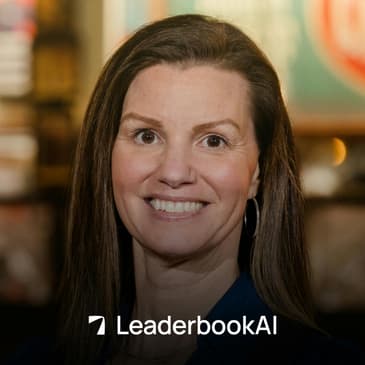
Jill Waite, CPO at Portillo’s, shares how the Ignite Program builds internal talent, strengthens core leadership skills, and preserves company culture—driving higher engagement and supporting Portillo’s expansion beyond Chicago. Investing in leaders is a key element of digital transformation, maximizes value creation, and ensures the success of long-term AI automation and business process automation strategies.
—
Subscribe to the LeaderbookAI Podcast (formerly CPO PLAYBOOK): https://leaderbook.ai/podcast.
Want to create 10x the value of your business or investments? Let’s talk: https://leaderbook.ai/contact
Powered by the WRKdefined Podcast Network.
[00:00:00] I'm Felicia Shakiba and this is CPO PLAYBOOK, where we solve a business challenge in every
[00:00:07] episode.
[00:00:08] This week, we're focusing on a delicious slice of the restaurant industry, inspired
[00:00:15] by tales like the gripping TV series The Bear, which portrays the gritty battles behind
[00:00:21] running a beloved sandwich spot in Chicago.
[00:00:24] Our spotlight is on Portillo's, a cherished name that, like many before it, faced significant
[00:00:31] hurdles as it ventured beyond its Chicago heartland.
[00:00:35] In response, their Chief People Officer Jill Waite cooked up IGNITE, a leadership development
[00:00:41] program designed to equip their future leaders.
[00:00:45] This strategic initiative wasn't just about filling positions, it was about fostering
[00:00:50] leaders who could embody and spread Portillo's distinct culture and values, ensuring every
[00:00:57] customer at every location got a taste of what makes Portillo's special, no matter how far
[00:01:04] from Chicago they are.
[00:01:06] Jill, thank you so much for being here.
[00:01:09] Thank you, Felicia, for having me.
[00:01:10] It's an honor to be here today.
[00:01:12] Jill, for our listeners who are not familiar with Portillo's, can you share some general
[00:01:17] context about the business?
[00:01:19] We were founded in 1963.
[00:01:21] We have over 80 restaurants across the United States with over close to 9,000 team members,
[00:01:27] which we're really excited about.
[00:01:29] We have many all-American favorites.
[00:01:32] Our Chicago style hot dogs, our sausages, our famous roast beef, some additional heroes,
[00:01:38] our hamburgers, chopped salad and our delicious and famous chocolate cake.
[00:01:44] Mmm, chocolate cake.
[00:01:46] It is amazing, and you can also put it in a shake, which was developed by our team
[00:01:51] members and it is loved by many of our guests.
[00:01:54] Well, that will be the next thing I order for sure.
[00:01:57] How did you identify that retention of managers was the key problem to address?
[00:02:06] So we identified that the retention of managers was a challenge, most specifically
[00:02:12] with our external managers, and it was identified a few different ways.
[00:02:16] One, the organization had been tracking our retention of hourly team members as well
[00:02:23] as management and comparing it to industry.
[00:02:26] We also teased out the data to say of those that we were losing, who were they and
[00:02:31] when did they leave?
[00:02:32] So it helped us to dive deeper into root cause.
[00:02:35] Separately, we spent time in our restaurants and in the markets trying to understand
[00:02:39] who was leaving, why, and so that way we could get direct in-market feedback so we
[00:02:46] could fix the root cause of some of the challenges we were seeing with our external
[00:02:50] leaders who were leaving.
[00:02:53] And what were those particular differences that you found between external managers
[00:02:59] coming in versus the internal managers that you were promoting?
[00:03:02] So we had kicked off our talent planning and succession process because we were
[00:03:07] a growing organization.
[00:03:08] We wanted to be able to predict and plan out our bench.
[00:03:11] And as we were doing that process, one of the things that we were learning is
[00:03:16] with our experiential brand, our expansive menu, we have some of the highest AUVs
[00:03:23] in the restaurant industry.
[00:03:24] And our average restaurant has about 87 team members, which is pretty
[00:03:29] significant in the quick service and fast casual restaurant environment.
[00:03:33] And we had to identify that leadership skills were truly critical in achieving
[00:03:41] success at Portillo's because you're leading 80, 17 members.
[00:03:45] The guest experience is really important.
[00:03:47] Our guests have a very high standard of the experience that they're
[00:03:51] desiring.
[00:03:52] And so not all those skill sets we found that our leaders were coming with.
[00:03:56] And so when we put them in our restaurants leading our boxes,
[00:04:00] especially in newer markets where it may not have as much support as Chicago did,
[00:04:06] they struggled to find success.
[00:04:08] And so in return, they were leaving.
[00:04:11] Got it.
[00:04:11] And then when you're looking for internal managers to promote and creating
[00:04:17] this succession process, how did you identify the high potential employees
[00:04:22] for the program?
[00:04:24] Our internal leaders, many of them started as hourly team members.
[00:04:28] And so we hire and look for individuals who are passionate about our purpose
[00:04:32] and our values.
[00:04:33] Our values are family greatness, energy and fun.
[00:04:35] And our purpose is about creating lifelong memories with our
[00:04:38] unrivaled experiences.
[00:04:39] One of the other things we had identified with our external leaders,
[00:04:42] we weren't necessarily hiring for leadership skills or a love for
[00:04:45] delivering our purpose and our values.
[00:04:47] We were at the time looking for have you worked in a restaurant?
[00:04:50] Have you been a leader in a restaurant?
[00:04:52] And so when we were assessing and looking at our internal talent, our
[00:04:56] internal talent very much spent time on every single station.
[00:05:00] So they had the understanding of what it feels and looks like to work at
[00:05:04] our Portillo's and delivering that guest experience.
[00:05:07] They also gained skills of teamwork because to make a Portillo's run,
[00:05:12] you have to work as a team.
[00:05:13] And so they were gaining communication and leadership skills by the nature
[00:05:18] of the frontline position.
[00:05:20] So as they were growing with the organization, they were already able to
[00:05:23] try on these skills and quickly adapt to each of the positions that they were
[00:05:27] being developed and grown in.
[00:05:28] So their ability to develop was faster and had a good foundation compared to
[00:05:34] individuals that were coming into the organization at the time.
[00:05:38] So maybe learning on the fly was an important competency.
[00:05:42] And what were the other core competencies that you were really looking for?
[00:05:48] As it relates from a leadership standpoint, it is communication.
[00:05:51] Can you communicate with one another, whether it be what's going on at any
[00:05:57] given point with a guest, with a team member, with the volume that's
[00:05:59] happening, our lunchtime and dinners are by day and in a good way.
[00:06:04] But it requires a sense of urgency and communication that's truly unmatched.
[00:06:09] The relationship building is critical.
[00:06:11] So 87 team members of all different generations to motivate, to inspire
[00:06:16] and to engage them and our team members being able to engage and
[00:06:19] inspire one another.
[00:06:20] We were looking for that because we knew and saw that there would be great
[00:06:23] leaders. And then also, can you hold people accountable when you have that
[00:06:27] many guests that you're serving and all of our food is custom made to the
[00:06:31] guest and to the team member?
[00:06:33] Individuals want to be held accountable to the expectations that we're setting.
[00:06:36] So it was really a combination of those soft skills that we saw would help
[00:06:41] our leaders achieve success.
[00:06:44] That's awesome to just think about a lunch order time frame and how fast the
[00:06:49] restaurant has to be moving.
[00:06:51] And all of those competencies make a lot of sense and how you shared them.
[00:06:56] So thank you for that.
[00:06:57] You're welcome.
[00:06:58] What was the process of developing the Ignite program, which essentially
[00:07:04] was your hypo program, your high potential program, and who were the
[00:07:09] stakeholders involved?
[00:07:12] So the Ignite program came from our growth plan.
[00:07:15] So growing 10 plus restaurants a year, and we have aspirations for even more.
[00:07:20] And our restaurants have at least seven leaders between our general manager
[00:07:24] and the positions that are supporting the general manager.
[00:07:27] When we looked at our pipeline, we know we needed a lot of talent, both
[00:07:30] internally and being able to hire externally.
[00:07:33] And when we grow outside of Chicago and even within Chicago, we want to
[00:07:37] make sure that we are delivering the best, the portillas experience that
[00:07:40] our guests want and that they deserve.
[00:07:43] And so we wanted to ensure that our experience was able to be replicated
[00:07:47] across the U.S., regardless of where somebody was at.
[00:07:50] And we didn't have a formalized program that would allow our internal
[00:07:55] team members to grow their careers.
[00:07:58] Essentially, what would happen is if someone wanted to be promoted, they
[00:08:01] were promoted, and then we trained them how to do the job on the job.
[00:08:05] And that doesn't set anyone up for success.
[00:08:06] So we said, why don't we identify the talent, them identify themselves so
[00:08:11] we have applications people can apply if they have an interest for
[00:08:14] growing with our organization.
[00:08:16] So we essentially worked with a third party.
[00:08:19] We hired a partner who we knew could help us develop the program and
[00:08:22] we leverage our learning and development team.
[00:08:25] They were the spearhead of this whole thing, as well as our operations
[00:08:29] partners. So there were many individuals across the organization that
[00:08:32] really helped us developing a night and leveraging a company called
[00:08:35] Experience Counts that helped bring this to life across all of our
[00:08:38] positions in leadership.
[00:08:40] Interesting. How was the program designed?
[00:08:43] So how much time did it take and what were the various activities or
[00:08:48] learning modules that went into the program?
[00:08:51] So we wanted to ensure that it was a blended learning approach.
[00:08:55] And one of the other pieces that was really important is that it was
[00:08:58] built on the framework of a cohort, that individuals would enter the
[00:09:02] program at the same time and then they would graduate at the same time.
[00:09:06] And the reason why that was important is we wanted our team
[00:09:09] members who were in the program to feel a sense of community and
[00:09:12] connection and support because they're learning new skills that are
[00:09:15] going to probably make them feel very uncomfortable because they're
[00:09:17] trying on things that they've never done before.
[00:09:19] And when you have somebody that's doing this alongside you, you get
[00:09:22] a sense of confidence.
[00:09:23] And Dick Portillo, who founded Portillo's, he built the
[00:09:26] organization based on the military training principles.
[00:09:29] And so if you think about basic training, it's very similar.
[00:09:32] You go in together and you graduate together.
[00:09:35] Very similar to this.
[00:09:36] Our team members are in a cohort.
[00:09:38] The blended learning is a combination of webinars that they're all on together.
[00:09:42] They do practical application experiences in the restaurant because
[00:09:47] we really want it to be hands-on.
[00:09:48] They're getting their hands dirty shoulder to shoulder with other
[00:09:50] leaders who are their mentors.
[00:09:52] And then they also do online and they come here to the support center,
[00:09:56] our leadership classes.
[00:09:57] And this is where they are bringing everything that they've been
[00:10:01] learning in the restaurants and then continuing to elevate that
[00:10:04] skill set in a classroom setting, but it's very experiential at the same time.
[00:10:09] I like that it's very experiential.
[00:10:11] I think hands-on learning is absolutely the way to go if you can do it that
[00:10:17] way in any type of learning and development program.
[00:10:20] It is, and it's worked well for us.
[00:10:22] It's been a combination too of the leadership skills that individuals need.
[00:10:26] Cause sometimes you could see programs that they're very
[00:10:28] focused on the job skill.
[00:10:30] Do I know how to make a schedule?
[00:10:31] Do I know how to read this report?
[00:10:34] And that's still very important.
[00:10:35] That is very much still a part of the program, but we also know that you
[00:10:38] need the leadership skills in order to be able to have the right business
[00:10:42] vacuum to read their report.
[00:10:43] Do they have the right developing talent?
[00:10:45] Because it's not the company's job to develop the talent.
[00:10:48] It's our leader's job to develop the talent.
[00:10:50] So do our leaders know how do you develop talent and
[00:10:52] create an engaged workforce?
[00:10:54] We combine the skill sets together.
[00:10:56] That's not one or the other, but it is a blend of both.
[00:10:59] What were the outcomes that you've seen from this Ignite program thus far?
[00:11:06] Well, all of our new restaurants are open with an experienced
[00:11:09] general manager and that is very important to us because we know when
[00:11:13] we open our new restaurants with an experienced general manager who has
[00:11:17] worked in a Portillo's has been developed within the organization.
[00:11:21] We see a higher success rate in those restaurants and with our growth plans.
[00:11:26] That's something that's really important to us.
[00:11:28] We've also seen our retention improve and we have some of the best
[00:11:32] retention from a leadership standpoint, but also an hourly turnover.
[00:11:36] And we have a pipeline of talent that's ready for our growth,
[00:11:39] which I think is really important, not only for the company,
[00:11:41] but for individuals as well.
[00:11:43] We are able to show our team members that they can have a career here.
[00:11:46] You started as hourly team member, work in the restaurant support center.
[00:11:50] You can work in the restaurants all the way to be a market manager for us.
[00:11:54] Really the career opportunities are endless.
[00:11:57] It's just up to the team member to raise their hand and us to also
[00:12:00] engage with them and have that conversation.
[00:12:02] So from a results standpoint, we're a results based organization.
[00:12:05] We need to be able to deliver our results in that guest experience.
[00:12:10] So I heard success rate.
[00:12:12] How do you measure success?
[00:12:13] What would be those metrics?
[00:12:15] Yeah.
[00:12:15] So we have an 80% internal promotion rate and so 80% of our leaders
[00:12:20] that are that are graduating because we still believe in hiring externals
[00:12:23] as well as you need to have a blind within an organization.
[00:12:25] And so 80% of our leaders are internally developed and our retention is double
[00:12:31] digits better than than the top fast, casual quick service in the industry.
[00:12:35] So we are really proud of those numbers and same thing with our team members.
[00:12:38] Our team member retention consistently beats out the industry by
[00:12:42] generally double digit numbers.
[00:12:44] And so we attribute that to the leadership skills that are
[00:12:47] being instilled in our leaders and that they're seeing this as a place
[00:12:49] that they can grow their careers and leverage these skills both in
[00:12:53] portillo's and without portillo's.
[00:12:55] We understand that these skills are really transferable wherever.
[00:12:59] Absolutely.
[00:12:59] When you think about the soft skills, they're very much transferable
[00:13:02] because they're part of the human, not the job.
[00:13:05] And that's an incredible success rate.
[00:13:07] I mean, it's no wonder where Pertillo's is as successful at as it is today.
[00:13:13] Learning and development I know is often a key factor in employee engagement.
[00:13:19] Did the program have any impact on engagement and motivation?
[00:13:24] Our engagement year over year has continued to improve.
[00:13:27] And even in the year right after COVID, where Gallup had reflected data
[00:13:32] that engagement had declined across the United States, our engagement
[00:13:36] scores actually increased, we bucked the trend.
[00:13:38] So that was another metric that we consistently look at to see is
[00:13:42] our human capital strategy working.
[00:13:45] And so our engagement scores continue to rise.
[00:13:48] We also have extremely high participation and participation is important
[00:13:52] because if team members didn't care about the organization or didn't feel
[00:13:55] like they had a voice, that they wouldn't participate in our surveys.
[00:13:58] And so we have close to 90% participation across our restaurants,
[00:14:02] our restaurant support center, as well as our commissary.
[00:14:05] So it's another way that is an indicator that the work between
[00:14:08] Ignite, the work between Total Rewards and providing the right
[00:14:12] culture to the organization is something that our team members
[00:14:15] are really passionate about.
[00:14:17] How do you measure engagement?
[00:14:19] Do you use surveys?
[00:14:20] How often are those surveys to collect qualitative data differently?
[00:14:25] How do you measure engagement?
[00:14:27] Yeah, feedback from our team members is really important.
[00:14:29] So we have several different ways of how we do that.
[00:14:31] We do use a annual engagement survey.
[00:14:34] We action plan off that to ensure that we are continuing to leverage
[00:14:38] our strengths that our team members have said, Hey, keep doing this.
[00:14:41] This is working for us.
[00:14:43] And then there are areas that we could improve.
[00:14:44] And so those are areas that we action on.
[00:14:46] We do consistent round tables and it's not just the people team
[00:14:51] that conducts the round tables.
[00:14:52] It's our market managers as well.
[00:14:54] Our team member engagement in how they feel about the organization,
[00:14:57] but also the business isn't just the responsibility of the people team is
[00:15:00] the responsibility of our operations partners.
[00:15:03] And they very much believe that.
[00:15:04] And so they conduct the round tables because they get to hear
[00:15:07] directly from the teams on what's working in the restaurant and what's not.
[00:15:11] And we can immediately give that feedback to the general manager.
[00:15:14] And additionally, we hold listen or lunch and learns quite regularly,
[00:15:18] ranging from Michael, our CEO to myself, different individuals
[00:15:21] across the organization do it because we just know that being able to hear
[00:15:25] directly from our team members on what is working in the organization
[00:15:29] and what is not allows us to quickly pivot and make changes,
[00:15:33] whether that be to benefit or to something operational.
[00:15:36] We're able to do that based on the connections
[00:15:39] and the ways that we listen to their team members.
[00:15:41] And by roundtable, do you mean focus groups?
[00:15:45] Many focus groups.
[00:15:46] So our restaurants, we look at it in our day shift, night shift and weekend.
[00:15:50] So we want to make sure we have a sprinkle of team members.
[00:15:52] Some of them, they volunteer here.
[00:15:54] I'd really want to spend some time.
[00:15:55] And it's generally no more than five to eight team members,
[00:15:59] sometimes even less than that.
[00:16:00] And it is just an open forum asking questions.
[00:16:03] So what's working today? What can we improve?
[00:16:05] What are you most proud of?
[00:16:06] And then learning a bit about the team members as well.
[00:16:09] So we don't just jump into business because that's always easy.
[00:16:11] You can jump into the things that can improve,
[00:16:13] but we spent some time getting to know our team members
[00:16:16] and learning their stories because a lot of times
[00:16:18] their stories also help influence where we're going.
[00:16:21] What's the environment that you collect this feedback?
[00:16:22] Do you go to every store to do this or you do go to every store?
[00:16:27] Every restaurant should have at least one roundtable a year
[00:16:30] and other restaurants have them once a quarter.
[00:16:32] So it really just depends.
[00:16:33] And same thing with here at the support center will hold lunch
[00:16:36] and learns in order to gain that insight.
[00:16:38] And so what happens is the individual that's facilitating it
[00:16:42] will take it qualitative.
[00:16:43] So there are some qualitative questions we ask and then there's some quantitative.
[00:16:46] So that way we can see what type of scoring the restaurants receive.
[00:16:49] And then we look for trends across all of the different information
[00:16:53] that we receive, because it's all put into a system
[00:16:55] and we're able to report on that.
[00:16:57] Got it. So you found the challenge.
[00:17:00] You filled the need with a program that clearly was highly successful.
[00:17:05] What needs surfaced as next steps
[00:17:08] after the program was successful?
[00:17:11] The ongoing next steps is continuous learning.
[00:17:14] Learning doesn't stop.
[00:17:15] So Ignite has been intended to because we have it at every level
[00:17:19] for general managers, AGMs, restaurant managers and our crew chiefs.
[00:17:23] The program is intended to help our leaders
[00:17:24] have the basic foundations for those roles.
[00:17:27] However, the roles are expansive.
[00:17:28] And so the learning has to continue through position development plans.
[00:17:32] And it's not just, hey, I graduated.
[00:17:34] I'm good to go. I've been promoted and I'm done learning.
[00:17:37] The learning has to continue because of our growth,
[00:17:40] but also as individuals, as lifelong learners,
[00:17:43] it's important that we continue to sharpen that saw.
[00:17:46] So that's our biggest challenge right now is helping to instill
[00:17:49] that learning is continuous and Ignite is just one part of the journey.
[00:17:53] But the journey continues as individuals.
[00:17:56] We have to own our own development
[00:17:58] and we have a variety of different tools of how we do that.
[00:18:00] We partner with a company called For Coaching.
[00:18:02] We have LinkedIn Learning. We have mentors.
[00:18:04] So there's a variety of different ways.
[00:18:06] It's continuing to build that continuous learning and development culture
[00:18:10] post the program.
[00:18:12] What were the greatest challenges that you faced
[00:18:15] in implementing the Ignite program?
[00:18:19] The greatest challenges in implementing the Ignite program
[00:18:23] was getting the alignment of this is what individuals will learn
[00:18:29] in each of the programs and not expecting that they're going to learn everything.
[00:18:33] We as humans, we can only take in so much information
[00:18:36] and then being able to practice it in order to really master it.
[00:18:41] And I think as humans, we want them to learn everything at one time.
[00:18:44] We want them to have it all.
[00:18:46] We just can't.
[00:18:47] And so being able to align as leaders within the organization
[00:18:51] that this is the most important information and knowledge
[00:18:55] and experiences that they need to have while they're in Ignite.
[00:18:58] And then knowing that, yes, there's going to be skill gaps.
[00:19:02] There is. But we're going to address that skill gap
[00:19:04] after they graduate through these position development plans.
[00:19:08] That's been the biggest challenge of helping individuals
[00:19:11] realize that they're not going to come out knowing everything and that's OK.
[00:19:15] But they will over time continue to gain that additional knowledge.
[00:19:19] You mean they're not going to have superpowers
[00:19:20] when they come out of the Ignite program, too?
[00:19:23] Not generally.
[00:19:24] They're not going to have the cake shake superpower.
[00:19:26] I have not yet seen that, but maybe someday that could happen.
[00:19:30] But not right now.
[00:19:31] Superpower, the cake shake.
[00:19:33] That's the superpower, the cake shake.
[00:19:35] Where do you see the leadership development program going in the future?
[00:19:40] Because we talked about continuous learning.
[00:19:42] They're not going to learn everything.
[00:19:44] So what is that next step look like?
[00:19:45] It's continuing to expand it throughout the organization.
[00:19:48] So it is really formalizing that continuous learning path.
[00:19:52] So when we say you have a position development plan,
[00:19:54] what does that look like?
[00:19:56] What does that sound like?
[00:19:57] What does that feel like?
[00:19:58] And have we modulize all the different curriculum
[00:20:03] that our leaders do need to know?
[00:20:04] Because some of it is still in people's minds
[00:20:07] and we have to get it from people's minds
[00:20:08] into different courses or curriculum.
[00:20:11] So it continues to allow us to scale the business
[00:20:13] from the 35 restaurants we once were here in Chicago,
[00:20:16] a nationwide chain in so many different states.
[00:20:20] So that's a key piece.
[00:20:21] And then second, expanding it to our restaurant support center
[00:20:25] and in our commissary.
[00:20:26] So we continue to have one language
[00:20:28] and one approach of how we grow and develop our leaders
[00:20:31] across the organization.
[00:20:33] The experiences may be a little different based on,
[00:20:35] call it a corporate headquarter
[00:20:37] or a corporate office environment versus a restaurant,
[00:20:39] but communication is communication.
[00:20:41] And so that expansion to include more leaders into this
[00:20:46] is something that we are continuing to explore.
[00:20:49] Taking a step back and looking at Ignite
[00:20:54] and how it fits into the philosophy of Portillo's
[00:20:57] learning and development strategy.
[00:21:00] How do you see it being a part of the bigger picture?
[00:21:05] Our strategy is really founded based on our purpose
[00:21:07] and our values.
[00:21:08] When we took a step back and said,
[00:21:10] what do we want our learning
[00:21:11] and development philosophy to look like?
[00:21:13] It was grounded on creating lifelong memories
[00:21:16] with our unrivaled food and experiences,
[00:21:18] founded on family greatness, energy and fun.
[00:21:21] And part of our greatness value is continuous
[00:21:23] improvement and part of the purpose
[00:21:24] of unrivaled experiences.
[00:21:26] So as we were and do create our curriculum,
[00:21:30] we say, does this create an unrivaled experience
[00:21:32] that our leaders are going through?
[00:21:34] Are we instilling continuous improvement,
[00:21:36] which is a core part of our values as an organization.
[00:21:40] And it also stems from at the highest levels
[00:21:43] of the company.
[00:21:44] So our CEO very much believes in development.
[00:21:47] So each of us as a senior team member
[00:21:49] has our own individual development plan
[00:21:52] that we review every quarter
[00:21:53] to see how we're progressing against it.
[00:21:56] And it includes things like exposure,
[00:21:58] experience, education.
[00:22:00] Many of us have executive coaches
[00:22:02] to help us continue to grow and develop
[00:22:04] and become the best leader that we can be
[00:22:06] in that permeate throughout the organization.
[00:22:08] So it's the fabric of who we are
[00:22:10] back when Dick founded the organization
[00:22:13] and it continues to thrive with our current leadership team
[00:22:17] and our learning and development philosophy.
[00:22:19] Well, I see a very, very bright future for Pertillo's
[00:22:23] considering all things you've shared today.
[00:22:26] So Jill, thank you so much for being here.
[00:22:28] This was a pleasure.
[00:22:30] Thank you.
[00:22:31] It's a great future because of our 9,000 team members
[00:22:34] and the experiences that they provide
[00:22:36] and care for with our guests.
[00:22:38] So thank you.
[00:22:39] It's an honor to be here
[00:22:39] and to connect with you about this.
[00:22:41] That's Jill Waite, Chief People Officer at Pertillo's.
[00:22:47] If today's episode captured your interest,
[00:22:50] please consider sharing it with a friend
[00:22:53] or visit CPOPlaybook.com to read the episode
[00:22:56] or learn more about leadership and talent management.
[00:23:00] We greatly appreciate your rating, review
[00:23:02] and support as a subscriber.
[00:23:05] I'm Felicia Shakuba.
[00:23:06] See you next Wednesday and thanks for listening.
Sponsors
