
How can HR strategy become a true driver of business success?
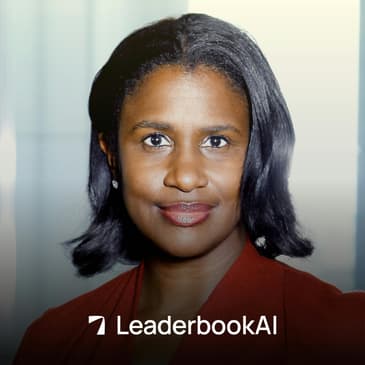
Syreeta Brown, Group CPO at Virgin Money, shares how aligning HR with business goals, leveraging data, and building trust across leadership can transform people strategy into a powerful force for organizational growth. This is the definition of forward-thinking C-suite strategy, utilizing data for business process automation and leveraging executive insights to prepare for the impact of AI automation.
—
Subscribe to the LeaderbookAI Podcast (formerly CPO PLAYBOOK): https://leaderbook.ai/podcast.
Want to create 10x the value of your business or investments? Let’s talk: https://leaderbook.ai/contact
Powered by the WRKdefined Podcast Network.
[00:00:00] I'm Felicia Shakiba and this is CPO PLAYBOOK, where we solve a business challenge in every
[00:00:07] episode.
[00:00:08] In order to effectively contribute at the strategy table, Chief People Officers must
[00:00:14] present a highly impactful HR agenda to the management team.
[00:00:17] To achieve this, Chief People Officers must leverage data and analytics to impartially
[00:00:22] present the people agenda, advocating for initiatives in a business-oriented manner.
[00:00:27] They can strategically collaborate with business leaders from early stages to establish themselves
[00:00:32] as reliable advisors committed to driving business outcomes.
[00:00:36] Additionally, clear communication is essential in demonstrating HR's contribution to the
[00:00:41] bottom line by facilitating revenue generation, cost reduction through efficiency enhancements,
[00:00:47] and alignment with overarching business strategy.
[00:00:50] To share her story on how she has accomplished all of this, today I have the pleasure of
[00:00:55] speaking with Sarita Brown, Group Chief People Officer and Communications at Virgin Money,
[00:01:01] based in London.
[00:01:02] Sarita, welcome to the show.
[00:01:05] Thank you, Felicia.
[00:01:06] Nice to be here.
[00:01:08] It's great to have you.
[00:01:09] Sarita, can you begin by telling us about Virgin Money, the headcount, where are
[00:01:14] employees based?
[00:01:16] Virgin Money is one of the top UK banks.
[00:01:19] We are the sixth largest bank in the UK.
[00:01:22] We are based in and around the UK with headquarters in Glasgow in Scotland, key hubs in Newcastle
[00:01:30] and Manchester, as well as in central London.
[00:01:34] We are 8,000 people and we service in the retail UK market, so mortgages, current
[00:01:41] accounts, and we also have a business banking proposition.
[00:01:44] Awesome.
[00:01:46] From a CPO's perspective, how do you establish yourself as a strategic partner to the business
[00:01:52] early in your career?
[00:01:54] It's a case of making sure that one, you understand the business that you're
[00:02:00] a CPO of or a HR business partner of and getting to know the leaders that you are
[00:02:06] working with.
[00:02:07] I always believe that the first step is in the contracting and the engaging.
[00:02:14] So understanding not just the individuals that you're working with, but the businesses
[00:02:18] that they are responsible for, their agendas, their challenges, and making sure that you
[00:02:26] can then appreciate what the HR contribution and support can be to helping them achieve
[00:02:32] what they need to achieve.
[00:02:34] So it's a lot of due diligence in the first stage.
[00:02:36] And I can imagine that not all leaders are open to that support.
[00:02:42] I've definitely had and seen resistance from leaders to meet or spend time with their
[00:02:49] HR strategic partner.
[00:02:51] So how do you do that part?
[00:02:53] How do you meet people with resistance or leaders that might be resistant to this
[00:02:57] type of support?
[00:02:58] Yeah, I've had some examples of that in my career and sometimes it's easier
[00:03:04] to go left and right.
[00:03:05] One of the things that I think has really helped me when I see a leader who is
[00:03:09] resistant to working in that strategic way with HR is to go find the thing that they
[00:03:16] need help with.
[00:03:18] Sometimes that means establishing a relationship and dialogue with their team and really
[00:03:23] getting to understand the managers in their business and finding out what's the sticking
[00:03:29] point, what's the problem that they're trying to solve or the issue that they've
[00:03:32] not been able to manage.
[00:03:34] And going that way and then working your way back up to the leader.
[00:03:38] Sometimes people need to see the strategic HR in action before they want to engage with
[00:03:43] you at a strategic level.
[00:03:45] So you have to decide where you're going to play with a leader when you want to
[00:03:49] start to engage with them and meet them where they are.
[00:03:52] We're always talking about readiness and whether leaders or a business unit is ready
[00:03:57] for the type of support that we want to give.
[00:03:59] What strategies have you used to communicate HR's impact on the bottom line and the
[00:04:05] business outcomes?
[00:04:06] I always tend to start from the outside in.
[00:04:11] Typically, a lot of HR agendas get drafted from a subject matter expertise perspective.
[00:04:17] So we are very good at relying on what we know and that can work.
[00:04:23] But depending on the environment you're in and to the point you've just made,
[00:04:27] the maturity of your business leaders, really for me, the value is starting from
[00:04:33] the external environment and the strategy and understanding the metrics that the
[00:04:39] business needs to solve for and playing that back into the HR agenda so that when
[00:04:45] you are looking at that SME lens on the work, your metrics line up with their
[00:04:52] metrics. And for me, the value is that things are seen as the same thing.
[00:04:56] Sometimes the HR agenda can be pigeonholed as people only.
[00:05:00] And I tend to think of it as people delivering business outcomes.
[00:05:04] And there's a lot of value tying the people metrics with business metrics.
[00:05:08] Sometimes they're the same thing.
[00:05:09] Sometimes they're a bit far apart.
[00:05:11] You can still draw a link.
[00:05:12] I like to think of it as direct and indirect metrics on business strategy.
[00:05:16] That's how I frame it. But it's grounded.
[00:05:19] I think the value and the credibility is when you can ground the HR agenda into
[00:05:24] the business agenda in a way that business leaders get.
[00:05:28] There are a lot of analytics and metrics that need to be paired in order to
[00:05:34] provide that communication of what is the bottom line and what's the impact,
[00:05:38] it sounds like.
[00:05:39] So how do you use data and analytics to build your influence?
[00:05:44] Yeah, I've learned as I've progressed my career and done different roles and
[00:05:49] had different experiences that data is HR's friend, not as an end of itself,
[00:05:55] but as the start point for conversations, for designing outcomes and understanding
[00:06:02] what you might be solving for.
[00:06:04] There's always a lot of interrogation and analysis that has to go into using data.
[00:06:10] I'm never one of those people that just looks at the data and assumes a
[00:06:13] conclusion. You have to interrogate it, especially people data.
[00:06:17] People data doesn't always tell you the story straight away,
[00:06:20] but you do need it as a start point.
[00:06:22] It also takes the emotion out of understanding what you might need to do or
[00:06:26] what you might be solving for and allows you to filter in perceptions and
[00:06:32] thoughts unfiltered.
[00:06:34] So it's a really good start point.
[00:06:36] Now, I think the only caveat I would say to this is not everybody has the
[00:06:40] investment or the capacity for sophisticated data platforms and cloud
[00:06:45] technology. So I want to talk for all levels of capabilities that people
[00:06:50] might be working a HR agenda in.
[00:06:52] So in your big organisation, this is a much easier play, right?
[00:06:56] You've got your cloud technologies will stay away from the company names,
[00:06:59] but you've got your cloud technologies.
[00:07:01] You have partners you can use consultancies to help you interrogate
[00:07:05] your data, to form views, to understand hypotheses for strategy and
[00:07:10] have really intelligent, informed discussions with your business.
[00:07:15] Some people might be working with Excel spreadsheets.
[00:07:18] I think all data, no matter what level of maturity is helpful, OK?
[00:07:23] As long as you supplement that with the capability around analytics,
[00:07:28] because data is different.
[00:07:30] For me, data is the ingredient.
[00:07:32] Analytics is what brings it as a recipe to life, right?
[00:07:36] And you've got to have the right people who can then look at that
[00:07:39] data, interrogate it and provide a basis for any strategy or
[00:07:46] proposition you might want to talk to your business about.
[00:07:49] And what type of outcomes and data would you say, maybe what are the
[00:07:54] top three types of metrics or business outcomes or ROI that you
[00:08:00] might really focus on in regards to impact?
[00:08:04] You've got your traditional metrics in any HR agenda around what I
[00:08:08] call the people productivity set.
[00:08:10] So engagement, absence, turnover, attrition, you've got the hygiene
[00:08:14] factors, but I think the value is when you take those metrics and
[00:08:20] then interplay them with others and get correlation.
[00:08:24] So some of the things that I've recently done is look at things
[00:08:28] like return on total equity metrics that we have in our business
[00:08:33] scorecard, our customer smile score, our customer satisfaction score,
[00:08:38] total shareholder return, all of those kind of scorecard business
[00:08:41] metrics and then correlate them with metrics that we believe have a
[00:08:46] direct or indirect impact.
[00:08:48] So colleague sentiment, so your engagement piece, media sentiment.
[00:08:52] How are you seen in the external environment as an organisation in
[00:08:58] both corporate affairs or be generally with the press looking at
[00:09:02] wellbeing indicators and understanding if any of these things are either
[00:09:08] directly or indirectly affecting positively or negatively your ability
[00:09:13] to hit certain scorecard outcomes.
[00:09:16] So I'm a big believer in not just looking at metrics of their own
[00:09:20] sake, but understanding the dynamics between how they play with each
[00:09:24] other or not.
[00:09:25] The other metric that I think is really important is how people are
[00:09:29] performing and performance management is always one of those very
[00:09:33] controversial areas, right?
[00:09:35] Because it can be objective, but it's so subjective in its application.
[00:09:39] But looking at performance management indicators as not just a lens on
[00:09:44] your capability profile, but is it actually driving the performance
[00:09:49] outcomes you want to see in your scorecard?
[00:09:52] So I think we look at metrics too much in of themselves rather than
[00:09:56] how they work with each other.
[00:09:58] Interesting.
[00:09:59] It's very interesting how they work with each other and you're not just
[00:10:02] looking at one piece of the data to really build the story of what you
[00:10:06] need to do as an organisation, rather how they work together.
[00:10:09] Yeah.
[00:10:10] And bring that again to the first point we were talking about
[00:10:13] strategy, bringing that to the way that you present HR as a function
[00:10:19] of business strategy.
[00:10:20] It's such an important lever and in every team that I've worked in,
[00:10:24] I've really tried to get people to start to fall in love with data.
[00:10:28] I wasn't a data geek at all.
[00:10:29] I'd be lying if I said that it was a natural passion of mine, but I
[00:10:33] learnt the value of it in building that engagement with the business
[00:10:37] and providing the HR function itself with a sense of credibility.
[00:10:42] I think sometimes HR functions do themselves a disservice and don't
[00:10:46] believe the value that they bring.
[00:10:48] They feel that they are a supplement to the business or
[00:10:52] servant to the business when actually I think we are equal
[00:10:56] partners and I try and make sure that I build that understanding of
[00:11:01] metrics and the value in every team that I've worked in and that people
[00:11:05] get it.
[00:11:06] They don't have to like it, but they get it and they can go
[00:11:09] and start having the right conversations with their business partners.
[00:11:12] Can you speak to an example of how you've objectively presented
[00:11:18] people issues using data to gain support?
[00:11:22] I would say there's loads of examples, but I think the one that really
[00:11:27] resonates for me because it's such an emotive subject is in the
[00:11:31] representation agenda.
[00:11:33] There are a couple of examples in the course of my career where
[00:11:36] I've had to initiate an agenda around representation, inclusion,
[00:11:42] the whole diversity and equity agenda.
[00:11:45] To your point, sometimes you're working with leaders who are a
[00:11:48] little bit resistant or don't want to engage with that agenda in a
[00:11:53] very integral way.
[00:11:55] It's almost the side program initiative and you have to try and
[00:11:59] make them understand the value of seeing it as a business priority.
[00:12:04] It's not a programmatic nice-to-do initiative, which it is all of
[00:12:09] that, but for the business leaders, this is really important.
[00:12:12] This will help you accelerate your outcomes.
[00:12:15] I think in the experience I've had that using data rather than
[00:12:20] sentiment and views and opinions and starting from a point of this is
[00:12:26] what you're not achieving, sometimes it puts people on the reactive
[00:12:30] back foot and you get the resistance as a result.
[00:12:33] I tend to start from a point of data with no assumptions and no
[00:12:37] judgment.
[00:12:39] Often I will look at the complete employee lifecycle.
[00:12:42] For some roles I've had in the past, I've had to focus on an aspect of
[00:12:45] it, but in the generalist work, the complete lifecycle to say here's
[00:12:50] how the people data looks in each of the life cycles.
[00:12:55] This is what it looks like.
[00:12:57] No judgment.
[00:12:59] Let's have a conversation.
[00:13:01] Let's talk about it.
[00:13:03] What are we seeing?
[00:13:05] If you approach it from that intellectual perspective, a good
[00:13:08] example is when people start to do the comparison and the contrast,
[00:13:12] they get curious.
[00:13:14] That's the first point.
[00:13:16] Even better is when you present it in a league table.
[00:13:19] You go to a collective team meeting and say here's how you're all
[00:13:22] doing and people start to do the compare and the contrast.
[00:13:25] Again, you get curiosity.
[00:13:27] You maybe pose some questions with the data.
[00:13:30] Do we think that this profile in our exit movement is right if we
[00:13:35] look at the data in the end, we see that there are people who are
[00:13:39] hiring profile.
[00:13:41] When you start to tackle it with questions and data and no answers,
[00:13:45] it makes people feel I think more comfortable to start interrogating
[00:13:50] it for themselves.
[00:13:52] I think the equity and diversity agenda has been a great place to
[00:13:56] really use data in a way that disarms people.
[00:14:00] I think there are a lot of different interpretations of that from one
[00:14:04] company to the next.
[00:14:06] What do you consider the meat and potatoes of an employee life cycle?
[00:14:10] I'm really old fashioned on this and I'm old fashioned because it
[00:14:14] rings true.
[00:14:16] It's a life cycle.
[00:14:18] It doesn't have a start and an end point.
[00:14:21] If you were looking at it typically, it's everything you do with
[00:14:25] the people that engage with your business.
[00:14:28] I think it's important to look at the point of start at attraction, how
[00:14:32] you are perceived in the market externally to when you actually bring
[00:14:36] people in.
[00:14:38] You hire, onboarding, induction, learning and development, reward
[00:14:42] and remuneration to the other aspects of the cycle that people
[00:14:46] don't always focus on until they need to but I think sometimes
[00:14:50] that's short sighted.
[00:14:52] Things like grievances, absence management, things that can really
[00:14:56] make people feel engaged with the organization's CSR or ERG agenda
[00:15:00] all the way through to exit management which could be voluntary
[00:15:04] or involuntary.
[00:15:06] And then how people leave the organization and stay engaged.
[00:15:10] Alumni, network mechanisms and referral pieces.
[00:15:14] It's not that they're always your employees.
[00:15:17] I don't see the life cycle as in-life management.
[00:15:21] Sometimes I think it's when people have left or they have an
[00:15:25] interaction with your organization but they don't join.
[00:15:28] So I think you have to consider everything in that life cycle.
[00:15:31] We've talked a lot about metrics and I want to just dig one level
[00:15:35] deeper.
[00:15:37] How do you determine which business metrics and key performance
[00:15:41] indicators to track, to demonstrate HR's value?
[00:15:45] I think this depends on the context.
[00:15:49] One of the things I always do before determining any strategy, at
[00:15:53] any level I've worked actually, is to do an external market map
[00:15:57] and an internal one.
[00:15:59] And understand what's going on.
[00:16:01] What's going on in the environment that we are operating in,
[00:16:04] either the industry or it could be the team environment depending on
[00:16:08] the level of operation.
[00:16:10] But if we take it as a CPO, what's happening in the external
[00:16:13] environment, the macroeconomic political landscape, demographics
[00:16:16] that might be impacting geopolitical uncertainties, all of
[00:16:20] that, and then I think about the fiscal financial context and
[00:16:24] landscape, especially in banking.
[00:16:26] And really, and I've done this with my board, really elevate
[00:16:29] everybody to this is the world we're working in.
[00:16:32] And then look at the internal landscape and say this is how we
[00:16:36] currently look.
[00:16:38] And then I tend to try and then think about how do you distill
[00:16:42] that into the key priorities therefore that we need to think about
[00:16:46] if you think about our business strategy?
[00:16:48] Given that external environment, given this internal landscape,
[00:16:52] what are the things that we, one, need to, we see as the people
[00:16:56] priorities.
[00:16:58] So what out of that distills into people priorities?
[00:17:01] Two, what are the challenges to that?
[00:17:04] So we might be enabled to deliver those priorities or not.
[00:17:08] And if we're not, what are the things therefore that we'll need
[00:17:11] to plug as a function and or as an enterprise?
[00:17:15] And then understand the outcomes that we would expect to see as a
[00:17:20] result.
[00:17:21] Okay, and this is where the metrics comes in.
[00:17:23] And then be very honest about the realistic view of what's
[00:17:28] achievable, what's probably not.
[00:17:31] And I also think it's important to whatever you decide to put a
[00:17:35] time horizon on things.
[00:17:37] I think it's really important that HR typically tries to do
[00:17:42] everything or look like it wants to do everything.
[00:17:45] We want to please everybody.
[00:17:47] I tend to work in the opposite way.
[00:17:49] I'm quite a rebel.
[00:17:50] So I believe that we're most effective when we cut our cloth
[00:17:55] to suit what it is we can do.
[00:17:57] I don't think anyone should overcommit.
[00:17:59] I'm not into overcommitting.
[00:18:01] I am into overachieving, but I'm not into overcommitting because
[00:18:05] I think you should be honest about what's possible.
[00:18:07] And then be really clear about what could happen if you had what
[00:18:11] you needed.
[00:18:12] Because sometimes people want to catch everything in the one
[00:18:15] strategy, and I just don't think that's right and effective.
[00:18:19] And I think the high performance that I've seen over my
[00:18:22] career with the teams that I've worked with and led are
[00:18:25] teams that really stay focused, laser-focused on critical
[00:18:29] priorities.
[00:18:30] And then as things get achieved and capacity becomes
[00:18:33] built, you can add things in.
[00:18:36] And I believe that that's worked in my career.
[00:18:39] And so you can see that HR becomes a more respected
[00:18:42] function, and you also have an ability to add stuff in as
[00:18:47] you get things done.
[00:18:49] But you don't overcommit at the get-go.
[00:18:52] What you just said I think is so critical because I see
[00:18:56] so many HR leaders who are saying we need X, Y,
[00:19:00] and Z.
[00:19:01] We need it by this date.
[00:19:02] And those are all great things to want and to have.
[00:19:06] I think it's important to think about it as a business as
[00:19:09] soon as possible.
[00:19:10] But at the end of the day, if you're not going deep and
[00:19:13] you're not getting one thing really, really right and
[00:19:15] doing it really well, you are basically just throwing
[00:19:18] yourself into all of these things, and then nothing is
[00:19:21] really getting solved when you have three, four,
[00:19:25] five, six things on your OKRs that are huge takeovers.
[00:19:31] How does an HR leader, a chief people officer push back
[00:19:35] on upper management to say, no, I can only handle these
[00:19:39] three things on my agenda if you want it to do well?
[00:19:43] Because in most CPOs, they're going to be fearful or
[00:19:46] any executive would be fearful of saying, oh, my
[00:19:49] executive, my manager doesn't think I can handle it.
[00:19:52] Right?
[00:19:53] How do you do that well?
[00:19:55] Yeah, it's the holy grail of relationship management,
[00:19:58] right?
[00:19:59] And it goes back to where we started at the
[00:20:01] beginning of the conversation.
[00:20:02] You've got to get that relationship and that
[00:20:04] contracting right at the beginning.
[00:20:06] It's great when you work with an executive, be it your
[00:20:09] CEO or your peers and your chairman and board who get
[00:20:13] you and you get them.
[00:20:14] It works great.
[00:20:15] Perfect.
[00:20:16] But I always say solve for the scenarios where that's
[00:20:19] not the case.
[00:20:20] Right?
[00:20:21] And the first nugget of advice I would give people
[00:20:23] is you've just got to feel really confident about
[00:20:26] what you do.
[00:20:27] You've got to stand in your own belief and you've
[00:20:29] got to feel credible, you for yourself, because you
[00:20:32] will meet these resistance.
[00:20:34] Even I would argue with some of the leaders that
[00:20:36] you get on with and you have a good relationship
[00:20:38] with, you might get into a situation where there's
[00:20:41] challenges.
[00:20:42] But leaders respect people who stand in and are
[00:20:45] anchored in what they're doing.
[00:20:47] And sometimes you just need a bit of time to show
[00:20:50] them the results, the beginning of the results,
[00:20:53] and then the credibility comes in.
[00:20:55] The one word I would say that this anchors on is
[00:20:59] trust.
[00:21:00] A lot of the time when I've been in these
[00:21:02] situations, I always say to either my peer or the
[00:21:06] leader I'm working with, you have to trust me.
[00:21:09] If you don't trust me, this isn't going to work.
[00:21:12] And I don't think as HR leaders and CPOs we
[00:21:15] rely enough on that type of language, but that
[00:21:18] type of language starts every relationship in the
[00:21:20] world.
[00:21:21] Right?
[00:21:22] 100%.
[00:21:23] Bankers have been saying it to each other since
[00:21:25] the beginning of time.
[00:21:26] Right?
[00:21:27] Trust me.
[00:21:28] And trust is really important.
[00:21:29] And if somebody said to you to what's the one
[00:21:31] thing you would say you would appreciate from
[00:21:33] business leaders saying about you haven't worked
[00:21:35] with you, it's that.
[00:21:36] That they felt they could trust me.
[00:21:38] Because if they trust me, I'm not going to let
[00:21:41] them down.
[00:21:42] I'm going to do what I say I said I was going
[00:21:44] to do.
[00:21:45] And I always say to them, and you can trust
[00:21:47] me to tell you if I think things are going off
[00:21:49] course as well.
[00:21:50] So the relationship piece is really important.
[00:21:52] And if you're in those tough, challenging
[00:21:54] relationships where you're having to beat
[00:21:56] through concrete a bit, keep going.
[00:21:58] Right?
[00:21:59] Don't worry about if it doesn't feel warm and
[00:22:01] fuzzy straight away.
[00:22:02] It doesn't have to be a warm and fuzzy
[00:22:04] relationship.
[00:22:05] Because I've found even when it's not like
[00:22:08] that, by delivery it becomes that way.
[00:22:11] Because they see, oh, okay, it is working.
[00:22:14] Some relationships you get there quicker, some
[00:22:17] it takes longer.
[00:22:18] But I think if the CPO acts like the CFO
[00:22:21] and doesn't care, because I'm here to do a job,
[00:22:25] it will work.
[00:22:26] And I think a lot of CPOs don't fall into that
[00:22:29] groove quickly and easily of I'm here to do a
[00:22:31] job.
[00:22:32] And you don't have to like me.
[00:22:34] It's great if you do, but you don't have
[00:22:36] to.
[00:22:37] But let's focus on what we're here to achieve.
[00:22:39] And I think you get the point of good
[00:22:41] relationships either way.
[00:22:42] But one just takes a bit longer than the
[00:22:44] other.
[00:22:45] Serita, what advice do you have for
[00:22:48] navigating organizational politics to drive
[00:22:51] change?
[00:22:52] It's going to sound like a political
[00:22:55] manifesto.
[00:22:56] But first of all, have your mandate.
[00:22:59] Believe in your mandate and who you are.
[00:23:02] I can't stress this enough because not
[00:23:04] everyone's going to agree with you.
[00:23:06] Not everyone's going to like what you're
[00:23:08] doing.
[00:23:09] But you've got to be clear what you're
[00:23:11] bringing to the organization and the
[00:23:14] value you can deliver.
[00:23:15] Once you're clear on that, you're going
[00:23:17] to be able to move on.
[00:23:18] Once you're clear on that, then my
[00:23:20] advice around politics is to go where the
[00:23:23] energy is.
[00:23:24] There are always going to be people
[00:23:26] that try and undermine or challenge or
[00:23:29] resist what you do.
[00:23:30] And that's fine.
[00:23:31] Go where the energy is and build up
[00:23:34] the momentum and the support.
[00:23:36] That's how campaigns are built.
[00:23:38] You go there first.
[00:23:39] And then as you start to have proof
[00:23:42] of concept for want of a better term,
[00:23:45] you can start to follow.
[00:23:46] But the key is not to let the politics
[00:23:48] become the job.
[00:23:49] The key is to navigate the politics.
[00:23:51] They're always going to be there.
[00:23:53] I've never fallen into that trap of
[00:23:55] worrying too much about all the
[00:23:57] spinning plates of an organization
[00:23:59] because you're never going to reach
[00:24:01] all of them.
[00:24:02] But you've got to very quickly
[00:24:04] understand what's going to be the
[00:24:06] valuable areas that will help you,
[00:24:08] that will advocate, that will sponsor,
[00:24:10] and how then can you use that to
[00:24:12] build momentum to maybe tackle other
[00:24:14] areas that are slightly more challenging.
[00:24:16] So have your strategy for yourself.
[00:24:19] I think there's two angles to a CPO's
[00:24:21] role around politics is you have to
[00:24:24] build a strategy for the enterprise,
[00:24:25] but you also have to build a strategy
[00:24:27] for how you are going to manage that
[00:24:29] agenda and those and the politics
[00:24:31] that ensue.
[00:24:32] And I think you need to do the
[00:24:34] work on both those things.
[00:24:35] I think that is incredible advice.
[00:24:38] I know so many times we are in
[00:24:42] the business of people.
[00:24:44] And to say that we won't be dealing
[00:24:46] with any politics I think is silly
[00:24:49] to say, but at the end of the day,
[00:24:52] like you said, knowing where the
[00:24:54] energy is and going where the energy
[00:24:56] is and seeing where that's
[00:24:58] manifesting and growing and being able
[00:25:00] to get on the boat with them.
[00:25:02] Right? Seems like that is where we
[00:25:05] can maybe double down on what we
[00:25:07] need to do and how we can support
[00:25:09] and build the business.
[00:25:11] Yeah.
[00:25:12] Awesome.
[00:25:13] Sarita, this is fantastic.
[00:25:16] I'm so happy to have you on the show.
[00:25:18] You bring so much energy and light
[00:25:20] and focus and insight into this
[00:25:23] conversation.
[00:25:24] And we're just so lucky to have
[00:25:26] you as a guest.
[00:25:27] So thank you so much for being here
[00:25:29] and thank you so much for your
[00:25:31] contribution.
[00:25:32] Thank you for having me.
[00:25:34] Absolutely.
[00:25:35] That's Sarita Brown, Group Chief
[00:25:38] People and Communications Officer
[00:25:40] at Virgin Money.
[00:25:42] If today's episode captured your
[00:25:44] interest, please consider sharing
[00:25:46] it with a friend or visit
[00:25:48] CPOPlaybook.com to read the
[00:25:51] episode or learn more about
[00:25:53] leadership and talent management.
[00:25:55] We greatly appreciate your rating,
[00:25:57] review and support as a subscriber.
[00:25:59] I'm Felicia Shakiba.
[00:26:01] See you next Wednesday and
[00:26:03] thanks for listening.
Sponsors
