
How can companies scale globally without losing local relevance?
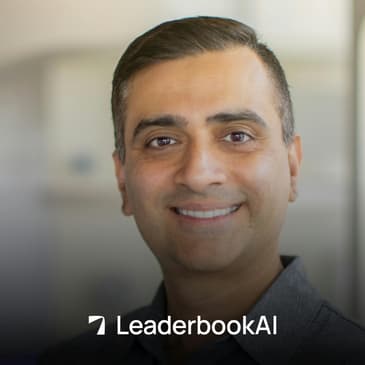
Hasan Kazmi of Visa joins Felicia Shakiba to share how global strategy succeeds only when it’s paired with strong local execution. Drawing on experience operating across diverse markets, Hasan explains how trust, adaptability, and empowered teams enable organizations to grow at scale while staying deeply connected to regional needs.
This episode explores how leadership alignment, disciplined decision making, and clear C-suite strategy drive sustainable global growth. Hasan breaks down how balancing global consistency with local autonomy fuels value creation—and how business process automation and digital transformation support coordination without stifling flexibility. Leaders will gain executive insights into building organizations that scale globally while remaining human, responsive, and locally relevant.
—
Subscribe to the LeaderbookAI Podcast (formerly CPO PLAYBOOK): https://leaderbook.ai/podcast
Want to create 10x the value of your business or investments? Let’s talk: https://leaderbook.ai/contact
Powered by the WRKdefined Podcast Network.
[00:00:00] I'm Felicia Shakiba, and this is CPO PLAYBOOK, where we solve a business challenge in every episode. Today we're tackling a challenge that many global organizations grapple with, aligning top-down strategies with the nuanced needs of local markets.
[00:00:30] How do you drive global consistency while respecting local differences in culture, regulations, and market realities? Joining us today is Hasan Kazmi, Head of FinTech and Technology Accounts at Ventures for Visa. Hasan has a wealth of experience navigating these complexities, and he's here to share how organizations can bridge the gap between global vision and local execution using trust, adaptability, and strategic people practices.
[00:01:00] Hasan, it is such a pleasure to have you today. Thank you for being here. Thank you, Felicia. It's great to be here. We met at the TechCrunch Disrupt, right? And you were, I think, a judge. Yes. So what were you there for exactly? Yes, so Visa runs a program across the world. It's called the Visa Everywhere Initiative, where startups can pitch to Visa through, there's a whole process to go through.
[00:01:30] The idea being that for each region, we will select startups that really excel at what they're doing. And then the final that you and I attended in San Francisco was actually the global final. So startups that had come through the country level, the regional level, then the top five came and presented at that event at TechCrunch. And then, as you remember, we selected a few that won specific prizes.
[00:01:57] Amazing. Yeah. And it was a fantastic competition, I remember. It was great. It's a very hard job to be a judge because especially the ones that make it there are all excellent. And you sort of are forced to pick the first winner and the second winner. It's a tough job. And, you know, the other thing with startups is they're very passionate founders. So it's always a very difficult decision, but we try to do the best they can.
[00:02:25] And the great thing about startups over there is they get a lot of visibility in publicity, which I think is also quite beneficial as you're growing your startup. Yeah, absolutely. We actually have the winner, Salva Health, on the show as well. So for those listeners who are interested in who the winner was, follow the podcast and keep listening.
[00:02:49] So today, Hassan, we are talking about global strategy and local execution. So can we start off by telling you a time when a global strategy you were working on encountered significant resistance or challenges at the local level? What happened and how did you approach it? Yes, absolutely. So just to give a little bit of background, I think I've had the prelude of working pretty much all over the world.
[00:03:18] So a lot of time in the U.S. In my current role, I cover Middle East, Africa, Eastern Europe. And then previously, I spent a number of years based in East Asia, but covering the entire continent global. So I've had the unique privilege of having worked in different cultures. And for most of my career, I've been in strategy roles where I was part of a global organization. But the work we were doing was execution, implementation related across different countries.
[00:03:47] So today's topic is very close to my heart. And the specific example I'd like to share is, so I was working for as an internal consultant, meaning think of it as a corporate strategy team for a large electronics company in Asia. And they're in the business of making different consumer electronic goods, everything from cell phones to home appliances. And that business, as you can imagine, is very global in nature. It is literally almost in every country of the world where they operate.
[00:04:16] So one of the specific challenges they were facing was actually in the U.S. market, which for them was an international market. So now you have an Asian company that's looking to do, that is doing business in the U.S., but was having challenges. So in this case, the local market is the U.S. and the global market is Asia, which is sort of reversed of typically what happens.
[00:04:39] And the specific challenge was, think of high-end appliances, like a super high-end refrigerator or TV or an oven that you would put in your house. And the challenge that, I'll give you the business challenge and then I'll come to the people challenge, because I think the business challenge is important to understand why there was actually a sort of a people strategy. Yeah, absolutely.
[00:05:02] And the business challenge was, if you think of almost any company, be it a car company, be it a hotel, an airline, any company you think of, typically most of those companies make money by repeat purchases or repeat customers. So you drive a specific car, the car manufacturer would like you to keep coming back to them as you decide to do it. And the same thing was true here. The challenge here was the company was not getting repeat customers.
[00:05:29] So what they said was, okay, they asked, they formed an internal strategy team to go look at it. I was the engagement manager, so I was responsible for the entire project. So the task was, okay, we have these customers who buy these really expensive goods for the house and then they never come back. So what's going on? So in a typical sort of consulting manner, what we said was, okay, let's identify what could be some of the areas that are problematic and then we'll figure it out. Sort of the hypothesis approach.
[00:05:57] So we looked at typical things like, is the pricing right? Which it was. Was there any issue with the product? There wasn't. And things break down, but they weren't breaking down any more than they should. But we looked at branding and marketing. That was fine. It was in line with what the competition was doing. I even went to a store to see, you know, is our product in aisle 15, whereas the competition is in aisle one? And we looked at a number of different places in the U.S.
[00:06:23] And the answer to all of those questions was, no, everything was basically the way it should be and in line with what the competition was. So then I said, okay, let's, well, we should go speak to the customers, which was already happening. But, you know, as you know, setting up interviews and focus group takes a little bit. So then we started speaking to them and we tested these things. And the answer was, no, you know, your price is fine. They put discounts. The brand is good. Your marketing is good. Everything is fine. So then we kind of puzzled.
[00:06:51] So I said, we need to change what we are asking the customers. Because clearly there's a problem, but it's not what we're asking. And then in one of the conversations, somebody briefly mentioned that they weren't happy with customer service. So I said, okay, let's probe this a little bit more. And then we actually changed what we were researching. We said, actually, let's dive down into customer service. And that actually was the game changer for us. So what we found out, I won't go into all the details.
[00:07:19] We could spend like two hours on that. But basically what was happening was the customer service was broken. And specifically, one example comes to mind where we were in a focus group and one of the customers said, she got really upset actually when she was thinking about this. She said it took her seven calls to get somebody to her house to come and fix something, you know, that basically took five minutes. Oh, my gosh.
[00:07:45] And you could see it almost felt like she was on the phone call for the seventh time, the way she was delivering the message, because it clearly had such an impact on her. So we said, okay, and well, that's clearly a problem. It shouldn't take seven calls to do that. And then the other thing was this was a very high-end product. So the customer expectations for a high-end product is a little bit different.
[00:08:06] You know, think of it as when you, you know, if you're staying at a very fancy resort, you expect a different level of service than if you're, you know, staying someplace that's not a five-star hotel. So the customer was saying, I'm spending all this money. I like the product, it looks good, but you guys get me so frustrated that I need to call seven times, I'm never going to touch your product again, and I'm going to tell everybody I know, don't buy that product. So that was a problem.
[00:08:33] So now we identified what the problem was, and then we actually went back and looked at our customer service, the way it was set up. So the challenge was, and this is where the global local thing comes in, was the customer service was set up the way the organization was set up. And large organizations tends to be a little bit siloed. For example, you know, one division may make a certain home product, and a second division will make a second home product. But you as a customer don't care who's making the product. You're buying it from one brand.
[00:09:03] You just say, well, I just want, I bought brand X. I want brand X to solve all of these things. But we had set up a system that was aligned with organizational silos. And I'll tell you where it became an issue in the U.S. is because if you think of this customer profile, when you're selling outside the U.S., somebody who's buying a $10,000 fridge usually is not the one who's troubleshooting it.
[00:09:28] So you have, you call somebody from your staff, home staff, from the office staff. You say, listen, this is broken. Then the person picks up the phone. They may make 10 calls. You never find out if they make 10 calls. You just have a person who goes and does it for you. And then he or she comes back and said, sir or madam, it's done. Because the customer profile is different. So we actually never realized that our system was set up to address.
[00:09:55] Actually, it was not fully set up to address customer needs, but it actually never became an issue in other geographies because the person who was quote unquote writing the check and putting, you know, paying or using the credit card of paying $10,000 in cash to buy something was not the one who was troubleshooting. He or she could just pick up a call, tell somebody on the staff and the person would do it. But in the U.S., as you know, that doesn't really exist. So there are very few. There are few people who have a lot of staff who can do that.
[00:10:24] But that's a very small minority of people who do that. So the challenge was we had actually set up a system that didn't account for differences from one geography to the other. And primarily, it actually didn't address the way customers behaved in Western Europe and the U.S., which we were studying in other parts of the world. The system was kind of broken, but it worked. So then the question was, well, how do you solve for this?
[00:10:48] Because you have this massive organization that is designed and is more or less working except for this one big market, which is the U.S. And since it wasn't a U.S. company, we didn't really have the full institutional knowledge to really understand the customer. And it's not that they hadn't done the research. It's just we hadn't spent time getting down to this level of detail.
[00:11:10] So then what happened was I tried to showcase this problem and I wasn't really getting traction because people were saying, yeah, well, a few people are complaining, but I don't face that problem. So now you had this situation where there are people sitting in one culture in one country saying, yeah, I kind of get it, but I can't relate to it. So why don't you go and find the real reason why we're not making that much money? And I said, well, this is the real reason.
[00:11:40] So there was this disconnect. So one of the things I actually did, and I'll come back to then how we solved it to get the buy in was I actually went back to that lady and I said, do you mind if I re-interview you? But this time I want to record it and I need your permission to actually share it entirely. Oh, you needed to record her. I needed to actually record her. Just like you and I are having a conversation. We sat down again. I recorded her and you could again see the emotion.
[00:12:09] She was getting really upset as if like she was on the call with the customer service agent for the seventh time. The evidence. And I took that five. Yes. You would just see it. You could feel it. You could see it. So I took that video. I put it in a presentation. And then what I did was actually drew out the process map behind what was happening. So on one side, you had the customer who was really frustrated, who was upset.
[00:12:38] You could see the emotion. And then on the back side, right after that presentation, I actually laid out for our executives. This is what's actually happening inside the company, which is causing this customer to have this experience. And it was a room of about 12 to 15 people. And as soon as I finished, there was death silence for about 30 seconds. And I'm getting nervous. And 30 seconds doesn't sound like a lot.
[00:13:04] But if you're in a room of 15 people and you're standing up and presenting something, there's death silence. It gets you pretty nervous. We'll be right back. Hi, I'm George Laroque. And I'm looking forward to exploring the critical trends shaping the future of work and technology with you over on the WorkTech podcast. Now, this podcast is a little different. I bring together industry leaders, innovators, and investors. And we go deep into market intelligence that matters to HR pros and tech providers alike.
[00:13:33] So give the WorkTech podcast a listen here on the WorkDefined Podcast Network. And please subscribe if you like it. See you there. Back to the show. I would be nervous. Yeah. But I loved that you married the, you know, the problem that was described by someone in the focus group and how it laid on top of the process of the business. That's, I love that.
[00:13:59] And that's what we had to do because you have to remember these large sort of manufacturing engineering companies. It's wired to be process driven and an engineer. I mean, I'm an engineer by education, right? So I always think of, you know, process, even though I'm not in an engineering job, but I think of process and flow and things like that. So actually, this is one of the learning is you also have to communicate in the language that people will understand, which can be different company to company.
[00:14:27] And especially culture to culture, which we'll come back to later in our conversation. And after that 30 minutes of really stressful silence, this inner person has said, I understand we have a problem. And that's what we needed to hear to say, OK, now we actually need to solve it.
[00:14:44] So sometimes you have to get really creative, especially when you're working across cultures for somebody or the senior decision maker to really understand the impact that somebody is feeling. And I think sometimes in business decisions, what can be challenging is if it's a purely numbers thing, revenue is going down or something else is happening. You can just have a conversation that's numbers driven.
[00:15:09] But anytime you're in a customer facing business, which most businesses are or anything that's impacting people, it's very important to show, literally show. Ideally, you take the senior executive into the market or into the environment so they can see it. If not, you know, these days through technology, you can you can just like you and I are talking, you can show a lot of those things.
[00:15:33] And that's one of the ways you actually show how one person may perceive something as good, whereas another person might perceive the same thing as something terrible. But we need to be able to see each other. And that's what I was able to do in terms of the way I communicated that the impact.
[00:15:52] So when you first realized that the local market, I guess in this case, it's the U.S., and required a global strategy, what were the signs or red flags that stood out to you? You know, what did those early conversations with the local teams sound like? Yeah. So in this case, the local teams sort of had that a little bit of a global mindset to say, well, this is how it works in everywhere else.
[00:16:19] So there must be something wrong with the custom because it's working everywhere in the world. They didn't use those words. Those are my words. I love that response, by the way. I mean, yeah. Those are my words to be fair to them. It was sort of the response was like, well, I was sure it's really a problem, but it's working everywhere else. And I think that can be sometimes a challenge with global companies is because a lot of times global solutions do work in most geographies. So but it doesn't work everywhere.
[00:16:47] So then the question was, how do you actually convince the local team that the global principles are OK, but the execution needs to be different? And what if I was sort of just as a sidetrack, one of the things I've learned now in having served in multiple global roles is. In almost all cases, the global principles that are created by headquarters do make sense. The challenge is the way we execute it and the way they're perceived in the market is different.
[00:17:17] So, for example, you know, you can come up with a branding strategy. So you can say, you know, we need our brand stands for this, whatever that is. Now, that is a completely valid strategy. You can every brand needs to define what it stands for, what it values, what it wants to be perceived at.
[00:17:36] The difference is that the message they're trying to send could be very different market to market, meaning what you're trying to position yourself as could work really well in the U.S., but could completely have a negative impact in some parts of Asia or the Middle East or Africa. So the principle itself that we want to position ourselves as a strong brand doing X makes sense. The question is that X might actually look very different in market to market. So just as sort of a theoretical principle.
[00:18:06] So coming back to this example. So, again, as a recap, the local team is saying, listen, it's working everywhere else. We don't really have a problem. So why should we do anything differently? So I said, OK, we clearly need to communicate in a different manner. So I had that video, but I didn't use the video in this case. Not yet, because that was sort of my final surprise, if you would, for the local team. What I said was, let's look at the numbers.
[00:18:32] And I said, if you think that this strategy is working, then why are your numbers going down and everybody else is going up? And it was sort of designed to scare them a little bit because they were like, oh, if it's not a customer service strategy problem and numbers still going down, then people might sort of say there's something wrong with the way we're running our business. So it was sort of to get them to give them a wake up call to say, guys, it actually is a problem.
[00:19:01] And if you don't look at it, you'll actually sign yourself up for a lot of trouble because people are going to start nitpicking every little thing that you're doing. So let's actually address the elephant in the room. Otherwise, you can create, you know, open up a whole can of worms. And once we looked at the numbers and then I brought back that video, they said, OK, that actually is a problem. And what I told them was that.
[00:19:24] We need to address this problem because the other thing I did was I actually projected out the so we knew that sales were declining, but it still wasn't a material decline. So again, to develop a sense of urgency, what I did was actually modeled it out three, five and 10 years. And in 10 years, the numbers looked very, very bad. So I also thought I had to have a little conversation to say, gentlemen, ladies and gentlemen, do you want to be associated with that number at the end of 10 years?
[00:19:54] If not, we really need to look at that. So the key takeaway here is that even when you have differences in a global or local strategy, given that we are, you know, in the corporate world. In the end, you always have to anchor it back on the business fundamentals, which in most cases is a revenue number, right? Because that is what will get people excited. That will create a sense of urgency and that will really drive the impact.
[00:20:22] So even in regardless of what culture you're in, if you really want to move quickly, you have to keep the cultural nuances in mind, but you have to tie it to some business impact. Otherwise, you just don't get that sense of urgency. We'll be right back. Back to the show. Yeah, I love this multi-layered approach.
[00:20:47] First of all, I think one of the most difficult things that anybody can do, especially when you're talking about strategy with multiple stakeholders, is convince people that what you think, you know, should be done is the right thing to do. It is really, really challenging. It's you're dealing with multiple personalities and people who have different agendas.
[00:21:09] But what you did was very clear to me, which was this multi-layered approach of saying, this is the message. This is the message through a customer's experience. This is the message through the business process. This is the message to the bottom line. And it's all saying the same thing. And that is, you know, you're bringing a lot of context to the problem.
[00:21:32] And I think that that is just the way to go when you are dealing with anything like, you know, trying to show someone what the root cause actually is. Right. So can you now share an example of like a breakthrough moment where a local team, like a local team's adaptation of a global strategy really led to their success? Like what made that moment stand out for you?
[00:22:00] In my in my career, I've led multiple sales teams in global roles where I'm led either regional team or global team. And I have people on the ground that are doing running different sales teams. And as you can imagine, when you are working for a large global company, you set up sales targets or sales goals at a global level and it cascades down. I think one of the challenges that is, and I don't think anybody's really solved for it.
[00:22:25] And I don't necessarily know if it's solvable is when you solve when you set up global targets and you cascade them down. There's only a certain level of granularity you can get to, meaning if you look at what we have about 200 plus countries, you can never fully understand the 200 plus countries sitting in any global headquarters. Without those how much time you spend on the road, that's just the nature of it. Right. Yeah.
[00:22:47] And especially in some of these markets, the economies and the politics move so quickly that what you set up in January might be completely irrelevant in April or May, sometimes even in February. So then the challenge is you need your local teams to be able to adjust and adapt to what the environment is. But that also means that you need to empower your teams.
[00:23:08] And I can think of a few different examples, but if I were to sort of summarize it, in each case, the breakthrough moment came when a local team was able to take the initiative to say, we understand these are the guidance or these are the quotas or these are the sales KPIs that are coming down from global. But given the context of our local environment, we need to make these changes.
[00:23:36] And the key thing was that they were proactive about it. And in certain cultures, you'll see when you go outside the U.S., I think in the U.S. corporate culture, it's almost a given that you have to be proactive. And if you're not, in some cases, you're almost sort of given a negative feedback to say, listen, you're not proactive enough.
[00:23:52] In other cultures, because of cultural reasons, because of sometimes sort of cultural norms, expectations, sometimes religious reasons, you are not encouraged at all to take the initiative because culturally it's not considered appropriate. And that actually is more common.
[00:24:12] That's actually the most consistent thing I've seen in most cultures, meaning that once you step outside sort of the U.S. and Western Europe, almost in all the other parts of the world, the expectation is that you won't necessarily push back. You won't necessarily say to somebody at a global that we should do things differently, not because there's anything wrong with it, because culturally that's not done.
[00:24:39] And what happens is that when you're in a global role pushing things down to the region, if they don't give you that feedback, you actually have a problem. But you may not find out you have a problem until it's much later on. So the way to manage that is not to go and tell the people, listen, we know you do do things differently here, but as a global company, you need to adjust. You actually clearly say, listen, we respect the culture. We understand it.
[00:25:04] What we're asking you is in the context of a business setting, in the context of working for this company, we ask you to please communicate what's actually happening. So we don't go and criticize the culture. We don't say, no, no, no, you need to evolve. We need to do this. You say, listen, we respect it, what you do. We respect the culture. We respect the country, what you do with your family. Everything else is completely fine. We're just saying almost think of it as a sandbox environment in the context of your work and professional relationships.
[00:25:34] We ask that you communicate this way or you take initiative. You do that. So it's almost like you literally give them permission that in the sandbox environment, you can operate differently versus I think historically what some people have gotten really wrong is they go and criticize the entire culture, which is probably the worst thing you can do. A hundred percent. I agree. Yes.
[00:26:00] Because there is always, you know, I've been in, I wasn't born in the U.S., but I've spent almost my entire life in the U.S., right? And I think sometimes we have a habit of sort of saying that there's only one right way of doing things. And one of the things I've learned after spending so much time around the world working is there are many ways of doing the right thing. But we have to be, we have to be open to it.
[00:26:26] And we also have to understand that even achieving your business objectives can be done through multiple ways of working. So it's almost like you and given my background, and I think, you know, that I used to be a police officer in New York City before. So I've grown up in these in these environments where it's sort of like it's very hard charge. You go and you do things and you get it done. And when you step outside the U.S., that's almost never the case.
[00:26:55] So we need to make big adjustments when we go outside to actually listen to people, hear how they operate and understand that they actually most people, especially in a business setting, actually want to achieve the same goal. The difference is the paths you take. And if you're operating 15 countries, I can almost guarantee you won't have 15 paths. You probably have 30 different paths.
[00:27:19] So what we need to realize is you can get to that same goal and same objective through all those different paths versus saying, no, there's only one right way to do it. Right. And I think that that is such a key to someone's success and being able to be successful in multiple places. Right. And not just went under one leadership. And sometimes actually most times leadership changes. Right. And how are you going to adapt?
[00:27:47] I know that we are coming up on time. And I really want to ask you this one question, which is, you know, can you take us behind the scenes? What does the process of equipping a local team to adapt to, you know, a global strategy? What does that look like? And do you have kind of like a story about what does the training or the preparation, you know, look like? How did that make a difference? Yes.
[00:28:16] So I think there's no magic trick to it. I think the key thing is developing the personal relationships and more the further sort of away you get from the U.S., the more important that becomes. And what I mean by that is in a lot of places, people. Once people get to know you, that's when you really find out who they are, what their motivations are, how the place operates.
[00:28:43] And the reason that's important is because in the end, regardless of what you're trying to achieve, we always have to remember we can come up with the best strategy. We can deploy the latest technology. We can say, you know, AI is going to do all of these things. In the end, people are going to do all those things. So whatever strategy you come up with, whatever execution needs to happen, whatever the targets are, it's going to be the people. And especially when you're in this global, local or regional context, right?
[00:29:13] If you're flying in or some of these people might have worked for the same company for 20 years, but never actually having visited the headquarters. So when you show up into the market, you are headquarters. You know, they will remember you as the company. You are the face of the company. You're the person who they can shake hands with and break bread with. The reason I share that is when you develop that personal relationship, in essence, you that personal relationship is their personal relationship with the company.
[00:29:41] And coming back to your question around sort of breakthrough moments and stuff. The key thing is I've had a lot of different training and coaching sessions that I've run that I've been part of and things like that. I almost never start off talking about the business objective or talking about the company and things like that. I always make sure that before we begin, especially if it's the first time I'm meeting a team or meeting a group of people, I actually clear out the first half day.
[00:30:11] And it's literally coffee, breakfast, networking one-on-one just for people to get to know me and the team that I've brought in. And when I first started doing this, the organizers or the local team was like, no, you can't do that. We need to begin at eight o'clock. I'm like, yes, we will begin at eight o'clock, but we will not talk about work until lunchtime. Because even though, yes, and that's the sponsor. And sometimes the boss is like, what are you doing? You're wasting half a day.
[00:30:40] And it took a lot of time to convince them, you know, that half a day is going to pay dividend for years, not just for a day. It's going to pay because that's how it operates. So I think what's important in all of this context is I would even encourage people, especially if it's a new environment and you think, yes, training is important. Yes, the business is important stuff. But those two, three, four hours that you spend will fundamentally change your relationship.
[00:31:08] And more importantly, the relationship that the people in the country have with the organization. Because don't forget, the organization is just a name. When you show up from headquarters, you are the organization. And that is what we forget sometimes. And if you spend two, three hours there, they will remember that for an entire lifetime. I've had people in other countries who have insisted that I meet their kids. They've insisted that I meet them. Well, when are our kids going to meet? I know that we have.
[00:31:39] It's interesting because anytime I have really started to get to know a new client, one of the first things I do is go and meet people, right? And I think that a lot of it is I want to understand. I want to know their world. I want to understand, like, why they're having certain challenges.
[00:31:58] But you have kind of elevated that for me to the point where having that personal touch of really understanding the person and who they are and where they come from and why they do the things they do. And having that insight really enriches how they behave at work, but also just the relationship in general, right?
[00:32:22] And that relationship allows for kind of like a safety zone for people to come and approach you and talk to you and give you more context. And that's very, very powerful. That's just, yeah, that's like your superpower, it seems like. And so I think that if everybody had that superpower, you know, they would probably be just a smidge more successful, right?
[00:32:50] But I think that's really enlightening. So thank you, you know, thank you for sharing that. Yeah. And the one last thing I'll say is, you know, we always forget, like, people are very complex. But that's also what makes us interesting, right?
[00:33:05] And it's, I really enjoy that is because if you think about the biggest problems that we have to solve in the world, even outside of the context of corporate America or corporate world, it fundamentally, it's almost every problem in the world is solved by people sitting together in a room and hashing it out. I think sometimes we just overcomplicate it.
[00:33:30] And if you think of people sitting together in a room and solving a problem, in the end, it all comes. Initially, you have to have a good personal relationship, right? You need to be able to trust the person, need to know something about them, and you need to connect at an individual level. And I generally think that if all of us did that in all contexts, be it politics, be it diplomacy, be it business, things would actually be a lot smoother and people would be a lot happier. I agree 100%.
[00:33:57] Hassan, thank you so much for being here and sharing your insights, your thoughts on trust. We talked about adaptability, empowering local teams, providing this valuable framework for tackling one of the toughest challenges in global strategy, local execution. Thank you. If today's episode captured your interest, please consider sharing it with a friend and leaving a review.
[00:34:22] To learn more about how CPO Playbook can support you or a leader you know with executive coaching or organizational transformation, visit us at cpoplaybook.com. Your support as a subscriber means the world to us. So thank you for tuning in. I'm Felicia Shakiba. Let's connect on LinkedIn. See you next Wednesday. Thank you.
Sponsors
