
How can CFOs and CPOs drive better results—together?
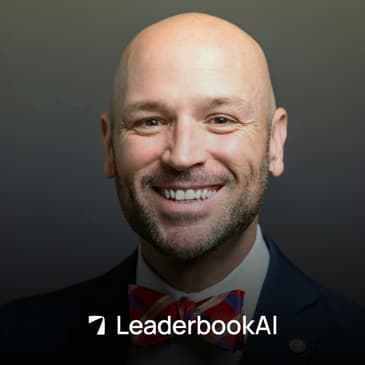
Robert Bendetti joins Felicia Shakiba to explain why tight collaboration between finance and people leadership is no longer optional. From workforce planning to incentive compensation, Robert shares how aligned CFO–CPO partnerships unlock clearer accountability, better performance, and stronger outcomes across the organization.
This episode explores how leadership alignment, disciplined decision making, and clear C-suite strategy turn data into action. Robert breaks down how transparency, shared metrics, and cross-functional strategy fuel high-performing teams—and how business process automation and digital transformation support scalable execution. Leaders will gain executive insights into using enterprise technology to drive value creation through truly integrated finance and people strategies.
—
Subscribe to the LeaderbookAI Podcast (formerly CPO PLAYBOOK): https://leaderbook.ai/podcast
Want to create 10x the value of your business or investments? Let’s talk: https://leaderbook.ai/contact
Powered by the WRKdefined Podcast Network.
[00:00:00] I'm Felicia Shakiba, and this is CPO Playbook, where we solve a business challenge in every episode. Where does the money go?
[00:00:23] Despite recognizing the strategic and financial importance of talent acquisition, many companies are dissatisfied with the recruitment process due to CFOs and chief people officers lacking consensus. This dissatisfaction can spread into other factors of talent, such as organizational design, cultural performance, and development.
[00:00:48] There are several factors that contribute to the misalignment in this relationship, such as misdiagnosed talent needs or viewing talent as an expense rather than an investment. Robert Bendetti, chief financial officer at Withers Ravenel, is here to demonstrate a role-playing scenario of a productive conversation with a CPO to meet leadership needs. Robert, thank you so much for being here today.
[00:01:15] Robert Bendetti, CEO, CFO, CFO, CEO, CFO, M.D.: Excited to be here and look forward to this conversation. It'll be very interesting to see what comes up of and out of our role-playing discussion. I agree. And to be fair, I have been really in tune with some of the questions that I ask my guests on this show.
[00:01:33] And today is going to be a little bit more improvisational, which I'm excited about because this is such a real conversation that we have all of the time and some real struggles between CFO and CPO. So we're going to get into what those challenges might look like and hopefully shed some light on what we can do better in these types of conversations. So thanks for being here. And an unnecessary struggle, right, Felicia? Because we should be partners.
[00:02:01] We should be two peas in a pod in partnership. And so I think this will be model good behavior for our brothers and sisters and accounting and HR. Yeah, exactly. So hopefully it goes as well as we hope it goes, right? Or we can start arguing and that would be really fun, too. Yeah, that's true. That's true. Let's start it off with some realistic conversation, right?
[00:02:25] I want to set the stage to really understand how a typical CFO and CPO conversation might take place in regards to the challenges that they really face together. So let's assume WR is in a growth stage and is looking to recruit new hires. Walk me through this conversation when you're first approached by your CPO. In this case, I will play your CPO.
[00:02:55] I think the first question that I'm going to have for you, Felicia, is what is driving the decision and what data do we have? I think we both really like data-driven decisions. And so if we can start from that, what are we getting? What's the demand signal from our customers? And just starting from that, what information do we have, say, from sales or business development? And is it how actionable, how accurate do you think it is? Thank you for asking.
[00:03:22] So there's a couple different scenarios that I want to present. One scenario is that the team is overwhelmed. So in this case, let's call it the sales team. They're overwhelmed and they really need some support. We have gone through a couple of, you know, different technical tools for the team.
[00:03:47] And so they're not just learning this new tool, but they're also inundated with additional requests from a recent product launch, let's say. And so we're really looking for a couple of heads to add to the team. And that's kind of the start of it. So I'll pause there. This is an everyday conversation. Great one to start with.
[00:04:13] And the first question I'm going to have is, has anybody looked at the process that these team members are having to follow to do their job? The technology that they're using to do their job. Are they overwhelmed? Are they stressed out? Maybe we got a bunch of corporate initiatives that's driving them crazy. The accounting department, the HR department that maybe they don't need to do. And if we didn't make them do it, they wouldn't need two more people. So I know that sounds silly, maybe too basic.
[00:04:42] But that's the first question out of my mouth is, is there process inefficiencies or projects that are non-value added that you and I maybe are asking them to do or other parts of the organization are asking them to do? And if we could eliminate those non-value added tasks or we could reduce and eliminate waste and variance in the process, first step is I want to guarantee that there isn't a process part of this that we could eliminate. Yeah, that's great insight because I agree with you.
[00:05:12] However, it will take some time to learn this new technology. And at the end of the day, there will be a point where everyone knows the technology and they're not spending maybe 10 or 15, 20% of their time learning the new tech. But then by that time, we think that we're going to, we're projecting that our sales will grow and we need to kind of go into new markets.
[00:05:39] There's a new region that we're looking to move into. And we also have a new seller who, not a new seller, but a seller who got promoted, who now needs support. And so we're really anticipating the, I guess you could say the team's needs two to three months out, which is why we're starting the process now.
[00:06:02] And the second question I'm going to have is when this organization, this group, this division justified that technology spend, did they justify it because they were going to reduce labor? Sometimes the department leadership will say, hey, I would like to spend $5 million on this new software package because I'm going to be able to eliminate X percent, X dollars of labor.
[00:06:25] And so if that was part of the justification, I just want to read that justification because this is contrary to it. And it's very common that this happens. They justify, hey, give me $5 million. I promise we'll save a bunch of money. And then three months later, they're like, totally won't know. He probably doesn't even notice this stuff. Let's go ask for five more people. So I'm going to check. It should. Technology should, in theory, make everybody's job better, faster, cheaper, safer.
[00:06:53] And sometimes they put that in the financial justification. So I want to read it because if it's not, if the chief sales officer said he's going to save, he's going to cut 10 positions to me and then to you, he's saying, I want to add two people. Now we have a problem. Yeah, that's a great point. And you know what? I should really get in with IT.
[00:07:18] Maybe we should bring, you know, IT or maybe the chief revenue officer into this conversation to see if it makes sense, you know, to add those heads, even with the increased efficiency that we have with this new technology. I'm not sure, based on what I know so far, I'm not sure that it would officially eliminate any key seats.
[00:07:43] I think if anything, we're really looking to grow and we're going to need that extra support if we're going to move into a new region. So the first seat is to support a recently promoted seller that's also going into this new region. And then the other individual seat is actually to find a lead seller, again, for the new region.
[00:08:13] As we look at our sales growth and where, you know, the company is going from a strategic standpoint, we feel like the product would be more successful, you know, in this new region. And so what we don't want to do is be understaffed to the sense that, you know, we have a lot of opportunity and we want to be able to seize opportunity. I do think that there will be some lag time, right?
[00:08:40] So we have recruitment, which will take possibly a few months for these roles. Then we've got onboarding. And then depending on how quickly we can onboard will also depend on how fast that person will be productive in their new role. We also have some leaders who may need to take time away just to mentor these new hires.
[00:09:05] And so we're thinking about the timing and how much time that will take. And by the time we actually find, you know, we fully integrate into the region, we're going to need all of that time to get those people up to speed and then be able to actually fulfill productivity. So I do feel like there's some additional work that we need to be doing.
[00:09:27] But, you know, in this organization, we're also trying to level up our managers to really take time away from, you know, 100% selling to maybe 80% selling and 20% managing, right? Because we're growing and we need to kind of level up our people to take on some of those management skills.
[00:09:51] And so we're actually really rethinking also the compensation design where we want managers to take on some responsibility and accountability for how their team performs. So maybe we can also think about that as we're thinking about, you know, these two heads. But to kind of go back to your question, because I want to make sure I answer your question, which is, you know, can technology reduce the number of heads?
[00:10:18] And I'm not sure we're there just yet, because in addition to that, we actually haven't seen the actual impact of this new technology yet. So we're a little bit in the dark at this time. We'll be right back. Back to the show. We covered a lot of ground there, Felicia. So this is exactly how calls, these are exactly how HR calls go. So I had to take notes. Good. I'm glad you're taking notes.
[00:10:46] Yeah, this is, I should be taking notes on whatever I'm saying. I'm like, my mind is going in three different directions. Because there's so much to think about. It's very strategic. It is. And it's very important. These are the important conversations that we have. And this is our job. So this is good. A couple of things. One, I've got one more question. And then I'll get to what you really want me to talk about. So I'm purposely being, I'm slow rolling this conversation.
[00:11:11] So one other question I'd have about before adding two people is, I know that we've done our performance management, performance assessments, team assessments, nine box. And there are some C players in this team. There might even be some D and E players, some F players.
[00:11:31] And I'd like to know if sometimes letting go the weak can free up the remaining A stars, the superstars. And maybe we could let go two or three C, D, and F players and then just replace them with a couple of A players. And you know, man, you let go a D player and then you replace them with an A player. It's like having an extra person. So we might actually need, we might not need to add two people.
[00:11:58] Maybe we just need to get rid of two not there, not at the level they need to be people. Let them go be successful somewhere else. And then replace them with two superstars. It's a good point. But I also want to be respectful to the team in the sense that, you know, we really need to do our due diligence to make sure that people are performing at where they need to perform.
[00:12:26] Now, we don't want to, I don't want to say we would ever really get rid of anyone, but I would say, you know, is there opportunity to manage people out that may not be a good fit for the role? And with that, I would say we do performance reviews twice a year.
[00:12:48] And culturally speaking, you know, historically, we have waited quite a long time to, you know, waiting for the performance review and then being able to start the PIP or managing people out if we see some concern.
[00:13:06] I would really actually like to push that forward in the sense that if we're seeing, you know, kind of repeated instances of underperformance, we want to try and catch that before the performance review. Right. And so maybe that's something that we need to think about on our part to really be on top of performance as an organization, as a leadership team, from a cultural standpoint.
[00:13:36] First, before we start saying, oh, we need a couple of more people to add to the team. Right. To your point. So I think that's a good point to think about.
[00:13:48] Based on my conversations with the CRO, where I have a weekly meeting with him or her, I would say that there might be one specific individual that seems like they might be underperforming.
[00:14:08] But they are also in a different region, not in this new region where these two seats are where we're looking to kind of build. And so we would have to kind of rethink the structure if, you know, number one, we want to make sure that we've given that individual all the tools and resources that they need to be successful. Right.
[00:14:35] I also want to maybe maybe I'll take another stab at looking at that person's manager and wondering, you know, is this manager really helping this person be successful in their role? And if it gets to the point where there's, you know, we're kind of pulling out what really is the challenge. And if it is to the point where that individual is underperforming consistently or maybe they're just not a right fit. The next step I would say is, you know, why they might not be a right fit.
[00:15:05] Maybe they need to be put in a different role. Maybe they need to have different skill sets. Maybe their voice is not being heard. So let me kind of do that investigation. I think for the most part, I want to try and I do want to kind of get at least one seat to move to kind of open up and move forward because we're really asking for two.
[00:15:25] But if we can get at least one while I'm investigating this particular case with this potential underperformer, I'd like to try and get at least one open role moving if that works for you. So, Felicia, I think my next question would then be if this is budgeted or unbudgeted. You know, was it part of the budgeting plan? And so we just need to execute on this to hit the sales numbers we budgeted. Or is this incremental growth that this is we've gotten some new demand signals.
[00:15:55] And so this is incremental headcount. So maybe I might be seeing some incremental sales down the road, you know, budgeted, unbudgeted. Yeah, it's not in budget, actually. And and and but but this is more of like an anticipation of how we think the market's going. I spoke with our CEO.
[00:16:16] He or she feels that we are we're we're going to need to expand our operations, given some of the prospective customer conversations that our CEO has had thus far. And so we're anticipating this growth, which is why it's it's not in budget. But but does it make but does it make sense for us to discuss budget in this conversation right now?
[00:16:45] Or is that another conversation you want to have? Yeah. Yeah, especially if I mean, the CEO, if she wants to do it, then this makes this process much easier. Right. We just have to come up with some sort of reasonable justification. But that justification, since it's outside of the budget, would probably be something like, hey, Felicia, what's the all in cost of this person? And you might say 200K.
[00:17:07] And then I might say, OK, with 10 percent margins, we need two million dollars worth of additional sales revenue to book in the period so that we can break even here. And then the CEO would give us both the green light. The sales leaders happy. CEOs happy. And then I'm just going to be checking in six months to make sure these sales really happened. Yeah. You know, on that note, can you educate me on, you know, this might be helpful for my role. Right.
[00:17:36] Is is when we look at our revenue, how do we is there like a ratio that we should be identifying between revenue and number of sellers? That is really hard. And that's very dependent on your industry. So in like professional services, two hundred thousand dollars of net revenue per total headcount is a good number.
[00:18:05] But that includes bean counters, HR, sales leaders, and then the people really doing the work. So that is that's a that's a revenue divided by all headcount. It's a it's a really rough number, two hundred thousand dollars. And so I if you tell me how many people work at a law firm, engineering firm, accounting firm, marketing firm, you tell me how many people work there. I can multiply that number by two hundred thousand dollars and probably get their annual revenues. Got it.
[00:18:34] If you just want to know for salespeople. Just how much revenue your average salesperson needs to cover. This has a lot to do with the margins of the business. So if your margins are really, really high, you'll get a different answer in your your kind of standard sweet spot is two to four million dollars. That's just a a really rough number is a hundred percent salesperson. This is all they do.
[00:19:04] They go out there and win business. A two million dollar target and maybe in certain industries, three or four million dollar target. Those are real rough. Estimates, but it's very, very much fact dependent on the the the industry. OK, so margin of error, right? More or less two to four million. Yeah.
[00:19:28] A better back of the envelope is if it's like new extra, we'd really like to go get some more sales. And then you think about how much does a person cost and you think about their labor and their benefits and their meals and entertainment. And the auto allowance, blah, blah, blah, blah, blah. Salespeople are expensive. And so a super easy number is two hundred thousand dollars.
[00:19:51] Well, if you want to break even that two hundred thousand dollars, if you if you sell a product that has a ten percent margin, two million dollars, ten percent of two million dollars is two hundred thousand. So if they sold the two million, they'd cover their two hundred thousand dollars worth of costs. And so you could look for your business, for your industry. You could look and see what your margins are. What would it what are the incremental margins on an incremental new person?
[00:20:18] And you could do the math based on your business, your situation. OK. And that's like a seller that is that's basically their only job is to sell. Right. Because there's other types of sellers at different levels that support sellers. Right. So we have to think about and I don't know if you could really put like a ratio on the support staff.
[00:20:44] But it sounds like, you know, based on what you said, you said it's like a very rough estimate that a seller essentially with all their benefits costs about around two hundred K. And then they should be selling anywhere from like two to four ish million for for the firm or the company. Yeah. Yeah. Yeah. It's it's in this in this example. Yeah. And you can the the sales support.
[00:21:14] The administrative assistant. Maybe you've got a pricing analyst. You've got an executive admin. You've got accountants. Those overhead folks, that's the difference between the two million dollars that started off as revenue. You've got some cost of goods sold. Maybe you're selling software or you're selling an airplane, whatever you're selling. There's a cost of that, a hard cost of that. That might be 30, 40, 50, 60 percent of the two million.
[00:21:41] And then you've got a big bucket of overhead to cover me, cover you and the sales support. It's that that 10 percent is the margin that remains that if I can go get these additional sales this year, it would cover the cost of this person. And that's how you could use it as a rough. This is a rough ballpark to kind of a reasonable test. Like it's good for this kind of conversation.
[00:22:04] Hey, when you and I would go talk to the sales leader, I'd be like, hey, Julie, can you promise me within 12 months or hiring this person? This person is going to increase revenue two million dollars. And if they're like easy, I'm like, all right, go. Oh, if they're like, oh, that's crazy. No way. It'll take two years. Sales cycle is really long. It's very risky. I'm not sure we're ever going to sell a dollar of this. The CEO wants to do this. I'm not confident in this.
[00:22:31] I'm like, OK, Alicia, you and I need to go talk to the CEO like this is. So it's directional. It's back of the envelope. It's it's kind of right numbers. It can help in a conversation. Hey, it's Bob Pulver, host to podcast. Human centric AI, AI driven transformation, hiring for skills. Potential dynamic workforce ecosystems, responsible innovation. These are some of the themes my expert guests and I chat about. And we certainly geek out on the details. Nothing too technical.
[00:23:00] Hope you check it out. We'll be right back. Back to the show. It's interesting because in these types of conversations that I'm getting out of character a little bit here, but I really feel like it's difficult to to nail a decision down. Really good decisions. Right. I mean, you can you can put a decision in, but having that third party. Right. The chief revenue officer.
[00:23:25] I think being in this conversation would be really helpful when when adding numbers to the team. But I, as the CPO, can also have that one on one with the CRO and be able to or should be able to articulate and portray the needs. Right. On behalf of the the function. Right. So it could go a couple of ways.
[00:23:46] But I also wanted to ask in this type of conversation, you know, based on some of the questions that you're asking, I'm really now wondering if we've maxed out our budget for learning and development and training. Right.
[00:24:01] Because if you're thinking about are we do we have people who are maximizing their performance where now we need more people or are we having maybe average performance throughout the function and we're adding people to supplement. Right. Right. Or to to complement the lack of performance. So I'm wondering how does the budget of training and development impact these decisions? Like, does that come into play for you?
[00:24:31] Do you find that relevant? It is relevant. I think it is usually a separate conversation because you've got to you've got to plan and think so far ahead. Felicia, during the budgeting process six months ago, I probably would have asked, hey, what do you think we need to spend in training of employees? And then also not just the hard dollars of bringing in the consultant, the trainer, buying the materials, but also the utilization. What what amount of time are these employees going to have to spend participating in this?
[00:24:59] Because if they're doing this, which is great, they're also not making widgets or doing something for sale to the customer. They're training. So I need to budget that. I need to budget the time these employees will take to participate in whatever you're planning. So I think that's a conversation for the budgeting process where you and I have a conversation agreed. It isn't a matter of if it's just what we do because we've got to do it. You've got to invest in your people.
[00:25:28] Got to. I want them around and I want them to be the smartest they can be. Whatever they are, I want the best. And let's get it a little better every year. And the only way that happens if we invest in the people with training and technology, let's make their job easier too. So I'm all in on it, but we only they only have so much time. We don't want to burn them out. So let's pick like what is the best training opportunity you're thinking about doing? Cool. How much? All right. Awesome.
[00:25:55] And then I got to figure out how much time they're going to need to do it and we'll budget for both. It's interesting to hear you talk because as I hear you speaking about some of the things that your concerns are, what you're concerned about. Let me start over. It's interesting to hear you talk because as I think about what your concerns are, I also think about AI and how it could impact this conversation.
[00:26:25] So AI is, you know, all about efficiencies, right? And so before we do workforce planning, before we start adding heads, like the last thing that I want to do is hire and then have to fire. Last thing I want to do. So I want to really make sure that when we do hire, we have those positions open and they're stable, right?
[00:26:48] So before we get to that point, I almost think that there needs to be some sort of like process where we look at performance, we look at efficiencies before we even come to the realization that we need. Or, you know, this could be part of like the workforce planning process too. This could be part of the... Jeez, I love... I love things. This could be part of the workforce planning process too.
[00:27:13] But does it even make sense to potentially put like a subfunction within the people operations unit to say this is like the human efficiency and productivity unit, right?
[00:27:28] Just focused on how efficient and productive we are as an organization where this person or team or even maybe it's like a task force, you know, from like multiple different functions of the business that they come together, they meet once a month or whatnot.
[00:27:48] And they look at how can we be more efficient on a regular basis where we can, you know, maximize our efficiencies ongoing and then we can move faster to hire because we know we've said we've looked into it. We've been looking into it. This has been a conversation. We've maxed ourselves out. Let's hire, right? I feel like the decisions would become easier if that was the case.
[00:28:12] I'm a big fan of the idea of having a cross-functional innovation and transformation and automation team. I think that that's a really great idea. Not housed like in one area, but I love your idea of cross-functional, having delivery, having sales, human resources, accounting, have some...
[00:28:32] We could pick high potential superstars within our teams to be on this cross-functional, to interact with other superstars in sales and operations, HR and accounting. This could be like a hypo program. For those of you who don't know what a hypo program is, it's a high potential program for those who are high performers that we're looking to succeed, like the next leadership. And we're looking at these individuals to grow, right, to put them on a growth path.
[00:29:02] And this could be a task implemented into that hypo program while also, you know, finding these inefficiencies and highlighting what they are in the organization on an ongoing basis. I mean, I get that it's really difficult to give people like extra work and more work.
[00:29:21] But if we can somehow figure out how to implement and integrate them into this type of task force where people are working together as a team and it's not such an overload and actually making people more productive. I mean, I just see it as a win-win, you know, and it helps me and you come to the conclusion that, yes, we do need or we don't need certain, you know, new hires and so forth, if that makes sense.
[00:29:50] I think it makes a lot of sense. And I found hiring an external consultant to work on a fractional basis, a great resource for the team because you're going to have fractional, like you're going to have a cross-functional team of your best superstar in HR, accounting, ops and delivery. Those people are very busy.
[00:30:08] And so to have someone that is steep, has steep knowledge and has studied nothing but innovation, transformation, process automation, Six Sigma lean, to have an expert to come around and coach that team up and take all the heavy burden off of them. So they're just delivering. They're not doing all the extra busy work can be very helpful. And then the separately I'd say, well, where does this team get ideas to fix problems to solve?
[00:30:37] I have found when you ask the rest of the employees to nominate a process that they have to deal with, that's a nightmare, that needs help. You get to the process owner and people that are working somewhere in the organization. They raise their hand and say, oh my God, this is so horrible. Please come fix this. I am the owner of this process. I have to use this process. It's terrible. I need help. And then this team rallies around that person and helps solve a problem for them. It just turns into a win, win, win.
[00:31:08] And plus a little external coach that's helping you. You get the stuff. You get some wins, solve problems. It's good for everybody. Yeah. Yeah. There's one last question I want to ask and it's a loaded question, but I'm going to try and ask it in the most simplest way. We also think about how the mix of pay is for sellers. What would be your recommendation?
[00:31:34] How do you really think about the mix around a total rewards package for sellers? I think that hiring salespeople is the hardest thing to do. And I've been doing accounting for like 25 years. It's a mystery within a riddle, within a quandary. I have, it's so hard to hire. I've tried it all and it's all been equally unsuccessful, I think.
[00:32:03] And what I've come to the conclusion is sales is really hard. There's a reason I'm in accounting is because I couldn't do it. I couldn't, I can't make a phone call, send the emails, go to meetings and constantly get told no. Well, it's a totally different skill set. I mean, you know, it's so hard. Yeah. So I just want to start, if there's any sales leaders listening to this part, if you're good at what you do, God bless you. It's really hard.
[00:32:32] And it's really hard, I think, as a CFO to sit in meetings and try to hire sales executives and maybe you feel the same. So I want to just start that this is a really important problem and one that I haven't totally figured out. But I have, that doesn't stop me from having some ideas. Hashtag new episode. Yeah.
[00:32:50] So some ideas would include, if you're a small or mid-sized firm, consider for that, for maybe your first salesperson or an extra salesperson, there are people that do fractional and commission-based work in your industry. And so if you're unsure and you're not sure what you're looking for, what impact they could have, that's a good put your toe in the water is look for the fractional or commission-based resources in your area. I think that also it's hard to figure out what to pay them.
[00:33:19] And luckily with this compensation transparency that's going on around the United States right now, a lot of companies are posting salary information in their LinkedIn profiles and in their LinkedIn ads. And so you can get a sense of, again, if you can't pay for one of the very large firms to give you salary comp data, LinkedIn is beginning to provide some more accurate information because some companies in some states are required to post salary information.
[00:33:47] So I have found that as a good free resource. And then I have found success. I'm super interested in your opinion on this one, Felicia, is I spent a lot of time hiring for experience in relationships and network. So we could just bring them over here and they'll replicate what they did. I'm not sure that works. I feel like sometimes it's just situational. Success is situational.
[00:34:13] It was because they work somewhere or what worked over there doesn't work over here. I'm not so sure experience always work. And I'm starting to lean, maybe you hire for potential and grit and ambitious ambition. So I'm torn on that. I'm interested in your thoughts. That's a big question, Robert.
[00:34:36] But I will say that it, I, so I would say this short answer is it's a mix. You hire for culture, you hire for skill, you, and then you, you obviously have to look at merit. But I also like to hire for team compatibility, which I think is really important, and competencies, right?
[00:35:02] So skill and competencies, culture, and then, you know, your team component. And it's, I think, another episode that we have to go through. But it's definitely something that it's really difficult to do if you don't have clarity on your values as an organization and what your culture is.
[00:35:29] I think referrals are great, but they also still should go through the due diligence phase of talent acquisition, right? But we are out of time, Robert. And I, this has been such a fantastic conversation. Thank you so much for being here. I have more ideas on what else to bring to this show, thanks to you. So thank you again for being here. And it's great to see you again. Thank you. I very much enjoyed it. Thank you for having me on.
[00:36:00] If today's episode captured your interest, please consider sharing it with a friend and leaving a review. To learn more about how CPOPlaybook can support you or a leader you know with executive coaching or organizational transformation, visit us at cpoplaybook.com. Your support as a subscriber means the world to us. So thank you for tuning in. I'm Felicia Shakiba. Let's connect on LinkedIn. See you next Wednesday.
[00:36:30] Thank you.
Sponsors
