
How can companies achieve operational excellence in a hybrid world?
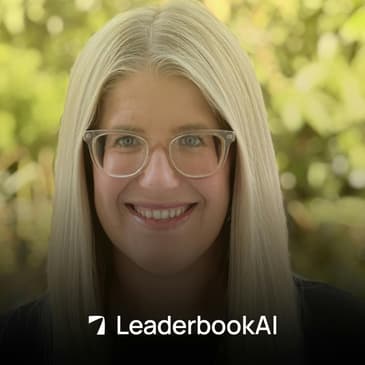
BuzzFeed CPO Chandler Bondan shares how leadership clarity, engagement, and AI automation improve efficiency. This episode connects C-suite strategy, enterprise technology, and digital transformation—showing how business process automation drives modern value creation.
—
Subscribe to the LeaderbookAI Podcast (formerly CPO PLAYBOOK): https://leaderbook.ai/podcast
Want to create 10x the value of your business or investments? Let’s talk: https://leaderbook.ai/contact
Powered by the WRKdefined Podcast Network.
[00:00:00] I'm Felicia Shakiba, and this is CPO Playbook, where we solve a business challenge in every episode.
[00:00:21] BuzzFeed has come a long way since its early days, evolving from a fast-growing digital media startup to a publicly traded company with diverse teams across multiple cities and time zones. But with this growth comes a new set of challenges, specifically around achieving operational efficiency without sacrificing BuzzFeed's core values for the well-being of its people.
[00:00:47] Today we're talking with BuzzFeed's Chief People Officer Chandler Bondan, who's been at the forefront of tackling these issues. Chandler, welcome back. Thank you. I'm so excited to be here. Yeah, me too. I'm so glad that you have decided to be on a second episode of the CPO Playbook Podcast. The first episode was fantastic. The richness of everything that you shared in your first episode was so amazing.
[00:01:14] So we're really excited to have you today as well. So Chandler, tell us about BuzzFeed's journey over the last few years. When did you start noticing a need for more operational efficiency? Sure. So over the last, I would say, five years, BuzzFeed's gone through an evolution, and that's just given the nature of the industry that we're in.
[00:01:40] So we've really had to look at right sizing, not just the organization, but looking at ways to improve efficiency, process, collaboration, which also has its own challenges related to, you know, remote work. And during the pandemic, having to switch to a remote first type company.
[00:02:02] People ended up moving and doing these, you know, personal sort of needs related to what was going on during that, you know, unprecedented time. And now, flash forward, we're, you know, on the other side of the pandemic in a lot of ways.
[00:02:17] And so now companies, including BuzzFeed, are figuring out ways to better connect with one another, to make sure that we have the most efficient, you know, organization that can reach our population. And so right now, I think the struggles that we've seen are what a lot of organizations are seeing and trying to figure out, okay, we were remote working remotely.
[00:02:41] Now, when we think about innovation and we think about the next era of the organization, how can we do that in person in the markets where it makes sense and still have, you know, our remote population feel connected? Yeah. And efficiency is a word we hear often, you know, but it can mean different things across different industries. So how do you define efficiency at BuzzFeed and what would be unique about your approach?
[00:03:09] Well, efficiency at BuzzFeed, I would say, means that we're able to create. So we're using a lot of different tools and resources in the AI space to make sure that we're able to create things in real time. We're obviously reporting on pop culture, on news events that are happening in the world. You know, we're making content that needs to relate and make it relative to what's going on, again, in the world that is constantly evolving.
[00:03:38] So with that said, you have to be able to do things quickly and you can't be waiting, you know, on someone else to create something. You want to be either the first person or you want to look at ways to use technology and ideas to create something that, again, is super relative to the industry that we're in. So the team has really had to take a step back and look at strategy, look at workforce, look at tools and resources and make sure that we have the right leaders in place,
[00:04:06] that we have all of the different divisions across BuzzFeed operate effectively. So we have implemented a lot of different programs within the HR space from like a well-being perspective. So it's important for a person to be able to show up and be the best version of themselves. We've also had to implement other sort of technology and systems and suppliers to make sure that people can connect.
[00:04:29] So when they're in the office, they have the opportunity to do that all together, but also remotely being able to be inclusive of people being in the conversation. So we've had to do a lot from the HR side as it relates, again, to workforce. What are we doing in our office spaces? So our workplace services and IT teams. And then how can we make sure that our remote employees can still be a part of the project and can make an impact and a difference?
[00:04:56] So it's really hard, I think, in a lot of companies. We're facing this. How can we be progressive enough to continue to push our employees forward and keep up with technology and keep up with everything that needs to be done in an efficient way? But also make sure that we still have the heart of the organization of wanting to spread truth and joy on the Internet, whether that be through our BuzzFeed brand, our newsroom, our HuffPost brand.
[00:05:24] And we want to make sure that we're able to do that across all of our different platforms. And it sounds like being efficient really takes a lot of different elements to create a holistic strategy. It's not just one thing. It's not just technology or, you know, just where people work. It's really about this cohesion of making everything work really well together in an efficient way. Is that fair? Okay. Fair. Yeah. It's a lot. It's a lot of work.
[00:05:51] So BuzzFeed's transition to being a public company must come with high expectations. How do you maintain transparency with employees about why efficiency is essential? So at BuzzFeed, we do a lot as it relates to updating employees on what's going on across the business. So we do that in a bunch of different ways.
[00:06:17] The first one is we do all hands, at least quarterly, where Jonah goes in front of the organization, talks about the state of the business. We then have speakers from across the business, depending on what's going on at the organization, do updates so people know what's going on, which I think is really helpful to hear from people on projects that have been really successful. Innovative ways that we're making an impact in, you know, our industry.
[00:06:45] What we're hearing from the marketplace. We've also been able to share, you know, employee well-being updates there. So whether that be updates on diversity, inclusion, and belonging, benefits that we're offering. We've also done announcements around things that people don't know exist at the organization. A lot of times you have a lot of, you know, offerings that people don't know about.
[00:07:09] In addition to that, we've brought back Bruce, which is a, I would say, off-the-cuff meeting. And we do one in Los Angeles, one in L.A., and then we do one for remote employees. And we try to do that once a quarter where it's Jonah and his leadership team being available and giving some light updates in person. But then opening up the floor and employees can ask questions.
[00:07:33] They might say, oh, I heard about, you know, the AI team within tech was working on X project. How did that go? So it could be a business update or it could be a, you know, right before the election. How are you feeling? Do we have a plan for whoever wins? What are we going to do? So it's a really great way to keep up with almost like a casual way with the executive team. And it allows Jonah to hear directly from employees on what they're thinking and wanting.
[00:08:01] And with doing that when he's in New York and the leadership team's in New York, doing that in L.A., and then also doing a remote one, you kind of get different views of different groups of employees. What has come through with like those different types of meetings? You know, you said that there's like a different perspective that you might see in a particular meeting. Maybe it's something that might like might be more apparent on what people's like what are on people's minds versus like other locations. What has come through?
[00:08:28] So I would say that a lot of people just don't know necessarily what other teams are doing or you hear about a project. You don't know what impact it's made. But it's been really fascinating to see. We've done a lot of work in the AI space. So being able to see how we're able to use AI technology in day to day type of work that our writers and our video editors and everyone are working on.
[00:08:53] So it's fascinating to see, for example, you know, when the Barbie movie was out, we had a quiz that you could take on what would be your Barbie dream. So that was really fun. We were able to play, you know, on what was going on in the world and able to bring people in to really interact with our content and our brands.
[00:09:14] We've also been able to utilize AI to do we did like a Shrek filter so people could make their own Shrek characters, which was really, really fun. So we're trying to figure out ways for people to, again, have joy on the Internet, be able to interact with our content in a fun way. It doesn't have to be very serious all the time.
[00:09:34] Being able to connect with other people on common interests is always a great way to build community, make people feel included in, you know, what's going on in the world and, you know, all of the different movies that are coming out and all of the different cultural elements that we try to represent. So that's been really nice.
[00:09:52] And then on the flip side of that, we obviously have the news team and the news team does a lot of reporting on not just what's going on in the world and what's going on, you know, in the government, but also looking at lifestyle and how people are living and what people want to be learning more about. And the HuffPost team has done a really great job of also creating content that's very relatable. So we have different podcasts that now exist that allow people to listen in and learn about.
[00:10:21] There was there's a really great podcast that's about ways that you can relate to what's going on in the world or things that you might not know. So one of them was on like tipping and how that works in the world. And people sent in questions about, do you need to tip if you're going to this type of event or this type of, you know, you're hiring a certain type of tradesman to come in. So it was like a very, you know, normal relative conversation.
[00:10:48] There were other holiday sort of tips that they were giving off of, you know, you're going to someone's house for the holiday season. And what should you think about? So, again, we're trying to be able to spread truth and joy on the Internet in the right way. So with looking at ways to get ideas when people are talking about that, whether that be in person or in a more group setting that isn't being moderated, allows people not just to talk to the executive team, but talk and get to hear from one another. We'll be right back.
[00:11:19] What if I told you that your boss skydives? Tim in marketing is a magician and Sam in accounting does sums in his head while standing on his hands. Seeing sides of the people you work with but never see, sides that inform and inspire their work and that can inspire yours is what the talent show is all about. Email me, Tom Alexander, host of the talent show at talent show at backbone inc.com and show us what you got. I look forward to seeing you on the talent show.
[00:11:47] Back to the show.
[00:12:23] Yeah, that's impressive. I mean, the way that you look at kind of bringing all of those elements together. And that's I think that's something that I've always admired about you is that you have you're not afraid to think outside the box. I think you're you have a very creative side. And it's one of my favorite things, you know, in this type of role is that you are dealing with people and people come from all sorts of like walks of life and they're all attuned in a different way and fashion.
[00:12:53] And we have the very big job of marrying science and art and in our role. And so I just think that your approach to problem solving is really fun and exciting. And I can see why you're at BuzzFeed. I think it's hard, too, because, you know, employees don't want to be micromanaged. Right. There's a lot of autonomy that you can have in task management. So instead of micromanaging employees and how they're doing, like when you think of productivity, a lot of times people are thinking about how someone's doing it.
[00:13:20] Really, we should be empowering our employees to take ownership of their workflows. So employees should be you should be trusting your employees enough to organize their day and decide how they're going to tackle that work. But when you bring people together, at least to be able to share, collaborate and think of the next big thing that allows them to do that in maybe an in-person setting or in some sort of, you know, group setting. But like day to day work, we don't want to be bogging people down with how they're doing things.
[00:13:50] We want to motivate them to want to be here and want to be productive. And when employees are engaged in their work, that's when they feel like they're trusted and empowered and they want to do the next big thing. Something really exciting that our tech team has been doing, and I believe part of our content team is we do sprints. So we bring in a group of people to solve a problem or to think of the next big thing. And they use that entire time, whether that be a week, a couple days to actually build it. And what is it going to look like?
[00:14:20] What's the monetary need for that? What problem are we trying to solve? So it allows people kind of to take a step back from their day-to-day job and get to do something fun, like a passion project. So we've seen a lot of great success with that too. And at BuzzFeed, we really try to encourage innovation and creativity. Productivity isn't about, you know, completing a task. It's also about being creative about problem solving and innovation.
[00:14:45] So we're really trying to foster a culture where employees are encouraged to experiment, innovate, think critically. These are the types of like creative engagement ways that we boost productivity because it enables employees to bring those fresh ideas and solutions to the table. Yeah, and that engagement piece is really critical. And I'm kind of layering on it on top of efficiency as a whole because efficiency can often mean organizational shifts, right?
[00:15:14] How do you keep employees on that engagement, you know, high and motivated when there might be some organizational shifts in the name of efficiency? Well, we do our best to try and push people to know that the industry that we're in is ever changing, right? And in media and pop culture and news, everything changes on the dime. So you have to keep up with technology.
[00:15:41] You have to keep up with the pulse of, you know, our viewers and of our contributors. So we're trying to be as progressive as we can with employees and making sure that we hear from people. We do surveys. We obviously do a lot of in-person type of elements. We have HR business partners that have really embedded themselves within teams to be able to hear from people and answer questions live so people aren't having to wait on responses.
[00:16:10] And I think that piece is very important, by the way. I think that that is very critical to embed the HR business partner into the team. Yeah. I mean, I don't want to take away from what you just said, but I just feel like it's such a big point that you shared. Yes. And I mean, our HR business partner team has teams that they've supported for years. They have deep-rooted relationships, not just with the leaders, but with employees on the team that have moved up within the organization. They know how each of those teams generate revenue.
[00:16:39] They know the work that those teams do. If you were to ask them what an employee, what their job is, and what does that include, they can answer those questions on the fly. So we're so lucky to have people that the business trust, that I trust, that the leadership team can trust to help. So a lot of times when we do have a change, we will empower HRBPs to be a part of the conversation because they know, okay, timing-wise, this is when this team will have a lull.
[00:17:07] This is when these changes might make more of an impact versus during busy seasons. So we have, I feel like, a very good view of the organization. Our leadership team also meets weekly. And we have deep-rooted relationships, which is really great. And we have an agenda that gets sent out every week that everyone can add to. That's really helpful.
[00:17:31] We meet about five to six times a year together on longer stretches to be able to, you know, go through quarterly earnings, be able to think about the next thing that we're going to try to accomplish, make sure that if we do have an issue, how are we going to solve it? And sometimes when you make changes, it's hard for people. We've made changes where, you know, people want to talk and want us to hear about why they may be upset, right? Not everything's going to be rainbows and sunshine.
[00:18:01] So doing discussion sessions or listening sessions is always helpful, too. It sounds like a lot. It sounds like a big lift. So how do you prioritize, you know, what decisions stay and what shifts, especially in the areas like creative content? Well, each year, each one of our leaders creates their strategy for the new year that has to align to a budget, which sounds so business-esque. But that's like where it starts, right?
[00:18:31] And so last year at BuzzFeed, you know, as we've said to the market was our year of stability. And next year is our year for growth. So this year, our leaders really had to think about how am I going to grow my business next year? How am I going to get more reader revenue? How am I going to get more engagement? What are, what is, you know, the expectation around tools, resources and needs that I need to make those things happen?
[00:18:56] And then what obviously are financial goals that we want to, you know, tell the market in the new year of what we're going to be doing. So that's like the first piece. And once we have that piece, a lot of times Jonah then will build out. Here's what the strategy is for the year. And in January, in our all hands as an organization, that's where it's shared out. If we're making any changes to the org, meaning, hey, this team isn't functioning great over here. So we're going to move it here.
[00:19:25] That's where we like to make a lot of those enhancements. Do things happen outside of that? Of course. But that's how we try to set up our year in the right way. And then we use our HRBPs, all of our systems and tools to then build out, okay, what are the goals? So what are each team will then have goals that align to Jonah's goals. And those are then put in the system. We also have performance management check-ins to make sure that we need to tweak goals throughout the year.
[00:19:55] We obviously can. So that's kind of the structure and strategy. And it sounds very corporate. But I think the part that people miss and most progressive companies want to encourage is collaboration rather than fostering that competitive individual work environment. So being more team-based and cross-functional collaboration will lead to better outcomes and people being more productive and people understanding why am I working on this project?
[00:20:23] How can I share information and solve problems together as a team? So we actually don't do individual goals at BuzzFeed. We do division and team goals. We do not set individual goals. So if I, me as a team, my team has HR goals. And then underneath that, there might be a group specific to total rewards. And then there would be a group specific to HRBP and employee relations and whatnot.
[00:20:51] But we don't do, hi, I'm Chandler, here are Chandler's goals. We like to think of it as a way for everybody to be able to work together towards a goal. And everyone contributes to that in a different way. So when you think about performance reviews, people are writing how they contributed to the team or how they contributed to the organization to accomplish that goal for the year.
[00:21:18] So it's more about cross-functional collaboration, team-based projects to have better outcomes and to be more productive. So employees can share knowledge, solve problems together, and we're able to leverage a diverse skill set. Which is exactly how I would do it. You're talking about OKRs, right? Correct. Okay, yeah. Just to make sure it sounds very OKR-ish.
[00:21:46] Yes, we don't call them OKRs. BuzzFeed obviously is corporate in some ways, but a lot of times our employee population hears some corporate jargon and then their brain shut off. So a lot of times we use it more as we call them organizational goals, division and team goals, just so that way it doesn't feel as heavy. We'll be right back.
[00:22:16] Back to the show. Which is, I think, a really intuitive thought process because I think a lot of people may not think about what they're calling them and that speak. But I think at BuzzFeed and what I've understood is that everything is very unique to BuzzFeed.
[00:22:37] Even if it's just the name of the goals or what you call them at the organization, which I think really drives good, healthy culture. It's like at BuzzFeed, this is what we do. This is how we do it. This is the we behind it, right? That sense of belonging, I think, is really rich, it sounds like.
[00:22:59] And even the smallest things, just as, you know, how you name your learning and development, you know, strategy or a learning and development. I think you called it manager dens. Yeah, yeah.
[00:23:43] With your CFO. You know, what has been key in building that partnership? And how does it influence the way HR and finance make decisions together around efficient organizations? Sure. And I think if we went back to what we're doing now, the strategy sessions that each of the leaders are having has to align to the budget that we present to the board. So it's almost like, hey, this is what I need to be successful next year.
[00:24:13] This is what, you know, I want for reinvestment. This is where I'm going to have savings. This is where I need more, you know, incremental spend, whatever that is. A lot of those combos happen prior to the budget being approved. So I feel like you can get, you know, a couple of things checked off the box. Obviously, you know, other things are off the list. I think other things for sure happen.
[00:24:35] But our finance team, our finance and accounting team have very deep relationships with the HR team because most of us have been working together for a while. And so Matt, who is our CFO, and I meet regularly to go through, hey, here from a workforce perspective is what we're seeing. Here are the roles and the headcount tracking that we're doing.
[00:25:01] So we have one tracker that both of us use in the system within Workday where we're tracking headcount. So we're able to know, OK, here are the roles we have open. Here are the roles that are upcoming. Where do leaders want to invest as it relates to workforce? We also know what all the division's goals are. So we know for our sales team, we know what the direct sold goals are. For our commerce team, we know what their goals are.
[00:25:28] So if for some reason they're not hitting where they need to be because we get a weekly update in our executive team meeting, I'm able to have that conversation with that leader to say, hey, I heard in the meeting. You're struggling with X, Y, and Z. Is there anything that we can do to help, you know, bring in some talent? Are there any issues that you're seeing from a performance perspective on your team?
[00:25:49] Do you have any roadblocks related to people, related to systems, related to, you know, facilities and getting teams together, whatever that looks like? So it's, I think, having open dialogue, knowing what budgets are, and being very connected to the outcome or the output of the organization, which is really hard to do sometimes. And I think it's taken us a lot of iterations to get there.
[00:26:15] But we've been in such, I think, a very good place as it relates to collaboration and connectivity. Obviously, at the end of the day, it does come down to the bottom line because we are a business. We know what our margins need to be. We know what, you know, what our spending needs to be and all of that. So we definitely have that in the, you know, I'm not going to say back of our mind, in the front of our mind. But we also try as best as we can to make sure that we're supporting each group.
[00:26:43] I was going to say that I think that your approach is so brilliant because, like, a lot of times, if you are too siloed as a CPO and you have your own agenda of what people, you know, of how you see, like, the people function moving, it's detrimental, right?
[00:26:58] Unless you're collaborating and being in the moment, coming out of a meeting and speaking to a leader and understanding what their goals are and things like that, you're more likely to be able to shift and be adaptable in order to meet the team, the leader, and the business where it's at and be more valuable as a function, right? And as a leader on the team. So, but yeah, go ahead. I didn't want to interrupt you on what you were saying. No, no, no.
[00:27:24] I just to even, I mean, you said a lot of it, but I always say to my team, a culture of transparency and open communication can improve productivity. And it's by ensuring employees are aligned on goals, expectations, and getting feedback. So, that's through regular check-ins, feedback sessions, the use of tools like Slack, you know, and helping to ensure that teams are on track and are working efficiently.
[00:27:53] That's the only way it's going to work. So, my team, I think, does a great job of empowering people and advocating for their needs without obviously stepping in or trying to be a roadblock. But that's what I tell my team to make sure that we're a great partner to the business, that we're constantly innovating. We're not stagnant because we have to keep up, you know, as the business continues to evolve and innovate and productivity may look different, right?
[00:28:21] When new technology tools, resources are available, we have to keep up with those things, too. As you look ahead, what do you think will be most essential to keeping this balance between efficiency and values at BuzzFeed? Like, what's next? I know I feel like you've shared so much. I don't know what could be next, but what do you think is on your horizon?
[00:28:45] As a progressive company, we have to continue to increasingly align to employees that work at the company with the company's mission and values. And we have to ensure that employees feel connected to a bigger purpose. And I see a shift, especially, you know, in different generations, wanting their work to be meaningful and wanting to align to their values.
[00:29:11] And a lot of times when you're in a creative space, you have writers, you have video editors, you have reporters, their work becomes a part of that. So that's when an employee, you know, feels the most purpose. So it's just so important for us to continue to make sure that everybody has that connectivity and they have a way to continue to grow and adapt.
[00:29:36] For other leaders facing similar challenges, what advice would you give? Like, how can they make thoughtful efficiency decisions that also honor the people behind the work? I think it's just refining what productivity means, you know, that could mean so many different things. Yeah. And when employees feel valued, they're going to want to be more productive.
[00:30:00] And by creating supportive work environments that promote growth, collaboration and well-being, those are the organizations where empowering employees to perform at their highest potential without sacrificing their mental and physical health is going to have a better come for them. And I think the first step is by understanding what the employee population wants.
[00:30:22] So that could be by an engagement survey, by having listening sessions, something so you can hear first from the employee population and then figuring out what the right cadence for, you know, company updates, for in-person sort of elements, a creative outlet, whether that be a sprint that I mentioned before, or another way for employees to get to do things that excite them and get them to think out of the box.
[00:30:53] And I think that we as a company can also do better. There's always ways to be, you know, more impactful. But as you continue to listen to employees and employees see that you're listening and you, you know, there's a lot of low-hanging fruit that you can probably accomplish pretty quickly. But making sure that you're listening. And then again, you provide a way for them to hear not just what's going on on their team, but what's going on with the organization and other ways to connect through a manager den.
[00:31:22] Be able to listen to their peers, talk about things that are going on in the industry. I think people just need that connectivity. They want to feel empowered. They want to have the satisfaction that their work matters and that they have a long-term plan.
[00:32:07] Yeah. It makes at least one person feel like they can make a difference. So thank you for the opportunity. If today's episode captured your interest, please consider sharing it with a friend and leaving a review. To learn more about how CPO Playbook can support you or a leader you know with executive coaching or organizational transformation, visit us at cpoplaybook.com.
[00:32:35] Your support as a subscriber means the world to us. So thank you for tuning in. I'm Felicia Shakiba. Let's connect on LinkedIn. See you next Wednesday.
Sponsors
