
How can effective succession planning boost performance and investor returns?
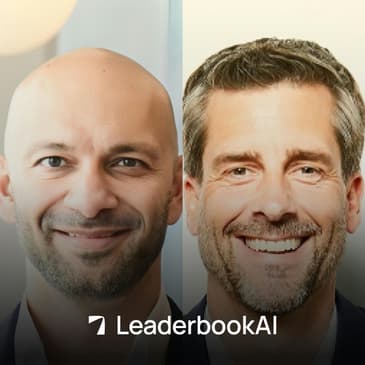
Alim Dhanji and Michael Rossi share how they executed a smooth leadership transition at Adidas Canada—highlighting strategies that preserve culture, ensure continuity, and elevate long-term value creation. This is a powerful case study for C-suite strategy and private equity considerations, showing how smooth business process automation and AI automation transitions require solid leadership.
—
Subscribe to the LeaderbookAI Podcast (formerly CPO PLAYBOOK): https://leaderbook.ai/podcast.
Want to create 10x the value of your business or investments? Let’s talk: https://leaderbook.ai/contact
Powered by the WRKdefined Podcast Network.
[00:00:00] I'm Felicia Shakiba and this is CPO PLAYBOOK, where we solve a business challenge in every episode.
[00:00:12] Improved succession planning could potentially boost annual gains in the large cap US equity market by a full percentage point, adding to the projected 4-5% increase estimated by Wall Street.
[00:00:26] This enhancement would translate to company valuations and investor returns being 20-25% higher, according to Harvard Business Review.
[00:00:37] Today we're in for a treat as we have both a lean and Michael here to share their experiences navigating a successful transition and succession planning at Adidas.
[00:00:49] In 2021, Alim Dongee smoothly took over the reins from Michael Rossi as President of Adidas in Canada, ensuring minimal disruption to the business while gaining widespread acceptance and support.
[00:01:03] Their journey highlights effective baton passing between outgoing and incoming leadership, maintaining momentum and ensuring a seamless handover of responsibilities.
[00:01:13] Alim and Michael welcome to the show.
[00:01:17] Thanks for having me. Pleasure to be here.
[00:01:20] Michael, can you describe the initial steps and strategic considerations that were taken when planning your succession?
[00:01:28] For me it was a bit of an inflection point 15 years with the company in about five years in the role as President of Adidas Canada.
[00:01:37] And I was thinking ahead as to what was next for me, what I was looking for and that's where the possibility of moving on first came up.
[00:01:47] And so it felt like a good time to reflect and think about their opportunities because we were just coming to the end of a five year strategic plan.
[00:01:56] We had accomplished a lot of what we set out to accomplish as a team and as a leadership team and be personally as a leader.
[00:02:04] And so it felt like perhaps a good time to contemplate new opportunities for myself and new leadership for the company.
[00:02:11] So it was the ingredients all coming together to point towards the opportunity for change and the opportunity to do it well.
[00:02:18] And Alim from your perspective, what were the key qualities and experiences that were deemed essential for the next president of Adidas Canada.
[00:02:30] And coming from a chief people officer role into a presidential role as significant you don't see many CPO's even being considered.
[00:02:37] On one hand I would say regardless of its the president of Adidas role or not any leadership role there are capabilities around leadership engagement.
[00:02:47] And culture as well as more of the technical or functional competencies you have based on the market composition that we're going into our necessary.
[00:02:57] Then there's also who was in that role before and good thing batting Michael said a really high bar, which is a good thing batting for me is I had to live up to that bar and make sure that I can honor all the great work that he's done.
[00:03:08] But that's a key mark of the culture that was there and so it was important for me to make sure that there is a leasehold improvement there and that I don't deteriorate the culture.
[00:03:18] But also I think important to note the context, the context is really important because it was in the midst of the pandemic.
[00:03:24] There were social justice movements and momentum that we were responding to supply chain had been disrupted.
[00:03:31] So really a perfect storm and not one that would be conducive to a transition and most of that was done virtual.
[00:03:39] And so I think putting that as an overlay in terms of the qualities I just mentioned in top of that, I think you had to double down on empathy and building relationships without having to meet people in person and just have a level of vulnerability quite frankly on what you bring and what you might not be able to bring.
[00:04:00] You could develop that team capability to support you instead of jumping in and leading and making assumptions along the way right from the start.
[00:04:09] Could you discuss some unexpected challenges and how did you manage them?
[00:04:15] What specific actions did you take to meet those challenges?
[00:04:19] I think I leaned set it up nicely, it was a very uncertain time we were going through we had announced this leadership change virtually.
[00:04:27] It was already a time where people were uncomfortable with what was going on in the world around them.
[00:04:33] There was a feeling that maybe we didn't control a whole lot of what was happening and it had the potential to feel like that all over again.
[00:04:40] And so I think one of the things that the company and a Lehman I all did well was we're really transparent about what was going on.
[00:04:47] We were transparent about where I was going next, we were transparent about the timing we were transparent about the way that we were going to almost say co govern for a little period of time of overlap.
[00:04:57] And one of the things there was the potential for that to be confusing because all of a sudden people are sitting in meetings with one leader who has made decisions in the past who still in the room virtually.
[00:05:08] On the other hand, there's a new leader coming in who's asking questions and observing and trying to learn and listen.
[00:05:13] And I think the way that we worked through that was we tried to be as clear as possible about who was making the call and at the beginning it was still me with a medium shadowing me.
[00:05:25] And then gradually as a Lehman got more comfortable with the players and the issues in the business.
[00:05:31] It flipped to be in verse, it was a Lehman making the call and I was in the background coaching if needed.
[00:05:36] But we tried to keep those lines clear and I think that gave people more control, more of a sense that they understood what was going on and who was in the room and it just sort of calmed people down and probably helped both of us through that transition period as well.
[00:05:52] For me everything on Michael said I think the addition if I could add offer one is everything was virtual for an extended period of time and just my sort of my nature maybe to should style to connect with people.
[00:06:06] And then I said so doing that virtually was difficult and I was prolonged if I recall correctly.
[00:06:13] I was in the role around January we had some overlap but it didn't actually meet the leadership team and person until August.
[00:06:21] So it was very, very prolonged and unexpected in that sense, but the thing that helped us in retrospect is both of us came to this transition with low ego.
[00:06:30] And it's difficult being in the room as a new leader and vulnerability. You've also mentioned I came from a HR role there was some level, I'm sure doubt of what's to say,
[00:06:41] Charca I'm going to do and how is he going to create value. So I think dropping the ego there and being clear about what I didn't have and also what I did have and add these relationship from global.
[00:06:55] I've done a lot of transformations work and thinking about how to evolve an organization.
[00:06:59] It's like a lean into that but also Michael being there who's also very low ego person gave me the space to find my own voice, but also overused work right now or in psychological safety for me to reach out to him.
[00:07:14] If I had any questions whether it's ahead of the meeting texting each other during the meeting or after the meeting.
[00:07:20] I felt very supported and at the end of the day what I hope the team saw were two leaders that care very much about their well being.
[00:07:28] I mean did you ever feel pressured to show up and prove your value?
[00:07:33] I hear you talking about having low ego but I can only imagine that I'm sure leaders coming into a new role they want to be able to build trust and show that their capabilities
[00:07:43] when everybody's questioning who is this leader and what are they going to do moving forward. Did you ever feel that pressure?
[00:07:50] For sure, and I don't think that is associated with just this role.
[00:07:54] Imposter syndrome I think is a real thing and I don't think that has ever not been the case with me. The role that I'm in now.
[00:08:01] I mean in industry that I didn't have experience with and so I'm learning along the way. So that imposter syndrome is there.
[00:08:09] My sort of antidote to imposter syndrome is not trying to be someone you weren't. If you're open and honest and vulnerable and I had lots of one on ones with my leadership team but also one on one to many other's in the company and that was transparent we had many get to know discussions.
[00:08:25] And it was clear what I had and what I didn't have and part of what we had was a leadership team was very capable and the new dear domain expertise really well.
[00:08:35] So that gave me some comfort that there wasn't exposure there and I could help them evolve and they could help me evolve.
[00:08:44] Michael what was the extent or the role that you played to show your support for a lean right because you have people questioning a new leader
[00:08:54] and then the people that might trust you are looking to you do you do you accept this new leader this kind of unspoken communication. It happens.
[00:09:06] I think for me when it was actually one of the principles that I always believed in and stood for and spoke for in my leadership was openness to change.
[00:09:16] And how it's a positive thing and the reality is even when I came into that leadership role six or seven years prior.
[00:09:24] I was unproven. I was an unknown. I was for many people not the choice that they expected but over time I think I was able to demonstrate to people my value, the unique perspective I brought.
[00:09:38] And so just reminding people of that story. Hey, what I came into this role you were unsure about me and we took the time to get to know each other you gave me a chance and look at what we've accomplished.
[00:09:50] And so give the lean that exact same courtesy and respect and over time you're going to learn about him and he's going to be different than me. He's going to have different ideas and that's a good thing.
[00:10:00] And I firmly believe whether it's a team, an organization, a company.
[00:10:05] Leadership can get stale just over time even the most innovative people sometimes it is good to have a change of leadership and perspective and tone and voice.
[00:10:15] So just trying to show people that hey, Liam's going to come in and it will feel different and you can't sugarcoat that a new leader is going to feel different.
[00:10:22] There's going to be a different style, different priorities, different communication all of that. So just trying to let people see that's okay. That's going to be good.
[00:10:33] Adapt, be open and then certainly a Liam picked that up quickly and started to build trust with people once he got in the role.
[00:10:41] I think that's really important point that you made.
[00:10:44] Did you Michael during the transition? What were some of the main challenges that you faced? How did you approach solving them with a Liam's support?
[00:10:55] The one thing and again, it was really frustrating being virtual because you go through a situation like this where I loved the company.
[00:11:03] I loved these people. I loved the team. I missed them, missed seeing them in person and then you announced a major life change that you're leaving the company to move on to something else.
[00:11:15] And what was funny was you were missing those opportunities at the coffee machine just to check in with people and people were trying to check in with me.
[00:11:23] They wanted to know was I okay. Was this my decision? Was there some big conspiracy theory in the absence of that connection? People might start to create their own versions of the story.
[00:11:35] And so I think just over time being able to show people in whether it was one on one conversation group chats just to show them first of all, hey, I'm moving on and moving towards my dream of becoming a coach.
[00:11:47] I'm okay. I'm really excited about this and it's a fantastic move. I think that helped people but I'll be honest, it also helped me. This was a big change for me.
[00:11:59] And so being able to discuss that with people and let them see that over time, I think we all got a little more comfortable with the change. It was also hard quite frankly after 18 years with the company you want that sense of closure.
[00:12:11] And so many people changed roles during COVID and left companies and left really deep relationships. And I believe to this day some people still don't have that full closure.
[00:12:23] I was really fortunate. My team organized a virtual send-off for me. That was beautiful. I actually just a couple of weeks ago it was three years to the day and I went back and watched video from that.
[00:12:35] And it was just beautiful to be able to get some of that closure. It was virtual but to be able to hear a little bit about the impact I had that helped me get the closure I needed to move on.
[00:12:45] And then I think between a Lehman I just finding our way in terms of when was it the right time for me to step back. When was he comfortable to start making the calls and I remember that was a very fluid organic way that a Lehman I worked on it.
[00:13:01] We talked every week. Can we prepare for the calendar and then it just gradually became obvious he didn't need the check-in calls he was good and it was time to let go of the reins. And so I think it lead mentioned that ego free approach.
[00:13:15] So the values that you both had was really important to the transition because there was that consistency that you both had those things.
[00:13:35] I think so yes for sure. I'll aim as the incoming president how did you approach gaining the trust and acceptance of a data employees and other key stakeholders.
[00:13:45] And considering obviously you've been there for quite some time prior to stepping into this role, but how did you gain that trust as the president a candidate?
[00:13:54] I was with the data's in Germany and it had office for a couple years. And I think during every tumultuous period the pandemic other things that were happening with the organization globally and so it worked very closely with the board and some of our key leaders and developing those relationships we're going to be an asset as I think about what's next for a country with so much potential and how to be leverage those relationships.
[00:14:20] So all that capital that was developed in Germany was going to translate and hopefully monetize for the team and Canada.
[00:14:28] But the trust they think comes from the approach that was taken as everything that Michael and I did together already set me up.
[00:14:35] I think in some form for success there was a sort of implicit endorsement also the way that Michael and I had worked together.
[00:14:43] And I think it's important to recognize that it's very unusual. It's not usually the case where we up two leaders that have a very graceful and elegant transition.
[00:14:54] And so we should recognize that's unique. But in terms of building the trust, I'm a huge fan of listening sessions.
[00:15:01] And partly because there was no coffee machine only my kids were at the coffee station in the kitchen. There was no cooler that I could go to absorb the culture directly and have the conversations.
[00:15:11] So I had to overcompensate by scheduling a lot of listening sessions and just hearing from people and I said look, there's not about me jumping into its solutions.
[00:15:21] And I think that was very cathartic to people because they insure that I was there to be a servant leader and understand where they needed to go.
[00:15:35] What ideas they have, etc. Rather than me coming with the playbook.
[00:15:39] Because frankly they didn't have a playbook. There was no template of getting through the pandemic. There was the Canadian laws were shifting around closure and whatnot.
[00:15:47] And we had to do this together. I think the trust came from listening mainly and then being open and vulnerable and authentic.
[00:15:55] And then I think finding some quick wins along the way where every little quick win that you can get for individuals whether it is around an ERG of what the ERG feels important to have a vision for them or whether it's something small in the office layout or it's a big product initiative because Canada wasn't able to get
[00:16:14] that the direct selection of the category wanted to introduce and bigger countries were getting that priority.
[00:16:20] And being able to phone a friend in Germany helped accelerate that. And they won by one, those quick wins helped build more trust and and confidence.
[00:16:29] Organizational culture often plays a significant role in leadership transitions.
[00:16:35] And I love that you talked about certainly leadership as well. And I want to go back and ask you what that actually means to you because it does I think play a big part of organizational culture.
[00:16:48] But what aspects specifically of a deed is culture were prioritized to ensure it's moved change over.
[00:16:56] Yeah, I don't think that there was a playbook. I'm pretty sure there wasn't a playbook that we got from corporate this was Michael and I connecting forces and saying what did the people need.
[00:17:06] And then what do we each need in order for us to be successful for the team?
[00:17:09] But I think the value is our consistent so we said earlier in terms of our desire for graceful transition making sure we put people first not undoing some of the big things that Michael and the team have done around and just treating the team with respect.
[00:17:23] We also knew that in candor there were some challenges of being in a market and a smaller market next to the US for example.
[00:17:30] And so how resources get allocated, etc. How do we make sure that we do what's right for the country?
[00:17:37] And we had good alignment there and we were able to prioritize some of the important aspects that we wanted to continue, but also start to calculate what needed to shift going forward in the culture.
[00:17:48] But being mindful that we didn't want to press play right away on what needed to shift until I felt comfortable that I've heard from for many employees as possible and could better refine my thinking around where the culture needed some evolution.
[00:18:03] I think from my standpoint, we had been through a lot of change in the years leading up to the change over from me to a lean.
[00:18:13] We transformed the business and evolved the culture all the way along and to me the hallmarks throughout that number one was always genuine care for our people.
[00:18:23] We knew we had to do some tough things to fix the business, but we always put people first and I think we carried that through this transition as well.
[00:18:32] Part of that was the second piece which was transparency. When you leave through change, I think it's just so important to be open and if you have to do difficult things or things need to change just being open and honest with people about what's going to happen and why.
[00:18:46] And people are adults employees are adults. They're responsible mature people who can make their own decisions and respond accordingly.
[00:18:54] We treated people with that respect. We were transparent about what was going to happen so it wasn't a surprise and I think that made what could have been an uncomfortable situation much more comfortable if not really comfortable because I think they saw right from a lean eye we were being really open about how this was going to work.
[00:19:13] We were sitting and meetings together and it wasn't awkward. Some leaders might have had a hard time in that scenario we were more than fine and I think that's it told them and gave people a comfort level to move forward as well.
[00:19:26] It sounds like you guys did a lot of things really well. What did you not do so well in this transition? What were the things that bubbled up that maybe you took a misstep here or there? It couldn't have been all perfect.
[00:19:41] I don't know that I call it a true mistake, but I think we were extremely generous with the amount of time we allowed for the transition and maybe some of the dialogue.
[00:19:51] And maybe we were surprised by how fast we actually were ready to move forward. I think with Alieman I we had planned quite some time for these shadowing meetings and one to one conversations.
[00:20:05] And it just became apparent fairly quickly through the process that people have responded they understand where we're at. They're starting to move forward with Alieman's leadership and we actually don't need to have all these touch bases and we actually can go let go a little bit sooner.
[00:20:22] So I don't think it was a mistake. I think it was great. We had the luxury to allow that time and I think it was great. We also recognized we didn't need as much and could move forward faster and hand things over to Alieman.
[00:20:34] Yeah, I would agree. Oh, heartedly if there was one doover which was not within our control it's not doing a change during pandemic or a supply chain disruption but other than that, I think the transition went as as best as it could probably could and I don't look back to say we've had any regrets or anything that we would necessarily do differently. That sense.
[00:20:57] What are the key lessons that you've learned from this presidential succession that you think could benefit other organizations undergoing similar changes?
[00:21:14] I would say and I think we've recognized through this conversation. We were somewhat unique in terms of having the luxury of time in our scenario but I do think that when you make time for a graceful and well thought out transition process it allows for some communications and transparency.
[00:21:35] It allows for people to catch their breath and understand the change that's about to take place.
[00:21:40] And I don't want to over-affisize the importance of a leader an individual leader but a change in leadership is a big change and in some ways it is almost like a loss if the leader's been with the team for quite a while.
[00:21:55] And so I think our process allowed people to process that and to acknowledge what was going away and to then get comfortable with what was coming in.
[00:22:05] And I think whether you have lots of time or a little time, I would say one thing is just giving people that space to acknowledge and feel what they're feeling about the change and recognize the impact and then start to move forward again.
[00:22:20] That's really critical.
[00:22:21] And I would also say that an open process where people are very clear on timing and details and what to expect, that can help them gain some comfort with what can be an uncomfortable position, especially if younger employees may not have been through a leadership change in their career.
[00:22:39] It may be the first time they're experiencing it and I think facts and knowledge really do help people become more comfortable with what's going on around them.
[00:22:47] So if I were to reflect back and say if we had delivered a successful transition which I believe we did, then how do we codify that? How do we create a playbook out of that so that our leaders could benefit.
[00:22:59] I've said, it probably starts off first with the two leaders agreeing on some principles and what's most important and I think some of those principles come from where is the risk.
[00:23:09] And intellectually because we were on the same sort of page, I think if we had done this exercise, we would have probably listed the organizational risk because people were first how to make sure that they are treated in the best repostillary managed to change.
[00:23:22] Then of course there are some major customers and how to re-make sure that those customers are treated with the respect and what risks are there.
[00:23:30] And then what are some other risks? And once you understand the risk assessment, you can create your principles on how you're going to lie.
[00:23:37] And then having that done, then gives you both some comfort around how you move forward because you don't want to trip up in front of others.
[00:23:44] You want to be as much as possible coordinated in your approach for communications supporting the strategy that's currently in place and supporting each other during the various pages of transition.
[00:23:57] The second is, I think the luxury of time is important but I certainly found it very reassuring that we had a prolonged period of time.
[00:24:05] So it gave me the comfort that the training wheels were there.
[00:24:08] They were available for me, but that also had the ability to take them off without offending anybody.
[00:24:14] And then the phone of friend still stays.
[00:24:17] Even if it was a year later and I needed to ask Michael a question, I know that Michael would take the call or text message or whatever.
[00:24:24] So I think understanding the timeline and how you're going to socially contract with each other, pre-during and post-changes.
[00:24:33] How much time was there during the transition?
[00:24:37] I was living in Germany first, so the discussions started before the actual date where I stepped into the role.
[00:24:44] And Michael and I had lots of conversations just understanding the business.
[00:24:48] What does work, what doesn't work, we did a talent map, etc.
[00:24:51] And then there was the January, I'm going off the memory now, Michael, it's keeping honest here.
[00:24:55] I think January formally, I stepped into the role, but it was still virtual because I was living in Germany.
[00:25:00] So I'll quit being leader of Canada and you're in Germany.
[00:25:03] I didn't make the move to Canada until end of March, but we were still in closure.
[00:25:08] It doesn't matter where I was living, I could do the role.
[00:25:11] And I think that the transition saw itself through until end of April and then the training reels came on.
[00:25:17] When you stepped into Canada, didn't people have some suspicion, someone coming from another country to lead Canada?
[00:25:27] What was that pushback or resistance? Was there any of that?
[00:25:30] Not really just because I am Canadian.
[00:25:33] And so I've just been traveling and working in different parts of the world.
[00:25:37] And I think that that was one of the comforting points was, I know the country the market really well.
[00:25:44] And at the end of the day, one parallel was that Canada is such a diverse country and the markets we serve.
[00:25:51] I reflected in our consumer base.
[00:25:53] So as we think about the moments that matter the most for Canadians and where it even shows up, that was pretty powerful.
[00:25:59] And I've done a lot of work in the D.I. states. So it's an interesting connection where my work in the HR space was able to translate into how do you commercialize that?
[00:26:08] And it was a very authentic way of doing it. We didn't do it just for the sake of diversity. It actually served diverse markets.
[00:26:14] And so it worked out quite well in that sense.
[00:26:17] Oh Michael, Aleem. Thank you so much for telling your stories and taking us on this journey.
[00:26:23] I'm sure many organizations have this same challenge around transition.
[00:26:28] And it sounds like you've done it beautifully. So thank you for sharing and being here today.
[00:26:34] Thank you for their opportunity. My pleasure. Thank you.
[00:26:39] That's Aleem, Don J and Michael Rossi both former presidents of a D.I.S. Canada.
[00:26:45] Aleem now holds the position of Chief People Officer and Executive Vice President at Equinox.
[00:26:51] And Michael Rossi has founded Vaux-Chay Leadership.
[00:26:56] If today's episode captured your interest, please consider sharing it with a friend or visit cpoplaybook.com to read the episode or learn more about leadership and talent management.
[00:27:09] We greatly appreciate your rating, review and support as a subscriber. I'm Felicia Shackiba.
[00:27:15] See you next Wednesday and thanks for listening.
[00:27:21] Thank you.
Sponsors
