
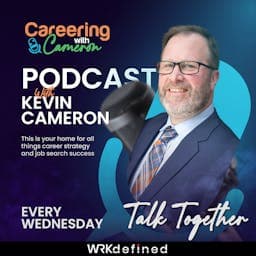
Kevin Cameron sits down with Colleen DiFabio, founder of BI3 Careers, to unpack the realities of consulting, what it takes to make the jump, and why AI on your resume is no longer optional. With 25 years in tech staffing, Colleen brings sharp, grounded advice for anyone navigating career transition. One standout line: “Staffing is filling a rack. Consulting is solving a problem.”
They also dig into BI3’s Rising Star programme, placing early career talent into companies that need AI-fluent new grads.
Key Takeaways
The consulting vs full-time decision is cultural, not just financial. Know what environment you thrive in before you commit.
AI fluency is now baseline. If it’s not on your LinkedIn or resume, hiring managers assume you’re avoiding it.
The fastest way to get smart with AI is to use it. One of Colleen’s consultants spent 24 hours straight using it and now leads AI strategy for clients.
Recruiters want business outcomes, not just tool names. Can you describe a workflow you improved? That’s the question.
Rising Star screening goes beyond grades. Emotional intelligence and scenario-based questions determine fit.
Episode Highlights
BI3 Careers’ three pillars: consulting, IT staffing, and the Rising Star early career placement arm launched in July.
Candid advice on consulting: higher reward, lower risk for both sides, but not the right fit for everyone.
The AI resume conversation every job seeker needs to hear. Not mentioning it is now a red flag.
Why Colleen asks AI scenario questions in every interview and what a great answer looks like.
The story of a recent grad who went from NASA internships to leading an AI strategy team of seven.
Timestamps
00:00 Intro
01:00 What is BI3 Careers?
03:15 The Rising Star programme
05:00 Should you consult after a layoff?
08:00 Navigating consulting without burning bridges
14:00 How Colleen built long-term client trust
17:00 How AI is changing who gets hired
23:00 Why AI has to be on your resume
25:40 Rising Star screening and what clients want
29:00 What Colleen wishes clients and candidates knew
31:30 Colleen’s why
Connect With Colleen DiFabio
LinkedIn: https://www.linkedin.com/in/colleen-difabio-3886b93/
Website: www.bi3careers.com
Email: colleen.defabio@bi3careers.com
Mondays: Career Connect Conversations open to anyone who needs direction.
If you found this advice valuable, please hit subscribe, leave us a review.
Visit Talent Connect:
Website: www.talent-connect.net
LinkedIn: Talent-Connect
Kevin’s LinkedIn: Kevin Cameron PCC
Production Credit: Edited and produced by @the32collective_ / https://www.the32collective.co/
Powered by the WRKdefined Podcast Network.
[00:00:00] Hello, hello. You're tuning into the Careering with Cameron, your safe place to ask all the dumb questions about finding a job. Hey, everybody. It's Kevin Cameron from Careering with Cameron. Thanks for tuning in today. I am thrilled to be able to bring you Colleen DiFabio, who is a very good friend of mine and somebody we've been trying to get on the show for a little bit and finally worked it out that we were able to coordinate schedules.
[00:00:28] And so Colleen is somebody I've known for 15. Yes. Probably when we graduated from high school 15 years ago. Thanks, Kim. No problem. And so, you know, Colleen is my expert when it comes to what's going on in the tech consulting space, what's going on in terms of hiring on the consulting side and also the newer space for both of us.
[00:00:57] What's going on with folks that are coming out of school and looking for new positions. And so, Colleen, welcome to the show. Thank you so much. Happy to be here. Good, good. So tell us a little bit about your firm. You've got three different prongs to it, correct? Yes. Okay. So I think I like the number three because I have three kids.
[00:01:18] Anyway, so BI3 Careers. We started this in 2019, right before COVID, but we made it through COVID. So we'll make it through anything.
[00:01:55] Mm-hmm. When I started BI3 careers, we did decide, you know, we were going to do a couple of different things. A lot of consulting, you know, strategy type work with our clients where somebody has created this strategy or just needs some advice. And then also on the execution side, we provide the actual people that will execute on that strategy.
[00:02:22] Through the years, though, we started to see we, you know, in partnership with different universities that we were asked to partner with, like just to do some mock interviews. We started to see this, like need for helping the next generation of leaders. And also we had some clients asking us for the next generation of leaders. So just in July of this year, we just kicked off our rising star brand, like arm of our company, which is early career, high potential talent placement.
[00:02:50] And that's not just information technology. That's anything. Could be HR, finance, could be information technology, operations, and any part of a company. And we've been really successful with that so far. I hired a rising star, also a recent college grad, to prove out the theory. And he is doing fantastic. We're happy to have Ryan Gentile on board, leading that part of the business for us. So just, you know, so we do consulting.
[00:03:19] We do traditional information technology staffing. And then we do rising star early career talent placement. That's amazing. I love the rising star piece because as you and I both know, the job search component for recent graduates is pretty challenging. Not only to find something, but also understand what that whole process is like.
[00:03:44] And while it has changed quite a bit, when I started in staffing, it was you waiting at the fax machine for the confirmation page. We no longer have that. I think right before then they were like, oh, we don't have to put this in the mail anymore? That's kind of nice. Right. So and then it was still on tablets before that. But, you know, I think it's nice that we can not only move things quicker, but they have changed quite a bit in terms of how we work. So very cool.
[00:04:13] What about like what types of companies are you working? Are they mostly like midsize, large? Like what does it look like? Most of our clients, the majority of the people I've worked with for my 25 year career in placement has been larger Fortune 500 companies. You know, I work a lot with Independence Blue Cross and have for many years. They've been a fantastic client. Then we work with some smaller PE backed companies. And that's a that's a different kind of hire. They want a different kind of person for those organizations.
[00:04:43] And some of my clients that worked at those Fortune 500 companies, they move on to those smaller type companies, PE backed companies that they're building for sale. And like, it's just really cool to be able to work with both types of organizations. Yeah. So we do a mix of both. Yeah. That must be fun to kind of straddle that as well, where you've got two very different work styles in terms of resources versus less resources. And so that's pretty neat.
[00:05:14] All right. So the question that I often hear from people who are in career transition, search mode, preparing to pivot, and we're going to do another whole episode on pivoting. But but and that's going to be really fun. So keep your eye for that episode. But people who are going through career transition. Maybe they have severance. Hopefully they have severance. Hopefully they have a little bit of a cushion, a parachute, if you will, coming out of that role.
[00:05:43] Often the question is, like, should I consult? Right. Can we talk a little bit about, like, what is it like to be a consultant? How does that work? So I get asked that question a lot. And I have even a whole document set up for people that are moving from maybe a layoff into consulting. So it helps them figure out the incorporation process, the insurance process.
[00:06:12] Maybe do they want to have their own website? Also, probably the most important piece of it, the accounting piece. You know, they have to see if this makes sense for them. So I always say if you're making above a certain amount of money, you know, an hour, if you're looking for a certain hourly rate and you've made a certain amount of money, I sometimes tell people, like, if you're comfortable with this, you talk to your spouse, your partner and your accountant.
[00:06:39] And you think this is the right thing for you to do, I would recommend this because there is some flexibility. And you get to also really work on some really cool stuff. There's usually a lot of pressure on you because you're there for a specific period of time to deliver something very specific. But if you're good, you can take that. You should take that risk. You can typically you you get usually make more money from an hourly perspective. Now, you will have some downtime.
[00:07:07] So you have to account for that, like in between projects. But you also can gain some freedom, too. So you you say you don't like something. Maybe you don't stay. Right. You don't have that kind of flexibility. If you take a full time job, you're probably let me try this out. Let me keep trying this. No, like I always say the risk from an employer perspective and from a person, like candidate perspective is lowered.
[00:07:35] If you do consulting, if they don't like the consultant, they call me. I take care of it. If the candidate, the consultant doesn't like the opportunity, they call me. I take care of it. Right. So the risk becomes lower, but the reward should be higher. And I do think that if you have the right tools to bring to a company, it's a good path to go down. But when I get these calls, I don't recommend this to everyone. I recommend it to some people.
[00:08:06] Yeah. Which is accurate. And that's that's a good good piece of feedback. So what about I think there's always a concern of if I take a consulting position and I still want a full time role. Well, how do I navigate that without burning a bridge? Yeah, I tell people take some time to figure that out because this is a small market. People know each other.
[00:08:34] You don't want to burn a bridge. So you really need to take some time to decide, am I built for consulting or am I built for a full time position with a company? What kind of culture feels better for me? Some people feel more secure in an FTE role versus a consulting role. But in reality, you can be terminated at any time, like whether you're a consultant or a full time employee. But, you know, you have to decide what you're comfortable with. And I do tell people you need to think about it.
[00:09:04] You don't want to burn a bridge. This is a small market. And also, you just want to do the right thing. Yeah, that's that's the biggest thing. You don't want to be in that networking environment where there's somebody there who knows knows the bad version of you or a mistake that you made. And you know that that's clear to them. So so, yeah, I could not agree more.
[00:09:27] I think also making sure that the way you you are interacting and working and behaving is is what people are going to remember. So it's the old saying, like people remember how you made them feel. Yeah. People also remember how you worked. And there's always a back channel someplace where somebody says, hey, I'm thinking about talking to Kevin. What was your experience with Kevin?
[00:09:56] Because you just you don't know where those channels are going to be. So so, you know, to your point, do a great job. Mm hmm. And really think about what you want before. And so that's so the BI three, the insight piece. I really try to go through that with the candidates as much as gaining insights about clients and client needs. I need to understand them. Yeah. You know, I need to ask the right questions.
[00:10:22] Like for the rising star, we have 10 questions that we ask scenario based questions that help us determine what is their level of emotional intelligence? What is their level of integrity as best we can? And when we ask these scenario based questions, we can get some interesting information, even if it's just their experience of rising star, you know, younger person working in a restaurant.
[00:10:48] You know, but we try to use the same model when we're working with, you know, a mid career person. When we ask those scenario based questions, we can gain some insights that will help us determine where this person might be best fit. Yep. That's really smart. And I think, you know, getting started in staffing, especially in the consulting side many moons ago when I was there, it was really more about like, who can you put in this role to essentially have the client have somebody who's getting the work done and also make money.
[00:11:19] Taking it the opposite direction to make sure that fit is secure is so much smarter. And longer term, you're dealing with less of the I'll handle it calls that you get. So, you know, very smart to be able to process it that way as well. Are you still seeing like fractional type work? Is that still happening? I do see some. I typically don't work in the fractional space as much.
[00:11:47] People like the O'Connor group, they do a lot of HR fractional work. You know, some companies are very specific to HR, I'm sorry, to accounting fractional work, CFO types. I'm primarily, it's a 40 hour a week commitment for three to six months usually. Got it. Okay. That helps too. Excellent. All right. So in terms of the firm, right?
[00:12:15] So you went into consulting, you came out of essentially staffing before then, obviously tech services type of environment. Mm-hmm. How did you like figure out that this was the right spot for you? Well, I think it's part of like the trust you build with clients. Mm-hmm. So you start out, they give you a job description and you find a person.
[00:12:40] And as you build trust with those people, they give you a problem and ask you to help solve it. That's the difference. Yes. So staffing is filling a wreck. Yep. Consulting is solving a problem. And as the trust, the clients I've worked with, I've worked with for 20 plus years. And when they go to different companies, then I go with them, right? They bring me with them and I feel grateful and lucky for that.
[00:13:07] But it's also a lot of hard work in maintaining those relationships and doing the right thing. Yeah. You know, doing the right thing for them and also doing the right thing for the candidate. Like I don't want to, I will interview a great person and I'll say, you are fantastic. You bring these skills to the table, but our client needs X, Y, Z. And I don't think this is a good fit for you. And I also think, hey, this might be risky for you.
[00:13:37] You're leaving a full-time job for a consulting role that you are matching 75% of the requirement. That's a risk for you. And I do like to think about people's families and their financial situations. I don't want to just, I'm building relationships. I'm not filling a position, which is good. And trying to help clients solve their problems. Yeah. And that's sometimes, yeah, sorry. Sometimes that's with a person.
[00:14:05] Sometimes that's with a process and sometimes it's with technology. Sometimes it's all three. And my clients know that they can ask me questions about all three of those areas and I will give them my honest answer. And if I can help them, I'll tell them. Yeah. That is, you know. So it's interesting going back to my recruiting timeframe of asking the question, why is this position open?
[00:14:30] And then having individual conversations with hiring managers on what they were looking for was always a very telling experience, regardless of whether I was on the HR side or, you know, in a consulting capacity. And hearing different answers and then understanding completely why this position was still open and they were having a hard time filling it. And so, you know, having those client relationships that you have where clients are coming to you and saying, Colleen, this is what we're dealing with. Like, what do you think?
[00:15:00] What should we do here? And being able to have a resource like that has to be very powerful for them to have somebody who not only knows their organization, but is also working with other organizations that can assemble some best practices to say, have you thought about it? So, you know, I know we have not gotten into this yet in our conversation, but it seems like it comes up in every conversation.
[00:15:26] We are now running with this age of AI as our, I can't say co-pilot because that might be an advertisement. But it's our gem. No. So it's our Claude. Claude is here. Claude's a dog. So, you know what? Claude is one of my best friends. Yeah. They're all of them. If there's a new one, that's even better. Yeah.
[00:15:50] So, like, how is AI, as it's coming more embedded, I'll call it, into work, how has that kind of changed in the consulting world? Well, every person we interview, we ask, what is your AI knowledge? What tools have you used? And it's not just about using tools and writing better emails. It's about improving workflows that improve business outcomes.
[00:16:19] And if they can't tell me a scenario where they improved a business outcome by using whatever their tool is, then, you know, we probably need to move on to find somebody that really has those kinds of stories to tell and has done the work. Because clients want that. And, you know, we had someone that we placed last year. Today is her one-year anniversary, actually, with one of our clients. She was a recent college grad.
[00:16:46] She had worked, done a couple internships with some great organizations like NASA, all related to, like, language models. And she was one of our rising stars. And she's one of seven people on the AI strategy team. Recent college grad. Yep. Working with leaders in an organization that have been there for 20 years. Yep. And she is bringing great insights every single day. And they're, like, they love her.
[00:17:17] And, but, so, like, every single person, though, has to have that example and probably multiple examples. Because we need to share that with the clients because clients are asking. They want to know. They want to bring that talent into their organization because they have a big organization typically and they don't have that across the board. They have pockets of expertise in different areas. Yes.
[00:17:42] So, I'm going to digress with you there for a second because that's something that comes up quite often when reviewing resumes and LinkedIn profiles of people who are in search mode. And the example that I typically, the first thing I look for when reviewing is, have you mentioned any exposure to AI in LinkedIn or resume? And I don't really care what field you're in. One, it has to be part of your resume.
[00:18:09] Because I do think that from a hiring perspective, we'll pick on the numbers, people, for a second. If you are somebody who is an accountant and you don't have any metrics on your resume, there's no numerical data, people are scratching their head. Yes. This is your language. Why wouldn't you speak this way? So, unfortunately, not everybody agrees that AI is a resource for them.
[00:18:39] I'm not saying it's a solution, but it's a resource. But if you're not mentioning AI at all in LinkedIn or on your resume, the assumption is that you don't like it or you are not comfortable with it. Right. So, you're almost better off just saying in your heading, I don't like AI. Because it'll weed through all the people who are going to want to use that, which, by the way, is the majority. The majority, yeah.
[00:19:05] And so, having that as part of the actual background is really important. So, here's an off-the-cuff question for you as a business leader and somebody who's also in the space. How do you stay sharp with AI? First of all, I have kids that are in college, which is really helpful. Okay? They teach me a lot. Yeah. You know, first we use chat. Then they're talking about Claude.
[00:19:33] And so, then, of course, if they're using Claude, I need to use Claude. I need to be up on what is the next. And what are the best workflow tools related to AI, right? So, then I got to look into those things. So, there's AI tools for sales. People got to look into those. So, it's just about staying. You know, I mean, technology has always been an environment that's always changing, right? So, it's just another way we're changing.
[00:20:02] It's just changing very quickly. Yeah. So, like, you've got to stay up on it. My team needs to stay up on it. My team needs to use it, right? And we all need to get better by using the tools that our clients are looking for. And being familiar with them is the first way to get hands-on experience. Yeah. So, we did a podcast a few weeks ago with Patrick Callahan at Kiel 3.
[00:20:29] And so, he is heavily involved in Delaware's AI programming. And so, I asked him, like, how do you learn it? And he said, which was the most obvious answer that I just love it because it's so, like, blatantly obvious. He said, I ask it. Like, I go in and ask your questions. And that's how I learn. And so, to get started, like, why not go in and just start asking questions?
[00:20:54] So, I think that there's, like, an intimidation factor of, like, once you start, it's going to take over and clean your house and make you dinner, which would be awesome. Yeah, wouldn't it be? It'll take the dog out. It'll do all that stuff. Yeah, all of it. All of it. It'll do your kid's homework. All of it. It's all done. But, you know, the other thing is that there are things that can do, like in our household meal planning. It will come up with recipes based on what people like and don't like. It'll even give you a grocery list.
[00:21:21] So, you know, there are things that can improve your life to make it easier. And it's a matter of getting comfortable in using those things. I bring this up just because it's important that if you're about to make a career change, whether you're going to be a consultant, even more so if you're going to be a consultant. Yes. Or you're going to be, you know, moving to another role in a different field or wherever it may be. You've got to be able to use it.
[00:21:47] And you've got to be able to say, these are some things that I like to use it for. And so, you know, what you're telling me is that on the screening side, looking for like, what are the solutions you're comfortable with? Because clients are asking, this is the problem we have and this is why we need help. Right. Absolutely. Absolutely.
[00:22:08] So, also, one of our consultants, you know, he's providing solutions for our client related to AI. So, he's a consultant, right? And he told me that the best way, the way that he got smart with it is he used it. Yes. He used it for 20, almost 24 hours straight, actually. And he barely slept once and told me this story. And I was like, this is amazing.
[00:22:38] But like, he's also my oldest person that works for the company. Mm-hmm. So, he went all in and now he is helping our clients utilize AI to improve business outcomes. And he's an amazing guy. He's a mentor, really, to me. So, just to point that out, he's the oldest person that you have working for you.
[00:23:04] And oftentimes, the generations who are not graduating right now, we'll call it, are the ones who are like, I don't know if I have time to learn this. I don't think I can. Like, it's a very similar conversation to like, I don't have time to go back to school for a degree in a field I want to move into. It doesn't really take days and hours. I mean, he did 24 hours and he was probably very sharp with it. It doesn't take a lot of time. Just use it. Start to like play around. Use it.
[00:23:34] To figure out where I can help you. And so, it really is critically important. I'm glad that you brought this up. It's critically important to make sure it's something you can talk about when you are networking, when you are interviewing, when you are looking for that next position that it's part of your background.
[00:23:55] Because unfortunately, if you're running away from the world of AI, where you are making it clear that you're not engaging with it at all. I'm going to say it's probably not that different from our parents when computers came into work. Yes. And saying like, you know what, I'm going to use the abacus instead. I'm not going to use the computer. And so, that's what I'm going to do. And just, unfortunately, you're slower now.
[00:24:26] And change is constant. And, you know, the best consultants are the ones that are willing to make those adjustments, to learn what they need to learn. You know, I would say like sometimes, you know, I don't know if this is what everyone would agree with it. The big four consulting firms hire very smart people that are willing to adapt and learn things. And typically, because they're smart, they can learn faster. Right? There are a couple steps ahead.
[00:24:57] You know, AI has been around for, you know, we've been talking about it a lot for the last three years. Probably started a little couple years before that. And we weren't all talking about it yet. But look at like, you know, but there are considered experts. How did they become an expert? They used it. Yep. And they kept using the new tools that came out to layer on top of the tools that were already out. That then improved the results they were getting with by using AI.
[00:25:26] Yeah. So, similar to computers. Yes. How do we get better at those? Because we used them. Same as your cell phone. When the cell phone changes and you get a new one, whether you're on whatever device, it takes a little bit to ramp up and then you're good with it. Same kind of thing. Probably the same as a car. So, there's a lot of different things that we run into that change and update. And so, it's a matter of staying with them and trying them. All right.
[00:25:53] So, in terms of recent graduates coming out of school, I want to talk about that as well, the Rising Star program. Yes. It's open to any background, right? Yes. In terms of what people want to get into. How do clients find you to connect with you on hiring those individuals? Because as crazy as it sounds, you know, this is a space where we still have job fairs. Yes.
[00:26:24] Going to schools and helping students find their next position. But it seems like there's always a disconnect between the companies looking for someone straight out of school. And we hear things like we want a really sharp student coming out who's got good grades and great personality and socially is somebody who can network or whatever it may be, depending on the role. Like, how do you get, A, the client to say, we've got this problem.
[00:26:51] We need to hire people who are just getting started, who we can bring into the organization as the future. And then how do you get the connection made on the other side, too? Great question. So, we're continuously working with local universities to build our network of strong candidates. And then we're continuously networking with our clients. And we're starting with the clients that we already have, right? Okay.
[00:27:20] So, we typically sometimes go in through procurement. Right now, we're trying to meet with HR. Because HR does the entry-level hiring. Yep. Procurement doesn't. So, we're letting them know, A, the program is available. And we want to partner with these clients that we've already done really good work with. So, but having that network of candidates already ready that we've already screened through our process. After we do the screening, we create a scorecard for each candidate, too.
[00:27:49] So, we don't just send the resume. We send the scorecard based on how we would rate their AI knowledge, their emotional intelligence, their attention to detail. Whatever is really important for the client, we can actually configure that on the scorecard. But so, it's like our rising star account manager, Ryan, he's always interviewing recent college grads. And he's always meeting with clients. And we try to mix the two and match the two.
[00:28:17] And we did just officially kick it off in July of this year. But I had been doing it for a couple of years prior. It was based on client need. Like, I want a really innovation centers of excellence, right? They want the best of the best. They want to know who's going to come in with a creative mind, but also knows how to use AI to make things better, smarter, faster, right? So, there's certain areas we will also kind of target for the rising star placement.
[00:28:47] Because we know that those people want those kind of hires. Yep. Smart. So, it's kind of like how we build BI3 careers and how I've helped build other companies. You're always looking for great talent. And you're always looking for great clients. And you want to help solve the problem by bringing the two together. It's mutual impact. You know, authentic connection has to happen. And then mutual impact, positive impact for both candidate and client.
[00:29:18] All right. We've got a couple more questions. What do you wish every client knew? I wish they knew how much time and energy went into finding them a good candidate. Because, you know, we only send over the top three, right, typically. But we interview, we kiss a lot of frogs before we find our prince, right? And, you know, we're typically not doing retained searches. We're doing contingent searches, right?
[00:29:48] We're not making any money until they make a hire. And, you know, the care and concern and the diligence that me and my team put into sending them three qualified candidates is a lot. You know, I love doing it. I love getting to know people and interviewing people. But it's a lot of work. Mm-hmm. Oh, yeah. So when a client says, this is a great candidate, that is really makes our day.
[00:30:16] Not just my day, but the recruiter's day and the whole team's day. We had a client recently that said, I hired another company. You know, I worked with another company as well as you guys. Your candidates by far were so much better and more prepared for this interview. And that was just the best compliment we could get. Yep. I love that. Okay. What do you wish every candidate knew?
[00:30:42] I wish they knew that we have their best intentions at heart. And if we say, you have great skills, but not for this role, it's not a negative. It's we're really trying to find you the right connection so that you can be successful. And I know sometimes people, they want to be the right person because it might be a financial challenge for them, right? Being out of work. And I do understand that. And we understand that.
[00:31:12] But if we put them in the wrong role, it's not going to work out in the long run anyway. Yeah. Yep. For anybody. All parties. For anybody. For them or the, you know, I would say the three is it has to work for the client, our clients, our candidates, and our company. That's what the three stands for. And if it doesn't work for one out of three people in that equation, it's not going to work long-term. Yeah. Yeah. For anybody. Yeah. Awesome. Okay.
[00:31:40] The question I ask everybody who's on the show, and I am very excited to hear this from you because I know how passionate you are about people. And I know how passionate you are about growing your firm. Just the level of professionalism that you conduct yourself with. Thank you. What's your why? My why? I feel lucky that I know my why.
[00:32:05] And I feel like when I got into, I want to say hiring over 25 years ago, and it actually was an education with Sylvan Learning Center. Someone helped me. Someone at that time saw something in me that I was good at, like, connecting people, right? And then I went on to working in technology and consulting.
[00:32:31] And again, I was salespeople would sell something and I would find the right person for it. I was good at connecting, right? And I feel like my why is identifying strengths in people and determining where they can make a positive impact. And I feel like that is my purpose. And I feel like one of the reasons I have been successful is because I live my purpose every day. I love that. Thank you.
[00:32:58] You know, I think similarly, when you get to a place where you get to do what you love to do, there's a feeling that you want everybody to feel that, right? Yes. I often tell the story that the first September when I came out of college and I was working was a bit of a cold shower because I was like, wait, this isn't going to change?
[00:33:28] There's no other classes that we can take. Yeah. So, you know, that was a big thing. And I was not in the right field at all. We will talk about that in a later episode. But, you know, I love the fact that you immediately said you want other people to know what their why is, which is an even better way of saying having, you know, people really like their jobs and be happy with them, which is a very powerful tool for somebody who is helping people
[00:33:57] who are in a consulting capacity because they typically know this is what I'm good at when I like to do. And so you're able to not only take that, but also say, oh, and there's also this to help you develop, which is amazing. So love it. Thank you so much for joining me today, Colleen. This was so fun. I'm so glad we got together. How can people reach you when they want to get to you after the show?
[00:34:24] So I'm on LinkedIn, Colleen DiFabio, D-I-F-A-B-I-O. A lot of people think it's D-E, but it's D-I. You know, www.bi3careers.com or just Colleen.deFabio at bi3careers.com. And my cell phone. You want my cell phone number? That's totally up to you. Just email me. Connect me on LinkedIn. You know.
[00:34:50] Oh, on Mondays, by the way, on Mondays, I do my career connect conversations. Awesome. So I tell people I will help everyone, but I do have a business to run. So on Mondays, I do a lot of time for my career conversations. I love that. That's awesome. So, all right. I'm available for Mondays for anybody that needs to talk. Sometimes people just need some to hear, to tell their story and to get some positive reinforcement. Yep. Yep.
[00:35:19] And some ideas on how to make that change if that's what they're looking for. And I always say, I have 30 minutes for anybody. Yeah. Sometimes you just need to give them hope. Yep. Well, yeah. And sometimes the answer is right there. They just can't see it because they're focused on the challenge, right? So that's great. All right. So everybody, if you've enjoyed today's episode, please give us five stars and go ahead and subscribe.
[00:35:48] If there is somebody that you know who should hear about Colleen, her company, the work she's doing with not only recent graduates, but also people who are kind of struggling in terms of what's next. Obviously, if there are organizations that have problems that need help, which is pretty much every organization, send them to Colleen to connect. But send them this episode so that they can hear it and they can understand who she is so they're prepared for a conversation.
[00:36:16] Colleen, again, this has been great. I really enjoyed our time together. Thank you so much, Kevin. Absolutely. We'll see you soon, okay? Thank you so much. Have a great day. Talk to you soon.
Sponsors
