
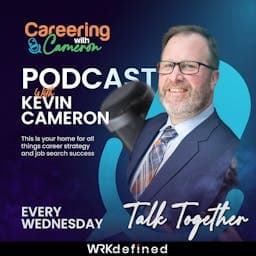
AI is changing faster than anyone can keep up with including the experts. In this episode, Kevin Cameron sits down with Patrick Callahan of Keal3, a tech entrepreneur with 25 years across data science, digital agencies, and AI consulting, for a no-fluff conversation about where AI actually is right now and what it means for your career.
From AI agents ordering his morning coffee to the concept of the "superintelligent company," Patrick breaks down what's real, what's hype, and why the best way to learn AI is to just talk to it.
Key Takeaways
The best way to learn AI is to use it - ask the tool itself where to start.
Never share personal financial data, legal information, or corporate trade secrets with a public AI tool.
AI agents are no longer the future, they are already mainstream.
Every organisation is now moving into the AI deployment phase: the question isn't if, it's how.
If AI can do the easy stuff, you have to be doing the hard stuff. Follow your natural curiosity and it will take you to the right content.
Episode Highlights
The data scientist who moved a button three pixels to the right and changed Patrick's entire trajectory.
Why Patrick won't call it "the AI" and what that choice reveals about how we think about it.
The superintelligent company: how AI retains institutional knowledge when people leave.
How Patrick's morning agent Marvin orders his coffee, curates his podcasts, and briefs him before he walks in.
What Stanford professors are now questioning about the value of a university curriculum.
Timestamps
00:30 — Introduction: Patrick Callahan and the Einstein of AI story
01:50 — Patrick's background: from Accenture to digital agencies to Keal3
04:40 — The button that moved three pixels and changed everything
07:07 — Why Patrick started Keal3 and what the name means
12:42 — Is it AI or the AI? Why the language matters
14:10 — How AI has flooded the job application pipeline
17:54 — Where to start if you know nothing about AI
21:27 — What not to share with AI tools
23:20 — What Patrick wishes people understood about AI
25:55 — What Keal3 does and who it helps
29:08 — The superintelligent company and the Oliver platform
34:15 — Patrick's morning agent Marvin — and what it does for him
37:35 — Where AI is heading in the next six months
39:00 — Patrick's why
Connect With Patrick
LinkedIn: Patrick Callahan at Keel3
X (Twitter): @biggreenbox
Email: patrick.callahan@keel3.ai
Newsletter: The Hype Index at keel3.ai
If you found this advice valuable, please hit subscribe, leave us a review.
Visit Talent Connect: Website: www.talent-connect.net LinkedIn: Talent-Connect Kevin's LinkedIn: Kevin Cameron PCC
Powered by the WRKdefined Podcast Network.
[00:00:00] Hello, hello. You're tuning into the Careering with Cameron Podcast, your safe place to ask all the dumb questions about finding a job. Hey, everybody. It's Kevin Cameron with Careering with Cameron, and I am super excited to bring Patrick Callahan on the show today. Patrick is with Kiel 3, but also for those of you who are watching via YouTube, I will introduce Patrick as the Einstein of AI.
[00:00:30] I will let him explain what this means. But I'm really excited to have Patrick with us. AI is something that is touching every component, I think, of our lives right now. And working with an audience that's going through job search and looking for something new and the pivots, and there's a lot of ups and downs to those in terms of like, is AI helping or not helping? And how does it work? And how does it fit in?
[00:00:57] I wanted Patrick to come on, and he's been gracious enough to say like, yeah, let's do something a few times a year, probably quarterly to do an update on what AI is doing and go from there. So, Patrick, give us a little bit of background in terms of like, who you are, what you're doing, bring us up to speed besides Einstein of AI. I hope my wife listens to this because she'll think that I'm Einstein. That can be arranged.
[00:01:23] Yeah, exactly. Well, you know, I'll go through my history and just briefly and then how we got here and how that picture is hanging on the wall. My background, I worked at Anderson Consulting for years. This is before they were public. And basically, Anderson Consulting is now Accenture. And, you know, my role is in technology. We would go on to clients and we'd say, this is how you adopt to change. And this is a technology that sounds deep in the tech.
[00:01:49] I left there to go back to Knight Law School for some reason. And then during the day, a bunch of us built a company called Hesta. It was a ERP solution, so big databases you can think of. We were creating for the banks here in the region. It grew. It got bought. And then I was like, what am I going to do next? A guy by the name of Lee Michaels and myself got together. At the time, it was the 2003.
[00:02:17] So it was right when ad agencies were still there, but they were doing the transition into digital ad agencies. So we created the digital-only ad agency and it's called Archer Group. And the intent there was, you know, we're going to focus on digital. It's a different type of mind that you need, a different type of designer that you need that's not building billboards, but building websites. And I was also very passionate or interested in how people interact with information. So the user interface.
[00:02:47] Because it's Delaware, Delaware is a great place to build a business from my perspective. That grew quickly because we had all the banks in the area. Wawa was a client of ours. We had a lot of fun clients. We were up and down the eastern shore, eastern seaboard, up to New York, down to DC. And we built it to a good size. And then the time came where I saw the data started coming out.
[00:03:12] Well, by the way, during that time, my friend, my business partner, Lee, and I were walking in Philadelphia and he saw this picture of Einstein. And we both kind of laughed at it. And I loved it because it kind of infused creativity with his hair and color and all that kind of stuff. Into Einstein's thinking. And I am no way close to the smarts or creativity as Einstein, but I just love the picture. So he bought it for me and I put it up on the wall. I love it.
[00:03:38] So the world of data was coming out. People remember Twitter. It was 144 characters, but there were 6,000 behind the scenes that people weren't doing it with. And while at Archer, I met, we hired a data scientist. And I was like, why are we hiring a mathematician? This is the worst position we need to be paying for right now. And I hope he listens to this because he'll laugh at it. And it was expensive.
[00:04:05] And I was like, you know, this is basically he had all these spreadsheets, all these charts in front of him. And he was really into numbers. And I sat next to him and I was like, just explain to me why. What are you doing so I can justify this? I didn't say it that way. But he said, you know, he made a bunch of algorithms and I didn't understand what he was saying. But he did say like, hey, okay, to make this easy for you to understand,
[00:04:31] if we move this button on this website, three pixels to the right and color it yellow, I bet we'll get a better impact for our client on December 23rd. And I was like, you've got to be kidding me. Wow. And it worked. And so that opened my mind to like, okay, data, math. It's really important right now. Yeah. And so that's the time where we transitioned the company. I was like, all right, I've got to go somewhere in this world where I'm going to get deep inside this. And so sold the company, packed up the kids.
[00:05:00] We moved out to San Francisco and I started working closely with companies like Twitter, Facebook, and Google to help these new things called data scientists get closer to the data. And from there, that's where my next company, Compass Red, was born. So it's just like an ad agency, but we would hire data scientists to be our creatives instead of the designers. And again, because Delaware is such a great place to have business after three years of working with Twitter flying around the world,
[00:05:29] I came back here and started to expand with a few other people, Compass Red. And there was another picture on the wall from Compass Red. I attended to make a painting with like kind of splice it. Basically, it was a bunch of guys with red sweaters that had a big C on it. Yes. And I thought, oh, it's the Compass Red team. And during the pandemic, I found out that that was actually the Cornell robotics team. So it wasn't there.
[00:05:59] We grew that company. And basically, we would help some of the bigger companies, W.L. Gore or the Phillies or DuPont, build these algorithms based on all this data. We built a platform. And at one point, we were up to around 35 people of data scientists and technologists who could really understand this information. We were acquired by a company called Labware locally.
[00:06:24] And they brought us in to be part of their platform for data science, but also to help train others around the world about how do you use data science in the lab and how do we build this into the product. And so that happened. The transition happened. I was there for three years and into the biopharma space, which I can't even spell, but really understood how to apply it. And it was really interesting.
[00:06:49] And I started seeing a little over a year ago, the world of AI start to really take shape and companies really starting to understand it a bit more. And I thought, OK, this is kind of the culmination of my world. This is where data science came in, people interacting with information. AI was stuff we were doing before, but now people were understanding what it was because of the chat JVT moment. And so that's when we started Kiel 3.
[00:07:17] Kiel 3 is, if you think of the boat, it's the keel on the bottom of the boat. It stays underneath the water, but it's probably one of the most important things to keep it going directionally to the right place and also to make sure the boat doesn't tip over. Three is because it's the third company. Oh, I like it. OK. Yeah, so that was it. And if you notice here, there's behind me for the people on YouTube, a keel that I just haven't put up on the wall because I got to add a few more things to it. So that'll be my next picture as we get into it. That's awesome. I love it. That's a little history.
[00:07:47] I have an involvement in, I saw an investor in a company called Acelis, which is applying AI to the medical field and healthcare because I think that's one of the biggest changes happening here. Super excited about that. And I'm on the AI commission. And that's heading up the sandbox committee and involved in some corporate work there, which I can explain later if you want to go into that. That'd be great. Yeah. Yeah. It's amazing. You know, I often use this is a major light bulb moment for me.
[00:08:14] I often use the analogy of when our parents started working and computers came in and we got away from, you know, the fax confirmation sheet that came out after we sent things. Yeah. To make sure the person received it. And how life changing it was that then you had email. And I remember conversations about the computers are going to ruin the work world. Nobody's going to work. It's going to be terrible. And we're having now similar conversations, I think, around AI and what's that doing to people's heads.
[00:08:43] But the point you made is really interesting in the span, which is that way before there, we had this data component that we were not paying attention to. Yeah. And it was really like, I think, a very heavy relationship component to the sale. And you think about shows like Mad Men and things like that, where they really highlight the relationships in between.
[00:09:09] When you get better at it, you understand that there's data sitting behind it that's telling you these are why decisions are actually happening. Yeah. So way back when, my dad was right when he said, go to school to be an accountant, as much as I was like, no, I don't want to. And I said, but. But he's right. Yeah. It's fascinating you say that.
[00:09:30] I like to do things, and I think we all like to do things, that have a positive impact on society or change people's lives or change a business model or whatever it might be for the better. Yeah. And I remember my first moment, someone had taught me back in the early days, SQL, for those of you who don't know, it's structured query language. It's the language you use to get data out of a database. And I remember writing a query for someone, and basically it was in accounts receivable.
[00:09:58] And I wrote this query that said, like, oh, here's your 90 days outstanding, and here's where the top customers we need to go after. And this is a long time ago. But as stupid and as easy as that is today, it was not so easy, but it changed. They're like, oh, wow, I didn't realize that. And I didn't realize. And then we would add something into the where clause, and it would say, like, okay, well, they're only outside of 90 days expanding when they do, when it's around this month or something along that lines.
[00:10:25] And it was showing someone something in this vast amount of data that changed their life. And receivables, and it sounds stupid, but it's actually, you can extrapolate that to doing queries on an EHR and saving a cancer patient's life. And so it was really interesting. Another quick thing that you made me think of is if you even zoom out further, like, you know, I'm a big fan of this guy named Marvin Bauer. He was the former of McKinsey. McKinsey.
[00:10:55] He's the guy, like, and I found old biographies they don't even sell anymore and read all his books. And the reason why I was fascinated with that is because he built a big lasting company during a time of change. What was happening is in the world, the, you know, you went from one, General Motors was in one place in Michigan, and they started to expand around the world. And that was a change that needed a different way of thinking.
[00:11:22] So he would take the change and he would move that, like, around the world. And you needed different things. You need management engineers to be able to do that. And then if you even step back before that, the new process engineers. But then accountants came along and they were, like, doing the accounting stuff. And then there were systems. And so that's when the Accentures of the world and the Pricewaterhouses got created. Then the digital stuff happened and it went from an Ogilvy to digital companies.
[00:11:49] And now we're in this another change that couldn't be, like, if you're out there looking for a job or if you're trying to start a company, like, now is the time. You won't run into this ever again is what my fear is. And so that's why I took the jump or whatever. But you could see these changes in history over a period of time that are actually pretty fascinating. Yeah, it really is. And I think, you know, and kind of jumping into this, there's a – well, let's first just identify one thing because I have questions on this.
[00:12:18] And this is your softball for the day. All right. Is it AI or the AI? I call it AI. And, you know, even before – I think soon it'll be – now it's becoming a genetic eye. The reason why I don't call it the AI is because it personifies it too much to be something very scary. And, you know, for the world that's listening at a different time, we're in September of 2026.
[00:12:45] And just this past weekend, everyone's concerned about is this going to kill us or wipe out our humanity? And that was literally the headlines over the weekend. And so the AI is – you know, I believe that AI is supposed to help humans be better and not necessarily be a monster that takes us over. And so that's why I call it AI. It is interesting. It's not A1 either. There's some people – Oh. A1. Yeah, exactly. It's not that soft. No, no, no. That's right.
[00:13:15] Different thing. It makes everything better, but it's a different way. That's right. That's right. But all right. Cool. So like where are we right now? I know – so from the career search world out there, the audience listening, they're looking at this thing. And in some cases, rightfully so because it has changed the application process significantly because you have tools that can submit people's resumes for them and cover letters. And they can do it all automatically.
[00:13:41] And people are not maybe spending as much time as they should thinking about what those jobs look like and do they fit. And you've overloaded the recruiting side now because they have so many more people who can apply. Where are we with how smart AI is today in terms of that ability? So there's a debate of whether we're at AGI component where it's an actual human. There's so much going on right now.
[00:14:11] Sometimes I'm even questioning myself like where are we kind of thing. Let's just take a step back. So we went through in 2000 – was it 21, 22, whatever – the ChachiBT moment. And people were like, that's cute. And then we went through all these things. And I really got excited about it because it did seem like I was talking to something that could speak with me. But it hallucinated. You could always tell when people were using it and their writing and all that kind of thing.
[00:14:37] And so then it's developed along the way into last year where it was all about prompt engineering. How do we ask the right questions of it to get it? And then very easily we could spin up a presentation by pressing F1 on our key or using gamma and all that kind of stuff. Then these things called agents started coming in last year. And then now they've become more mainstream where I have multiple different agents. There's Instinct. There's CrackBot. There's Claude agents.
[00:15:06] There's all these open clock kind of stuff. So there's things where we now give a request to and it goes out and does things on our behalf. And so now that's becoming mainstream. And I guess the big debate now is like how does this get more integrated into the corporation? When it comes to now everybody's using it, I still think it's important to realize if it's that easy, then everyone's going to do it.
[00:15:36] So you can't do just the easy stuff to get the hard things done. Right. You have to one, always do something that scares you. So you have to try the new things that are going to be doing. But two, don't do the easy stuff. I literally just had coffee with someone for an hour talking about the whole AI structure, what it's meaning for his corporation. And that was over coffee. And we were sitting there saying like, well, it still can't do this. So it still needs that human oversight.
[00:16:04] And I think that's always going to be the speed at which all this stuff is happening. In 2026, both of us over the coffee said, we don't know where this is going to be in six months to a year. And that's even coming out of bigger labs. So it's a moment of significant change that I've never seen in my career. I don't know anyone who has. It's very difficult. But it's better to be aware of the things that it can and can't do rather than the things that will affect you.
[00:16:35] And that's something we talk about a lot in coaching sessions is I will see resumes of people who are searching for a new position. And the first thing I look for is, does it say AI anywhere on the resume? If it doesn't, the very first thing we cover is you need to appreciate the fact that AI is going to be part of your workday. Whether you realize it or not, it's going to be baked in. No matter where you are on the chain, it's going to show up.
[00:17:03] But also, I encourage people to take anything they can in terms of online courses, anywhere that they can get some more information to sort of build that skill set. So you being my proclaimed Einstein of AI, where would you send people to like, let's say we just heard about AI and now we're like, I want to try this out. And maybe I've got Gemini on my desktop and that thing pops up and it does some stuff for me.
[00:17:33] Where would you tell somebody to start if they were just getting into it? So this is the most fascinating part of it. And, you know, I've never really been able to do this. Like usually when it's, we're learning accounting or Twitter or something like that, we say, okay, here's a book, go read it. Yep. Now, now the thing we want to learn is the thing that can teach us itself.
[00:17:57] And so in Gemini, in Copilot, in ChatGBT, which is free, you know, to most, I mean, if they got the world, whatever, you have a little box. And you can take, Kevin, the question that you just asked and you can put it in there and have a conversation. And it's going to help steer you in the right direction. It's going to say, okay, here's where you start. And you start to read. And then as you start to, I guess the best thing is with your own curiosity.
[00:18:24] You got to ask the questions of the bot to get the information to help you figure out how to understand the bot. It's like when you go into a party or you meet up with another person and you want to learn about them. When you're faced with them, do you ask them or do you first go around and read a bunch of books about them that may not even exist? I'd ask them. So what do you do? Like, what are your interests? What do you, you know, how, tell me about yourself. How would I learn more about you? That kind of stuff. So I think the best place to start is there.
[00:18:53] When I would interview, so this is another way to kind of get to understand things, is that when I would interview new college grads or whatever, back when I was building Archer Group, I'd always ask them this question. And there aren't as many bookstores, sadly, like the Barnes and Nobles and stuff. When you go into a bookstore and you walk up to that magazine rack, what's the first magazine you pick out?
[00:19:21] And the reason why it was telling me, like, what's their natural curiosity? What are they like? Some of them would say men's health. Some of them would say gardens of the Eastern Shore or something. Some of them would say PaintShop Pro or Photoshop or JavaScript. And so what I was trying to do is to make sure that I'm aligning the things that they're naturally curious about to what they're actually doing.
[00:19:47] And so when you're online, if you want to learn about AI, I mean, you can go to CNN.com or you can go to Twitter or X, they call it now or whatever. And you can start just exploring by the search bar. I think you can do this on Facebook as well. And I'm not on Facebook, whatever. And LinkedIn, you'll see people constantly posting about this stuff. Just follow your natural curiosity and it'll take you there. But that's still today my big question that I'd ask.
[00:20:16] Where online do you read? Where do you like to read? If you have a browser in front of you, what's the first website? Even like, what are you asking of AI? Are you asking it to help you with your beehives or with regards to profession, what's interesting to you? And so going back to your original question, use AI to teach you AI. And then also, like, what are you reading on the side that you're naturally curious about and start to dive into that even more. That's a great, great instructional point.
[00:20:46] Because, you know, going back and forth with AI, especially for people who I think have a tendency to maybe be a little more afraid of it. When they haven't used it. But treating it as you're meeting somebody at a party and having a conversation with them makes it a little bit easier to go that direction. Yeah. Are there things you'd say don't include in the conversation? Well, I think certainly I'm always wary of my personal information.
[00:21:14] And to make sure if I am going to share it, that I fully understand what's the terms and conditions. And I know that's not even people change terms and conditions all the time. But am I able to delete the data over time? Am I able to put a guardrail around it? My financials. Is it going into a secure environment if I have AI analyzing my financials?
[00:21:39] And definitely, if you work in a corporate environment, there's trade secrets that if you share online, you know, the models aren't being trained most of the time. But you need to be aware, like, how is it going to be using this information to train itself? Because it could be distilled out of it. You can't go in and just write in, like, tell me Kevin Cameron's, like, credit card expenditures last month. I can't be able to – I won't be able to distill that out of it. Right.
[00:22:08] But if Kevin had put up his information, then there's maybe some things that may be able to come out of it that would be that. And then even more so in the legal area, the legal space, there are – like, there's certain laws that, like, if I share information into a public realm, that means I'm sharing it outside of the attorney-client privilege. And so there's things that you have to worry about there as well.
[00:22:33] So if you're dealing with a legal contract or a legal component to – make sure you understand what you're actually doing with that kind of stuff because it could get you in trouble. Yeah. But to be honest with you, Kevin, a lot of these laws are being framed now. So people are starting to figure this stuff out now. Okay. It's just kind of really interesting. Yeah, it is. Man, it's really fast-changing. Okay. So that's very, very helpful. Yeah. Yeah.
[00:23:02] What do you wish people knew about AI? Yeah. Oh, wow. Great question. I'm just not as fearful as a lot of people are. I think I'd like to see people understand just a level deeper than it's actually another person.
[00:23:20] And so, for example, again, we're in 2026 and the big headlines over the last couple of weeks were of these AI agents that were breaking out of a sandbox and doing things that are really scary that we do need to pay attention to. But that doesn't mean that AI is bad for everything or all over the space.
[00:23:46] So understanding just a level deeper of what some of these things are doing is kind of like if we thought that one type of accountant is bad, that we're not going to throw out the entire industry on the space. So really try to understand this stuff. Kevin, as we talked about earlier, I'm on the AI commission.
[00:24:06] And it's a super important time right now for us to be having a discussion on AI and what it means for our community, what it means for jobs, how we reskill, how we match people with agents, what's going to be the big change that's happening. Privacy, privacy, security, you know, all these things are super important to be having right now. But it's also being clouded by the fact that if I say the word AI, it means I'm building a data center. And so splitting those two discussions out and what what means what.
[00:24:35] And so we understand a little bit more, I think, is so that we can have we can have these conversations, I think would be really good. Yeah, that's a really good. Typically, there is the data center, data center, data center that pops into the conversation. Yeah. And separating them is important. Yes. Yeah, exactly. And I and to really understand them.
[00:24:55] And again, we need to talk about it all that we can't just talk about in the sense of like, oh, let's kill cancer research because we are concerned about the data center that may not even be attributed towards that. But because it has the word AI in it, it's a bad thing. So those are the things I wish that, you know, we could have some really it's it's imperative that we have these conversations right now. Yeah.
[00:25:31] Otherwise, we'll be too late. Yeah. What's kill three deal? Tell us more about that. Yeah. So what I saw, first of all, I was concerned about building a business that was a one product only in the digital space. And I know the digital space. So I'm not going to be making clocks or anything like that. But I was concerned about doing that because I saw that with all the advances going on in AI that it could be displaced very quickly. And so I wanted to do something.
[00:26:01] I wanted to take advantage of the moment. As I mentioned, I also think that owning equity in something is really super important for me. A paycheck looks good. But at the end of the day, if you own equity, that's a really good thing as well. And so I wanted to try something that it was interesting. I'm ADD in a certain way. So I'd like to see this change happening to multiple different industries, whether it be in the corporate services type stuff or it's in the health care stuff, whatever.
[00:26:30] So I wanted to do something else. And I want to come from built from a base of strength. So I have been doing consulting and that type of stuff for my entire life. I understand it. I know it. And so diving into that. So basically, we're helping clients go through this process of adopting AI within the organization. That's what our focus is. There's another component to this is that someone told me that when you're in the service industry and you leave for the night,
[00:26:59] you turn the light switch out, you're stopping the revenue as well. So it's like an hourly basis. So how do you keep the revenue keep going? And honestly, the world of consulting is changing as well. And so could we build a platform that it's useful for clients that addresses a particular thing that we could build at the same time as we do this? There's an organization called Y Combinator out of California.
[00:27:25] And Y Combinator is where they bring students in or professionals who they just throw money at them to focus on a different idea. And it's a really good podcast and website to follow as well. And they talked about this thing called the super intelligent company. And so what that means is in this digital world, if I could bring in Slack or Teams or stuff where I have conversations with coworkers through digital,
[00:27:54] if I could bring my email in, if I could build the things that I do with and decisions I make with a day, every day, and I could put this into an environment with artificial intelligence, I could make an organization that learns off of me and my actions and the things that I do on a daily basis. And so when I get hit by this someday, that the things that I've learned are still there, that their skills have been learned.
[00:28:19] And so we've built a platform called Oliver that goes into an organization and helps compound intelligence. So that when Kevin is like typing out a letter, he doesn't have to think of what is the branding have to be on this, this letter. What is the way that our company talks?
[00:28:42] It automatically brings it into that action of Kevin's so that when it goes out, Kevin doesn't have to think twice about it. So it's a way to, they call it super intelligent or intelligent corporation because it's constantly learning off itself and getting better and better. So that when knowledge leaves the organization, the skills and everything that helped build the organization to that point doesn't leave with it. Interesting. And so that's it.
[00:29:09] And then the other things you can do with it is you can describe like, here's my workflow. And again, you're just typing through, I'm using it through Telegram or chat or whatever it might be. I just type in a request to it, build me a workflow that improves my day. And it'll say like, here's your day. Here's all the workflows that I noticed for you from yesterday. Here's the workflows that could be helpful. And by the way, do you want me to build an application or user interface for that stuff? And so that stuff is doable now.
[00:29:37] And that makes organizations compound in intelligence and makes it better and takes out the monotony of the workday. We have this thing we call it in our office. We say it's heads up or I'm sorry, heads down to heads up. So if you think about it, you're working on a spreadsheet, your head is down and you're doing some things. Certainly the mundane stuff is the stuff that we want to release from having to do that and then build human capacity.
[00:30:05] So it's helping the human instead of actually hindering it. More effective. Yeah. And probably I would imagine more exciting in terms of your job because you're not just doing the mundane. Yeah. You're like, oh, here's this again. And there's some things like when I sometimes I used, you know, I was the COO at Archer. Like I would Lee lost the first check. So I was like, all right, I'm going to take over that stuff. And so and then he would go talk to clients.
[00:30:31] And so when I would when I would rebuild a spreadsheet, I was doing some thinking at the same time. And so there are reasons to write. There are reasons to do a spreadsheet. There's reasons to still do math. There's some things that I wish I could do faster or it could help append to me. And that's when AI comes in.
[00:30:51] And so we I don't think that all spreadsheets should be thrown out the door, but certainly some things where I don't have to spend time trying to figure out a formula that it's not going to be helpful for me in the future. I think it's useful. Yeah. Yeah. Where do you find AI most helpful for you? I do a lot of ideating.
[00:31:11] Well, I guess when it was, I guess, a year ago when I was just doing prompting or when I just asked chat GBT questions, I would explain to my situation to see if it could think of another way. I'm not seeing things. OK. I I'm a big believer that I can always be better. Right. I always like to say I'm the dumbest guy in the room, which is a good thing, because that means I'm learning. It's not just a self-deprecating thing to do whatever.
[00:31:38] And so I can now turn to it and find something. Sometimes it comes back with really good things. Sometimes it doesn't. The longer it's gotten to know me, it's it's been good. The other thing I do now is because now we've moved into the more agentic stuff. Every day, my morning starts with a brief from my Marvin bot. It's a I call it Marvin off of Marvin that I talked about earlier with McKinsey. Yeah. It starts with a brief.
[00:32:06] And then it also says, like, you know, here's some emails that came in overnight and here's what I would recommend responding with. Sometimes I don't do it. Sometimes I do. And if I had given it a project the night before, like go do all the research on lab information management systems and the changes that are happening within their world with AI. If I give it that research project, it'll review. Hey, I've got the results of this research project. Would you like to review this now? But then it gets even better. So I will drive in.
[00:32:36] And so when I like to drive in, I like to listen to the most relevant podcasts. And so it's constructed. My agents have now or Marvin has given me. Here's the podcast that came out last night. I've now hooked up Marvin to my toast account. So I order coffee at the brouhaha. So I don't have to wait a long line and then pick it off the shelf. And then the final thing on top is that when I get into the office, it has Sonos playing for me on my music.
[00:33:06] Nice. Nice. That's just the touch. Exactly. That's a nice little touch. But it's doing things for me. And I think that's that I don't like. I don't like waiting in line sometimes. And there's a process to make that easier. I don't like shifting and sifting through all the podcasts to say, like, what's important for me today? Because it's the user interface. I think I spend now 80% of my day in Marvin instead of in apps or on spreadsheets. It's a significant amount.
[00:33:34] And that change has happened in the last three months. Okay. That's very good. And I guess, you know, I have no one special, to be honest with you. I look at these things early on. And I've gotten to know these things. But this is not something that my wife is not doing now. And she's a financial aid director who doesn't. She left now. She's running the Brandywine Buzz. But she's not a technical person. She's a mom. She's a grandmother.
[00:34:03] She loves the things that she does with the family. And this stuff is, once she starts just to try it, it becomes very easy. And you'll be really surprised at how fast it comes to get you. Yeah. It is interesting. We have used it for meal planning for the rest of her recipes for the week. And not only does it pill in, like, this is what you liked last week. Then it will also populate the grocery list, which is also online. And you go to the store, you check them off, and you're done. I mean, it's so simple. And then sometimes you might say, I don't like any of that.
[00:34:33] I just want to be spontaneous. We're going to make macaroni and cheese out of a box. Exactly. Yeah. Exactly. Which is, you know, that's okay. That's good. Yeah. Exactly. Yeah. We could just do eggs because the kids are gone. Let's just do eggs. I know. Exactly. It is fun. All right. That's awesome. So this was very helpful. Yeah. Let me ask you one more thing. Well, a couple more things. But one more thing.
[00:34:59] If you had to guess, where do you think is the biggest change we'll see in terms of what AI is doing six months from now? Gosh, Kevin, it's so hard. I think it's going to be this, I guess, a few things. For society, I think we're having some really meaningful conversations about how do we, you know, they could, there are some scary things that could happen.
[00:35:27] And like, not to get sad or morbid or whatever. But today you have people that kill people just because, and we can't understand why they do that. The same people have access to now a very, very intelligent tool. Yeah. And what could they do more of that? So being very concerned, like, I think we'll have some meaningful conversations around governance and all that kind of stuff from a societal thing, which I think is really good.
[00:35:51] But from a corporate side of things or an organizational things, I think we're moving into the deployment phase a little bit more where, oh my gosh, this chat GPT thing is really cool. Oh my gosh, we have agents. Look, they're really good. And now, okay, we are going to be spending a lot of money. How do we think about rolling this out? And that's what my Kiel 3 company, that's where I'm hopeful that we really are able to help a lot of companies with that because we know how to do this. Yeah.
[00:36:16] And then to a personal level, I do believe that, like, Kevin is going to have his Marvin or his bot that gets to know him really well and that you converse with. The movie's her, you know, that kind of stuff always. Like, I think that's really doable now. And you just have to remind yourself what's human and that this thing is supposed to help you be better, not necessarily.
[00:36:39] Like, I read a book and if I still physically read it and if I get lost in it, I'll have someone I can discuss it with that's not judging me. And so, I think the AI genetics or AI agents will be our friend along the way that helps us transition to these things. So, I think that'll be a big thing. I think, lastly, from a student perspective in university, it was really interesting.
[00:37:04] I had a conversation with some professors out of Stanford and they were saying how, now that I have a super intelligent thing in my pocket, is curriculum as big as we thought it would be? Like, is that our moat? And they're coming up to the answer. It's like, no, it's not. It's the experience of going to college that becomes our moat that we need to build around.
[00:37:30] And so, I think universities and how education happens is going to be, that's going to be part of the conversation in a big way. Interesting. Yeah. Yeah. That's, you know, absolutely. I can see all of those things happening within six months for sure. I mean, that's, if you think about how fast we've moved to this point, it doesn't seem like that's a real big jump, which is good. It's insane. It is. People just have to jump into this a little bit to understand it. Yeah. Don't be afraid of all.
[00:37:59] Yeah. Yeah. All right. Last question I ask all guests. And you're only going to get this once because you'll be on a few times, but what's your why? Wow. I haven't asked that in a long time. You know, at Compass Red and I think at Kiel 3, we believe that we have super capes and everyone does in the world. Kevin has one. I have one. My wife has one.
[00:38:29] We believe that we can help cure disease. We hope we can help cure cancer in some way. And cancer could be a broad word. But just as I mentioned at the beginning of the show, like how I was, when I saw a response from an SQL query that showed something to someone that they didn't know and they were able to change their trajectory for a positive way, that became my why. And I was like, oh, wow.
[00:38:59] And I want to build companies of people who have that as their why of making society better through their supernatural capes and artificial intelligence. And that's been my mission for all of life. I love that. I love that. That's awesome. Yeah. All right. Kevin, this is exciting. We probably could talk for another couple hours. Absolutely. Yeah, we can. Absolutely. But we will cut it off here. Yeah. Hopefully people listen to this at 1.7 speed. Exactly. Exactly.
[00:39:29] But also, you know, how can people reach you if they have questions they want to get in touch with you? Sure. Through LinkedIn. Okay. There's a couple Patrick Callahan's out there. So it'll be Patrick Callahan and my, I'm at Keel3. Okay. I'm on Twitter at Big Green Box or X, I guess it is. So that's my handle. Okay. And then just through email at patrick.callahan at kiel3.ai or .com. Okay. And Keel3 also has an awesome, what is it? Weekly update. Oh, yeah.
[00:39:59] We started this. Oh, it's cool. It's like the hype index. And so we're doing that now. And it's really telling. I was like, holy cow, this is actually kind of cool. I like reading it. Yeah. Yeah. I saw it pop up and I was like, oh, that's so much better that we can come back to just this and not try to figure out all the other things going on. Because I don't have my Marvin set up yet, but now I'm going to work on it. I know. I got you, Kevin. I'm excited. So this is good. So thank you again, Patrick, for being on the show. Thank you. So much fun to learn more about you and about AI and looking forward to future times you can
[00:40:28] talk about what's happening then. Yeah. And everybody out there, if you've enjoyed the show, if you're afraid of AI, please start to kind of figure out what this maybe can mean for you and how it can help you. If you know somebody who's afraid of AI, share the show with them. Go ahead and give us five stars. Please subscribe. And hopefully we'll see you next time around. Thank you.
Sponsors
