
Get ready to uncover the secrets of emotionally intelligent leadership with our esteemed guest, Dina Denham-Smith. With a career that spans over 25 years and includes contributions to Forbes and Harvard Business Review, Dina brings a wealth of knowledge and experience to our conversation. From her unique upbringing on a Connecticut boarding school campus to her academic accomplishments and influential work as an executive coach, Dina's journey is a tapestry of personal and professional growth. She shares how pivotal life events, such as the loss of her father and the premature birth of her daughter, have shaped her perspective on leadership and the crucial role of empathy in today's business environment.
Emotionally charged leadership takes center stage as we explore the consequences of emotional suppression in the workplace. Dina shares practical strategies from her upcoming book, "Emotionally Charged: How to Lead in the New World of Work," including the transformative "three N's" framework: Notice, Name, and Need. These insights are particularly relevant in a post-pandemic world, where the demand for emotional intelligence has never been higher. Leaders are challenged to embrace emotions as valuable data and cultivate environments where team members feel seen and heard, driving better decision-making and fostering healthier workplace dynamics.
Navigating the complexities of a diverse workforce requires a nuanced understanding of leadership styles and challenges, including gender bias. Through our conversation, Dina highlights the additional emotional labor often shouldered by women and people of color, and the importance of aligning personal values with company policies. As traditional leadership models face scrutiny, the discussion emphasizes the need for flexibility, such as hybrid work arrangements, and the creation of positive team environments. This episode is a must-listen for those grappling with the evolving expectations of leaders in a world that values authenticity and emotional resilience.
Powered by the WRKdefined Podcast Network.
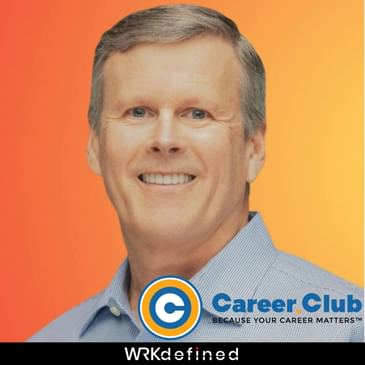
[00:00:10] Hey everybody, welcome this is Bob Goodwin, President of Career Club and welcome to another episode of Career Club Live. Today's guest I am super excited about. She's got a very impressive background so let me just read it to you. So Dina Denham-Smith is an Executive Coach and Leadership Strategist with over 25 years of experience helping senior leaders excel. Formerly an EVP at a private equity firm and a Principal Consultant at PwC, she's worked with top brands like Adobe, Netflix and Goldman Sachs. A frequent contributor to the business of the business of the business,
[00:00:39] her to Harvard Business Review. She wrote an amazing article last week. And Forbes, Dina is the author of the book we're going to talk about Emotionally Charged, How to Lead in the New World of Work. The book in hard copy launches on February 18th, downloadable on February 4th on Kindle. Dina is also certified by the International Coaching Federation and the European Mentoring and Coaching Council. And with that, Dina, let me find you. Welcome. Thank you. Thank you so much for inviting me to join you.
[00:01:09] No, it's such a pleasure to meet you and I really have enjoyed getting to understand the book, your practice, and I know we're going to talk about it's going to resonate really, really well with the audience. So thank you for joining. Thank you. Okay. So as is our want to do, we like to get to know you a little bit as a human being first and then we'll tap into your big brain. So easy question. Where were you born and raised? Where'd you grow up?
[00:01:33] I was born and raised in the northwest corner of Connecticut, Kent. But I'd say the most interesting piece about all of that is my parents were both teachers. But furthermore, they were boarding school teachers at an all boys boarding school.
[00:01:51] So I grew up on the campus of an all boys boarding school. So, you know, when I first entered the corporate world, which I know we'll get to, for me, it was not unusual or weird or wrong at all to be the only woman in a sea of men. Oh, yeah. Well, I would have imagined because boys high school, like I would have kept you 10,000 miles away from that. Well, unsurprisingly, when I was 13, I got shipped off to Catholic boarding school.
[00:02:22] There you go. So you made my point. Thank you. So let's use that as the lead into your education. Where'd you go to school? Well, I went to undergrad in Texas. I went to Trinity University. My primary criteria for college at that point in time was anywhere but the East Coast. I just wanted to get out and experience. And then I was in a PhD program for organizational psychology at Colorado State.
[00:02:49] I chose to leave after my master's because I could tell that I was being well, well groomed for a position in academia. And my whole goal and really the through line of my career was to get all the great science and psychology out of the universities and the labs and into the hands of people who could actually benefit from it in the business world.
[00:03:16] So I left with my master's and I went and I got my MBA at the University of Michigan because I knew, at least at that point in time, like I needed to create a really good business case for companies to invest in more of these what people were calling soft skills. Yeah. And that's actually because we're going to pick up on some of that here in a bit.
[00:03:39] But this marriage of kind of the science, the practice in the business case and kind of putting all that together, I think is part of what makes this really interesting. So just a little bit about your family. You mentioned growing up in Connecticut. Yeah, I did. I grew up with a brother. He is truly like one of my dearest, dearest friends. He and I couldn't be more different. But I absolutely adore him. We're super close.
[00:04:08] I did grow up with both my mom and dad in a in what felt like a really sort of like lovely, fortunate situation. Really, sadly, I lost my dad five years ago at the sort of at the start of covid. And he had a really long battle with cancer. And and I I've dedicated my book to him.
[00:04:38] He was like my rock. He was just like the best guy ever. And I told you he was a teacher. But one of the things he did in the very like last years of his life that I believe kind of helped him defy every doctor's odds for his longevity as he was writing a book. And he just wasn't done and he wasn't done and he wasn't done, you know.
[00:05:02] And and and so I just know how it helped me kind of like connect with him, which may sound very weird, but it did. And I know he'd just be super proud that I also wrote. It sounds very human, Dina. That's what I think it sounds like. That's a sweet story. And now I understand your longevity strategy. You're going to keep writing books. You're right. You'll be back. You'll be back every year with the book that you've written.
[00:05:30] I'll be the oldest woman alive. Just to stay on planet Earth for another year. I'm just going to keep writing books. So so I alluded to that, you know, just I guess your career at private equity at PwC. Do you mind just sort of after school where your career took? Yeah. And sort of after right after right after finishing up grad school, I went into management consulting, which I absolutely loved.
[00:05:56] I was working on sort of large operational and organizational strategy projects. So once again, this really is that intersection of business and psychology. How can you move an entire organization into a new model that there are like large pockets of resistance? Right. Whether it's just because of the change or they don't like the change. And so had so many great experiences with PwC.
[00:06:25] I really, really, really appreciate all the experience and opportunity that they provided for me. And while I was working at a client, though, helping them like scale up their organization, they asked me to come on board. And this was like back in sort of like dot dot com boom. And I'm here in the Bay Area.
[00:06:50] And so I joined a rapidly scaling startup, leading their whole account services organization, as well as for sort of affiliated professional services organization. So I went from managing project teams and projects to having an intact team over time.
[00:07:12] And I had way more scope and responsibility than I had the training for, which is actually something that I feel like a lot of leaders can relate to. Right. Like you perform well and all of a sudden you're given a whole lot more. And now you need to step up and you need to grow as quickly as the role is demanding of you. And there's there's a huge learning curve there.
[00:07:39] And so that was one of my first positions as a leader in an organization with sort of this ongoing responsibility for, you know, developing the relationships that would enable results over time. And and and I wish I had an executive coach back then. I could have learned a lot and really benefited. And so could have the people that I managed.
[00:08:05] And, you know, from there, after a few years of that, moved into into private equity and worked really as more of an internal consulting role there, you know, helping with scale and human resources related issues. So really contributing there as opposed to being out there, brokering deals and, you know, have enjoyed that for a good long period of time.
[00:08:34] And then my husband and I decided to have kids. And as life does, it throws you curveballs all the time. Right. And so we my first pregnancy did not go as planned. And and and I gave birth at 24 weeks, which is this. Oh, my goodness. And my oldest child is here to here to tell the tale.
[00:09:00] Thankfully, she really doesn't remember much of that very harrowing experience. But but it necessitated me really stepping back from work immediately. I sort of became a fixture in the NICU for the four months that she was there learning anything and everything I could about how do you take care of a preemie?
[00:09:27] And when she was finally able to come home, she was still very compromised. And so, you know, we were kind of like mom and kid in a bubble because the immune system was still so, so fragile. And and so that took me away from the career trajectory that had already been put in place and what it ultimately did. And, you know, thankfully, she is she she's amazing. She is a freshman at Northeastern University this year.
[00:09:57] Like, again, another story of really defying the odds. You know, it created this break in my career that caused me to step back and reflect on a bunch of things and ultimately led to this great sort of last chap.
[00:10:15] Maybe not last chapter, but current chapter of executive coaching and really taking all that I've experienced and learned and funneling it back directly into leaders and teams that I have the pleasure of working with. So super quick, because this isn't the point of the whole conversation, but you've already identified two things that really on the human side of life.
[00:10:44] Right. With losing your father and having a preemie. By the way, my wife is three months premature. So you understand. But her mom definitely understands. I mean, I got the adult version. But the but just sort of we're going to get into all the, you know, being an emotionally sensitive leader. But we're dealing with human beings, not work producing units. And when we talk about bringing your whole self to work, well, that's your whole self.
[00:11:12] Right. That's a pregnancy that's not going well. That creates all this other stress. That's what you don't know is my father's got cancer. I mean, like all these things that are going in real people's lives and they're more than just the director of marketing, you know, at XYZ company or the lead of client services or whatever.
[00:11:31] So, you know, that's actually part of what I really like about sort of what I call the icebreaker section of these conversations is you do connect with the human being behind the title or the portfolio or whatever. So I appreciate what you're sharing. Thanks. Thanks. I mean, I just we all have stories and we all have things that happen in our lives that are really difficult.
[00:11:55] And you may organizations that are like expect their people to leave that at the door. That's magical thinking. Right. We are not we can't separate ourselves in this in this in this really super convenient way.
[00:12:15] Right. Like all of that, we bring it into work and it can actually lead to like some of our greatest strengths as a human and a leader. But when you're in the midst of it, you know, it can be distracting and teams that don't allow people to bring that in to the into the workplace.
[00:12:42] There's still the consequences of all of that stress. And but it gets bottled up and it comes out sideways. Exactly. And so when we talk about bring your whole self to work, people do. Right. Because aging parents, kids are off the rails. Whatever's going on in your significant other relationship finances, your health. Like I haven't gotten to work yet. Yeah. Yeah. Right. Yeah.
[00:13:10] And I think I think one of the important distinctions is like we are we're always our whole selves. But when sort of the expression of the things that we are or feel or believe is not permitted or is unsafe in an organization, that's where we really run into trouble because because we're ignoring something that doesn't go away.
[00:13:38] Like emotions don't go away. We can control the expression of them. But all the physiology that's associated with that emotion is still there. And that's why over time, emotional suppression does not work. And you should write a book about this. Well, you know, it's actually it's embedded. I know I know the book that we wrote. So it's it's it's it's dense.
[00:14:04] But we actually have, I think, what's a wonderful analogy for this very phenomenon in there, which is like holding down some negative emotions, like trying to ignore them, suppress them and make them go away. It's like trying to push a beach ball underwater. And you can do that for a while by all means. Right. Like as an adult, you can hold a beach ball underwater for a while, but it actually gets tiring.
[00:14:34] And then another beach ball of emotion comes along. And now, you know, you've got both arms. You're trying to like wrap yourself around these beach balls. And the thing is, because emotions are are complex and it's not just the feeling or the label of it, but there's a physiology associated with it. The emotion does not go away if you suppress, ignore or hide it. It's still there. And so over time, these beach balls are going to pop out.
[00:15:01] And when they do, you know, they go sideways. Right. And they very well can like hit you or somebody else in the face when that was not like the original goal there. So. Right. OK, so let's just sort of dive into it there. So you wrote this book Emotionally Charged. Right. And how to lead in the new world of work. What was the impetus?
[00:15:26] What was the germ that got this book in your mind, in your co-author's mind that this is the time? This is the book. Yeah. And so. So for me. You know, I've been working with leaders directly as a coach for, gosh, like 10 years now. But at this part of the start of the pandemic, something became so highlighted.
[00:15:55] And it was just like technical or like too hard to ignore. And so it was really like these collection of moments where I was witnessing and hearing from my clients who were all leaders. Just and seeing like the emotional strain associated with their roles and the toll that it was taking on them personally.
[00:16:24] And, you know, the start of the pandemic was, of course, this exceptional period of time. But what it did was really make something that had been occurring for some time just all the more obvious and intense. And so it was it was really at that point in time where I was like, you know, there's so. Yes, there's a lot written about leadership, no doubt about it.
[00:16:51] But there's very little about like the emotional life of a leader and what that's really like and the emotional requirements of their job and and the strain that can that that can take on them.
[00:17:09] And so when I was in this PhD program some time ago, my very dear friend, a friend to this day, she kind of continued on this professor route. And she's now the head of organizational psych at Penn State. And so I reached out to her because she's an expert in stress and emotional labor more generally and pitched this idea like we should really we should write an article on the emotional labor.
[00:17:41] And she was stoked about that.
[00:18:10] And so it was like all of that. And then Alicia, my co-author, and I both really just share this like deep interest, despite the fact that we went different ways of, you know, simplifying science, making it consumable and usable by people who can benefit from it.
[00:18:29] And so the partnership on the HBR article led to this like larger partnership around the book to sort of share insights and evidence based tools and strategies that leaders could use to really handle the increased demands that they face today. So, so, so I think this is going in the right direction.
[00:18:52] If it's not, you can, you can, you know, rerouting, you know, you talk about, you know, the, the, the pandemic and how it sort of took things that were there and kind of put them in technicolor, you know, like remote work, like mental wellbeing, right. You know, DEI inclusivity, like all these things are really, you know, all kinds of front and center, all the social change that was happening. Because that's George Floyd. Right.
[00:19:19] That's it's mine right on top of all this other stuff, you know, and you know, all of this is really important. All of it's got people on edge and as a leader, you know, I was like, I know you want to manage your spreadsheets and stuff, but it's the people behind the spreadsheets are actually getting work done and they're being impacted by all of this. You know, by the way, so are you, right. So, so can you, can you kind of expound on that a little bit? Yeah, absolutely. Absolutely.
[00:19:50] So my belief, and I think a lot of data would support this is that sort of like very broadly speaking, there were sort of these trends in the workforce that were already occurring. And when the COVID-19 pandemic hit, it just accelerated them, right? Like we'd always had some amount of remote work. Well, that took it to the next level. Right.
[00:20:20] There had always been some employee expectations around like working at a good place. Right. And having a supportive leader, but it took it to the next level, like the level of support and the there's really like the requirement that like workplaces value mental wellbeing. Employee expectations really skyrocketed.
[00:20:49] Same, same with AI and technological advances. Same with some of the polarization that was getting experienced in teams where, especially where there's diversity of backgrounds or perspectives or more surface level, like attributes of diversity.
[00:21:14] And so all of the pandemic just like accelerated things that were already occurring. And it increased the emotional demands on leaders by a whole lot.
[00:21:27] And so what I mean by that is, you know, leaders have always needed to build connection while doing it in diverse teams that are distributed globally, where some portion of your work is virtual. And so, you know, when you're not virtual, it's harder. Right.
[00:21:50] Like the skills you need to build relationships and build trust and build and motivate those, those increase. And, and furthermore, these different trends, they intersect. Right. So it's hard to say, to take them separately, but like the net of all of them is that leaders need to do more emotional labor than ever. Right.
[00:22:17] So for example, leaders have always been expected to, you know, support their team on work related challenges. Right. It's kind of part and parcel of the job, but the expectation now is that leaders also support employees with more personal related challenges. Right. Right. And, and leaders haven't really been equipped for that necessarily.
[00:22:45] And so that can be a pretty uncomfortable and new position for leaders. And so, and it requires this, it requires more emotional empathy and compassion and the willingness to like slow down and listen and be there in a different way for people than saying, oh, no problem. I can like knock down that barrier for you. I'll connect you with like Joe and supply chain and, and don't worry.
[00:23:14] We'll like, we'll get that out of the way. Um, so, so there's a lot of different ways and then just the expectations for, um, for leaders in general, like we, I believe that we have some superhuman expectations for leaders at times. Like we want them to both be confident, um, but at the same time humble, you know, and, and both these things are important and they're right.
[00:23:41] But leaders need to be constantly like toggling between these, these two, um, ways of showing up, both of which are important. And, and that takes emotional labor. Um, so, so there, there's, there's, the demands are high and the need for, um, managing emotions, um, both their own, as well as those of a, of a team are, are, are higher. Yeah.
[00:24:10] So real quick, because I, I'm unfamiliar or have been unfamiliar before I started getting into your material with the, the expression, emotional labor. Yeah. Is there a definition or working definition or just sort of a, give us the gestalt of what that is? Yeah, no, thank you. Thank you for asking that.
[00:24:28] Um, emotional labor is, um, the, really the process of managing your emotions and your expressions to meet the emotional requirements of your job. Okay. So, um, one key thing to understand is that within all organizations, there are display rules. They're not in the employee handbook.
[00:24:55] You do not find them written anywhere, but there are a lot of expectations about how you are supposed to show up. Um, so for example, leaders, you know, despite the fact that like, they may have something really hard going on in their life. Or they woke up on the wrong side of the bed or, you know, their dog was sick all last night. Like mine was all last night. And then they had really, really disrupted sleep.
[00:25:24] You know, if there is a team meeting and they're up against like a big project, they're expected to like show up and rally the team and display optimism and confidence in the team's ability to get there. That requires them to really like manage their own emotions and manage how they express them. Because there's an expectation that there, this is what needs to happen within this situation for the collective good. Right.
[00:25:54] And this does not mean they can't show some vulnerability and say, well, last night was really rough. Right. But then they need to pivot and be like, but we can get there, guys. Right. Um, you know, we've done this before. Like we're almost there. Like, um, and so that's an example, a really simple example of one of the many, many ways that emotional labor shows up for leaders. Right. Okay.
[00:26:22] So, so what's kind of think about then, because you use it another kind of cool term, which is like emotional upscaling. This is great. I love that. Um, is if, if I'm somebody that, you know, is kind of like, I'm not here to be your friend. Like this is a job, this is work and we've got a number and I've got a bunch of pressure from the board to hit this number.
[00:26:48] And I appreciate the fact that your dog was sick, but yeah, anyway, like, but maybe some, maybe I've got an executive coach. She's really bright. And she's telling me, yeah, that's great. Bob, but you, you need to start weaving some of this into your repertoire here. Uh, the world's changing. Yeah. Where do I start? Like, like, like I've been very successful for 25, 30 years, just pedal to the metal nose to the grindstone, whatever metaphor you want to use.
[00:27:18] And now you're telling me no, but I also need to like, give you a hug and find out about the dog. Like, I kind of don't care. I just want the job done. Yeah. Yeah. Yeah. No. I mean, there's really been, um, we have been, and we continue to move away from sort of command and control, um, styles of leadership.
[00:27:43] And I absolutely 100% get like pressure, this pressure cascades downhill. Right. Yes. Right. So I have a lot of empathy for all levels of leadership, even the CEO, um, especially public companies, right? Like, um, because they've got the shareholders, um, breathing down their neck and the board. There's no hiding. There's no hiding.
[00:28:11] Um, and so where do we, where, where does one start? Um, first off, I think that there's really some room for like a little bit of self-compassion here. We, especially in this Western world have been so developed from the neck up, right? In school, you get good grades by having the right answer.
[00:28:39] Um, in business, you succeed by again, you know, initially having the right answer. And most of us, myself included grew up in families where, um, you know, how well you perform helps you, uh, get attention. Right.
[00:29:02] And, and, and worth, and, um, there wasn't a lot of time in my family to like slow down and nobody was saying, Dina, well, how do you feel about that? Right. Like, I get it. Like, this is, this is a new skillset, but the world has changed. The game's changed. And so it's not that different than digital upskilling, right? Like that's changed. We need to learn new skills in order to stay relevant. Well, the, the workplace landscape, um, has changed.
[00:29:32] And so we all need to learn new skills to thrive in that as well. And I think that's why I like the term emotional upskilling too, is because this is not like emotional intelligence is not some province of like, um, this special group of people, right? But everybody can develop emotional skills.
[00:29:53] And that's really the, the purpose of our book is to equip people with the emotional skills that they need to thrive in today's work world, which will enable them to perform emotional labor more effectively, more healthfully, because there can be really significant consequences to your health over time. And not, um, inconsequentially, these are the same skills that help you build emotional intelligence more generally.
[00:30:22] Um, so is there, is there sort of like a, a foundational level of emotional skills? If this is like, not my natural lane, I'm very much in this, you know, performance based and whatever. And I hear you, I can, I can see that the world of work has changed. So I'm not even arguing the problem statement, but I'm not sure what to do next. Where would you have me start? Um, I would, I would have you start in a couple of different places.
[00:30:50] And one is understanding, uh, what an emotion really is, which is, it is information. It is data. Yeah. Um, it is such a fundamental, like piece of input, um, that when you attend to it, you can make better decisions. You can have better relationships and you can have stronger results.
[00:31:16] Um, so I think that, um, emotions have gone a bad rap because we call them feelings, right? Like they're, they're like the other F word. In fact, um, they, what they are is data. Um, and so I think it's important to understand that and shift your mindset to really realizing that.
[00:31:37] And, you know, I'm not going to go into all of the, all that's there, but like our book has a whole chapter, just helping people understand scientifically what actually is an emotion and what is the value that it provides. So one is realizing the value that emotions can actually offer you. Um, two is just try to start to notice them. Right.
[00:32:04] We, um, we like, because of like the strong training of our heads, um, we, we spend a lot less time paying attention. Like what's going on in our body? What's what's going on with my feelings? Um, but when you understand that these both provide data, um, that you can like mine for your own benefit and the benefit of others. Um, what you need to do is like slow down and pay attention.
[00:32:33] So when you feel a rush of something, um, think to yourself, like, where am I noticing that in my body? I call it like the three ends. Uh, where am I noticing this? What, what label would I give it? Like, what would I call this thing I'm feeling? Um, and then what is the need there? If you, if you work yourself through this very short framework over and over and over again, you are going to build such emotional self-awareness.
[00:33:04] Um, and we can kind of get into that more, but let me add the third part and then I'll see where you'd like to go with this. Um, which is, um, having an expanded emotional vocabulary is profoundly helpful.
[00:33:21] When we are stuck at the level of like, I'm mad, I'm sad, I'm glad we are missing so much of the nuance, um, that exists in ourself. Like if you say I'm sad, like, what do you really mean by that? Like, are you lonely? Are you disappointed? Are you bereft? Do you feel empty? Like, like, like what's your, what's, what's your sad?
[00:33:48] Um, and so having this expanded, it's like an artist with like a huge palette, right? When you start to have this expanded vocabulary, you're so much better able to recognize these emotions in yourself as well as others, thereby communicate them and regulate them more effectively. And there's lots of different ways to learn these words. There's emotionless, there's emotion wheels. You can get these easily on the internet.
[00:34:14] You can read a book or watch a movie and just try to pay attention to like, what's all like the emotion that's occurring, like between those words, right? Um, cause it's a whole channel of communication. And most of us just haven't had the, the training, um, to tune into that. So, um, I appreciate what you're saying in, in a little bit of a recap, even in my own executive coaching stuff.
[00:34:44] What we see is people oftentimes are not that self reflective and self aware sometimes. And to the extent they are, they often lack the vocabulary. Right. And so what you're talking about is, you know, notice name, what's the need. If I followed your three ends, I speak a little relation to, by the way, so you have three ends, but, um, but that kind of name it to tame it. It's what, like, what am I feeling? A friend of mine is a CHRO at NASCAR and he has one of those emotion wheels.
[00:35:14] I'd never seen him until like a few weeks ago. And he's like, Oh, Bob, you gotta check this thing out. And I'm like, that's cool. Because as you're saying, there's so many gradations of some of these emotions that we just sort of put this big headline emotion title. Well, that's not actually what I'm feeling, but I lack the vocabulary to actually, oh, that's it. Right. That is what I am feeling. And then to your, your third end. Okay. What's under, what's the need behind that?
[00:35:43] Why do you think that we're, you were feeling this way? Right. And you're, you're very, I really resonate with what you're talking about, but I want to go back to, it's a really interesting insight. I haven't heard you say this before, which is using emotions as a data. Right.
[00:36:00] And this is a little off script, not that we're on script, but this, this might be a little off script, which is, I've been, you know, the past couple of years, maybe I find a lot of mostly men, I think, who have been reading, uh, Marcus Aurelius. And stoicism. Right. He's book meditations. And he would put forward that, you know, it's a lack of knowledge that people make bad decisions. It's a lack of knowledge in its emotion.
[00:36:28] And like, I really kind of, there's some good self help, you know, kind of resilience and stuff like that. But I think it's kind of more your beach ball thing. Like that might work for a while, but you're denying this fully integrated human being, the way that we've been designed, the way that you can just see this is how everybody's wired. And to say that everybody's wired wrong, because you have emotions like that just doesn't even pass common sense to me.
[00:36:57] But it's what we do with it, I think is brilliant of what you're describing. Yeah, it's, it's what we do with it. Um, we all have emotions. They, they, they served a profound role in our survival. Right. Um, and so they're, they, they absolutely like most parts of us serve a really important role.
[00:37:20] Um, we just haven't necessarily taken the time to attend to it.
[00:37:28] Um, and that's why, you know, honestly, for me, um, understanding, and this, this is years ago now, but, um, you know, my, my DNA is very much like I'm very driven, um, high achieving, you know, uh, I earlier in my career, you know, I very much internalized, um, the lessons that, you know, being
[00:37:58] the leader was being calm, cool and collected. Um, I, you know, given my drive, I felt like, you know, slowing down for emotions. Why? Like, let me just push that out of the way. Um, because I've got stuff to do, right? I've got to get things done. Like nothing's getting in the way of that. And, um, and it wasn't until I started to learn more about what emotions really are and see them as important information and data that I myself,
[00:38:29] gave them the respect that's due. And so I, I lived that. I a hundred percent lived that. Um, but as a leader and in my own learning journey. So let me ask you this from a gender bias perspective, right? You're too emotional, right? To where I know, I, I know I'm like, you know, kind of poking the barrier, but it's like growing up in business and being told as a woman,
[00:38:58] you just keep all that at home. You're being too emotional. Like this is business and, and trying to like, how did you deal with that? And how would you talk to women even today that are laboring under, you know, this illusion that they're supposed to not be emotional or have emotions? Um, I think, I think, I mean, you said it right. There's gender bias because you could take the same set of behaviors.
[00:39:25] Um, and when they are displayed by a woman, it is often perceived or cast as being too emotional. You take those same behaviors, um, when demonstrated by a man, um, you know, a heterosexual man in a position of power and that's passion. Mm-hmm. Right.
[00:39:51] And so the, you know, I have, I, I am, I am an optimist by nature. So I, I have hope for humanity. I have hope for, um, evolved workplaces, but the reality is that women and people of color still have to walk a narrower line, um, at work in terms of the behaviors that they express.
[00:40:18] This increases the amount of emotional labor that they need to do. Right. Because they are put in a position where they need to spend extra calories thinking about, is this safe? Right. For me. Right. And how do I manage this in a way where it can be well-received and effective? Um, and, and so, you know, that just still exists today.
[00:40:48] I think we've made some strides. I'm, I am, I have, uh, legitimate concerns about some of the headwinds, um, we're, we're looking at today, but, um, I still, I still carry hope for, for the goodness of people, um, and where we can ultimately go with, with hard circumstances.
[00:41:38] I know, you get your butt back into the office, whether you want to be here or not. Um, and, you know, fairly draconian in, in how they're addressing their people, which seems to kind of be the opposite of what we're talking about. One, just sort of that phenomenon. And then two say that you are a more emotionally attuned leader in an organization like that. How do you balance these things? Yeah. Yeah. I think there's, there's a couple of things there, right?
[00:42:07] Like, um, if, if we think about Andy Jassy or, um, Jamie Dimon, like they're taking really hard line stances. Right. That are quite reflective of that more traditional leadership model. Um, you know, it reflects this, this belief that, um, being in person is fundamental to collaboration and results.
[00:42:38] Um, you know, meanwhile, the data shows that there are benefits to in-person, um, work. There are also benefits to work that is done more flexibly from home. Um, and so, you know, they, they're leaning on their power. Um, they run super complex organizations. Simple seems better.
[00:43:05] And I'd also say it really like reflects this, uh, discomfort with change and newer leadership styles. Right. So they've adopted a hard line stance. Um, the irony of it, especially from an investment banking perspective is they, you know, freaking crushed it in 2024. Like what more results do they need to see that like hybrid arrangements can actually be very effective.
[00:43:31] And from what I've seen across the numerous companies that I work at, it is a complex solution, but the hybrid model is very, very effective in terms of reaping the benefits. Of the in-person work as well as some of the more remote work. And surely there are teams that need to be in person all the time. There's no doubt about that.
[00:43:55] So, you know, my perspective is that really the smartest is to decentralize the decision making about this. Um, when that doesn't occur, you know, you asked about this question, like what can, what can leaders who disagree with this model do? Is it's always, it comes back to start where you are, do what you can, um, to be flexible and attuned within your team.
[00:44:19] Like don't under, underestimate the impact that you can have, um, on the people in your team by how you show up and how you lead and the ripple effect of that out. Like, you know, this is a system within a system. And so, um, you can have broader impacts really by just making your team the greatest place to work. Yeah.
[00:44:45] And, and I don't want to, I don't mean to ask the same question. Oh no, go ahead. But, but, but, you know, we're also seeing like if I worked at Meta and Mr. Zuckerberg has said now that we're going to whack the lowest 5%, however you deem the lowest 5%. That's a forced ranking system. That's a different topic. Um, but, but now again, I work at this really large company.
[00:45:11] They've taken this new policy, you know, and, and now I feel like I'm having to let go of people that I don't feel like we should be letting go of. And maybe the question Dina is, does there come a time when the culture doesn't fit me anymore? And maybe I need to start making a different decision rather than trying to figure out how do I keep these stress beach balls down all the time? A hundred percent.
[00:45:40] The very quick answer to that question. Like when our values are squarely, um, out of line with the place that we work, um, it can be, it can, it can be useful to consider other options, right. Um, for your own wellbeing. The thing is though, the rub is that we're not always in a position to do that. Right. We have, we have mouths to feed the job market is call it bad.
[00:46:08] You know, like sometimes we really are constrained. Um, and we need to stay where we are. Um, and then what does a leader do with that? And there's a whole chapter in our book where we address, um, what are, what are broadly called the necessary evils of leadership. And one of those necessary evils, right. Is laying off people, right.
[00:46:33] Who have made good contributions who you feel like, um, are great members of your team, but now there's a forced ranking or, you know, the company is not doing well. And now it's on your shoulders as the leader to perform this necessarily evil and let these like good humans go. That is a huge emotional demand. And there's a variety of other necessary evils, right.
[00:46:59] Things that leaders must do, um, to perform their roles that hurt individuals. Um, and, and so learning how to do that in a way where you can be direct and you can be compassionate while protecting yourself from the collateral emotional damage that can come from that is a really important skill for, for leaders, um, to learn.
[00:47:25] And so we, in the book, we teach a technique that's, that's called compassionate detachment. Like, um, and it's, it's something that for example, like doctors and nurses and therapists learn, right. Think up, think about their role, right. They're constantly having to like witness and be a part of pain and stress and really difficult circumstances.
[00:47:48] Like how are they able to do that and show up and be direct with really difficult information, demonstrate compassion and protect themselves. There is a way to do that. And, and so that's, this is like a perfect example of why, um, regardless of, um, where you're at increasing our emotional skills to like weather some of this and, and do it, do it well.
[00:48:17] Both for yourself and for someone else is so important in this day and age. Yeah, no, that that's right. I appreciate that. And that's chapter. I want to go back and look at again, because I think that, you know, there's just people that want to do the right thing. They value their folks, but for whatever reason, they have to deliver really hard news to someone. And how do you do that? It's empathetic, right? Gets the job done. And as you said, but also at the same time, protect yourself.
[00:48:48] And, and so that you can go home and look at yourself in the mirror. And I did the best I could in what's a very admittedly difficult situation. Yeah. Um, really quickly, one of the questions I was curious about is, you know, what are their six generations in the workforce now? I think something like that. Yeah. And it's going to be seven.
[00:49:12] So how do you see this, you know, playing out in this very multi generational, very diverse workforce that we have where we're trying to create inclusion, but my goodness, that pie is getting sliced really thin a bunch of different ways in the emotional needs and how they, you know, value and receive, you know, emotional investment. Maybe for lack of a better word. Yeah.
[00:49:41] How do I like figure out how to keep all these plates spinning, you know, as a leader, when there's not even a single answer to how you deal with all these different needs and generations and just all the diversity that's in the workforce. Mm-hmm . So are you asking more around like, given this backlash against DEI, how do we, um, build inclusion or is it more like, how do I deal with all these different people on my team who have all these diverse like. Yeah.
[00:50:10] I mean, just like, like, like there's like 52 different cells here that I'm trying to manage. Like this is getting very heavy math of how to meet everybody's needs. Yeah. Yeah. First off, if you have 52 direct reports that we have got a bigger problem. Um, but, um, you know, it really is important. Like your team will be most effective. You will create the best results if you customize your leadership to the person, right?
[00:50:40] Because we are not, um, to one of your earlier points, uh, people are not the same, right? And we are not like cogs in a, in a big machine. Um, and so, you know, there's a term I'm sure you're going to be familiar with it. Situational leadership where you're really thinking about like, what does this person need in order to do their best work? That's the hallmark of a great leader. Right.
[00:51:06] And that can include anything from like, what task related help do they need? What kind of coaching do they need to what motivates them? Right. And, and how should I engage with them? Um, such that they feel like deep meaning and connection to like the work that they're doing.
[00:51:25] Um, and so acknowledging, um, acknowledging who you have on your team, seeing what matters to them, seeing what their needs are and attending to that. That's great leadership. And that's like your fast track to excellent results. Well, what I like about you said is you said the word seen twice and there's listening and there's a lot of this that happens by observation. If you're looking for it, we tend to find what we're looking for.
[00:51:54] So if you're looking to pick up on those cues that people are exhibiting and it's like, okay, to your point about situational leadership, how do I then kind of nuance that this? Yeah. Yeah. I'm always sort of liking this to a liquid, you know, the liquid is the same, but it adapts to the container that it's been put in. Right. So there's an authenticity to it. It's still water in the container, but it takes the shape of the container.
[00:52:21] So how you need to receive water and how somebody else needs to receive water can be very different, but you're still getting what you need. And so I think that that's really good advice on your part. It really does kind of come down to situational leadership. I knew that we would run out of time. So that was a given. What have we not talked about? Or what would you like to leave listeners with is maybe two or three takeaways? Oh, boy.
[00:52:49] I really, I really do encourage people to get the book. I mean, it is so chock full with like important digestible science and actionable strategies across a variety of different like scenarios that a leader experiences just on a given Tuesday. But I think if I were to like raise it back up, I'd say emotions are information, like ignore them at your peril. Truly, like if you ignore the emotions, they don't go away.
[00:53:20] If you have if you're a human or you have humans in your midst, emotions are there. So like you're saying, like we see what we look for. Look for the emotions. Look for them in yourself. Look for them in your team.
[00:53:37] They will provide you with so much supplemental, useful information for making better decisions, crafting stronger, more connected relationships, getting more out of your life, getting more out of your team and better results in the things that really matter. So so I guess that's what I would I would end with.
[00:54:02] I like that. And so, you know, I would again, we we said this at the beginning, but the books obviously available on Amazon on February 18th. The download is available on February the 4th for Kindle. And preorders are available now so you can get it on the 18th show. But you're just so I would really, really encourage people to do that. I was fortunate enough to get an advanced copy. Amazing. And then if people wanted to learn more about your executive coaching practice, how can they do that?
[00:54:30] Two primary ways in terms of socials. I live on LinkedIn, so you can find me there. Dina Dunham Smith. I would love if you connect with me there. And then my website is Dina D.I.N.A. D.I.N.A. D. Smith. S.M.I.T.H. Dot com. And so you can easily connect with me there as well. Dina, I knew this would be fun. So thank you so much. This has been great.
[00:54:57] And we're going to have to have you come back because there's people are endlessly fascinating. And I think we've kind of scratched the surface in some way. So thank you for joining. Thank you. And I'd love to come back. So wonderful. And for viewers and listeners, thank you so much for investing a few minutes of your time. Please go get the book. Let's just read the name of it again. It is Emotionally Charged. How to Lead in the New World of Work by Dina Denham Smith. So thank you again. And we'll see you on the next episode.
[00:55:25] I know you're good. You've got all.
Sponsors
