
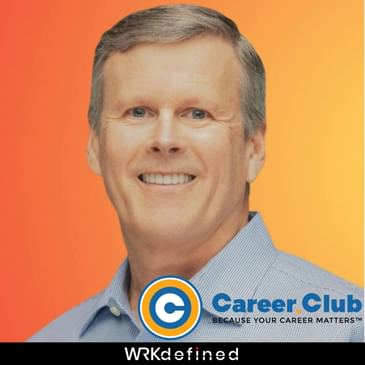
Discover the secrets of transforming talent acquisition with Bob Goodwin, President of Career Club and Bill Fanning, CEO of TALK (Talent Acquisition Leadership Keynotes). Journey from his roots in Beverly, Massachusetts, through his military service, to leading the world’s largest talent acquisition community. Bill shares insights on balancing career and family, and the impact of AI in recruitment. Learn how companies use multi-channel approaches, including TikTok and Instagram, to attract top talent. Explore skills-based hiring, the importance of collaboration, and the costs of turnover. Join us for a comprehensive discussion on employee lifecycle, wellness, and the "Talk Talent Acquisition" community. Don't miss this enlightening episode!
4o
Powered by the WRKdefined Podcast Network.
[00:00:00] I know you're gonna find it, you gotta keep on it. Hi everybody, this is Bob Goodwin, President of Career Club and welcome to another episode of Career Club Live. Today's episode is brought to you by a new pilot program where we're
[00:00:19] initiated called Journey Forward. If you're a human resources or talent acquisition professional and you'd like to create a better candidate experience and drive your employer brand. We've been going to check out Journey Forward where we can take rejection letters and turn them into
[00:00:36] redirection letters and provide tangible resources for candidates who may not be moving forward in the current job process, but you'd like to keep them as part of your talent community, referring people to you as well as continue to be advocates of your brand. You can
[00:00:50] that's called Journey Forward and you can learn more about that on the Career Club website at career.club. So with that I'd like to welcome today's guest, today's guest is Bill Fanning, Bill's the CEO of TALK which stands for the Talent Acquisition Leadership Key Notes.
[00:01:08] I'll have you to explain that one to me in a minute. But Bill for so long. Thank you very much. I'm really glad to be here and excited to for our discussion. Yeah. So for just a little bit of context, TALK is the world's largest organization
[00:01:23] of talent acquisition professionals with nearly 12,000 members representing 80 chapters in North America. The talk platform enables TA leaders to connect share best practices, innovate, improve their business processes, manage all three events and make new friends. So does that do a pretty good job of encapsulating TALK?
[00:01:44] That does a phenomenal job and that's fundamentally what TALK is. This is an online talent acquisition focused community. And the word to me there that's really critical is community. It is actively engaging in conversations, discussions, webinars, and local events
[00:02:05] across this country on a weekly basis. So I belong to other communities like this that are as active and as engaged. So it's one of the things I really got excited about when I was introduced to
[00:02:20] TALK is the actual involvement of the members across the country. Yeah, and we'll get into that here just another minute. Sure. For me, all that stuff let me kind of do as we are want to do to
[00:02:33] assess a few icebreaker questions so people can get to know you look as a human being first. Yeah, so the easy one, wherever you born and raised. So I was born and raised on the North Shore of Massachusetts. It's an town called Beverly. Actually, birthplace of the American
[00:02:49] Navy at the first. They not know that. Yeah, the first naval ship that was commissioned for the colonies was commissioned in the harbor of Beverly, Beverly Harbor. Now, the interesting aspect is where the ship was situated because depending on the distance from shore, it was either the
[00:03:07] Beverly or the Salem Harbor, the two towns, Salem, which city. So there is still and probably an active debate over that since we are a group of people that thoroughly enjoy debating things of that nature.
[00:03:20] So that's cool. And where did you come out to the Chuseous accent, go by the way? So that's a great question. So I spent prior to my professional career 10 years in the military
[00:03:32] and I quickly learned that not everyone embraces the Boston accent as much as people in Boston do. So I actively worked to minimize it. So now what only really comes out when I'm
[00:03:46] super tired or around my family. Around the family, I said, being bored, I was born in the South. My mother is from Alabama, my father was from New York. And I ended up talking like you
[00:03:58] I'm talking to. So my accent would just sort of go to, but if I'm in the South, like I can start drawing down the eyes and doing all that stuff pretty easily. So so you're in the military first
[00:04:10] I'll thank you for your service, which branch were you in? Was it New Army? Awesome. Well again, thank you for that. And then did you go to school before after the Army? I went to school during
[00:04:22] I went through a program called Grindigole. And so I went in as an elicid soldier right after her high school. I've always had this desire to try and challenge myself. So at that point,
[00:04:34] the challenge was could I become an officer? So I submitted a packet and went through this program and went from elicid to becoming an officer. So I threw that in some private work I was able to
[00:04:47] earn my college degree. That is awesome. What was your degree in? Business administration with a concentration of marketing and a minor military history. Very good, that's cool, that's awesome. Now right before we started you needed to go take a time out to tell somebody to be quiet, tell
[00:05:03] some little bit about your family. Sure, I'm married. I have four kids, two dogs, two cats, and when we put all of that in one house, you can get loud. So sometimes it's just always
[00:05:16] especially when school is over and the ruckus is happening to just stick my head off the door and get everyone to be quiet for a little bit. So yeah, we have four kids too. So my
[00:05:26] empathy levels are very, very high on control. Yeah, it's funny because you know, parenting, true parenting doesn't start until you are technically outnumbered. That's what we say. It's not even
[00:05:39] a challenge so you're outnumbered. You see there are two on one or man on man like you can play that defense but we're not over there. That is a challenge. So yeah, it's a common parents of four,
[00:05:48] we understand that. So how long have you been the CEO of talk? How long have you been there now? So I just started in March. Okay. So very quickly I had no opportunity to start a talent acquisition
[00:06:04] candidate experience platform with a very talented CEO and over the course of the growth of that about a year, we just were struggling as a lot of talent acquisition technologies were in gaining momentum in scale. The biggest issue I found was connecting with the market with the
[00:06:25] tools available to build brand awareness, get people excited. So outside of the individual networking that you can do, the ability to build pipeline and momentum for the organization of scales very
[00:06:37] tough because it's hard to connect with your ICP. So when I learned about talk in a online active community of talent acquisition leaders being able to bring that to the market to other TA leaders
[00:06:54] and other TA vendors to build a broader community seem like a no-brainer. So I was super excited at the opportunity to be part of this. But you've been around the talent community for quite a while.
[00:07:10] Yes, absolutely. So my first job coming out of the military was each arm payroll sales with ADP. You can't do better than that. That's sort of like the master's degree in sales and
[00:07:27] all things they chart. It was phenomenal and you know I worked in downtown Manhattan. We got into situation, we lost a lot of large deals to people so I've named some people may not be familiar with
[00:07:41] but was the 100 pound gorilla at one point. So I went to work for them, learned into my sales, work for Oracle, work for big companies, and then through consecutive career changes I've focused much more on talent acquisition, recruitment advertising, recruitment marketing, things of that
[00:08:02] nature which to me is just fascinating. And it comes back to the military in one way that I learned very clearly when I was in the military, the power to get a mission done is the people period.
[00:08:15] And so one of the things that excites me about talent acquisition is when you think about an employer the power for them to get their mission done comes to the quality and the type of people that
[00:08:25] bring into that organization, they foster a culture of enablement to tackle and complete tough missions. And so I got really excited about talent acquisition and it's remained since three years now. Yeah well I appreciate you saying that. I mean because I'm saying about this early this morning
[00:08:45] the focus that a company might put on something like their supply chain, or maybe a laser focus. And yet the reality is that sometimes talent acquisition is much elusive, then all of that
[00:08:59] it right at it is buttoned up through no fall of the TA people just sort of the nature of the beast. And yet to your point the mission is 100% dependent on the people and I think the other thing
[00:09:13] that maybe you and I haven't commented as I come into the HR industry war from a consumer insights marketing background but it's all what makes people tick what motivates people and so when you're talking about recruiting employer brand things like that you're selling at that level right 100% and
[00:09:33] in what does your ICP your ideal consumer growth out what what are they looking for what do they need where are the benefits if they're looking for what's the value proposition. And so you know all
[00:09:44] the stuff kind of swirls together in needs but at the end of the day it's about the people. Yes I do whole heart of the degree and I think that and we'll talk about this a little bit
[00:09:56] but I think as we look at the evolution that I'm experiencing through the community and the conversations with and talk skills assessment the different ways to assess and validate the fit of a person in your organization both hard and soft are evolving and I think because people are
[00:10:14] getting more focused on bringing the right people into their company you know beyond what we traditionally could do with some of the more static tools like a resume and things of that nature.
[00:10:26] Yeah no no we're definitely going to click on that one and more. Yeah last question and for our listeners I just learned this about 10 minutes ago before we press the record button Bill what do you like to do when you're not making talk and even greater organization?
[00:10:42] Well I'd like to go for what we call long runs so this weekend we we did a great marathon up in Vermont it was phenomenal it was made interesting due to the fact it was all on
[00:10:54] trails and it went up and down a mountain a couple times so super fun and I had something I enjoy quite a bit and yeah so this weekend was a good kickoff to the season I've got a
[00:11:07] couple more coming up and marathon's but this was a marathon but I pretended drift a little bit more to ultra marathon distances and what's that ultra marathon? Anything beyond a regular marathon so 50k which is 31 miles or so 50 100k a hundred miles something to that distance
[00:11:30] and then how did you describe to me an ultra marathon they're just just a mellow fun just relaxing and relaxing event just going out there jogging along and enjoying yourself and it is a very very different community than a shorter more organized races for me I have found
[00:11:51] it to be a more relaxed inclusive fun culture where you know we're all there to do something that quote unquote could be difficult but we're doing we're also there to have fun and support each other
[00:12:03] and I think that's cool it reminds me my daughter did cross country and I think there were shirts it said your sports punishment is a sports sport yes yeah yeah my daughter used to wear
[00:12:17] shirt all the time that said she was all across by she was a goalie for years and she was just wear the t-shirt all the time said if across was easy you had a place off all
[00:12:30] it's just a crack me up all right so let's dive into this so I was so pleased that we were able to get the schedule bill because you're you're leading the largest organization in North America
[00:12:42] of talent acquisition professionals and to be able to tap into your expertise you know it's phenomenal so you know just kind of a little high level and there's obviously several places we can
[00:12:56] go with this but you know as you've gotten acclimated to your new organization plus you got deep experience in a lot of these issues anyway you know what are you guys seeing what are you
[00:13:08] all identify some of the fundamental challenges for TA today and maybe where that's like they have it in the future so in in kind of generalities what I have experienced is that there's a lot of organizations today that their talent acquisition teams function was reduced over the last 24
[00:13:35] 36 months what I'm experiencing is or not experiencing but able to watch and see people talk about is that that team size is now the same right it hasn't grown back but the volume and the
[00:13:53] hiring needs of the employers has started to restore itself yep and so now what we're experiencing is a real need for recruiter enable right the ability to bring tools processes and pieces together
[00:14:08] that allow people to do things in a much more efficient manner which is why I think we're seeing some of the new trends in technology coming about to make that a possibility so you know people
[00:14:21] who are listening to this podcast will know that we work a lot with job seeking candidates that's sort of or what career club does and you know I tried to explain to folks like
[00:14:34] don't get mad at the talent acquisition person because typically they're one of the first groups that got cut when companies are going to lay off hey don't get any people don't use many talent
[00:14:46] acquisition people so the teams got down size and then they tend to be to your well-made point one of the last groups to be restored because it's like well I guess we've got a now to problem
[00:14:59] you know then you know whatever some of the KPIs that they're using regarding recruiting are not up to par and so yeah we've been telling you guys for months we don't have enough people there's too much work
[00:15:10] for this staff that we've got and then so it's always kind of like chasing the the tail a little bit yeah and it's not TAs fault in that sense but now what's cool kind of look at some of the things
[00:15:24] that you guys are seeing that whether it's maybe you can just start off with most obviously the general today I and how AI is being deployed to to help you know instead of one for one what's
[00:15:37] just add more TA bodies back to the equation how are you guys seeing companies using AI maybe indoor data analytics to help bridge some of those productivity gaps so I think at a high level what I'm starting to see is traditional organizational marketing starting to bridge into recruitment
[00:16:00] marketing now there's a lot of people that talk about recruitment marketing as functional vendors delivering solutions that's existed what I'm starting to see is that the organizational TA function is starting to think much more business like around the marketing and the sales aspects that other
[00:16:18] parts of the business measure themselves by so people are getting much more effective in terms of who are we going after where are they what are the vehicles to reach them and thinking a little
[00:16:29] bit broader social media is a great aspect in terms of I'm looking to hire a front line person or skilled labor person well there's now tools that allow us to effectively distribute opportunity on platforms that you may not traditionally consider tech talk in Instagram Facebook
[00:16:50] appeals think it's real but but you know but that's so I see people starting to think a little bit more multi-channel marketing capable in the recruiting aspect and then I I also see
[00:17:03] AI advancing in the TA space so I'll use this example last year I went to one wish and what I experienced was a lot of vendors it's been what on leases very quickly like
[00:17:16] oh on leases a phenomenal trade show in Las Vegas they do unleashing the US they do unleashing Europe I think the Europe version is bigger in the predecessor to America but it's phenomenal to be able to
[00:17:27] see each our entire telemetacosition technologies here are phenomenal speakers it's in Las Vegas and I I found the last two times have gone for a really rewarding experience okay what I found the last year was a lot of vendors talking about the fact that we have AI
[00:17:45] and to me it seemed very cursory this year it was much more functional use of AI in the platform so I see the advancement of the technology going from we have it to let me show you how it's deployed
[00:17:58] you know natively within our technology our tech stack and accomplishing something in a faster way than you could do it yourself and and I think that was really interesting in terms of pulling skills out of a resume making matching happen helping organizations decipher
[00:18:14] interviews whether they're in person or over a phone or over a video but making things more tangible less subjective and more measurable is where I saw a lot of AI coming to play
[00:18:26] yeah you know one of the things you just said reminds me like you know a typical or not to a traditional applicant tracking systems pretty literal like you know these are the words
[00:18:37] you are looking for on a resume yeah on the terms of our clients I will use an example like client services in account management well as a human being maybe those are the same thing
[00:18:49] close enough to be in the same thing but to an ATS well no you told me client services this ladies resume says account management so you know she's not going to go through because
[00:19:03] she doesn't have the requisite skill or AI can say no that's the same thing that's close enough same thing right and be able to you know just be smarter about understanding the data that's
[00:19:17] coming to them by virtue of you know resumes as an example well it's a hundred percent and it goes back to what we're talking about about skills based hiring being able to take a term from
[00:19:30] somebody's background where independent of how you get it and break the taxonomy of it down yes so understand what is account management so independent of what the title is if we can define the taxonomy of the skill set it takes to accomplish that role then we can
[00:19:44] make intelligent skills alignment happen and that's great for misline titles but it's also think you know technology even within talk is probably our largest industry it's certainly a a large volume of hiring that's happening because so many organizations are becoming digitized
[00:20:02] but looking at technology backgrounds in making the comparison AI's phenomenal that when a person can't do it quickly so if I'm a recruiter and I put a job out and I get 300 500 applicants
[00:20:18] without that technology becomes objective of whether making good as us alignment of the people who have applied in their fit for the role where an AI supporting system whether it's in the ATS system or additional can quickly go through that stack and help you find the great alignment
[00:20:38] the diamonds and the roughs making smarter or find somebody who applied for role A but a phenomenal fit for role B in maximizing the value of those applicants coming in you know I think that's a phenomenal
[00:20:51] use case for me knowing some of the metrics that have been challenging for when that resume reviews being done manually where you can really extract a higher degree of value so then people raising your hand saying they want to work for you. I really appreciate it I've
[00:21:06] effect on learning something for thank you with this idea of whether the underlying core skills and attributes for somebody who is successful in this kind of a role whether that title is present or not
[00:21:20] even synonyms forget synonyms just like but this person has done a lot of the kind of work that we need that we know people who are successful in this kind of a role have done that's one
[00:21:31] that you're a cool and then too is the ability to kind of cross-pollinate well she applied for the director of you know whatever marketing role but which he really did good at is our employer recruitment
[00:21:46] stuff because here earlier point just a lot of the things she's done is exactly what we need for this you know recruitment marketing that was running to double down on and so I think that
[00:21:59] you know AI and then I want to ask you about this I mean AI is definitely got some watchouts shall we say you know saving with it but when you start to think about and this
[00:22:12] is this is my number one frustration because I just see it hampering our clients ability to land a really good job sooner is when the kind of first and second way of the assessment process that the AI is doing actually opens up to speak it not narrow
[00:22:35] of set to say oh this is actually a very qualified candidate you know let's put her forward like that makes me really you know encouraged that AI is going to be opening up more opportunities
[00:22:49] for people not you know narrowing again that the opportunity for people but I guess I didn't want to ask you because we just said there weren't watch out what where where do you guys see what
[00:23:02] are you learning that might be some of the watchouts yeah the technology is cool but you need to do your due diligence on what I think the amount of use it had for that particular function so
[00:23:19] when you think about AI and again I'm not a data scientist so I operate in very general terms but it's based on the quality of data that has analyzed and what it has learned so when you're going
[00:23:31] to deploy anything to as AI is part of its functional capabilities or it's an AI specific solution the question I would have is well what confidence or what degree of validation has happened to prove that this is doing accurate skills alignment that it's matching people appropriately that the
[00:23:52] doing the things that needs to do in a way that's fair that's equitable that's distributing opportunity the right way versus boxing people out because it hasn't had the it hasn't processed and learned enough to effectively do what it's it's being tasked with so that that is my
[00:24:12] outside listening to people what I see as a concern I mean this also people using AI or chat GPT in particular for writing and so then the question is is it writing fair equitable discrimination
[00:24:33] free job descriptions or you know like really need to think about the use case of the AI that is being deployed and one for me is it capable of doing what I'm asking it to and two is it being
[00:24:47] used properly once it is deployed to deliver you know the right material back to a job seeker or independent of I mean it can be used for a lot of writing capability so just obviously
[00:25:01] want to make sure it's doing the right work yeah because that is the lure is in its fast right it's efficient but it needs to be fair accurate right and not reinforcing biases because
[00:25:17] sometimes the data we we had a woman hilt a shellman on who wrote a phenomenal book called the Alvaro though yeah I got used to AI in the workplace and you know she had examples in her book where
[00:25:29] it's like oh we have a professor of people who play baseball why because somewhere in the data that the thing was trained on whoever played baseball you know tended to be higher performers
[00:25:43] or were named Greg or other you know things that you know what is it coincidence at the same as causality right so you know it starts to build in these weird bits of logic that actually you
[00:25:57] if you looked at your left but but if you just sort of seed control over to a black box that you don't understand then I think what you did then is you like put a turbo charger potentially
[00:26:12] ongoing in a bad direction and then you know technology and AI is going to get a black eye when part of was on the person that was training the thing and making during their due diligence
[00:26:25] that hey the tool is as you say bias free or bias free as we can make it right and the in the quality of the data that it's used to learn what other process it's trying to execute on
[00:26:38] behalf of its user I think is also a really relevant aspect to consider so in that in that use case you just talked about it I would guess and again not a data scientist but the level of
[00:26:51] data that that AI engine was looking at was you know somewhat unique and it didn't have aspect to other organizations maybe it was looking at some specific from that ATS system which is
[00:27:04] a very small amount of data so it learned based on that small sampling that baseball was a relevant aspect to who they should hire going forward where it's probably isn't and if it had a
[00:27:17] this goes back to the due diligence of before you use the technology of understanding the how it was designed and how it was tested if it had access to a high volume of data so could learn correctly
[00:27:30] then your in a situation when maybe that's not going to happen so I think that's a that's a great example so let's let's move on to you've referenced it a couple times and it's near into your
[00:27:40] topic for me is skills based hiring yeah so you're kind of the traditional model is where do you go to college when did you study and what your experience after college and you know how
[00:27:55] all those things relevant to the role that we're trying to fill and okay so but the world hopefully seems to be moving to something that is more skills based and skills can be hard skills and soft skills right so learning agility you know contribution motivation plus proficiency
[00:28:20] like if you're going to be a digital market do you need to be good at digital marketing right but we also need soft skills like collaboration you know the ability to learn because the
[00:28:29] technology's changing so quickly and then there's the whole bit bill on what about all the people that didn't go to college who might be really great fits for you know the talent needs of a given
[00:28:46] organization absolutely right how does talk you know I don't know if it's educate discuss you think about non college degree talent sources so I have been able to experience a number of discussions around assessments pre-higher assessments and the ability to evaluate somebody's in
[00:29:17] eight skill sets whether they're harder soft skills to do a particular role now there are a number of roles where the brand of that company is sitting in the hands of those frontline workers so
[00:29:29] bringing somebody in who represents that culture and being able to test that within them is imperative so they put the right people on the right roles and so there are assessment platforms out there that offer those capabilities to evaluate them so I think that organizations are
[00:29:47] starting to recognize that it's important to move past the resume and a subjective interview process standardization of that process is certainly a great point that a lot of organizations are focused on the collaboration between hiring manager the recruiting team and the ability to exchange and
[00:30:08] share information to properly evaluate some of them also to test their skill set is really becoming more and more a comment and obviously I'll go back to unleash a core topic that I
[00:30:22] experience when I walked around and looked at a lot of the vendors that were out there was pre-higher skills or skills assessment not just in the hiring process but also in the retention and playing engagement experiences as well because you know you have people who are
[00:30:39] already at your organization there's a little bit off top it but still incredibly relevant that you want to hopefully keep given that they're right people and grow within your organization the questions and what can they do and so skills assessment can evaluate and determine somebody
[00:30:55] they would be great over here or you have somebody who's in technical support who would be a phenomenal customer success manager you know because of their people skills or something on that example so I think the technology is really important and what I'm seeing is more and more
[00:31:11] open-minded discussions around how do we embrace skills assessment who are the vendors that are delivering quality products how do we make sure we don't experience sizable drop off when we ask people to do it things of that nature so there's a lot of different specific trap conversations
[00:31:29] it fall under that umbrella and it's really interesting to see how the course of the talent acquisition process is falling very much towards that that I'm seeing yeah so so you know while you're
[00:31:50] generally I would be a fan of things that would you know open up more opportunity to more people for sure and it is the kind of hard-and-saw skills stuff but at the same time you know how to
[00:32:07] make sure that we are not biasing against folks who for whatever reason I mean I think like ACT and SAT tests you know taking hits in the past for you know they they buy a against people who
[00:32:20] come from you know disadvantaged backgrounds right yeah the way the questions are phrase or vocabulary that it uses the topic city uses for suppositional kinds of questions so well that's not for my background you know how to think about the way you just phrase that question
[00:32:38] because that's not grew up or whatever just people that like aren't good test takers for whatever reason I can freak out because like on my gosh you know the timer is going and I'm cutting
[00:32:49] into all these questions yes you know nothing on the people they freak out at the doctor's office right we're gonna take your blood pressure your pulse is like so I mean I guess with everything right
[00:33:01] you know there's watchouts that you know have the odds that we need to be aware of but if if assessments it truly work and are in fact predictive of you know success is the right we're
[00:33:17] really fit for role sure yeah and we're all fit for culture yes I mean there's a couple different parameters that we're testing to make sure people fit into but I think we're we're going
[00:33:31] down a similar thought process as we were we're talking about AI which is devaluation that the vendor or the technology that you're choosing to use has to keep ability to do that for
[00:33:42] example has it been thoroughly vetted by somebody who has the background because I don't maybe you don't from to eliminate racial ethic in gender bias in the way it asks and talks to the potential
[00:33:54] applicant because that's really important and and phrasing things in a way that make it available to somebody who may not have a call at your degree and may not have a certain industry
[00:34:07] vernacular at the ready but certainly can understand things if it was explained in a more common way and and give a great response to it you know so those are things to me that I think are
[00:34:17] are really important as you make it a decision on the technology you're going to use to be part part of a process yeah so I'm optimistic you know that the tools like this you know will drive
[00:34:34] you know the the principles of DEI so that yeah because I do believe in those I think some of the programs maybe have been amazing but the the aspirations of what programs like that should
[00:34:53] be delivering on and to the extent that companies are able to bring in a more diverse workforce I think that highly benefits and I think that's good business not you know virtue signaling I
[00:35:07] think it's just smart and then you know I like how you said that you're having the questions on the safety phrase in a way that you know doesn't bias against people so one of the other things
[00:35:23] it's in the news a lot these days obviously returned to office is a big deal sure I'm just put out something a couple weeks ago seeing 45% of 44% of workers are feeling burnout you know my manager what does it say people leave they don't leave companies they leave bosses
[00:35:46] people want to be developed in their careers so maybe the learning development curriculum is amazing it's like the company all those things way on retention yeah I guess flip side retention
[00:36:03] is a tradition you know does that start to fall into the broader your kind of mandate for talk and talent acquisition more broadly you know we just had a conversation a couple weeks ago
[00:36:18] we do a weekly webinar within talk and it usually has a couple hundred people who attend it's very you know it's it's a great environment and it's and webinars not the right term it's a it's a
[00:36:31] fire side chat or discussion around the topic and so the topic was the role of employee wellness in the talent acquisition process right so it comes back to employer brand candid experience but employee experience and how that continues through the life of the the employee when they've made
[00:36:48] that transition from applicant to actual physical employee how does that happen and it was really amazing to me the thought that the organizations are putting into showing that they care for
[00:37:03] and will nurturing grow people who come and work for them right that is part of the brand so like I'm a sales guy I've been a sales guy for a long time I am one of those coin operator sales guys
[00:37:17] like I would be like it I go I would give you three weeks of a case we give it like wait just compliant show me the compliment that's all I want like that's all I want to see it's great I
[00:37:27] don't I didn't come here to take time off I came here to sell and to make money so show me how that's going to happen that's different today right and so people are looking for much more
[00:37:37] involved or considered experience where the employer is actually giving back to the employee that's giving so much to the employer you know it's funny as you may have noticed I had a lot of
[00:37:52] time alone in the woods this weekend one of the things I was considering as I was trotting along at an incredibly slow pace was was a concept of work life balance and so
[00:38:07] could have been in the dehydrated delivery and but what I walked away from was that's a misnorm and it's work life integration or synchronization right we have to we have to think about the fact that
[00:38:22] that that balance doesn't exist anymore we are asking employees to do more than ever we're asking them to come to an office but how do we synchronize or integrate those experiences
[00:38:34] honor the fact that you're a person with a life but you're also coming to do a phenomenal job and create a way that we're going to help you grow help you learn honor the feet that
[00:38:47] listen to you honor your feedback and value you as part of this community which is the employee community of that company and share that with you as your come in as an applicant make you know
[00:39:00] that that's part of the value of working for whatever organization you're applying to so I think that's a really interesting message model that has to happen there's a lot of interesting pieces along the way that a pre-higher assessment it's candid to experience it's onboarding it's the
[00:39:20] employer experience it's performance management there's a lot of pieces to it but it also goes back to something I said earlier which is this is where some of the trotters are marketing messaging value now is transitioning to another side of the build business where we're communicating
[00:39:38] to our applicant and our employees to value a working force in a way that they can go out this is exciting yes yeah gosh making so many good points so just back on work life balance and work life
[00:39:50] going to grow you should which I am highly subscribed to how you talked about that you because work life balance and if you're watching this on the video you know I'm holding my hands up
[00:39:59] like scales that implies that they're in conflict with one another and balance is just minimizing the conflict right that's a balancing does in a scale versus the integration which allows you to
[00:40:13] be in your flow state because you are the same person at home as you are at work this company's values tie into your values you're not trying to be somebody else at work that you are at home
[00:40:26] advice versus because that's conflict in that stress and it's exhausting it's the point of turn over yes and so that's why I'm polisly jobs because they are not getting the experience in their life
[00:40:42] that they want and I think that the newer generations coming into the workforce are going to want that even more whether they're getting it exactly and that's why I fostered the conversation
[00:40:57] around employee wellness is like this is something that is a real need how are we addressing it let's talk about this and it was a great conversation but I think yeah 100% like if you you know for example
[00:41:11] let's say you have a phenomenal onboarding experience and you get to a place where you meet your hiring manager and the job that you got excited to take all of a sudden takes a twist or a turn
[00:41:22] how long you know now you've you've started an employee off that has a sizable investment in costs to get there on a negative foot foot hold you know and and so those are simple things
[00:41:35] that we talked about up to much bigger you know employee resource groups welcoming environments how are we supporting the people as they come in with their different unique backgrounds which
[00:41:46] we want to right we want to bring that collective presence together and foster one team as best we can so do you see companies and in this fire just my ignorance but do you see companies where you know
[00:42:00] the entire kind of talent experience is integrated and it's not you know we've got a VP of talent acquisition we've got a VP of learning and development we've got a VP of total rewards and kind of all these functional silos versus all of it being more integrated because
[00:42:21] it seems to me that at the end of the day not doing all those post-employment things that you just did a great job of articulating just drives more talent acquisition demand because we're running off
[00:42:35] employees and we have to backfill them which is just making the talent acquisition people in theory more busy than they should be based on the organic needs of the organization but it's also
[00:42:49] damaging your employer brand right so the more people you bring in the turn back out and I'll give you a great example I mentioned I have four sons one's a coder went through a long interview process
[00:43:03] of a large financial company here in Boston for it is in post-assessment the interview that he thought he was going to get the offer they ghost him they don't even show up and so he is literally
[00:43:17] 22 year old dumb man sitting on the couch and tears and so I had to sit down next him and say listen this isn't you being slided this is a problem of a process of a small team with an amazing
[00:43:32] workload they probably filled the role somebody was supposed to call you you're probably still valuable to them but for lack of process integration something happened where nobody showed up everybody else thought they told you what had happened and you were left in the dark so it's not
[00:43:50] you it's a process but what it did is later that day because he's he builds and does a lot of gaming he's on a webinar a talk chat with 50 other developers and all they're doing he's saying
[00:44:02] negative things around this one employer so what happens by not doing good job is not only do you have the cost of turnover not only have you asking the recruiting team to bring people back in
[00:44:14] but going back to the marketing of your ideal candidate profile that brand can start to get tarnished by that turnover and stuff like so I think it's really important for that integration of
[00:44:26] the you know as a salesperson you've I don't know if you ever have done this you've mapped the customer life cycle yeah where are we adding value how are we managing this right they're going to come in
[00:44:37] we're going to convert them we're going to turn we're going to make them happy we're going to right are we doing that with the candidates and a lot of organizations are but mapping the employee life cycle the journey of somebody in your organization and everybody understanding the
[00:44:51] role they plan it I think and not just me before when I'm hearing is becoming much much more important because people are starting to value the opportunity of an employer beyond just what they're
[00:45:03] going to get paid right they want that organization yes so so this is really interesting because you know we also seen the data that the tenure with companies is shorter not longer yeah so from millennials it's about three years so you know an employer could argue
[00:45:26] well if they're only going to be here for 2.8 years CFO would say why why my investment in this right because they're going to one probably still be part of our ecosystem right because if
[00:45:41] at industry experience they may be a client they may be a partner they may be a vendor to us that's one two is boomerangs that's that's I'm pretty pretty popular thing to go back to a company on another
[00:45:54] okay there's being part of your talent community in terms of referring people hey Bill I saw this posting on financial company we won't name though I think you'd be a this looks like a perfect role
[00:46:09] for you you should like stay away from them they suck like you don't want to work there you're right and they're adorable um and then if you are a consumer facing brand then it's like hey is your money with them absolutely not like I'm almost shwav I'm not
[00:46:27] with those guys right because they didn't treat me well so you know sometimes I think people get a little short-sighted on why do we want to take care of the candidate as you said but then
[00:46:42] secondly is like why am I making this investment employees when their tenure you're already telling me talent acquisition expert that they're only going to be here for less than three years well I mean let's let's mainly back up for a second because the question that comes to immediately
[00:47:03] comes to my mind when you say 2.8 or 3 years the first question we didn't talk about is why well maybe the reason but for the 2.8 turn is they just feel like the cog on a wheel
[00:47:13] and they want to go do something else now you know and there are organizations out that they're embracing like I've worked with in a hiring role a number of times where I say to people
[00:47:22] I get you're only going to be here to three four years just like going back to college so let's talk about which you would you're going to graduate with right we're going to teach you
[00:47:31] these things this this is the value of being here that you're going to you know and so what you're you're setting up the foundation of enrichment that a person is going to get by working for you
[00:47:44] and if they leave in two and a half years and they are three years and they become an ambassador of your brand so in that community that's awesome that's what that's at the end of the day
[00:47:54] just like in traditional consumer brand you want somebody to use product day and then go to all their friends this is phenomenal yeah but you know I appreciate what you said to them about
[00:48:06] what you're driving them to want to change yes that's a part that I'm very curious to like I've tried to dig in and find some of the things the root causes of why and maybe there's things
[00:48:22] maybe it's just culturally how things are changing but if there are things you can do that has a dramatic impact on just you know recruiting and replacing people's expensive exactly that that's
[00:48:35] the exact point is all that turnover just creates more need for expensive and you know not without risk hiring yep and so you've got somebody it works there they know they industry they know the company
[00:48:50] they know the culture they're a good fit but they decide you're not a good fit it just opens up this whole cycle you know we don't have anybody in that role that works like getting done
[00:49:02] other people having to pick up the slack along the way there's recruitment marketing expense blah blah blah it's just like yeah hold on to the good people that you've got natural growth needs at the business drive you know more of the talent acquisition efforts instead
[00:49:22] of just running on the hamster wheel you know we just keep replacing people because we can't keep them long enough yeah and I mean I question the overall impact of turn like you just talked about we keep replacing
[00:49:39] people so then do the people who are there start questioning you I want to stay here because everybody's leaving right it creates this interesting change in the thought process of the
[00:49:51] people who are like in use and I've seen it in professional companies I've seen it in the military and the mindset of the people there when they know you're you care about them in your investing
[00:50:04] in them could create a very different culture I'm sure somebody can argue against it but a perspective I see is that makes people more excited to come to work every day you know what I the remote aspect versus hybrid work environment versus office environment you know that's
[00:50:25] I don't have a solution for that I see a lot of people talking about it I don't know what the right answer is because let's face it my wife's in healthcare that's a job that needs to be done
[00:50:36] and a healthcare facility yeah geez not you know I don't want she's not really worried patients no I don't want my living room to come the ER you know so you have to be where you need to
[00:50:49] be and that's but that's part of the job on the other side maybe maybe going back to that concept of integration of work life balance maybe there's a way to be more flexible for some roles and I
[00:51:00] think a lot of employers are putting a lot of thought and time and effort into figuring that out but it's going to be a challenge for what well I what's starting to put in a bow on this
[00:51:11] like I think what you're doing there in your organization it's awesome um if I'm a tone-up position professional not yet a member of talk we're sort as I should be thinking about joining
[00:51:22] and how would I do that so joining is super easy and one of the things that I really value about talk for anyone who is a talent acquisition practitioner is there is no cost right
[00:51:34] so all you have to do is go to the website which is talk talent all one word dot com does the your ask a couple questions geographically so we can assign you to the right community
[00:51:46] in industry um we validate everything with LinkedIn and then you're part of our community and you can participate in a number activities and events um and that will continue to accelerate where we started the year to about 10,000 members we're sitting at about 12 and a half
[00:52:03] right now I expect us to end the year it about 20,000 members you're going to double in the year yes yeah we are we are I mean even without even without us really doing anything to promote it
[00:52:19] organically through referrals of our friends in the in the events we're doing we're seeing an a sizable object and people wanting to join because it's by TA it's about TA it's focused on talent
[00:52:34] acquisition so it's while there are others out there it is in an all of value by the way I think this phenomenal company is doing talking about talent acquisition other groups and organizations
[00:52:46] but this is this is one that has a topical discussion formed polls feedback around vendors it's and it has no cost so I think it's a highly uh usable resource that people if they are interested
[00:53:00] can come and become part of awesome so are there any because I do want to be respectful of your time and less than a time is there is there anything else just about talk talent acquisition
[00:53:12] that we can cover maybe a point they would want to just reinvestise as we wind us now I think that it is just an exciting community where there are probably whatever you're experiencing
[00:53:27] right now there's probably somebody out there who can collaborate with you and come up with creative ways to discuss and engage problems so you're not alone right it then that's what I love about it I see people from across the country talking about aspects that they're dealing with
[00:53:45] and sharing concepts and ideas and learning from one another building those friendships best practice is that we talked about it at the beginning happened on a daily basis and I think that's
[00:53:54] phenomenal I'm very excited to have a have a role in this organization well and then you know it career club community isn't really big piece of out of value proposition too and what what
[00:54:07] I really admire about talent acquisition folks is you know they are in neighborhoods to this work life integration that we were talking about right they are introducing people and helping facilitate getting people into roles where they can have that fulfillment you know living out there
[00:54:25] purpose in their passion in the workplace while still you know maintaining their real life and hopefully they can reinforce each other so you know huge huge respect in appreciation for but talent acquisition people are doing professionals practitioners are doing so I appreciate your
[00:54:44] leaning at bill you know I'm excited about what the future holds for talk and that's very very grateful that our paths cross so thank you for sharing your time today oh I really appreciate it was a
[00:54:56] great discussion and I'm glad we were able to connect and have it awesome okay well everyone thank you so much for listening and again you have candid experience is something that resonates with you
[00:55:08] encourage you to go to career.club there's a section there for employers and then you'll see a talent for candidity experience and we call that journey forward so with that thank you everyone Bill thank you and we'll see you next time
Sponsors
