
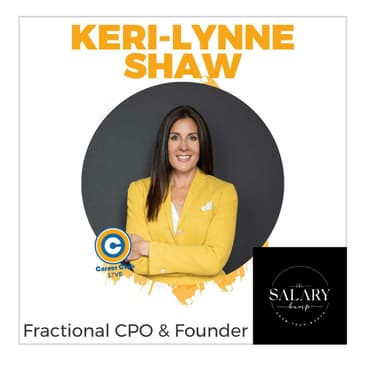
Discover the power of self-worth and master the intricate dance of salary negotiation with KL, an HR powerhouse with an impressive track record at BMW and Cody, as she joins me, Bob Goodwin, to unveil her latest venture, The Salary Bump. Imagine a world where you comfortably articulate your value and confidently navigate compensation talks, armed with KL's battle-tested strategies and a wealth of knowledge gleaned from her global corporate success. From her Canadian origins selling cars to finance her dreams, to the life-altering insights from a trip to India, KL's journey is as remarkable as it is instructive.
Unlock your potential with the transformative wisdom shared in our heart-to-heart about the art of salary and benefits negotiation. With KL's guidance, learn why offering a salary range can play to your advantage, how to leverage tools like salary.com and Glassdoor, and the crucial role confidence plays in not just asking for what you deserve but also in earning it. The conversation broadens as we dissect the psychological nuance behind negotiation tactics, the profound impact of asking the right questions for cultural fit, and the undeniable importance of gratitude and networking in carving out a thriving career path.
Cap off your listening experience with a deep dive into the ethos of The Salary Bump, where KL offers a guiding light to those looking to elevate their earnings and, by extension, their lives. Follow her on platforms from LinkedIn to TikTok, and witness firsthand how her expertise can shepherd you towards a more rewarding professional trajectory. If you're ready to command the compensation you truly deserve and foster meaningful connections along the way, this episode is your roadmap to success.
Powered by the WRKdefined Podcast Network.
[00:00:00] I know you're gonna find the key body! Hey everybody, this is Bob Goodwin and welcome to another episode of Career Club Live. If you're not familiar with Career Club, please check us out at Career.club.
[00:00:19] We are offering a bunch of free resources for job seekers beginning in January which we hope you will take advantage of, including a free Career Coaching Call every Thursday at 1 o'clock Eastern. You can find a link to that on our website.
[00:00:34] So today I am very pleased to introduce our guest, Keri-Lynne Shaw or KL. KL is a former head of HR for North America for BMW as well as a head of HR for Cody, the beauty company,
[00:00:48] and then most recently at Global Brands International as well as the Shades Store. KL has recently started a new company called the Salary Bump and we're going to be talking a lot about compensation
[00:01:01] and things that you can be doing to increase your compensation and get paid what you deserve to be paid. So that KL welcome! Hi, thanks for having me, Bob. No, thanks so much for joining.
[00:01:13] So as I said in the beginning, you know, you started a new company and we're going to get into that in just a minute that's very exciting.
[00:01:20] But as we are want to do, I would like to ask you just a handful of questions so people can kind of get to know you's a human being first. So easy one wherever you born and raised. Love it! Thank you so much.
[00:01:32] I was born and raised in St. Albert Alberta, Canada, a suburb of Edmonton. So minus 40 is an average winter day and the reason why I left in my early 20s. Not because of the location but the cold was not mine.
[00:01:47] I'm a sunseeker, I belong at the beach, I live in New York but that's really where it belong. Awesome, very good. And then a little bit, where you could school? So I went to school in Alberta so that was what you did.
[00:02:01] It wasn't, it's not like the US where you go away to college. You generally go to the university in your city. So University of Alberta started studying special education.
[00:02:12] Decided that that wasn't the route for me, I ended up with the marketing degree and then went to the University of Maryland at Got My MBA. Awesome, go to terms. And then just a little bit about your family.
[00:02:25] So I have husband and an amazing Gen Z daughter who teaches me something every single day. I did an expat assignment in Germany and liked to joke that I brought home a souvenir.
[00:02:40] My husband and was a phenomenal experience in my life and life changing really to be part of his family and learn another language. And from a cultural sensitivity standpoint, it's also taught me a lot in really navigating someone who is English is not their first language.
[00:03:02] And how we argue, he likes to say that we should try to argue in German instead of English and see how I do.
[00:03:09] But I like to win them a little bit competitive so we generally speak English but yeah it's a beautiful art daughter is studying to international business. She's junior on her way to London to study at Westminster and we could only work out. And she's bilingual.
[00:03:27] She is, she should practice it more but yeah, she when we lived in Germany, she picked it up very quickly.
[00:03:34] That's what you were saying earlier before we went there, that's one of the greatest gifts you can give your child is the the opportunity to speak a second language. So that's cool. Absolutely, she was my husband.
[00:03:47] We met him when she was six so had had we obviously met early on and she would be bilingual in a question. But learning to integrate English really was the language that we chose.
[00:04:00] And now she can learn British English and I think I think it's in church, but yeah two people separated by a common language so she'll learn another language when she's in London. Absolutely, whilst she's in London. Whilst amongst the British.
[00:04:17] Hopefully not at British accent because that would be awkward. So I kind of breeze through because you've got some really great companies as part of your background, but when you you got your graduate degree from Maryland. Is that when you begin?
[00:04:33] Your full work career that you have an interlude between your undergrad and your graduate. So I had a bit of a different start. So as I said, I was studying special ed and I quit school. Once a semester shy of my degree.
[00:04:47] I was paying for my own school. I was selling cars actually to pay for college so my parents really didn't say much about me quitting but it didn't feel right. It didn't feel like this was the direction I wanted to go like most 20 year olds or 21 year olds.
[00:05:01] I'm not sure at that age how you really know what you want to do, but I knew that that was not the direction for me. So I ended up falling back into business but in the meantime I worked and I worked since I was 14 years old.
[00:05:16] And I worked full time while I was in school regardless. So I actually preferred the work part and the school part. And fast forward, I started working corporate and I almost didn't get the job. It was with general motors.
[00:05:31] And the general one that I met to ask me to send him his resume, which by the way is how I've gotten every job. I've never applied for one. He said, oh, I didn't realize you didn't have your degree and I saw shoot.
[00:05:44] You know, this could actually lock me from doing great things. So I immediately signed up to finish my degree. They put me through school and got helped me pay for my MBA.
[00:05:55] So I actually did work and when the door was closing I pride it back open by saying, listen, you have an opportunity to mold me and shape me and we can grow together working together and they then hired me.
[00:06:11] So yeah, it was a different approach for sure but wouldn't change it for a thing. I'm higher, pluck. Yeah, it's not taking no for an answer which is really good and kind of helping them see what the benefits would be. So, but you found your way into HR.
[00:06:28] How it had a done? What a accident. So as I said, I sold cars and loved automotive. So I spent over 20 years in the automotive industry and sales was my jam. Sales and marketing and an aloft it. Any contest?
[00:06:44] I would win it or my team would win it. It was always about the win for the company but I was really intrigued by sales and marketing. So HR completely, I had honestly didn't even know how to spell it. I had zero connection to HR.
[00:07:00] Maybe because it wasn't a modern HR that I was really interested in. Fast forward. I run a very modern HR. So it was an accident. Somebody said, I we like your approach. We like your style.
[00:07:14] We like how you think and we think it'd be great in this role. And it truly was one of the best things I've ever done was I always said yes to every opportunity anyway.
[00:07:23] But when I moved into HR, I also became a professional coach and that was one of the three biggest transformations of my life. And I wouldn't want to go back into the business because they HR see.
[00:07:38] We actually get to touch every aspect of the business or one of the few roles besides the CEO that has depth and is required to have depth in every single business area. And I'm fascinated by human behavior.
[00:07:51] So it really was this beautiful journey that brought me to be a fractional CEO but also three decades of work. brought me to launching this salary bump as well. Yeah, we did just side note. We had bread, warga on the podcast last year. Yeah, right, right.
[00:08:11] Yeah, so Brad leads now the global HR practice are co leads it for a hydro construct. And you know, when we had anymore, what I think he said is like getting people into HR who come from the business and not lifers in HR.
[00:08:24] But people that have lived in different parts of the business bring a fresh perspective. And I think the chore great example of that. We're going to get into your new adventure in just a second.
[00:08:38] But last question when you are not starting new business or being the HR executive or fractional HR executive, what would we find KL doing? So I mentioned automotive. I'm not a car junkie. But my real passion is writing motorcycles.
[00:08:55] So I was going to guess why it's like, it's like, it's right. It's a little bit strange right? I didn't even expect it. But I'm a major fitness buff so I'm working out a lot.
[00:09:06] I love to travel and you know, my husband and I found found riding together was just something really interesting to do. It's not about speed, but it's like wind in your hair and somehow there's a freedom that is wild.
[00:09:22] I didn't expect to love it so much, but yeah, I really enjoy it. We're going to bike to your own? A Harley. Of course. That's all I'm saying. That's all I love about asking these icebreaker questions.
[00:09:34] It's like I'm learning all kinds of cool stuff about to the, you know, and people as you say are endlessly fascinating. So we don't ever want to take anything for granted.
[00:09:43] So you've got, you've had a very, very successful career as an HR executive with some really cool brands. But you've decided to strike out on your own. I want you to tell us a little bit about, you know, the what in the why of the salary bump. Sure.
[00:10:02] So I evaluated, I guess it was 2016. I was in an environment that didn't match my values. And I realized, you know, what? I need to take a break. It took six months off. I traveled to India. I did Ayveda, which I now do every year.
[00:10:22] Was the second biggest transformation of my life. And I really evaluated what is in my purpose. And I wanted to understand what I would meant to do on this planet and throw out a meditation. And some really interesting experiences.
[00:10:38] I recognize that helping people unlock their potential was what I do best. And I thought to myself, I never thought I would launch a company that wasn't really in the forefront of my mind. Becoming and continuing to grow as an HR executive is what I really loved.
[00:10:56] But I realized that people don't know what they don't know, especially around negotiation. And sitting in an HR seat, I really recognize the limited number of people that actually negotiate.
[00:11:10] And a part of that is not knowing your worth and really helping people to identify that they are worth it. And they can ask and not to be afraid that the offer might get pulled.
[00:11:22] So I wanted to give people a little bit of a peek behind the HR curtain and give you the confidence and the tools to be able to ask what your worth and learn this, learn the compensation that you deserve.
[00:11:34] And while it's not only about the money, it was never about the money for me. It really was about my growth and learning. And sadly I used to say that in an interview. I mean, what was I thinking?
[00:11:47] But you know, I always believe that if I did good work, the money would come. And to an extent it did. So I don't want to misrepresent that, but I realized like everybody else who's listening, you're leaving money on the table and we all have financial goals.
[00:12:03] We have retirement goals, we have homo's homes, we have family kids to London for school, we all kind of stuff. We have lots of financial goals and there's no reason why we can't have it both. And so that was how the salary bump was born.
[00:12:18] And frankly I've been doing it for 10 years. I just didn't monetize it. And people would tell me every one of my life, Kelly you should really do this for a living. And I was like, I don't know, do I want to do it for a living?
[00:12:32] I don't know. And so it's sort of just evolved and I'm really excited about it. I think it's going to make a massive impact around the world.
[00:12:40] How hard was it for you to walk from corporate, known income, known every, you know, I mean, a lot of good assets? So I'm going to jump off a cliff here and see what happens. Scary is heck. So scary. And obviously still is on some level, right?
[00:13:00] Because I've been in corporate my whole career. I think I've made good financial decisions which have allowed me to be able to say, okay, I'm going to take this leap. What I've created, I'm also really thoughtful about the investment. Yeah, I'm betting on myself.
[00:13:18] And I always have, I suppose. And so, you know, it's funny, I would ask my parents, why over the years have you never ever given me advice? They've never given me advice, not once, not did they question me when I quit school, moving to another country, nothing.
[00:13:36] And I even want to ask for advice. They won't give it to me and they said we've always just trusted that you will figure it out. And so I think based on that and knowing I've got a heck of a lot of grit.
[00:13:48] And I feel fairly unstoppable, no matter what has been thrown my way in my life, I know I'll figure it out. And so that's how I'm approaching this. This is an opportunity for me to go all in.
[00:14:02] And at the end of the day, you know, I have income as a fractional CBO. I can put weight on different things at different times based on where I'm at. But I really am sure that it's all going to fall into place as it's meant to.
[00:14:18] No, so I'm sure it will too. I mean, you obviously at Master of the Topic which we're going to get into in a sec. So you said earlier like, you know, people feel awkward about negotiating. None of them is that a particularly American thing or not necessarily?
[00:14:35] No, I think around the world people are facing the same. So we have a lot of connections and Germany and help a lot of friends there. It's certainly socialized in terms of benefits are different. So it's a different conversation around benefits.
[00:14:49] But the big thing I see is people don't ask. They're afraid to ask. They don't know what they're worth. But what they also don't recognize is that there's this whole plethora of items around the compensation package.
[00:15:02] Beyond salary that if they're not even asking for the salary because we know those percentages are so low of people asking. We know they're not asking further on benefits packages, sign on bonuses, cars, yeah, all these other things. Not one person in my entire career in HR
[00:15:25] I have the thousands of people that I have made offers to has ever asked. Tell me about the salary break or sorry, tell me about the benefits break down and the cost associated. So people think they're jumping to a new company and they're getting this great salary bump.
[00:15:39] Well, what they don't realize is that now this it's going to get eaten away because their benefits are not as good. So there's very certain. So I need to go plug in my computer real quick. I thought I had like 100% battery now, so I want zero.
[00:15:53] Oh, no worries. I'm going to remind me of plug in a team. And one second. Perfect. Thanks so much Bob. Yeah, it's a really shocking thing. But I think it's just people don't know what they don't know and that they can ask.
[00:16:13] No, okay, okay, I'll start with that. Okay. I had to go grab my power. See, oh, there's not like 80% power only started and that quickly diminished. So. Okay, no worries. There we go. No, I'm not going to crash.
[00:16:47] The point that you were just making and we're going to pick up right now is, you know, the people getting focused on compensation and like the salary piece and not realizing it's all going to get eaten up in benefits or,
[00:16:59] you know, that is such an important point that you're making. And I would love for you to help listeners understand how to get the employer to help articulate and quantify the value of the benefits because if one salary is 100,000 dollars,
[00:17:20] but the benefits package that they're being offered is, you know, worth 40,000 dollars and somebody else is offering 110 with the benefits package is worth like 15. Like how does they calculate this and get an invisibility to be able to do a calculation like that?
[00:17:40] So companies will rarely give you that visibility of front, which I think should change. But that's, you know, maybe for later in the conversation. It's really about you equipping yourself with the information and the right questions to ask.
[00:17:54] And so this is part of what you will get in working with me, either through my own, I program or one-on-one with me. Yeah. And really, I list out all the different levers that you have to pull.
[00:18:06] So when you're talking salary, the first question that a recruiter or an HR person will ask you is, what are your salary expectations? After asking tell me about yourself.
[00:18:16] But usually in that first meeting, they'll ask you that question and you really need to be armed with what your current package is worth.
[00:18:23] So I recommend people list out their current package, all the different things that are included in that package, including what they're spending on healthcare benefits, car, bonus, etc. Pension in some cases.
[00:18:37] So list all that and list the value, and that way when you go to have the conversation and you do your homework on the salary piece of it,
[00:18:45] you know you have different layers that you need to add in either in the base salary when you're talking about what your expectations are there.
[00:18:54] But I always recommend you answer the question with your market research, and the expectations and based on similar roles that you've been interviewing for this is the range.
[00:19:04] And also recommend never ever to talk about a dollar amount. You'll always talk in ranges, and then you also say, and obviously there are different answerillary benefits that we would need to talk through.
[00:19:15] So that you know we can do a side by side but looking forward to hearing more as we go through this process.
[00:19:21] So to sort of set that stage is very important, they're not going to do it for you. They're not really interested in paying you more than you're.
[00:19:29] Then they were but they budgeted or they think the role is worth. It's your job to come equipped with all that information to be able to ask.
[00:19:37] And then those levers really in the end become the negotiation, right? So then you can say, okay well let's talk about this. We didn't quite get there on the salary, but let's talk about some of the other benefits and how we can close that gap.
[00:19:53] I see, I mean what I love about this is it's a very fact-based conversation. It's not emotional. It's not you know hey, what I want is, so well this is my market value. Now I, okay, you're probably correct me in what I tell people sometimes is.
[00:20:12] When somebody says you know what are your salary expectations do you think it's a fair question to say well do you mind sharing with me what the budget is that you've been given for this role? 100% I would never have any questions to tell.
[00:20:26] I would never answer that question without going back to the interviewer and say you know listen. Be really curious when your ex- our would- your budget is for the role given we're in the early stages of this process to start the conversation. Yeah, helpful for you to share.
[00:20:43] Always go back never, never, devolute your information early and if they come back with a range that's lower than you're expecting then you can simply respond with based on you know roles similar roles on the market and recruiters that I've met with.
[00:20:58] It's a little low end on a little low on the range my expectations would be between ex and ex.
[00:21:03] Always be prepared and you never want to be on the back foot of that question and know everyone will ask you that in the in the first interview that's a very very common question that they'll ask.
[00:21:14] So you want to be equipped to be able to respond to put it back in their court and the respond appropriately and I have to bulge what you're making currently.
[00:21:26] And to your point about taking the emotion out of it, this is doesn't have to be an ugly conversation or a conversation where people feel like if I'm asking for what I'm worth.
[00:21:37] I might come across Breedy or oh you know it's difficult times there's a scarcity mindset you know at the end of the day that's all stuff that you're putting in your head and you want to go in with confidence and know that I negotiate. And be a win-win.
[00:21:53] And Kay, this is why we get on so well because you're exactly right I mean this should be confidence it should be fact based it doesn't have to be emotional it's about being prepared
[00:22:04] It's about having an adult to adult conversation with somebody and not this parent child like I'm so sorry to be you know asking for something. I mean it's sort of like well how much I wish you want for your house well what's the market value for my house.
[00:22:19] These are known things we can kind of calculate this relatedly is when people say well Kay, what are you making now.
[00:22:27] I'm like what kind of doesn't matter what I'm making now if I'm making a million dollars or one dollar what is this role worth to you and what's the market value for this role that's the only germane thing to be talking about.
[00:22:40] I can be grossly over or under compensated that should not color this conversation. Yeah, I don't see them asking so often what you're making but people make the mistake of saying to answer the question what are your expectations. I currently make it.
[00:22:55] Yeah they say clearly on making X yeah. Yeah, so you want to be in a position to be able to have done your homework and to really know what the role is worth. The mistake I see companies make though is they they budget the role based on nothing.
[00:23:10] Maybe a term in smart they don't always go out and do their own market research and their internal benchmark could be way off. So when you see a job posted in certain states you're required to post what the role is what the market value of the role is.
[00:23:27] Be mindful that's not necessarily a market value that could be a budgeted value. I don't see companies in the my experience doing their homework on what the market value really is it post quick. We need to fill this role here's what the last person was making boons.
[00:23:46] So for a company to really get it right it's to do a full blown audit inside the organization against external research to see what the roles are.
[00:23:56] What the roles are really worth out there and are they paying people appropriately and also are they expressing to their people what their whole package is worth.
[00:24:05] Because that's where people might feel undervalued in their current role, but if you don't show them with the whole package is worth your you know you're missing a big opportunity as well as a company.
[00:24:18] Well, see in back to kind of our point I think you even if the salary is lower the total compensation package which is different tell me if you read this if that's even different than OTE.
[00:24:30] So on target earnings tends to be right salary plus bonus or salary plus commission or like whatever the variable component of the compensation plan is and people would talk about what the OTE for the role is 200,000.
[00:24:45] But that's still not taking into account all the benefits and how much you be paying for health insurance what's deductible on that what's the formula and K-look like what's the match.
[00:24:56] You know is there a pension like there's just so many other things it go and it's all real money. Yeah same with PTO I mean there's another word flexible work or tuition reimbursement or child care or transportation.
[00:25:10] I mean the list goes on and on and on and those are real out of pocket costs that are costing you every month so. I mean I'll give you an example I've that my two most recent clients I helped an old CEO with a multi million dollar package.
[00:25:24] Transportation is you know included in some of these there's airplanes or training you know cars or drivers but I just helped an automotive technician who. received his top level certification and he was making a hundred thousand dollars an hourly worker and with this top level certification.
[00:25:47] The interesting part around technicians is the turnover is 50%. So dealers have a really hard time finding and grooming and developing automotive technicians.
[00:25:58] So when you have a certification as high you become a hot commodity on the market and so other manufacturers are giving him a call he loves where he is he did not want to move.
[00:26:09] He loves the culture he loves the environment and he said but I want to be paid what I'm worth what do you think.
[00:26:14] So we worked it out and he got a fifty thousand dollar raise and that was through multiple channels so we got created on a hybrid approach from equity in the company equity in his work.
[00:26:27] Plus increased hourly rate but you know that he was putting in the effort he was also gaining more from the effort in his output.
[00:26:36] We also got company car in there we got healthcare in there we got gas fuel included we got really creative with his package and sort of loaded the lips of his manager to be able to go and talk to his leadership about.
[00:26:50] Let's get creative with this person because we don't want to lose him and he doesn't want to leave us so you know there's a certain capacity and then the last thing we added in was an additional two weeks of pto which has an hourly person also his actual real money.
[00:27:08] So there are so many different things and I think one of the things I like to recommend to people is focus on what you value.
[00:27:15] So time off was always something I valued greatly flexibility to work for more ever in the world I want to be with something that also I really valued so I always asked people to look inside and really figure out what are the things that are most important to you.
[00:27:32] It's not a compromise of one or the other that the salary should definitely always be there but then you've got some play with things that really matter to you.
[00:27:41] Well I appreciate you mentioning that because you know when our clients at career club are you know having the same kinds of conversations.
[00:27:49] And you're right I mean there's a lot of variables to come into this like commute do you think here with this company does or even have the opportunity to grow in your career like does it fit your life not just you know one aspect of your bank account.
[00:28:06] And so as you say kind of like what do you value that's really the compensation is does it allow you to maximize the things that you value.
[00:28:15] How do you articulate those and as I said before I mean money was never my number one driver I made the mistake of actually thinking it was one or the other in my early days.
[00:28:28] And now I recognize that you can and should have both you can have money the salary was out it coming across and in a good way and I can have all the other things that I want as well.
[00:28:41] And that's where you have the secret sauce and the magic happens when you work for a company that all of it falls into place. I don't know if this is giving away your secret sauce or not so you can stop me but.
[00:28:56] We're not trying to research my value.
[00:28:59] You know I know site like salary dot com or glass door something similar I mean are those legitimate sources in your mind for just somebody to sort of regular person out there trying to figure out what they're worth those big good sources to go to.
[00:29:15] There are many good sources out there boven in my online course I give you a few options but with AI it's changing every day so I think what I always recommend is to look at a few different sources and also.
[00:29:29] Not just look online but look within your network and talk to people about what their worth so in this technicians example he talked to a few technicians who were in his master class that worked for different manufacturers and different dealerships.
[00:29:45] And that was another really helpful way for us to look at it the you know when I talk to my clients in different countries it's different because they don't necessarily all have access to that so talking with friends in your network your colleagues your neighbors you know you don't have to ask them directly what they make but you could ask something like.
[00:30:07] What is a VP in your organization make or what is director level in your organization make I think you can kind of look at your own trajectory and get a little bit of a picture you can also talk to HR.
[00:30:19] And your current company and you can ask where do I fall on the range of this role what does the next level look like what is the range for that level how can I continue to grow inside the company so there are other things that you can do in other ways that are not just looking at.
[00:30:37] And chat to you as a tool a salary accelerator tool pay scale is a good one there are there's a lot of options out there for you to put together your business case.
[00:30:48] And just remember though it's pure salaries but you're not looking at all the other benefit again those all add up in a significant way. In a very very in in a compounding way to right so high for go you're getting like 20,000 dollars right now all my future raises.
[00:31:11] And any other benchmarking against my comp you know is either based on that number or not based on that number so being able to get it sooner is always better right.
[00:31:23] And you're a person well look Forbes has a lot of people I think ground themselves to this statistic but they've done a study where.
[00:31:31] If you job hop every couple of years you will make more than 50% of someone who stays loyal with a company now that's not to say that you can't grow inside your organization but it's a little bit more challenging to do it.
[00:31:44] You want to see one of my secret one of my secret sauces if you will I really focus on if people love where they are they value where they are helping them to get the salary that they deserve in their existing role or get promoted inside their company so there's another.
[00:32:02] Another angle that I think if you approach it in the right way at the right time it can be it can be pretty significant.
[00:32:11] So we were working with clients and you know they're coming to the finish line they're so excited that you know company acts is making them an offer about to make them an offer.
[00:32:21] And you alluded to this early on but they don't want to screw it up now they're afraid of like oh my gosh I do not want to pop the bubble here because like I'm almost home and I don't want to screw it up by looking like a pig.
[00:32:34] Any good people over that anxiety. So look we focus on confidence and asking appropriately I like to have people and loading their lips to have this conversation.
[00:32:46] To even just say listen I'm really excited about the opportunity and I'm so grateful for the chance to work inside your organization and be part of this great team.
[00:32:56] Knowing now we're at the stage of negotiation I know you want to make it a win-win as much as I do.
[00:33:02] So let's talk about what that looks like you know early on we talked about the salary and my expectations based on other other interviews I've had and the market research I've done. So let's start there and let's see how we can close the gap.
[00:33:16] And then we can talk about all the answer even if it's because often what happens when you get an offer they will give you here's a salary in the bonus.
[00:33:24] Yes all the other stuff is not part of that conversation and so you want to make sure you're adding that there.
[00:33:30] So before you say at the end of that conversation give me 72 or 48 or 72 hours to take you know take some consideration time you've already planted a lot of those seeds so they're able to then go back to their leadership.
[00:33:45] And have further conversations she's expecting that we need to be ready with with a richer offer.
[00:33:54] And I think too you know kind of emotionally the employer you know wants to get this going to I mean they've got there's a reason they're hiring you there's work to be done and they're you know there's kind of that decision fatigue of like hey we finally made a decision.
[00:34:10] So we start thinking about the next thing. Fine another 10th at whatever yes let's just get one board right you Bob as much as you want them and and I'll tell you also.
[00:34:22] Have free single HR person and they will repeat every one of them expects you to negotiate so we're shocked when you don't.
[00:34:31] And you are leaving money on the table if you don't and one of the other really important things to think about when you're going back and you ask for X or you asked for range is to stop talking.
[00:34:43] Silence is actually working for you and let them respond so when you say my expectation was between but but you stop talking.
[00:34:53] And silence is really a magical thing in that case so yeah I know it's it's it's always been amazing to me and I've never ever once pulled an offer and I can bet if you talk to 100 HR people maybe one would say they pulled an offer.
[00:35:09] And the only reason you would do that is if somebody behaved really inappropriately or aggressive or something that just was rude.
[00:35:17] It's it is very very unusual and again when you when you talk about it with energy and you talk about how excited you are about the opportunity and making it a win. You're setting the stage for really what can be a beautiful conversation and also.
[00:35:34] shows you confidence when you negotiate if you're negotiating with them that means you're going to negotiate effectively. With partners inside the organization that means you you're showing your leadership and your confidence to walk in to have a.
[00:35:50] a proper conversation it means you're not afraid to have hard conversations so there's all sorts of good stuff that comes out of that as well that really works for you. That is such a great point.
[00:36:00] I've never heard anybody make that point before but you're right your sort of behaviorally interviewing how we how will you represent the company how you really gastro arbest interest in a professional. But direct way which is really really cool.
[00:36:18] So what is the easiest ask that people don't ask for.
[00:36:26] Well as I said, they're not asking for anything you know in my experience less than 15% of people negotiate statistically at all statistically if you can research it is 50% and for women it's 34% and even even lower for people of color. So stamp on is just ask.
[00:36:48] It's it's so it's it's underrated just ask and I would say do your homework make sure you're going in prepared to have this conversation because if you're if you haven't done your research. You're you're going to stumble on that on that question and and I think you know.
[00:37:08] I was always like to say and again, this isn't it's not just about the salary of home but it's not just about the money it's you're interviewing this company as much as they are interviewing you.
[00:37:18] And another shocking thing that I always found was that people don't ask the interviewer questions so in my program I give you a list of really important questions to ask because you want to know the kind of culture you're walking into.
[00:37:34] You want to know that this is a real match for you and that. You could be protecting yourself from something that you know might not might not work out in the end and I've made that mistake in my career saying yes, so it's so excited about an opportunity.
[00:37:49] I definitely didn't negotiate and nor did I ask the right questions and you know that values mismatch came out pretty clearly.
[00:37:58] I'm going to have to leave right so no no and that's such a great point too because you know I've I've not run two jobs before since I've been running from a job.
[00:38:09] And you know so I'm just looking to get out of there more than I'm actually looking to go to that and that that would obviously.
[00:38:16] It's not has a limit itself to not being a great match, not negotiating, because look it's, as you can get me out of jail. Like, I'm happy with whatever it is which is obviously the mistake. The thing, and then we're beginning, becoming more challenging economic times.
[00:38:34] You know, the collaborative market is different. different. It feels like it's swinging back to a bit more of an employer's market and you know, versus, you know, I've done the phone this morning, I was going to take my phone
[00:38:46] and ring off the hook, eight-year ago, and I'm going to ring it off the hook anymore. And so, there is a sense of a bird in the hand, you know, kind of mentality, and that I think that
[00:38:57] there is a reluctance of kind of messing up something. And so what I appreciate about what you're saying is that's all fair and true and fine, it doesn't change the dynamic of you should be
[00:39:11] getting paid what you're worth. And one of the main reasons you're not is you're not doing a, the research and then b, asking for what you're worth based on your research. And anybody can do this.
[00:39:24] Anybody can do this. And just not enough people are, look, you're always going to hear how tough the market is, how bad the market is, how scarce the market is, how change is so hard. I just wrote
[00:39:39] a LinkedIn post about it. But what if it wasn't? What if change wasn't hard? What if there is abundance? What if there is, you know, tons of opportunities to go around. I think you just had Melissa
[00:39:54] Grabner on your podcast and all of her, by the way. One of the things that she talked about was networking. And I mentioned this at the beginning of our conversation. I've only ever applied
[00:40:08] for one role in my entire career and the rest all came from a network sometimes to be raising a hand, sometimes then saying, hey, we saw you in this project, we want you on this team,
[00:40:19] all of it came from a network, all of it came from the impression that I left wherever I was and fostering relationships that really made a huge difference in my career. And when someone
[00:40:33] says they want to help you, they mean it and not to apologize. You mentioned it in the podcast. Oh, I'm so sorry, Bob, I know you're really busy. If I hear one more person say that,
[00:40:44] I wouldn't be on the call with you if I didn't want to be here. No, I'm not too busy to have this conversation. That's why I'm here. Let's like maximize it. Don't apologize for it. The
[00:40:54] one thing I will say is show gratitude. I find this to be also really underrated in the amount of people that you help or I help that don't say thank you. It's a it's a miss. So show gratitude
[00:41:13] each and every day. And once a year, all the people who've touched you or mentored you or coached you or guided you or landed hand to you in that year, I think, giving it's a beautiful time to show gratitude send them an email, thank them for just being
[00:41:28] in your life and for the effort that they gave you. It goes so far, you'll have no idea, because then when you do need that person, you're not just calling because you need them,
[00:41:40] check in everyone's in a while and if somebody has mentored you, I want to hear how you're doing. Did it work? Didn't it work? Where are you at? That it goes a long way. So I think it's just a nice
[00:41:54] thing. The videos are interesting because you know, I love not working. I love connecting people that's probably my favorite thing to do. It's like, oh, you were going to love her. She's amazing and I just enjoyed doing that. And I think that was not working. Sometimes people
[00:42:09] think that it's manipulative, right? And that I'm just trying to use you to get to something. And I suppose there are people that that is actually their aim. They're just trying to stepping
[00:42:18] stone you to get to the next person. But when it's done right, you know, it's not manipulative. It's it's sewing and re-pain is a thing. If you plant, you will reap. That's not manipulative.
[00:42:32] That's just the way things work. And if I plant good seeds and I plant gratitude, if I plant, you know, the intentionality to want to help. And and you just do that is just
[00:42:46] part of a lifestyle. Then what ends up happening is on another day. As you say, like that starts to bear fruit. And the other metaphor I use for this is like an ATM. Like
[00:43:00] if you make deposits, you can make withdrawals. But if you haven't been making deposits in other people's lives, you just got laid off or something's going on. Like you can't go to the
[00:43:11] ATM and press the button hard enough to make money come out. That's just overdrawn. Like you can't do that. And so, you know, it's, you know, Dorie Clark we had her on the podcast and she talks
[00:43:22] to say, you should have a whole book called Playing The Long Game. And the beautiful thing about the long game is it's all done within the right spirit. Yeah. There it's trying to help other people
[00:43:33] and you're just sort of foster goodness. And when you do that, the amazing thing is it reflects back onto you. Yeah, you pay it forward. It's, it's a good karma. It's just, you know, you do,
[00:43:47] you do good things, you treat people well. It will always come back to you or someone else in your life or you just never know. And that's not why you do it. But that's something it's not why
[00:43:58] you do it. It's just the natural result of doing it. Yeah. In the closing minutes, is there anything? I want to have that innovation in just a second. Is there anything else just sort of generally
[00:44:11] whether you were speaking to a candidate or speaking to a fellow HR professional that you'd want to sort of add on to with our conversation so far on a compensation? I think we've covered it,
[00:44:22] Bob. I mean, there's, there's other elements of course, you know, we didn't talk about how you build the confidence to ask, how you know your worth. But I think doing your homework, putting
[00:44:33] the facts together, trying to take the emotion out of it, these are all things that anybody can do and we can obviously talk about that further. And if you follow me on LinkedIn, I post a lot.
[00:44:44] I post every day and giving a lot of free tidbits and tools to help you with that. So I think we've covered it. In terms of innovation, I mean, nothing stands still. You talked about changes like
[00:44:57] embrace change. Well, we're to some of the innovations that you're seeing or that you would like to see and sort of the the wacky world of compensation. I'd like to see, and this is some of the work
[00:45:09] I do as a fractional. I'd like to see companies actually drive the conversation around comfort philosophy and really understand how that can work for them inside the organization. So I think it's a bit of an unknown, most companies don't share what their philosophy is. Most of many
[00:45:27] of the companies don't even have one. Let's be honest. I'm saying, you can't share what you don't have. Yeah, if they don't have one and they haven't found a way to connect the dots between transparency
[00:45:36] around pay, around talking about that full package and helping people understand how valued they are and that goes beyond just salary. If you leave it to chance, people will make up stories in their
[00:45:49] head about not feeling valued, not being recognized. They don't know how they can grow inside the organization. They don't know how they can get promoted inside. They don't know how they can develop
[00:45:59] their careers. So there's a real miss and a big opportunity for companies to do this, especially because it's now being required by law. So get ahead of it. It really get ahead of it. I'm actually
[00:46:11] working with some Canadian companies. A couple of provinces have now got the laws to talk post-pay transparency and for those that don't is coming so every other state in the U.S. and every other
[00:46:24] province of Canada should just get ahead of it and actually we use this as an employer of choice opportunity there. We have transparency around these things and by the way, many of them have paid transparency as a value, but you're not valuing transparency around conversation. So it's
[00:46:45] not connecting. There's a beautiful way to have the conversation without fear that, oh if we tell people, then they're just going to want more. It's not the case. One of the things I do in every
[00:46:59] ahead of each or a role I've ever taken is I do an audit and an equity analysis and make sure that we're paying people appropriately at different levels, different diversity categories, and really being sure that we are positioned right for success in the long run. And usually when
[00:47:16] I show the leader the retention turnover numbers and what that's costing them is a no-brainer to make the adjustments that are needed on the internal side and talk to people, well, why we're doing that because we value you and we value that your part of our organization
[00:47:34] and the most important part of it. So I'm most excited about leaders paying more attention to the talent agenda and putting different demands on our leaders to be better leaders. Well, I think that one of just transparency, Gen Z is much, much, much more open
[00:47:58] about pay transparency, like my generation I want to then peep that onto you. But you're like that's something that you didn't talk about. That was sort of a sex-re-lige and kind of a
[00:48:08] conversation. We don't talk about that. And in Gen Z, I don't care, like this is what I make. And so I think that as we see some of the generational transition, it's like just,
[00:48:21] that's a value for them that we'll inevitably make itself. And I love how you said, kind of basically the employer branding uses as the opportunity. You want to demonstrate this value that you're claiming and be an employer of choice. Use it as a
[00:48:38] differentiator and let the laggards be laggards and you be a leader in stuff like this. And go as somebody who represents talent, like this is the kind of stuff that people flock to.
[00:48:51] This is what they're looking for and they're just not finding it nearly often enough. And to they send the has to be legislated, you kind of lose all the credit for it. It's like, well,
[00:49:02] you did it because you had to do it, not because you wanted to do it. Well, and again, there's also some big misses for the law that is requiring because you might be posting on the
[00:49:13] outside what the range is and you haven't done the internal research. So guess what? The person who's sitting in that role, who now sees what you've just posted online, that does not match where they are, how happy are they? So there's a massive, like you have to
[00:49:30] think about both. And I see it as a real event, which I agree. And coming back to Gen Z, I mentioned it earlier with I have a Gen Z daughter who blows my mind every day on kinds of topics that she
[00:49:43] talks about and her friends talk about mental health and the confidence that they have to just ask. Like, it's just it's mind-blowing. I wrote a post on LinkedIn about it and actually it went
[00:49:55] completely viral. It was around my daughter who asked for a pay bump. Never even talked to me. I own this salary bump. Well, this is generational. Not asking parents for advice. There you go. She and she fought almost like unionized the dog kennel that she worked at
[00:50:15] and got everybody a raise because someone came in at a higher amount and she was like, that's unacceptable. I've been here a year. These people have been here at some amount of time and
[00:50:23] we all deserve a raise and she got them all a raise but I'm chanted up, putting because she didn't feel valued. I thought, wow, it's 17, she was 17 at the time. How? It's my mind. It really is.
[00:50:37] So I look at the end of the day. She just asked, you know? Well, but but also again and I think this is one of the key key takeaways. You talk about confidence since probably the third or fourth time
[00:50:49] reviews were confidence. It's one that we use a lot at career club in terms of people understanding their unique value proposition that they're bringing to an employer and confidence is not arrogance or cockiness. Those are not the same thing. Confidence is rooted in
[00:51:11] convictions. It's rooted in fact, right? So that it's it's has a real basis for why I'm confident and I think that in your career and then now here of salary bump is your helping folks,
[00:51:26] understand what their real value is, that they should be more confident. And even when we talk to people about when you're interviewing in your confident, you sit up straighter. You lean into the conversation, your eyes are more open, you smile, you modulate differently. And what we say
[00:51:43] is in the beautiful thing about confidence is it's contagious. When you believe, you make me believe and so it just all works to the good compensation. You look, you're trading your skill at your life in some ways for some remuneration. You should be getting paid, which are worse.
[00:52:04] And if what you say, 15-only 15% people actually in the thousands that I have offered, it means for cent. Statistically, statistically it's around 50%, which is still way too low. For women, it's only 34%. It's too low. It's absolutely too low and I think the one thing that
[00:52:26] I would I would close with is if you knew that everyone on the other end who's making you an offer is expecting you to negotiate, the door is already open. So it's not as if, you know,
[00:52:39] that's not happening. So the door is open, walk through it. It can't hurt to happen. What's worse than can happen? They can say no. Best case scenario is you get everything you dreamed of
[00:52:49] and more. And that's all I can't think of, but I can't think of a better note to end on then I can't even think you dreamed of and more. So, Kay, if people want to learn more about the
[00:53:00] salary bump, how do they do that? They can follow me. You can follow me on LinkedIn, Kerry Lenshaugh. The salary bump pages there. You can follow me on Instagram. I website. Everything is the salary bump. So TikTok, Instagram, and my website.
[00:53:18] Awesome. And we will make sure that those are in the show notes and that we've got links for people to be able to click on. It's been an absolute pleasure. We've gotten to know each other
[00:53:26] the years, and I was very excited about this episode because you're just such a good human being, but you're bringing very tangible life-changing benefits to people. One is mentality back on the confidence. But then too, as you see, people have financial goals, not just because I want more
[00:53:44] money, but because money allows me to invest in the things that are important to me. And that's a good thing. That's just an inherently good thing, so thank you. Thank you Bob. It was a pleasure.
[00:53:56] Okay, everyone, thank you so much for taking a few minutes out of your day today to either watch us on YouTube or listen to this on your favorite podcast platform. In either event,
[00:54:06] if you wouldn't mind subscribing, rating and reviewing, it really does help. And we wish you the best in 2024. And if you haven't negotiated your compensation, you should. If you don't know how,
[00:54:18] go to the salarybump.com and KL will help you get to where you need to be. So if that thank you so much. Thank you Bob.
Sponsors
